
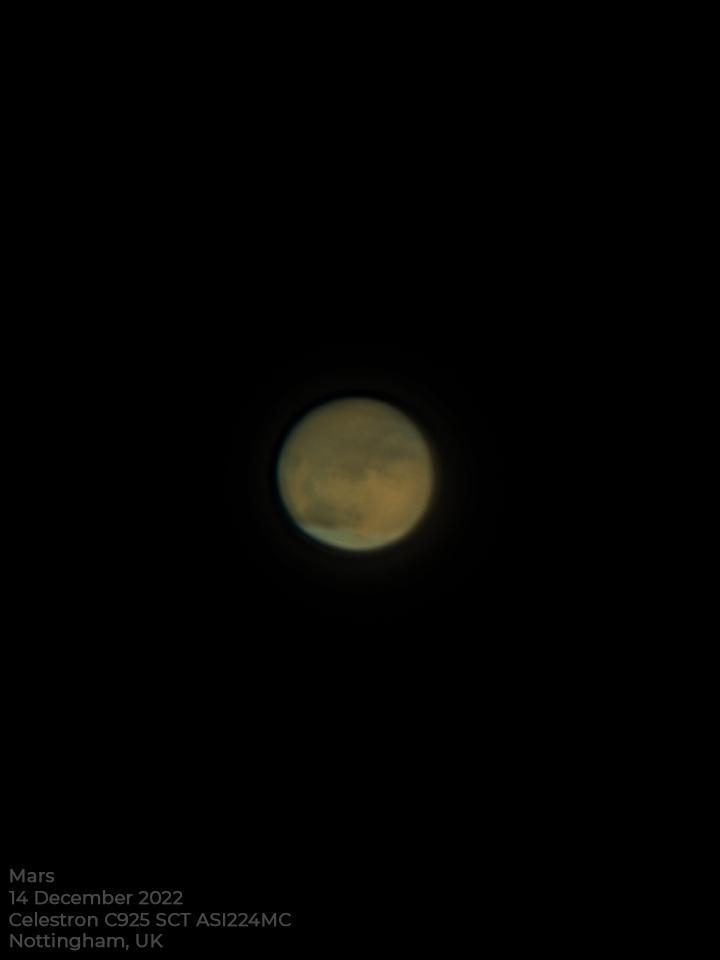
Mars 14 Dec 2022, C925 and ASI224MC
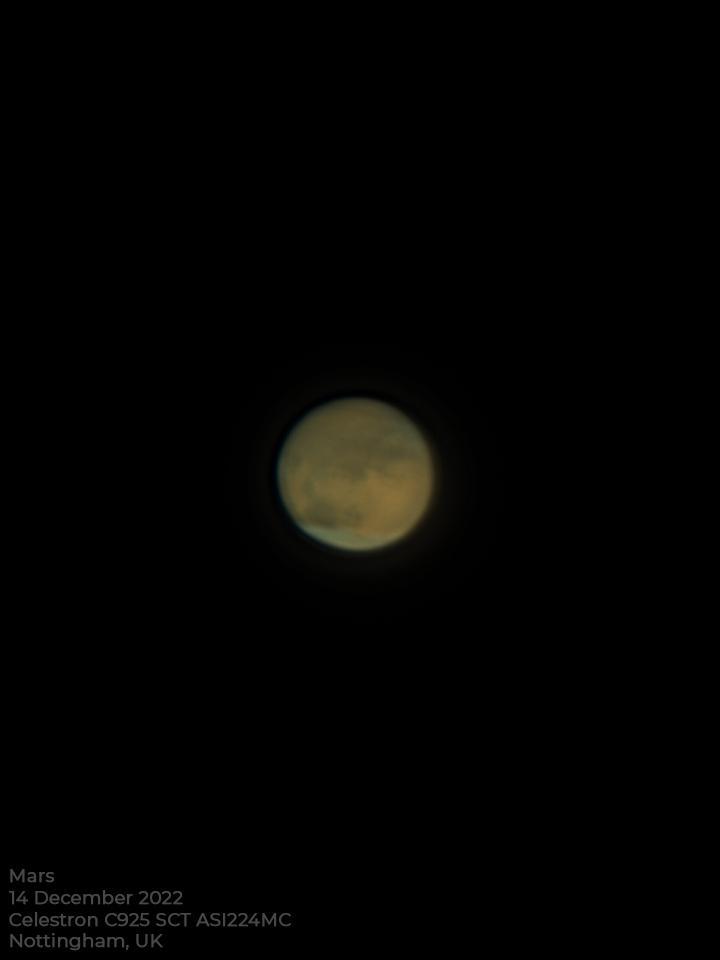
The planet Mars captured with my Celestron C925 SCT telescope and my ASI224MC colour camera. I used a Powermate x2 barlow lens to give a higher image scale together with an Atmospheric Dispersion Corrector (ADC).
A total of 12000 frames were captured using Firecapture to a SSD drive on my capture PC. I used Autostakkert to process the best 20% and then PixInsight to bring out the details with 8 wavelet layers. A bit of unsharp mask afterwards to sharpen it up a bit.
Mars was to the East of the meridian and about 40 degrees in altitude.
From my backyard in Nottingham, UK.
I am quite new to using the ADC and what I did was use the colour alignment tool in Firecapture to "tune" the ADC to get the colours all as perfectly aligned as I could.

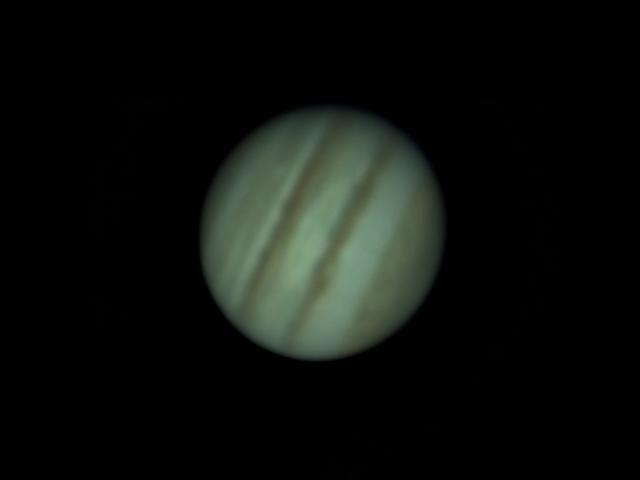
Jupiter, 7 December 2022
Jupiter, 7th December 2022 with C925 SCT and ASI 224MC camera

I am not experienced with imaging the planets other than the Moon. This image is not going to win any prizes or keep the award winning planetary imagers awake at night! However, it's a first effort at Jupiter and a foray in planetary imaging to give me some other astronomy options since almost always, when it is clear the moon is bright thus rendering deep sky observing and photography impossible
I used my Celestron C925 telescope with a x2 Powermate (a 2" version). I then used an ADC to try and improve colour correction and to this was connected my ASI224MC colour camera.
I tried my very best to "eyeball" the focus the best I could. This is very difficult to do as Jupiter was bouncing around considerably due to quite poor seeing. Jupiter was at about 30 degrees altitude almost at the meridian but was above a neighbour's house and this affected the seeing conditions (heat rising from the house and thus creating air currents that spoil the seeing). Collimation of my scope may not be ideal either and this is something I need to check into.
All this said, many of Jupiter's features are visible in this image - the Northern and Southern equatorial belts, the temperate belts as well as the polar regions. A few of the ovals in the cloud formations are also visible. At this time the Great Red Spot is not visible and is on the hemisphere facing away from the Earth.
Technical Stuff
5000 frames in colour from ASI 174MC camera with C925 telescope on MESU200 mount.
Captured with Firecapture and processed in Aurtostakkert where best 30% of frames used. PixInsight Multiscale Median Transformation used to sharpen up five layers. No other processing at all other than this.
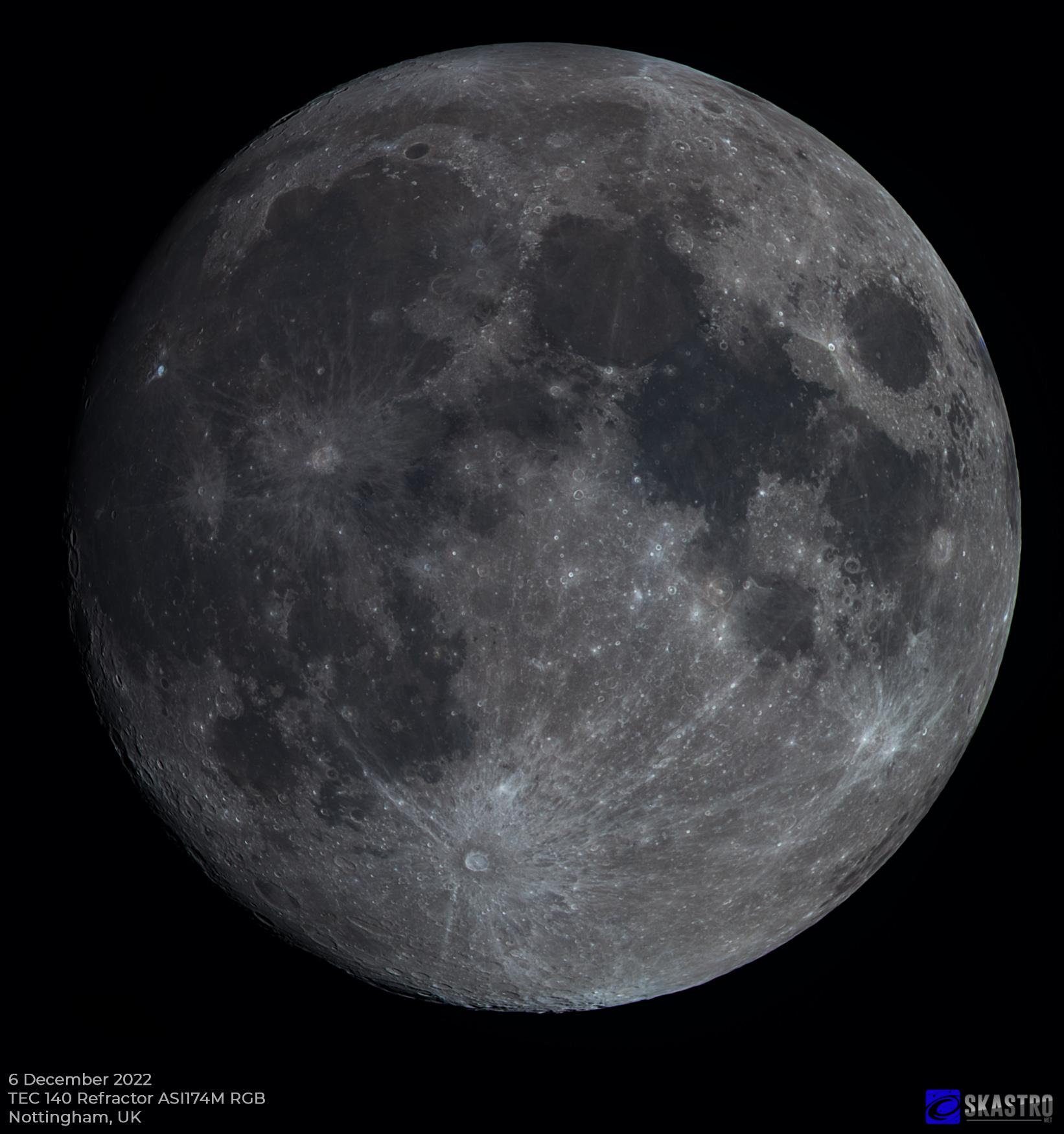
December Moon with TEC140 Refractor
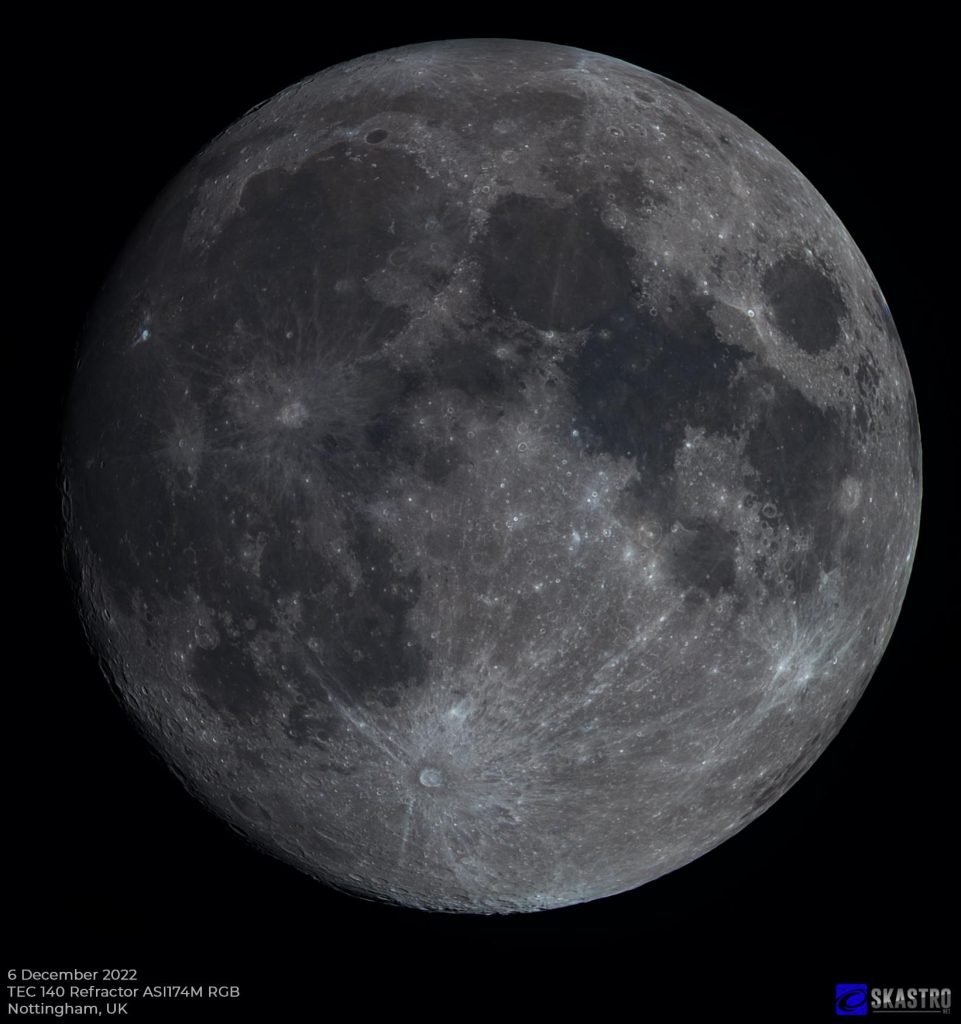
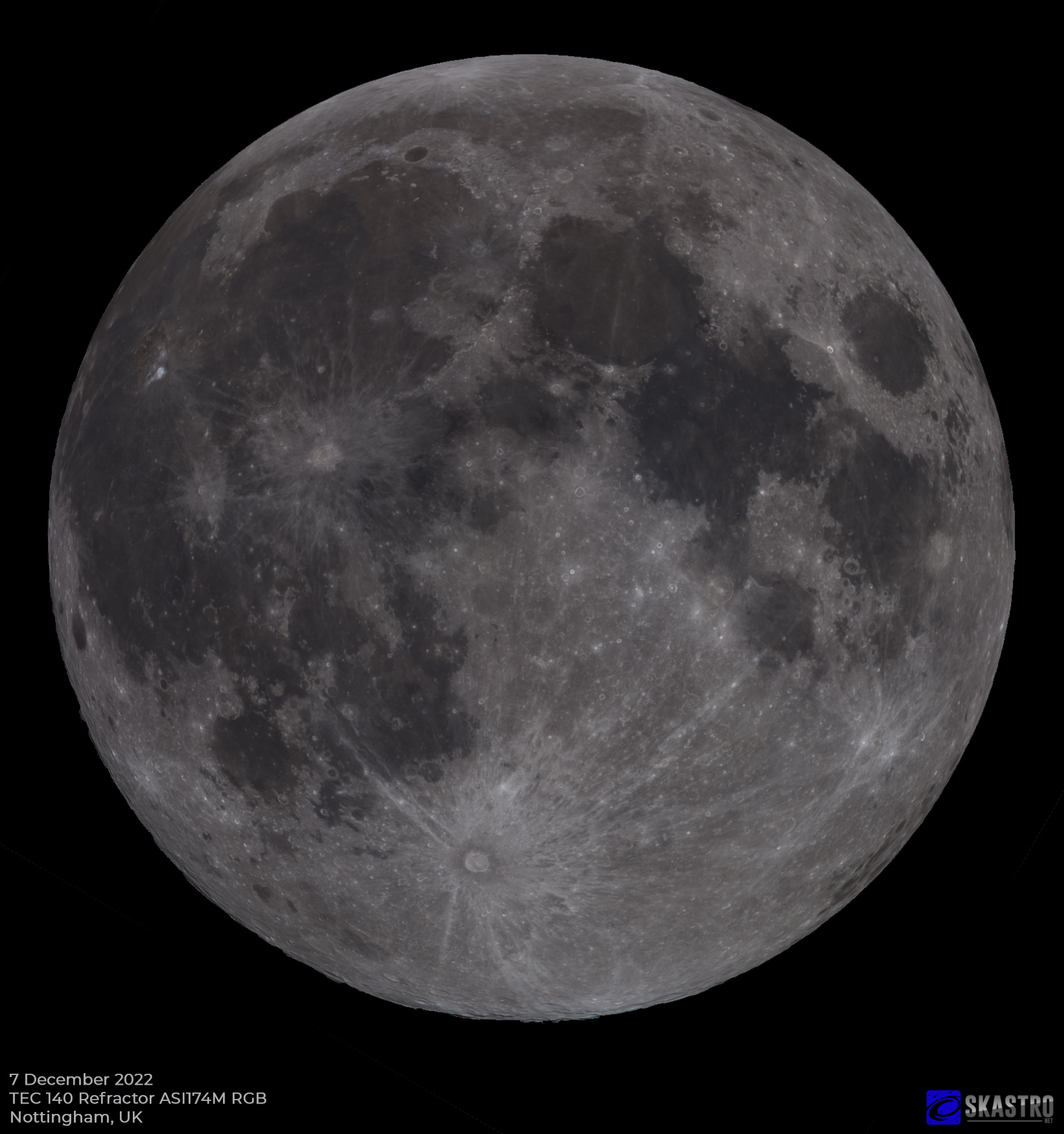
The Moon with my TEC140 December 2022.
Images taken on the 6th and the 7th. The 6th was not quite a full moon and the 7th was just a few hours past full. On the picture on the left you can see that the circle of the moon's disk is not quite full between the 6 and 11 O'clock positions.
Both images were taken with my TEC140 refractor and ASI174M camera through Baader RGB filters.
Each capture was of 5000 frames and the seeing was quite good so that I could utilise the best 50% of frames of each capture run. Because of the Field of View with the combination of the F8 focal length of the TEC140 and the chip size of the AIS174M, each capture run through each filter was comprised of a North and South run. I then stitched the two together in Photoshop.
Weather conditions were extremely cold at about -2C when the captures were taken on the early evenings of the 6th and 7th December. The Moon was very high in Taurus.
From my backyard in Nottingham, UK. My skies are at Bortle 5 in terms of light pollution.
Architecture Walks are Popular, Find One in Your City
Many years ago, I worked for my parents who own a video production company. Because it is a family business, you inevitably end up wearing many hats and being the czar of many different jobs. I mainly managed projects and worked as a video editor. On production, there were times that I was called on to work as an audio tech and was made to wear headphones on long production days. In those days, having a really good set of headphones that picked up every nuance of sound was essential to making sure the client got what they needed. Naturally, my first impression of these headphones is based off of the look of them. They have a classic over-the-ear style that is highlighted by a blue light that indicates the power for the noise canceling. The padding on the ear pieces seems adequate for extended usage periods.
They are wired headphones, but the stereo mini-plug cable is detachable. Something else I noticed right of the bat was the very nice carrying case that comes with them. It has a hard plastic exterior with a soft cloth interior that helps to protect the surface of the headphones from scratches. I never truly appreciated cases for headphones until I started carrying them from place-to-place. Now I can’t imagine not having a case. Once I gave the headphones a thorough once-over exam, I tried them on. As I mentioned, they have a classic over-the-ear style and just looking at them, the padding on the ear pieces seem adequate and the peak of the headband seemed to be a bit lacking, but you don’t really know comfort unless you try on the product. So, I slipped the headphones on and found them to be exquisitely comfortable.
If you look at what you have in life, you'll always have more. If you look at what you don't have in life, you'll never have enough.
Oprah Winfrey
Now that I had the headphones on my head, I was finally ready to plug and play some music. I plugged the provided cable into the jack on the headphones and then the one on my iPhone. Then I called up Pandora. I tend to have a very eclectic music purview and have many stations set up for different moods. the sound quality of these headphones was remarkable. There is an amazing depth of sound and incredible highs and lows that make listening to music a truly breathtaking experience. In order to test how voices sounded, and the overall art of mixing, I pulled up Netflix on my iPad Air and watched a few minutes of a movie to hear all the nuances of the film.
None of them were lost. In fact, I ended up hearing sounds that I hadn’t heard before. Echoes…birds chirping…wind blowing through trees…breathing of the characters…it was very impressive what the headphones ended up bringing out for me.
Best New Studio Headphones: the Ultimate Musician Guide
Just the other day I happened to wake up early. That is unusual for an engineering student. After a long time I could witness the sunrise. I could feel the sun rays falling on my body. Usual morning is followed by hustle to make it to college on time. This morning was just another morning yet seemed different.
Witnessing calm and quiet atmosphere, clear and fresh air seemed like a miracle to me. I wanted this time to last longer since I was not sure if I would be able to witness it again, knowing my habit of succumbing to schedule. There was this unusual serenity that comforted my mind. It dawned on me, how distant I had been from nature. Standing near the compound’s gate, feeling the moistness that the air carried, I thought about my life so far.
Your time is limited, so don't waste it living someone else's life. Don't be trapped by dogma – which is living with the results of other people's thinking.
Steve Jobs
I was good at academics, so decisions of my life had been pretty simple and straight. Being pretty confident I would make it to the best junior college of my town in the first round itself, never made me consider any other option. I loved psychology since childhood, but engineering was the safest option. Being born in a middle class family, thinking of risking your career to make it to medical field was not sane. I grew up hearing ‘Only doctor’s children can afford that field’ and finally ended up believing it. No one around me believed in taking risks. Everyone worshiped security. I grew up doing the same.
‘Being in the top will only grant you a good life’ has been the mantra of my life. But at times, I wish I was an average student. I wish decisions would have not been so straightforward. Maybe I would have played cricket- the only thing I feel passionate about. Or maybe I would have studied literature (literature drives me crazy). Isn’t that disappointing- me wishing to be bad at academics. It’s like at times I hate myself for the stuff I am good at.
When you step out of these four walls on a peaceful morning, you realize how much nature has to offer to you. Its boundless. Your thoughts, worries, deadlines won’t resonate here. Everything will flow away along with the wind. And you will realize every answer you had been looking for, was always known to you. It would mean a lot to me if you recommend this article and help me improve.
The Moon TEC140 Refractor/ASI174MM
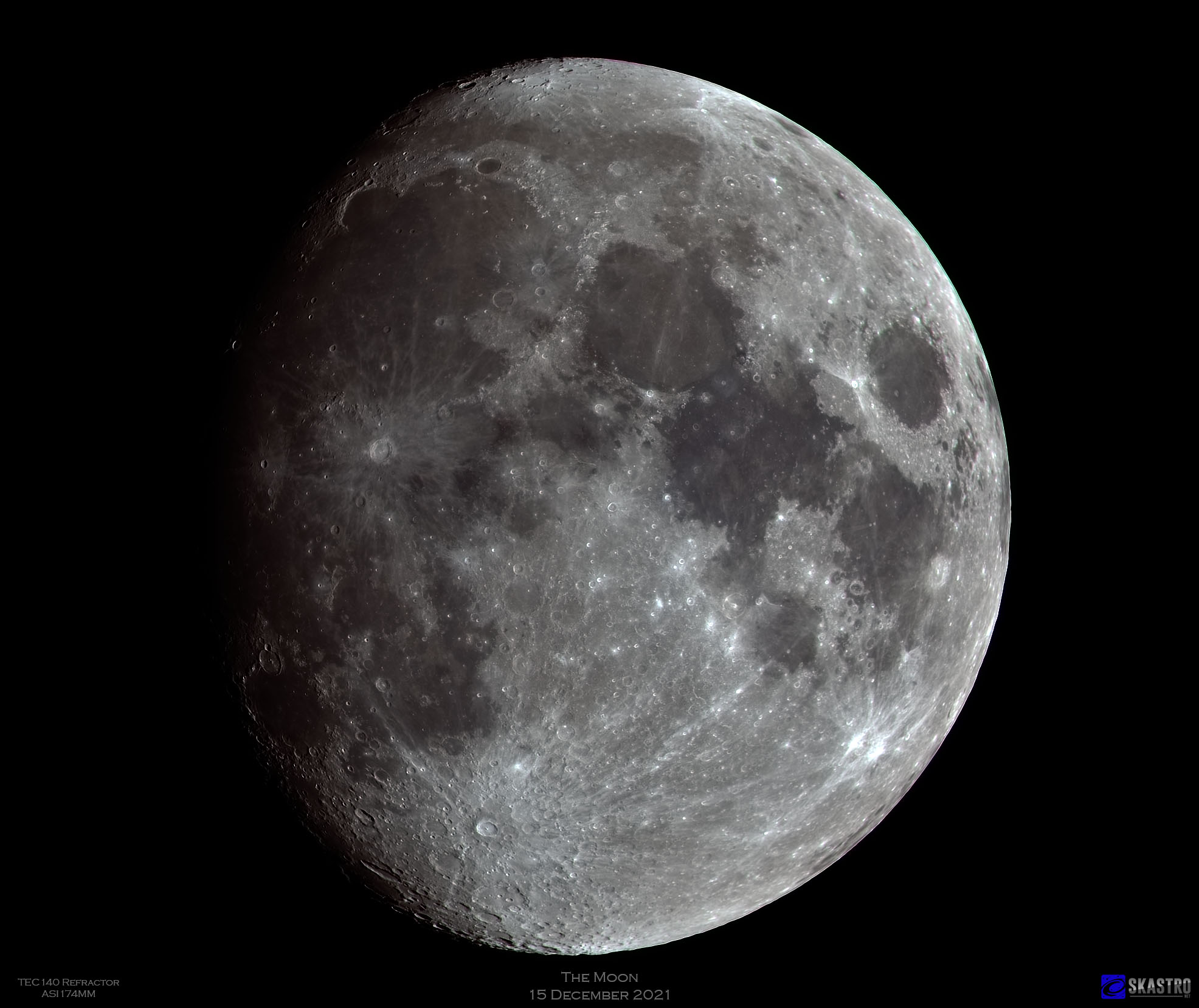
This is a RGB image of The Moon captured at about 20:00 on 15th December 2021 from my observatory in Nottingham using my TEC140 refractor and ASI174MM camera.
I captured two capture runs in each filter and stitched the resultant images together in Photoshop. Each video capture file was 9GB in size.
Sh2-171 with FSQ85 Telescope and G2-8300 CCD camera
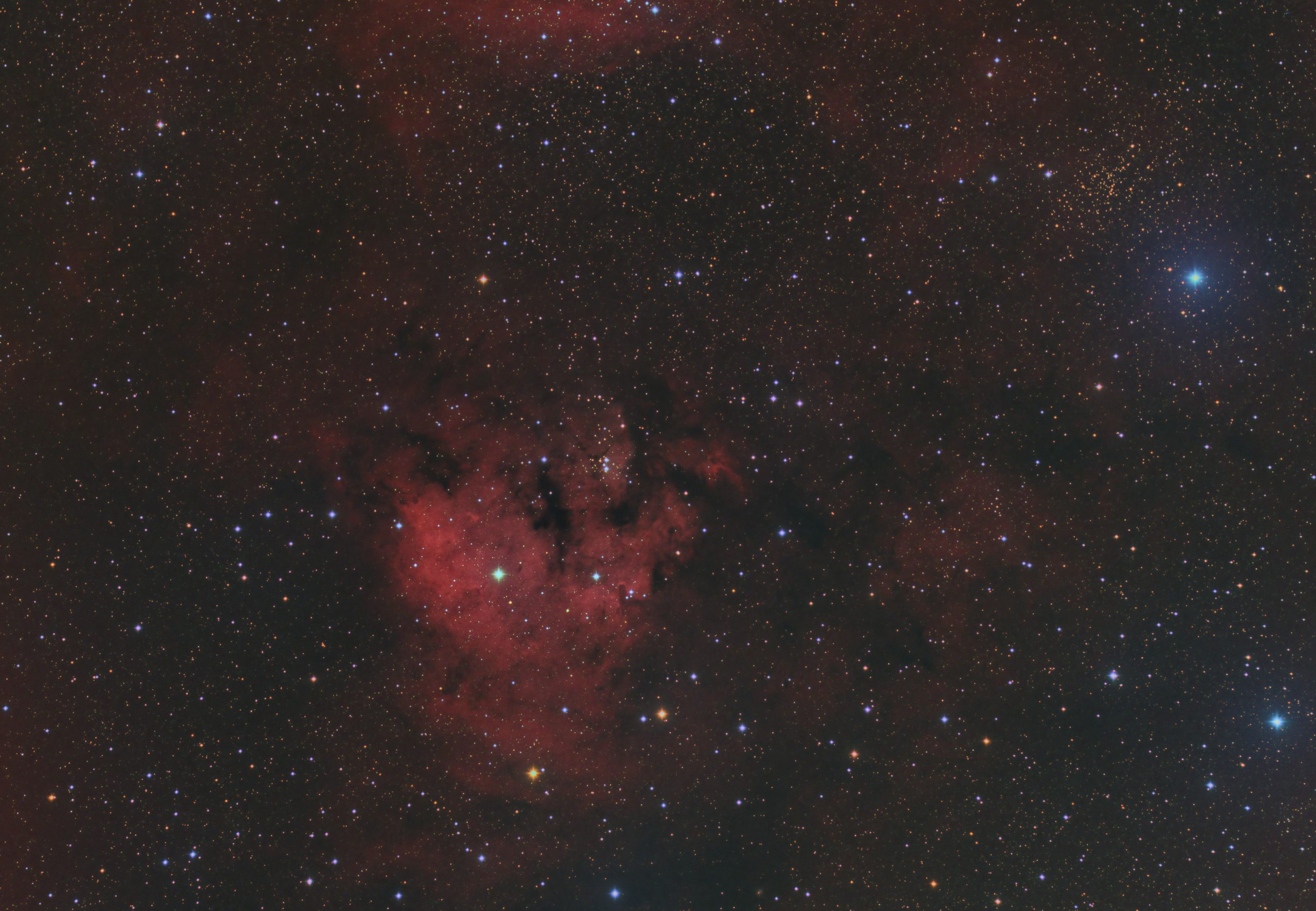
Sh2-171 is a star forming region in the constellation of Cepheus in the far northern hemisphere of the sky.
Imaged here with Takahashi FSQ85 and G2-8300 with Astrodon HaRGB filters.
M33 Galaxy in Triangulum FSQ85 with G2-8300
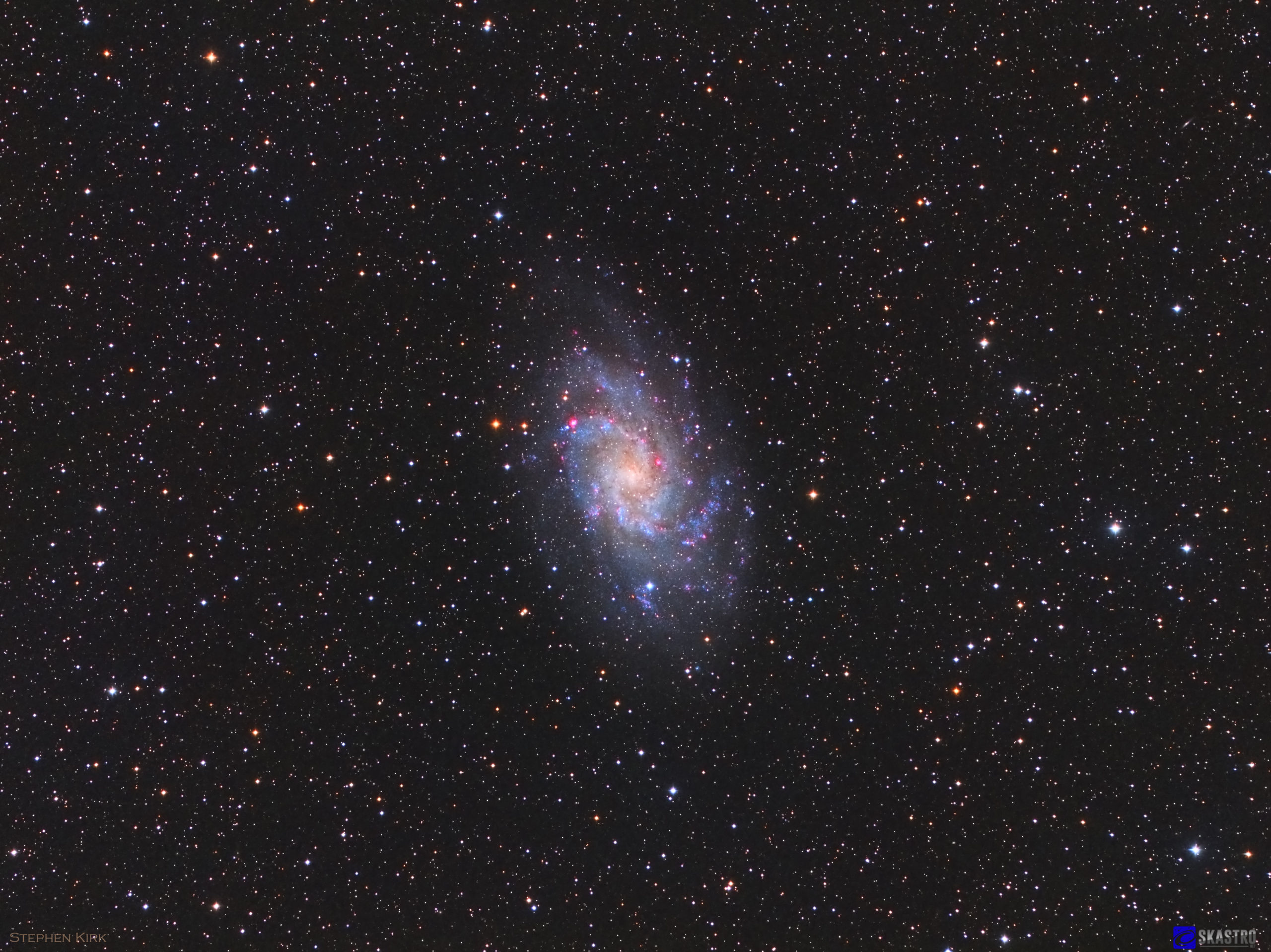
M33 is a galaxy about 2.8 - 3 million light years away in the constellation of Triangulum. Along with M33, it is one of the Local Group of galaxies with which our own Milky Way galaxy shares the local universe. M33 is the most distant object that the human naked eye can see, appearing as a ghostly white smudge on a very dark night from clear skies. It is a magnificent spiral galaxy about half the size of our own galaxy and because of its close proximity to us it appears very large in our skies and is am oft-photographed object by many, myself included.
I've imaged M33 multiple times. For example, with the same FSQ85 telescope here and also at a closer image scale with the TEC140 refractor here.
This time I have set the galaxy in a slightly wider field by utilising the FSQ85 0.73 reducer. I used the Moravian G2-8300 CCD camera and Astrodon RGB filters all binned 1x1. I did not use a separate luminance channel.
The data collected for the image was collected from my backyard observatory in Nottingham, UK on 4/5 and 8th of November 2021 and is a modest data set of 15 x 300s exposures in each of the three filters to give a total integration of nearly four hours. However, because of the proximity of M33 and its brightness this data set has revealed a very pleasing, detailed and colourful result. What do you think?
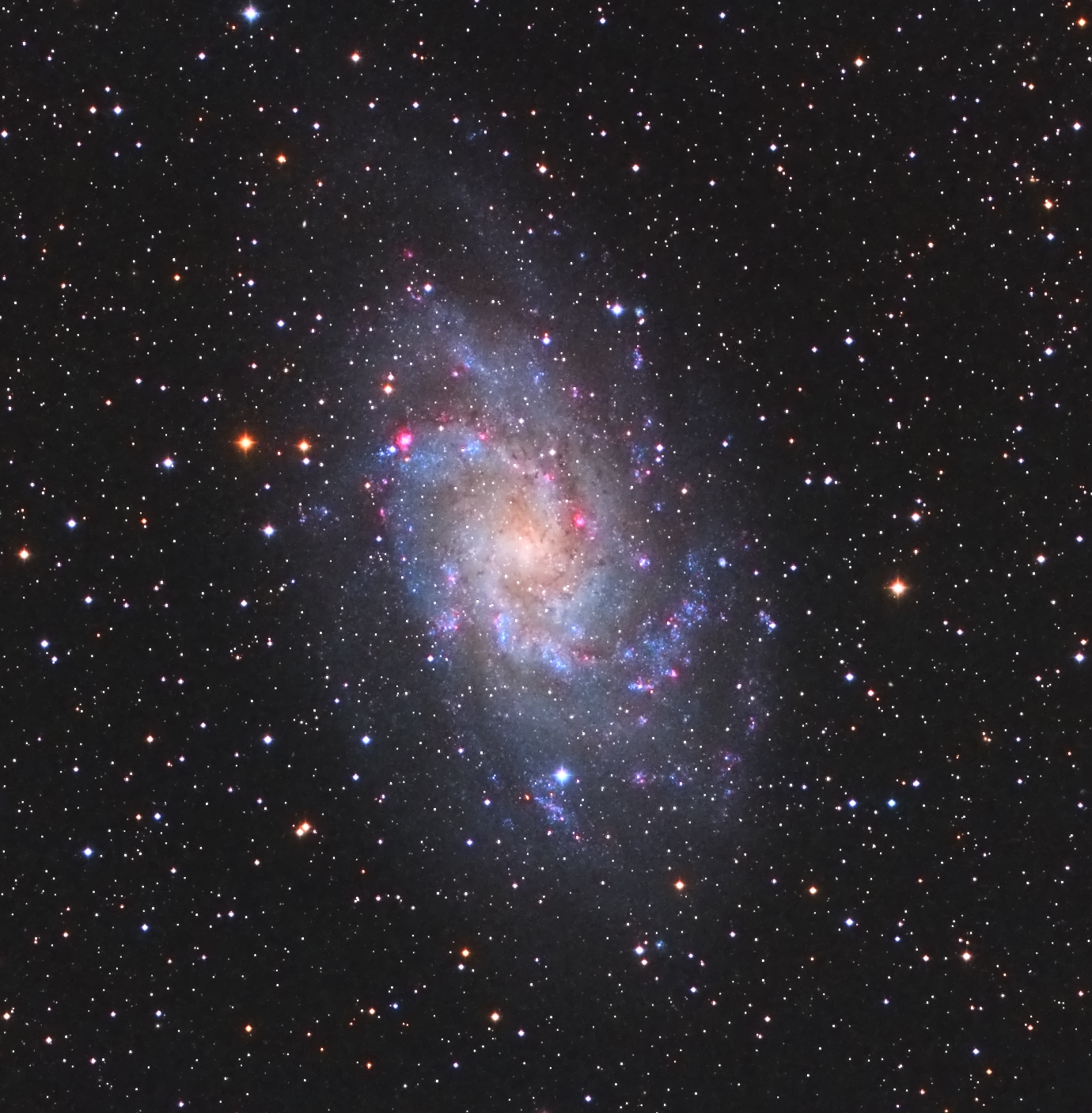
Image data captured with NINA automation software and processed in PixInsight.
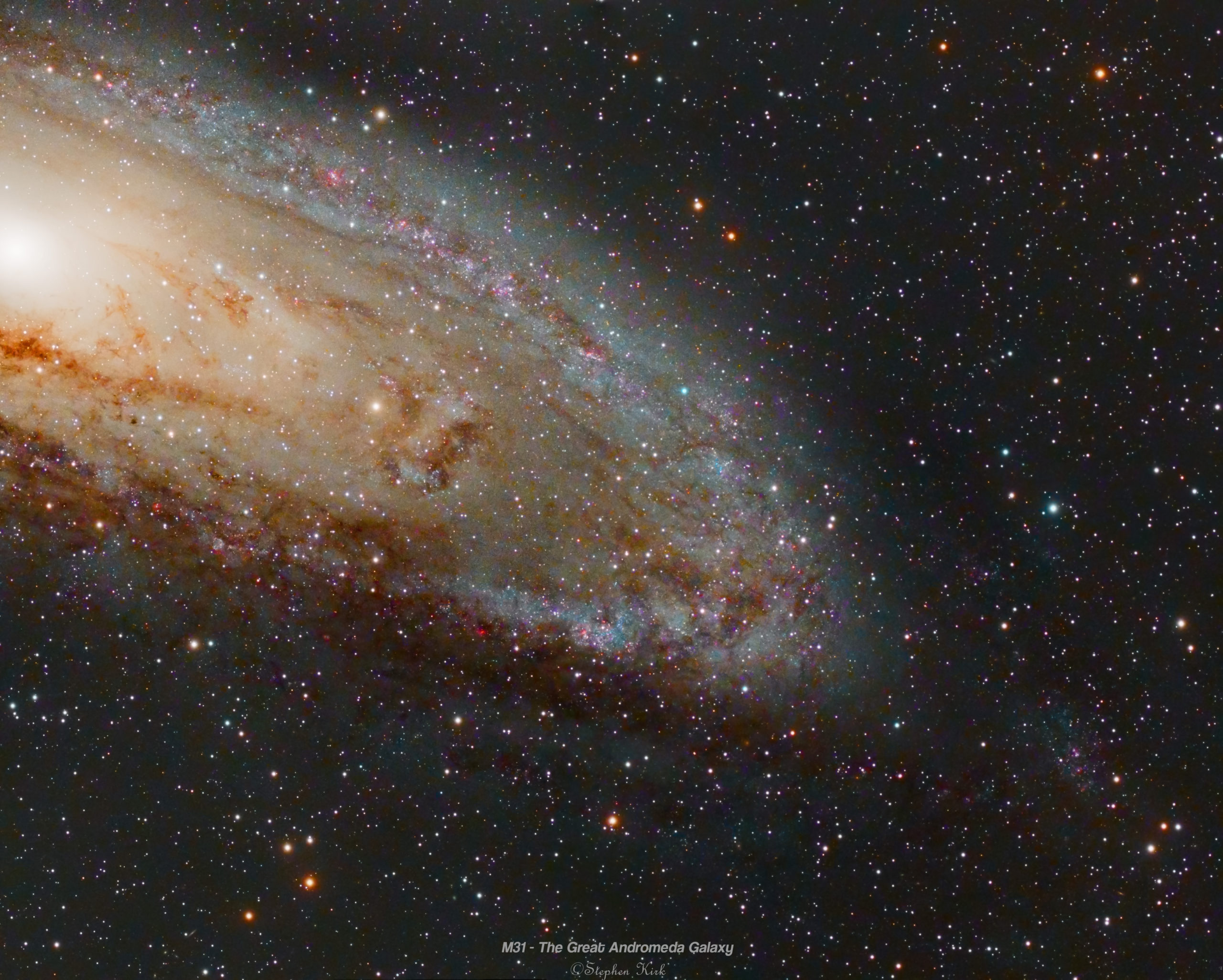
Close Up Study of The Great Andromeda Galaxy M31 with TEC140 and FSQ85
M31 is one of the most favoured and popular imaging targets in the night sky; it is bright, large and very photogenic. I have imaged this galaxy numerous times, for example, in this LRGB version and in this OSC version. Since the galaxy is so large, each of these images is set in a wide field, one of 3 degrees horizontally and 2 degrees vertically across the field of view which equates to six times the diameter of the full moon. Many newcomers do not appreciate how large these objects are in the sky. Large but VERY dim!

The above image is at a resolution of 4.16arcsec/pixel. On such a large object as M31 this allows the entire galaxy to be imaged in one field of view on a wide field refractor such as the FSQ85 but does not allow for a "closer in" and more detailed image.
In order to do the latter, I created a mosaic of four panels to image the right hand side "west" of the galaxy at the greater resolution with my TEC140 and Atik 460. All I needed is the luminance data and then I could use this to blend with the lower resolution OSC data at the top of this post in Photoshop.
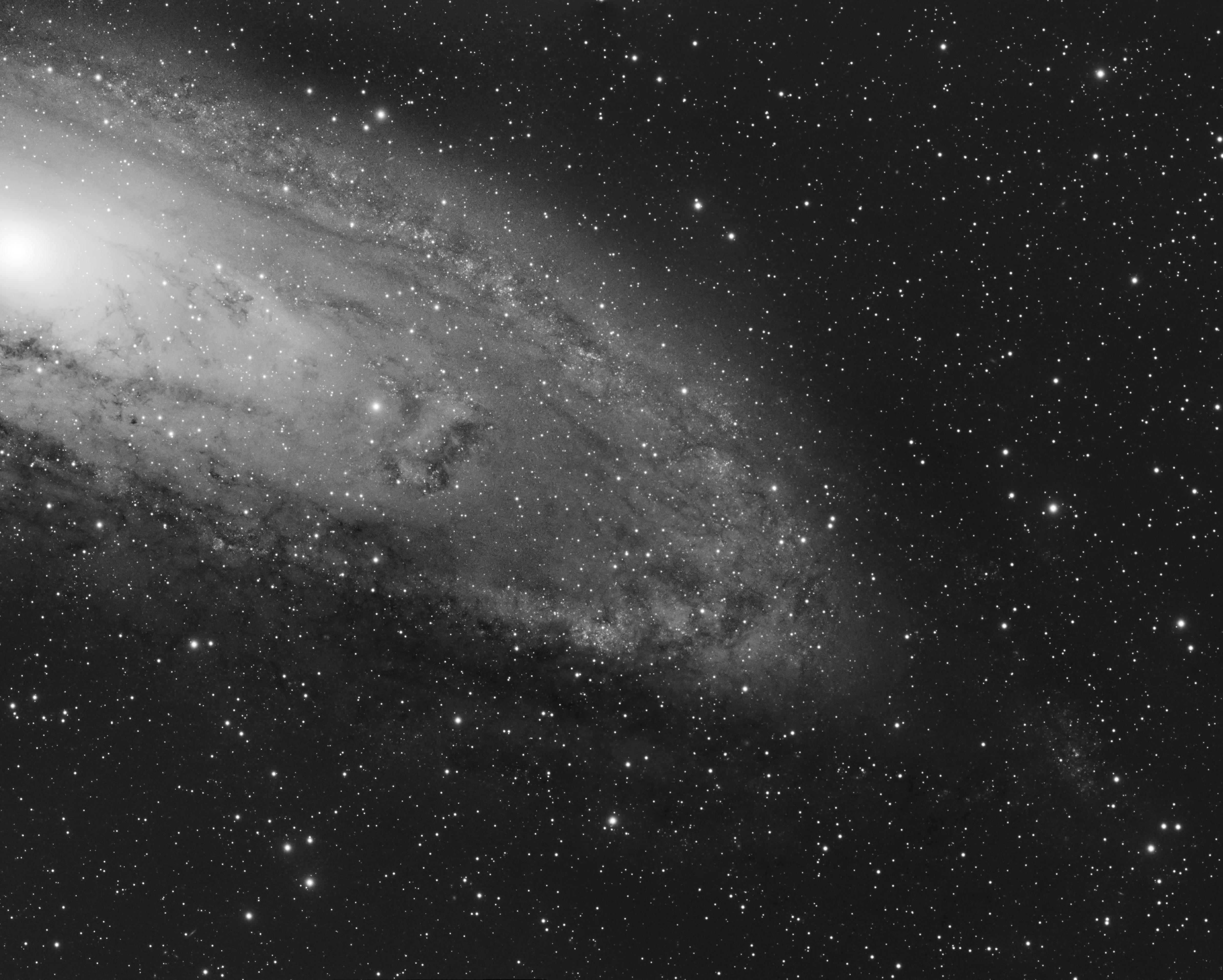
Each of the four luminance panels is a total of 90 minutes of 300 sec exposures captured with the TEC140 and Atik460 CCD camera with a Astrodon luminance filter. The luminance image above is a total of six hours of imaging time. I then processed these four images and knitted them together in PixInsight. I then registered this four-panel luminance with the OSC data at the top of the post and then used it as a luminance layer to give the best of both worlds; the colour of the OSC/FSQ85 wide field image with the detail of the TEC140/Atik460 image!

I hope you like it! :)