
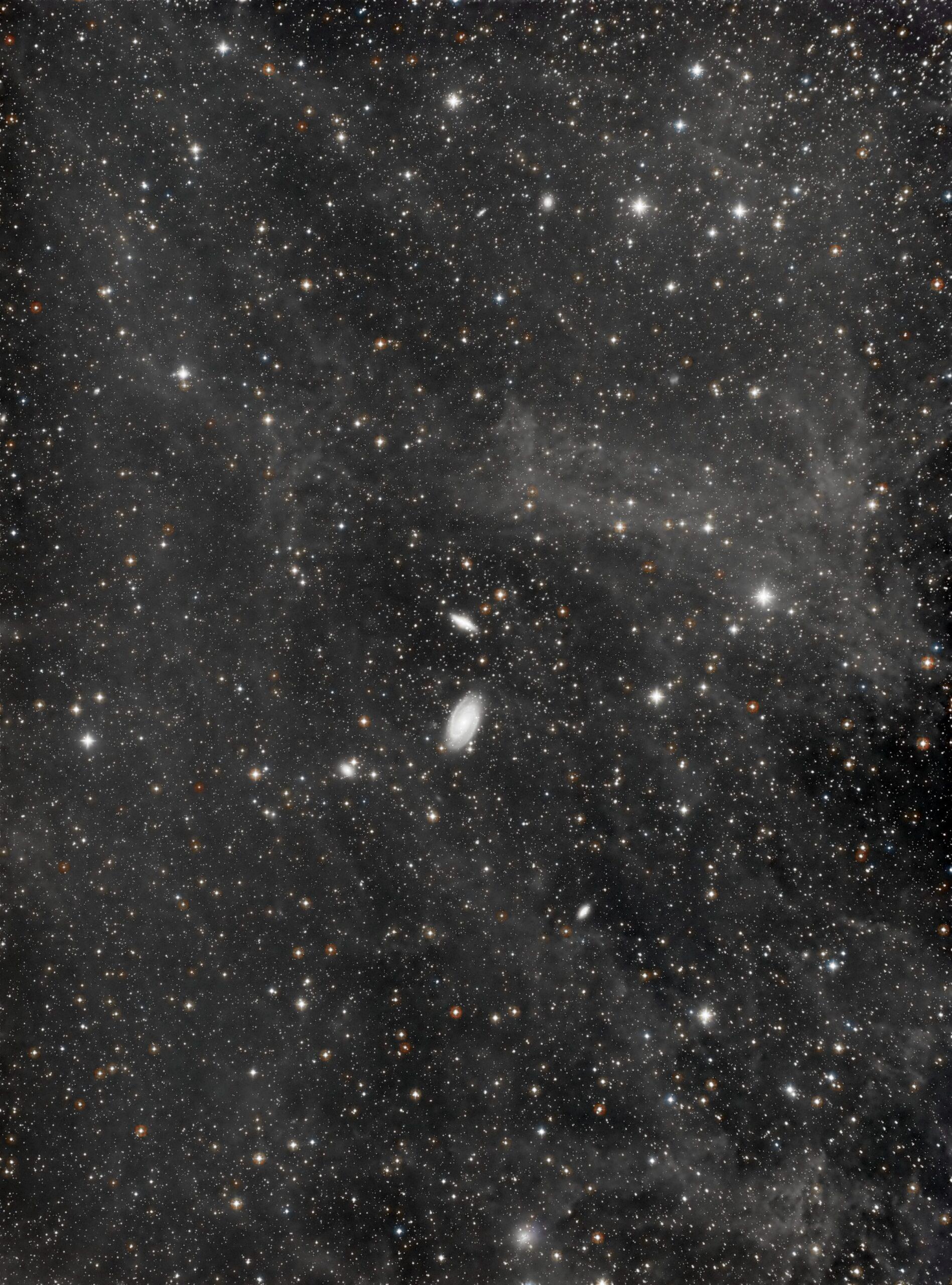
M81 / M82 Group and IFN with Samyang 135mm
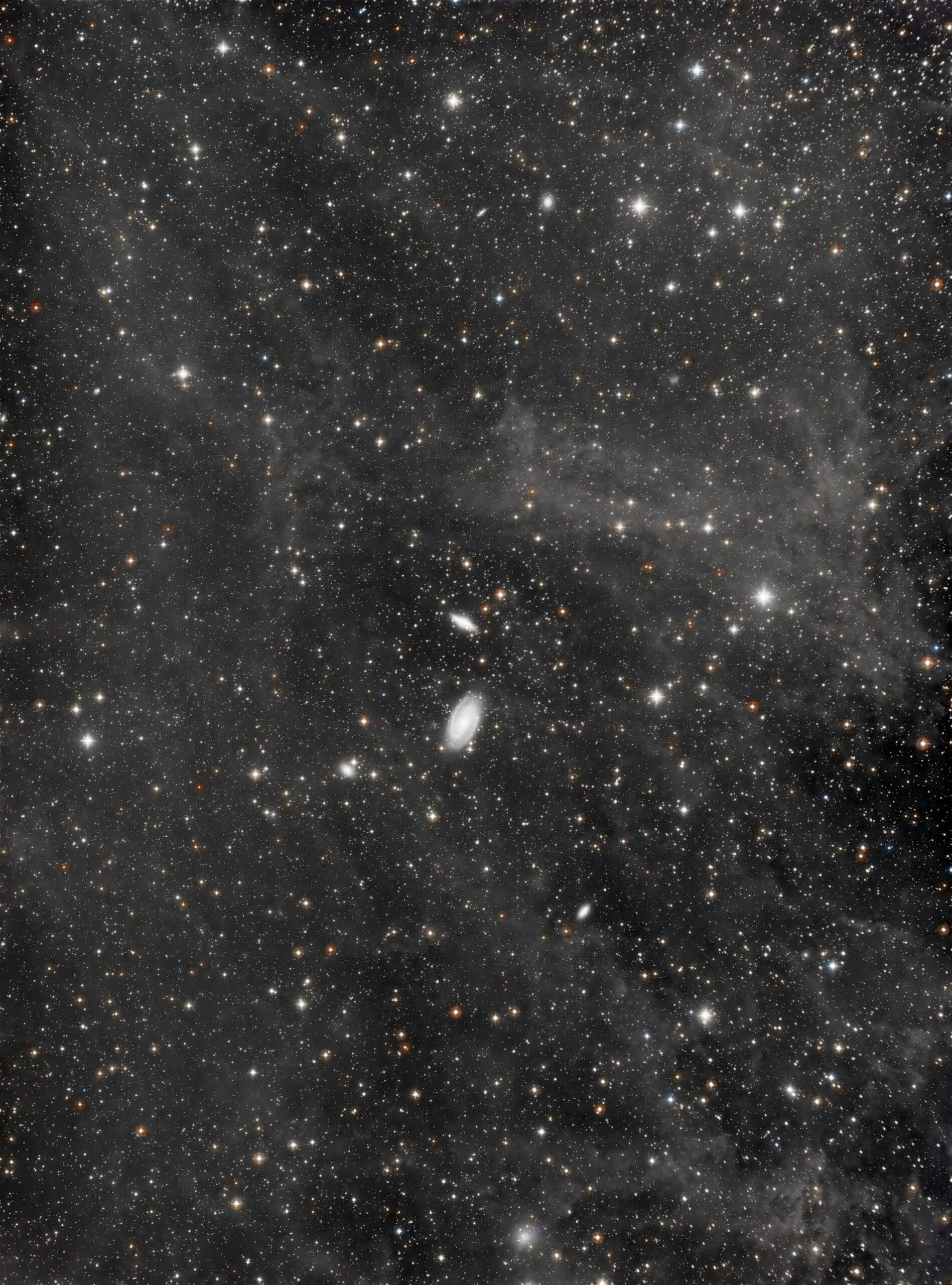
The M81 and M82 galaxies in Ursa Major showing the background Integrated Flux Nebula.
These are a well known and popular pair of galaxies and can be seen with binoculars. I've imaged them here in a very wide field with a DSLR camera lens - the Samyang 135mm connected to a G2-8300 CCD camera and filter assembly using Astrodon LRGB filters
The cloudy dust that is visible is not passing cloud! Rather, it is the extremely faint dust and gas that exists in the space between the galaxies - in intergalactic space. Hence it is called the Integrated Flux Nebula or IFN. It is extremely faint and is only visible with very long exposures and integration times. Careful processing is needed not to inadvertently cut it out of the image.
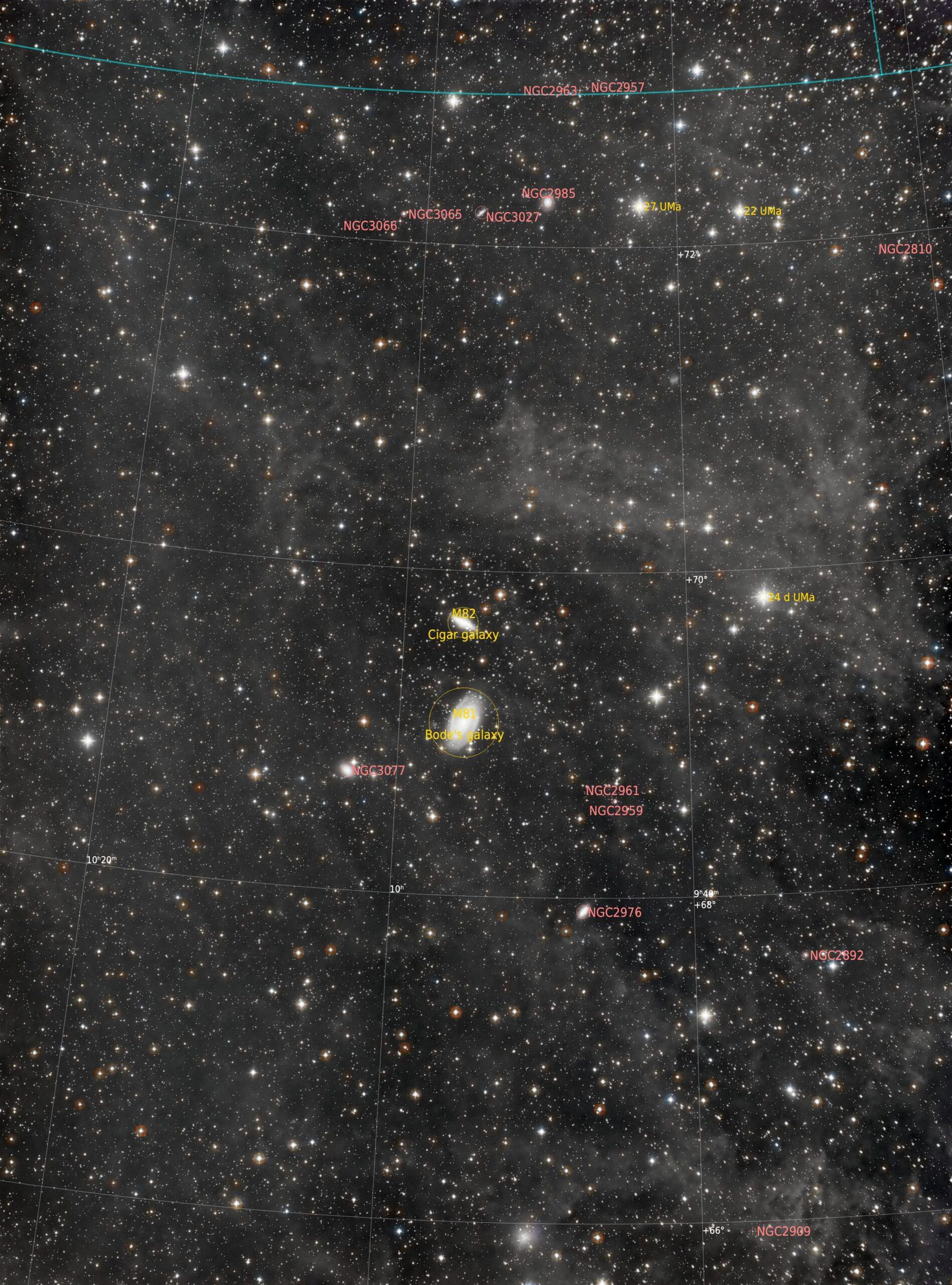
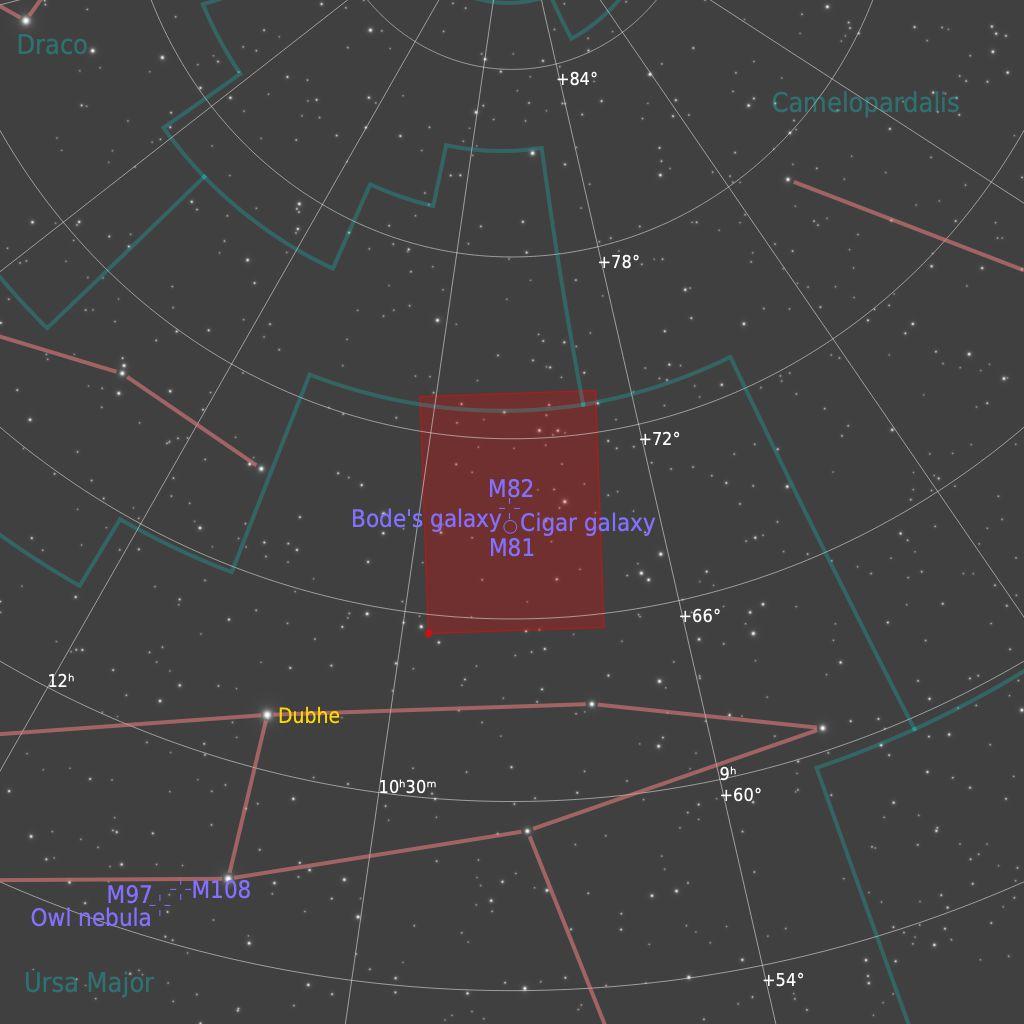
Technical Data
Imaged in my back yard in Nottingham in March 2020 with Samyang 135mm and G2-8300 CCD camera on a NEQ6 mount. I used a separate guide scope. I only got round to processing this data set in 2023 having completely forgotten about it!
All exposures 300 seconds in length and binned 1x1.
Lum > 24 ; Blue > 15; Red > 15; Green > 14
This gives a total of Lum > 120mins; Blue > 75mins; Red > 75 mins; Green > 70 mins
For a total integration (exposure) time of 5 hours and 40 minutes for the image.

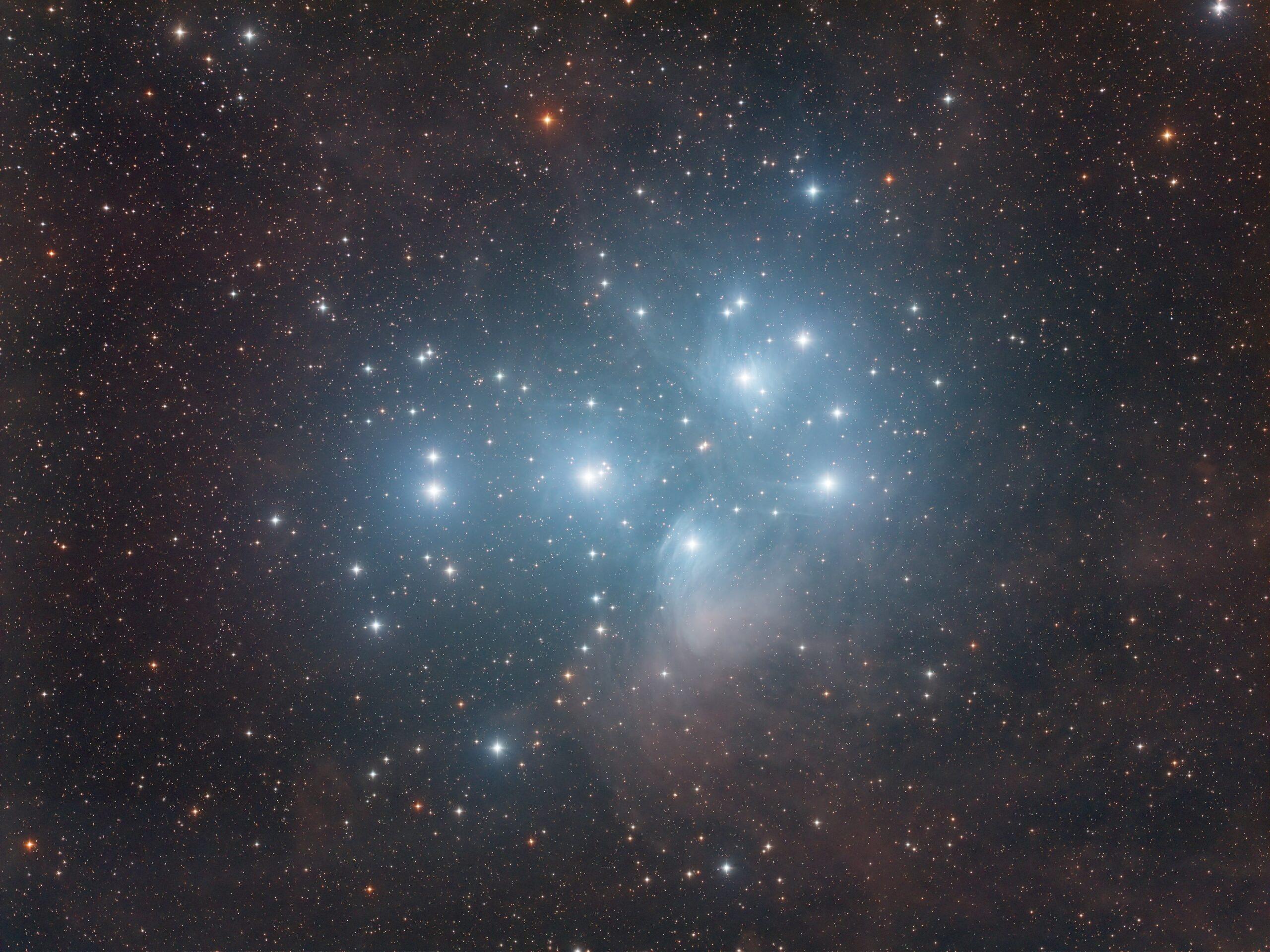
The Pleiades (M45) with FSQ85 and G2-8300
The magnificent Pleiades, known to many as the Seven Sisters, is an open cluster in the constellation of Taurus. The Pleiades have been known since the dawn of antiquity and even some cave paintings from 30000 years ago depict them on cave walls.
The cluster is 442 light years away and they are about 20 light years across. The exact distance has been a source of debate amongst astronomers for many years but the matter was recently settled using parallax data from the Gaia satellite.
Technical Data
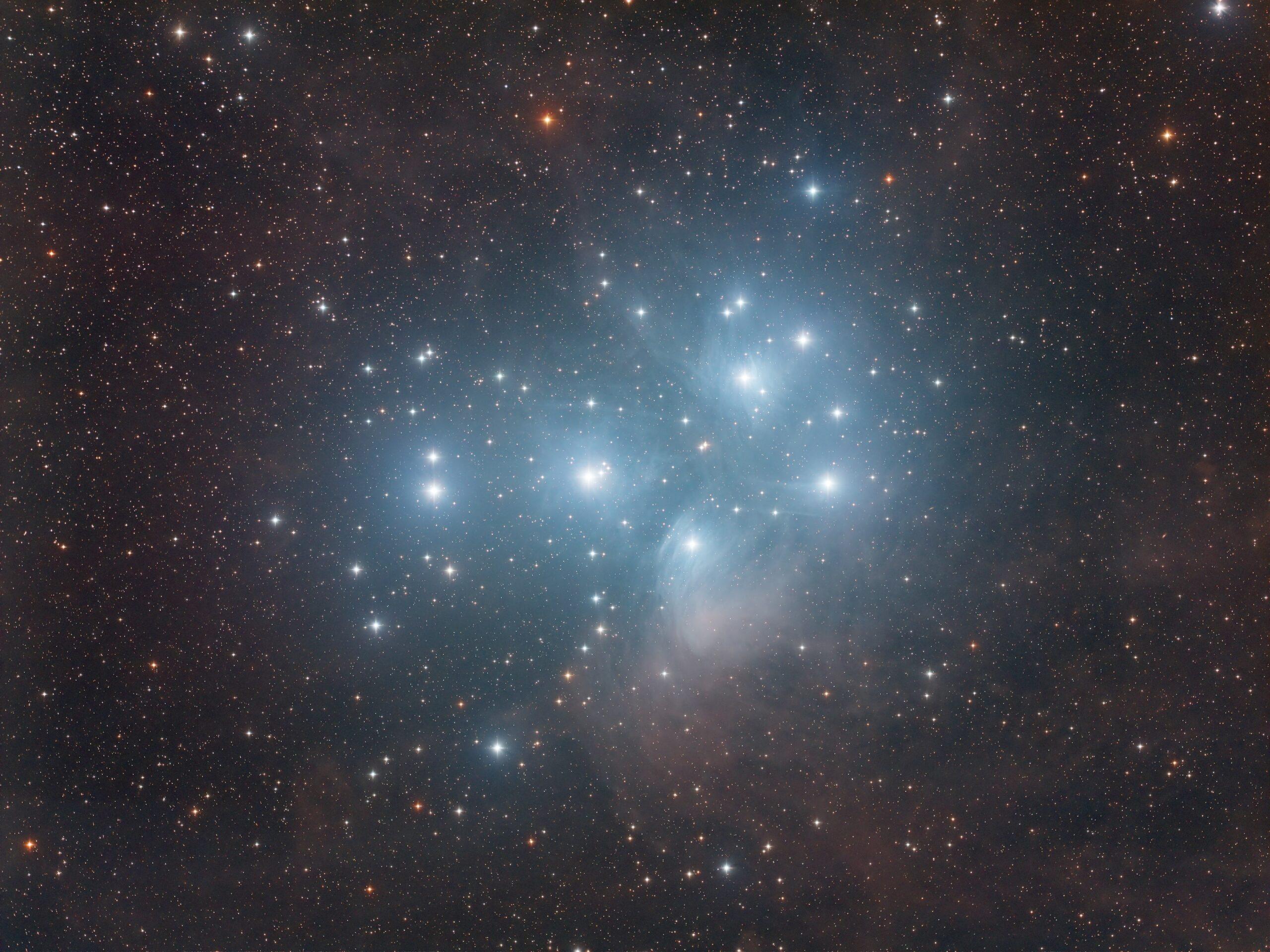
Imaged with Takahashi FSQ85 refractor and G2-8300 CCD camera with Astrodon E-series RGB filters. It consists of 20 x 300 second exposures in each of those filters to give over 90 minutes in each of the three channels for a combined integration of about four and a half hours. As is normal with any type of cluster, I did not bother with a separate luminance channel and instead bin the RGB all at 1x1. This amount of exposure is necessary to bring out the faint dust clouds through with the star cluster is moving.
Image data acquired on November 2021 with NINA imaging software and processing was done with PixInsight and Photoshop. Very little in the way of image processing was done on the image. After preprocessing all I did removed the background gradient, used a bit of deconvolution and then stretched the image. I then applied a bit of noise reduction and a tiny bit of colour saturation. This shows the importance of a good data set; you hardly need to push the data that hard in processing to get a good result.
I have imaged M45 before with the same equipment combination that you can see here. However, on that image my exposures were shorter and I did not get as much of the dusty background that I have managed to achieve with the picture on this page.
I hope you like it!