
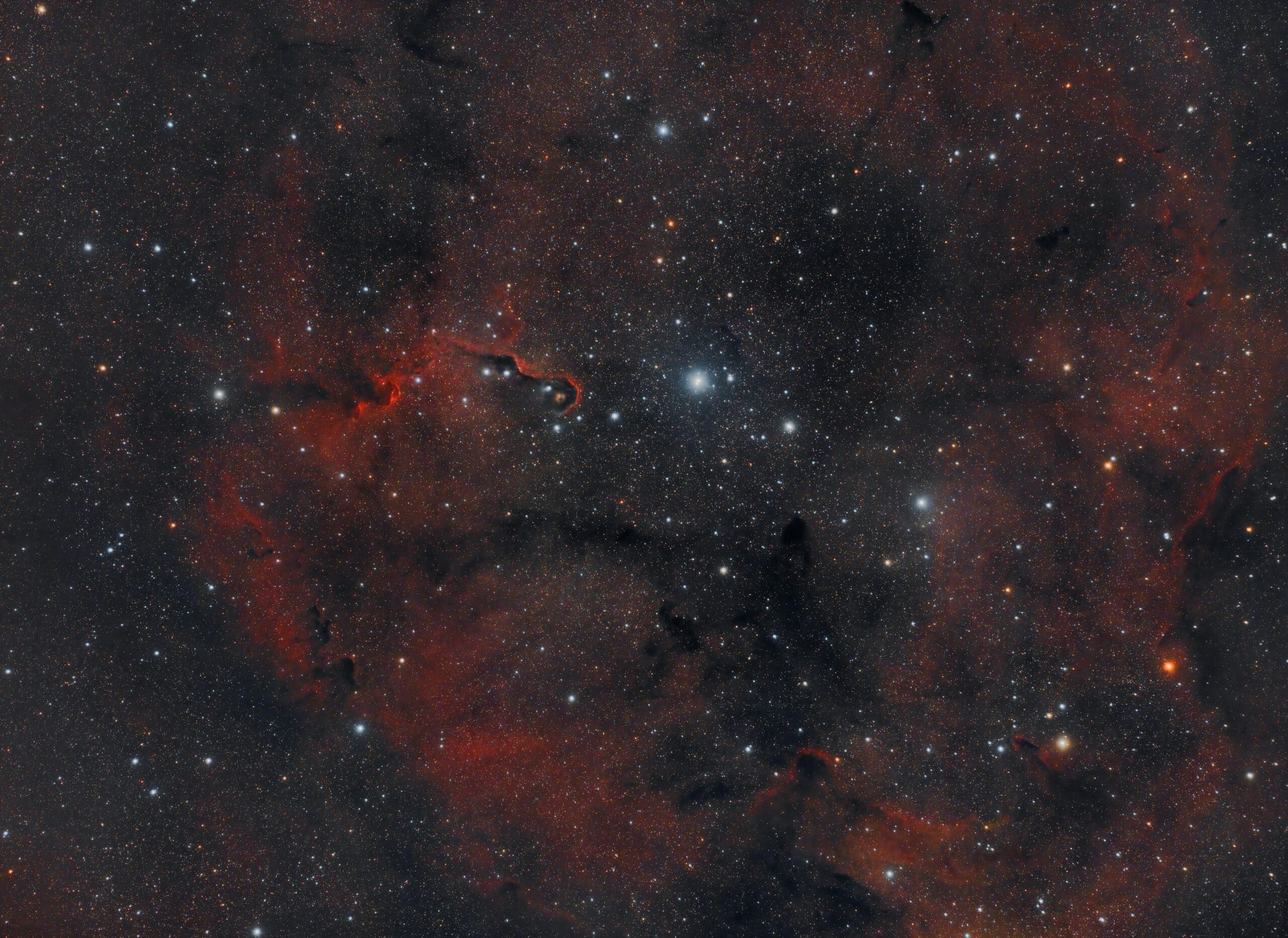
IC1396 Nebulae In A wide Field
IC1396 is a fabulous and well known nebula complex in the Far Northern constellation of Cepheus and is about 2400 light years distant. It is comprised of a huge cloud of excited hydrogen gas known as a HII region (pronounced H-two). Some nice features include the Elephant's Trunk nebula embedded in it.
Full resolution (8Meg) image here (opens in a new tab):
https://thekirkshouse.com/wp-content/uploads/2024/01/IC_1396_WF.jpg

Technical Details
Imaged from my back yard in Nottingham, UK on the nights of 15 and 16th October 2023 when almost directly overhead. It consist of 54 x 240s exposures with a QHYCCD One Shot Colour (OSC) camera with a gain of 30 and offset of 0 through a Takahashi FSQ85 telescope with the 0.67 focal reducer/flattener.
Sky conditions and transparency were both poor, as usual for the UK in all but the rarest nights of seeing.
I hope you like it :)

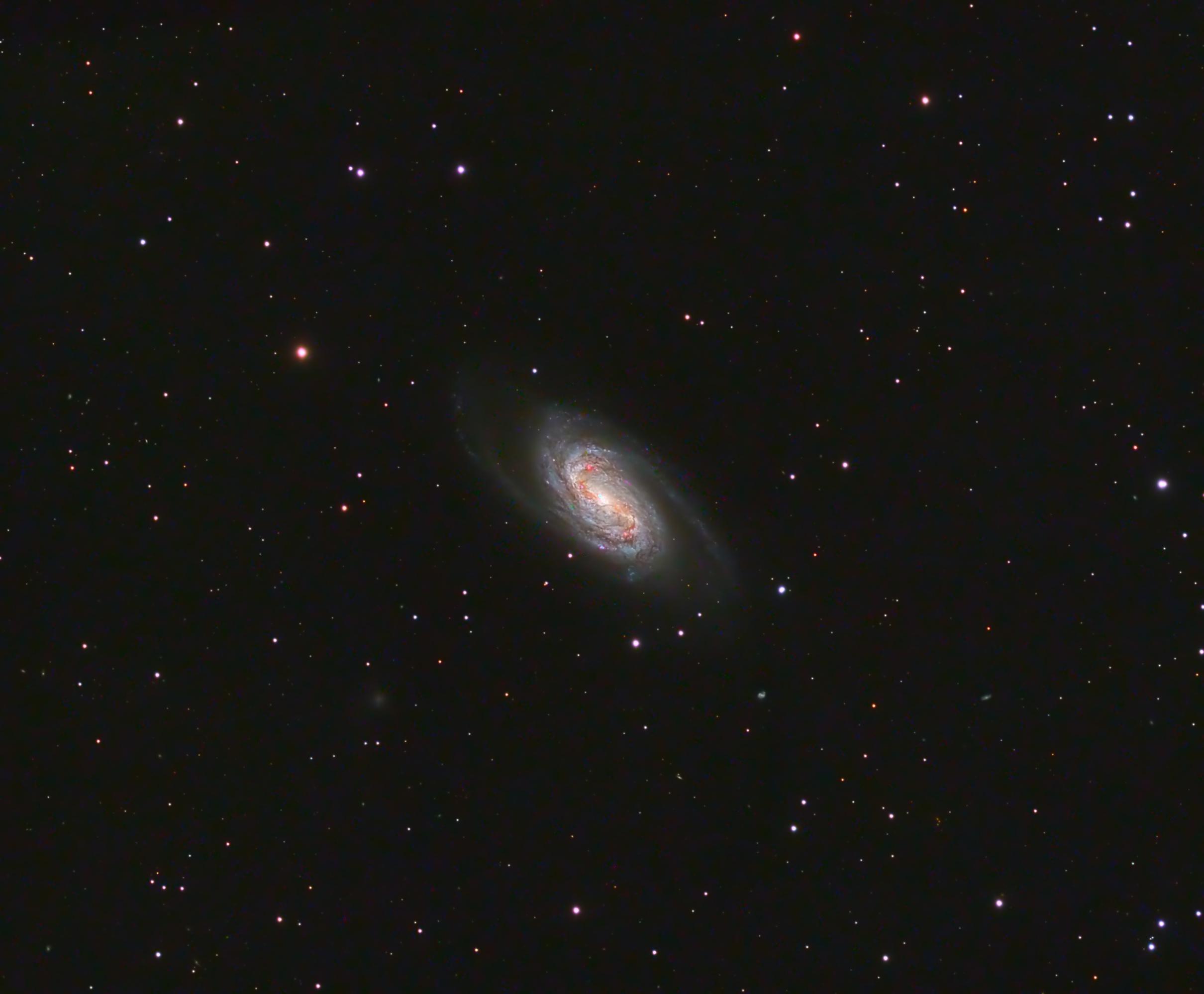
NGC 2903 Spiral Galaxy
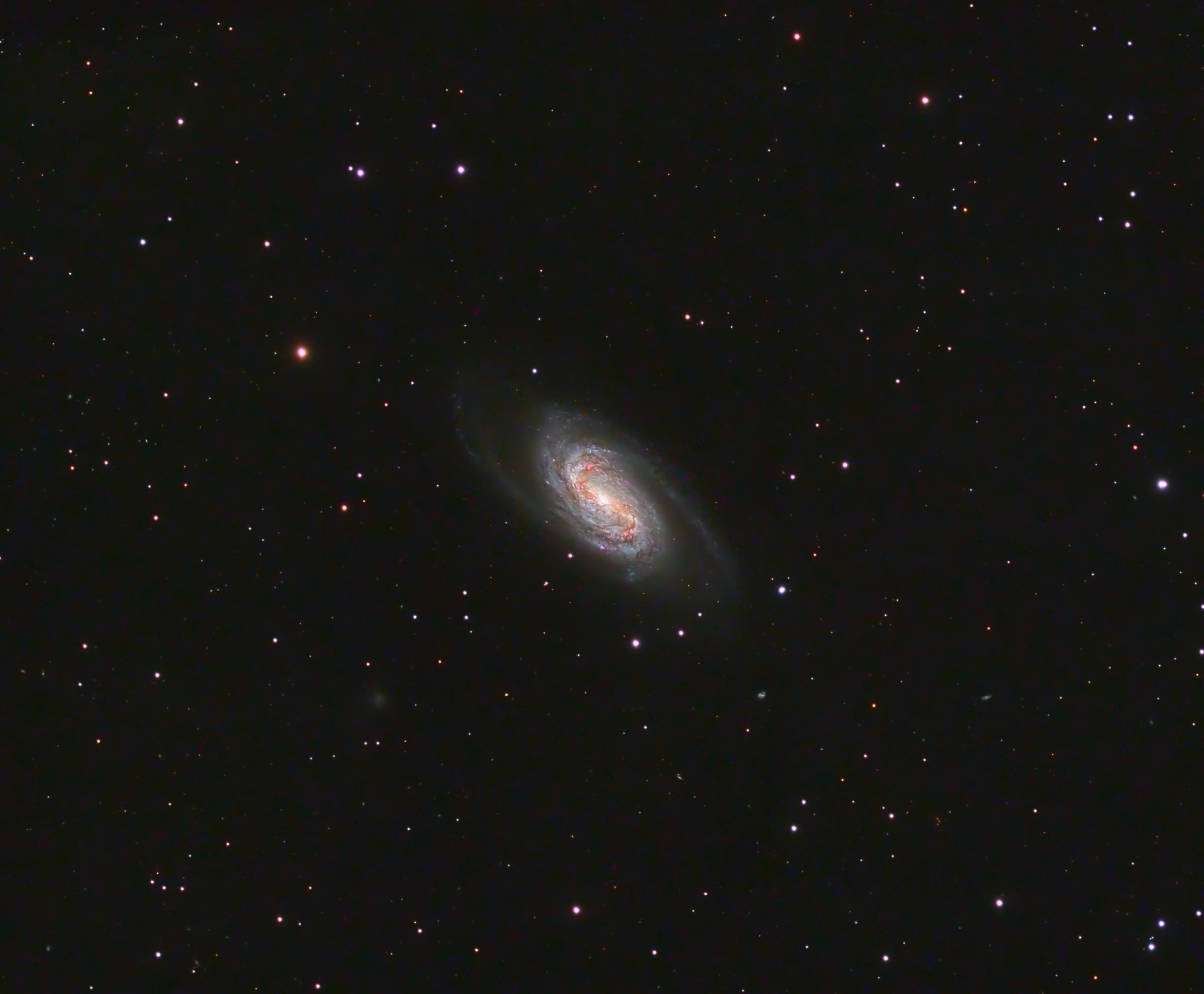
A magnificent spiral galaxy with TEC 140 and Atik 460
Many astronomers consider NGC 2903 the best and brightest galaxy that isn't included in the famous Messier list and are surprised Messier himself didn't include it in his catalogue. It is very photogenic and brighter than several other galaxies that are included in Messier's list such as M65 and M66. It is located in Leo to the right of the "sickle" of Leo and is about 30 million light years distant.
Full resolution image here (opens in a new tab). If you open the full resolution image you will see many tiny, remote galaxies in the depths of the Universe.
Technical Detail
Imaged with my TEC140 telescope and Atik 460 CCD camera with Astrodon E series LRGB filters on the 25th and 26th March 2022. The data set is as follows with the luminance binned 1x1 and the RGB at 2x2:
Lum 24 x 300s ; Red 12 x 180s ; Blue 9 x 180s ; Green 34 x 180s
(yes, I know that's a lot of Green! I overdid the green because I misconfigured the NINA automation software but decided to throw it all into the image anyway).
This gives a total integration time of four hours and 45 minutes in total exposure.
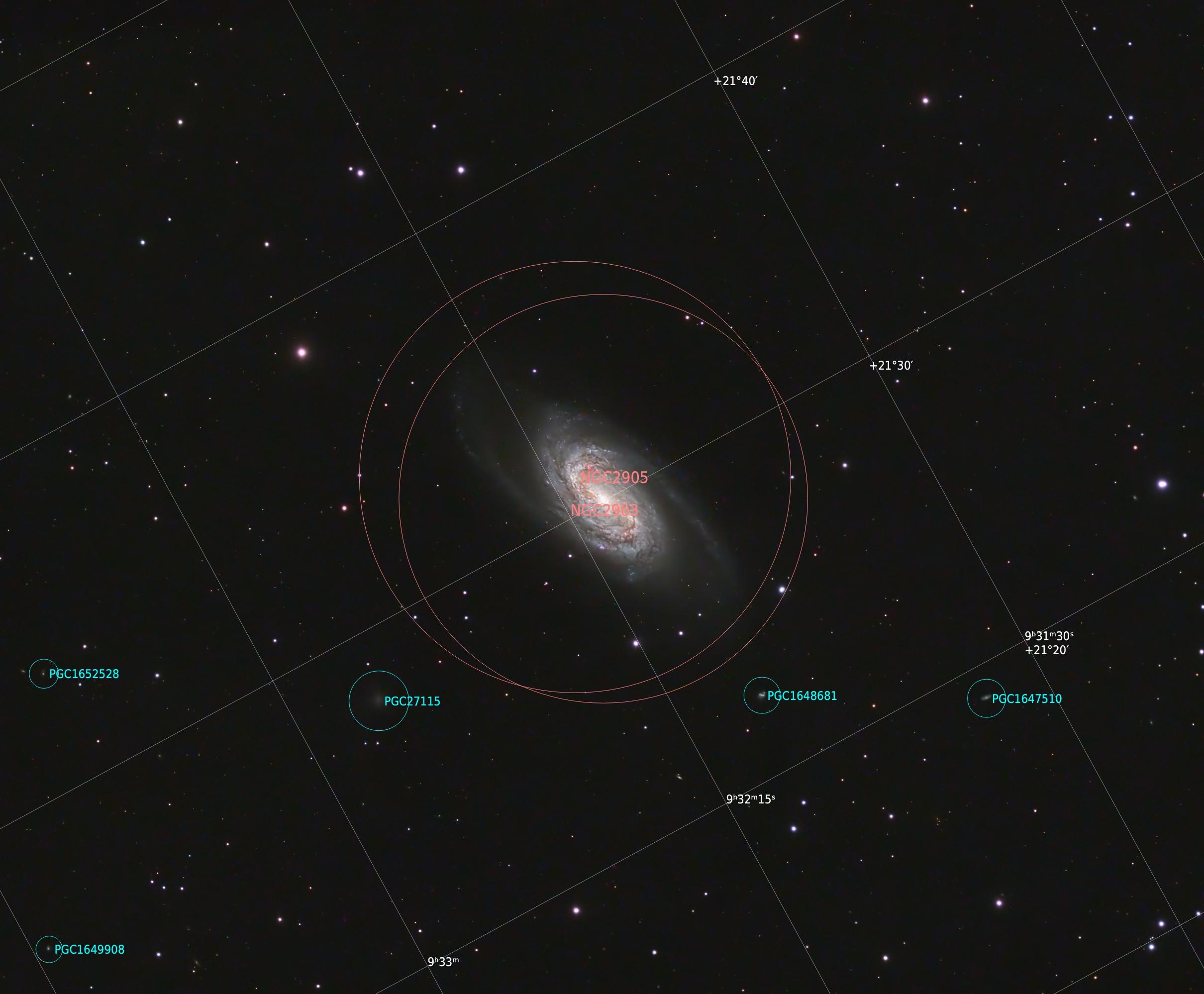
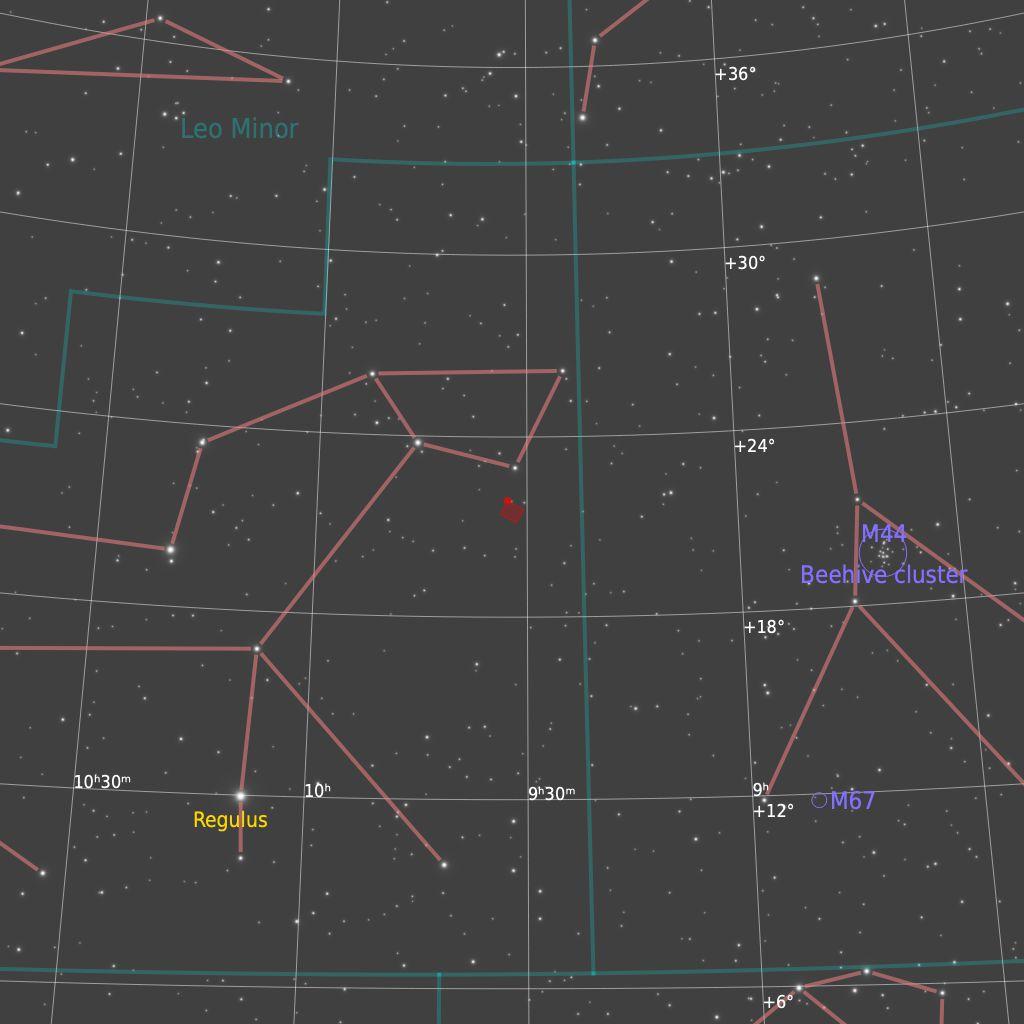
Developed in PixInsight for all pre and post processing. Since it is a good data set all I did after preprocessing was combine the master LRGB files, apply DBE to remove background gradients (and since I am in Bortle 5 sub-urban neighbourhood there are security lights going on and off all night). I then applied Blur Exterminator and some noise reduction. I then stretched the image and applied a bit of colour saturation. That's all I did. It took about 45 minutes in total and most of that time was waiting for WBPP to complete.
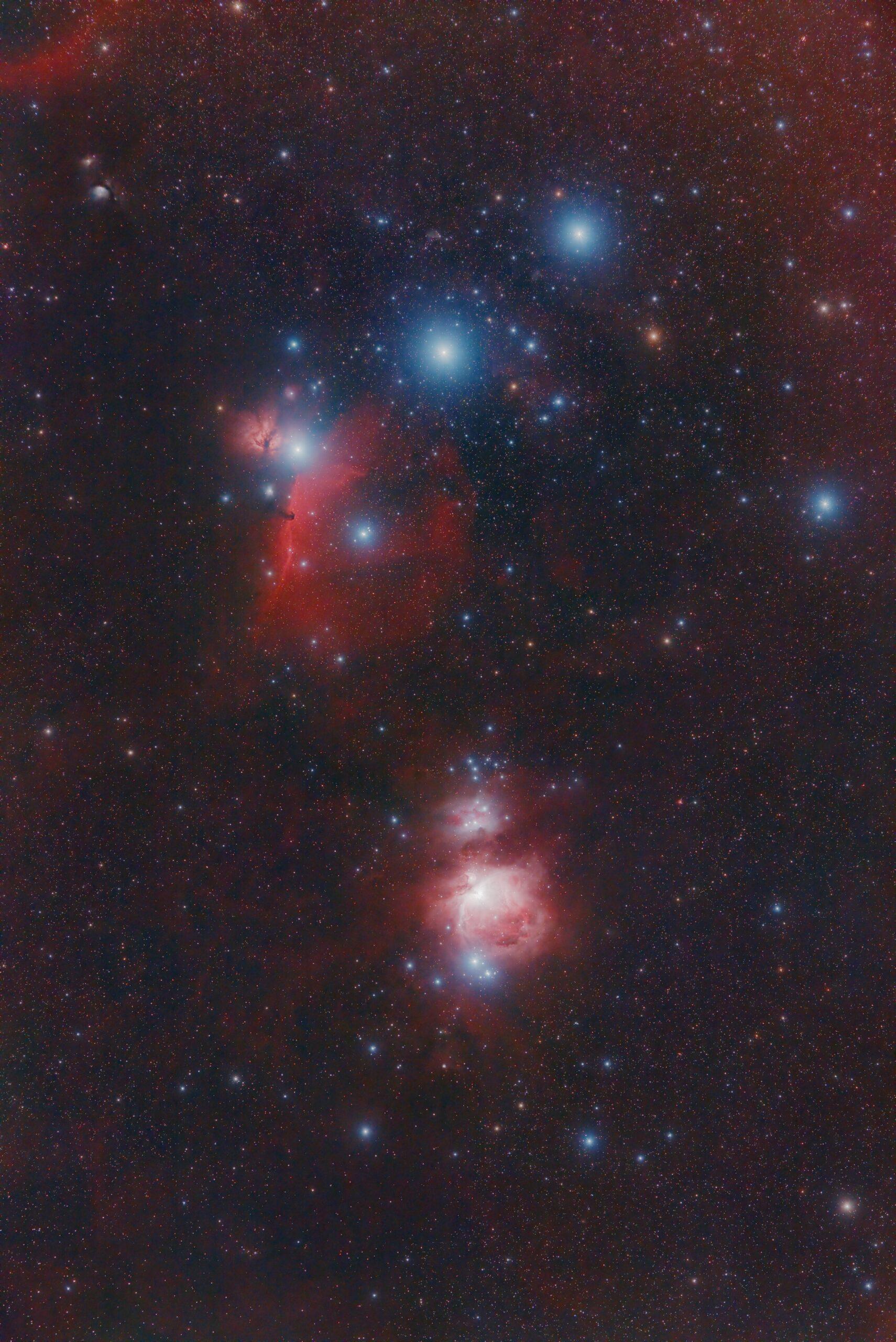
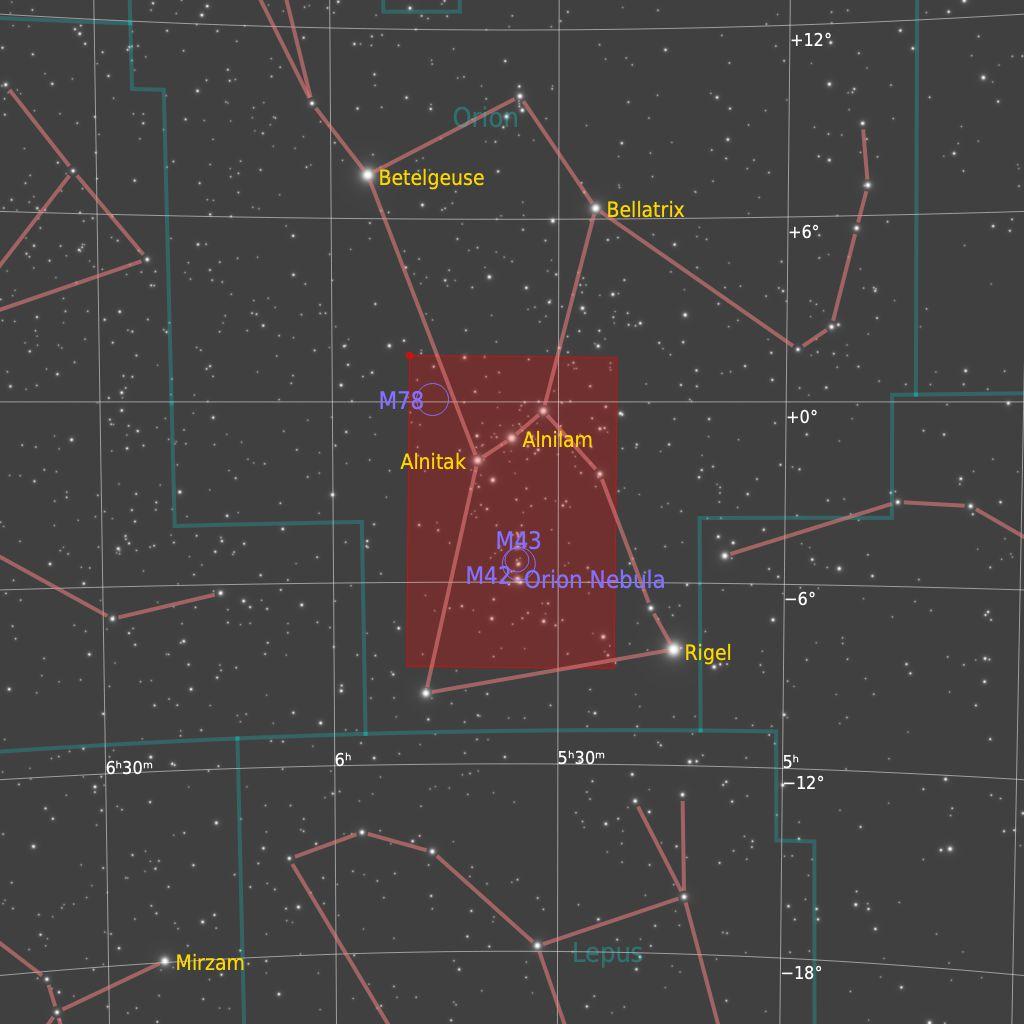
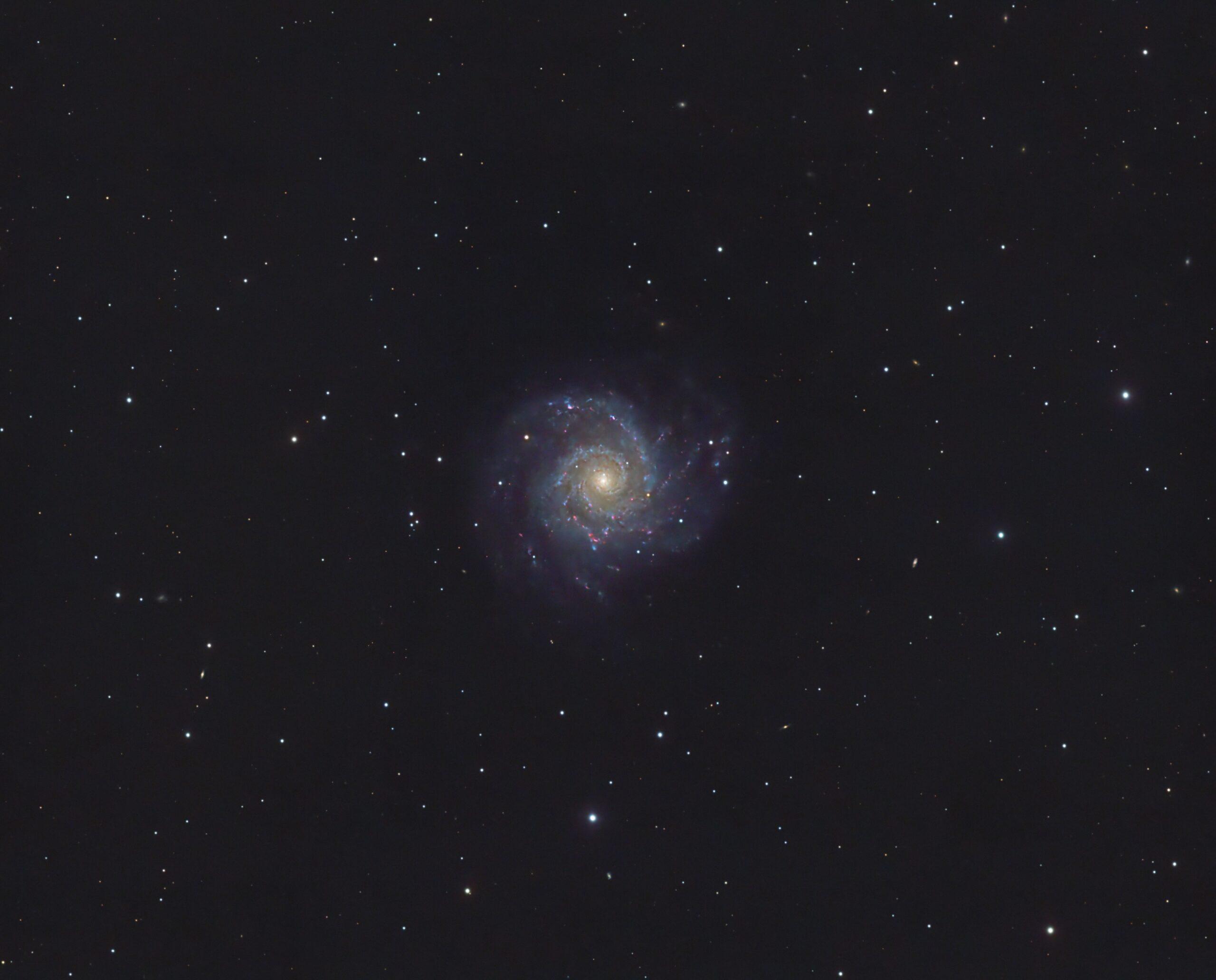
Southern Orion in a Wide Field View
An image of Orion from January 2023 taken with a QHY268C cooled astronomy camera mated with a Samyang 135mm lens to give a very wide field view.
Full sized image here (opens in a new tab).
The image is composed of 56 x 120s exposures at F2.8. I used my wide field rig with autofocus to get the stars and nebulosity sharp and tight. I captured flats, darks and dark-flats. Mounted on NEQ6 with a guider scope and image data captured with NINA. All pre and post development is done in PixInsight.
Captured over two nights 20th and 23rd January 2023 when Orion was high to the south. From my back yard in Saxondale, Nottinghamshire - suburban, Bortle 4-5.
I have also captured the Constellation of Orion here.

M74 Galaxy with TEC 140 and Atik 460
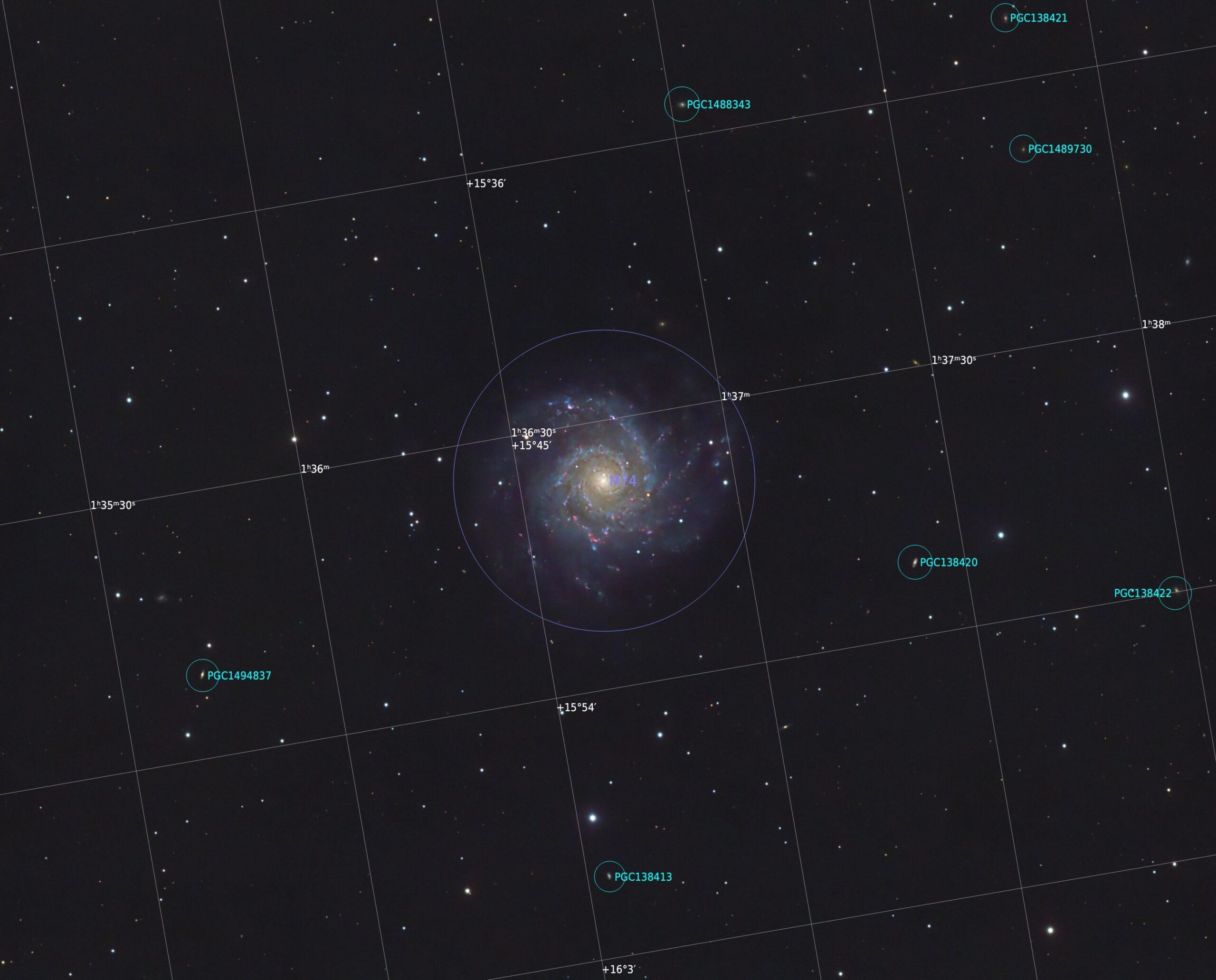
M74 is a magnificent spiral galaxy about 32 million light years away in the constellation of Pisces. It has quite low surface brightness which makes it quite a hard galaxy to observe. It bears a passing resemblance to M101 I always think, but is much dimmer.
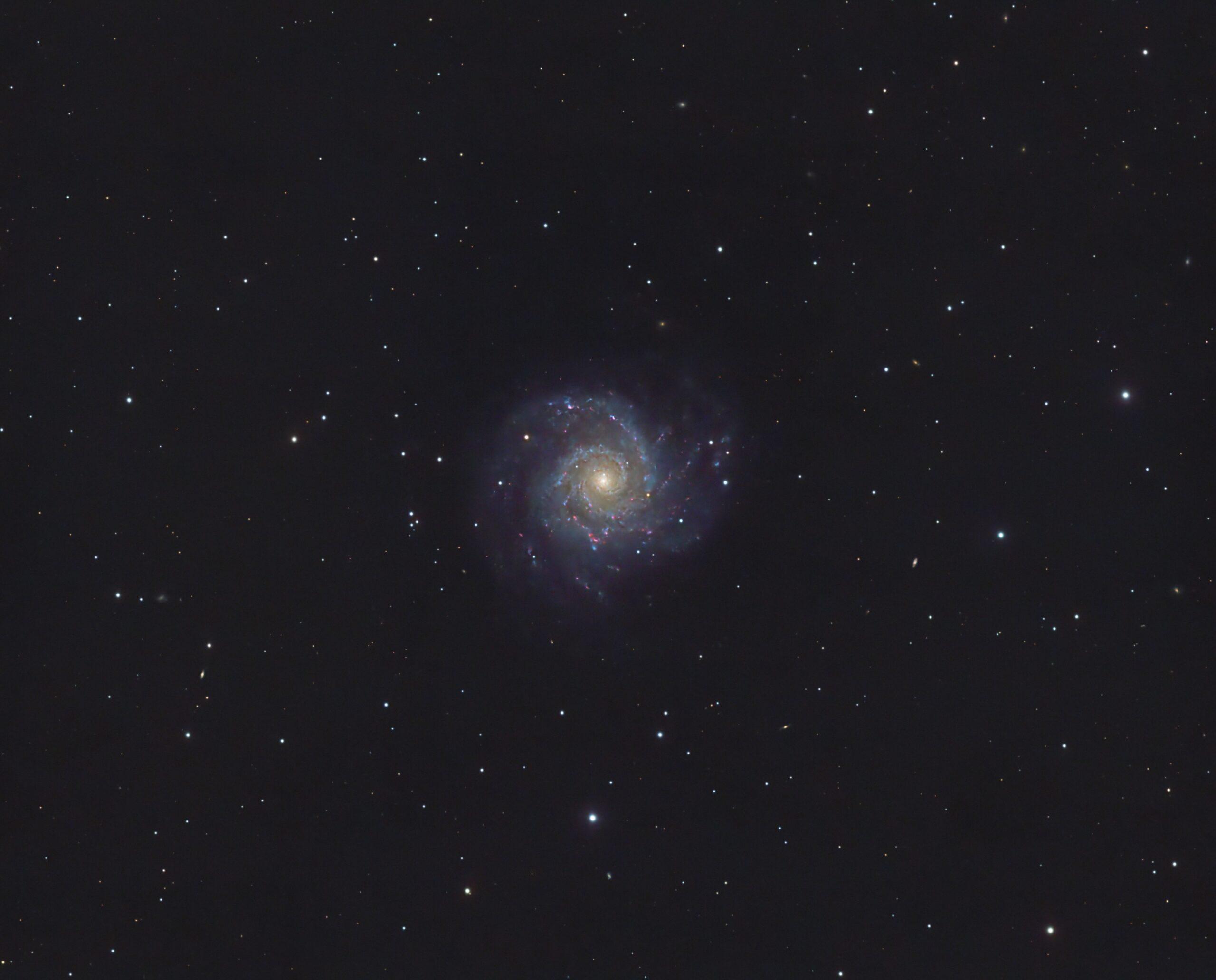
Imaged on 15th December 2022 when to The South. I used my TEC 140 refractor with its field flattener, an Atik 460 CCD camera with Astrodon E series 1.25" LRGB filters. All on my MESU 200 mount which was off-axis guided. The objective lens was very dirty and I cleaned it the following day. Despite that, the image came out quite nice.
This image is made from quite a modest data set comprising the following
LUM > 12 x 300s ; Red > 9 x 300s ; Green 9 x 300s ; Blue > 9 x 300s
Which gives a total integration (exposure) time of three hours and fifteen minutes in total.
I captured the data with NINA software and did all processing with PixInsight.
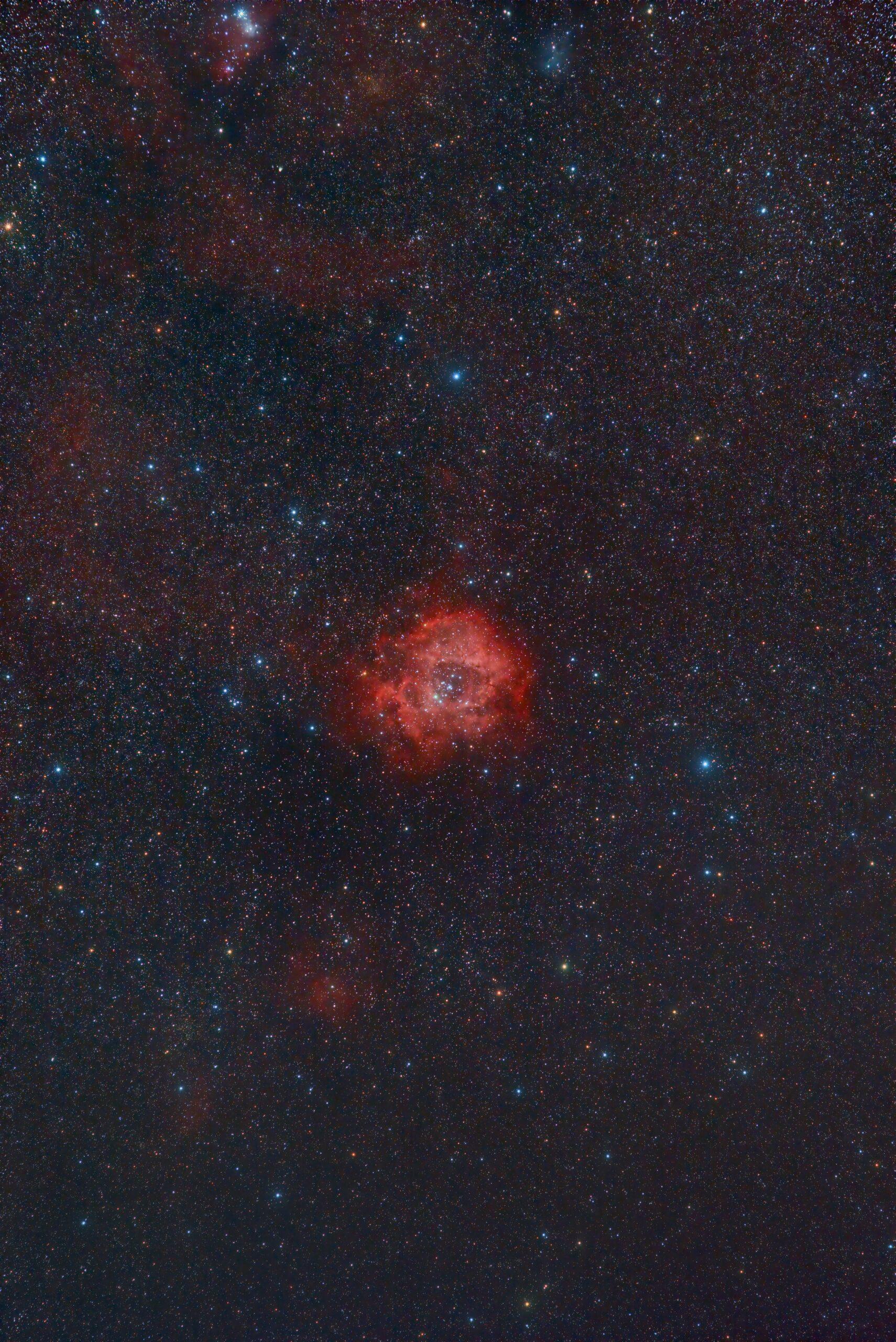
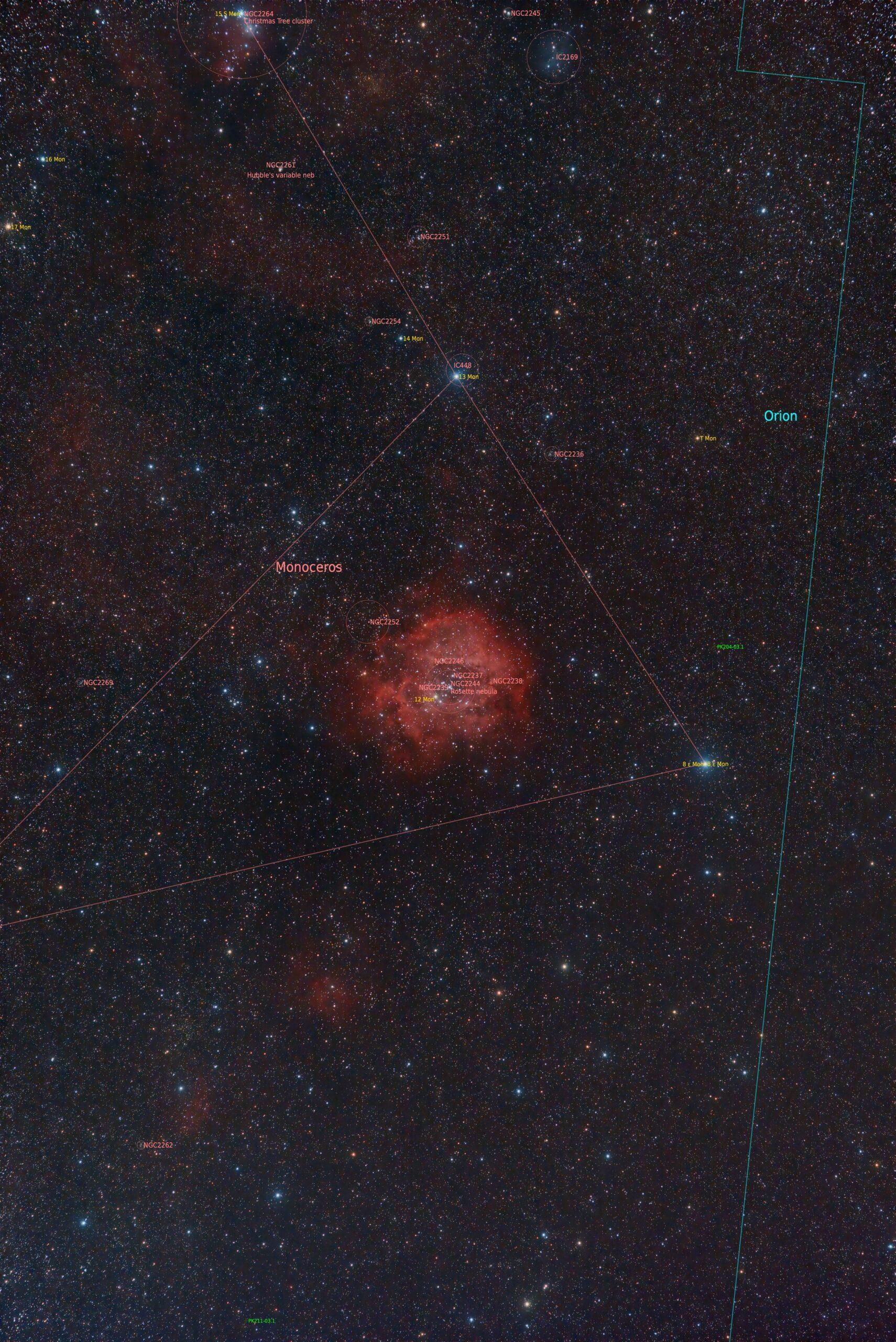
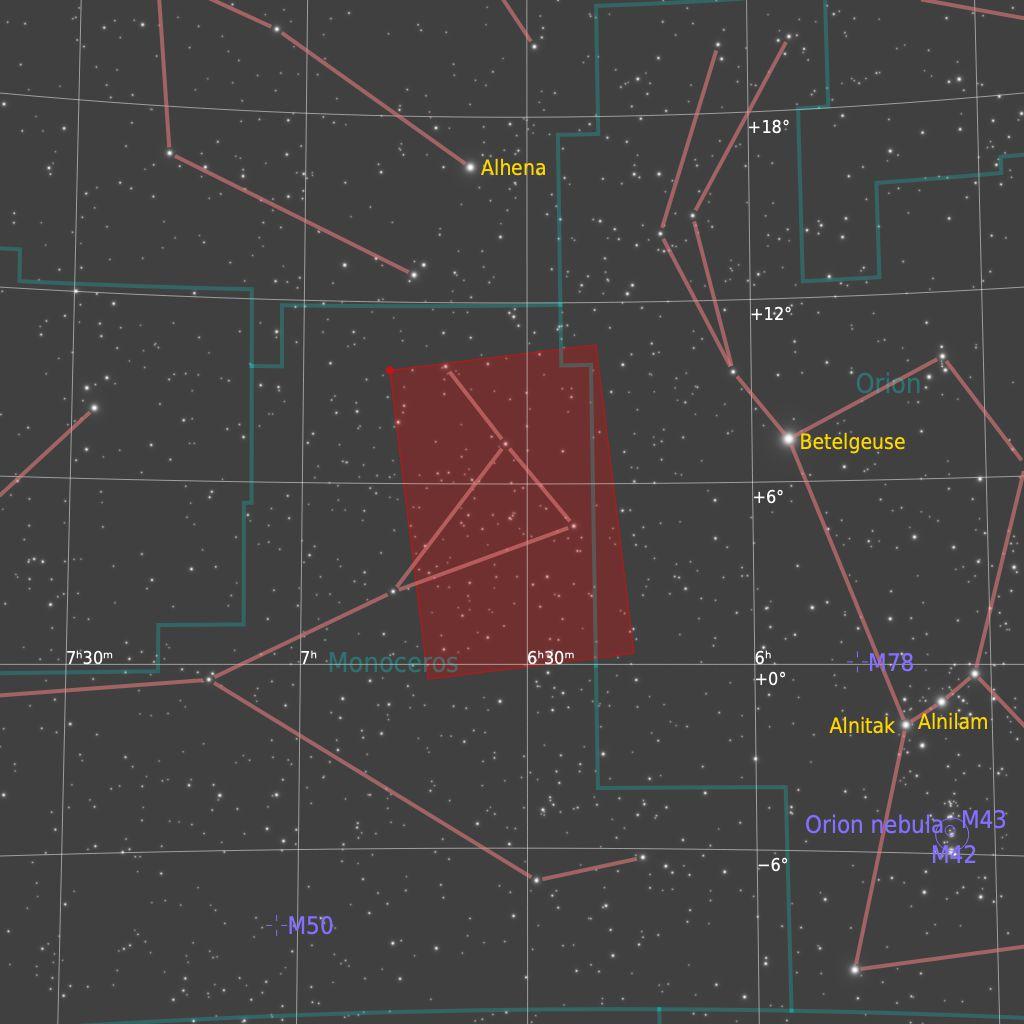
Rosette Nebula In A Very Wide Field
Image taken with a Samyang 135mm DSLR lens and QHY268C Colour CMOS camera in January 25th 2023 when high to The South. A total of 30 x 120s exposures at F4. I used NINA software for image acquisition and processed in PixInsight. I wanted to set the Rosette in a very wide field so as to see the surrounding nebulosity.
I have imaged The Rosette Nebula before with a FSQ85 telescope which can be found here.
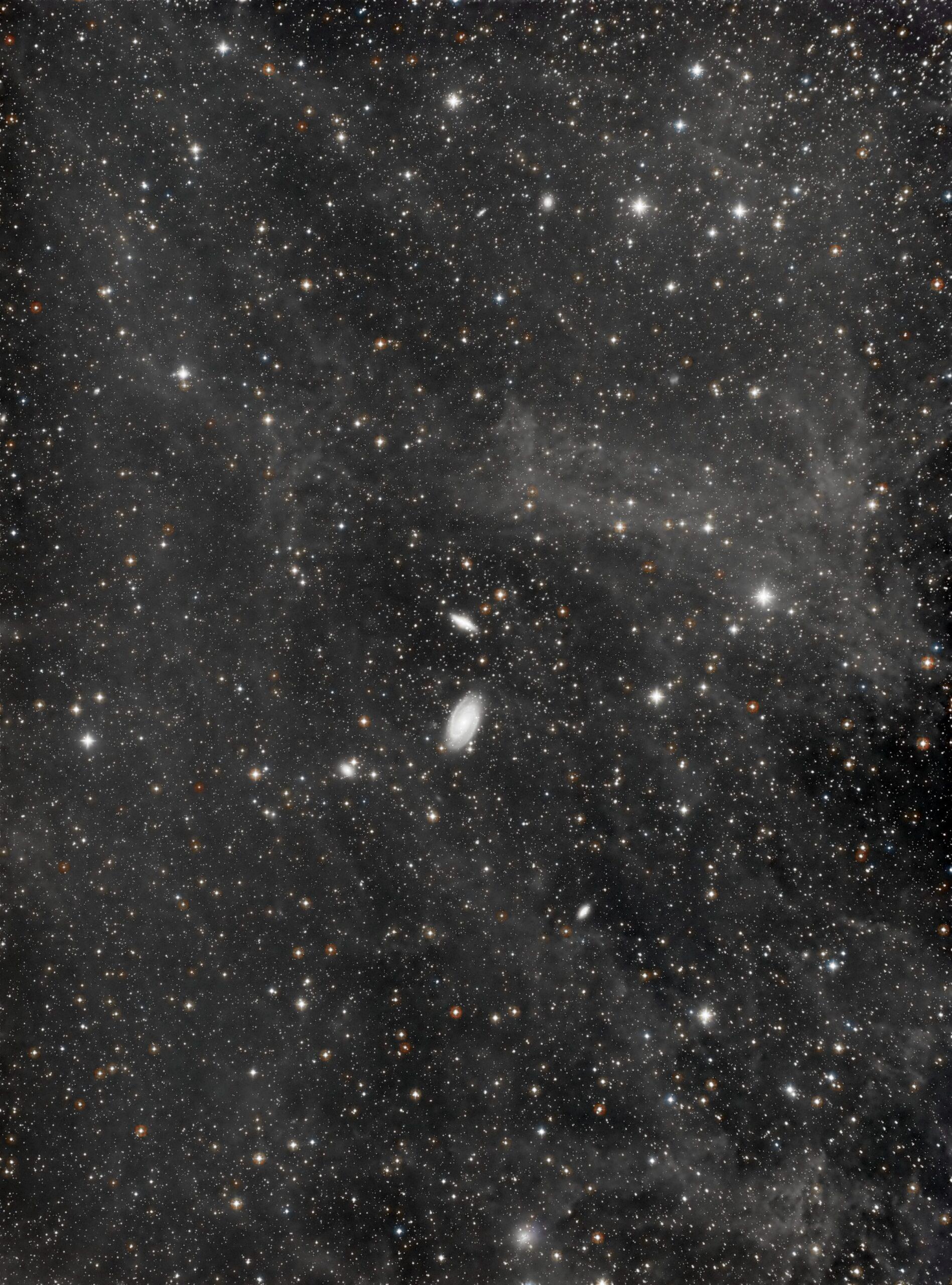
M81 / M82 Group and IFN with Samyang 135mm
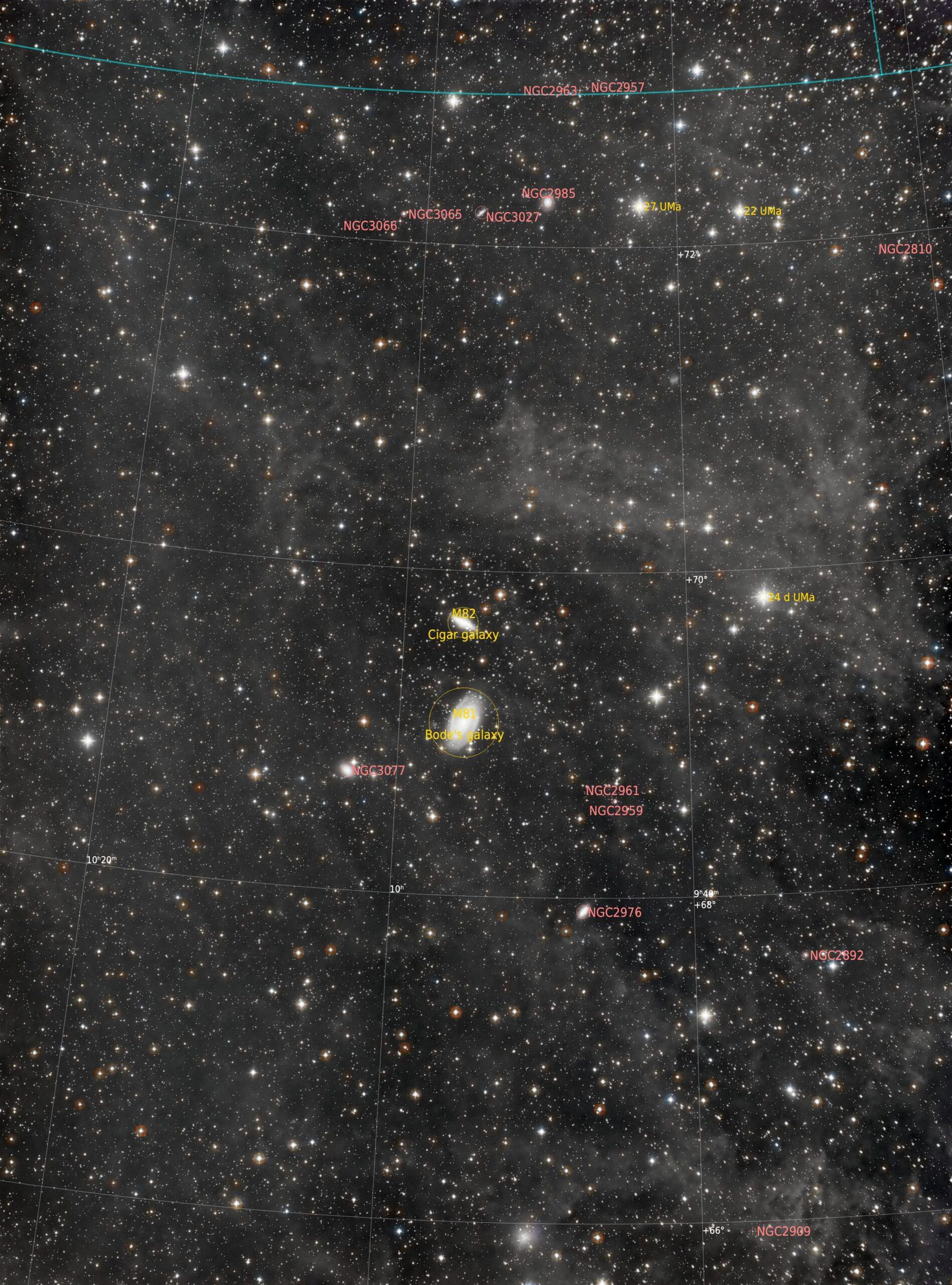
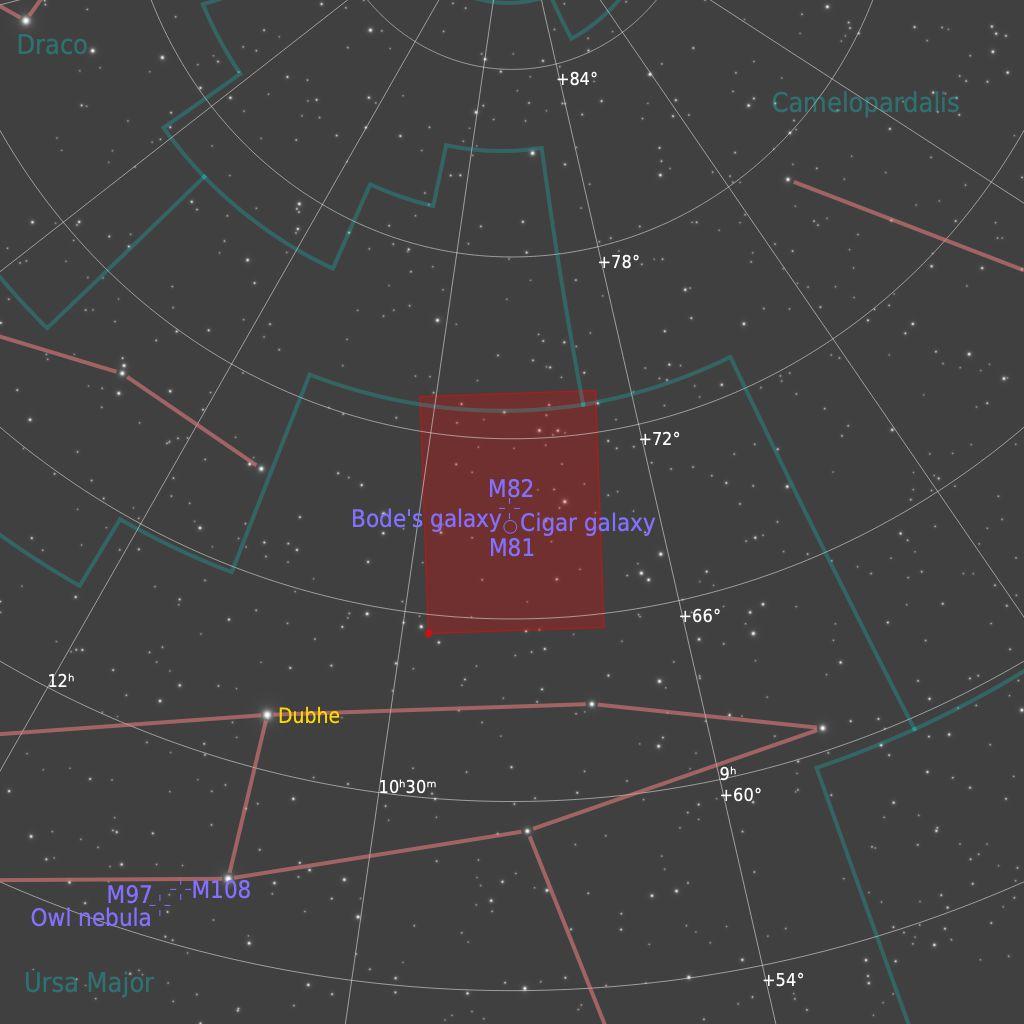
The M81 and M82 galaxies in Ursa Major showing the background Integrated Flux Nebula.
These are a well known and popular pair of galaxies and can be seen with binoculars. I've imaged them here in a very wide field with a DSLR camera lens - the Samyang 135mm connected to a G2-8300 CCD camera and filter assembly using Astrodon LRGB filters
The cloudy dust that is visible is not passing cloud! Rather, it is the extremely faint dust and gas that exists in the space between the galaxies - in intergalactic space. Hence it is called the Integrated Flux Nebula or IFN. It is extremely faint and is only visible with very long exposures and integration times. Careful processing is needed not to inadvertently cut it out of the image.
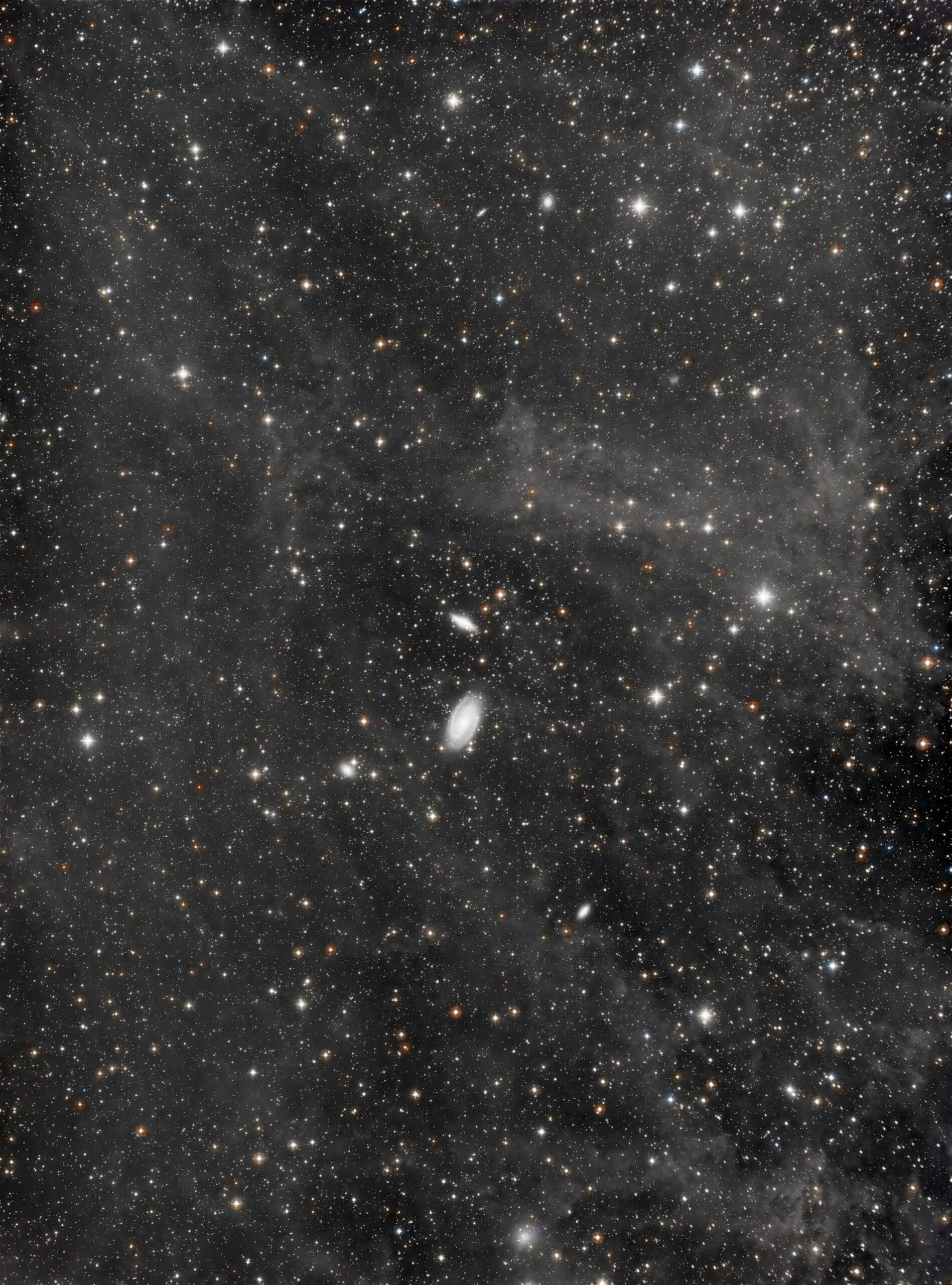
Technical Data
Imaged in my back yard in Nottingham in March 2020 with Samyang 135mm and G2-8300 CCD camera on a NEQ6 mount. I used a separate guide scope. I only got round to processing this data set in 2023 having completely forgotten about it!
All exposures 300 seconds in length and binned 1x1.
Lum > 24 ; Blue > 15; Red > 15; Green > 14
This gives a total of Lum > 120mins; Blue > 75mins; Red > 75 mins; Green > 70 mins
For a total integration (exposure) time of 5 hours and 40 minutes for the image.
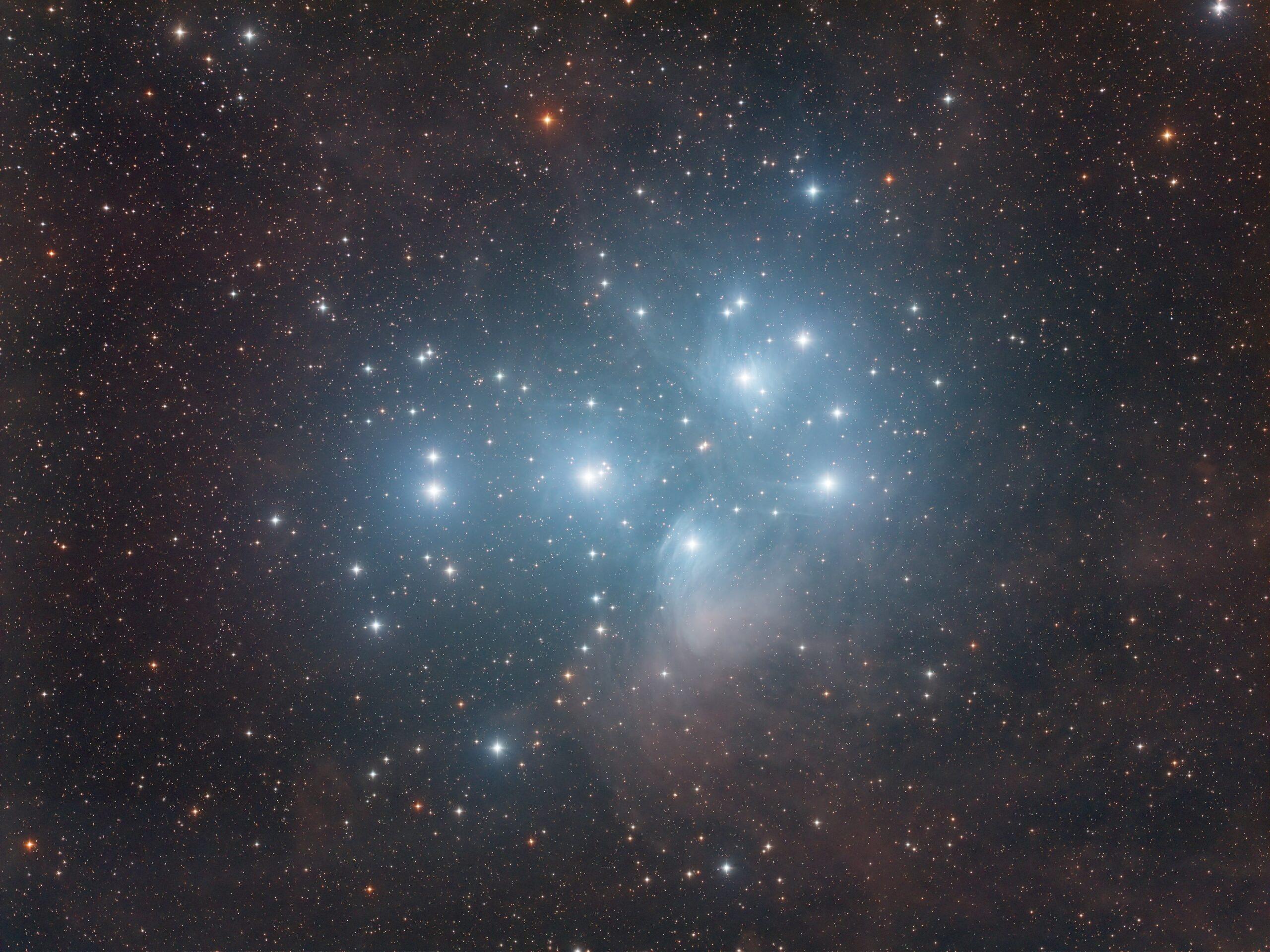
The Pleiades (M45) with FSQ85 and G2-8300
The magnificent Pleiades, known to many as the Seven Sisters, is an open cluster in the constellation of Taurus. The Pleiades have been known since the dawn of antiquity and even some cave paintings from 30000 years ago depict them on cave walls.
The cluster is 442 light years away and they are about 20 light years across. The exact distance has been a source of debate amongst astronomers for many years but the matter was recently settled using parallax data from the Gaia satellite.
Technical Data
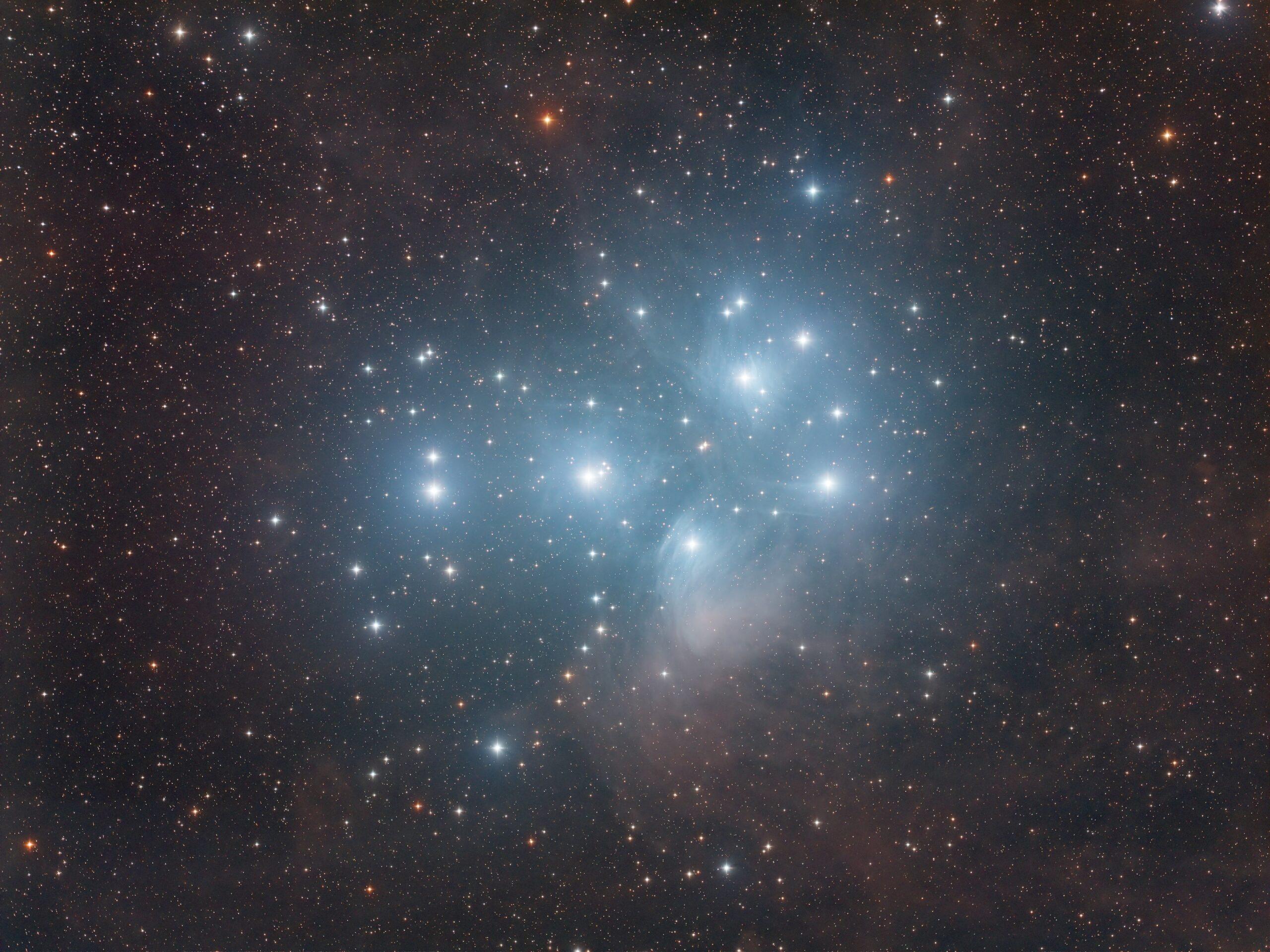
Imaged with Takahashi FSQ85 refractor and G2-8300 CCD camera with Astrodon E-series RGB filters. It consists of 20 x 300 second exposures in each of those filters to give over 90 minutes in each of the three channels for a combined integration of about four and a half hours. As is normal with any type of cluster, I did not bother with a separate luminance channel and instead bin the RGB all at 1x1. This amount of exposure is necessary to bring out the faint dust clouds through with the star cluster is moving.
Image data acquired on November 2021 with NINA imaging software and processing was done with PixInsight and Photoshop. Very little in the way of image processing was done on the image. After preprocessing all I did removed the background gradient, used a bit of deconvolution and then stretched the image. I then applied a bit of noise reduction and a tiny bit of colour saturation. This shows the importance of a good data set; you hardly need to push the data that hard in processing to get a good result.
I have imaged M45 before with the same equipment combination that you can see here. However, on that image my exposures were shorter and I did not get as much of the dusty background that I have managed to achieve with the picture on this page.
I hope you like it!
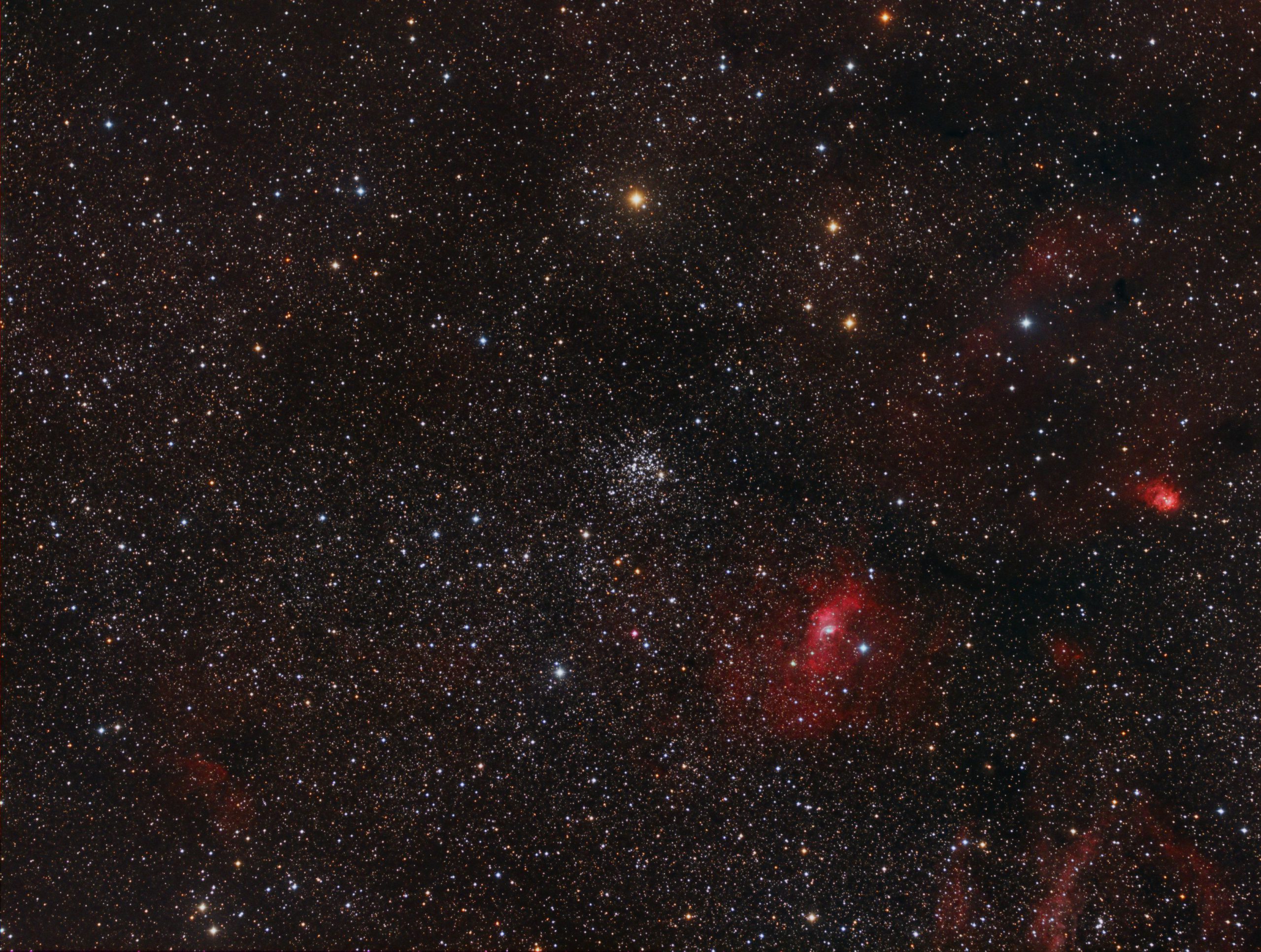
M52 with FSQ85 and G2-8300 Camera
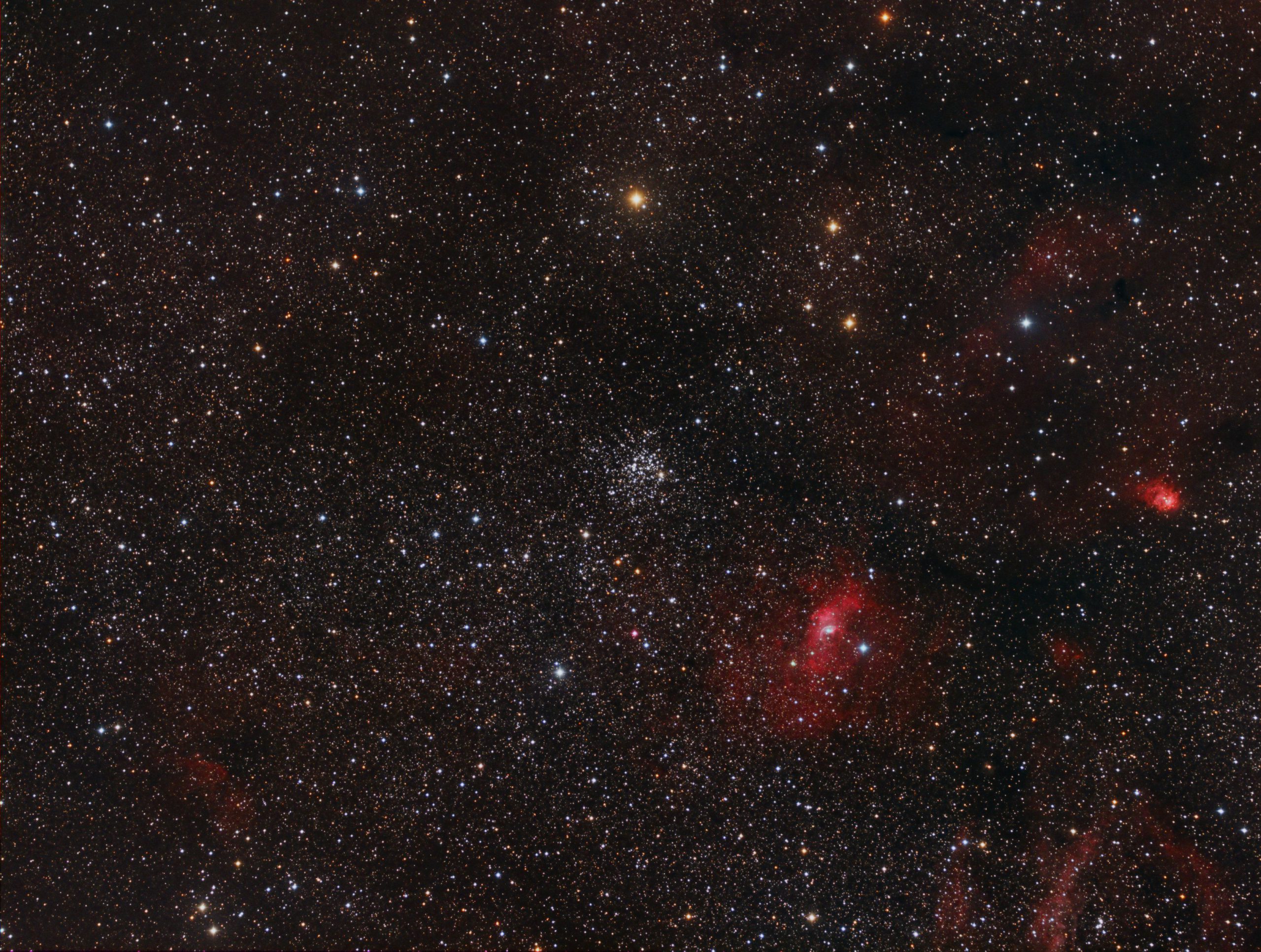
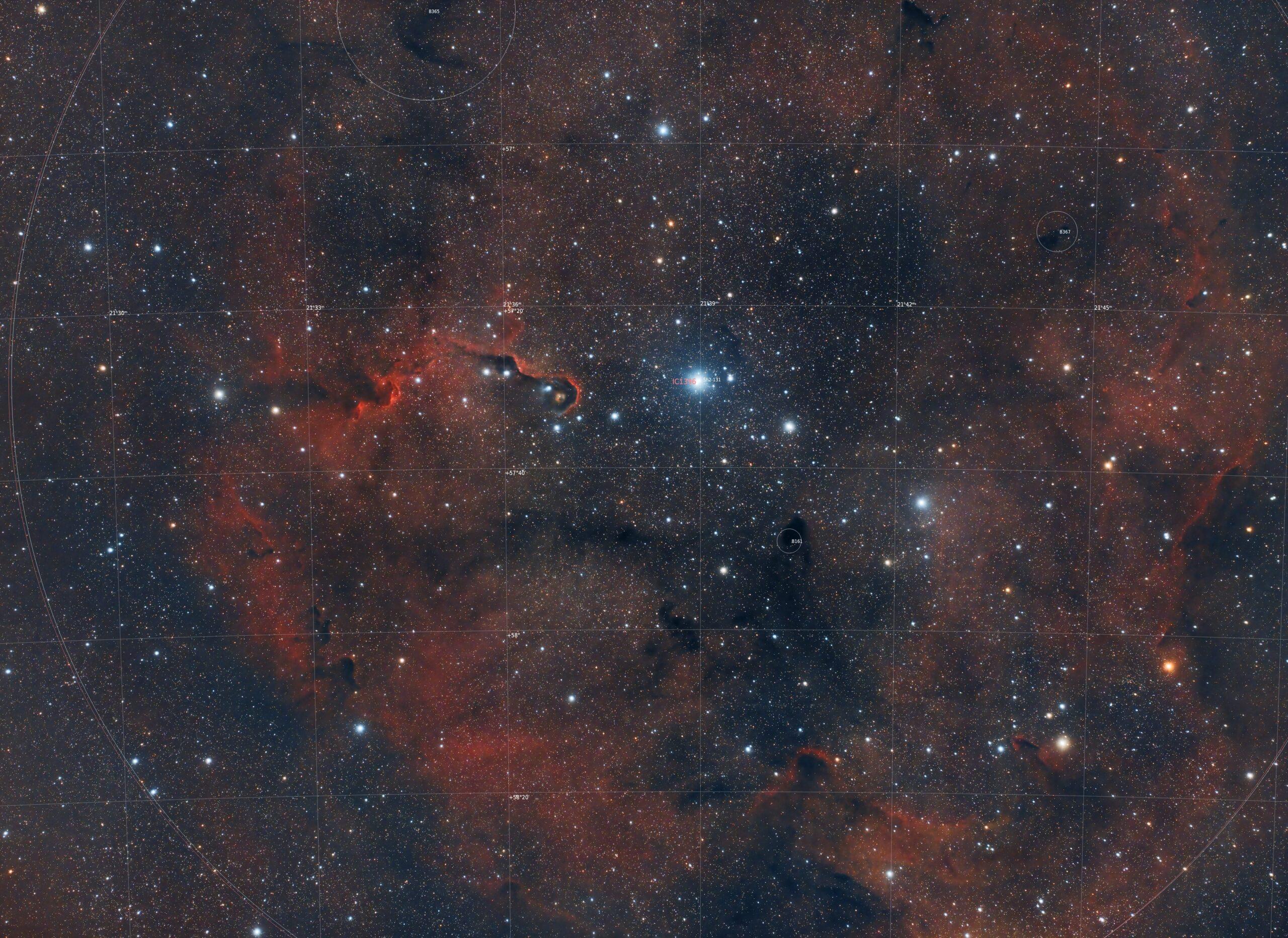
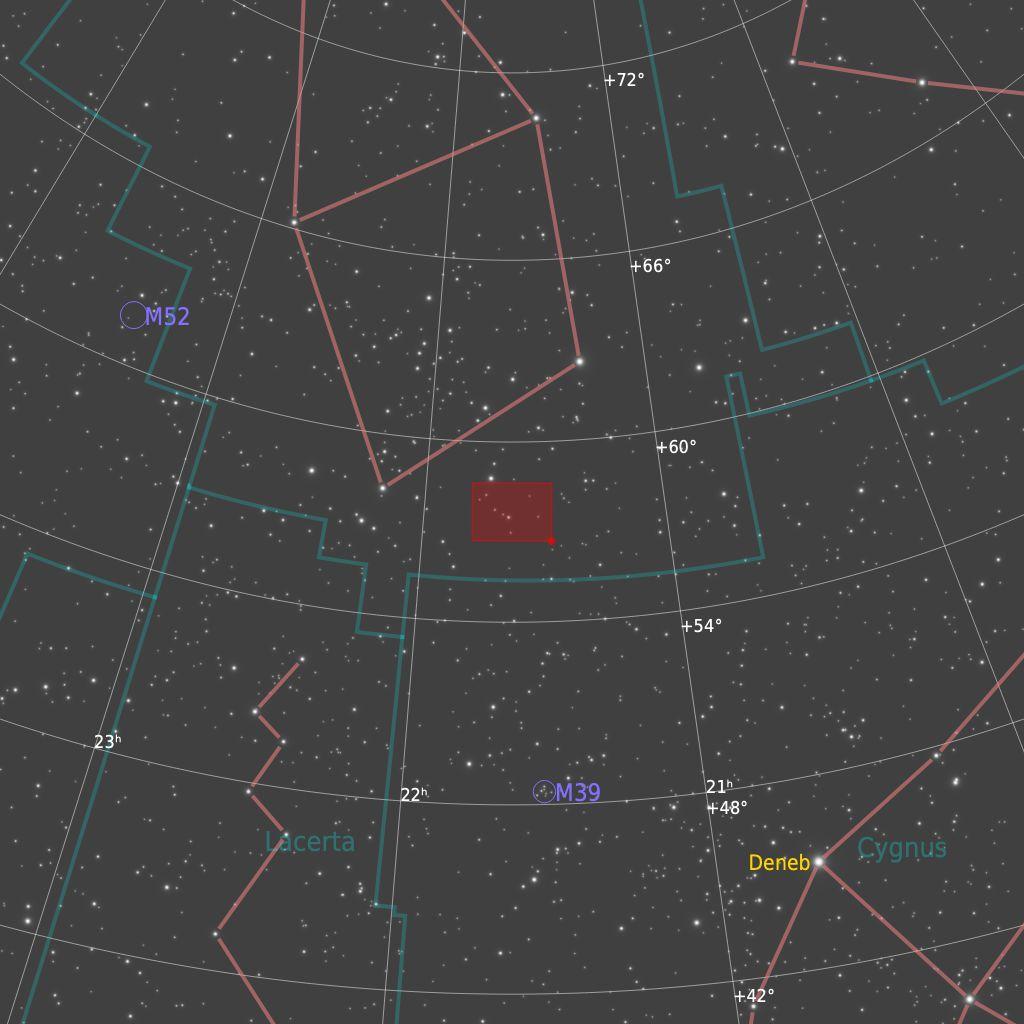
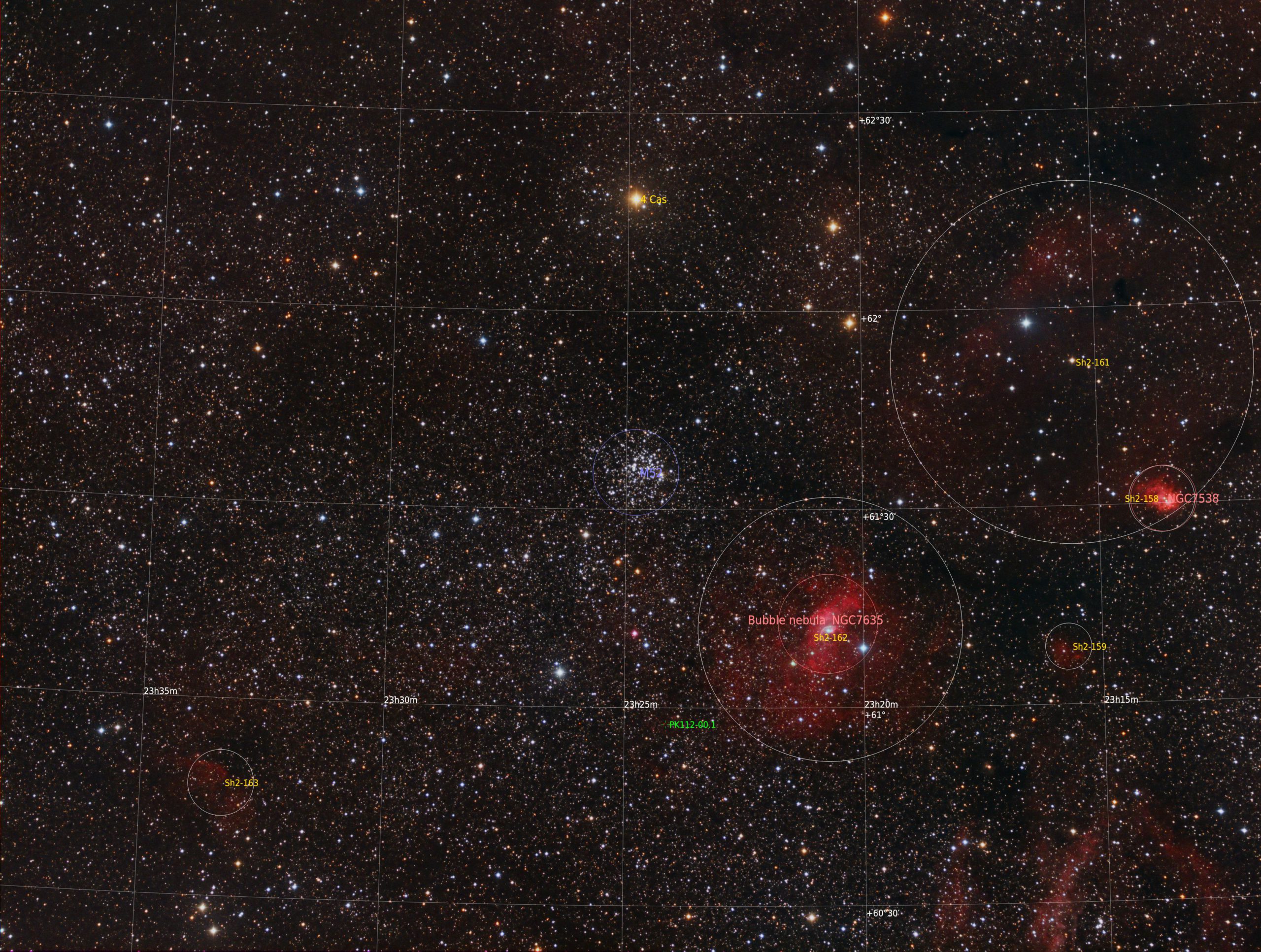
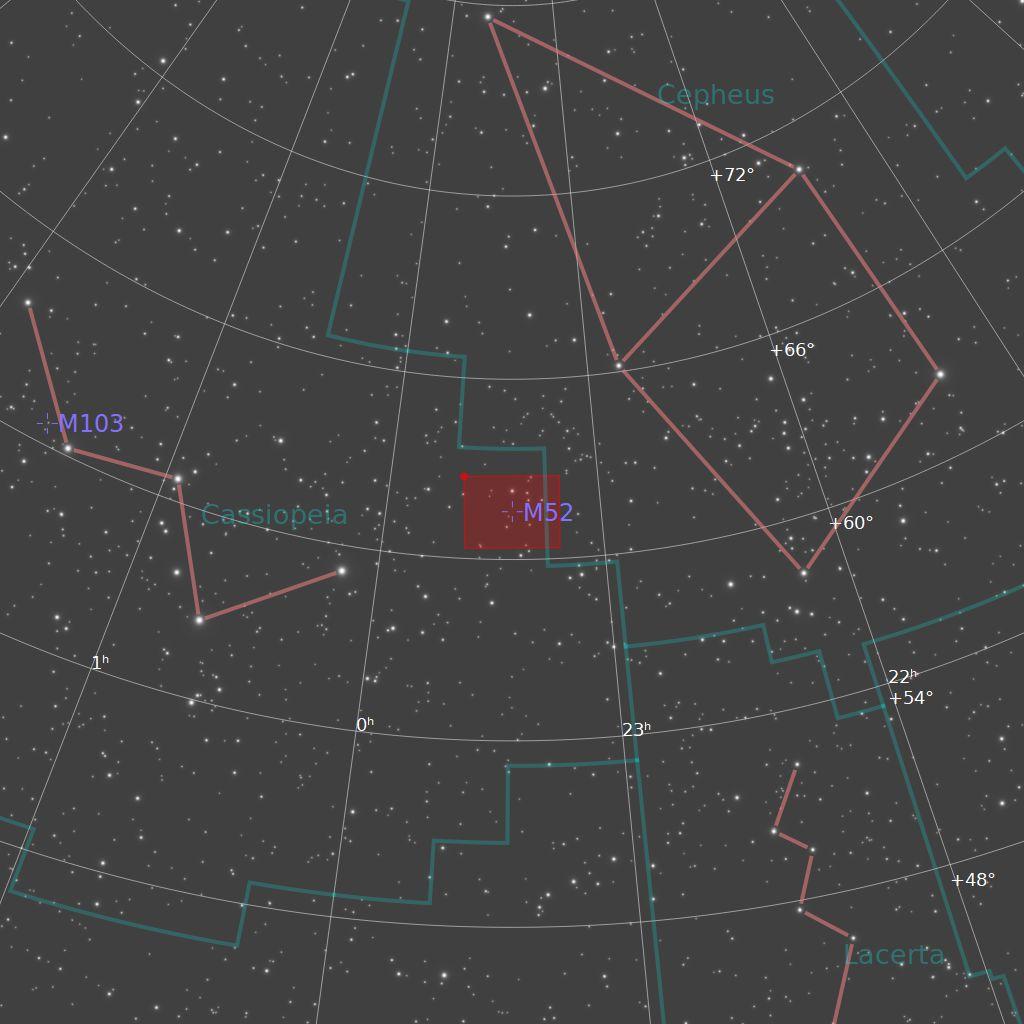
M52 is a fabulous open star cluster in Cassiopeia. It is set against a huge amount of nebulosity that spans across the constellations of Cassiopeia and Cepheus. In this image The Bubble Nebula can be seen at the four o'clock position with respect to M52 and many other objects in the Sharpless Catalogue of nebulae are also visible. These are detailed in the annotated version of the image below. The square red box on the finder chart on the right represents the image.
Full resolution image here (opens in a new tab).
Technical Information
Imaged from my backyard in Nottingham, UK on 28 November 2021 with a FSQ85 refractor and a Moravian G2-8300 cooled CCD camera with Astrodon HaRGB filters on my MESU200 mount guided with OAG.
All image data is binned 1×1: Note I do not capture a separate luminance when I bin all of the data channels is 1x1 in order to save some precious (In the UK) clear sky time. I do know purist swill say that it is best still to capture a luminance because that captures all of the light frequencies at the 1x1 level. I agree.
Ha> 9 x 300s ; Red > 9 x 300s ; Green 9 x 300s ; Blue > 9 x 300s
Image capture is with NINA and processing in PixInsight.
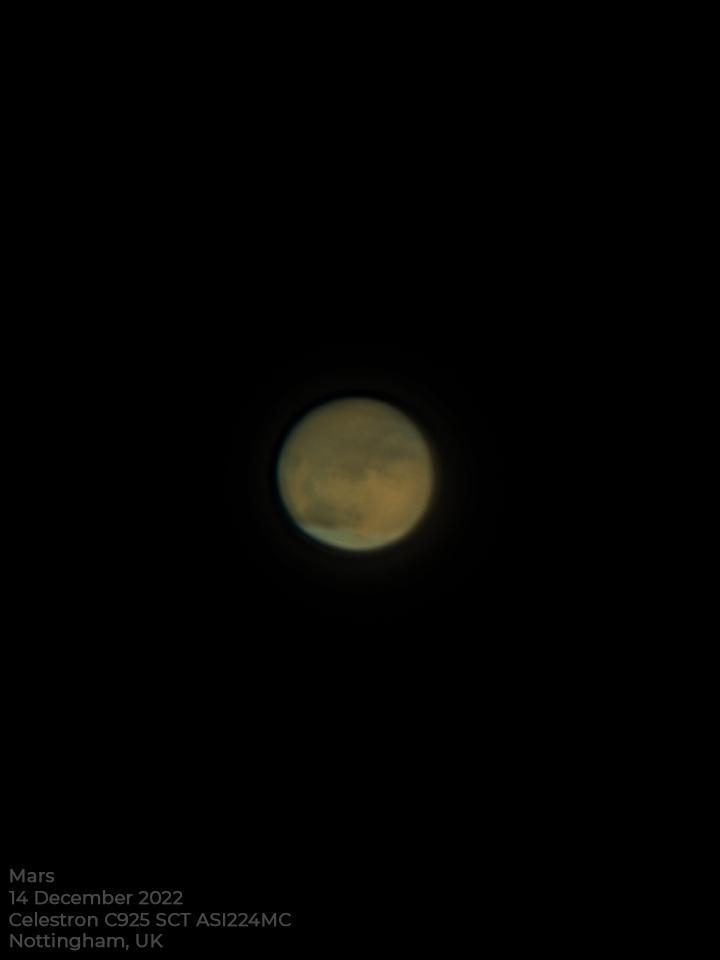
Mars 14 Dec 2022, C925 and ASI224MC
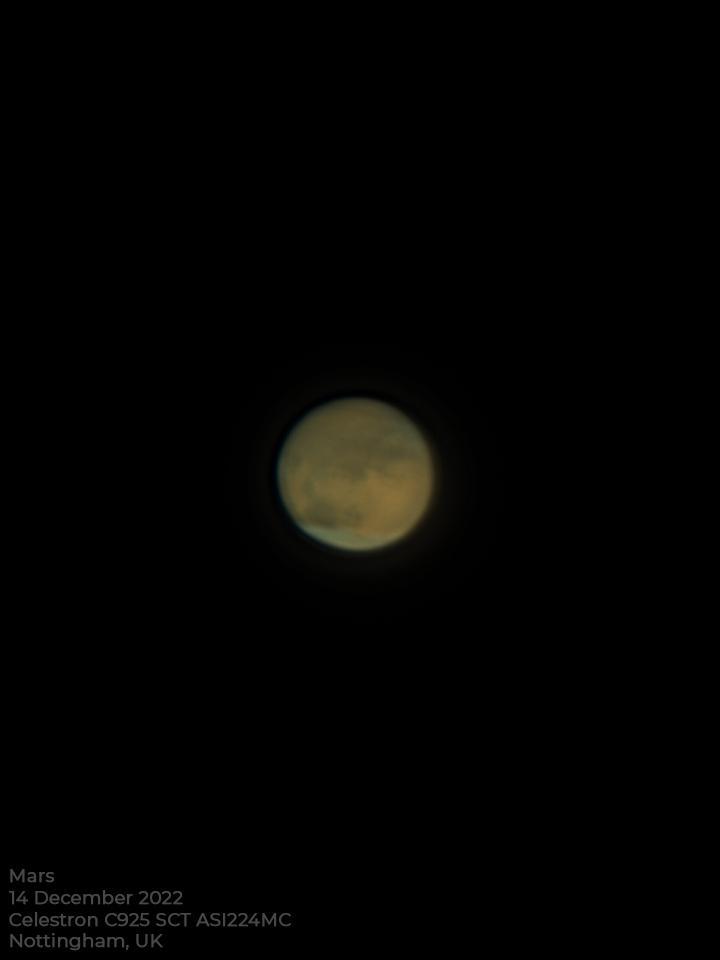
The planet Mars captured with my Celestron C925 SCT telescope and my ASI224MC colour camera. I used a Powermate x2 barlow lens to give a higher image scale together with an Atmospheric Dispersion Corrector (ADC).
A total of 12000 frames were captured using Firecapture to a SSD drive on my capture PC. I used Autostakkert to process the best 20% and then PixInsight to bring out the details with 8 wavelet layers. A bit of unsharp mask afterwards to sharpen it up a bit.
Mars was to the East of the meridian and about 40 degrees in altitude.
From my backyard in Nottingham, UK.
I am quite new to using the ADC and what I did was use the colour alignment tool in Firecapture to "tune" the ADC to get the colours all as perfectly aligned as I could.