
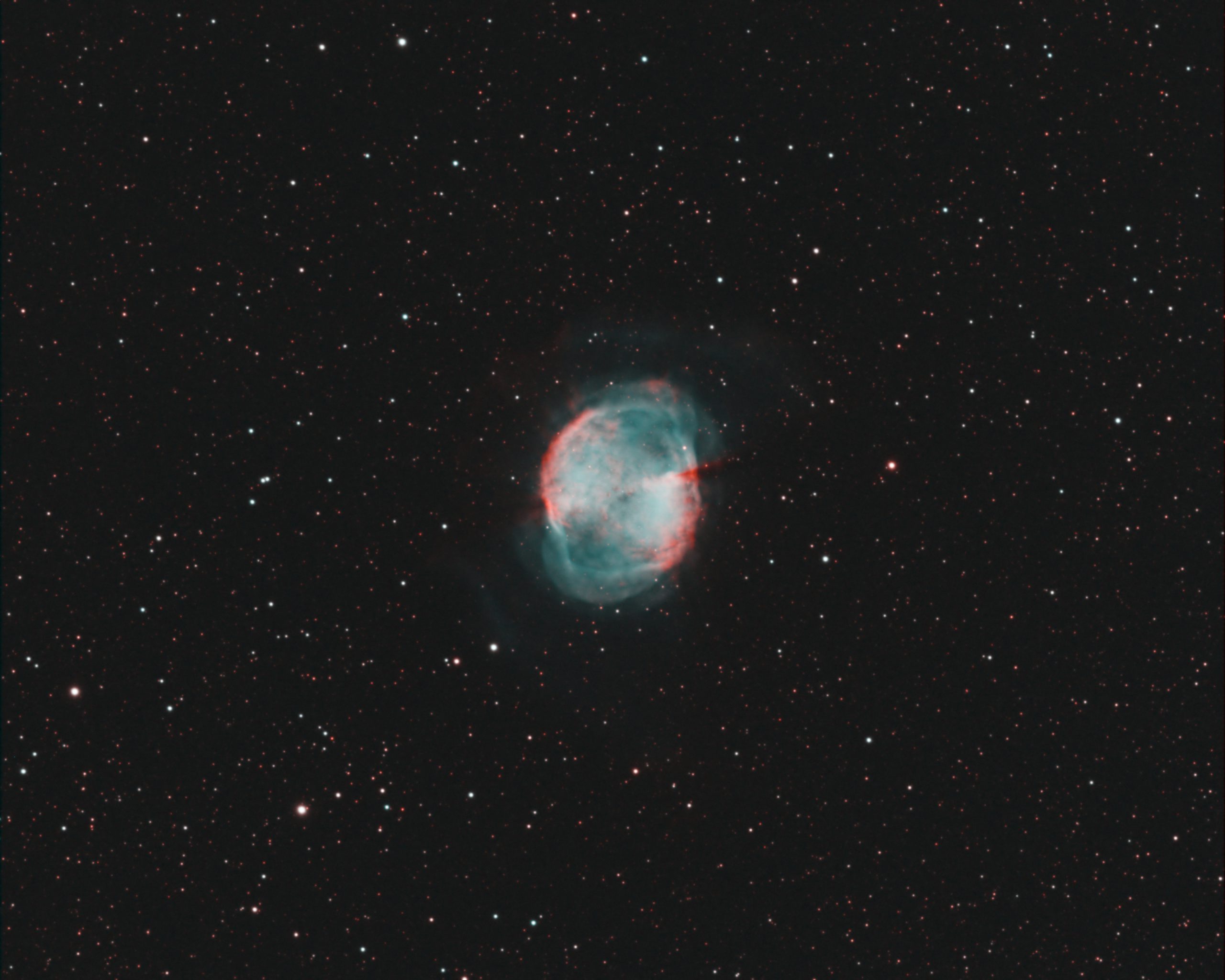
M27 in The Hubble "HOO" Palette (TEC140)
M27 is a famous planetary nebula in the constellation of Vulpecula, The Fox. Despite its name, it has nothing whatever to do with planets, it is instead the remnants of a dying star that has cast off its outer atmosphere when nuclear reaction can no longer sustain it. Our Sun will look like this in five billion years from afar.
M27 is a fine object to view through a telescope. I have also imaged M27 several times over the years. Here for example.
The rendition on this page shows M27 in the HOO or Hydrogen-Oxygen-Oxygen palette which maps the Ha channel to Red and green and Blue to OIII (Oxygen 3). Planetary nebula are rich in Oxygen since it is one of the elements synthesised in the nuclear fusion processes as the star dies.

Image Technical Data
Imaged from my backyard observatory in Nottingham, UK, August 2019. I used my TEC 140 refractor and Atik 460 CCD camera and Astrodon HA (3nm) and OIII (3nm) filters - very expensive filters too! This was all mounted on my MESU 200 and guided with my OAG.
All data is binned 1x1:
Ha > 18 x 300s ; OIII > 12 x 300s
This is quite a short integration but the result is quite nice I think. This is largely down to the utterly superb Astrodon filters and the extremely tight 3nm emission passband.
I did not blend the data Ha, OIII, OIII >>> one on one to R, G, B Insteads I used the following PixelMath formula:
Red > Ha(i.e. one to one)
Green > (OIII * 0.85) + (Ha * 0.15)
Blue > (OIII * 0.8) + (Ha * 0.2)
Then add them all together to give the colour result. Making only small changes to the formulae can make quite a large difference to the outcome and will emphasis the green, blue or red more depending on which colour formula you wish to adjust.

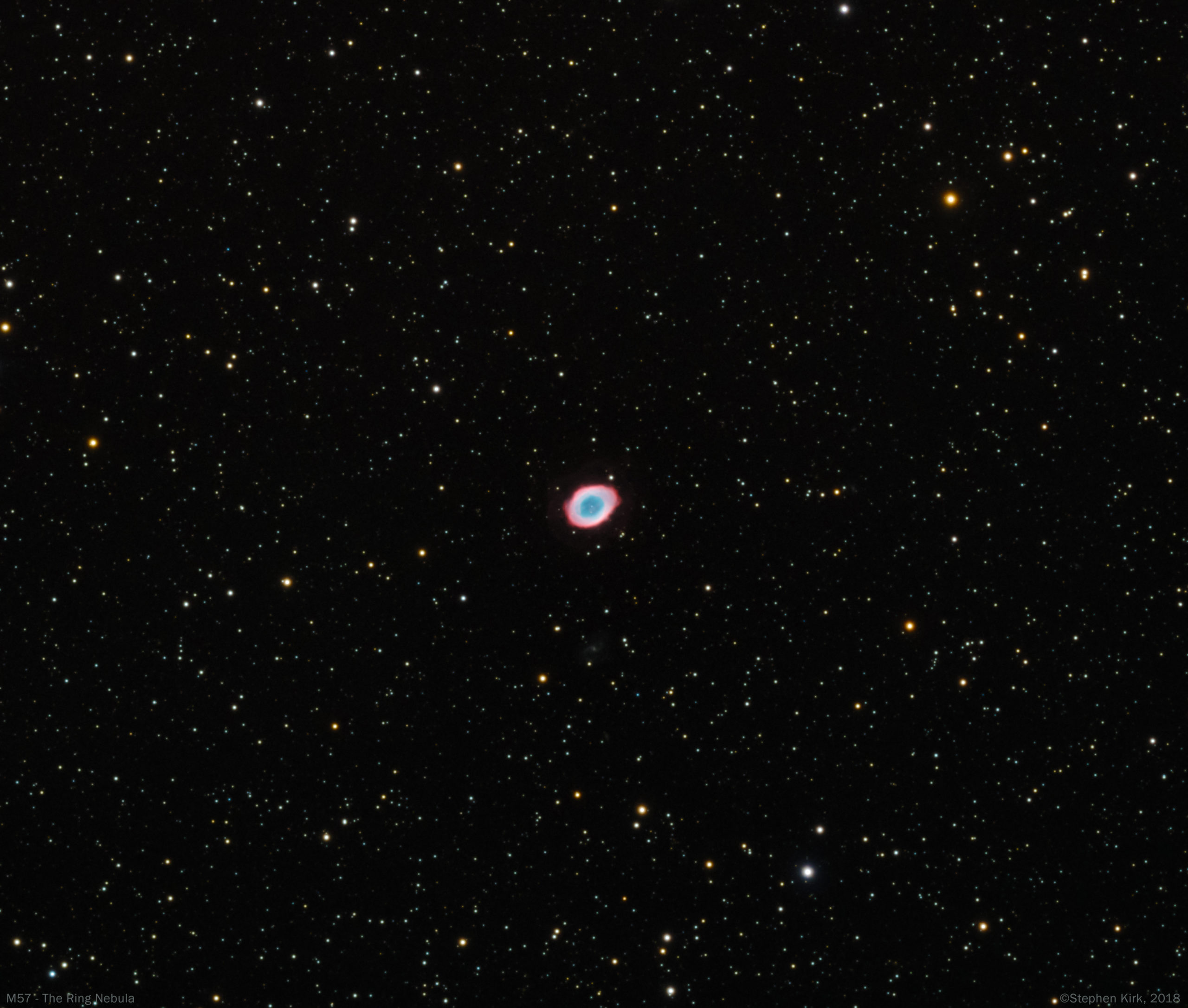
M57 - The Ring Nebula In Lyra - TEC140
A famous planetary nebula in the Northern Hemisphere of the sky in the summer constellation of Lyra. One of four planetary nebulae in the Messier catalog of deep sky objects, the other three being M27, M76 and M97. It is visible in a small telescope as a faint ring. M57 is about 2500 light years away and it is the outer envelope shed off by a dying star, the star itself can be seen right in the middle of the nebula. The Sun will look like this from afar when it does the same in about five billion years from now. More massive stars do not die in this fashion but explode in a cataclysmic event called a supernova; M1 being one such example.
In the image below, look for the ghostly outer ring surrounding the main "ring" of the nebula.

Image Technical Data
Imaged from my backyard in Nottingham, UK with my TEC 140 refractor and Atik 460 cooled CCD camera over three nights in August 2018 with Astrodon LRGBHa filters. mounted on MESU 200 and guided with OAG.
Everything binned 1x1
Lum > 13 x 600s ; Red > 12 x 300s ; Green 12 x 300s ; Blue > 12 x 300s ; Ha > 12 x 300s
Total integration > 6 hours )just over)
Captured with Sequence Generator Pro and processed with PixInsight and Photoshop CC.
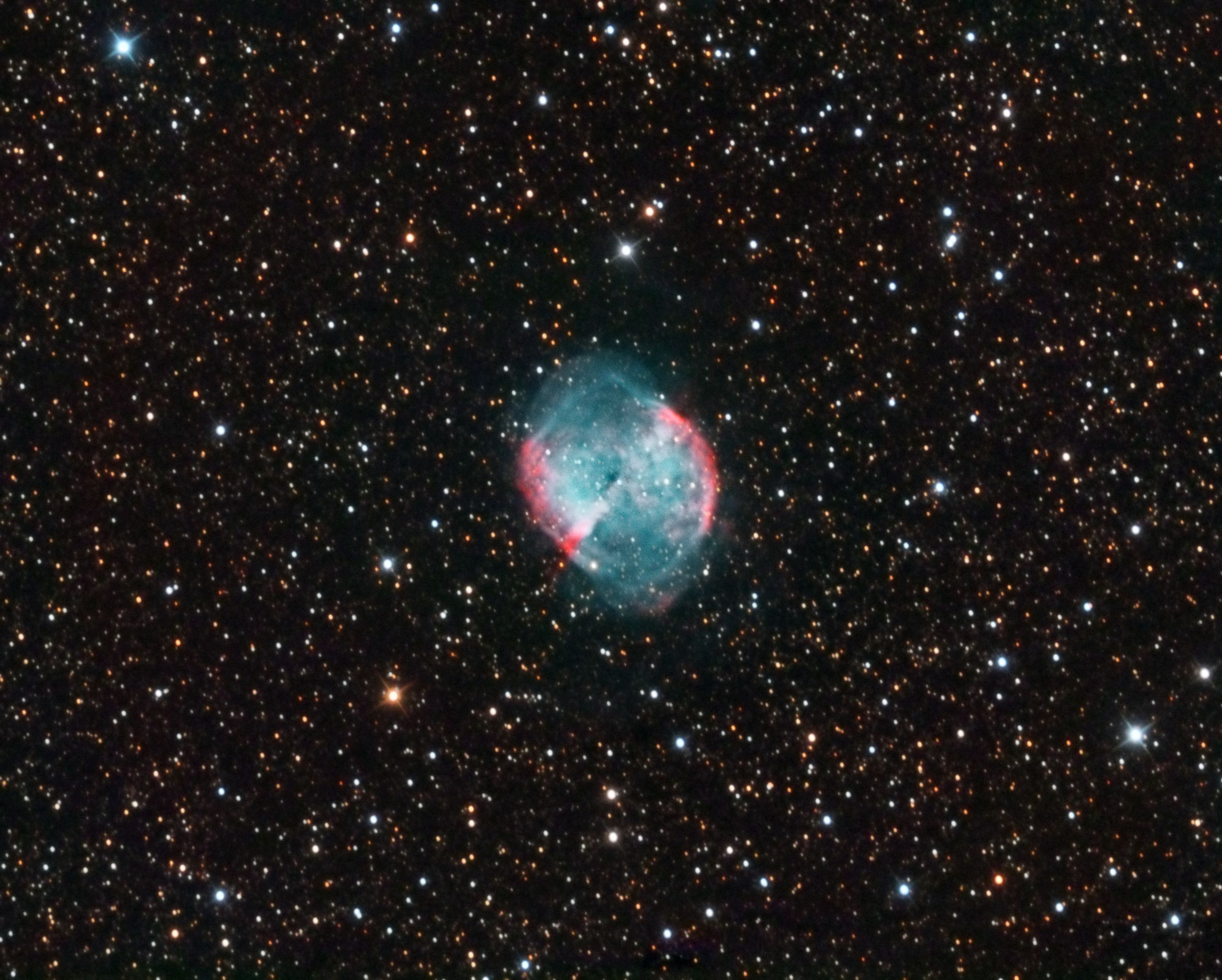
M27 - My First LRGB CCD Picture
M27 is known as The Dumbbell Nebula and is a planetary nebula in the constellation of Vulpecula - The Fox. It is located about 1250 light years away and represents the outer ejected gas envelope of a dying star.
This is the first image I took with my CCD camera - Atik460 - on the 28th October 2013. This is a lovely object in the summer and early autumn skies and is very pleasing visually in a pair of binoculars or a telescope. Its brightness and vivid colour make it a perennial favourite object for astro imagers.
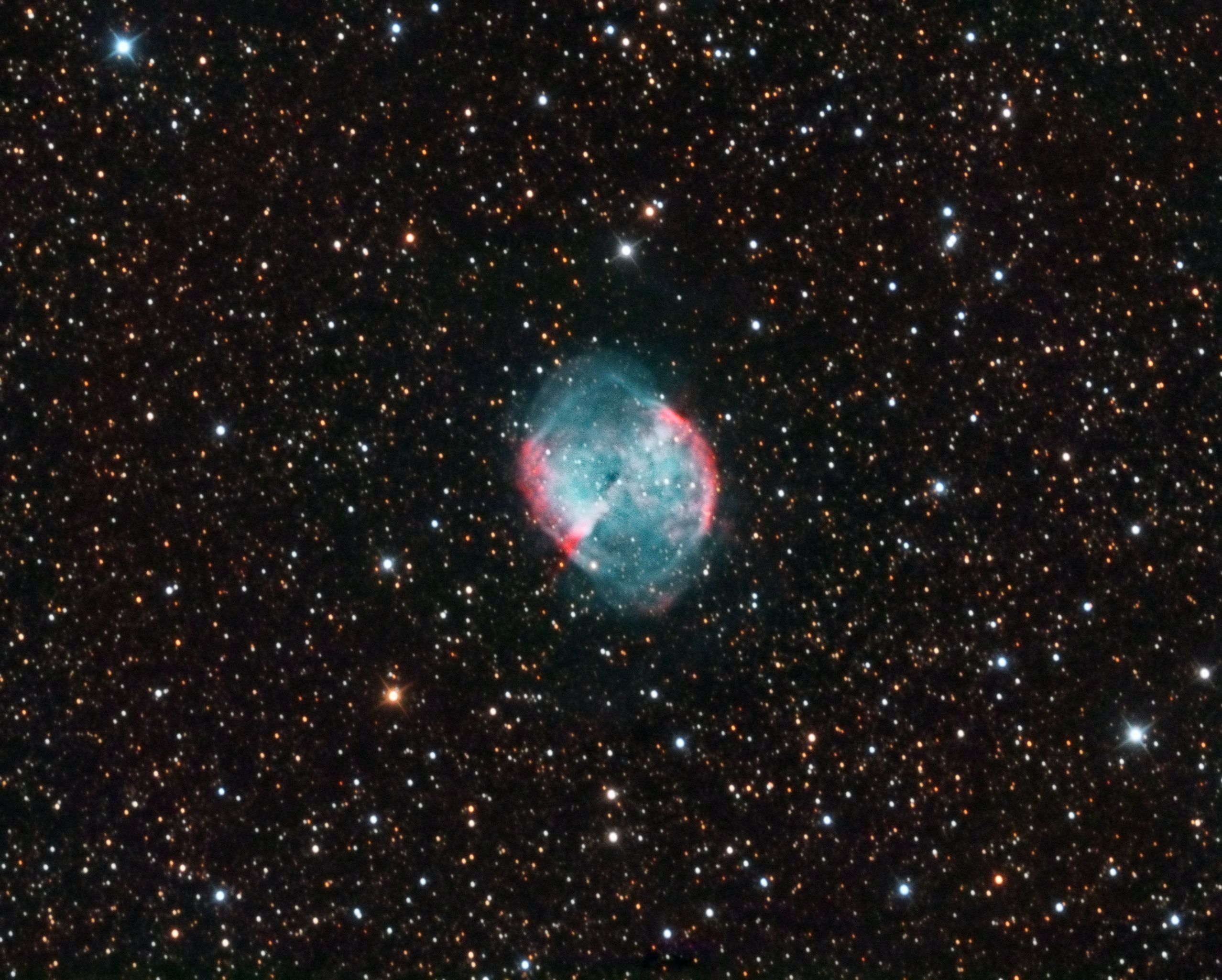
Image Technical Data
This is a small dataset taken with my superb Skywatcher ED80 Black Diamond refractor and Atik 460 CCD camera with Baader LRGB filters on an NEQ6 mount, guided with a Skywatcher guidescope and QHY5 (I still have and use this guide setup). This is a superb imaging setup and despite its modest cost is capable of great results. I upgraded the ED80 to a Takahashi FSQ85 and sold the ED80. Be assured though, the super ED80 is capable of 90% of what the FDSQ can do at 10% of the cost. I kind of regret selling that ED80 now.
Luminance 8 x 300s 1x1; Red 6x 180s 1x1; Green 7 x 180s 1x1; Blue 7x 180s 1x1
Developed in PixInsight - first picture I ever developed with this software.
It looks quite nice for an early effort.
P.S. This excellent Atik 460 CCD camera and EFW2 filter wheel is still going strong after seven years of use (writing this in August 2020). I had to have a port repair on the EFW2's mini-USB port under Atik's fabulous customer service in 2019 but other than that no issues whatsoever with the camera or filter wheel. I have since upgraded the filters to Astrodon E series Gen2 LRGBHaOIII filters.
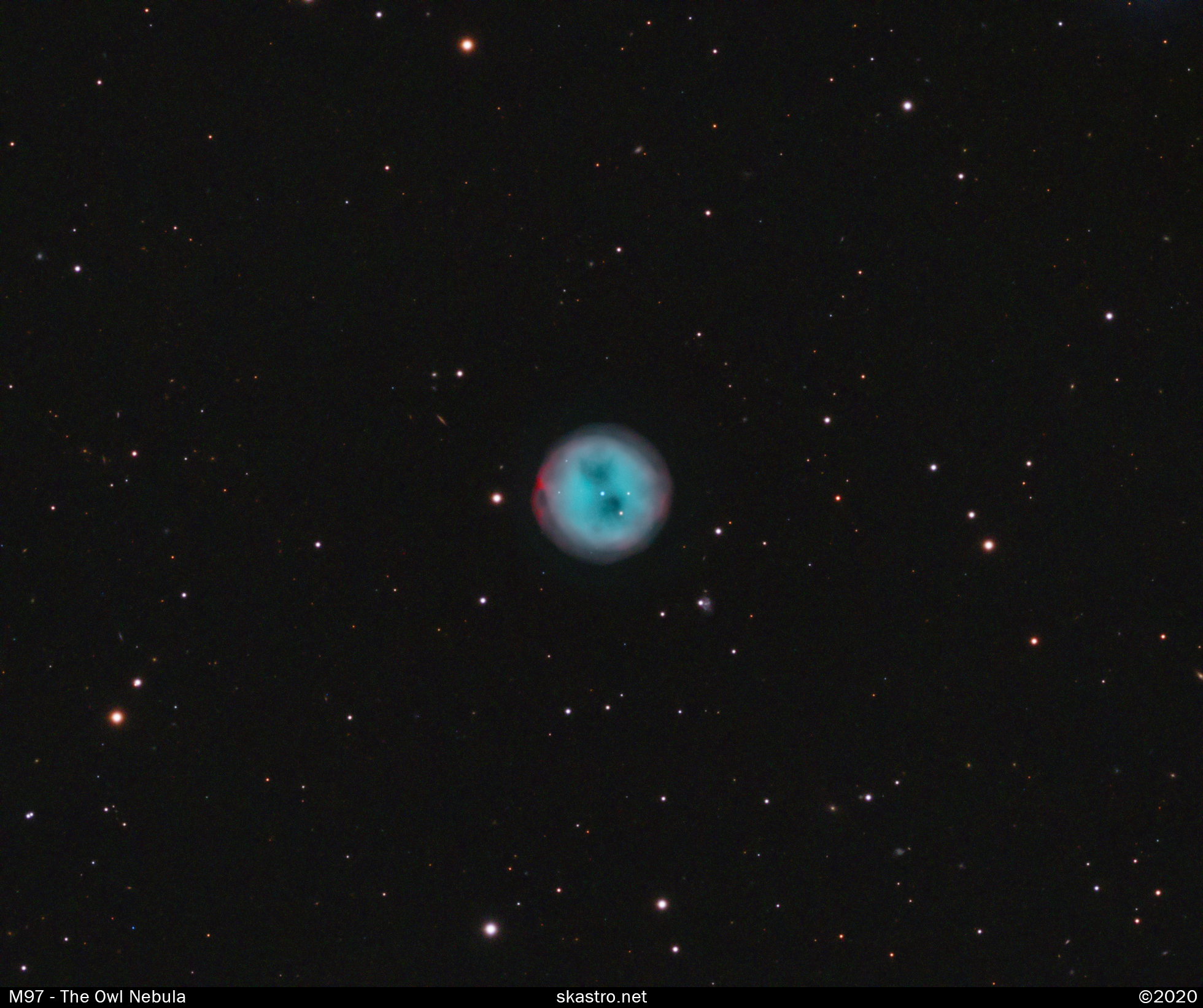
M97 - The Owl Nebula TEC 140
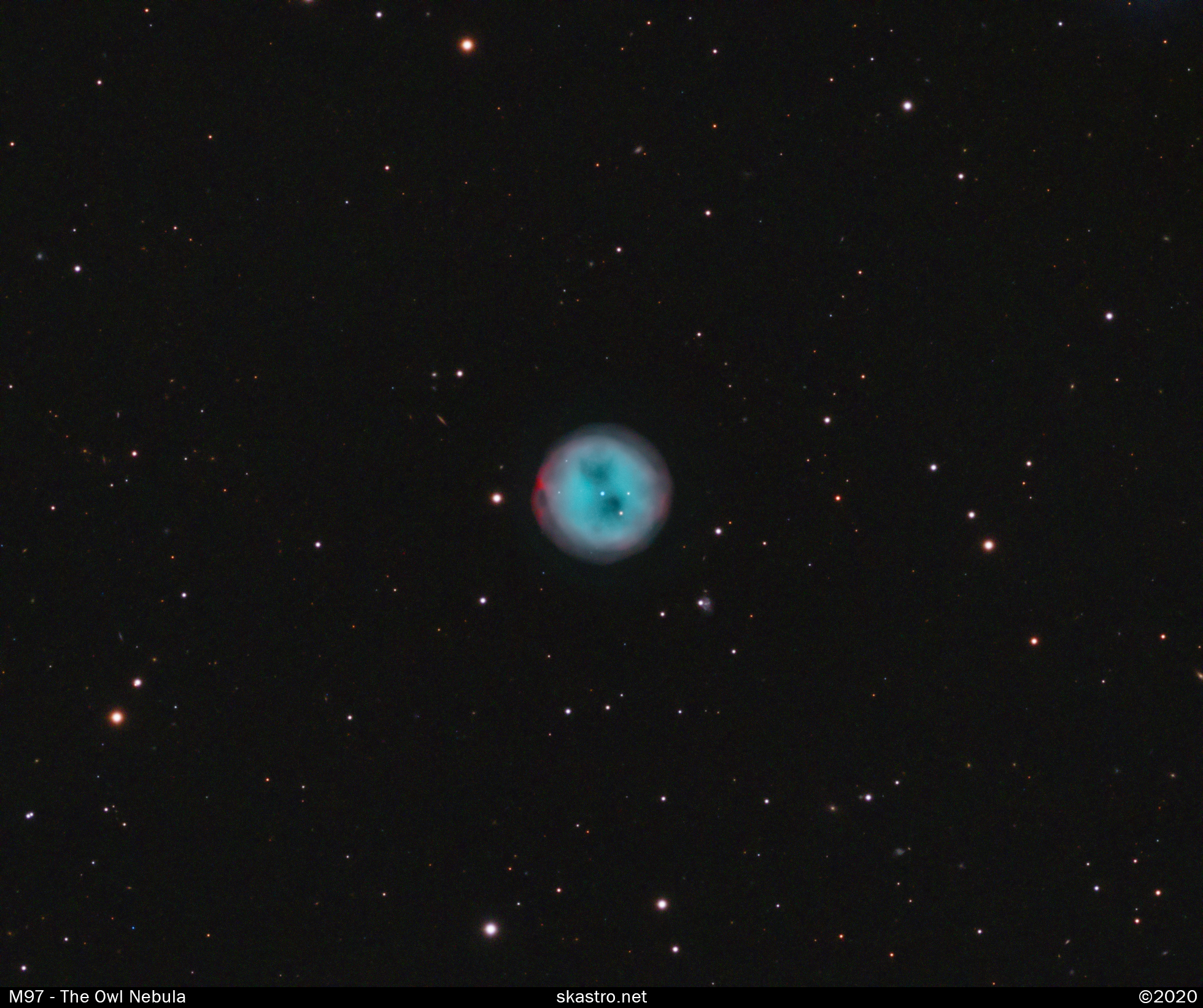
The Owl Nebula is a planetary nebula in the constellation of Ursa Major, one of three planetary nebulae in the Messier catalogue. It is visible as a faint smudge in amateur telescopes but the colours are not evident visually. It is called The Owl Nebula because of the resemblance to the face of an owl. 6 hours and 30 minutes of LRGB in this image
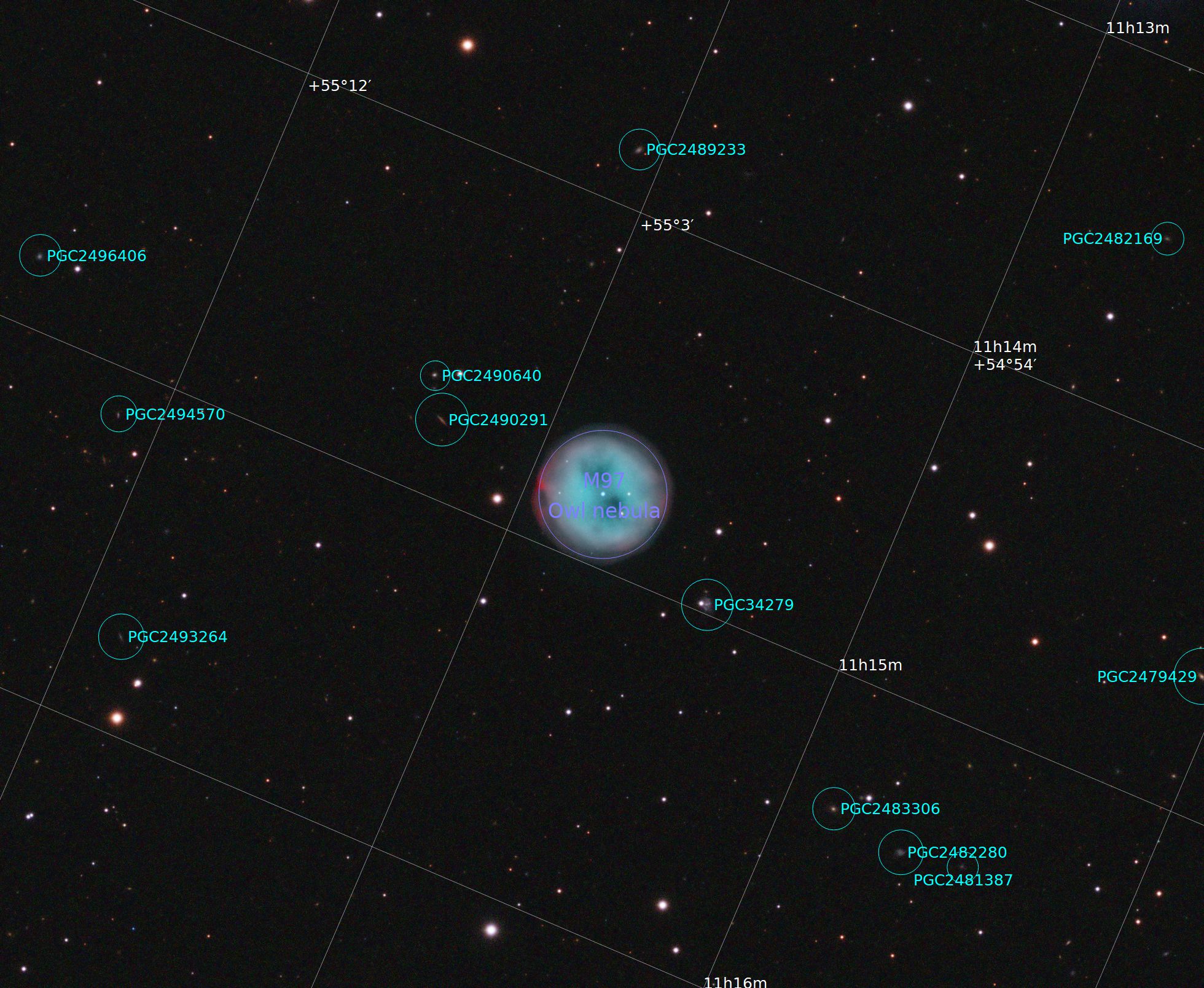
The annotated version above shows many distant galaxies in the same field of view as M97, although obviously these are very much more distant.
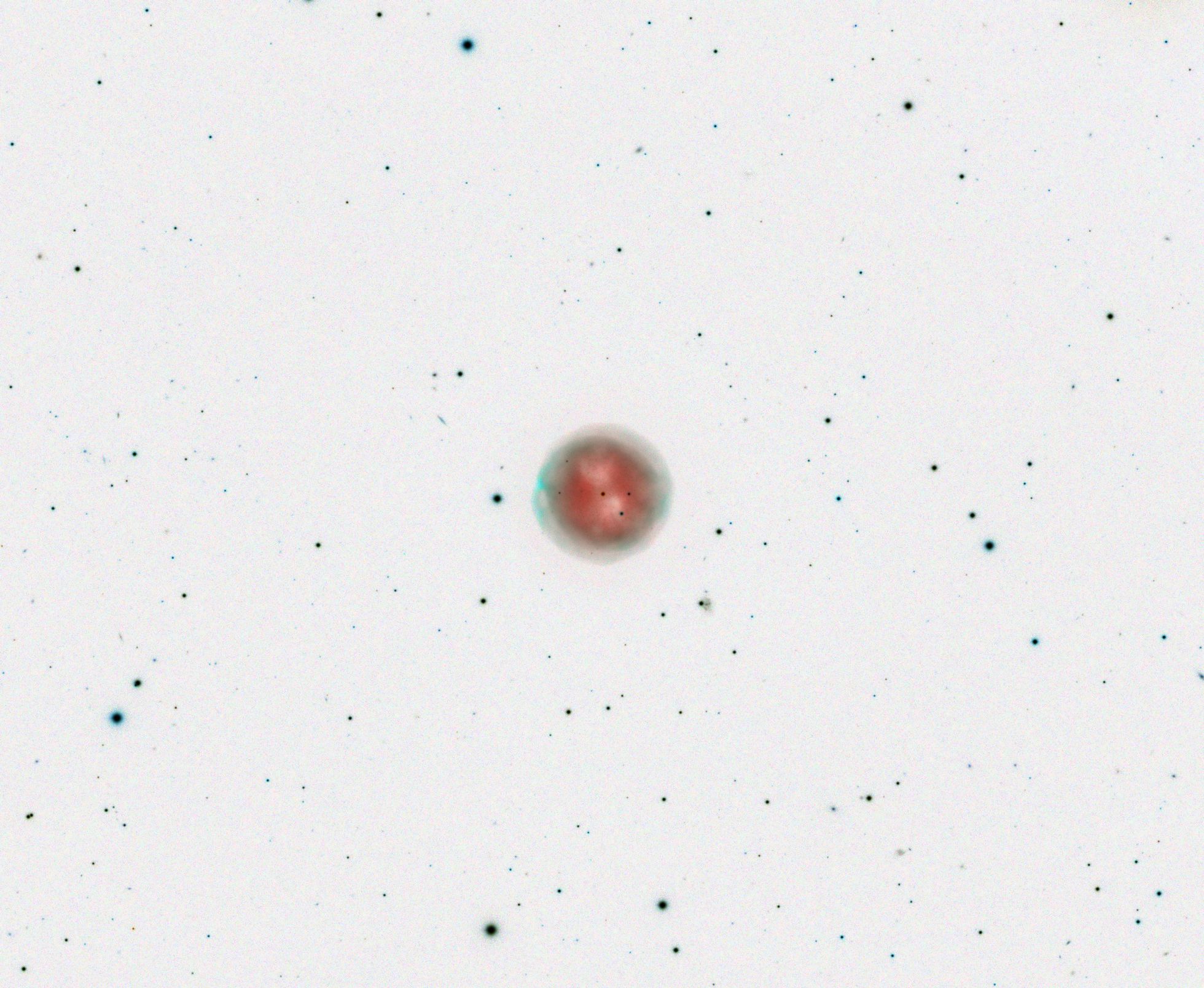
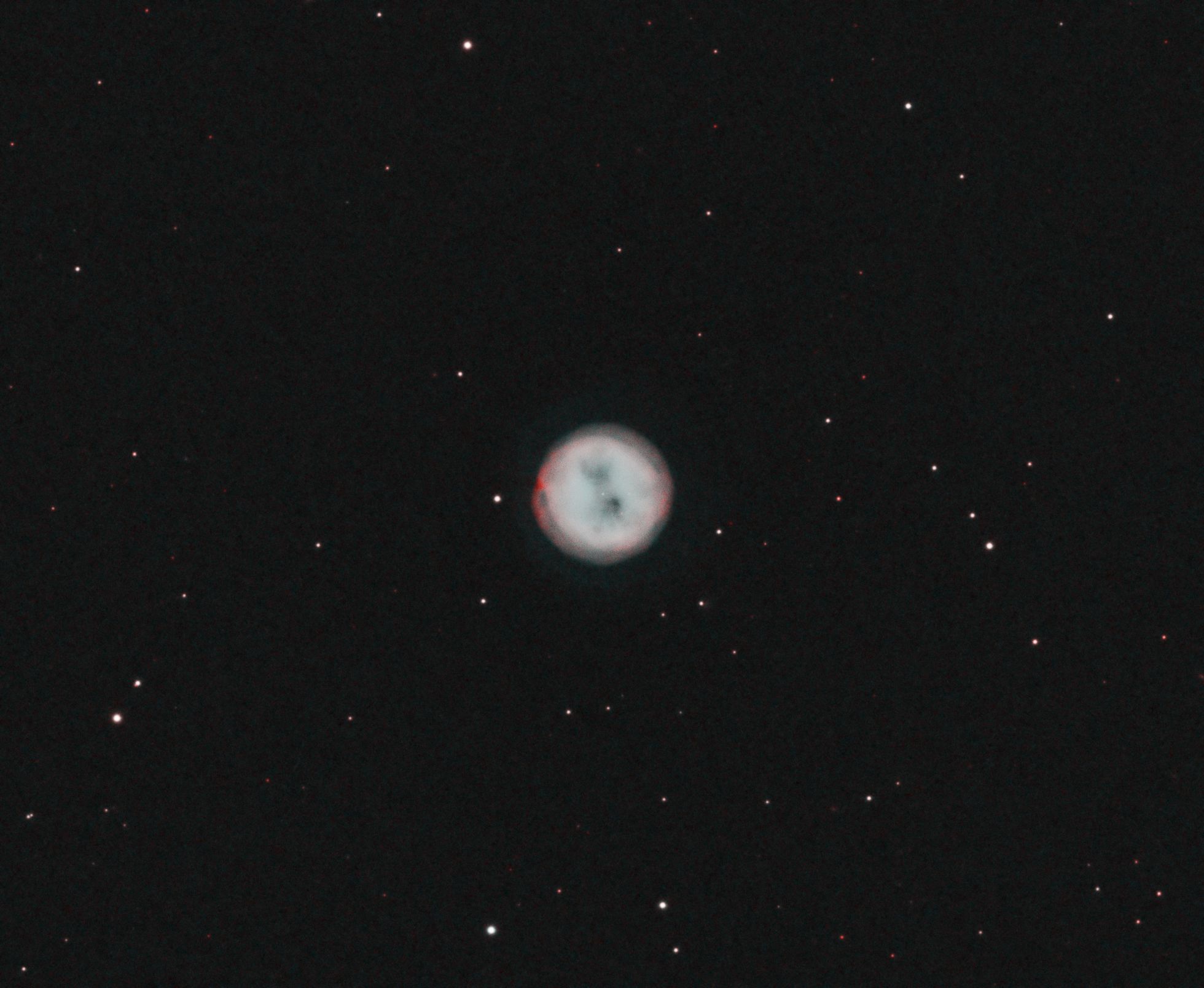
The HOO version above shows the Owl Nebula with Hydrogen Alpha mapped as Red channel and OIII mapped to Green and Blue to create the HOO palette colours. 3 hours and 30 minutes of HaOIII. This HOO image could really do with more data added to it in the Ha and OIII channels and I hope to do this next spring hopefully.
Image Technical Data
This image was captured with TEC 140 refractor and Atik 460 CCD with Astrodon LRGBHaOIII (3nm) filters during Spring 2020 (during the coronavirus lockdown in the UK) from my backyard in Nottingham. Mount is my MESU 200 guided with OAG. There is a quite a lot of data in these images as follows. Everything binned 1x1:
Lum 20 x 600s; Red 13 x 30s; Green 12 x 300s; Blue 13 x 300s; Ha 12 x 600s; OIII 9 x 600s
M97 - The Owl Nebula TEC 140
The Owl Nebula is a planetary nebula in the constellation of Ursa Major, one of three planetary nebulae in the Messier catalogue. It is visible as a faint smudge in amateur telescopes but the colours are not evident visually. It is called The Owl Nebula because of the resemblance to the face of an owl. 6 hours and 30 minutes of LRGB in this image
The annotated version above shows many distant galaxies in the same field of view as M97, although obviously these are very much more distant.
The HOO version above shows the Owl Nebula with Hydrogen Alpha mapped as Red channel and OIII mapped to Green and Blue to create the HOO palette colours. 3 hours and 30 minutes of HaOIII. This HOO image could really do with more data added to it in the Ha and OIII channels and I hope to do this next spring hopefully.
Image Technical Data
This image was captured with TEC 140 refractor and Atik 460 CCD with Astrodon LRGBHaOIII (3nm) filters during Spring 2020 (during the coronavirus lockdown in the UK) from my backyard in Nottingham. Mount is my MESU 200 guided with OAG. There is a quite a lot of data in these images as follows. Everything binned 1x1:
Lum 20 x 600s; Red 13 x 30s; Green 12 x 300s; Blue 13 x 300s; Ha 12 x 600s; OIII 9 x 600s