
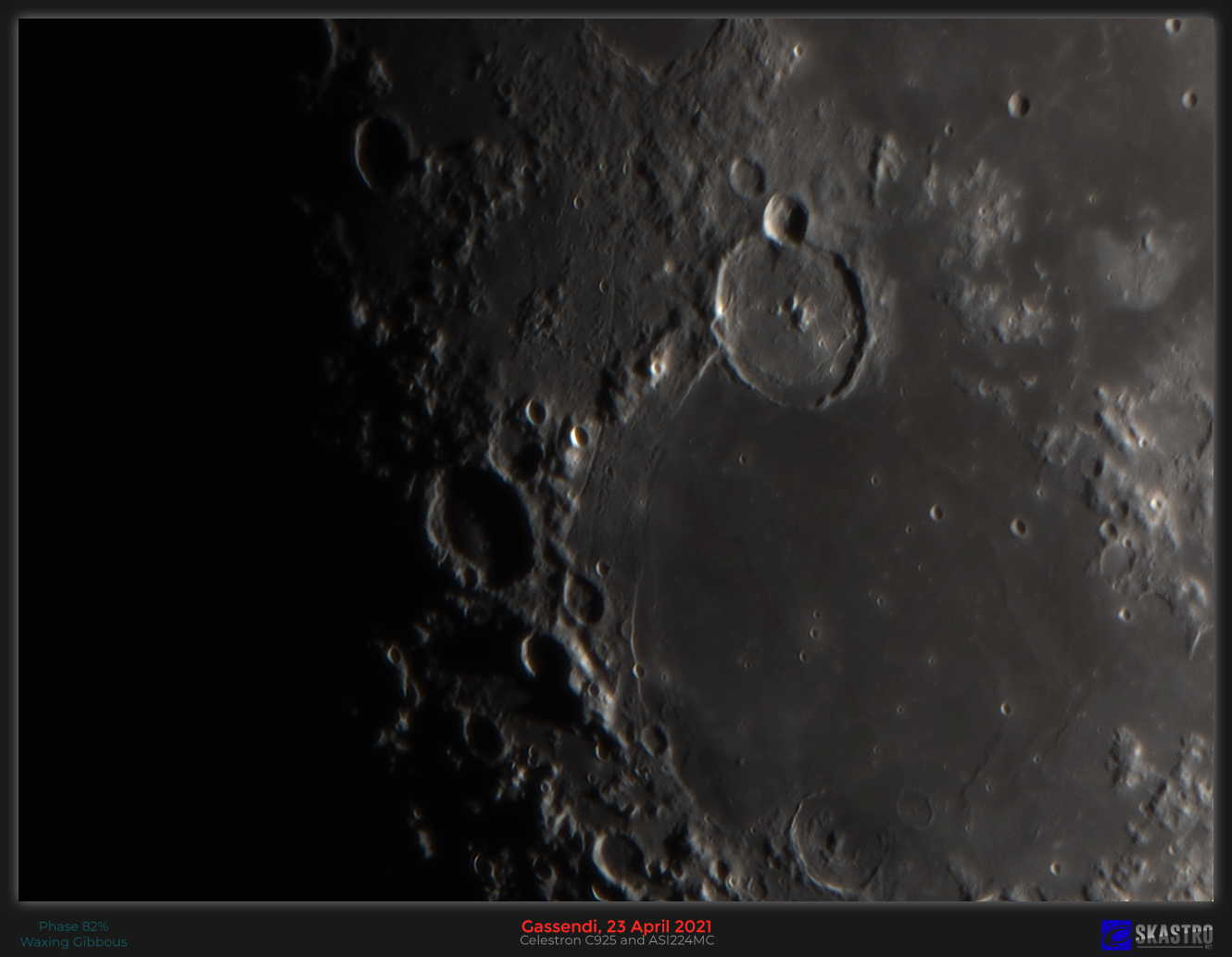
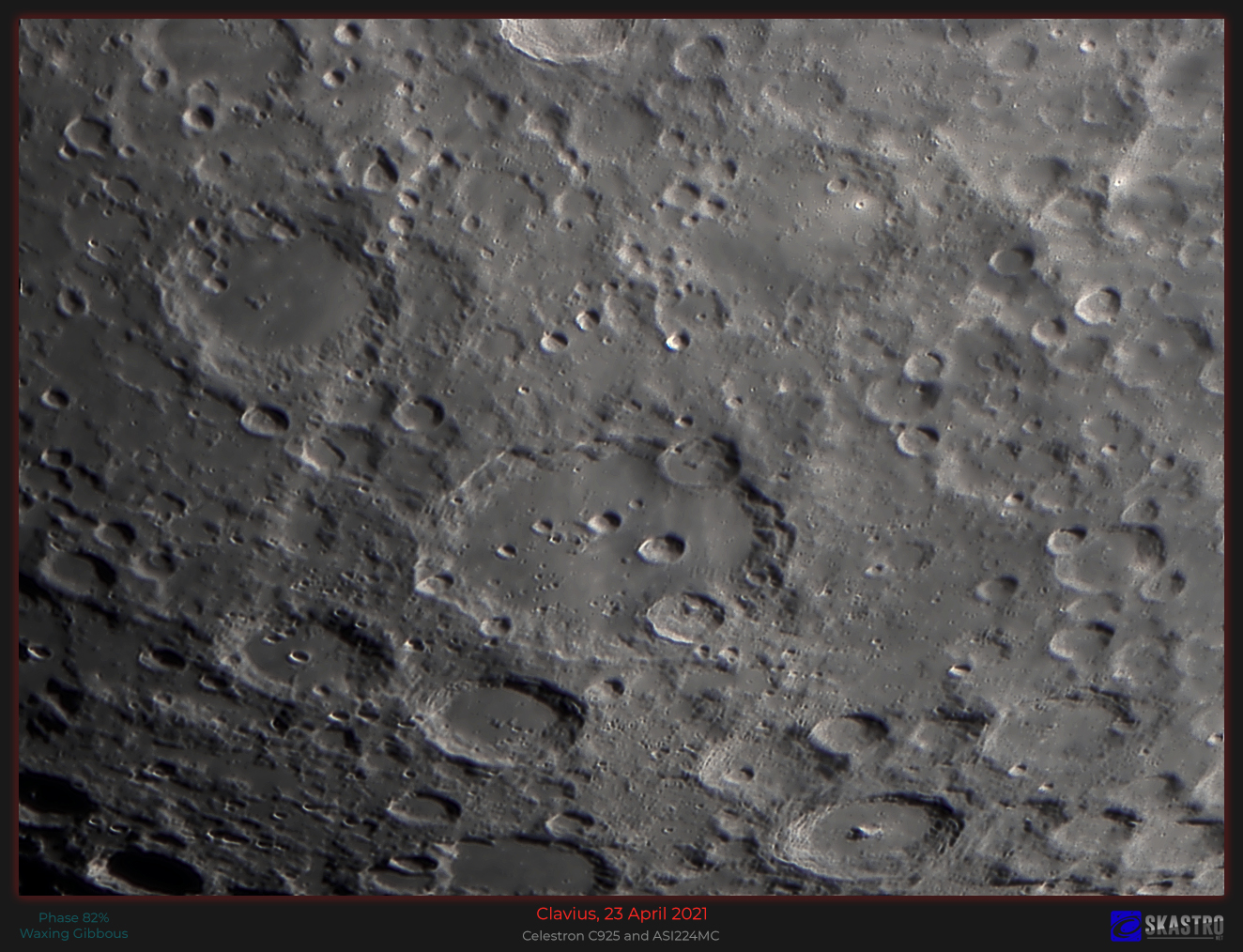
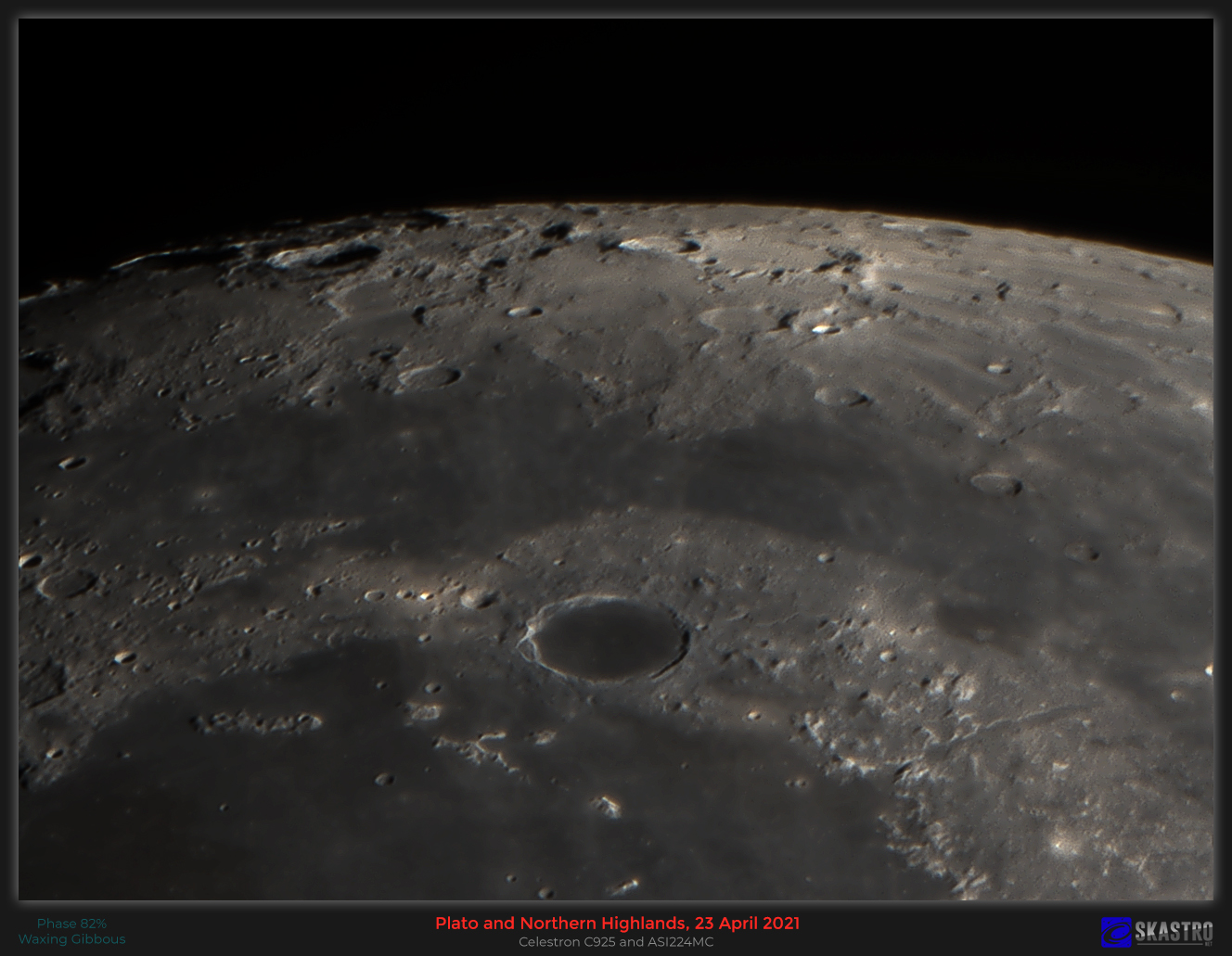
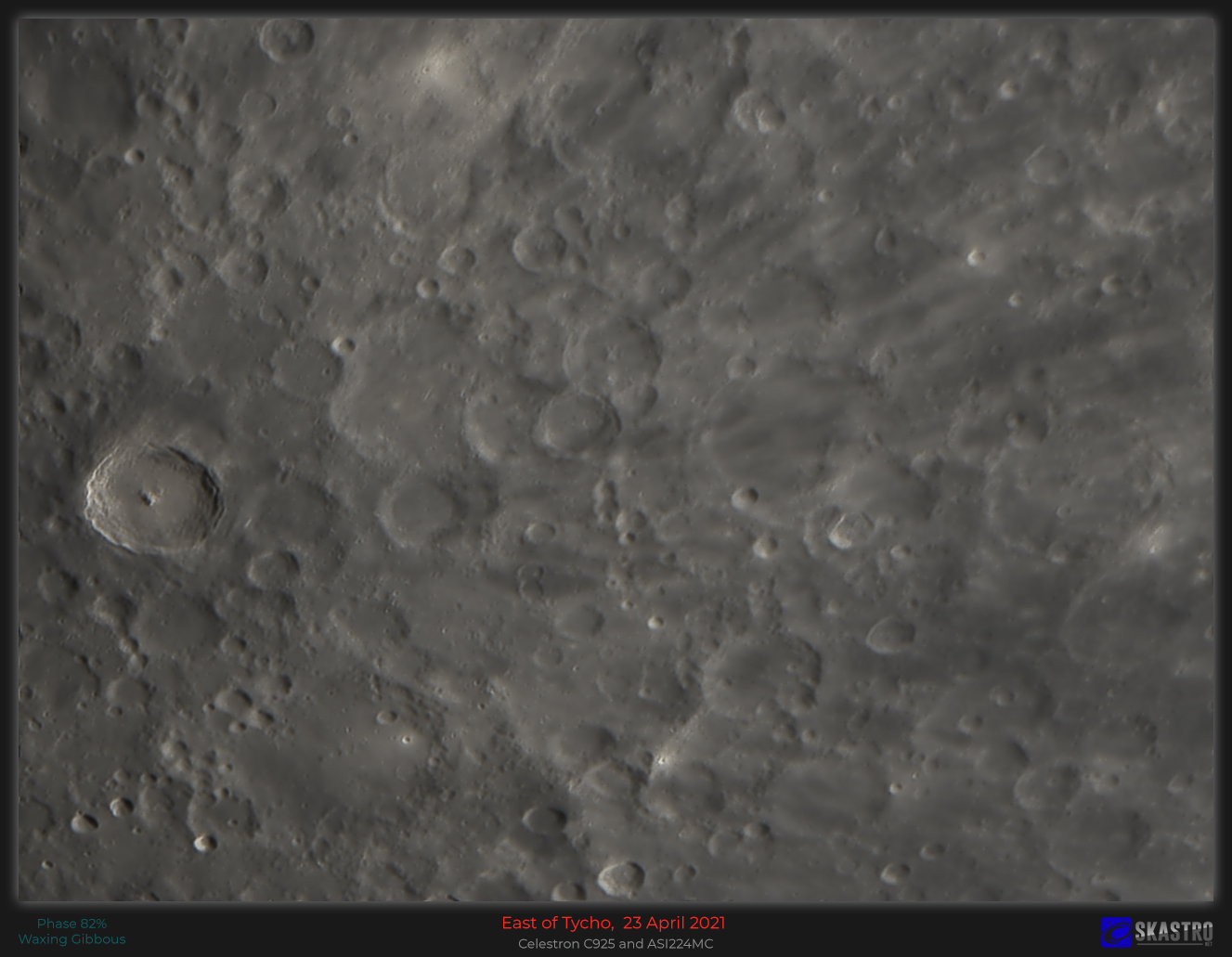
Lunar Pictures from 23rd April 2021 C925 and ASI224MC
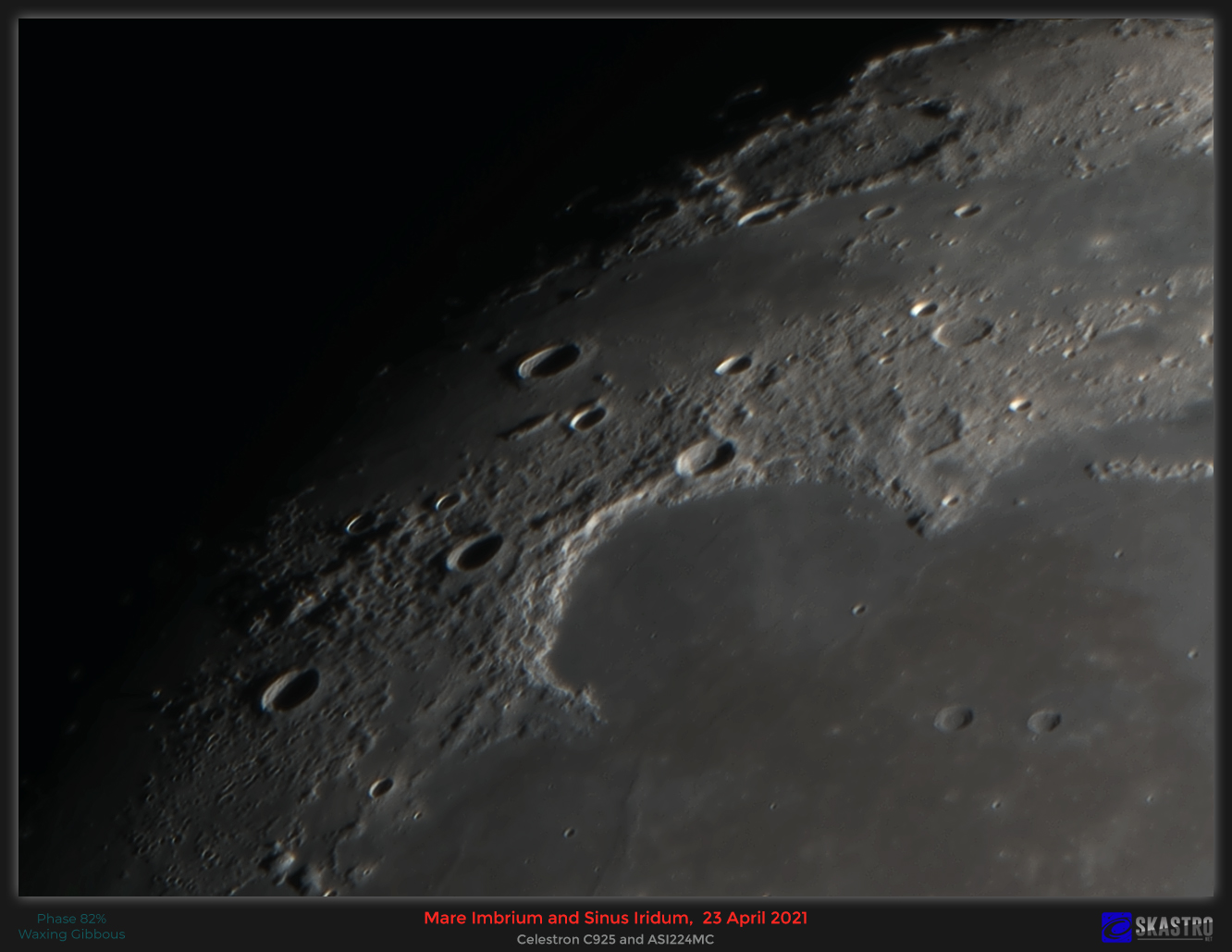
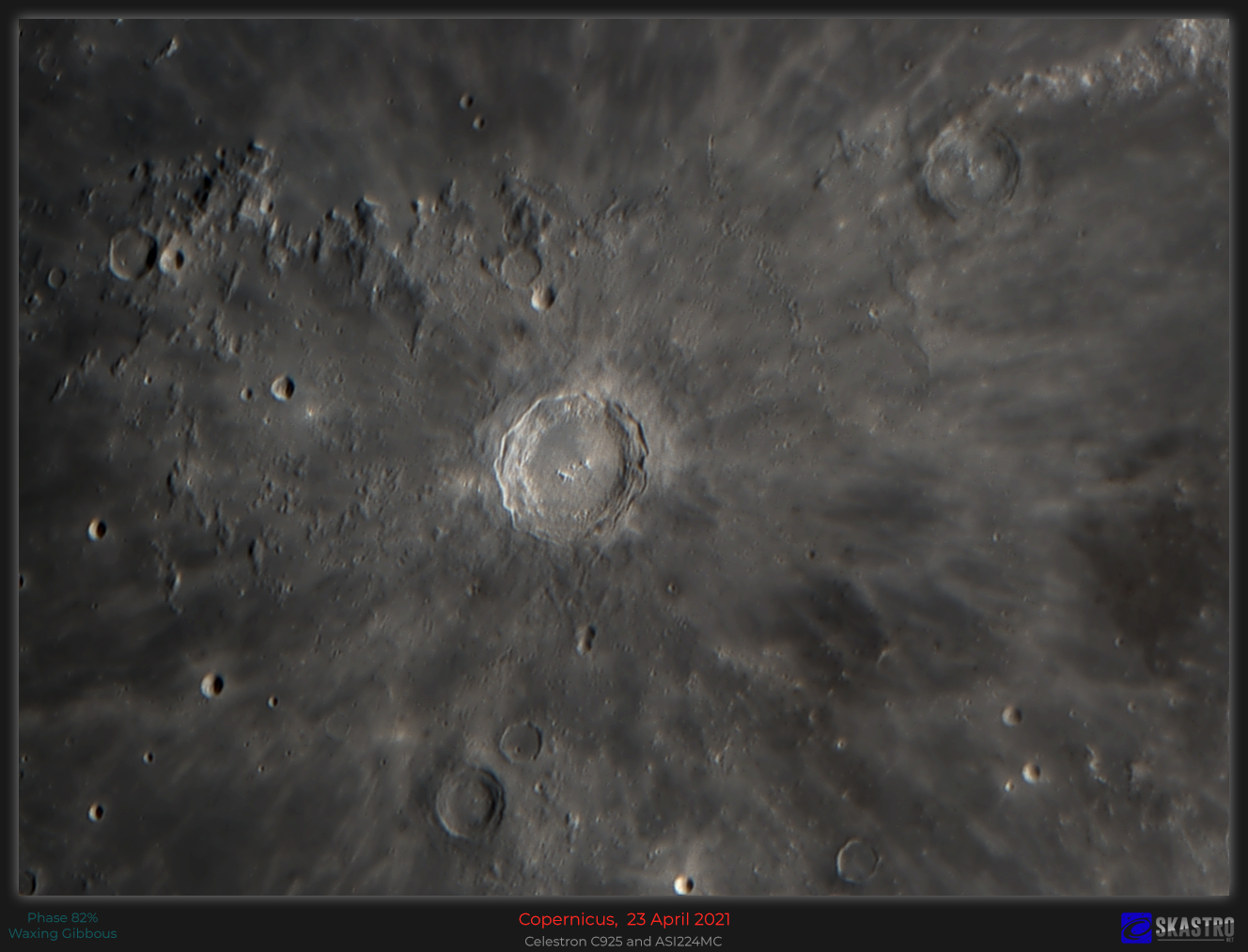
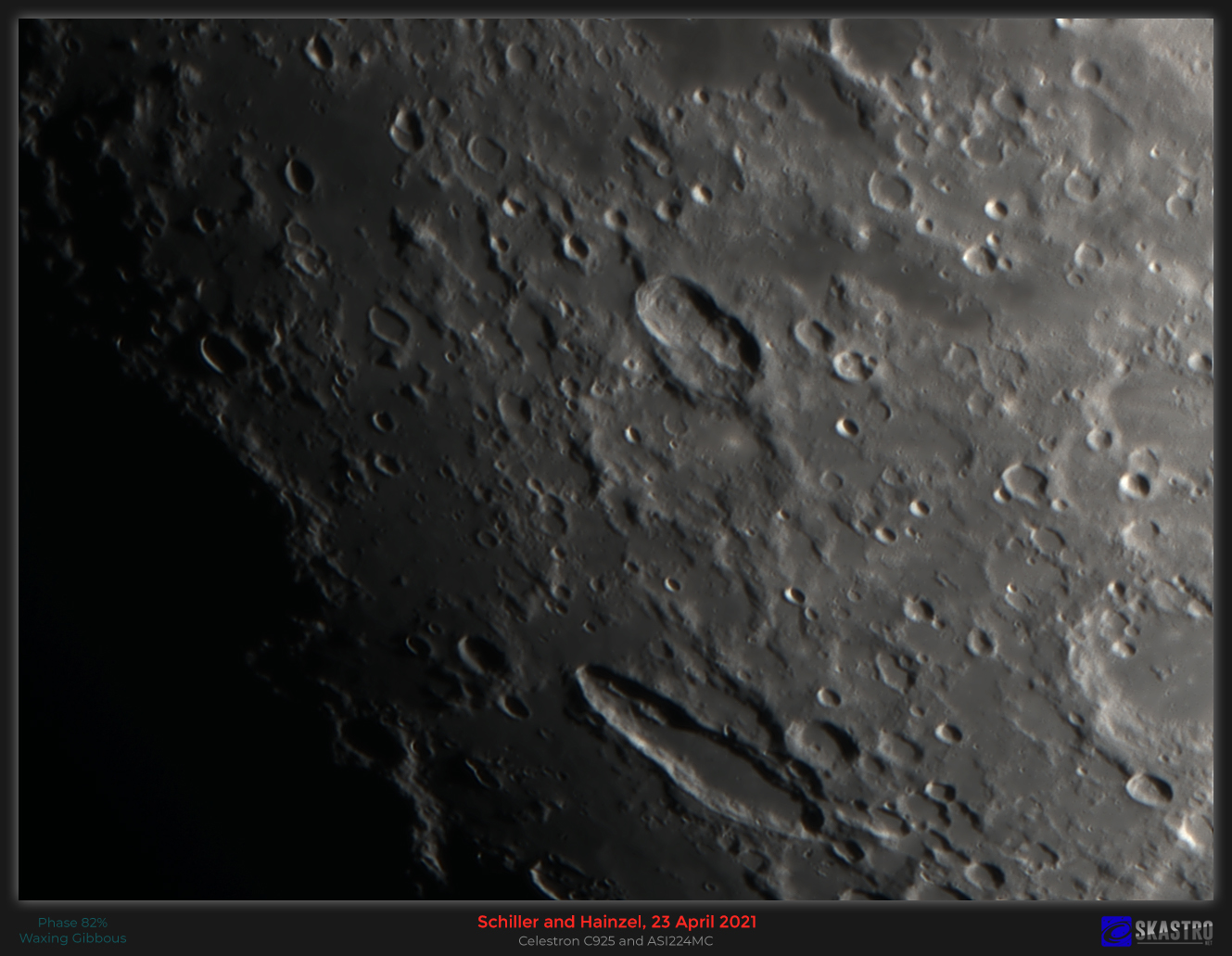
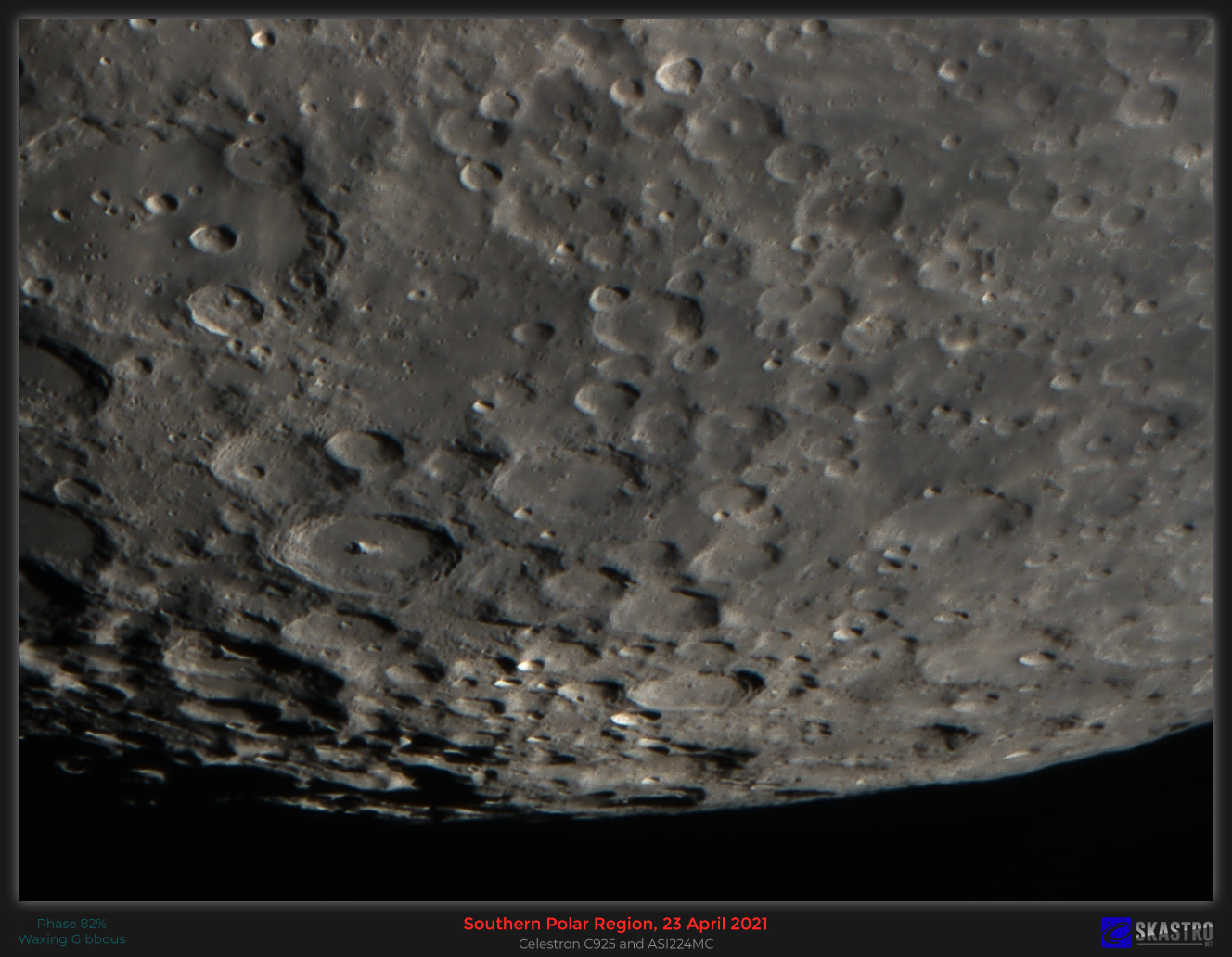
A selection of images I took with my C925 and ASI224MC. Transparency was reasonably good but seeing was quite poor and the image was wobbly. Each image is developed from a 5000 frame .ser file choosing the best 15% of frames as a result of the poor seeing. The Moon is at a phase of 82% waxing gibbous and some nice shadows on the terminator.
From my back yard observatory in Nottingham, UK. Using Celestron C925 SCT telescope and ASI224MC colour high speed planetary camera.
Telescope is at its native focal length of F10 for all these images since the seeing was much too unstable to use a Powermate or Barlow, even a x2 one woudl have been too much on this session.

Lunar Images from 25th March 2021 with TEC140 and C925 SCT with ASI174M
Images on this post were made by using the TEC140 and Celestron C925 SCT telescopes with my ASI174M mono camera. From my backyard in Nottingham on the evening of 25th March 2021 with the Moon high to the south in Leo at a phase of 86% waxing (i.e. growing towards full moon) and at an altitude of about 50 degrees above the horizon. A slightly hazy sky made for quite good seeing although it was very cold and windy and the moon was jiggling about a lot in the gusts, even inside my sheltered observatory. I had to try and time my capture runs between these gusts and passing clouds, a process that was not always successful. As a consequence I accumulated nearly 600G data for these four pictures in total, much of which had to be deleted. I was outside at the scope for about 90 minutes doing these captures.
All the captures were done in Firecapture software at about 60 fps in 16-bit mode. I used DeepSkyStacker for processing the .ser files and then Photoshop and PixInsight for image processing.
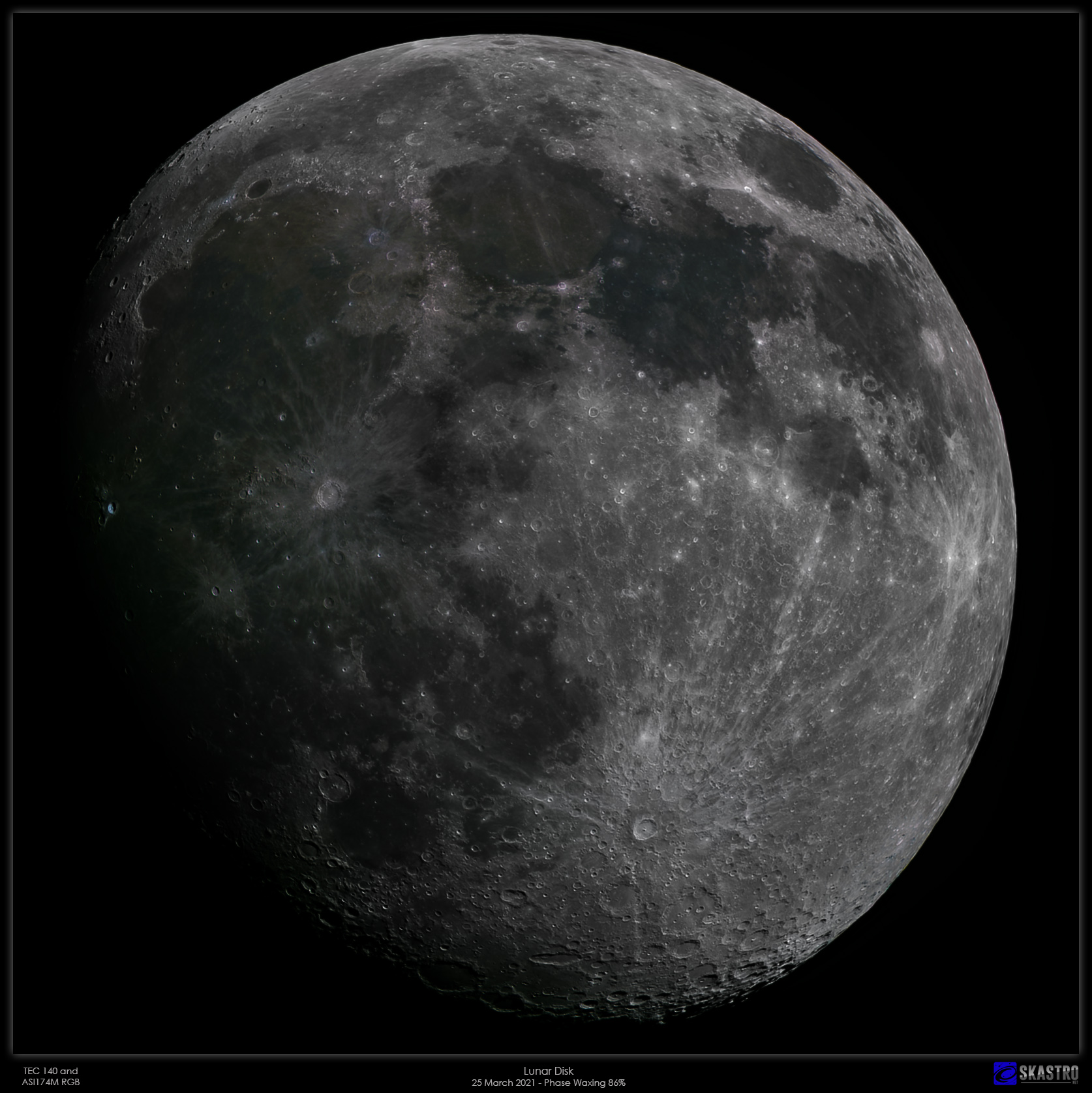
First up, the partial disk image below is with my TEC140 refractor (flattener removed) and the ASI174M camera. This is a two pane mosaic using RGB (Baader CCD RGB filters) for colour and a Baader Ha 7mm filter for the luminance. For the merging together of the two panes I used the Photoshop merge tool. The image is the best 50% of 6000 frames in each of the RGB channels and the top 50% of 10000 frames in the Ha. For my next run on this I am going to try for 20000 frames in each of the RGB to try and get more colour since I struggled to get more colour out of the bluer cobalt rich regions.
I am very happy with this image other than I wish it had that bit more colour. I think my technique of the Ha channel for the luminance is highly effective. I deconvolved this in PixInsight and then used a bit of HDR multiscale transformation and a bit of Unsharpmask to get a wonderful crisp luminance without overdoing it as I often see with some lunar images.
The RGB is simply aligned RGB channels with the alignment performed with the Star Alignment tool in PixInsight which is easier than Photoshop in my opinion for this purpose.
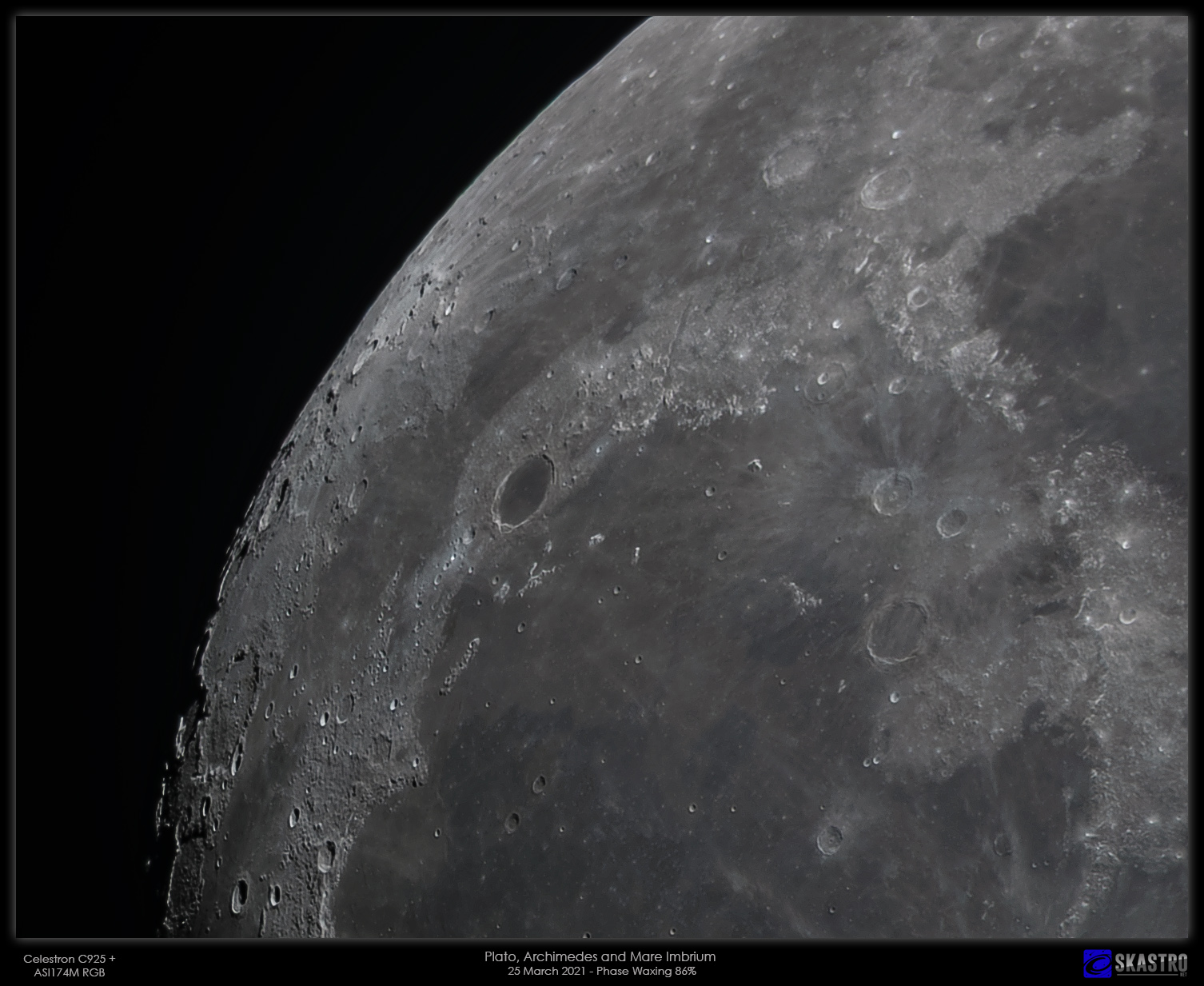
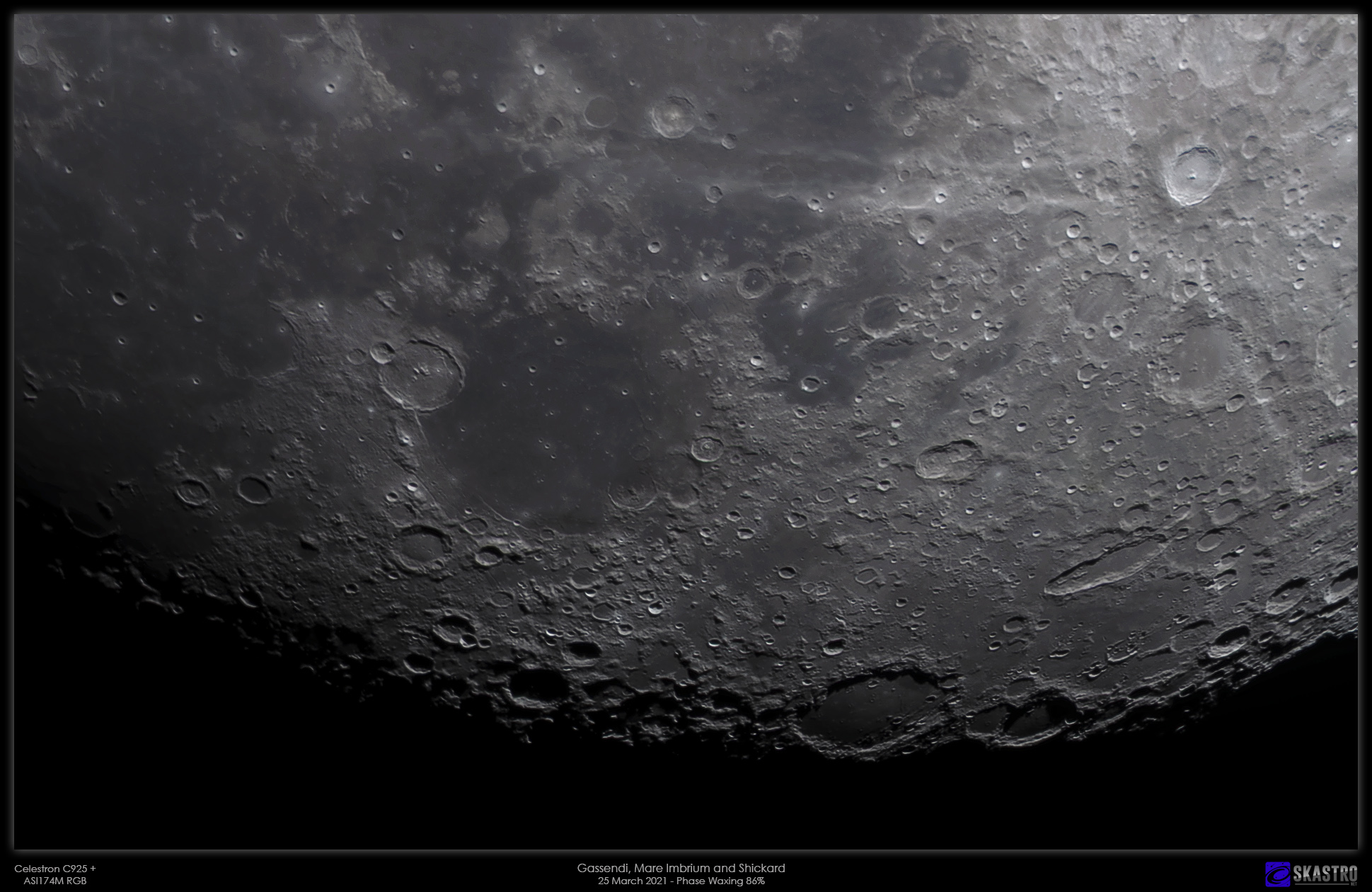
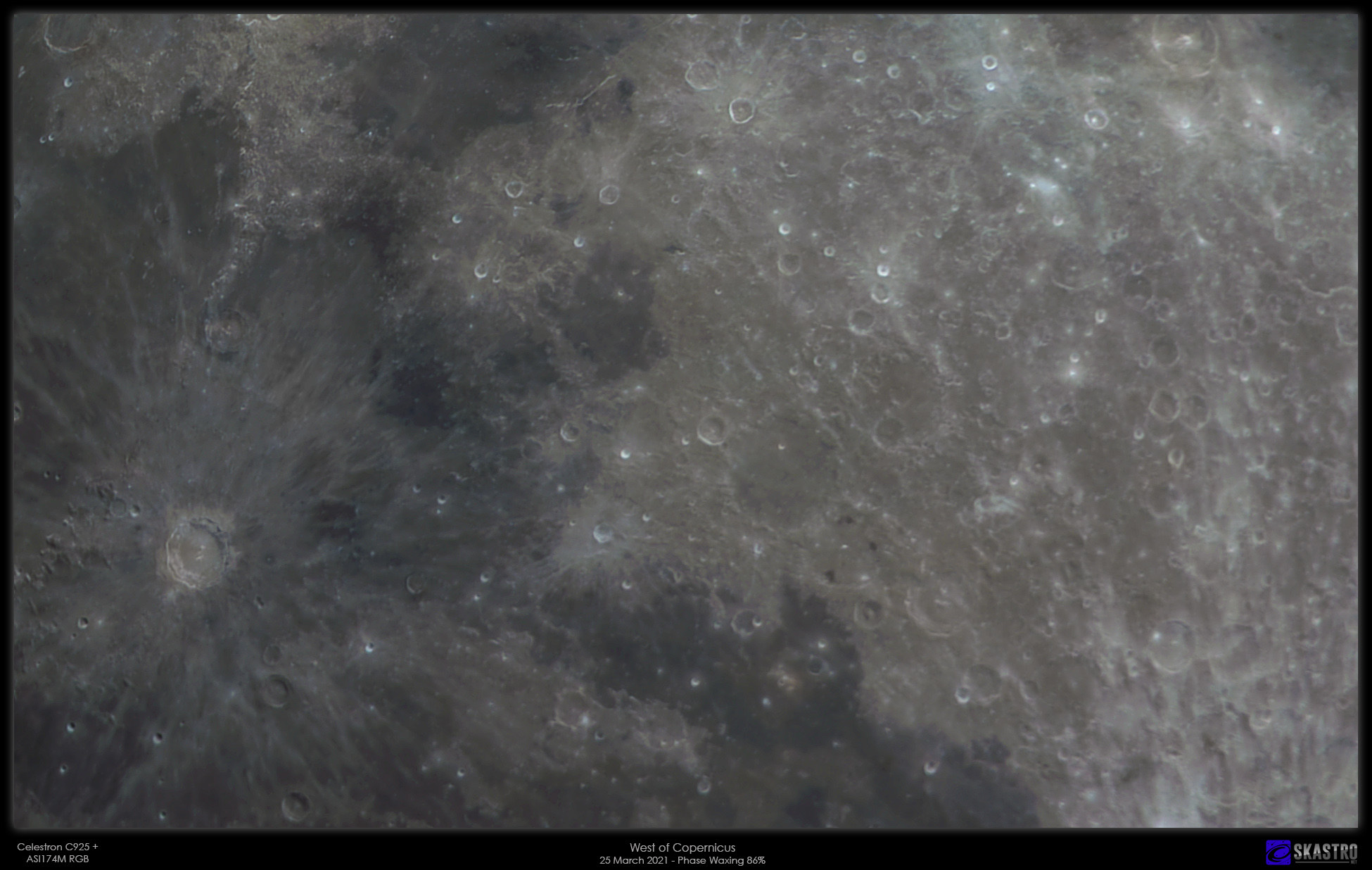
Below we have three images of the Moon in a closer up or more "zoomed in" imaging scale. These are with the C925 SCT telescope at its native F10 focal length - i.e. no Barlow - and again with the ASI174M with RGB filters. I did not use a dedicated luminance channel with these three images and I instead used RGB channels and made a pseudo-luminance after balancing those three channels in a 1:1:1 combination to create the pseudo-luminance. I then used deconvolution, HDR multiscale transformation and Unsharpmask in PixInsight on this pseudo-luminance to enhance the details before blending it with the RGB composite in Photoshop.
I hope you like them!
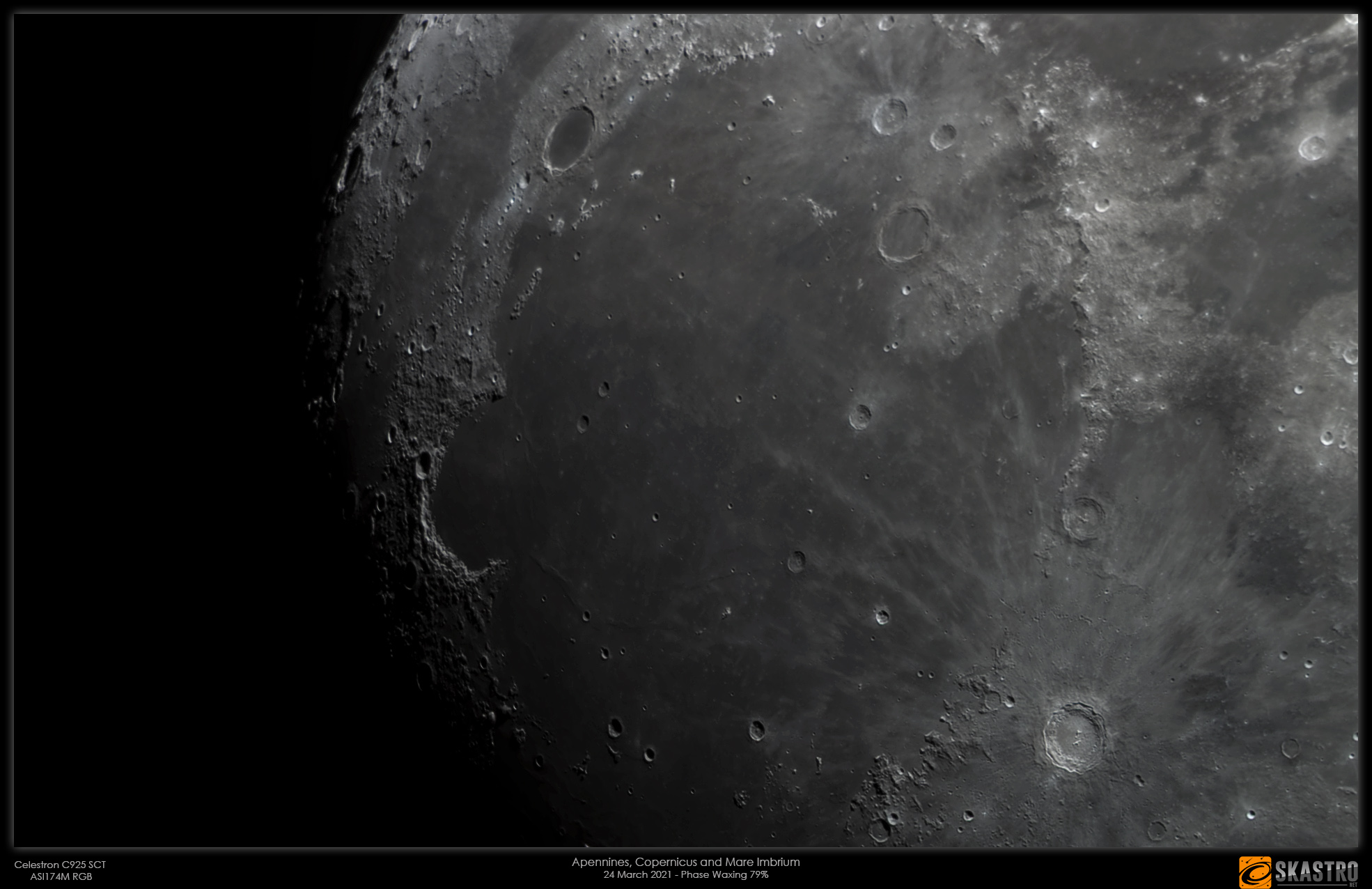
Lunar Images 24 March 2021 with TEC140 and Celestron C925 with ASI174M
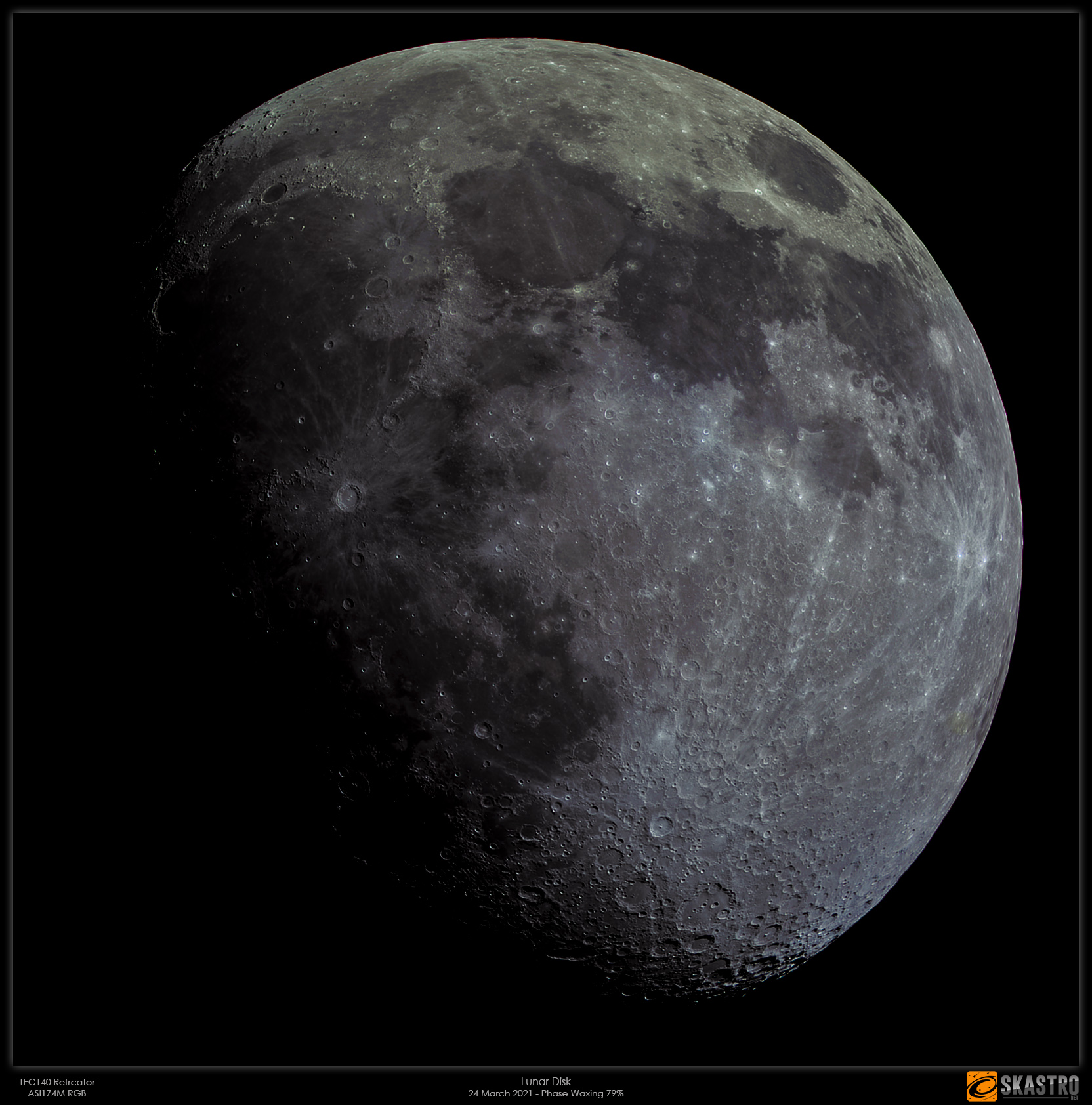
A selection of four images I took with my two main telescopes on the evening of the 24th March 2021 with The Moon at 78% waxing gibbous phase to the South in the constellation of Leo.
First up below is a main disk taken with TEC140 refractor. I shot RGB through those filters on my ASI174M camera and I took the luminance through a 7nm Ha filter. My field of view with the TEC140 and this camera is only half the disk and so I have to take sequence runs, one for the north and the other for the south and then combine them in Photoshop.
I then moved on to use my C925 SCT telescope again using the ASI174M in RGB mode. I did not capture a specific luminance channel this time and just used RGB and made a pseudo-luminance. The weather conditions were too windy to get a closer scale with the Barlow lens on this occasion.
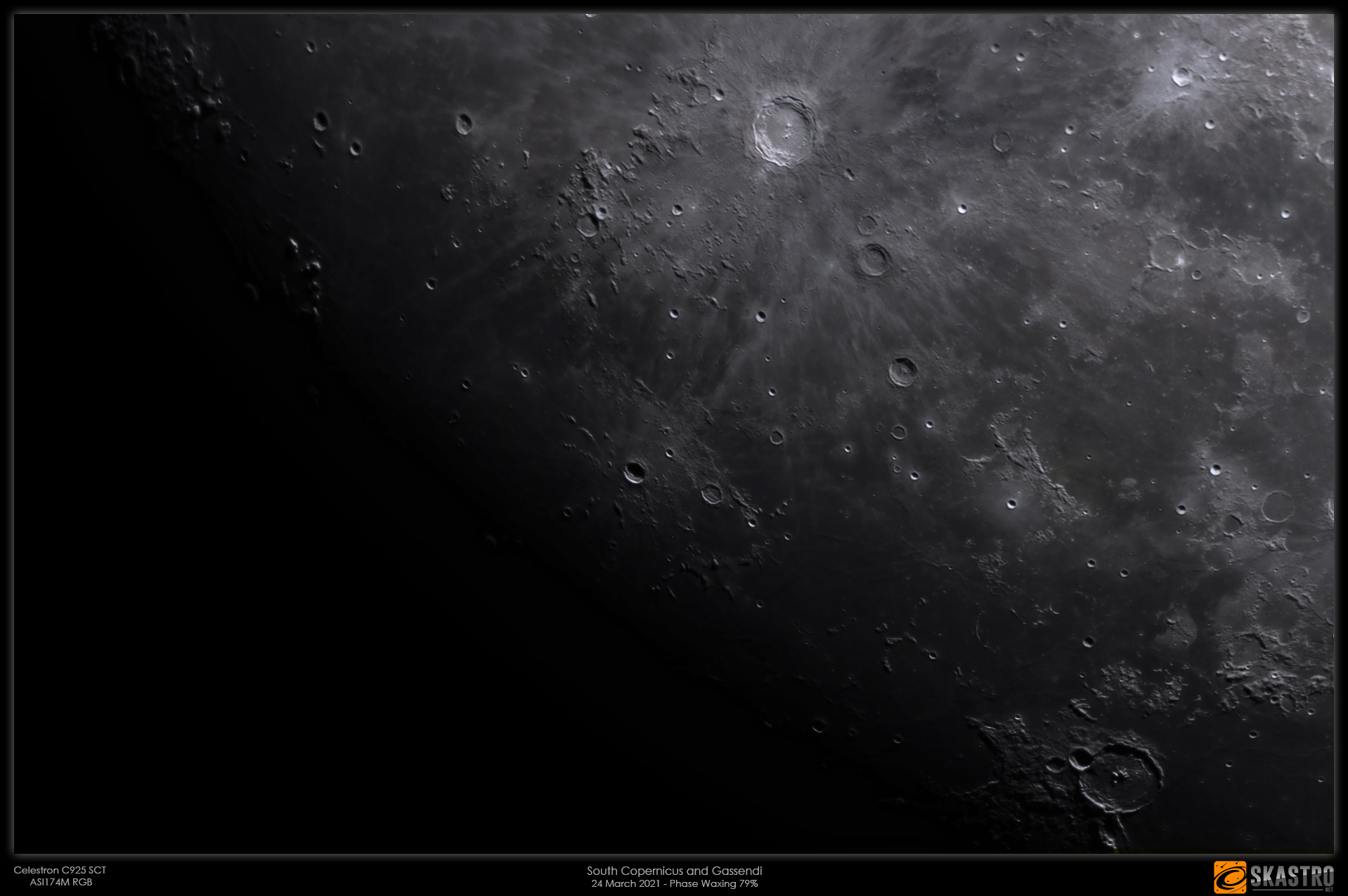
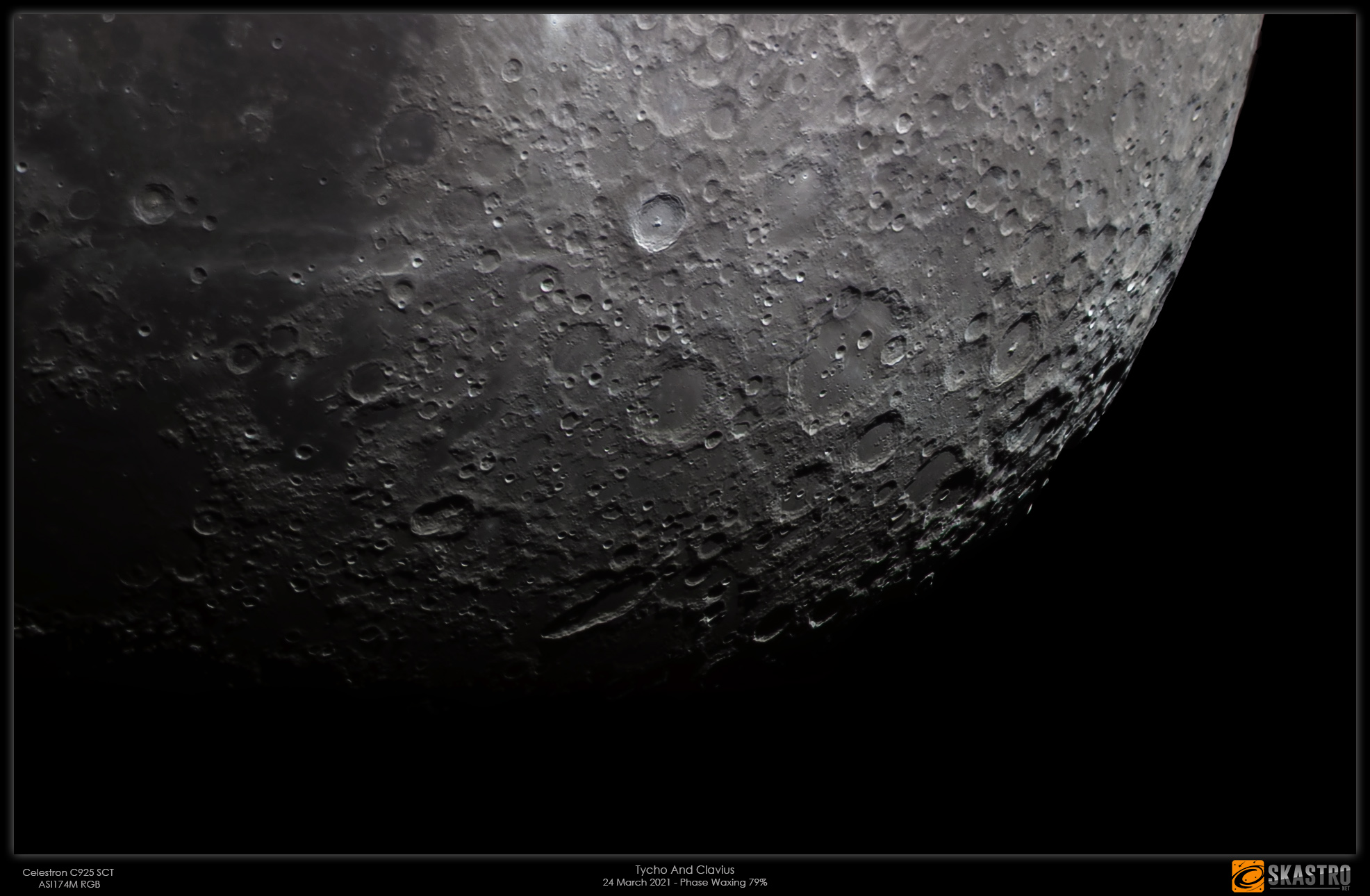
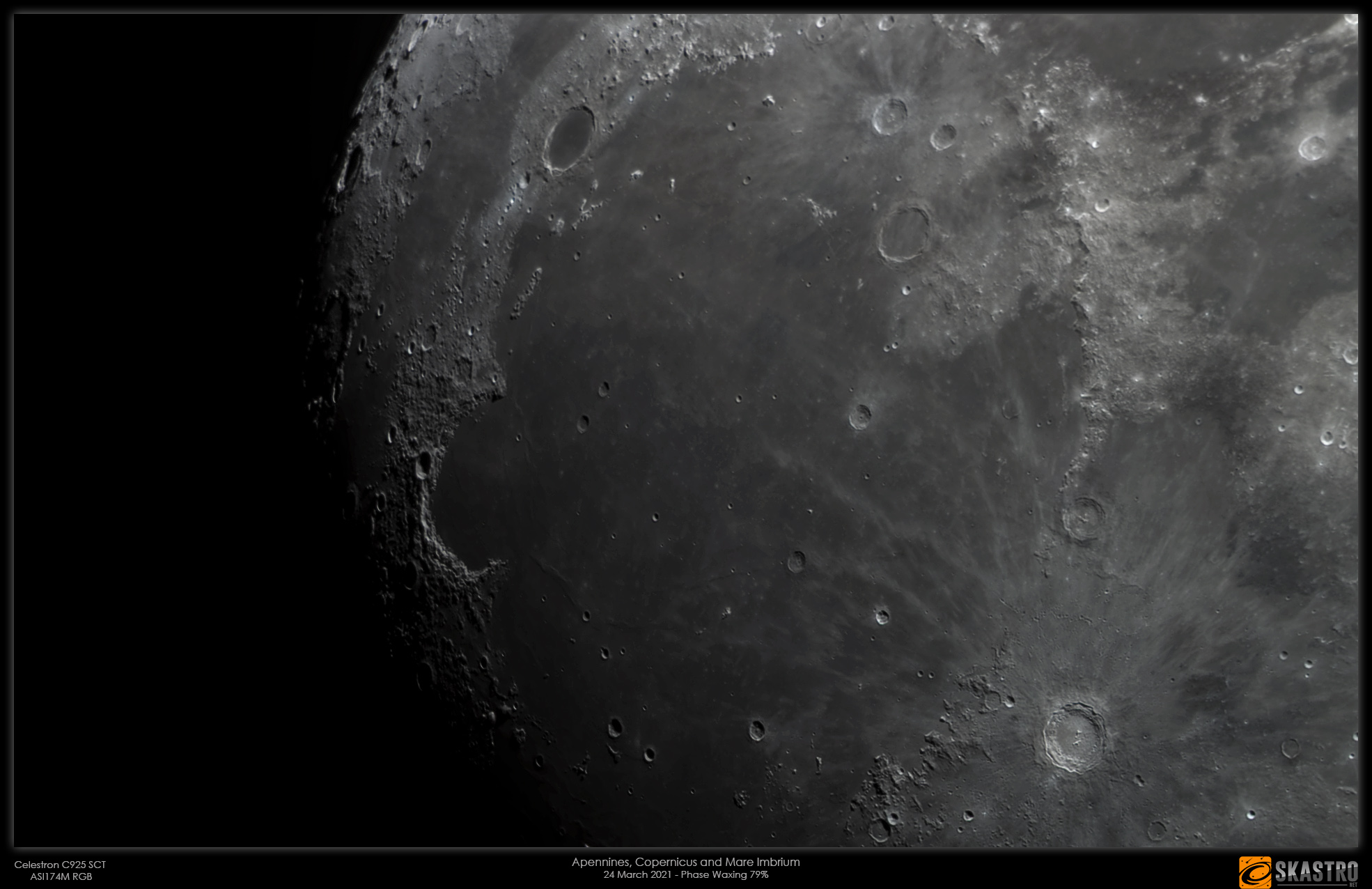
All images are RGB and captured with Firecapture software and then processed in Planetary System Stacker and then in PixInsight and Photoshop.