
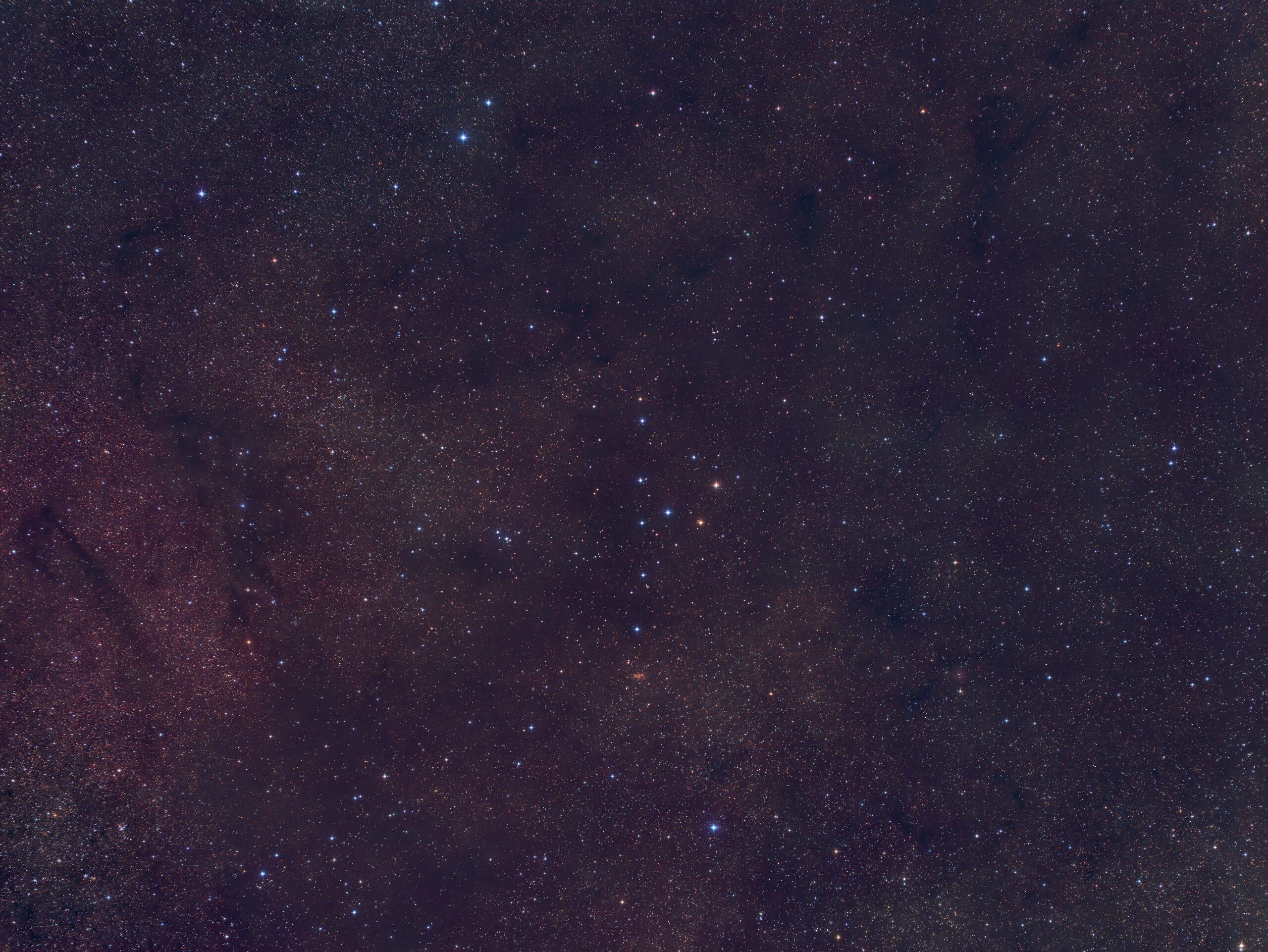
Collinder 399 "The Coathanger" Samyang 135mm
Collinder 399 or Brocchi's Cluster is offered nicknamed "The Coathanger" for its striking resemblance to that wardrobe item! If you look at the stars in the middle of the image and it looks very much like a coathanger on its side. It is located within the constellation of Vulpecula - The Fox - within a larger asterism called The Summer Triangle. The Coathanger is a chance, line-of-sight effect and the stars that form the appearance of the coathanger are not physically associated with each other at all and range from 350 to 2300 light years in distance.
The stars are backdropped against the vast clouds of glowing hydrogen that dominate the spiral arms of the Milky Way galaxy.
Image Technical Data
Uncompressed version of the image is here (opens in new tab).
Image captured in my backyard in Nottingham, UK on Sunday 20th September 2020. I used a Samyang (Rokinon) 135mm DSLR lens with a Moravian Instruments G2-8300 cooled CCD camera. This was mounted on my NEQ6 mount and guided with a Skywatcher Evoguider and ASI120MM guidecam. All exposures are binned 1x1.
Red > 12 x 300s; Green 10 x 300s; Blue 11 x 300s
All processing is done in PixInsight and image capture was with SGP.

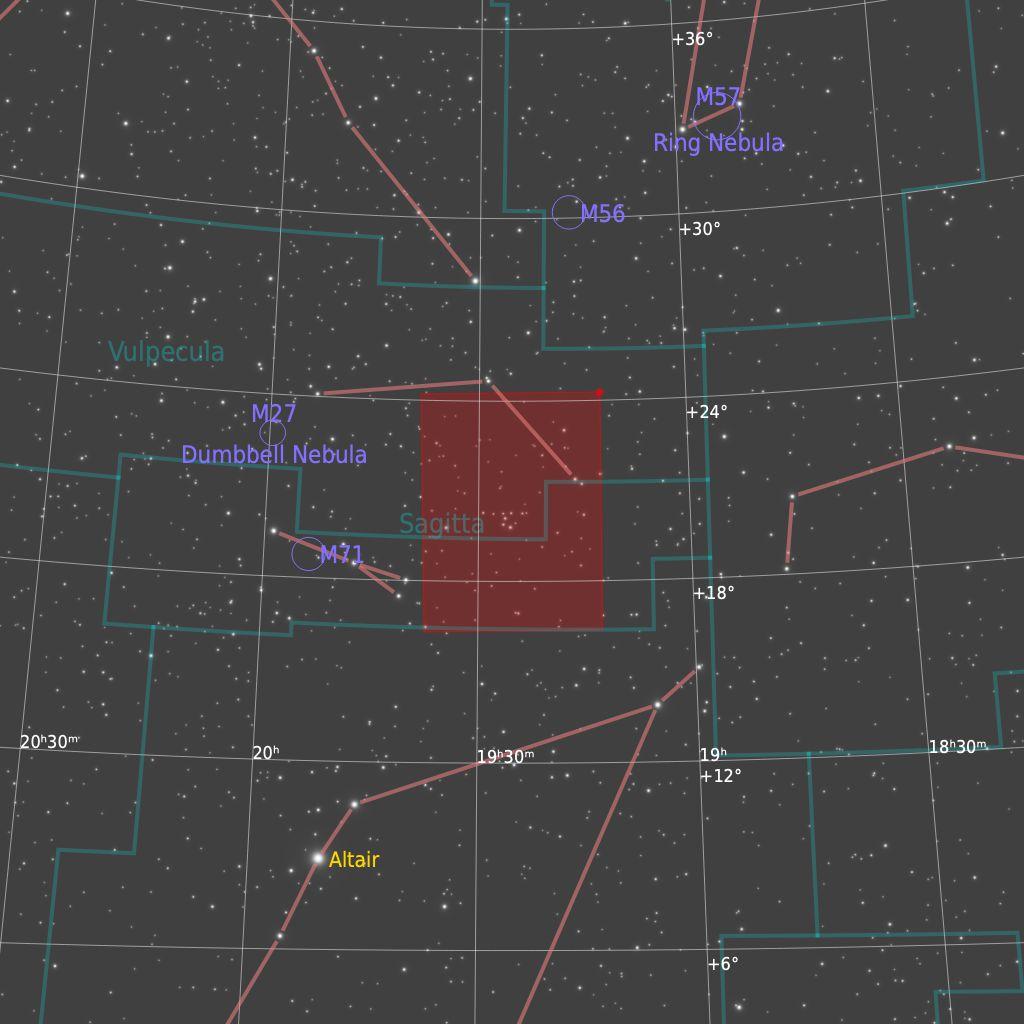

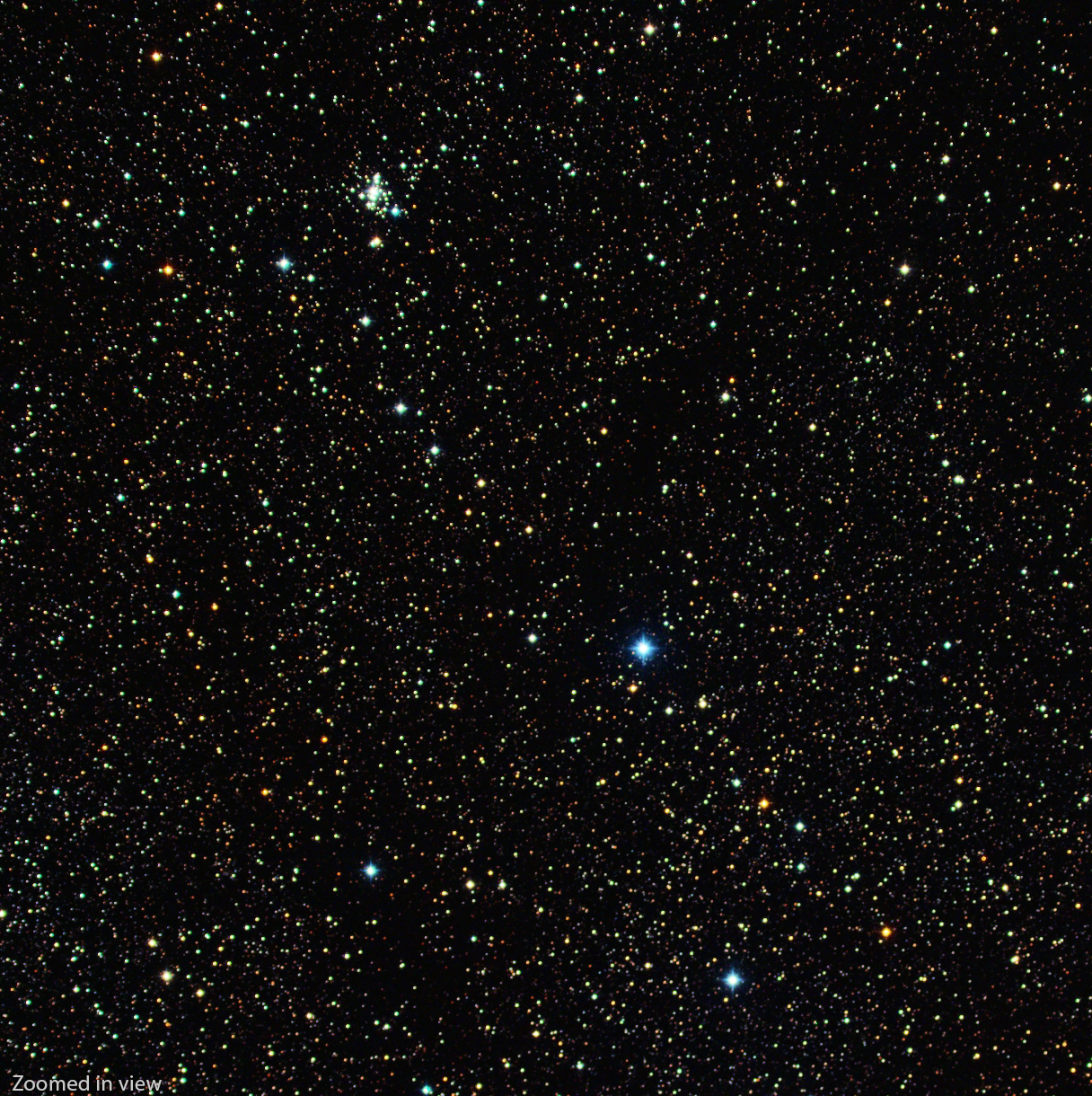
Kemble's Cascade with Samyang 135mm

Kemble's Cascade (Kemble 1) is a chance straight-line alignment of 17 or so stars between the 5th and 10th magnitudes in the far northern constellation of Camelopardalis. The stars are of different colours and look lovely in a widefield telescope or binoculars. At the end of line of stars is the open star cluster NGC 1502. This asterism is named after the Franciscan monk and amateur astronomer Lucian Kemble. The cascade itself is about three angular degrees in length.
Image Technical Data
Imaged from my backyard in Nottingham, UK on 14 September 2020. Part of an automated capture sequence and the exposures were taken between 02:00 > 04:00 in the morning. Needless to say I was in bed asleep at the time :) I processed the images afterwards. I used Samyang 135mm DSLR lens connected to my Moravian Instruments G2-8300 CCD camera with Astrodon RGB Gen 2 E series filters on my NEQ6 mount. All exposures binned 1x1. No separate luminance (i.e. just RGB)
Red > 12 x 300s ; Green > 12 x 300s ; Blue > 10 x 300s
Total integration time is just short of three hours. Processed in PixInsight and Photoshop and captured with Sequence Generator Pro.
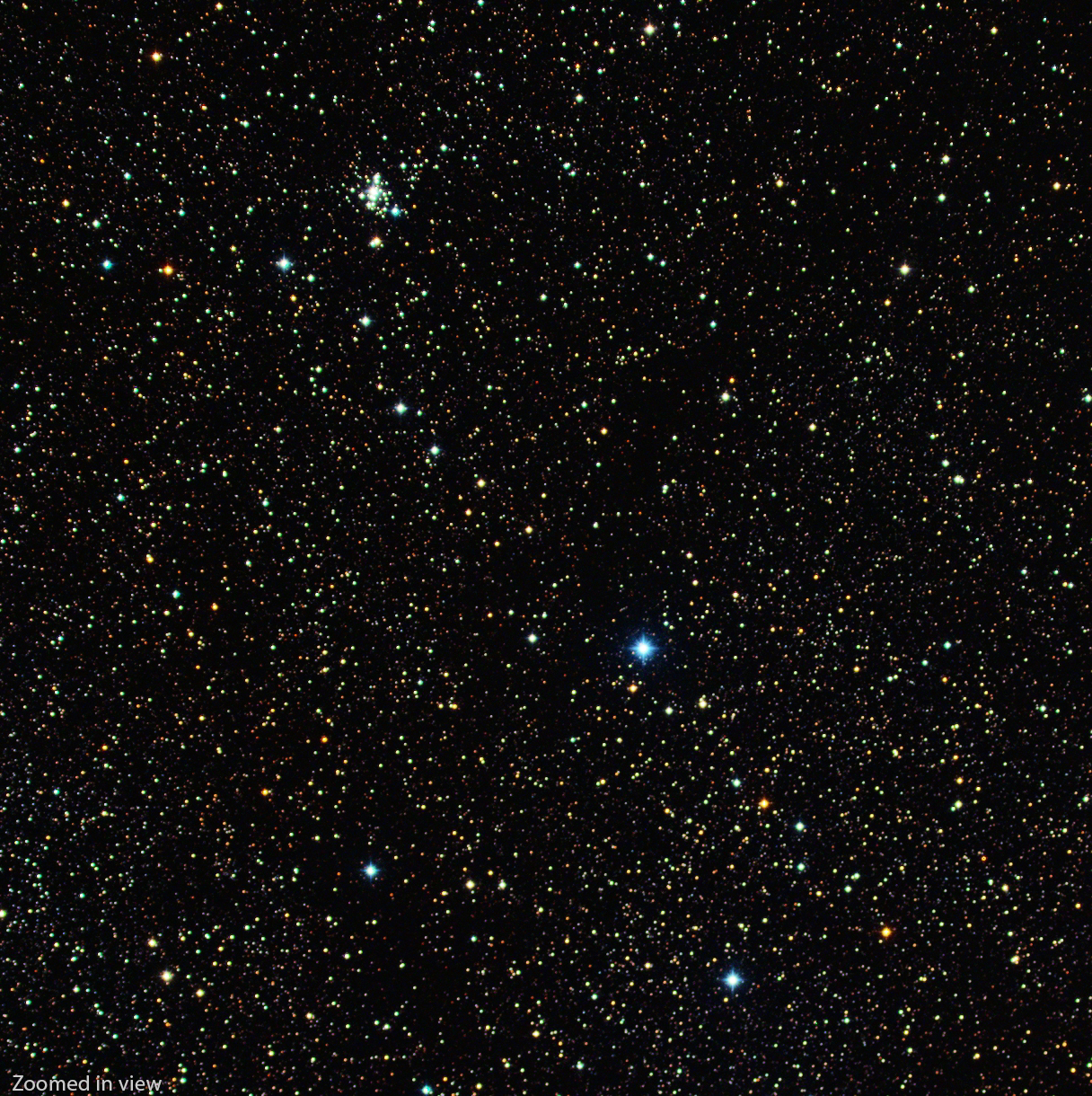
I just cut out the cascade stars from the image above. Personally, I prefer it in the wider setting in the topmost image


The inverted colour version above may make it easier to see the "cascade" of stars and make it easier for you to find them in the main image.
I hope you like it!