
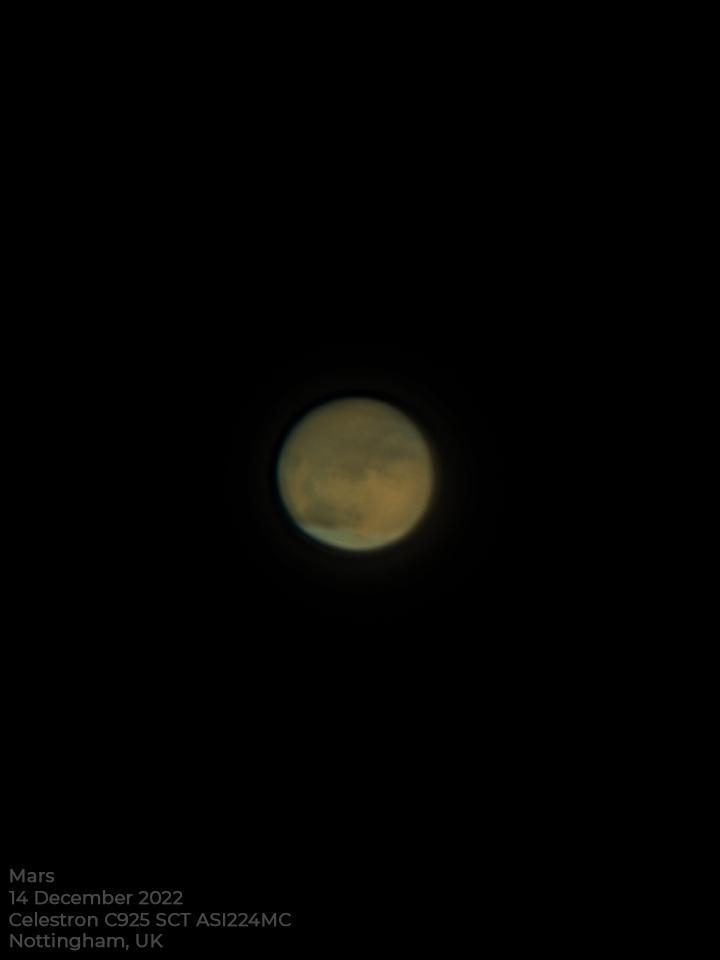
Mars 14 Dec 2022, C925 and ASI224MC
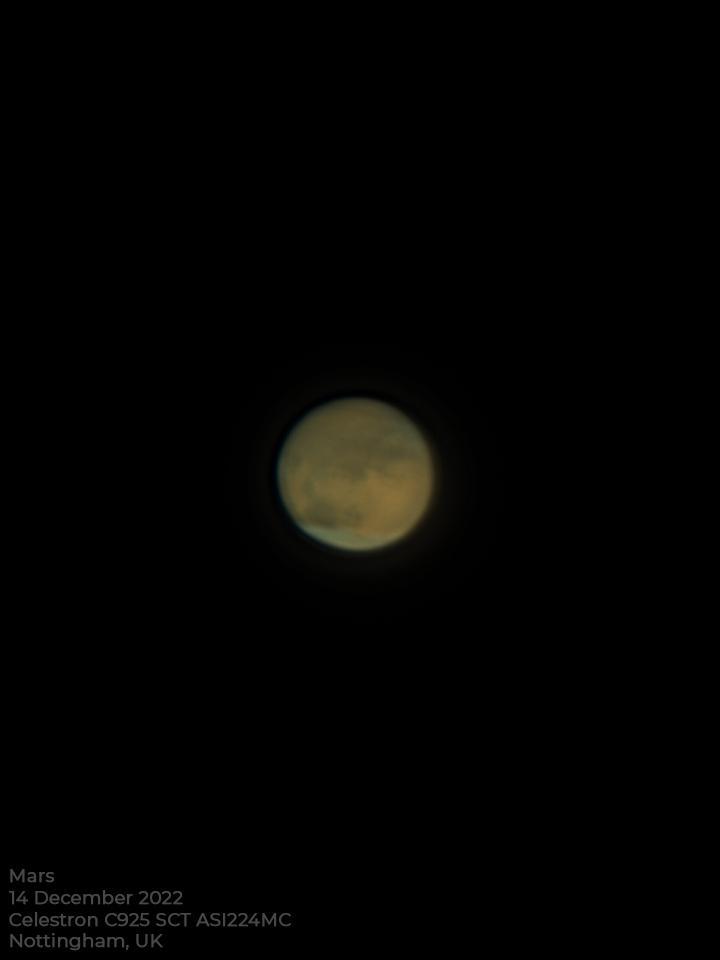
The planet Mars captured with my Celestron C925 SCT telescope and my ASI224MC colour camera. I used a Powermate x2 barlow lens to give a higher image scale together with an Atmospheric Dispersion Corrector (ADC).
A total of 12000 frames were captured using Firecapture to a SSD drive on my capture PC. I used Autostakkert to process the best 20% and then PixInsight to bring out the details with 8 wavelet layers. A bit of unsharp mask afterwards to sharpen it up a bit.
Mars was to the East of the meridian and about 40 degrees in altitude.
From my backyard in Nottingham, UK.
I am quite new to using the ADC and what I did was use the colour alignment tool in Firecapture to "tune" the ADC to get the colours all as perfectly aligned as I could.

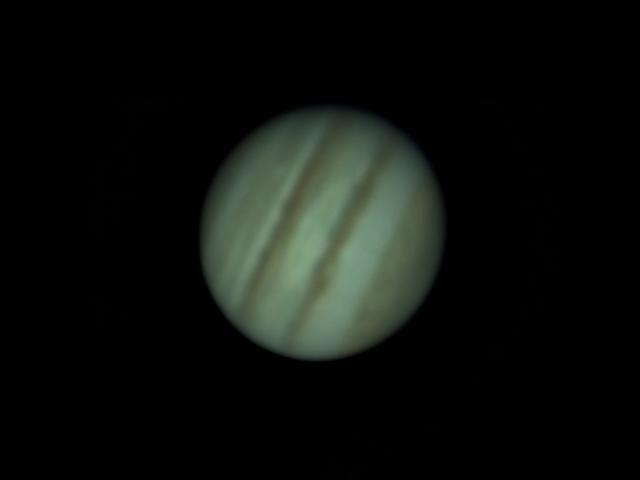
Jupiter, 7 December 2022
Jupiter, 7th December 2022 with C925 SCT and ASI 224MC camera

I am not experienced with imaging the planets other than the Moon. This image is not going to win any prizes or keep the award winning planetary imagers awake at night! However, it's a first effort at Jupiter and a foray in planetary imaging to give me some other astronomy options since almost always, when it is clear the moon is bright thus rendering deep sky observing and photography impossible
I used my Celestron C925 telescope with a x2 Powermate (a 2" version). I then used an ADC to try and improve colour correction and to this was connected my ASI224MC colour camera.
I tried my very best to "eyeball" the focus the best I could. This is very difficult to do as Jupiter was bouncing around considerably due to quite poor seeing. Jupiter was at about 30 degrees altitude almost at the meridian but was above a neighbour's house and this affected the seeing conditions (heat rising from the house and thus creating air currents that spoil the seeing). Collimation of my scope may not be ideal either and this is something I need to check into.
All this said, many of Jupiter's features are visible in this image - the Northern and Southern equatorial belts, the temperate belts as well as the polar regions. A few of the ovals in the cloud formations are also visible. At this time the Great Red Spot is not visible and is on the hemisphere facing away from the Earth.
Technical Stuff
5000 frames in colour from ASI 174MC camera with C925 telescope on MESU200 mount.
Captured with Firecapture and processed in Aurtostakkert where best 30% of frames used. PixInsight Multiscale Median Transformation used to sharpen up five layers. No other processing at all other than this.
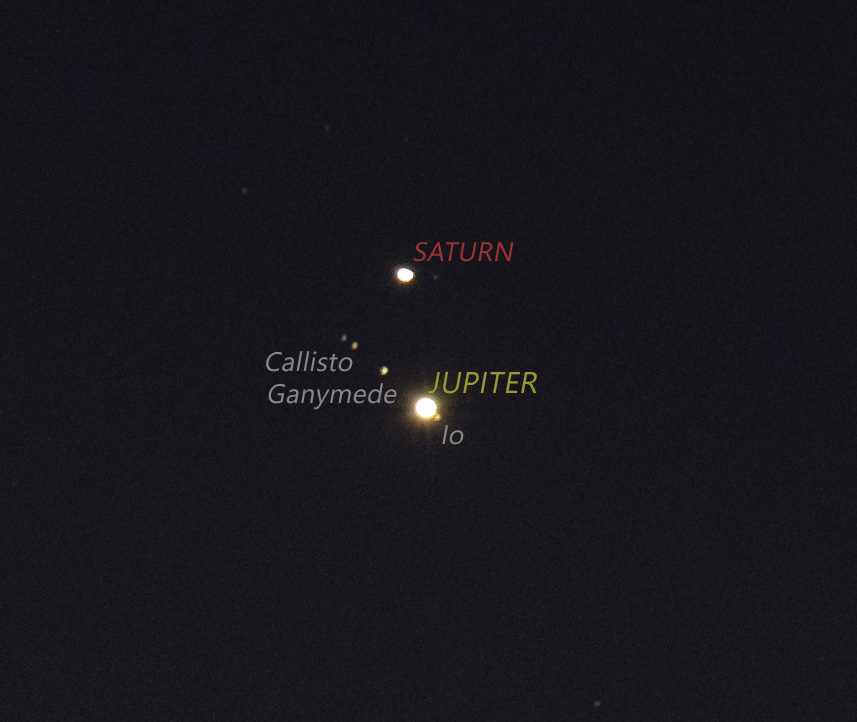
The Grand Conjunction of Jupiter and Saturn
Imaged with a FujiFilm X-T2 and a 55-200m zoom lens (set to 200mm). Camera mounted on a Skywatcher Star Adventurer to prevent smearing of the image due to 7 second exposures at that focal length. Imaged at F4 and ISO 800.

This set of pictures was taken almost one day before the planets' closest approach and were taken on 20 December 2020 at 17:20. The closest approach itself was on the 21st December at 18:00 but that day was clouded out with very heavy rain where I live (as usual, most astronomy special events are clouded out in the UK - typical!).

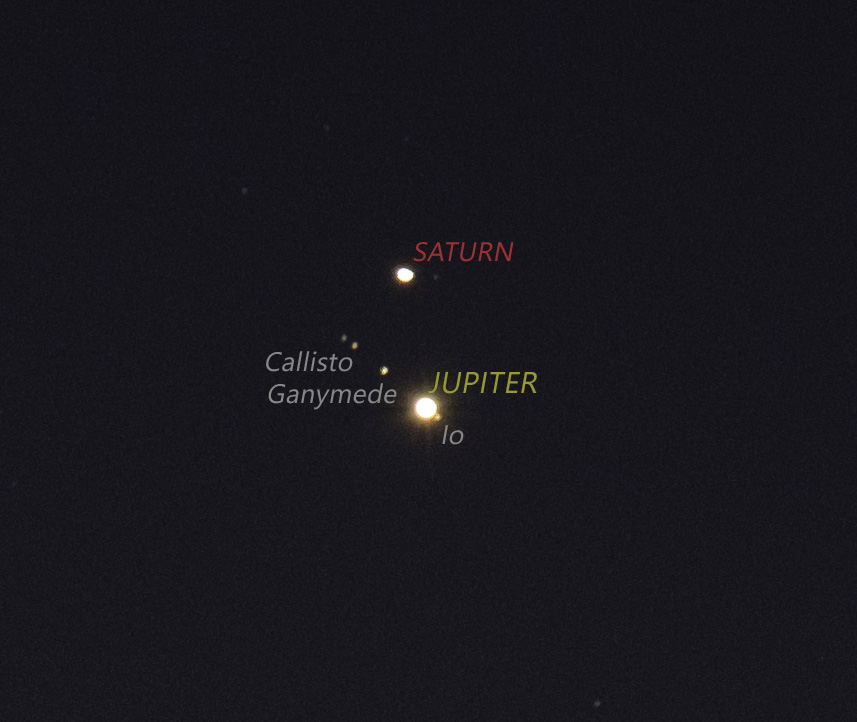
Jupiter and Saturn were around 32 arcminutes apart when this picture was taken, moving to their closest at around 30 arcminutes at their closest the following day. 30 arcminutes is about the same diameter of The Sun and The Moon.