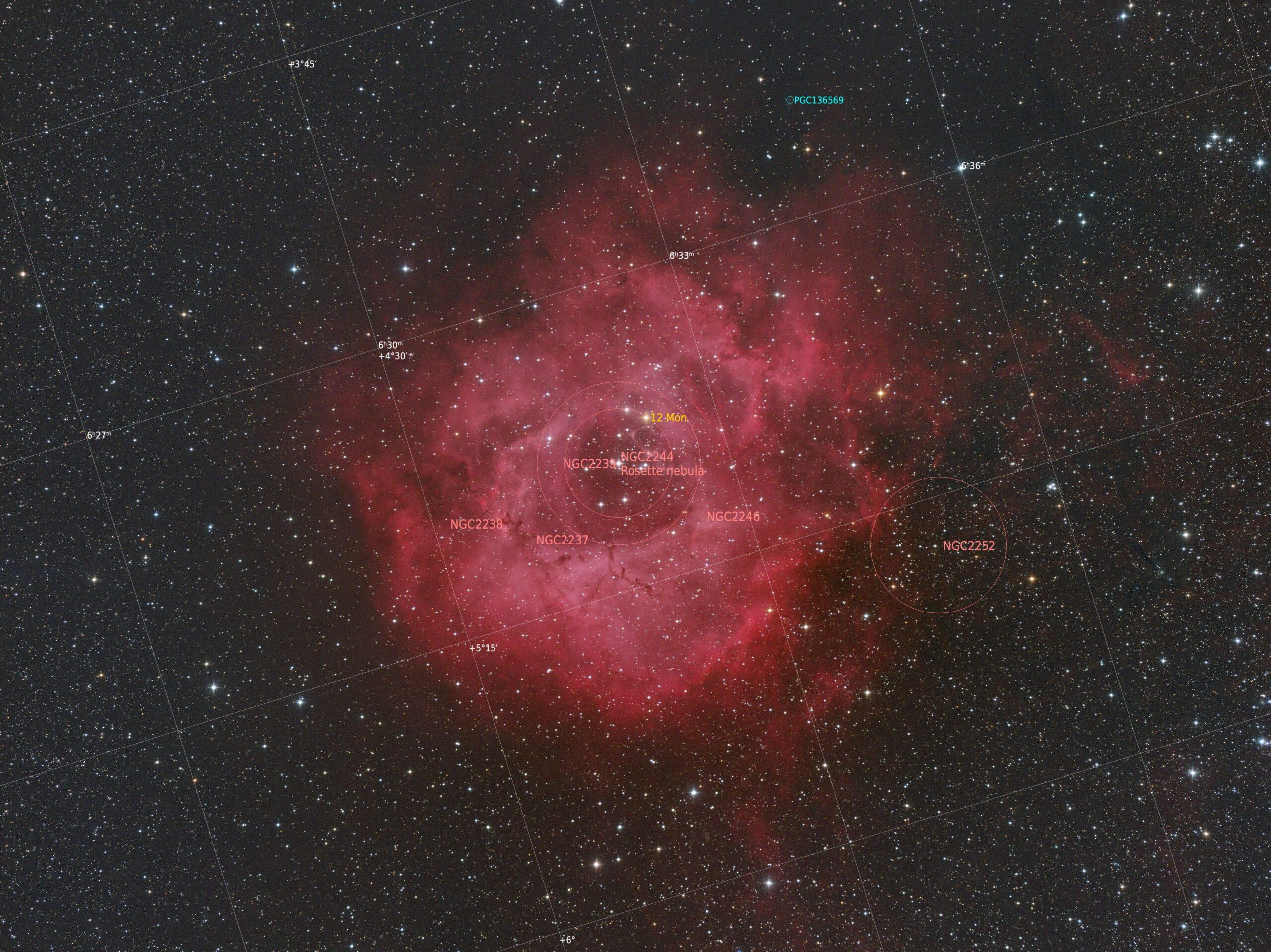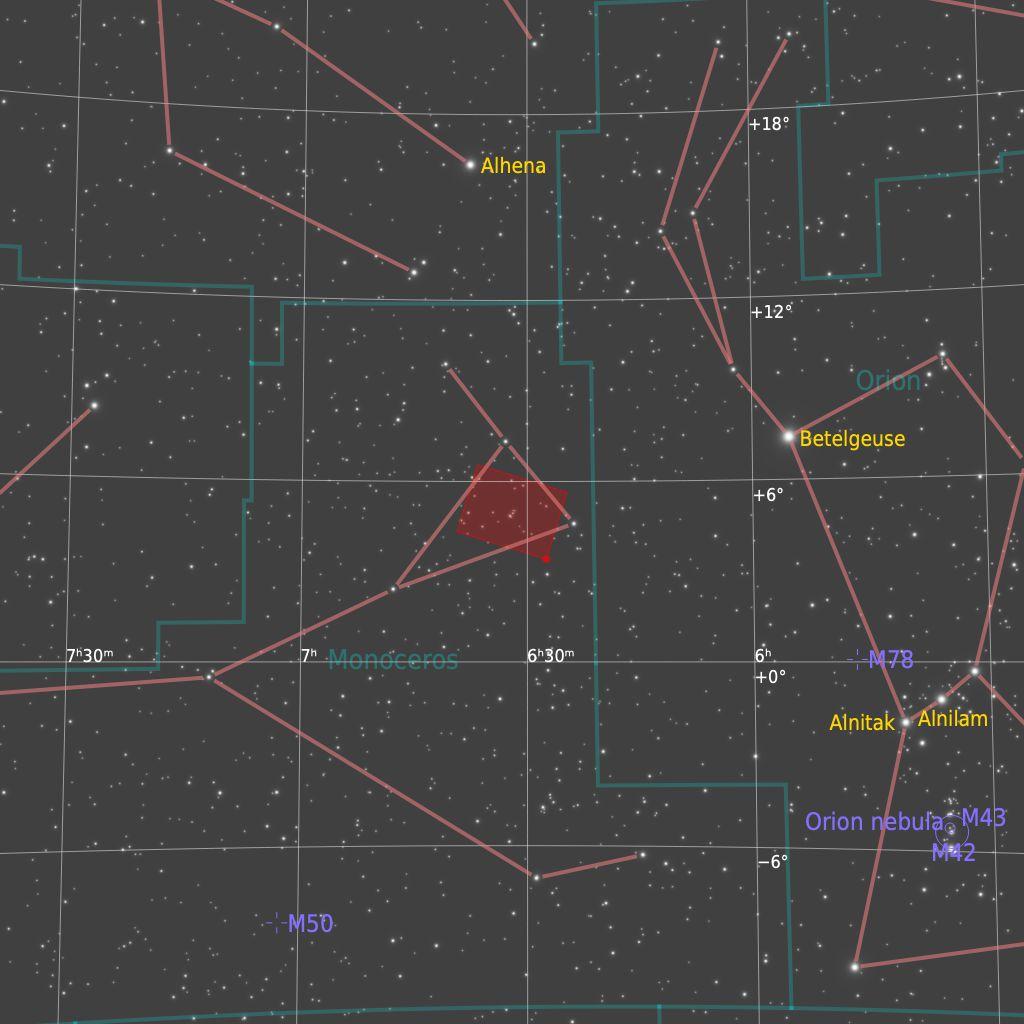
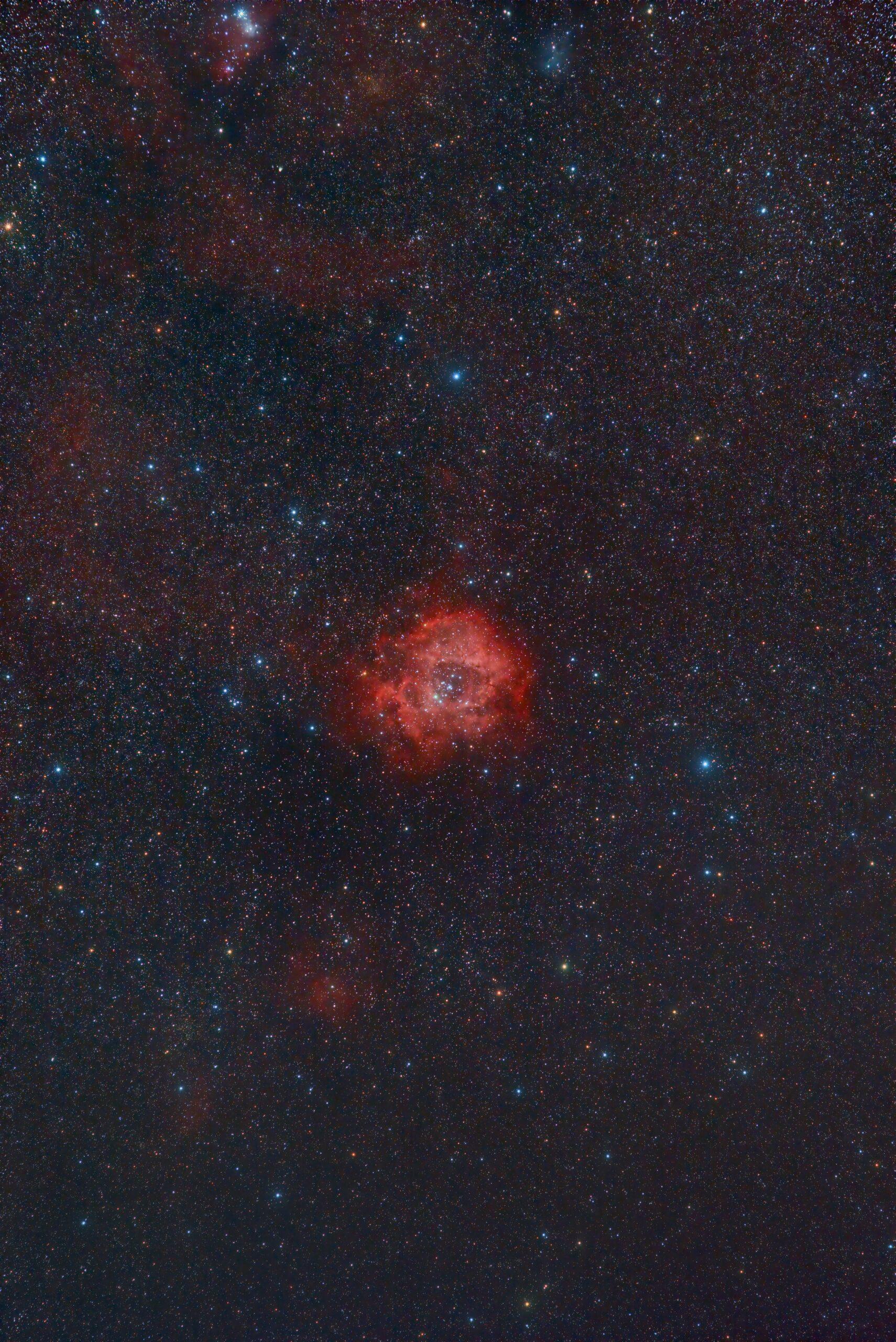
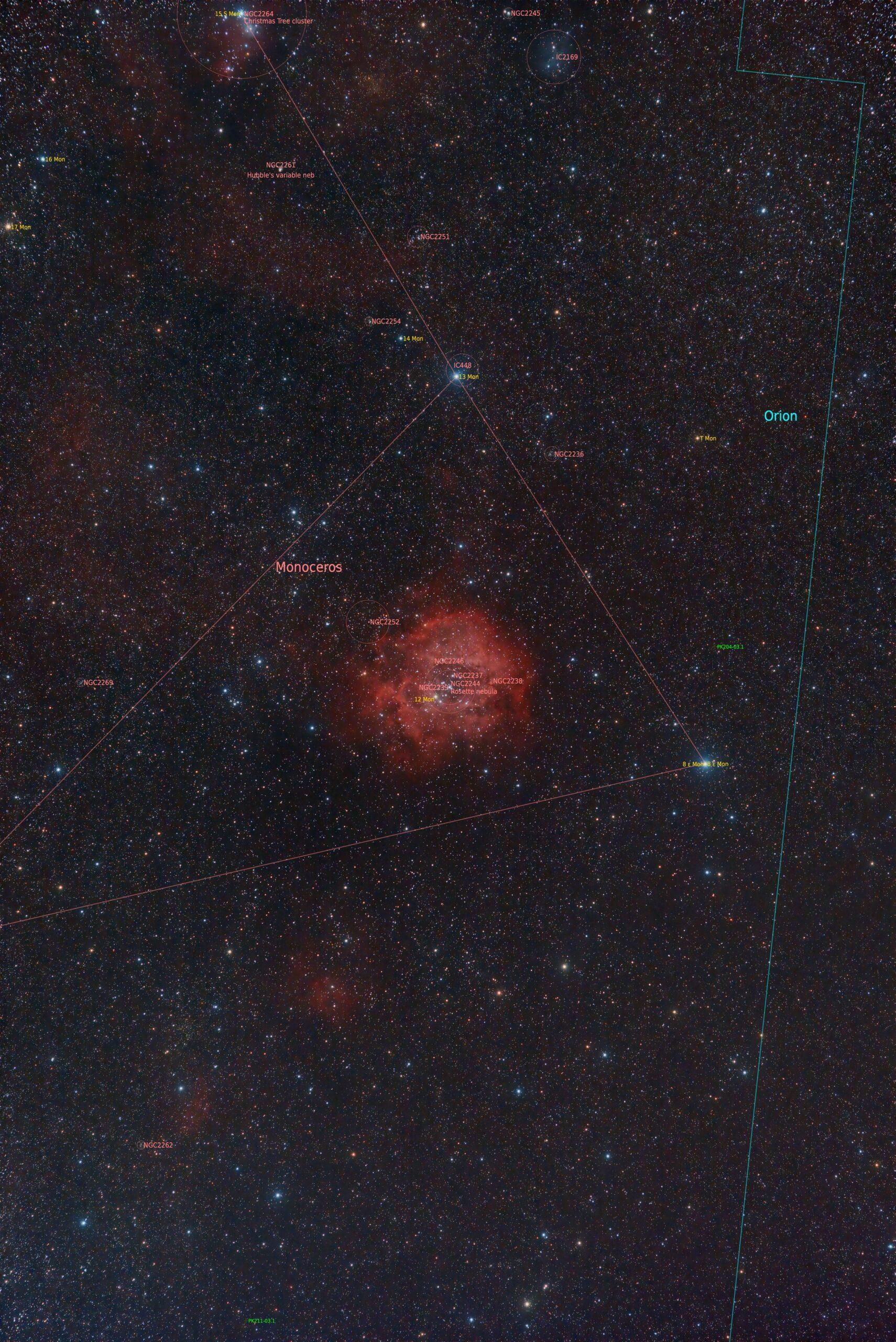
Rosette Nebula In A Very Wide Field
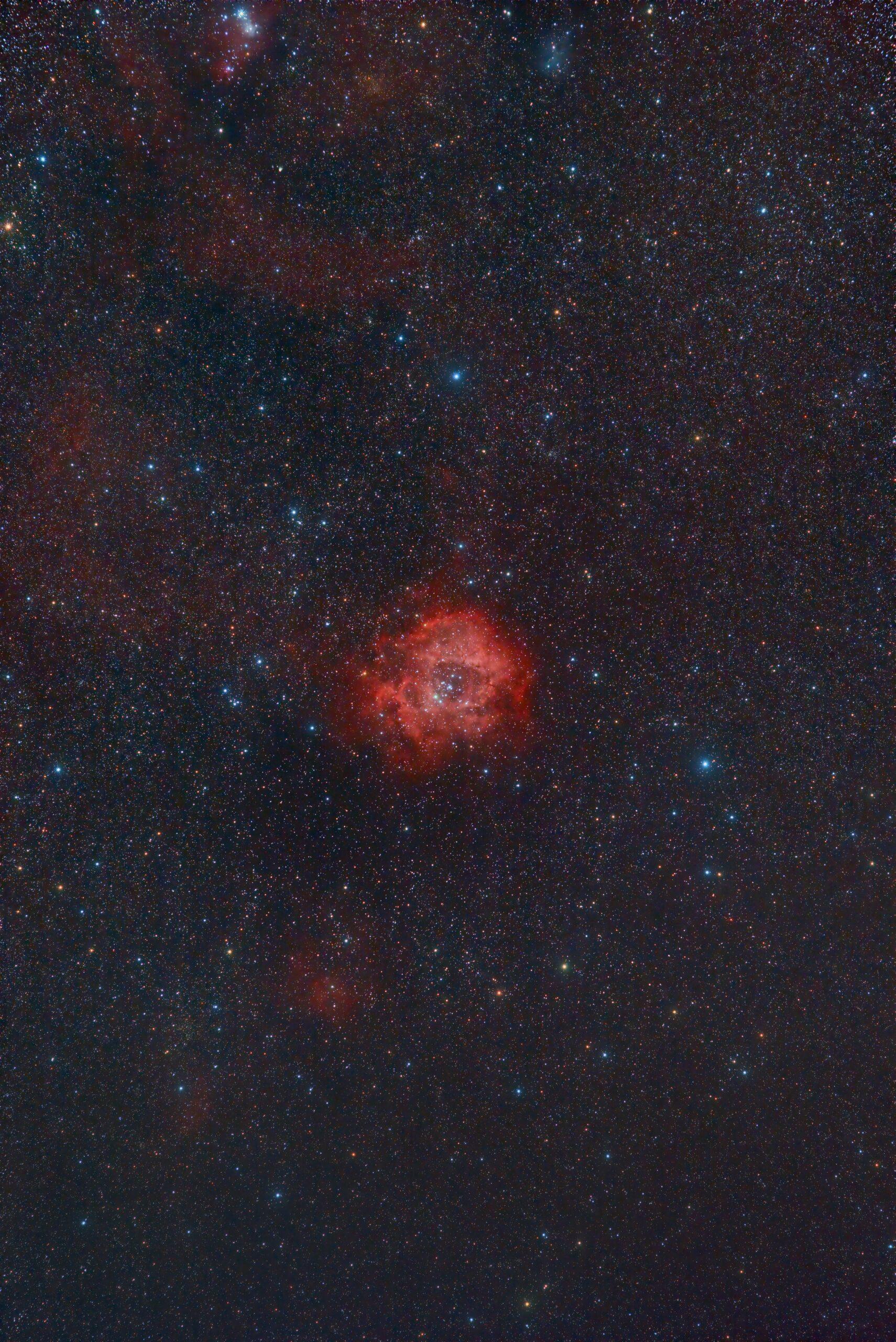
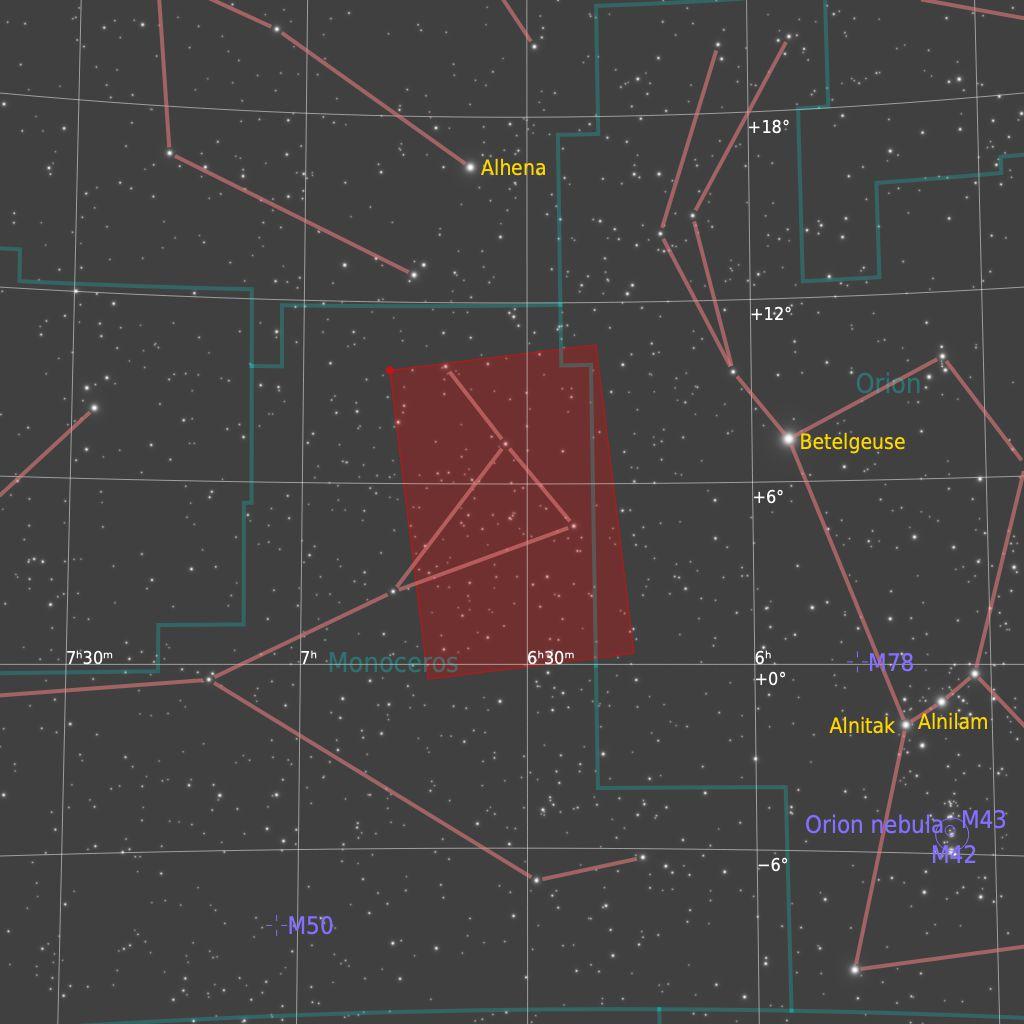
Image taken with a Samyang 135mm DSLR lens and QHY268C Colour CMOS camera in January 25th 2023 when high to The South. A total of 30 x 120s exposures at F4. I used NINA software for image acquisition and processed in PixInsight. I wanted to set the Rosette in a very wide field so as to see the surrounding nebulosity.
I have imaged The Rosette Nebula before with a FSQ85 telescope which can be found here.

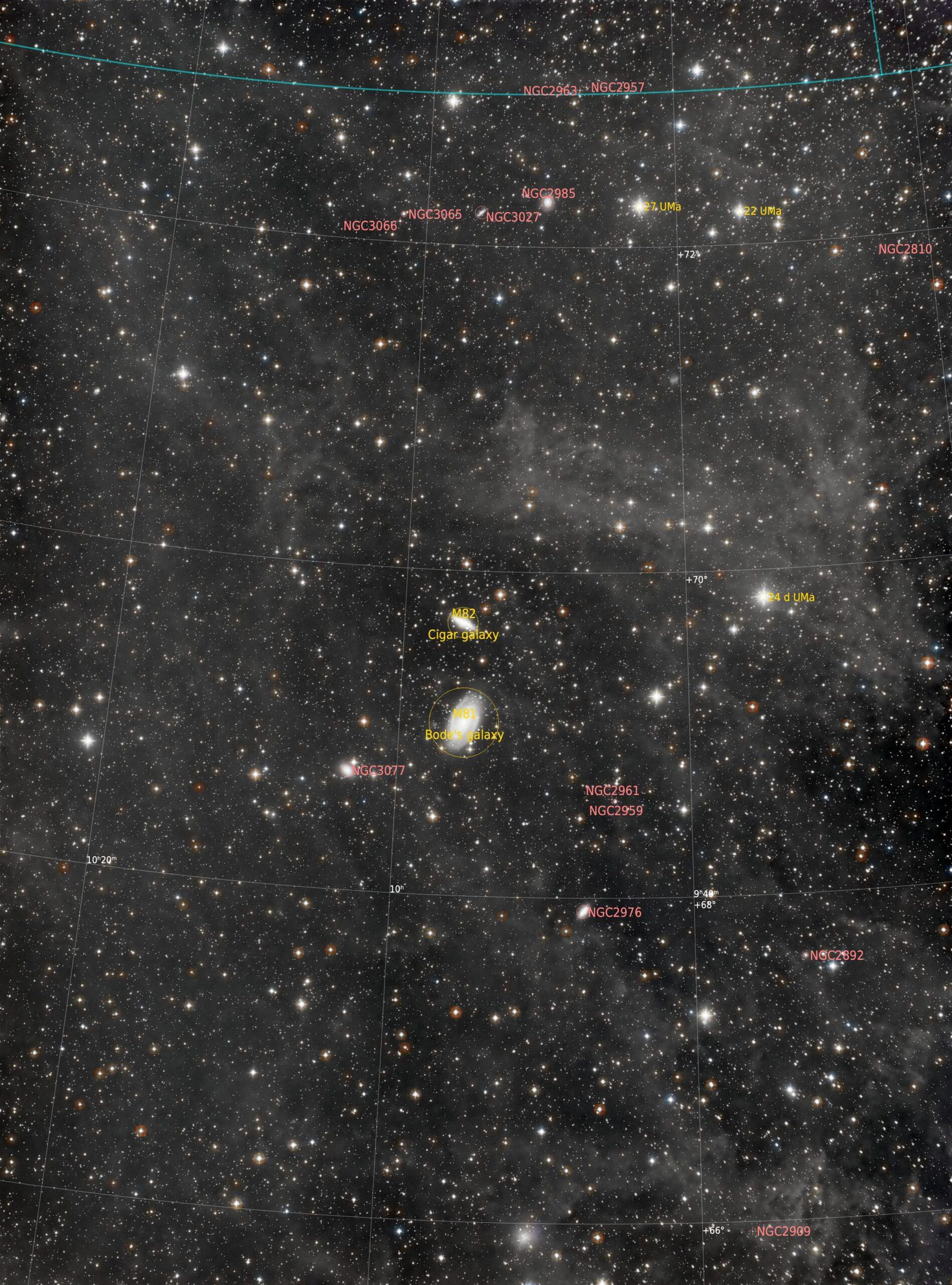
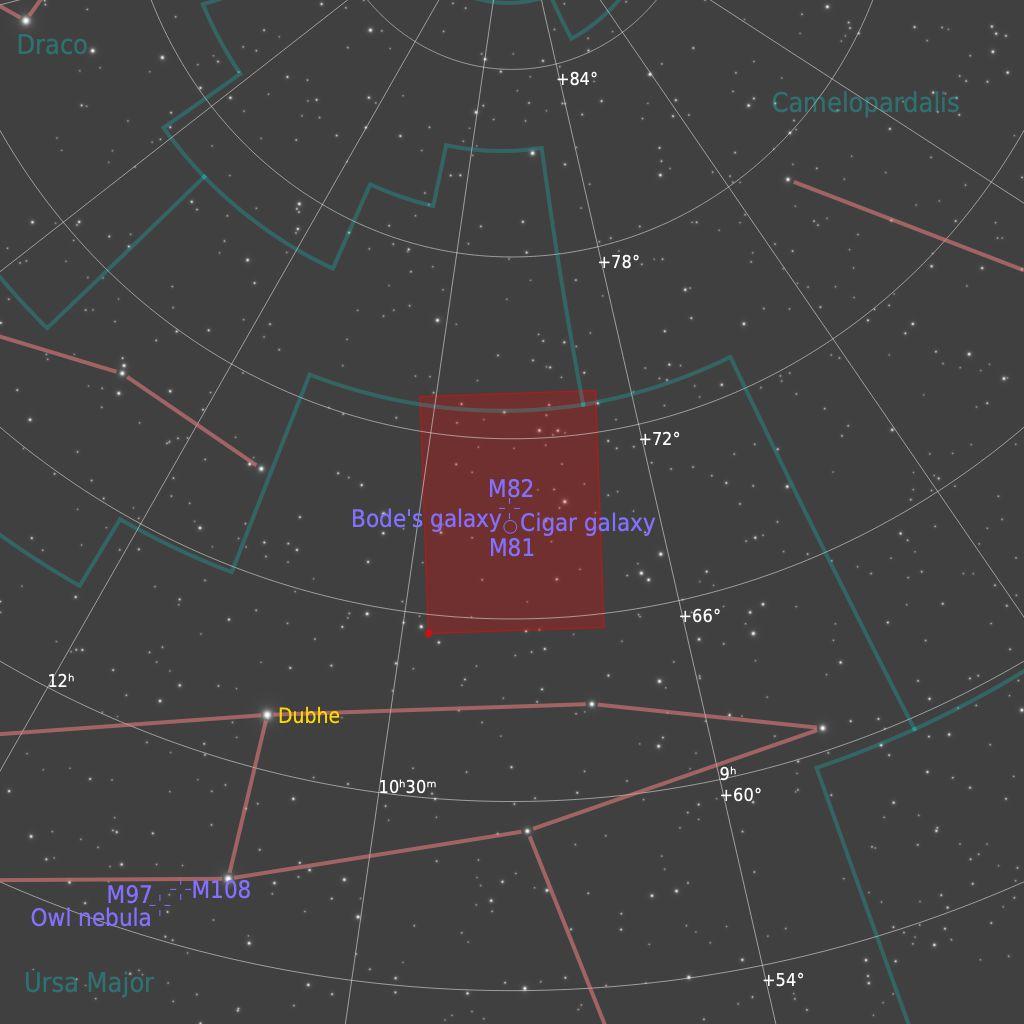
M81 / M82 Group and IFN with Samyang 135mm
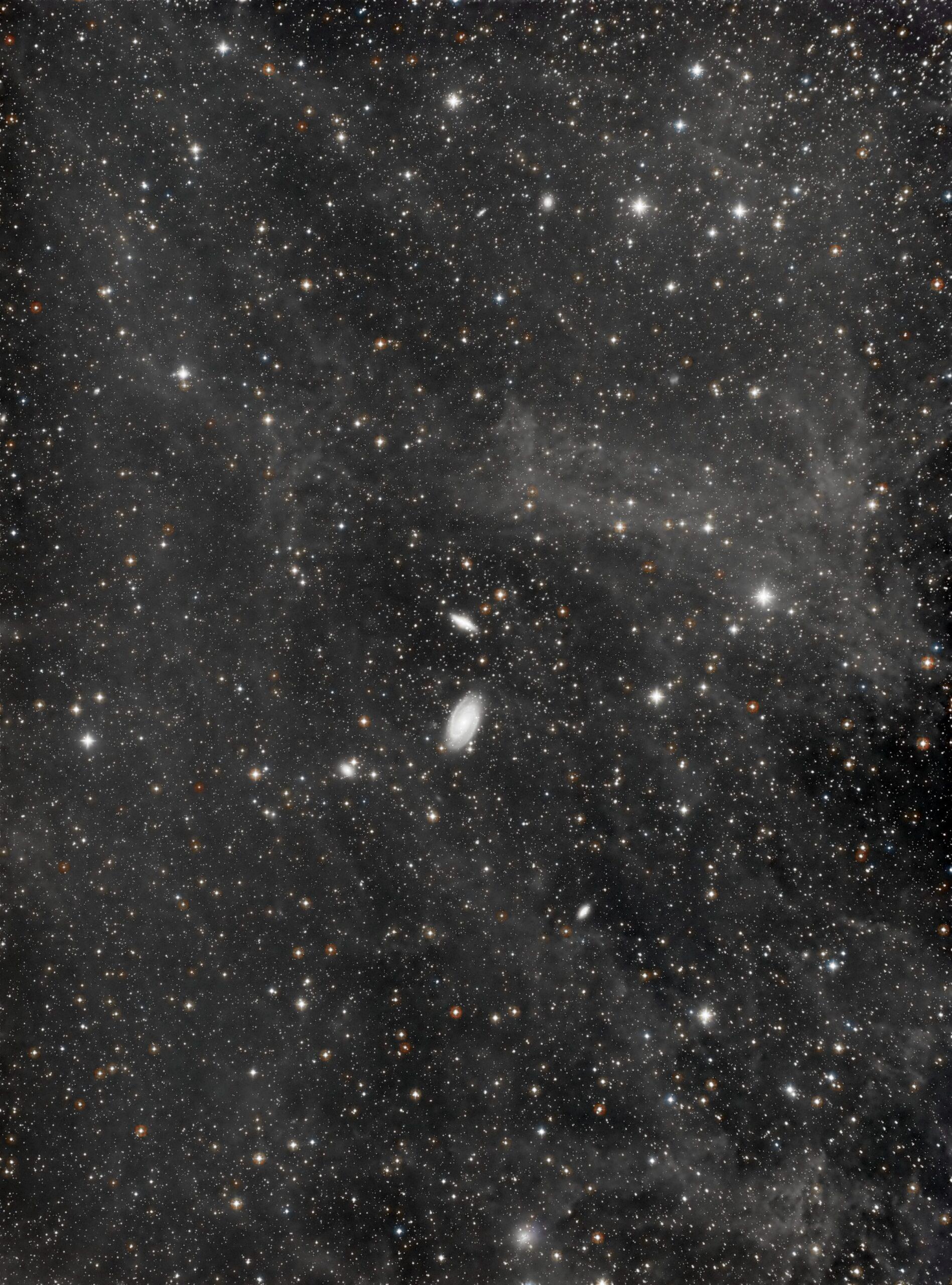
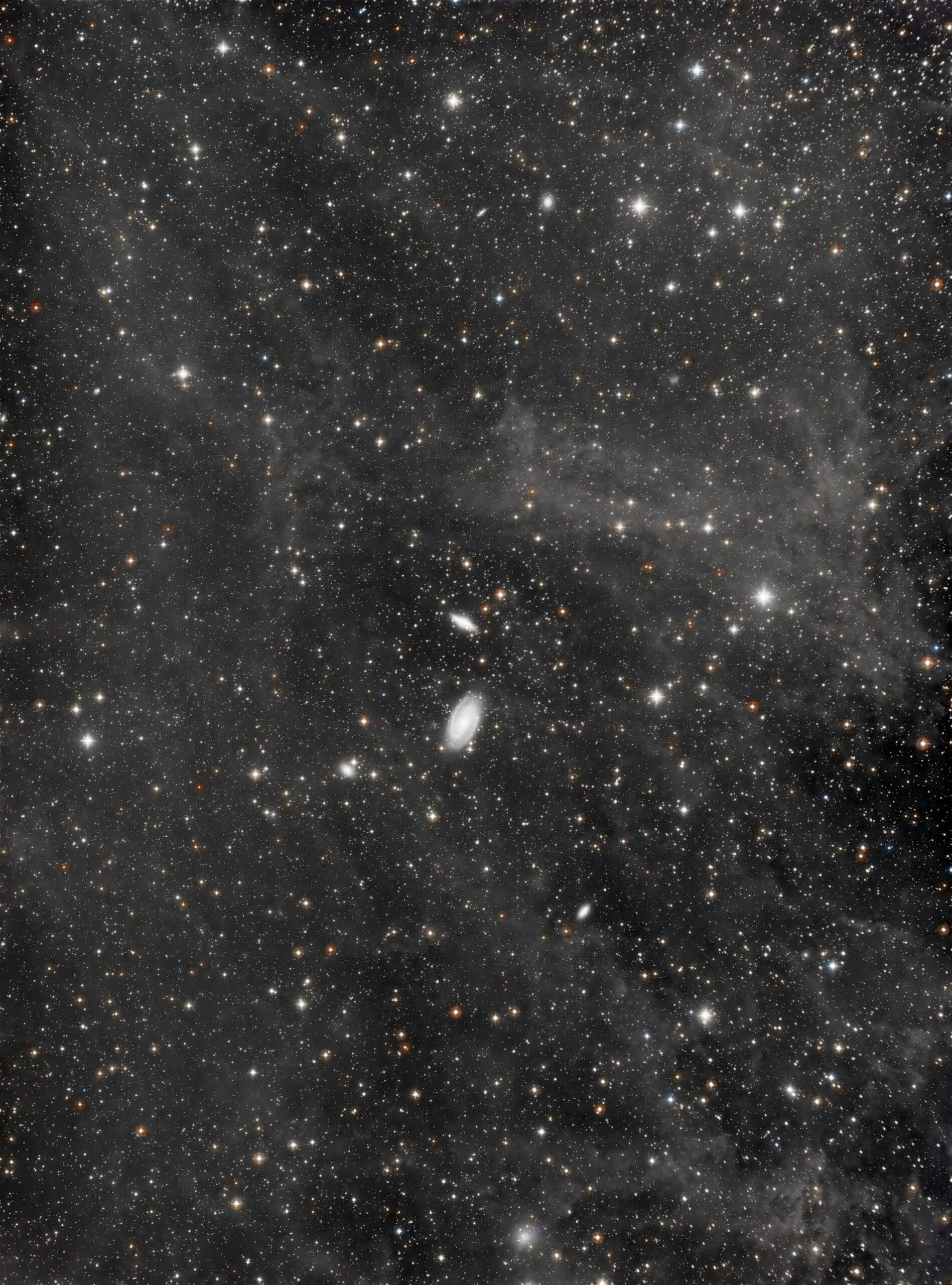
The M81 and M82 galaxies in Ursa Major showing the background Integrated Flux Nebula.
These are a well known and popular pair of galaxies and can be seen with binoculars. I've imaged them here in a very wide field with a DSLR camera lens - the Samyang 135mm connected to a G2-8300 CCD camera and filter assembly using Astrodon LRGB filters
The cloudy dust that is visible is not passing cloud! Rather, it is the extremely faint dust and gas that exists in the space between the galaxies - in intergalactic space. Hence it is called the Integrated Flux Nebula or IFN. It is extremely faint and is only visible with very long exposures and integration times. Careful processing is needed not to inadvertently cut it out of the image.
Technical Data
Imaged in my back yard in Nottingham in March 2020 with Samyang 135mm and G2-8300 CCD camera on a NEQ6 mount. I used a separate guide scope. I only got round to processing this data set in 2023 having completely forgotten about it!
All exposures 300 seconds in length and binned 1x1.
Lum > 24 ; Blue > 15; Red > 15; Green > 14
This gives a total of Lum > 120mins; Blue > 75mins; Red > 75 mins; Green > 70 mins
For a total integration (exposure) time of 5 hours and 40 minutes for the image.
M52 with FSQ85 and G2-8300 Camera
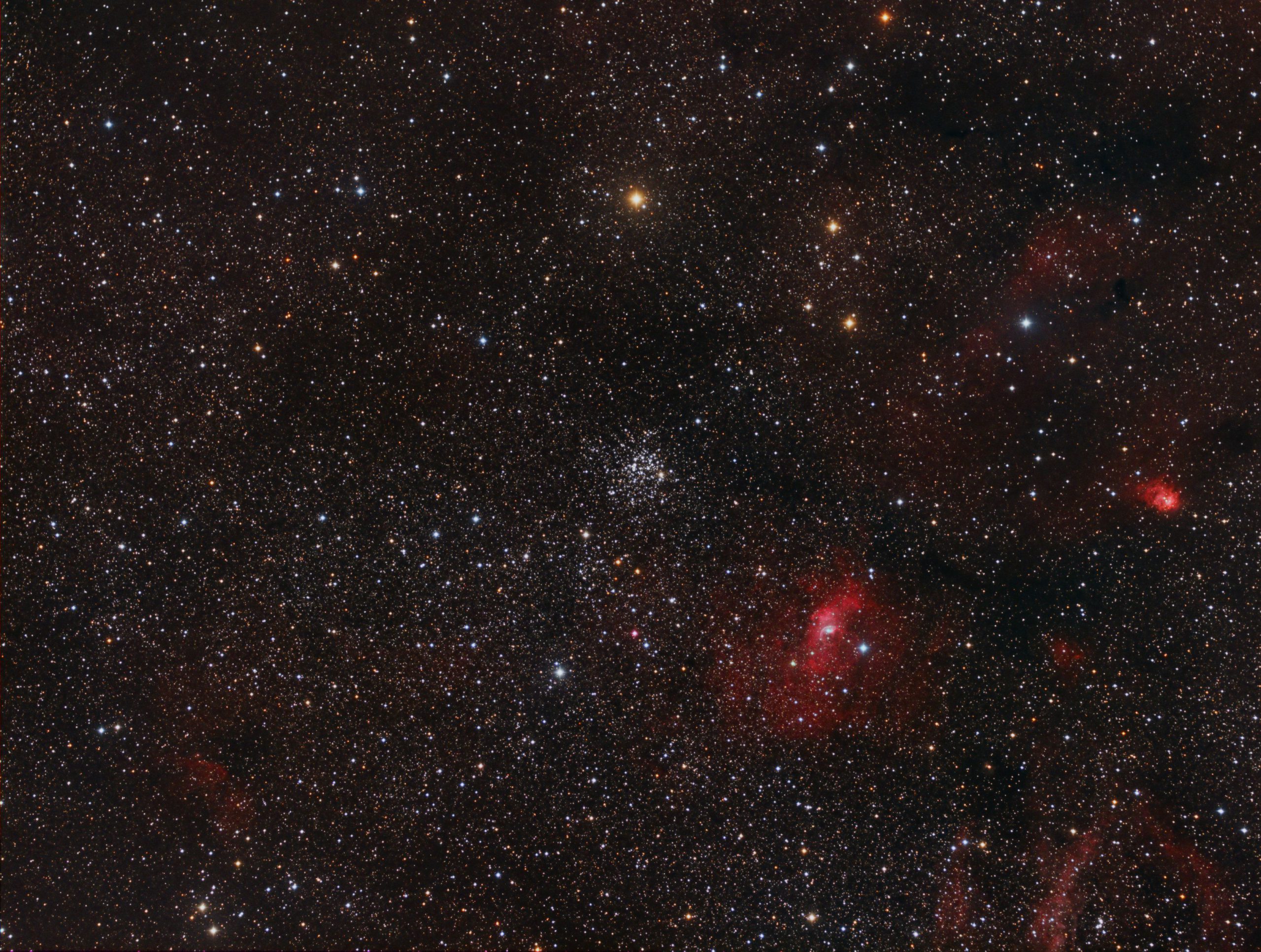
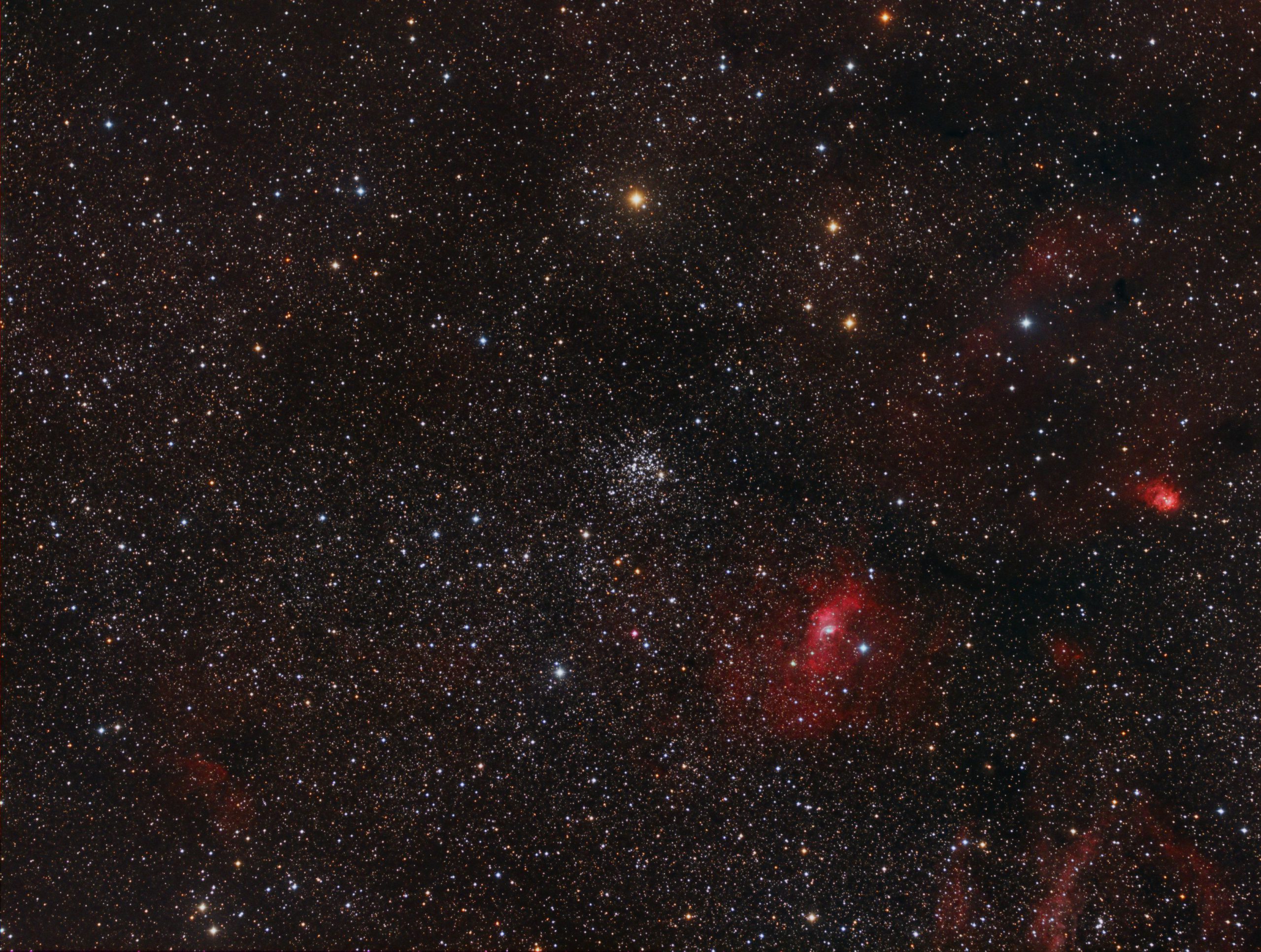
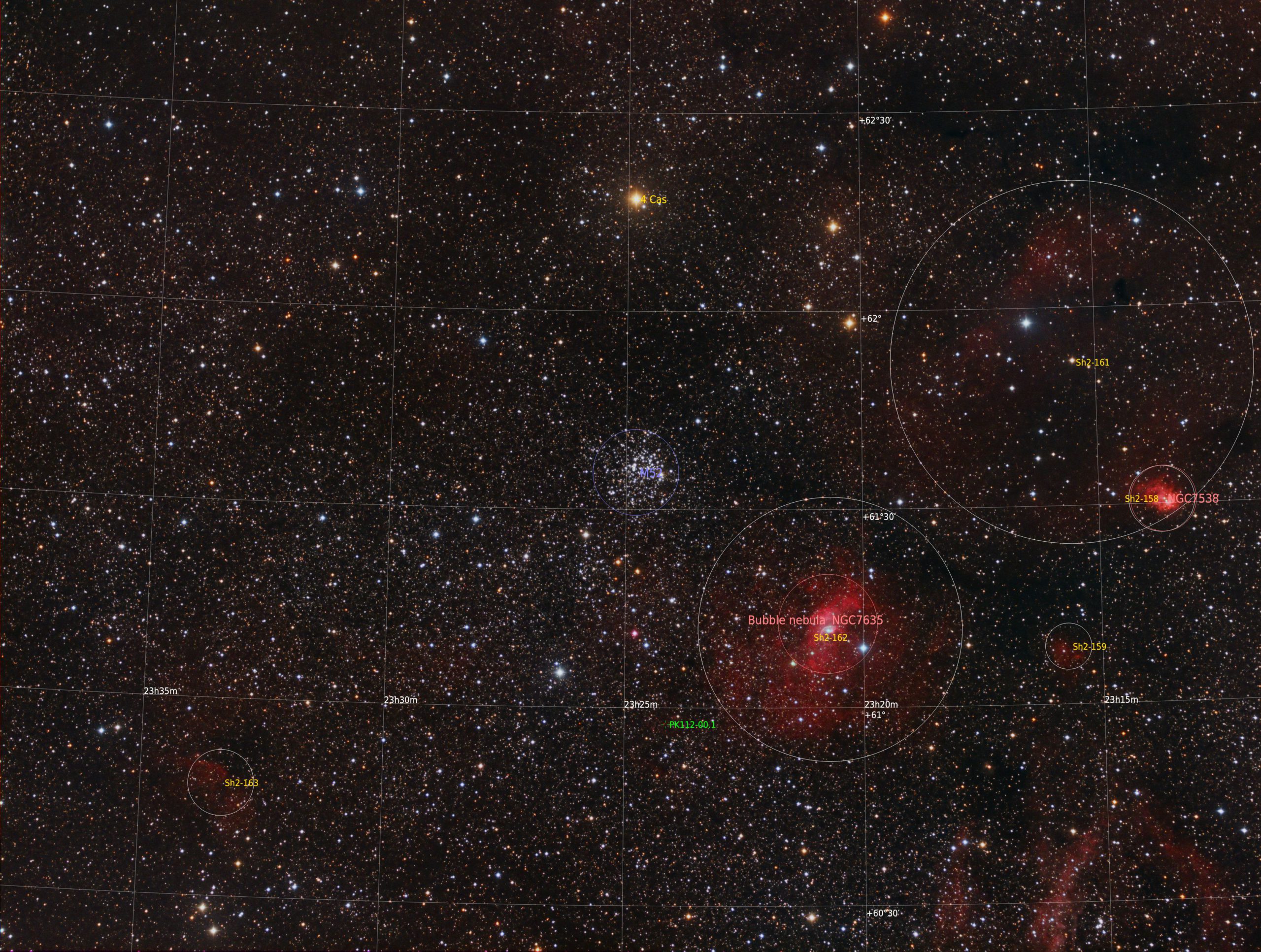
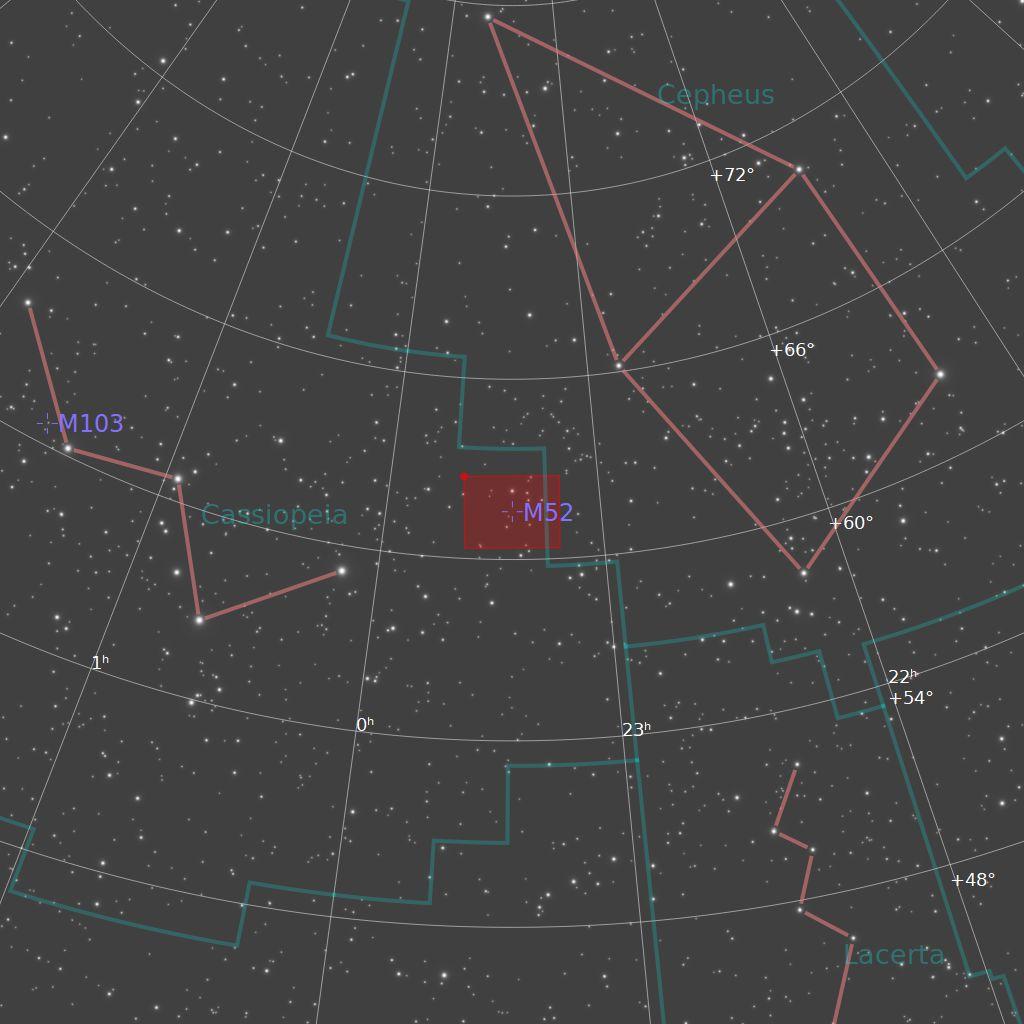
M52 is a fabulous open star cluster in Cassiopeia. It is set against a huge amount of nebulosity that spans across the constellations of Cassiopeia and Cepheus. In this image The Bubble Nebula can be seen at the four o'clock position with respect to M52 and many other objects in the Sharpless Catalogue of nebulae are also visible. These are detailed in the annotated version of the image below. The square red box on the finder chart on the right represents the image.
Full resolution image here (opens in a new tab).
Technical Information
Imaged from my backyard in Nottingham, UK on 28 November 2021 with a FSQ85 refractor and a Moravian G2-8300 cooled CCD camera with Astrodon HaRGB filters on my MESU200 mount guided with OAG.
All image data is binned 1×1: Note I do not capture a separate luminance when I bin all of the data channels is 1x1 in order to save some precious (In the UK) clear sky time. I do know purist swill say that it is best still to capture a luminance because that captures all of the light frequencies at the 1x1 level. I agree.
Ha> 9 x 300s ; Red > 9 x 300s ; Green 9 x 300s ; Blue > 9 x 300s
Image capture is with NINA and processing in PixInsight.
Sh2-171 with FSQ85 Telescope and G2-8300 CCD camera
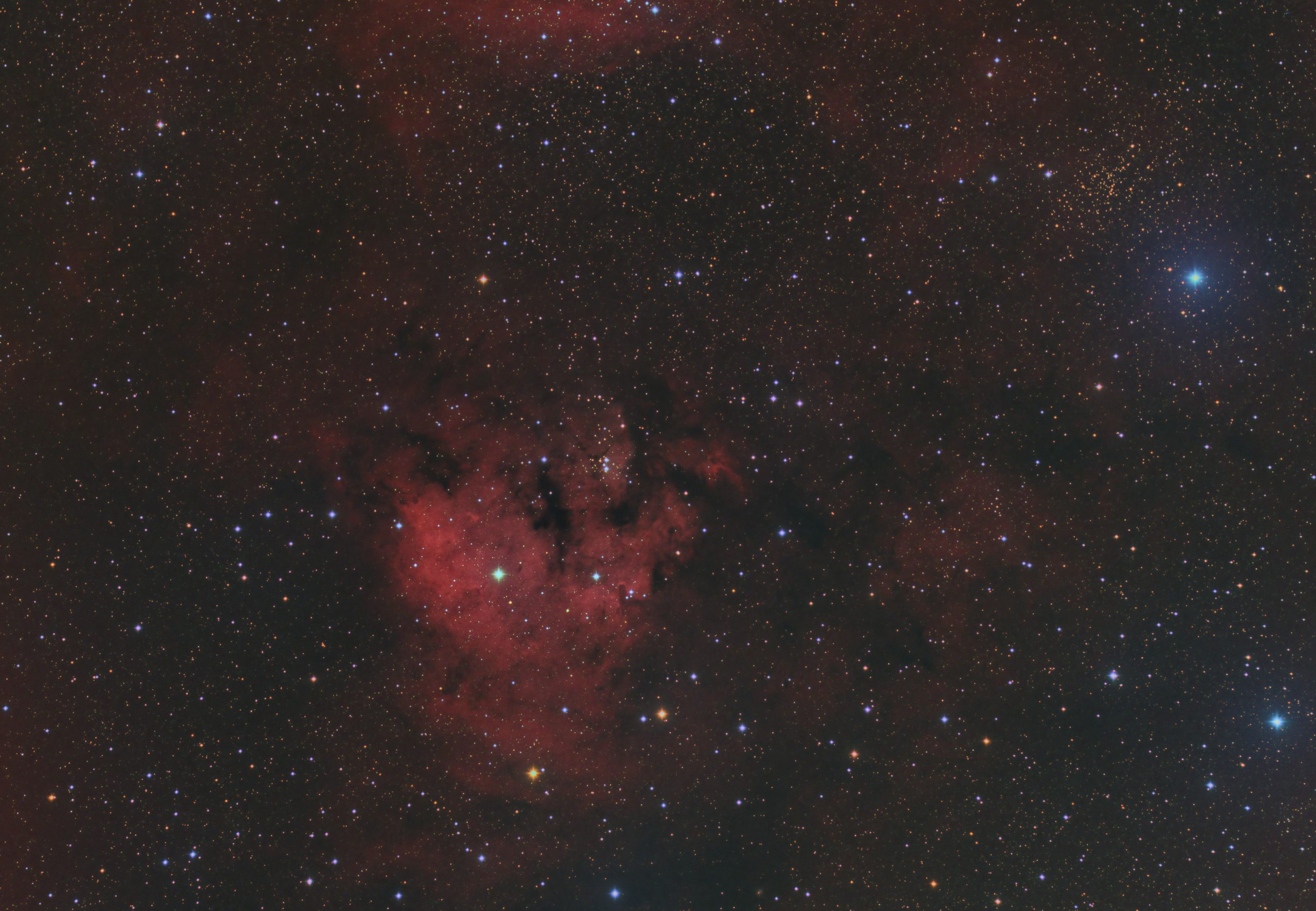
Sh2-171 is a star forming region in the constellation of Cepheus in the far northern hemisphere of the sky.
Imaged here with Takahashi FSQ85 and G2-8300 with Astrodon HaRGB filters.
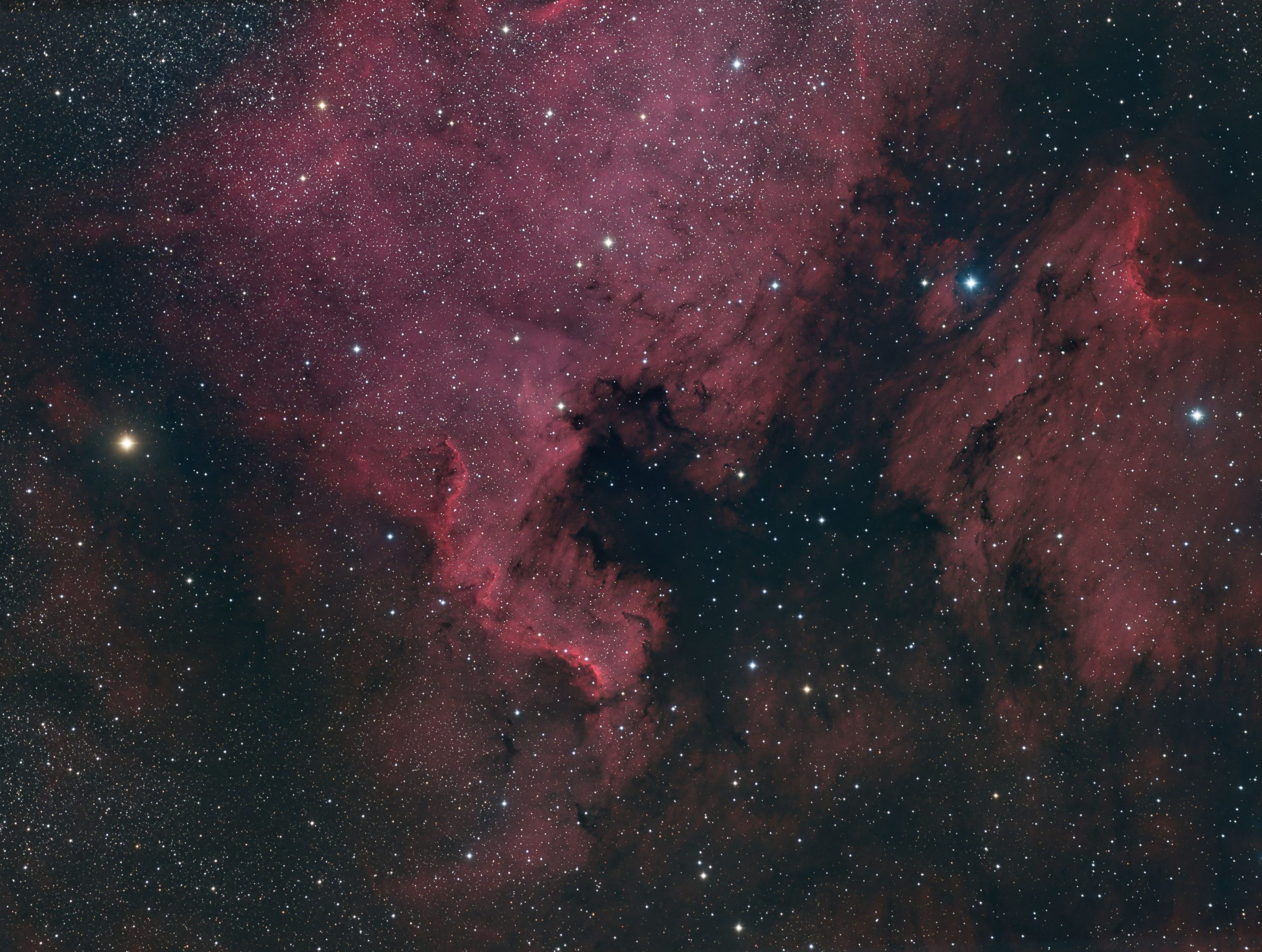
A Set of Images of NGC7000, The North American Nebula. Is Ha data worth it?
A perennial favourite object to image in the summer and autumn months in the Northern Hemisphere. I've imaged this target with multiple equipment combinations over the years. For example, in One Shot Colour (OSC), in widefield and in a very wide field.
As part of the image I used my existing Ha dataset from 2018/2019 which consists of 48 x 600 second exposures. I discuss capture of this image here.
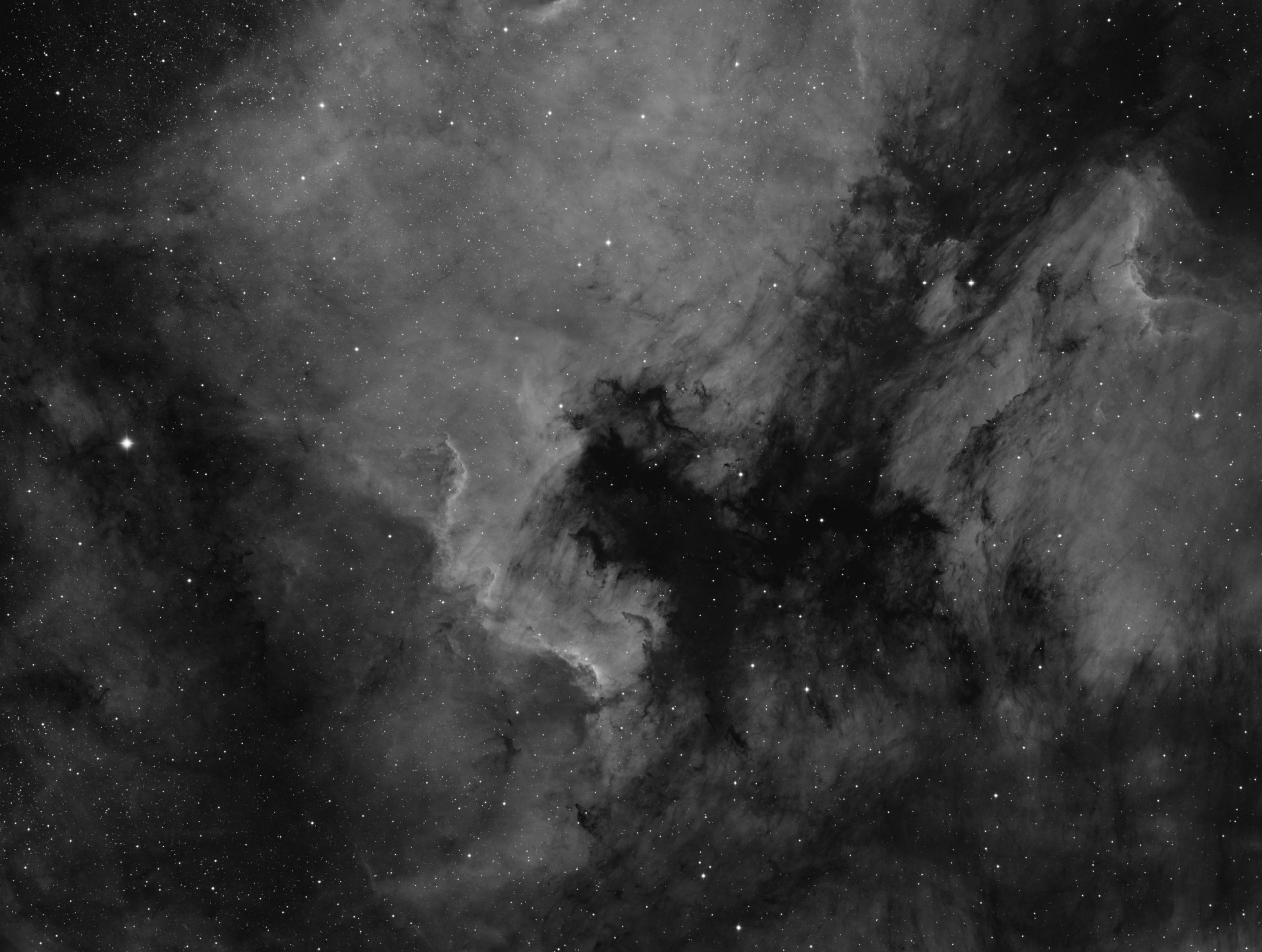
I then captured the RGB dataset in October 2021. This image is my first image set that I captured using the excellent NINA (Nighttime Imaging "N" Astronomy) imaging software. I captured four hours of RGB data through Astrodon 31mm E series Gen 2 filters binned at 1x1. This consisted of 300 second exposures. Seeing and transparency were not good but clear nights have been very infrequent in the UK in the past six months so I went for it regardless.
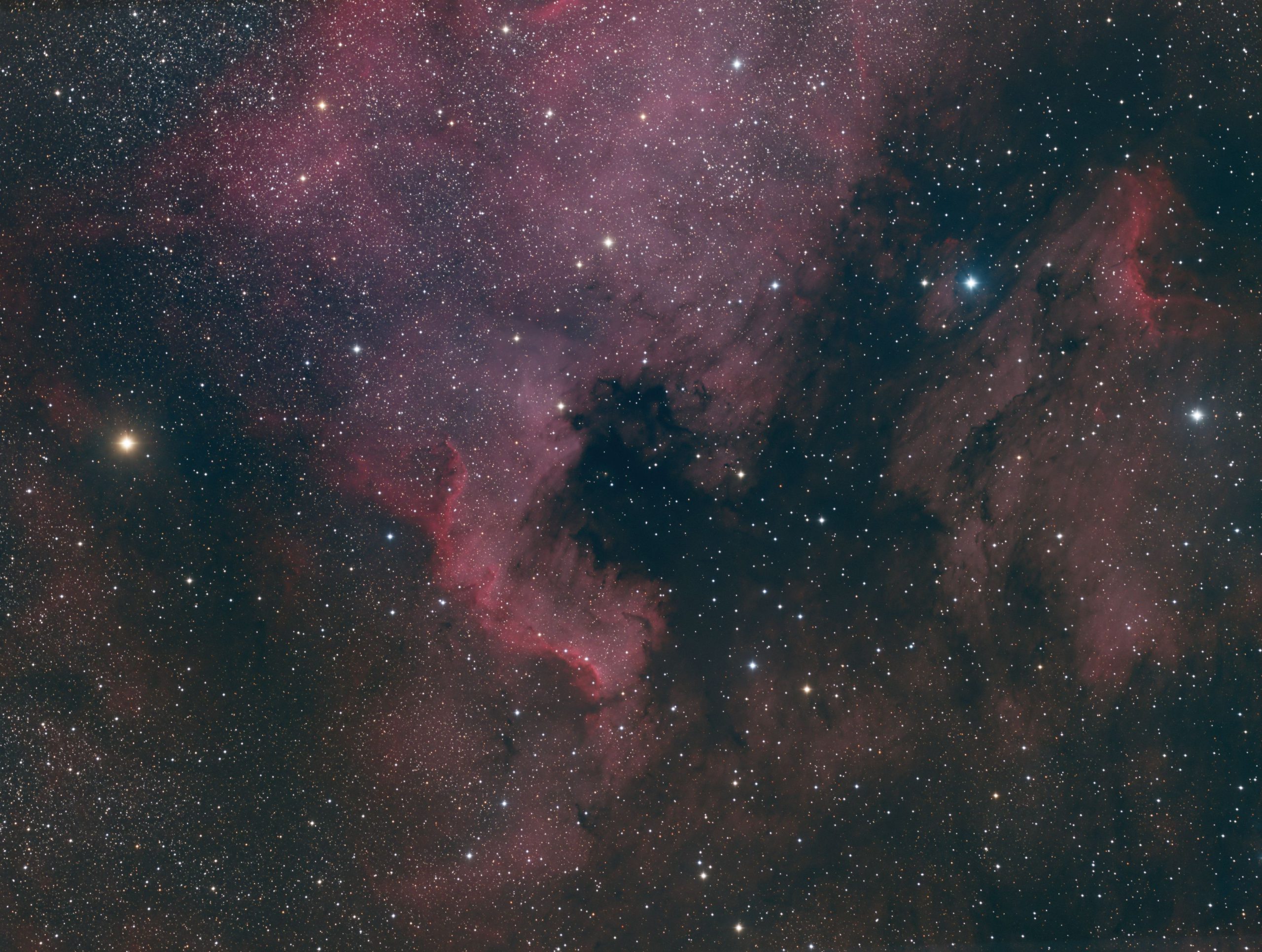
I am very impressed with the quality of the standard RGB image above. Since the data is binned 1x1, I did not feel the need to capture any luminance channel at all. Indeed the RGB alone is so good that the Ha data addition, whilst it does add some signal, adds so little to the final result that I question the time I spent capturing the Ha data. For sure, the Ha image is a pretty picture all on its own. However, it does add something to the picture as detailed below.
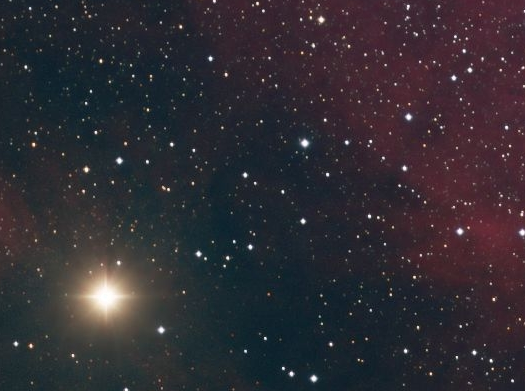
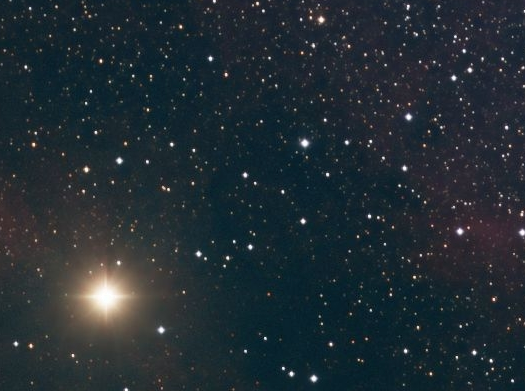
Despite the expense in time of gathering the Ha data, you can see that when it is blended with the RGB it brings out some fainter structures in the nebula. Whether or not a full eight hours is needed though, I doubt.
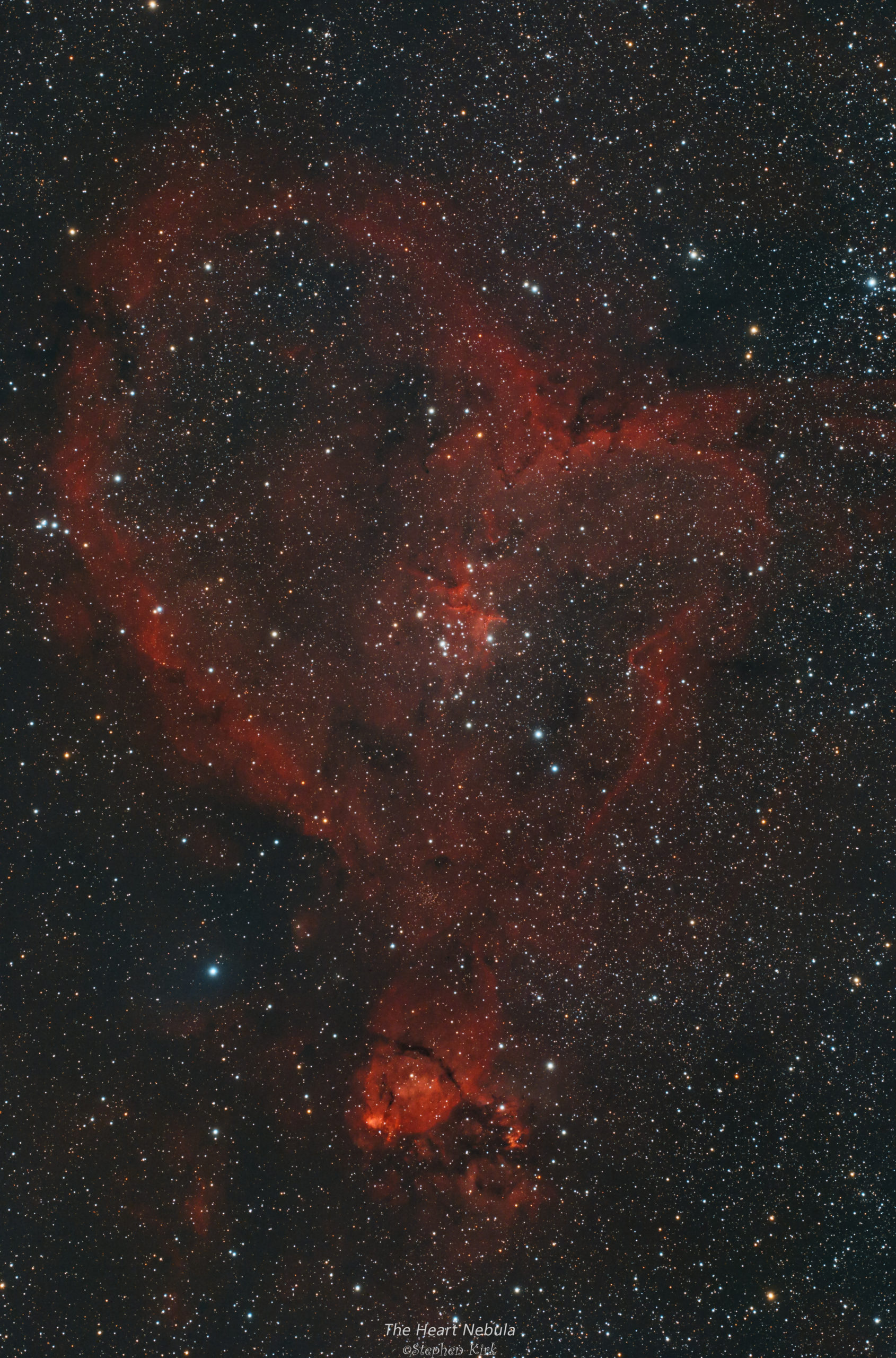
The Heart Nebula - IC1805
A famous emission nebula in the Northern constellation of Cassiopeia, the Heart Nebula is a huge star forming region located about 8000 light years away, out in the Perseus Arm of our galaxy. It is often imaged as a pair of nebulae alongside the Soul Nebula as the famous Heart and Soul Nebulae. I have imaged them together here as well as The Soul nebula here, presented on its own. It is also known as IC1805 and Sharpless S2-190.

It is a beautiful nebula and I have even seen it portrayed on Valentine cards :)
Technical Details
Imaged from my back yard in Nottingham, UK on 20 December 2020. Seeing conditions and sky transparency were reasonable. I used Takahashi FSQ85 refractor at native focal length and a QHY268C OSC CMOS camera. I took 42 x 180s exposures and the data was captured with Sequence Generator Pro. Processed in PixInsight and Photoshop.
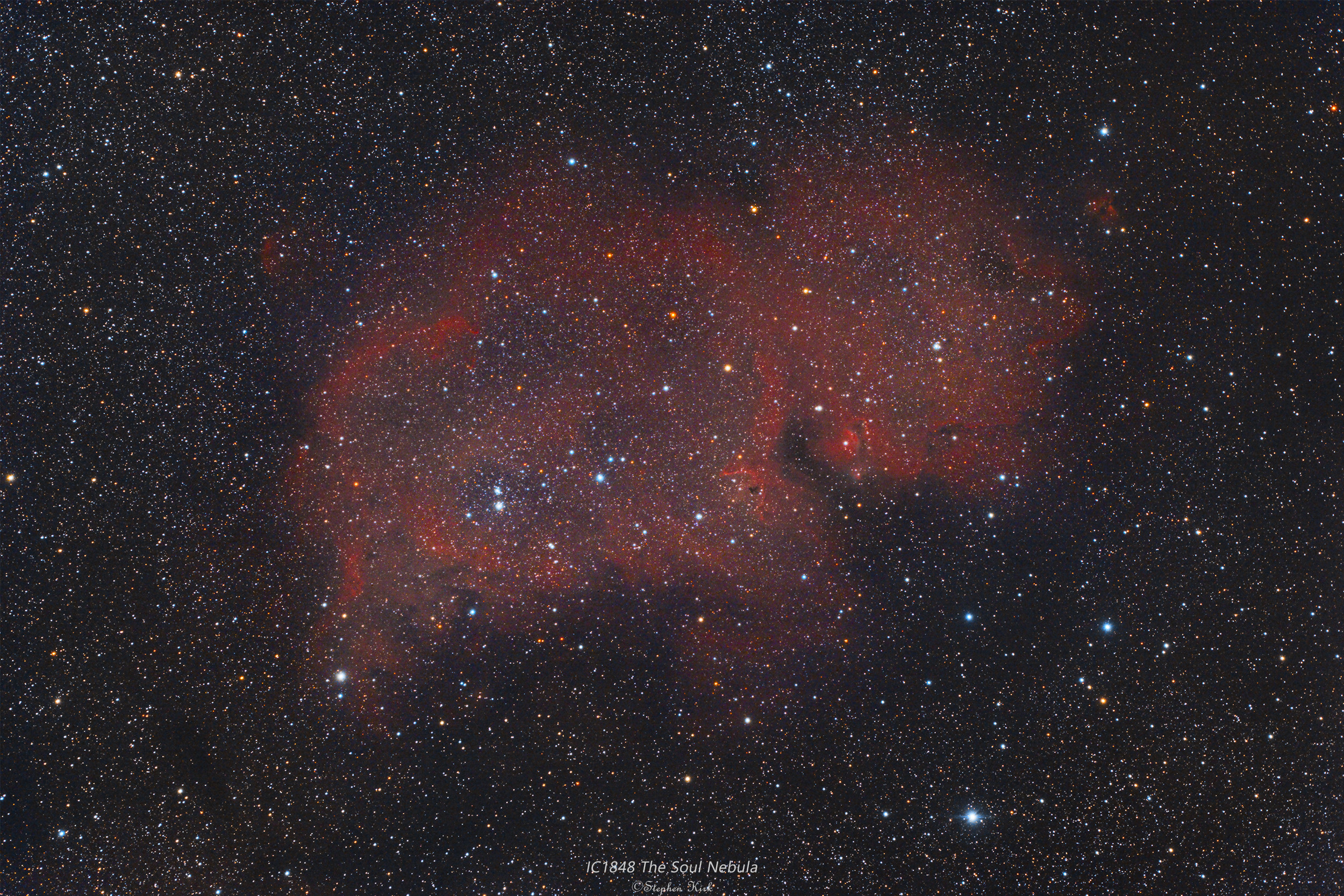
The Soul Nebula with QHY268C and FSQ85
The Soul Nebula is a large emission nebula in the constellation of Cassiopeia. It is commonly imaged with the nearby Heart Nebula as a nebula pair, not unsurprisingly called the Heart and Soul Nebulae such as my rendition here.
The Soul Nebula is a vast star forming region and is located about 7000 light years away, in the Perseus Arm of our galaxy, outward from the core. It is sometimes called the baby nebula because it resembles a baby!
Technical Data
Imaged with my Takahashi FSQ85 refractor at its native focal length and I used my QHY268C colour camera on MESU 200 mount using off-axis guiding. The mage comprises 42 x 3 minute exposures to give a total integration time of just over two hours. It could use some more data, especially some Ha data to bring put more detail in the nebula.
Seeing and transparency were average and the data was captured November 2020.
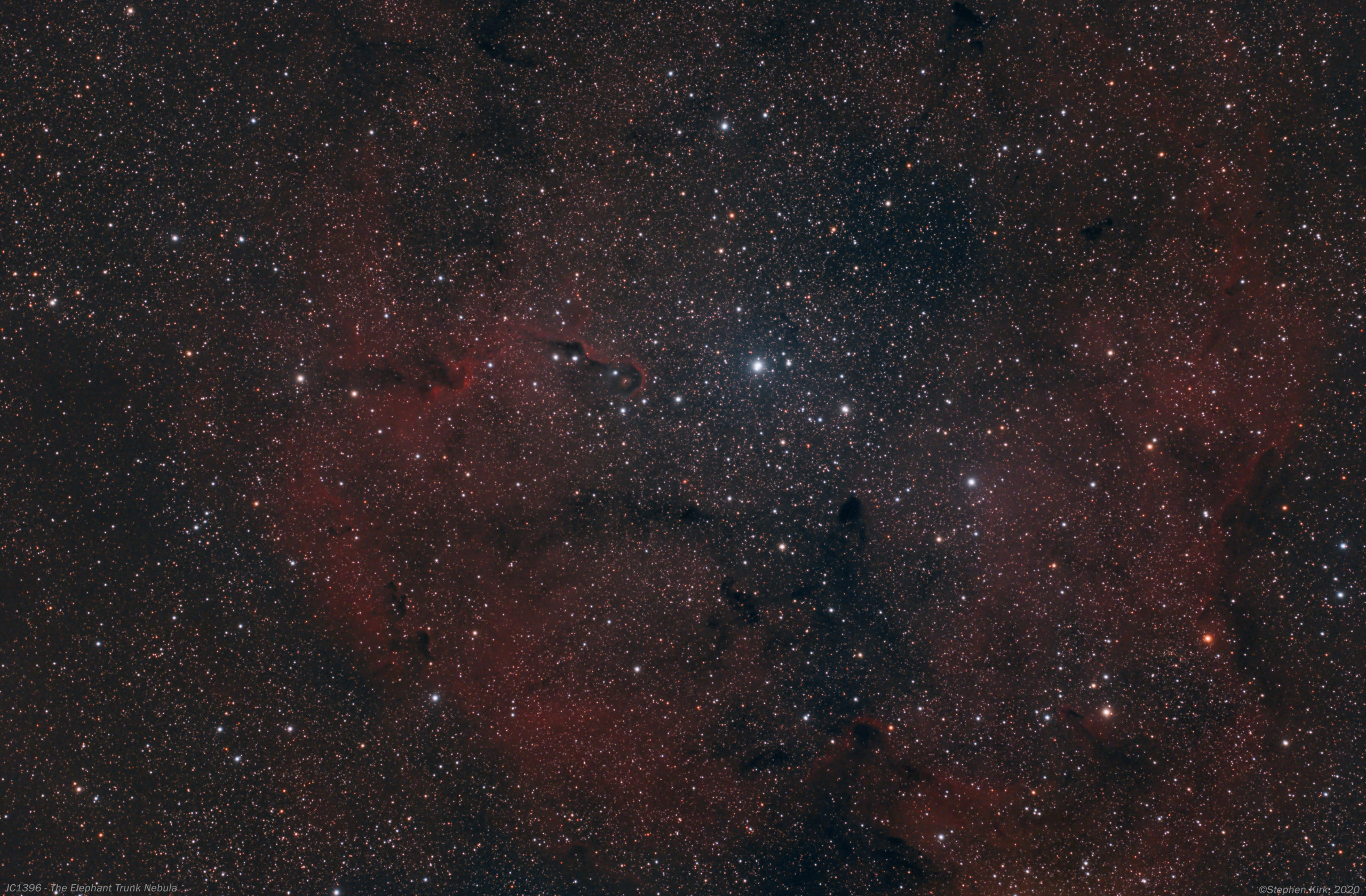
IC1396 - Elephant Trunk Nebula

I have imaged IC1396 before. It passes directly overhead at my location in Nottingham, UK.
Imaged here on 14-15 October 2020 with FSQ85 refractor and QHY268C OSC camera on MESU 200 mount.
A total of 55 x 240s exposures. Developed in PixInsight and Photoshop CC. Image capture with Sequence Generator Pro.

First Light Image From QHY268C and FSQ85

Full Size Image here (opens in a new tab).
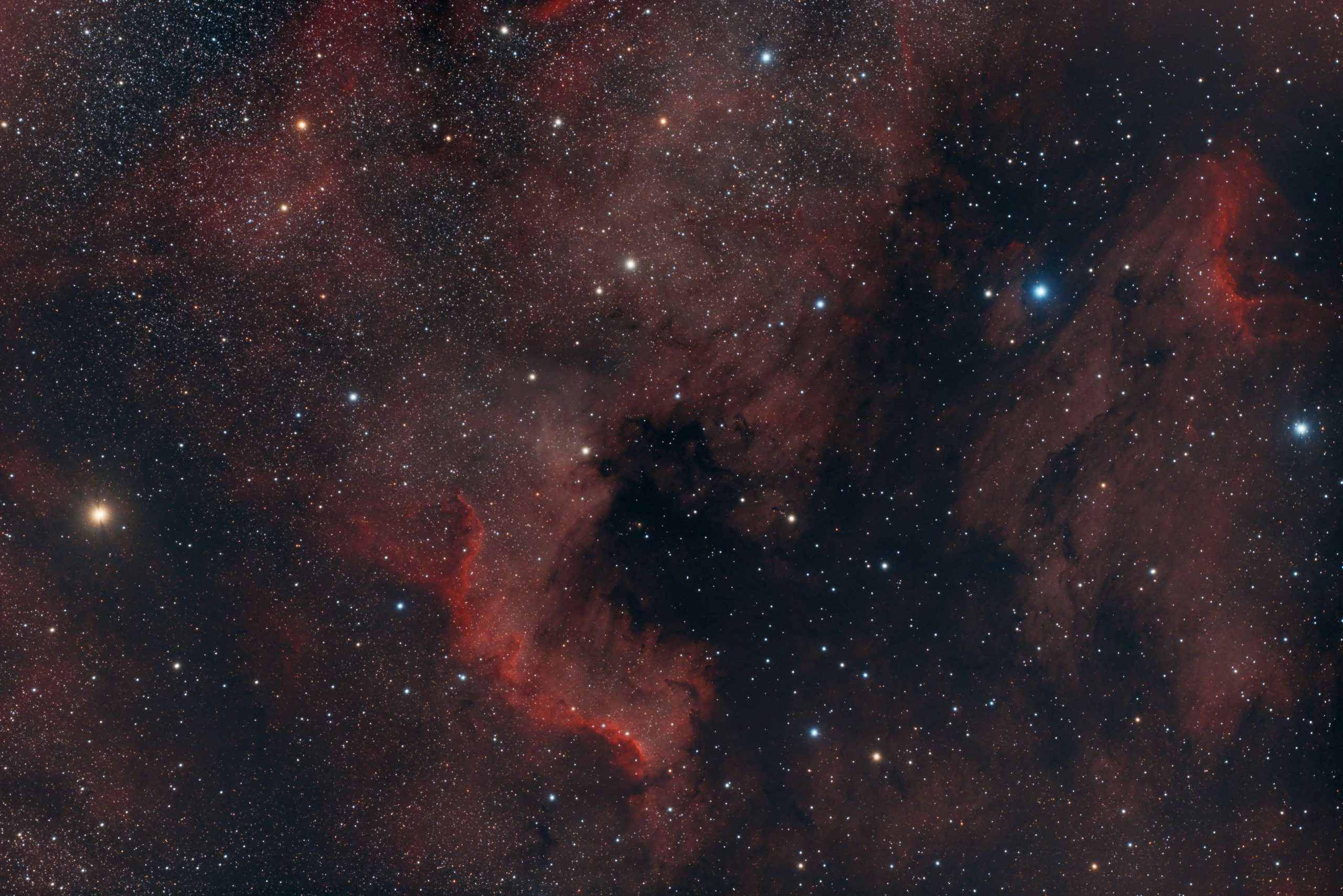
This my first semi-completed image from the QHY268C and so far I am impressed with its performance. I discuss unboxing the camera and also how I connect it to the FSQ85 in other posts on my site.
This image - above - of The North American and Pelican Nebulae is a stack of 47 x 180s exposures at Gain 0 and Offset 30 at -15C on my Takahashi FSQ85. This is my first deep-sky CMOS camera and I had to research how to preprocess the data from the camera and I will discuss this in another post.
Since I acquired the camera and in keeping with the "new gear curse", I have been constantly frustrated by wet weather and cloudy skies for almost a month. The 47 exposures for this image were spread out over about seven imaging sessions, sometimes with as few as four exposures per session, such as been cloudy nature of the skies of late where I live - Nottingham, UK. I'd set up, get everything running and then it would cloud over.

I'm really happy how clean the images look as you can see from the single 180 exposure above. Very little processing work is needed to bring out the detail in good data. I was a bit concerned initially about the visual appearance of the master dark but it did the job of removing the artefacts in the lights.
Below is an annotated version of the main picture at top.

The relatively large APS-C sensor, 16-bit resolution and high pixel count, allied to very low noise and zero amp glow make this camera an incredibly powerful proposition. I understandf QHY and ZWO are about to release a mono version of this camera shortly.
I think it is not unreasonable to say the era of CCD in amateur photography is pretty much over with these incredibly powerful and cost effective CMOS cameras being released nowadays (Oct 2020).
The Rosette Nebula FSQ85
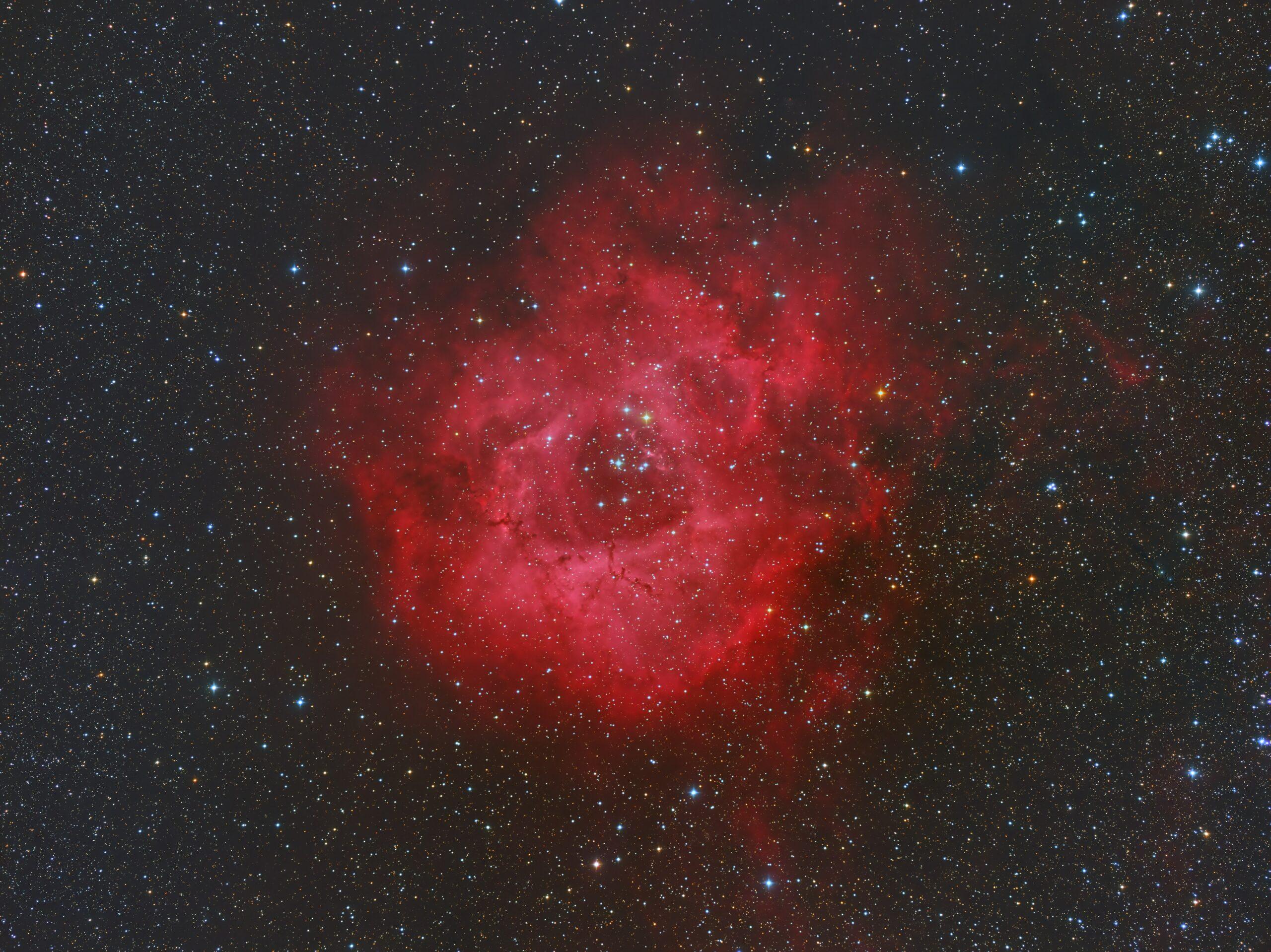
The Rosette Nebula is a huge emission nebula in the Orion arm of the galaxy located in the constellation of Monoceros. It is about 5500 light years away and about 150 light years across and stars are being born from the hydrogen that comprises the nebula.
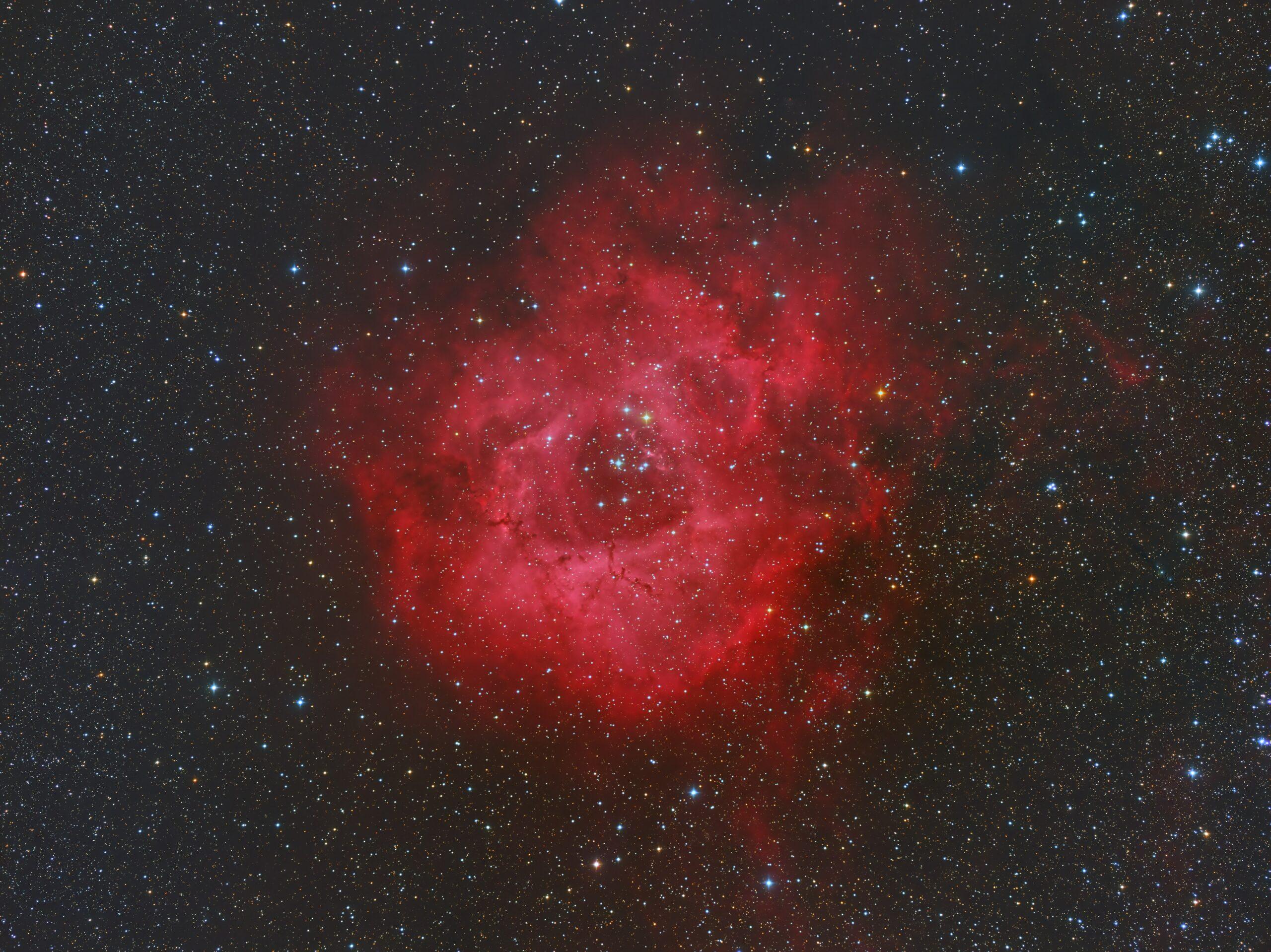
Image Technical Data
Imaged with Takahashi FSQ85 at native focal length with my Moravian Instruments G2-8300 cooled CCD camera and Astrodon RGBHa filters. Data collected from my backyard observatory on 8th January 2018.
Image data is as follows (Ha is 1x1 and RGB is 2x2)
Ha > 14 x 1200s ; Red > 17 x 300s ; Green 12 x 300s ; Blue > 20 x 300s

As can be seen above, the Ha image is extremely detailed and shows a huge amount of detail. This is 3.5 hours of exposures through the Astrodon 3nm Ha filter.

Above is the RGB only image which is binned 2x2. It is a good picture in its own right but it is a bit flat and lacks the pizazz and sparkle of the Ha image. It is the combination of the Ha and the RGB that creates the colourful and detailed main image at the top. There are many ways this combination can be achieved. Here, I did it all in PixInsight whereas on some other pictures I used PI and Photoshop. What I did here was when in the linear state used the emission line script to add the Ha data to the red part of the image. Then after stretching the images I used the NBRGB script to combine the images in the linear state.