
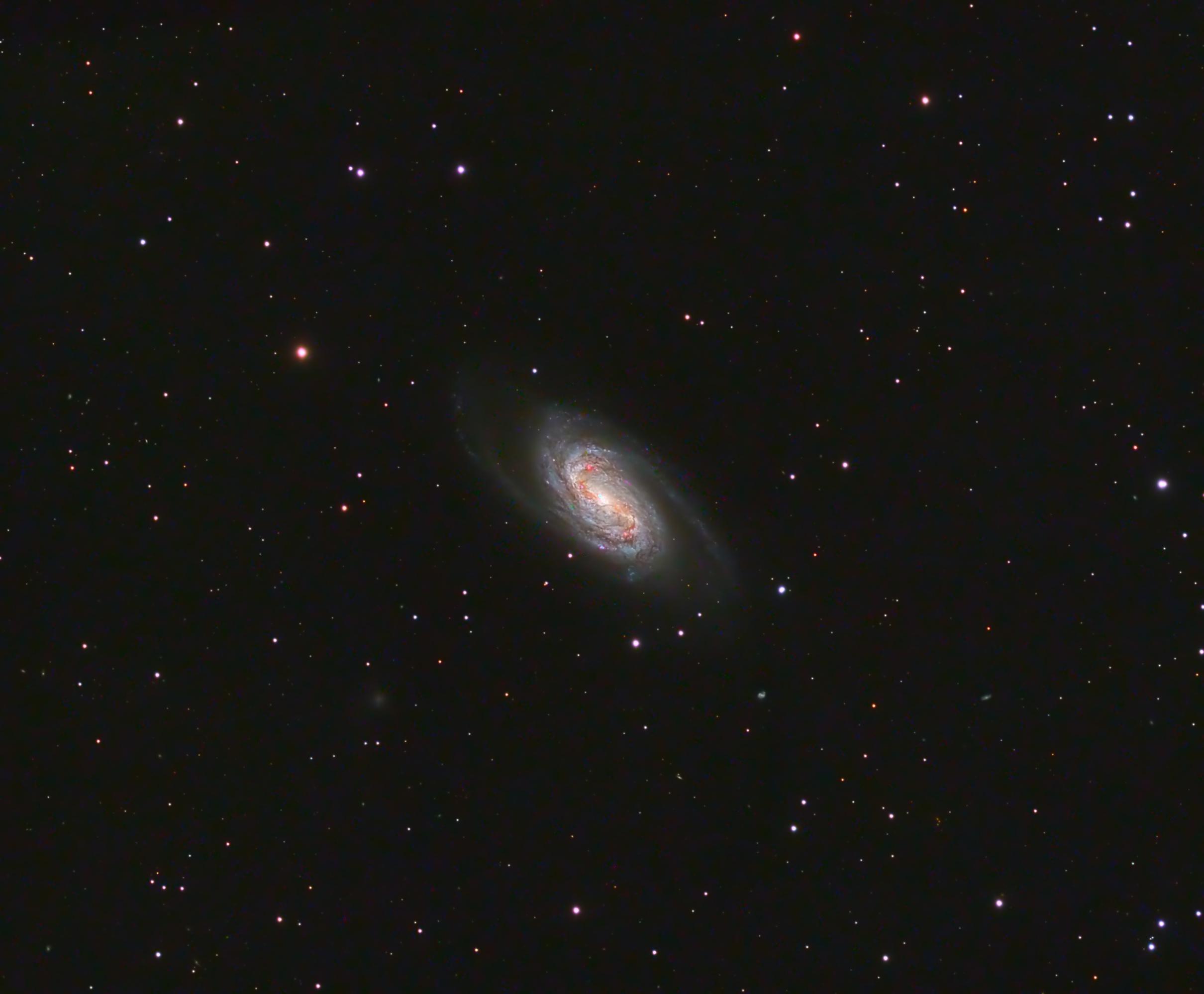
NGC 2903 Spiral Galaxy
A magnificent spiral galaxy with TEC 140 and Atik 460
Many astronomers consider NGC 2903 the best and brightest galaxy that isn't included in the famous Messier list and are surprised Messier himself didn't include it in his catalogue. It is very photogenic and brighter than several other galaxies that are included in Messier's list such as M65 and M66. It is located in Leo to the right of the "sickle" of Leo and is about 30 million light years distant.
Full resolution image here (opens in a new tab). If you open the full resolution image you will see many tiny, remote galaxies in the depths of the Universe.
Technical Detail
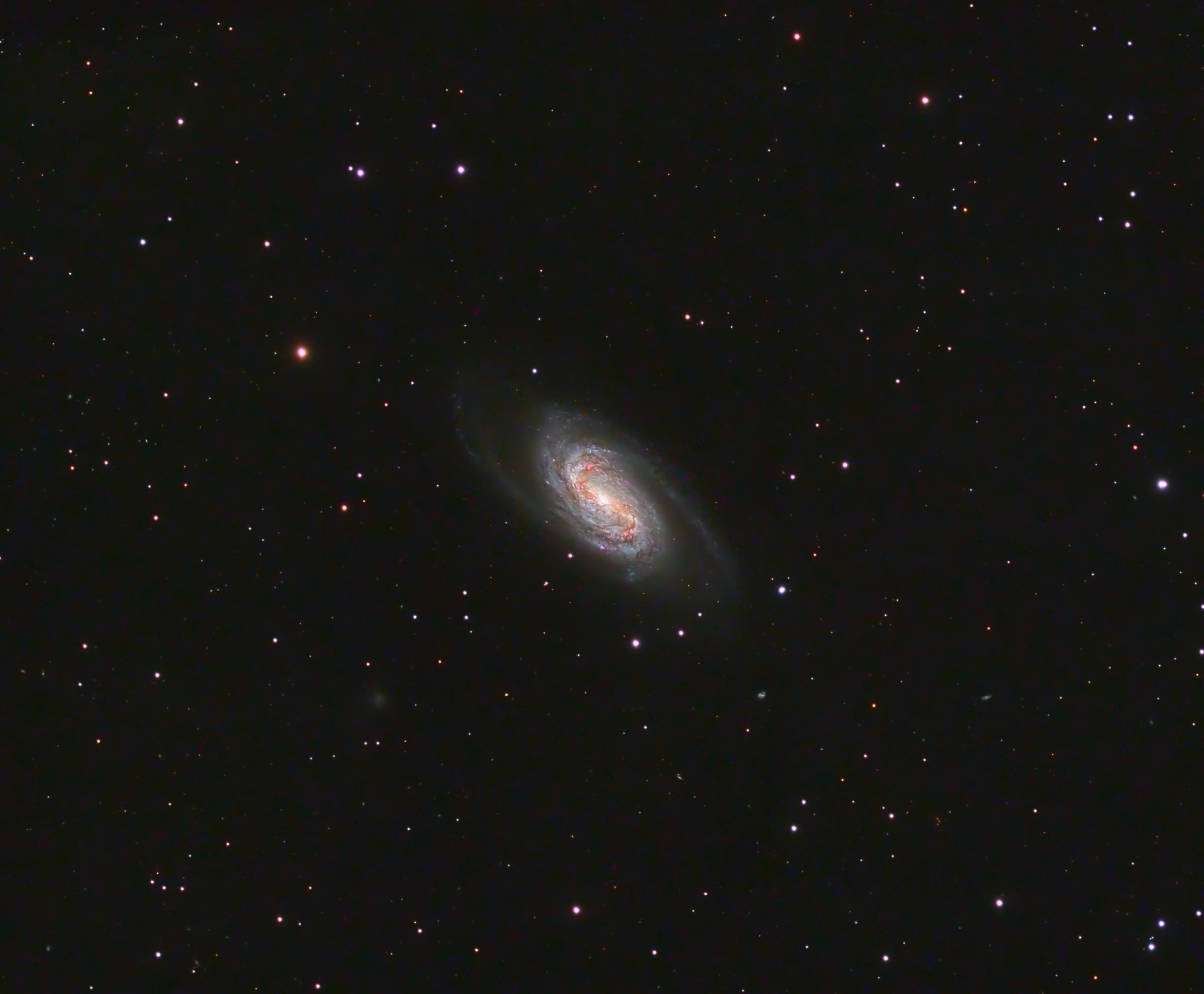
Imaged with my TEC140 telescope and Atik 460 CCD camera with Astrodon E series LRGB filters on the 25th and 26th March 2022. The data set is as follows with the luminance binned 1x1 and the RGB at 2x2:
Lum 24 x 300s ; Red 12 x 180s ; Blue 9 x 180s ; Green 34 x 180s
(yes, I know that's a lot of Green! I overdid the green because I misconfigured the NINA automation software but decided to throw it all into the image anyway).
This gives a total integration time of four hours and 45 minutes in total exposure.
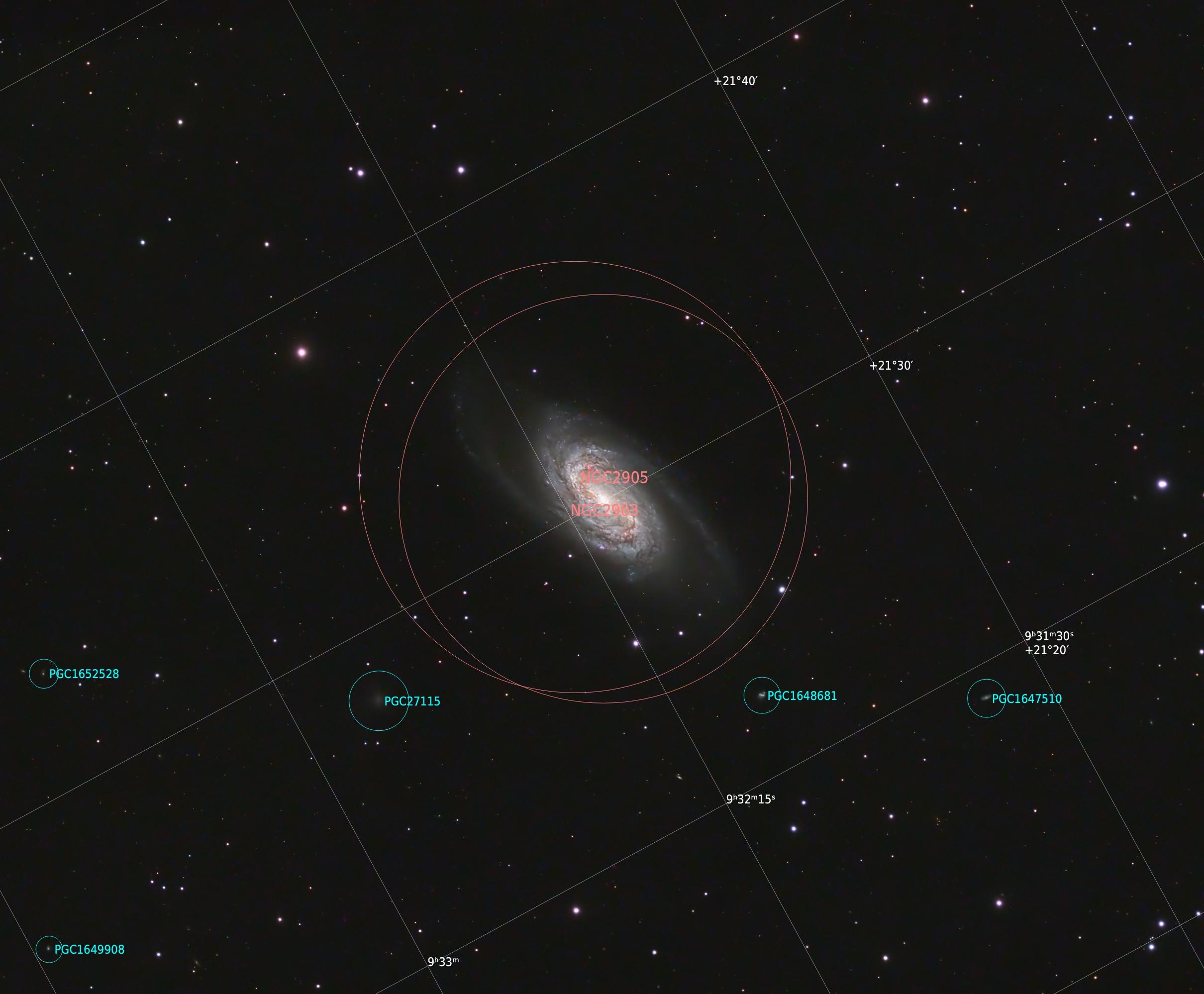
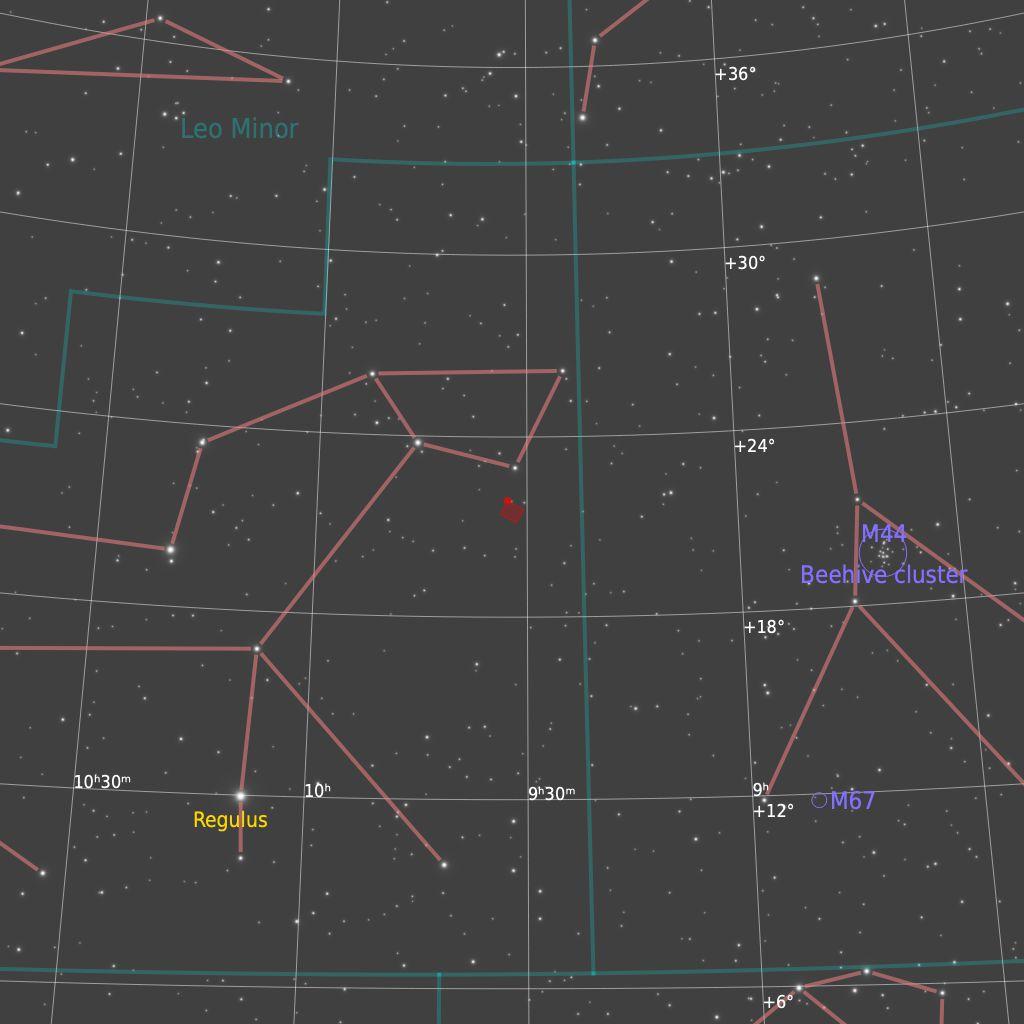
Developed in PixInsight for all pre and post processing. Since it is a good data set all I did after preprocessing was combine the master LRGB files, apply DBE to remove background gradients (and since I am in Bortle 5 sub-urban neighbourhood there are security lights going on and off all night). I then applied Blur Exterminator and some noise reduction. I then stretched the image and applied a bit of colour saturation. That's all I did. It took about 45 minutes in total and most of that time was waiting for WBPP to complete.

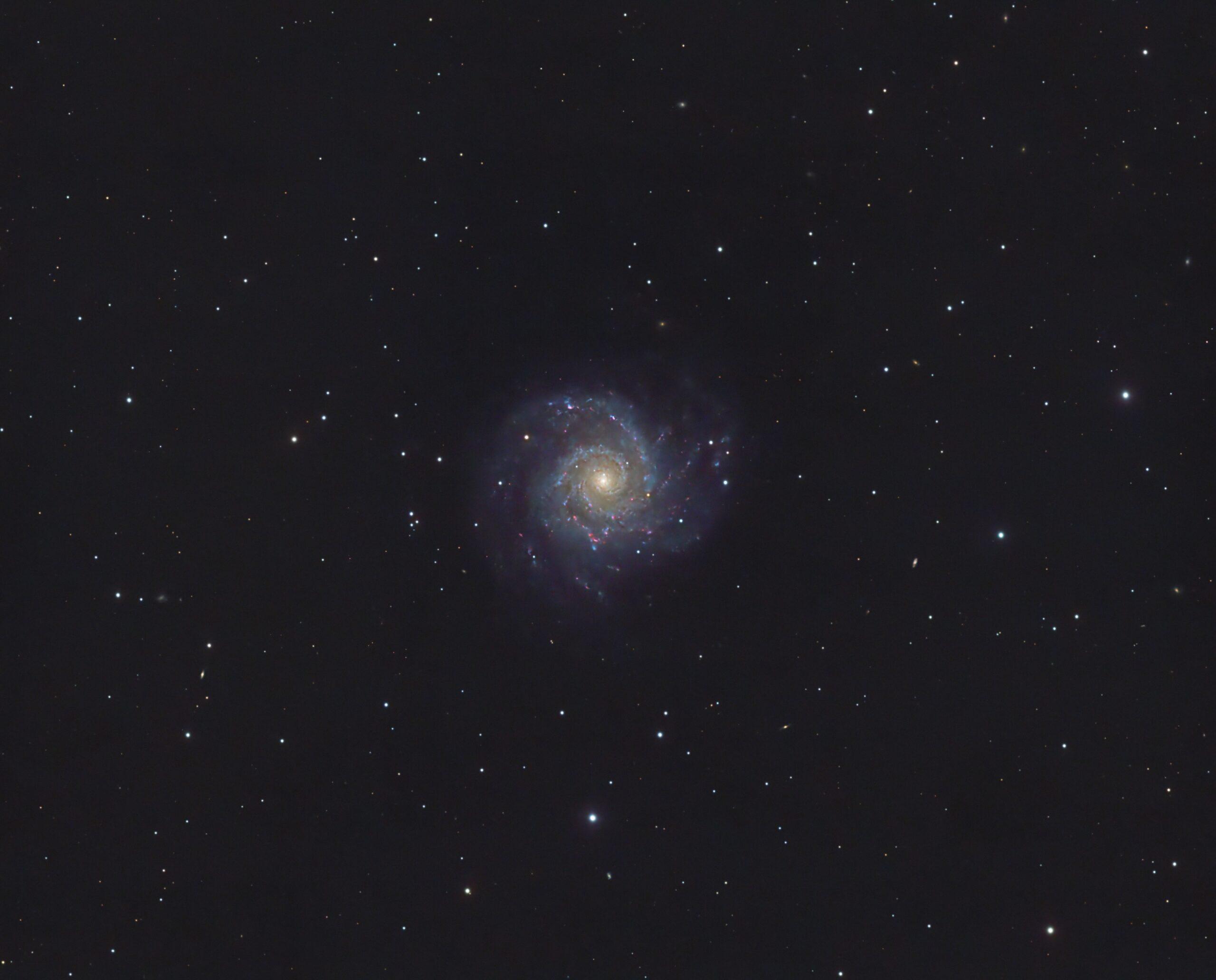
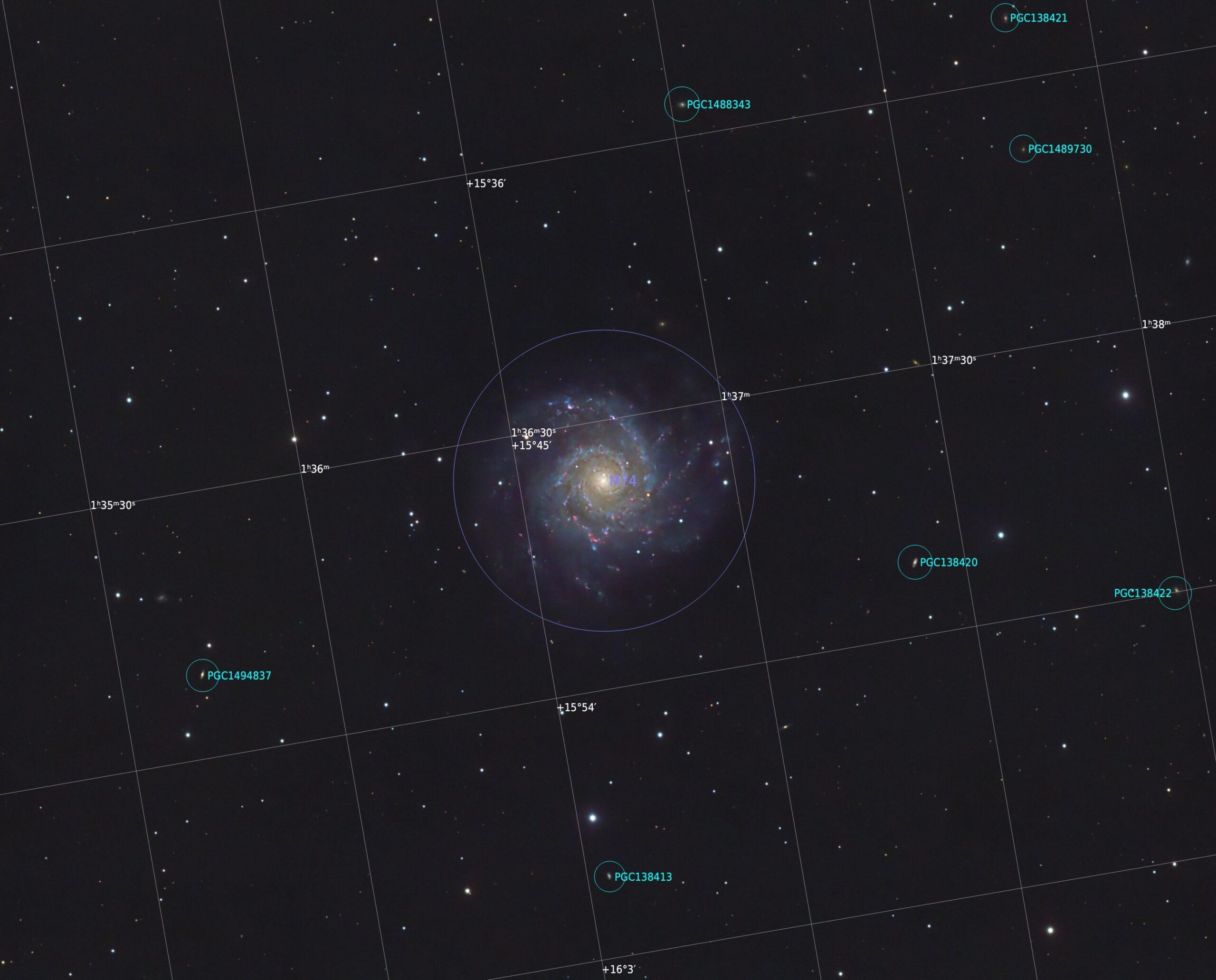
M74 Galaxy with TEC 140 and Atik 460
M74 is a magnificent spiral galaxy about 32 million light years away in the constellation of Pisces. It has quite low surface brightness which makes it quite a hard galaxy to observe. It bears a passing resemblance to M101 I always think, but is much dimmer.
Imaged on 15th December 2022 when to The South. I used my TEC 140 refractor with its field flattener, an Atik 460 CCD camera with Astrodon E series 1.25" LRGB filters. All on my MESU 200 mount which was off-axis guided. The objective lens was very dirty and I cleaned it the following day. Despite that, the image came out quite nice.
This image is made from quite a modest data set comprising the following
LUM > 12 x 300s ; Red > 9 x 300s ; Green 9 x 300s ; Blue > 9 x 300s
Which gives a total integration (exposure) time of three hours and fifteen minutes in total.
I captured the data with NINA software and did all processing with PixInsight.
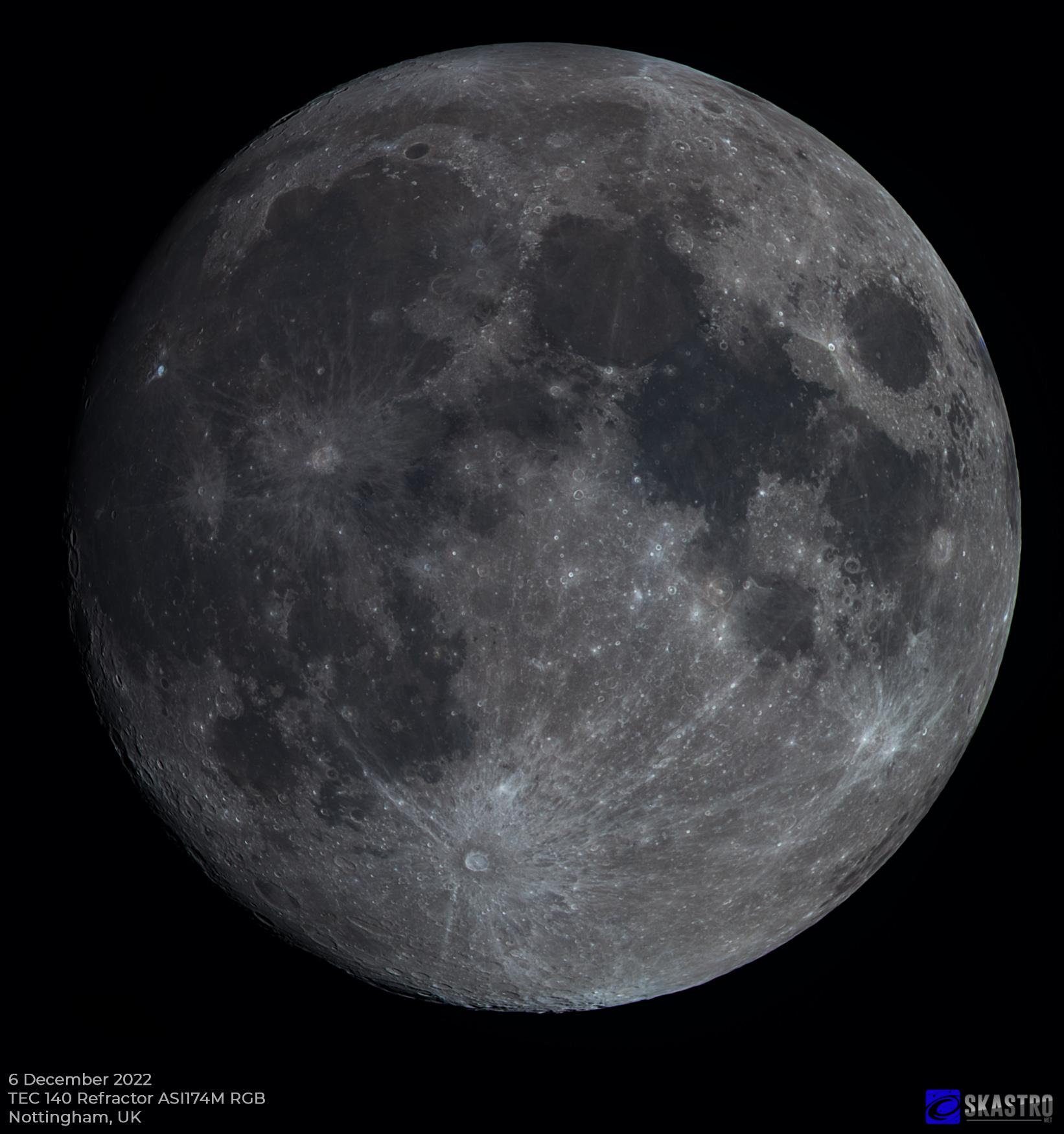
December Moon with TEC140 Refractor
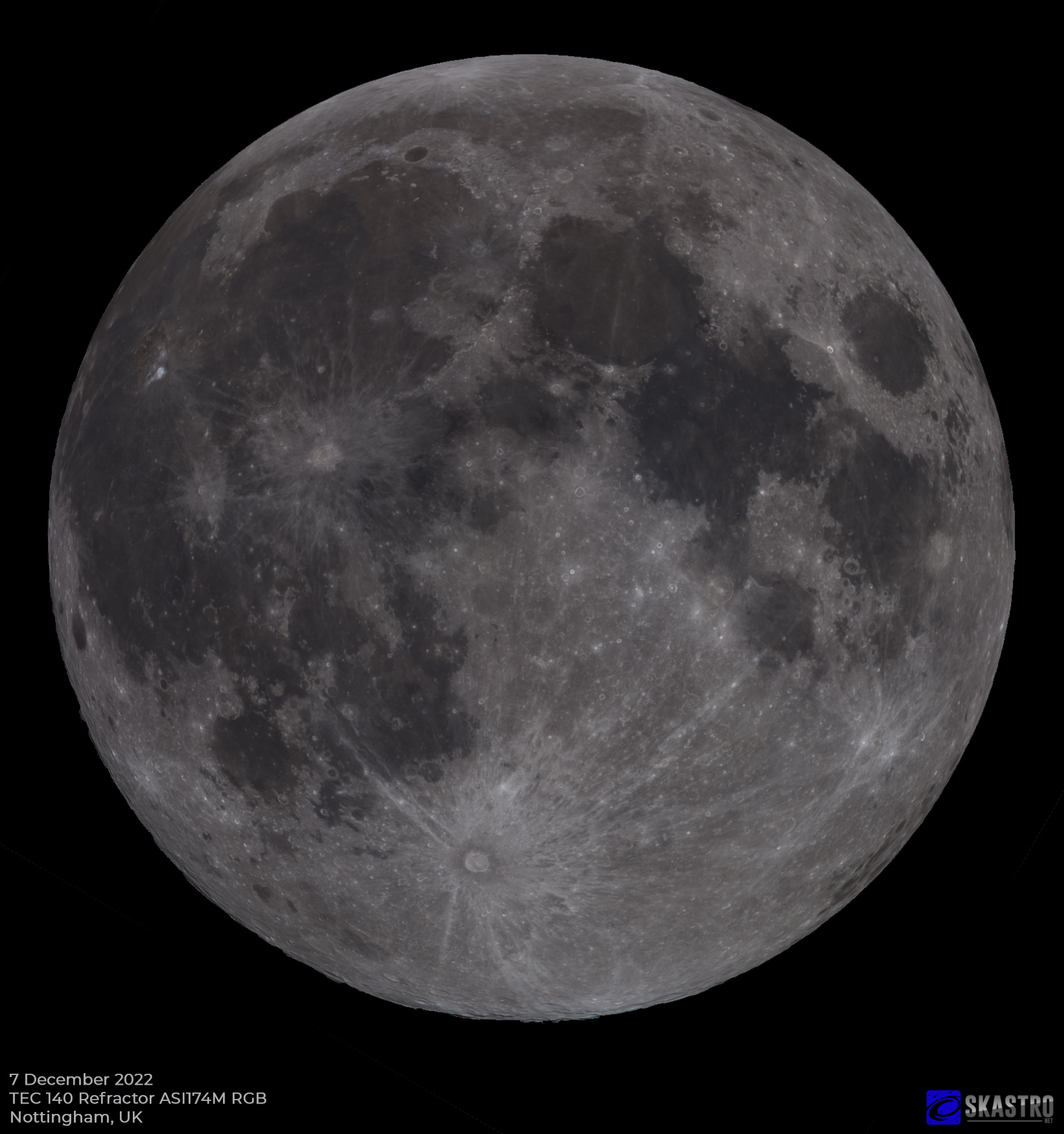
The Moon with my TEC140 December 2022.
Images taken on the 6th and the 7th. The 6th was not quite a full moon and the 7th was just a few hours past full. On the picture on the left you can see that the circle of the moon's disk is not quite full between the 6 and 11 O'clock positions.
Both images were taken with my TEC140 refractor and ASI174M camera through Baader RGB filters.
Each capture was of 5000 frames and the seeing was quite good so that I could utilise the best 50% of frames of each capture run. Because of the Field of View with the combination of the F8 focal length of the TEC140 and the chip size of the AIS174M, each capture run through each filter was comprised of a North and South run. I then stitched the two together in Photoshop.
Weather conditions were extremely cold at about -2C when the captures were taken on the early evenings of the 6th and 7th December. The Moon was very high in Taurus.
From my backyard in Nottingham, UK. My skies are at Bortle 5 in terms of light pollution.
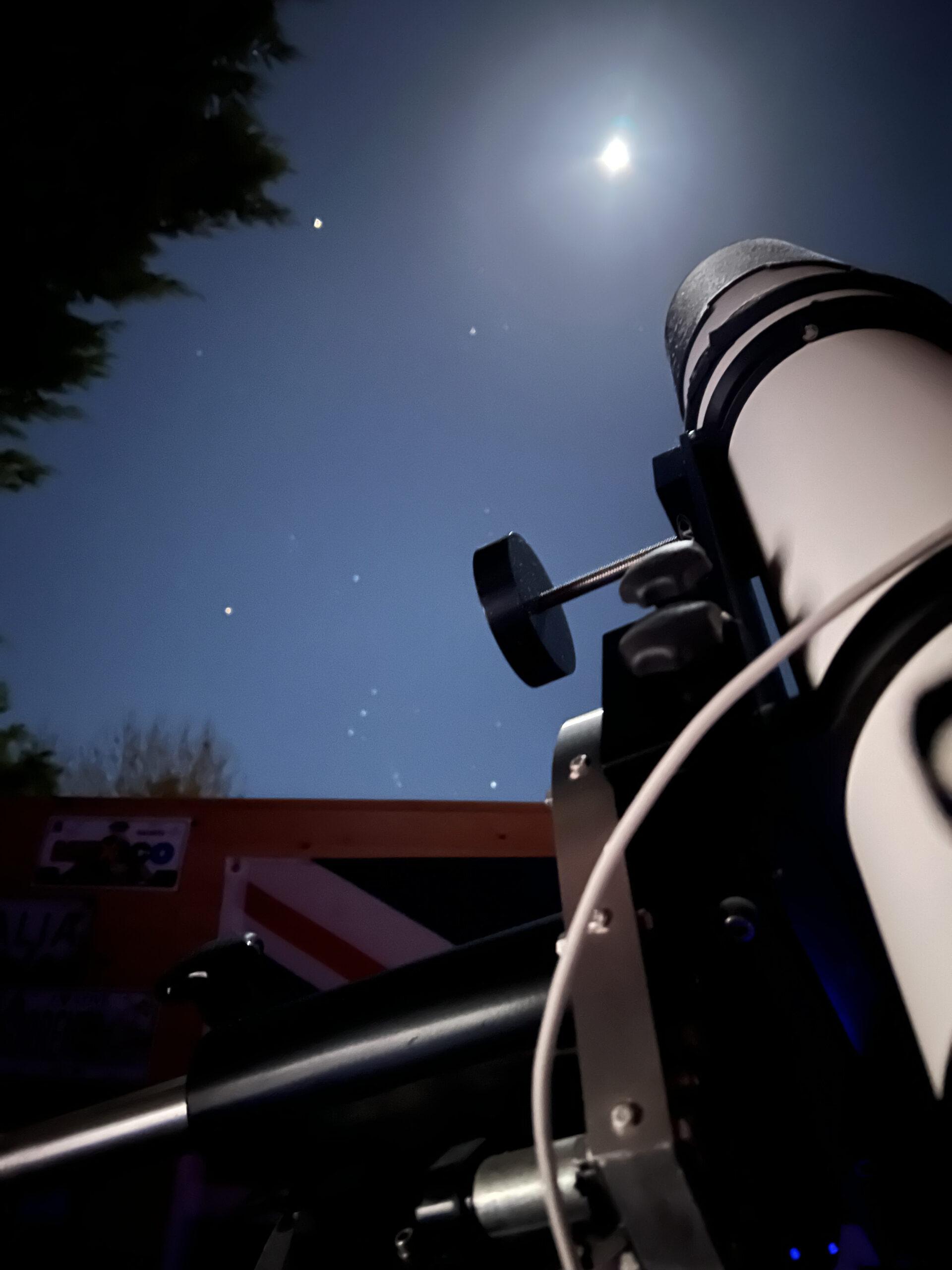
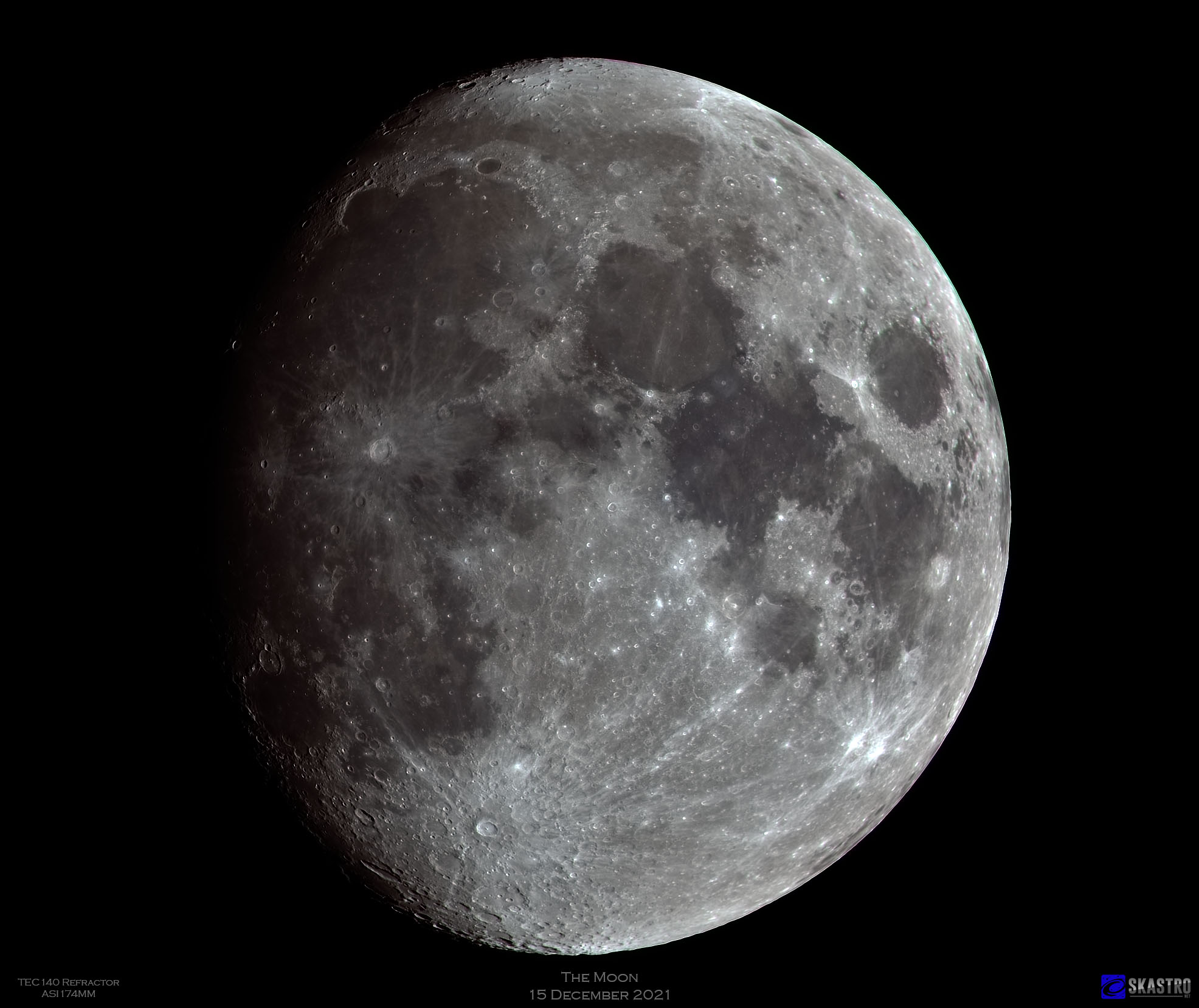
The Moon TEC140 Refractor/ASI174MM
This is a RGB image of The Moon captured at about 20:00 on 15th December 2021 from my observatory in Nottingham using my TEC140 refractor and ASI174MM camera.
I captured two capture runs in each filter and stitched the resultant images together in Photoshop. Each video capture file was 9GB in size.
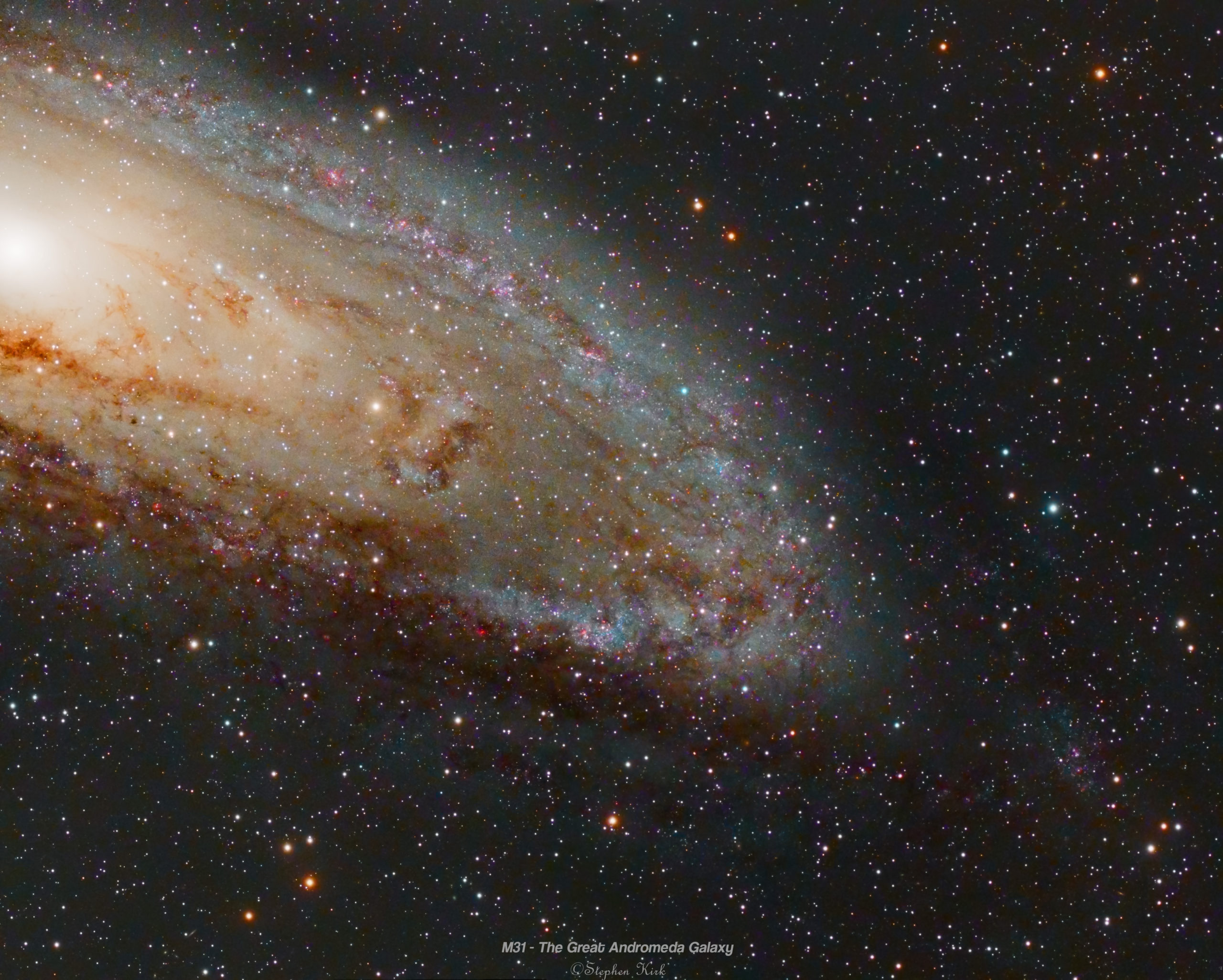
Close Up Study of The Great Andromeda Galaxy M31 with TEC140 and FSQ85
M31 is one of the most favoured and popular imaging targets in the night sky; it is bright, large and very photogenic. I have imaged this galaxy numerous times, for example, in this LRGB version and in this OSC version. Since the galaxy is so large, each of these images is set in a wide field, one of 3 degrees horizontally and 2 degrees vertically across the field of view which equates to six times the diameter of the full moon. Many newcomers do not appreciate how large these objects are in the sky. Large but VERY dim!

The above image is at a resolution of 4.16arcsec/pixel. On such a large object as M31 this allows the entire galaxy to be imaged in one field of view on a wide field refractor such as the FSQ85 but does not allow for a "closer in" and more detailed image.
In order to do the latter, I created a mosaic of four panels to image the right hand side "west" of the galaxy at the greater resolution with my TEC140 and Atik 460. All I needed is the luminance data and then I could use this to blend with the lower resolution OSC data at the top of this post in Photoshop.
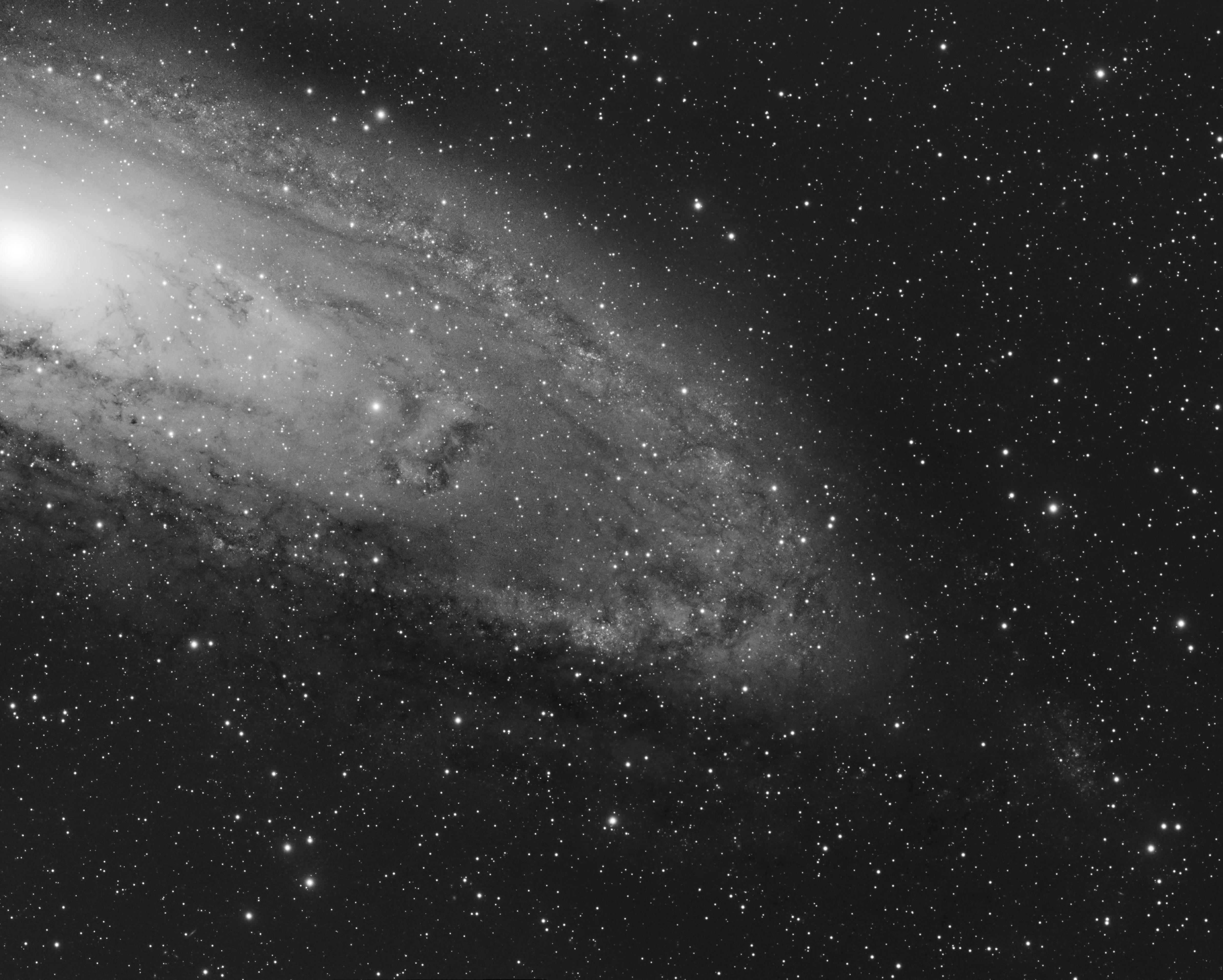
Each of the four luminance panels is a total of 90 minutes of 300 sec exposures captured with the TEC140 and Atik460 CCD camera with a Astrodon luminance filter. The luminance image above is a total of six hours of imaging time. I then processed these four images and knitted them together in PixInsight. I then registered this four-panel luminance with the OSC data at the top of the post and then used it as a luminance layer to give the best of both worlds; the colour of the OSC/FSQ85 wide field image with the detail of the TEC140/Atik460 image!

I hope you like it! :)
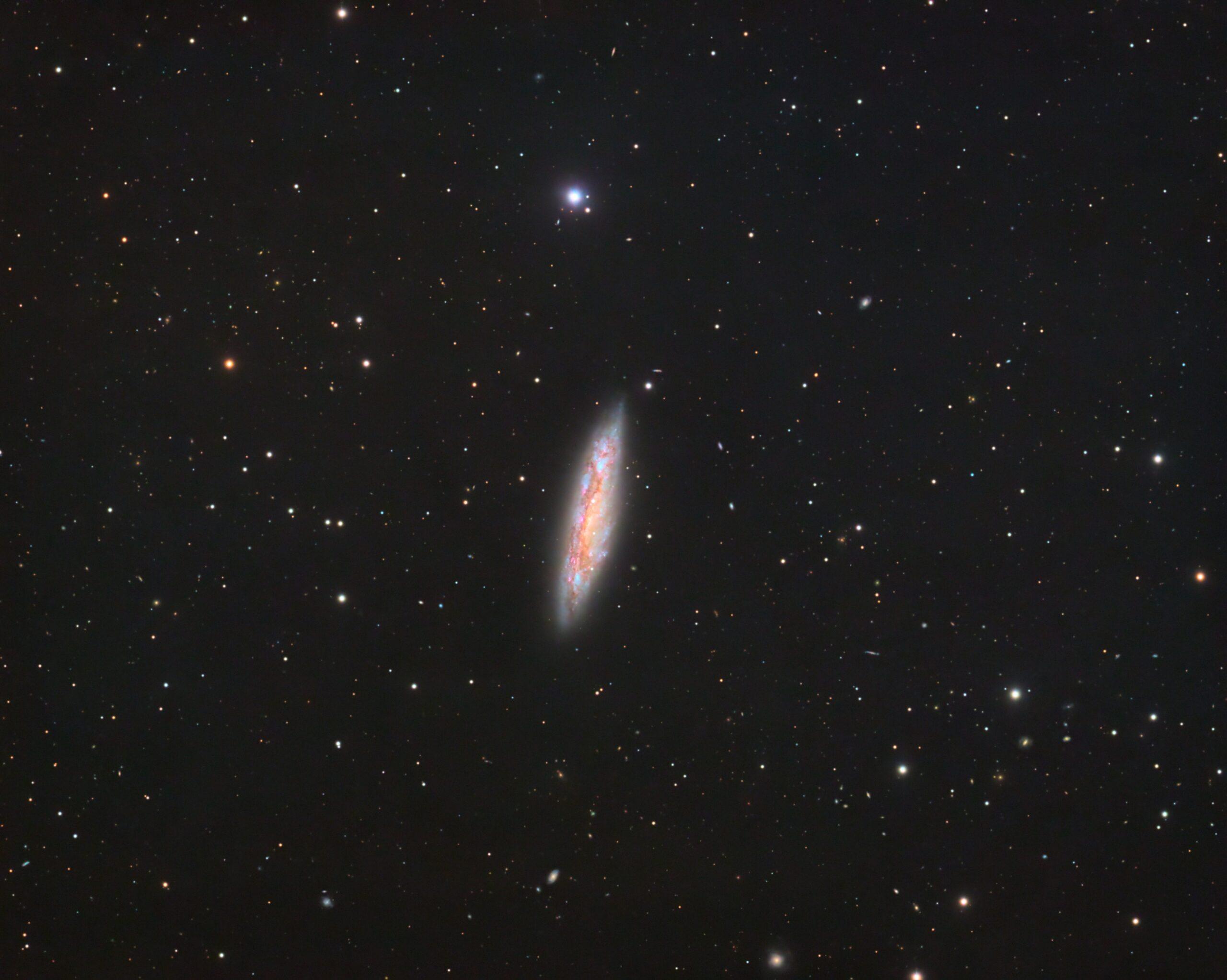
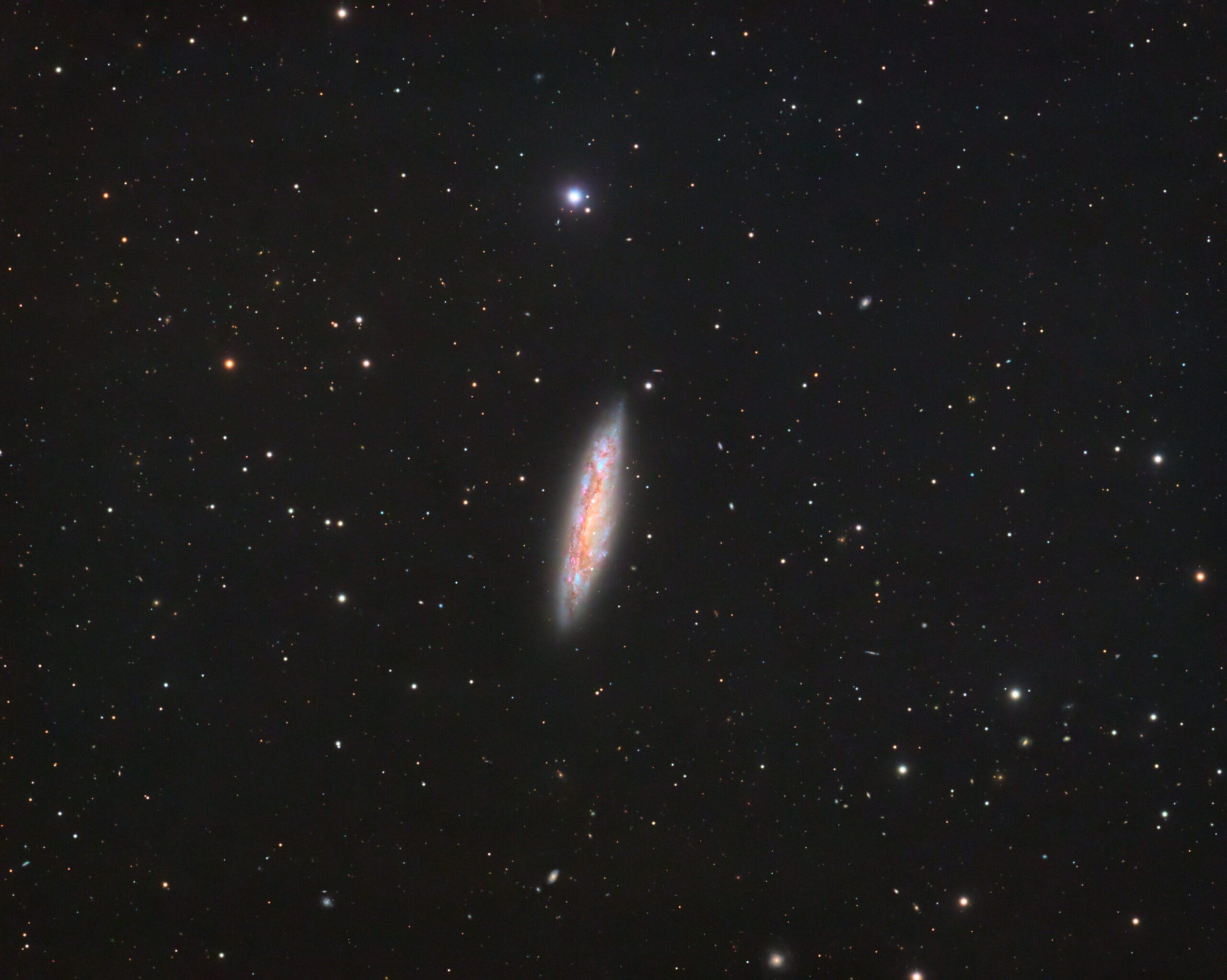
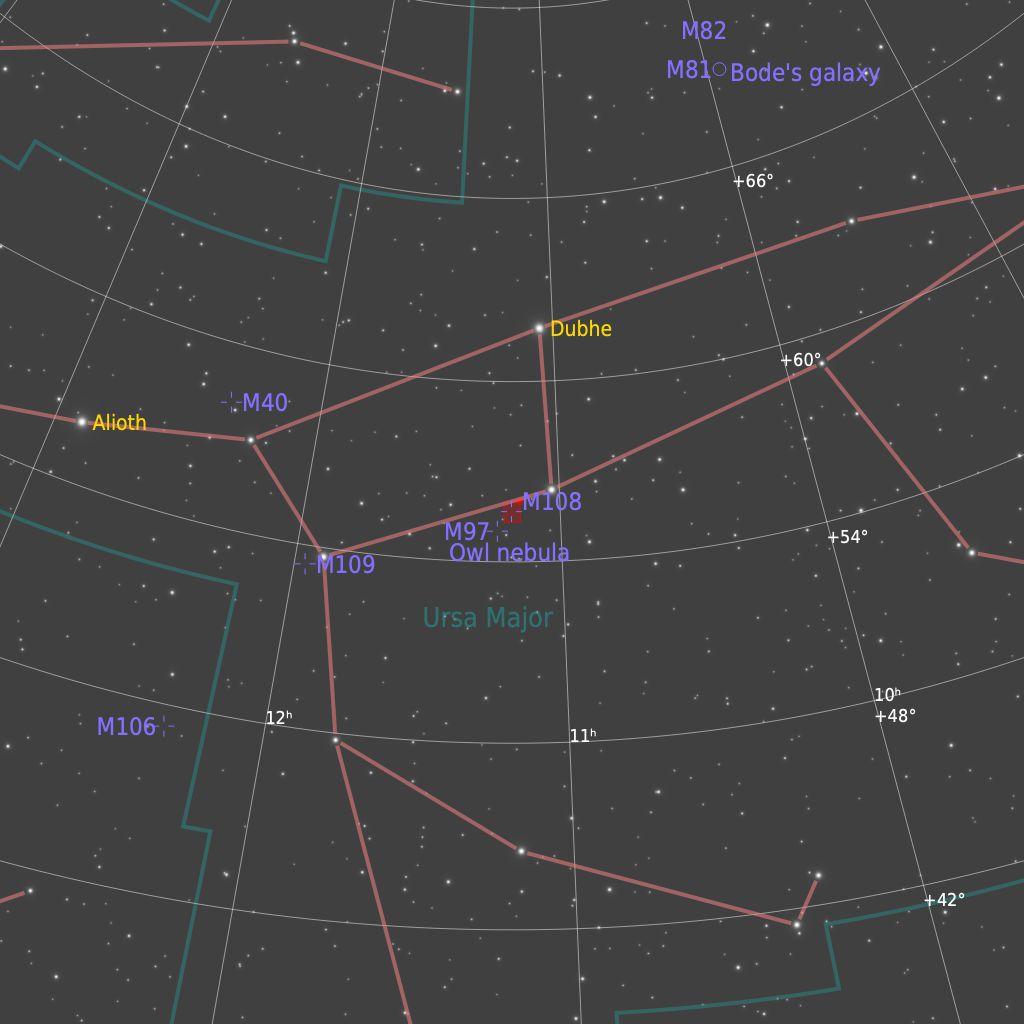
M108 Galaxy in Ursa Major, TEC140
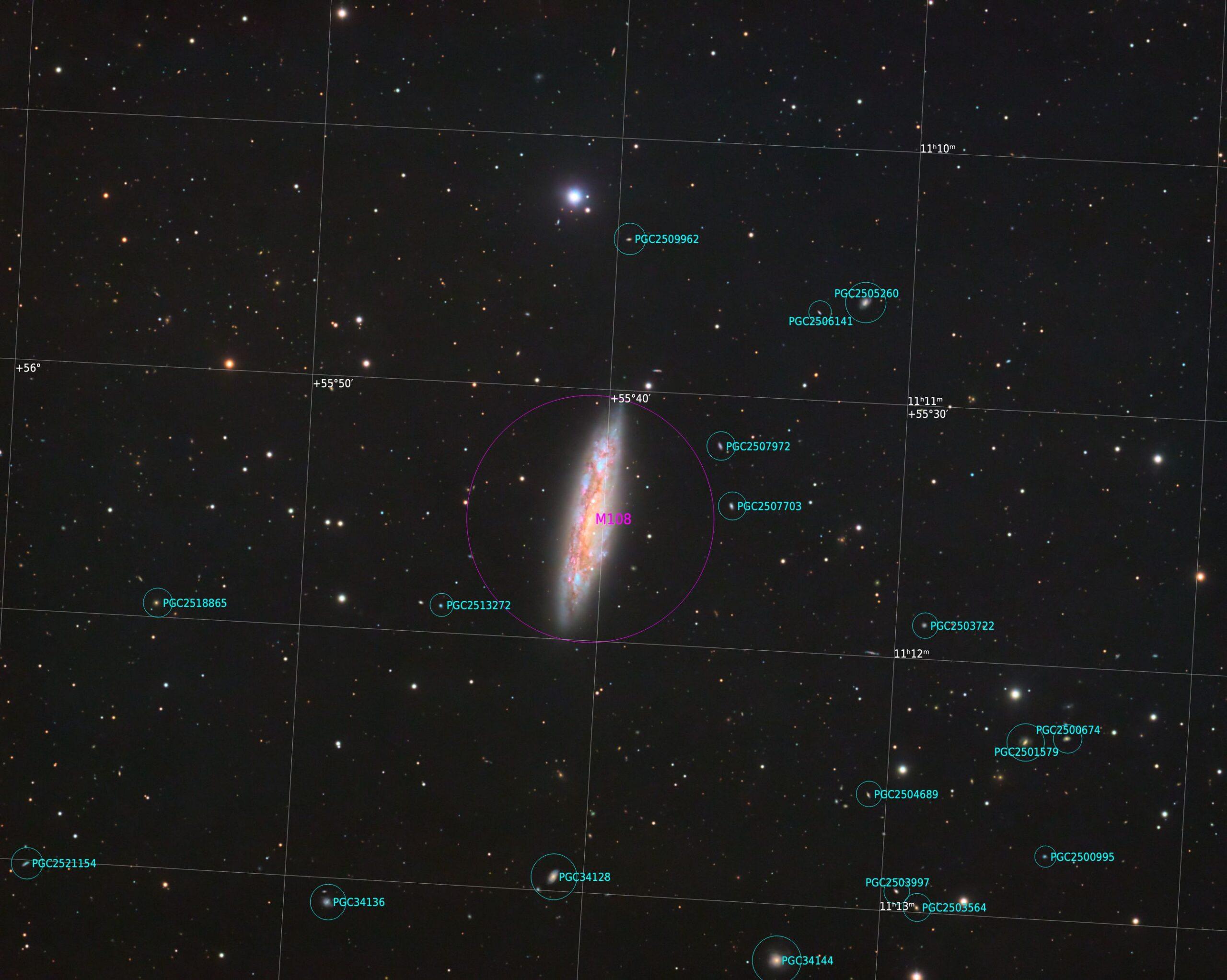
M108 is a galaxy about 45 million light years away in the constellation of Ursa Major. It is sometimes called the surfboard galaxy because of its resemblance to a surfboard. Note the huge number of tiny, distant galaxies in the background. These are hundreds and in some cases up to two billion light years away from us.
Technical Information
I imaged M108 from my backyard observatory in Nottingham, UK on 4-5 April 2021 (two imaging sessions) when M108 was almost directly overhead. Conditions were very cold and frosty with good seeing and transparency. I used my TEC140 refractor and Atik 460 CCD camera with Astrodon E series Gen LRGB filters (1.25"). There is almost 9.5 hours of data in this image consisting of:
Lum > 42 x 300s; Red > 24 x 300s; Green > 24x300s; Blue 24 x 300s
Everything was binned 1x1.
Image data was captured using Sequence Generator Pro software and the equipment was was guided using OAG on my MESU 200 mount. Processed with PixInsight.
I hope you like it!
Full size image here (opens in new tab).
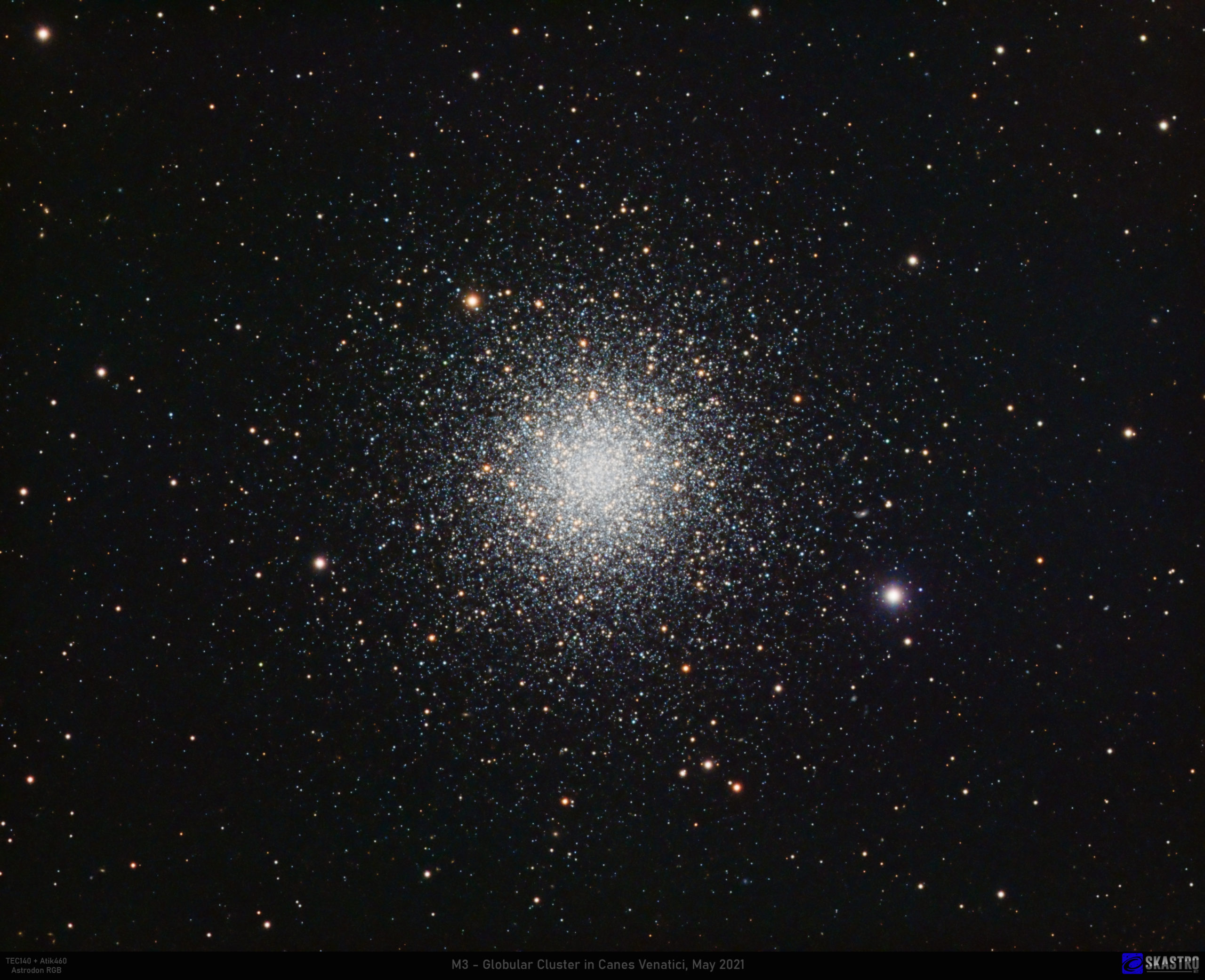
M3 Globular Cluster in Canes Venatici
Lorem ipsum dolor sit amet, consectetur adipiscing elit. Ut elit tellus, luctus nec ullamcorper mattis, pulvinar dapibus leo.
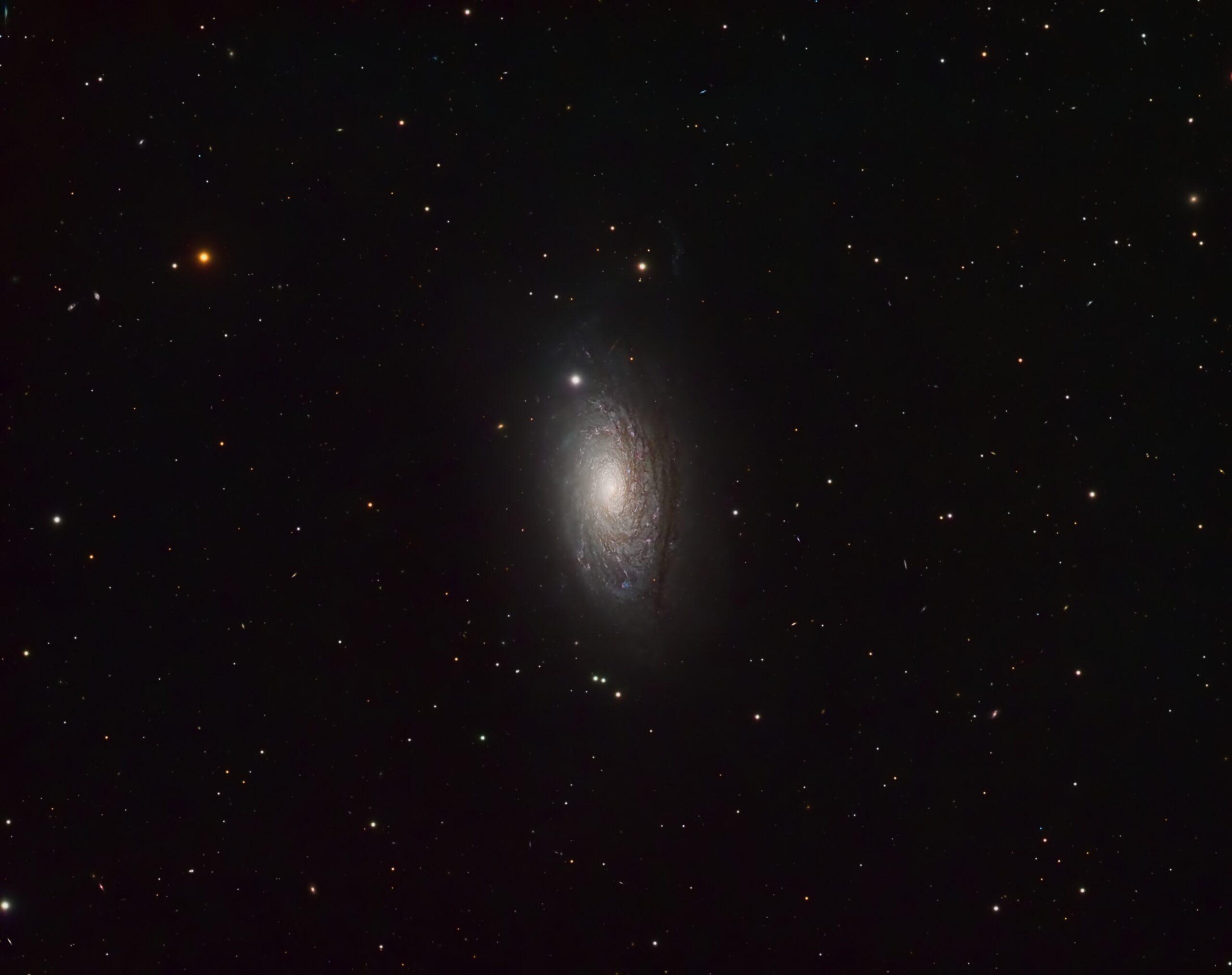
M63 - The Sunflower Galaxy
M63 is a magnificent spiral galaxy located in the Northern constellation of Canes Venatici, about 30 million light years away. The galaxy is a member of the M51 group. There are lots of faint galaxies in the background.
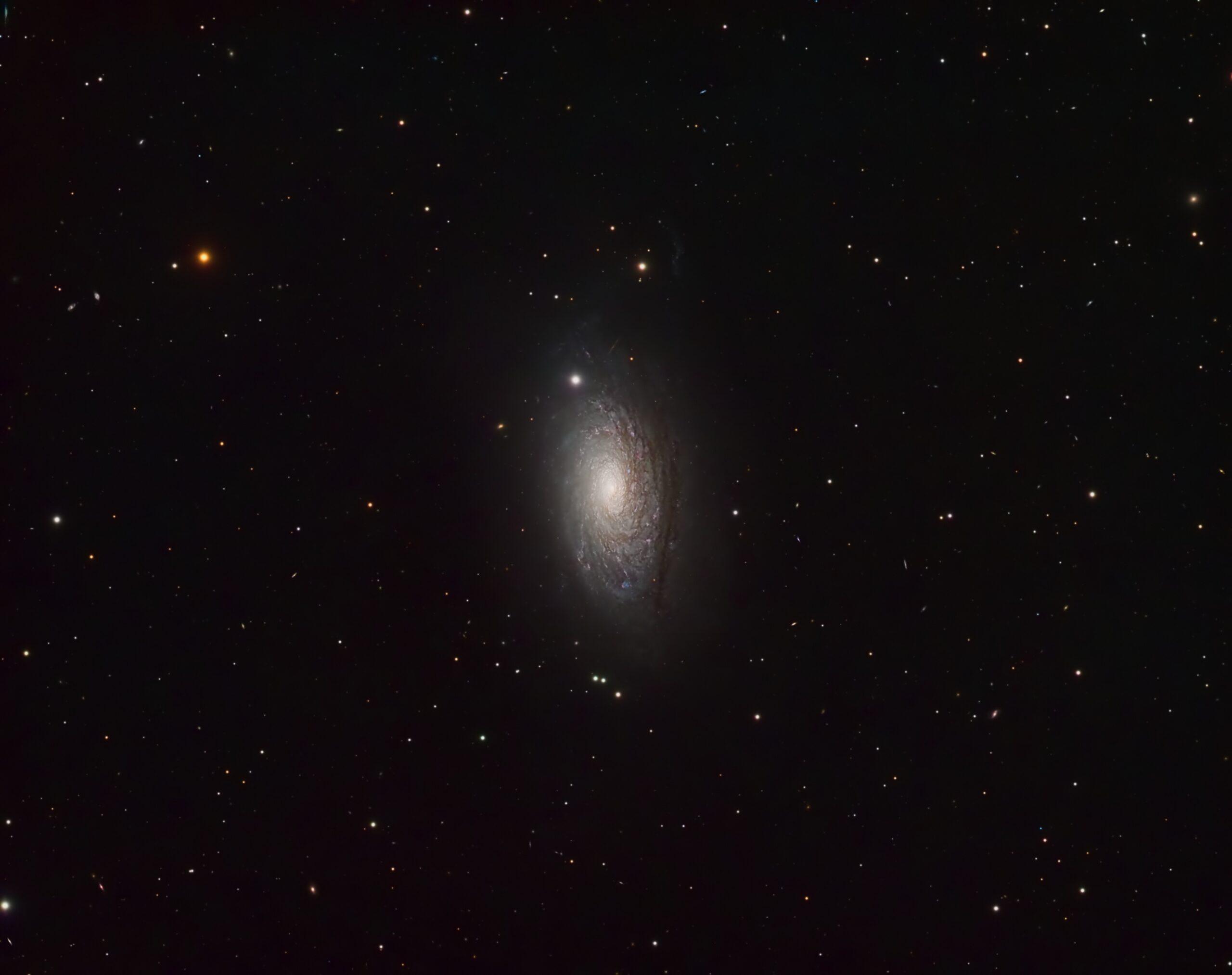
Technical Data
Full resolution image here (opens in new tab)
M63, often called the Sunflower Galaxy because of its resemblance to that flower, is a spiral galaxy about 27 million light years away in the constellation of Canes Venatici. It is a member of the M51 group of galaxies.
I captured the data for this image of the galaxy from my back yard observatory in Nottingham, UK over the nights of 4th and 5th of May 2021 when M63 was high near the zenith. Most of the data was captured in the middle of the night on an automated basis whilst I was asleep in bed! I used my TEC140 refractor and Atik 460 CCD camera with Astrodon E Series LRGB filters. I used off-axis guiding on my MESU200 mount.
Integration is a total of nine hours comprised of:
Luminance > 30 x 300s binned 1×1 ; Red > 22 x 300s 1×1 ; Green > 24 x 300s 1×1 ; Blue > 24 x 300s 1×1 to give a total of about 8.5 hours of integration time. Captured with SGP pro and processed in PixInsight.
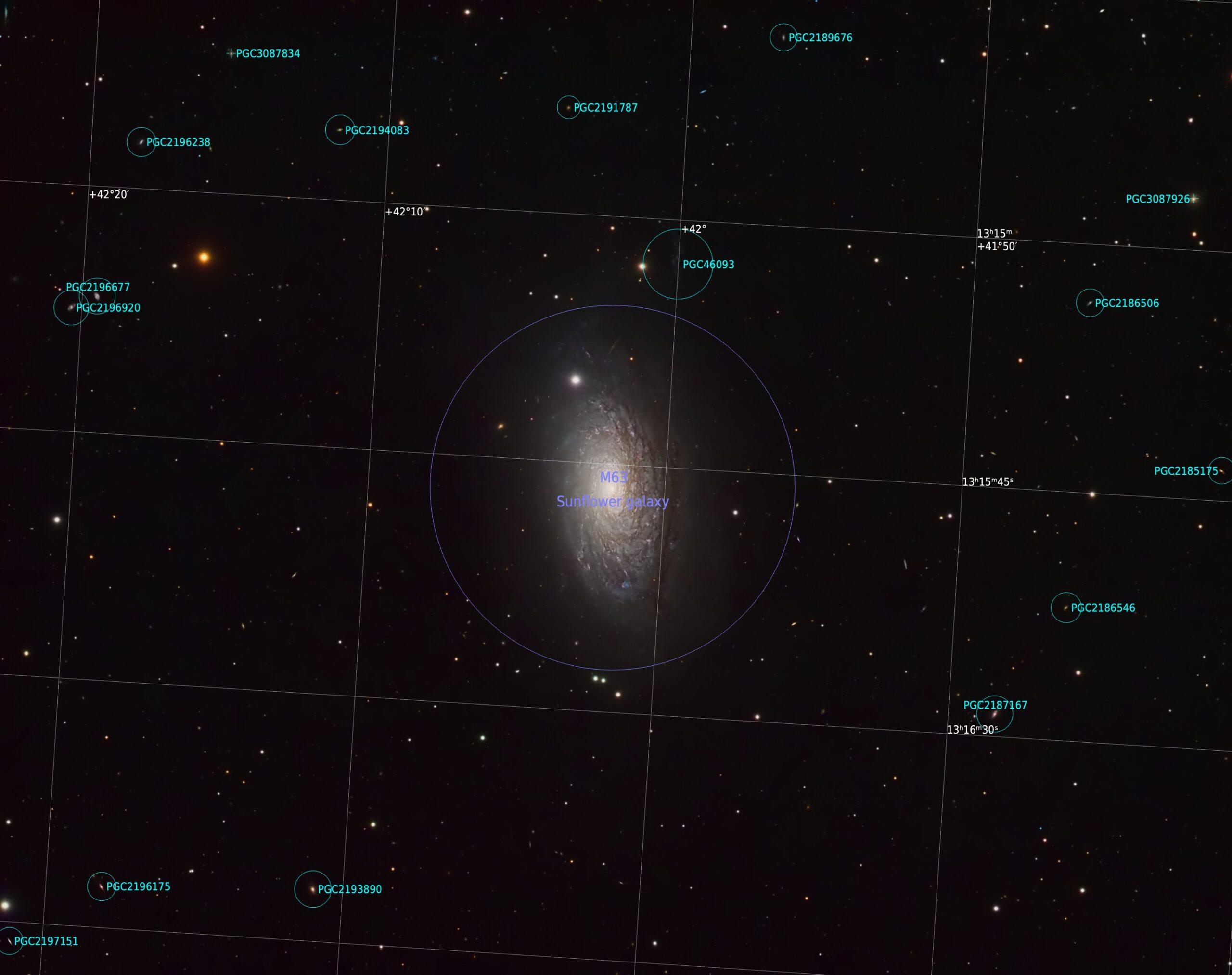
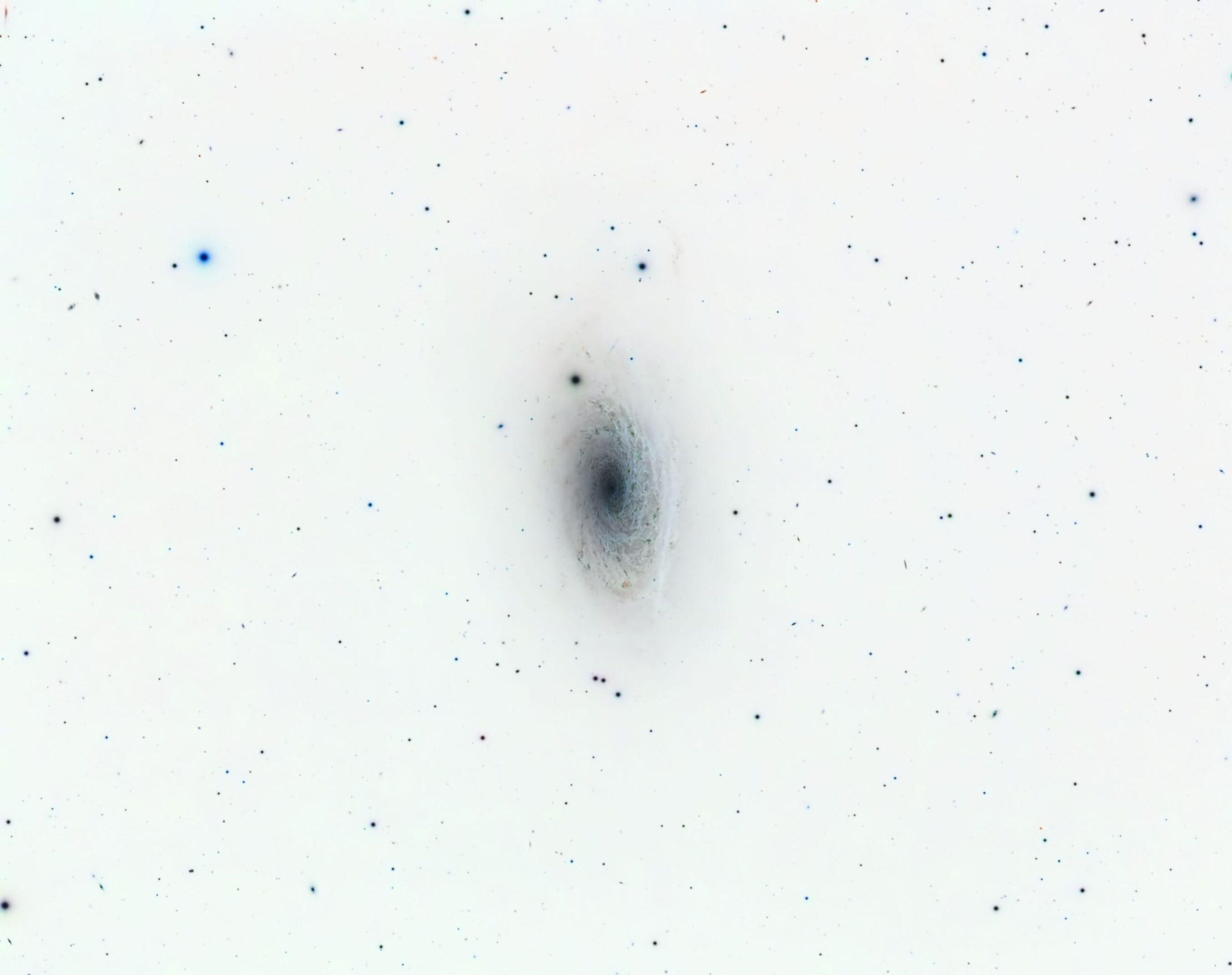
Annotated and inverted versions of the galaxy shown above. The annotated version shows the many, extremely distant background galaxies present in the image, some of which are billions of lightyears away.
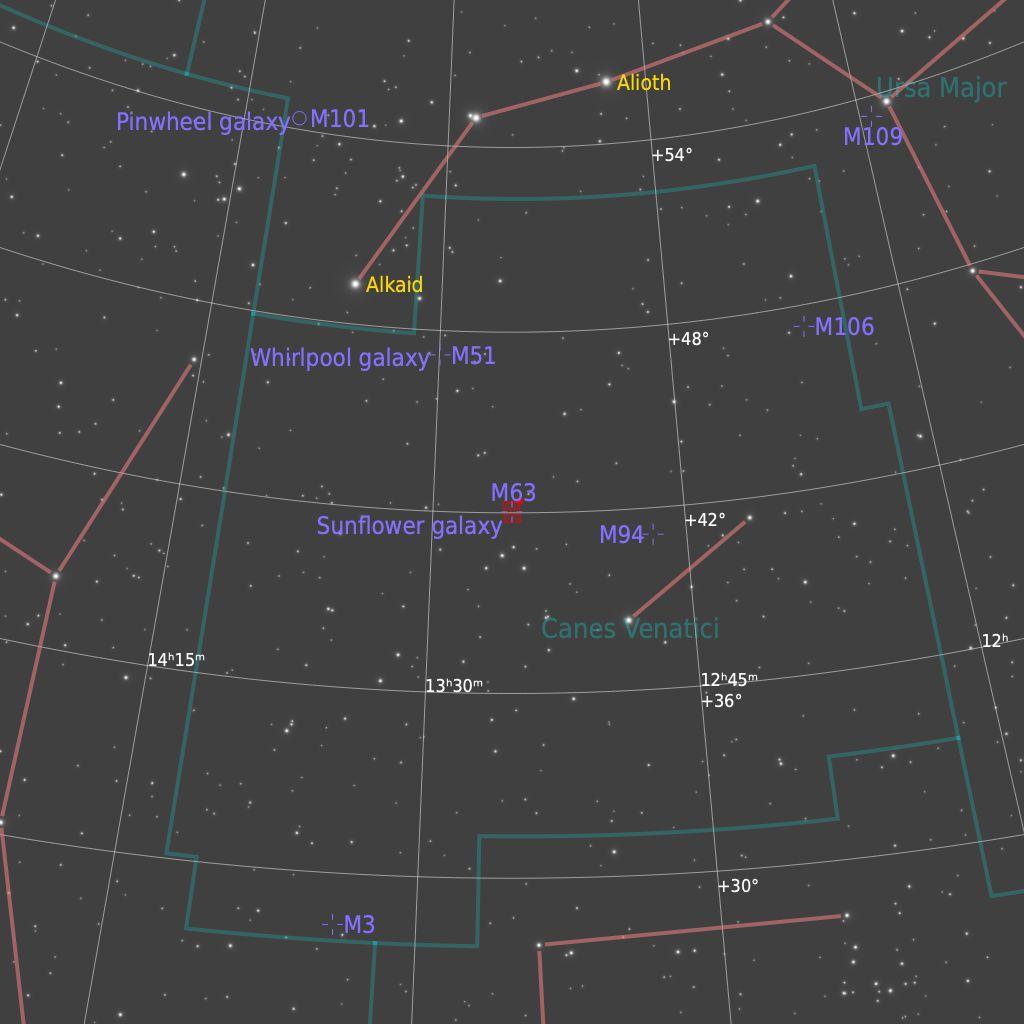
The finder chart to the left shows the location of the galaxy.
The image at the top of this page is 42 arc-minutes in width and 32 arc-minutes in height at an image scale of 0.927 arc-seconds/pixel.
The Hubble Deep Field (from Nottingham)
Background
The Hubble Deep Field (hereon-after the HDF) is an iconic image from the Hubble Space Telescope (HST). In 1995 the HST was instructed to stare at a tiny patch of space in the constellation of Ursa Major that is almost devoid of stars and is far from the plane of the galaxy, enabling the telescope to stare out of the galaxy into the depths of the Universe. It did this for about 190 hours with a total of 340 exposures and in so doing captured some of the most distant galaxies in the Universe, some of which are an astonishing 12 billion light years away.
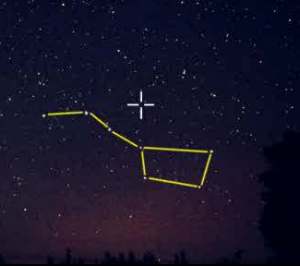
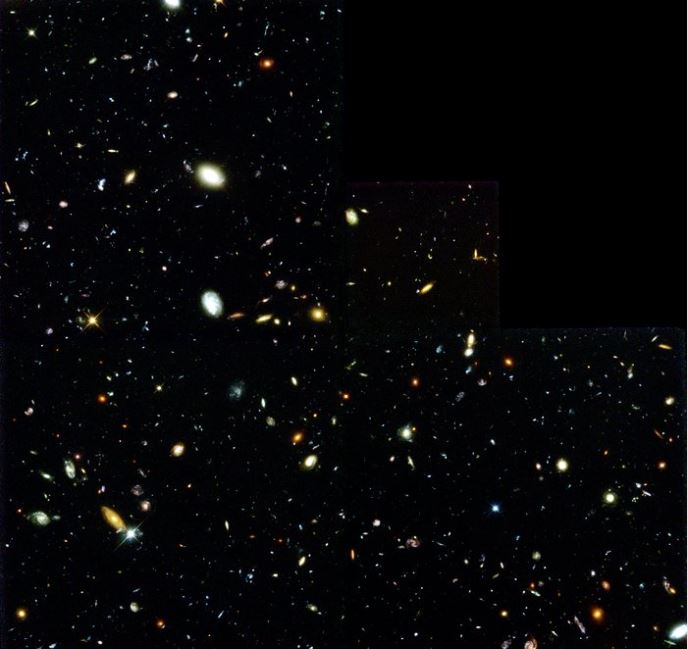
The HDF is located above the "bowl" of The Plough (or Big Dipper as it is called in North America) asterism in Ursa Major as can be seen in the left image above. The right image is the actual HST, a composite of red, green and blue to create a colour picture. No ground based telescope can capture such an image since the galaxies are so remote and faint that the slightest atmospheric turbulence will blur out the faint galaxies. However, the brighter members are available to ground based telescopes as we shall see later. Read more about the HDF here.
The HDF image was created with the Wide Field and Planetary Camera 2 (WFPC2) that was installed on the first Hubble servicing mission in 1993 and is an iconic instrument that created many of Hubble's most famous images. By today's standards its CCD sensor was tiny and comprised of three 800x800 sensors in a "L" shape. The missing top right of the image was used for the planetary section of the WFPC2 camera and just uses the bottom left quarter of the top left segment. By utilising digital manipulation techniques the four imaging quadrants could be stitched together to create a composite image. The WFPC2 was replaced by the WFPC3 in another servicing mission in 2009 that has a more modern (by 2009 standards) sensor that offers a complete image corner to corner. The WFPC2 was returned to earth and is displayed at a NASA museum.
Whilst very interesting, this is not just a pretty, semantic picture - it holds extremely important information about the early universe and the evolution of galaxies. Other Deep Field images were subsequently taken with the HST in other parts of the sky and the deep Universe looks almost identical everywhere we look, proving the cosmological principle that the Universe is essentially identical, everywhere, as a result of the Big Bang 14 billion years ago.
My Version
I took it on myself as a small project to image the Hubble Deep Field myself. Ursa Major and the HDF region is directly overhead at my location in Nottingham, UK in spring time. I downloaded the HDF coordinates from the Internet and used my TEC140 and Atik 460 CCD camera and captured 6 x 600s exposures with a luminance filter. There is no point in acquiring colour data for such remote objects. I used these to create this image:
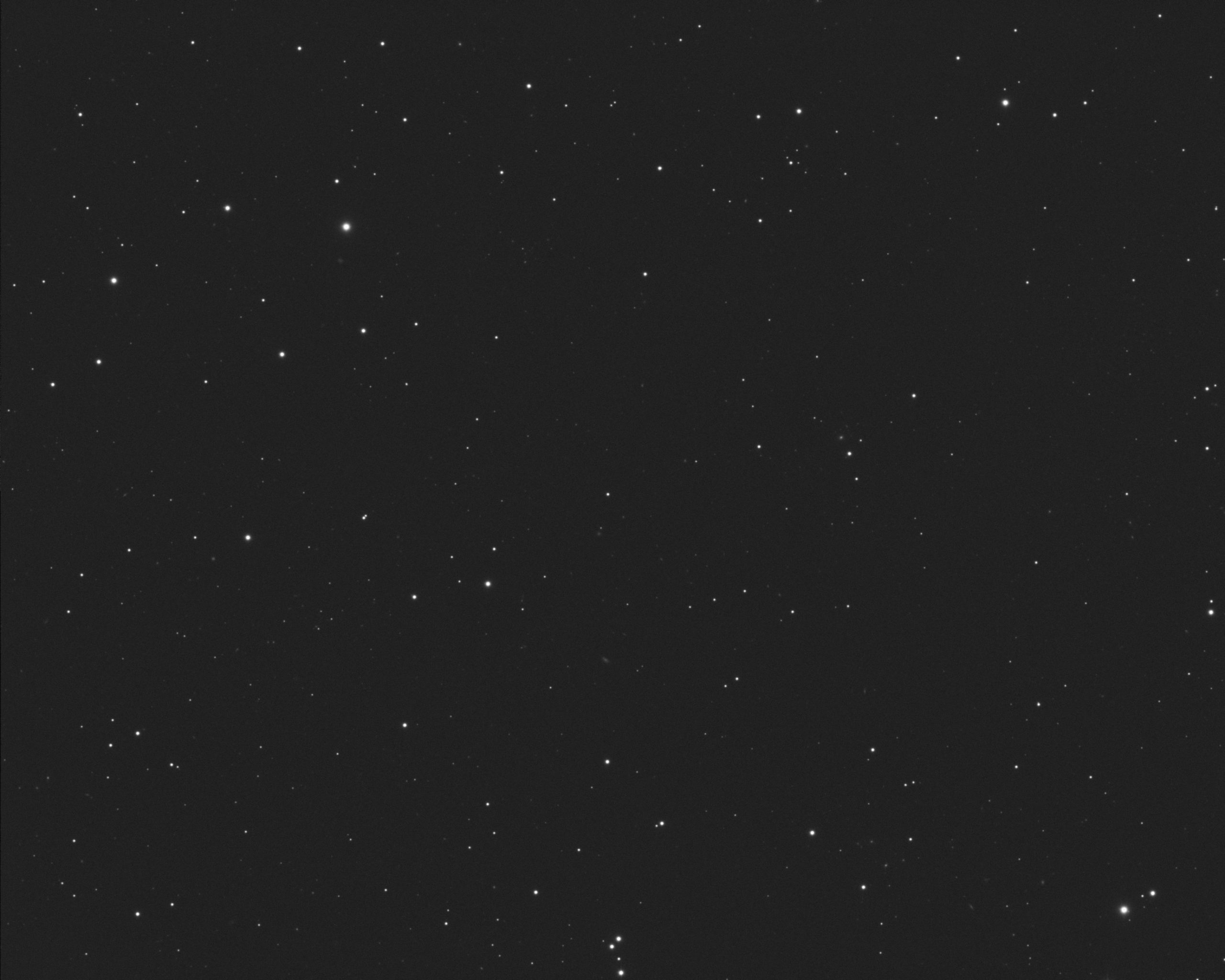
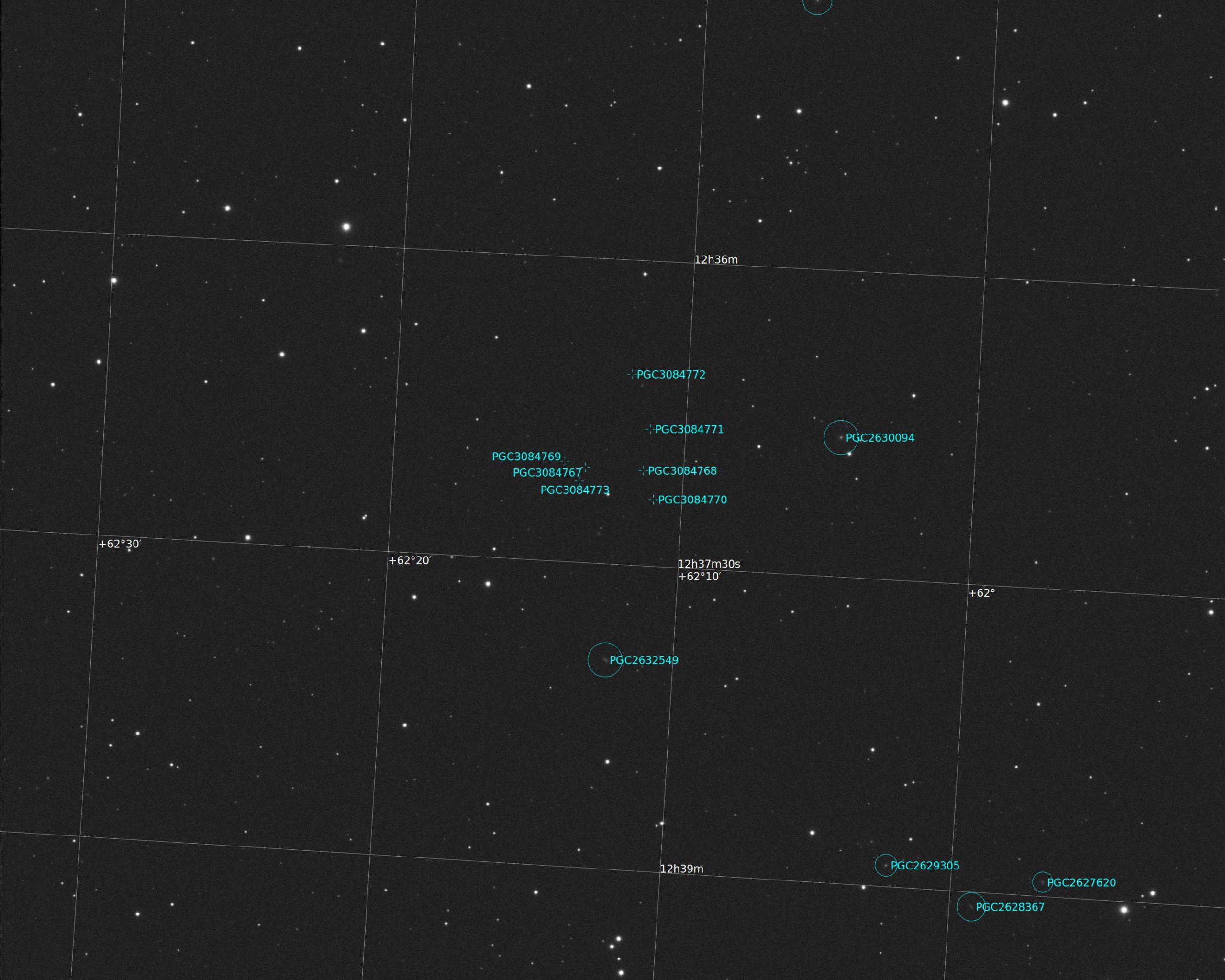
There are many extremely remote and faint fuzzy galaxies across this entire image. I then plate solved this image in PixInsight above to give me the galaxies surrounding the HDF as indicated on the left. Note the PGC galaxies. I used these to zoom in on the Hubble Deep Field area.
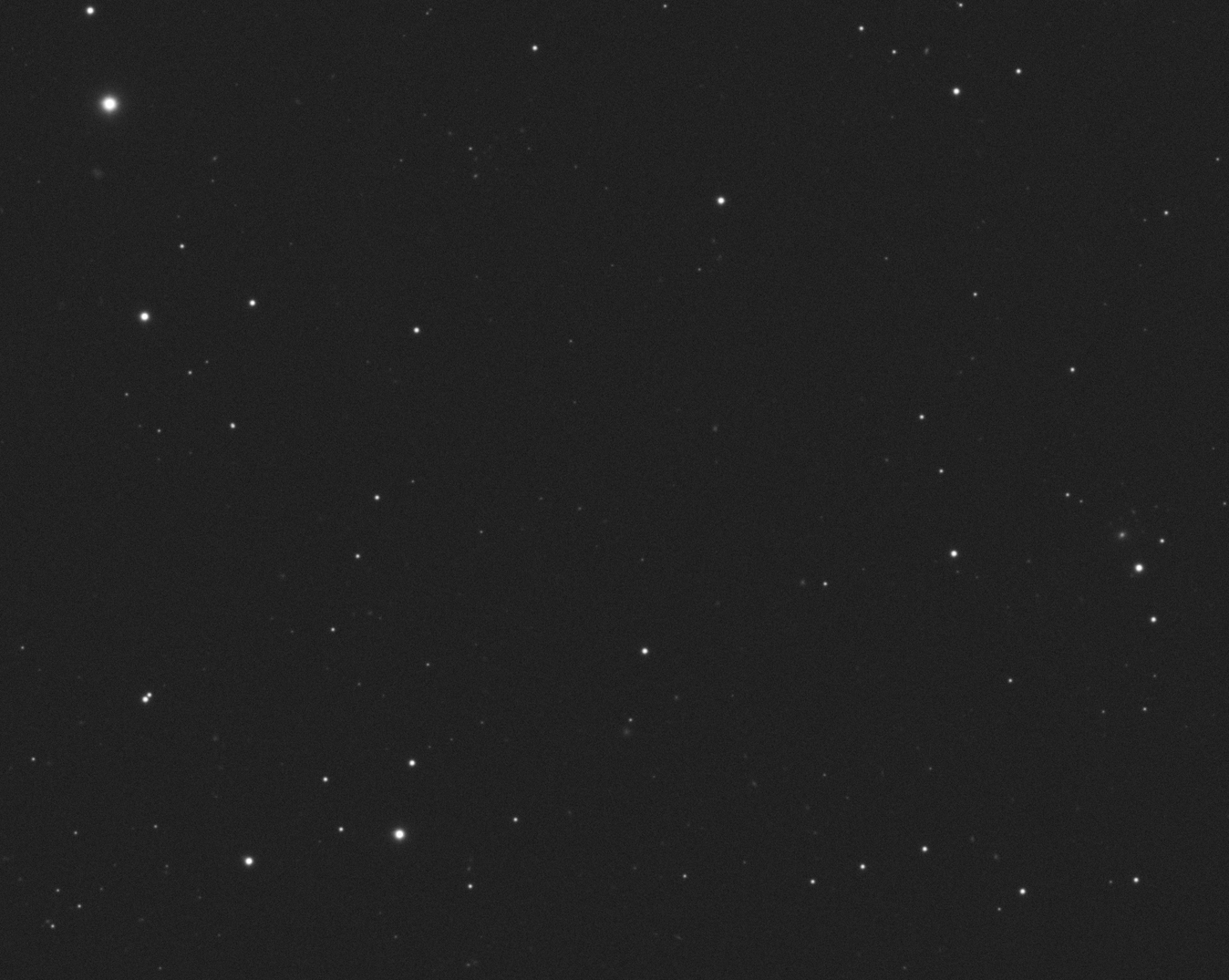
To the left is a zoomed in view of the Deep Field. The HDF is located just above the middle star that is one third of the way up from the bottom of the image.
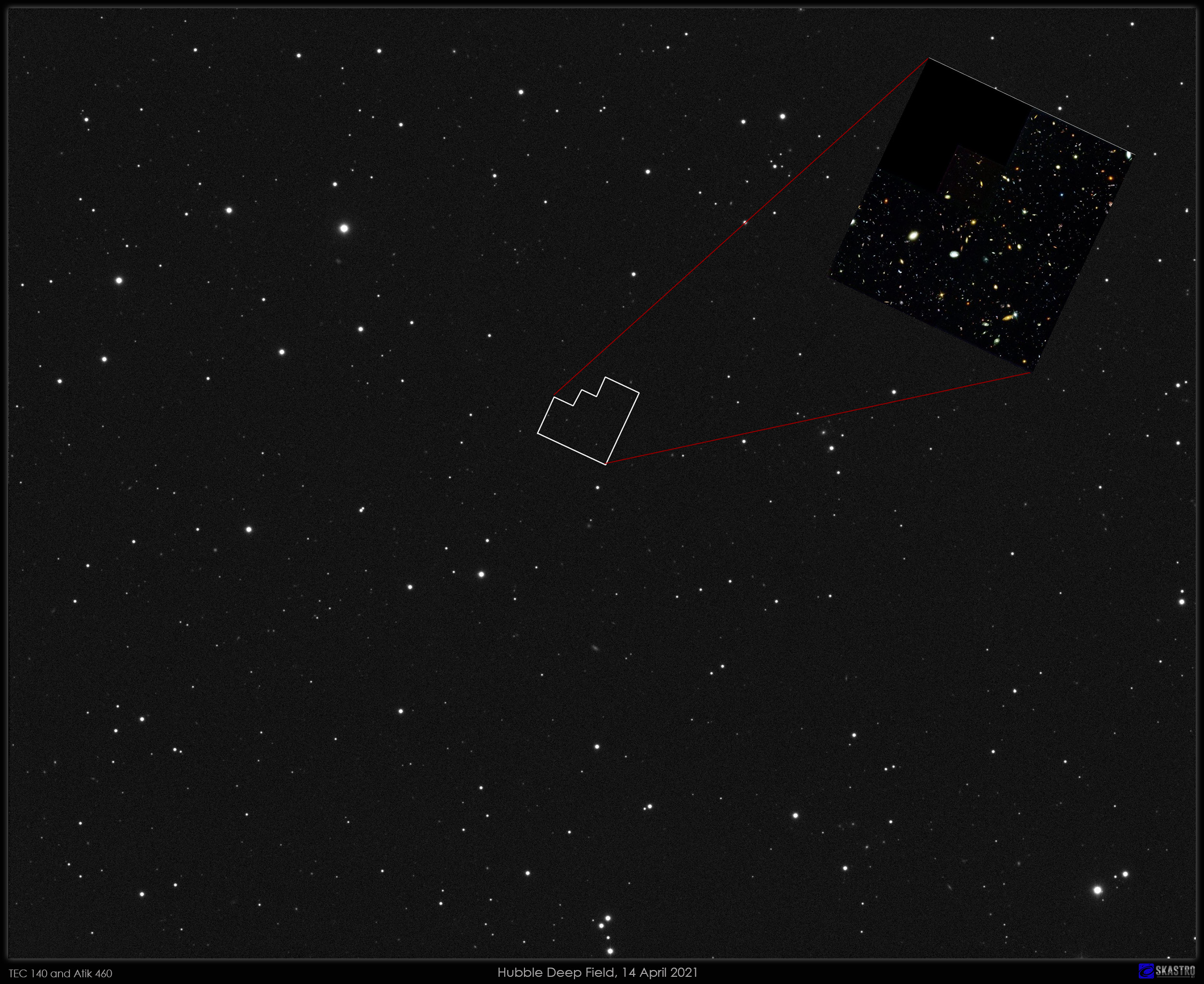
Above is the HDF annotated by superimposing the HST version of the HDF and rotating and scaling it in Photoshop to match my image. You can clearly see the four brighter galaxies (about five billion light years away) and a few of the others in my image.
It is quite remarkable what amateur equipment is capable of these days!