
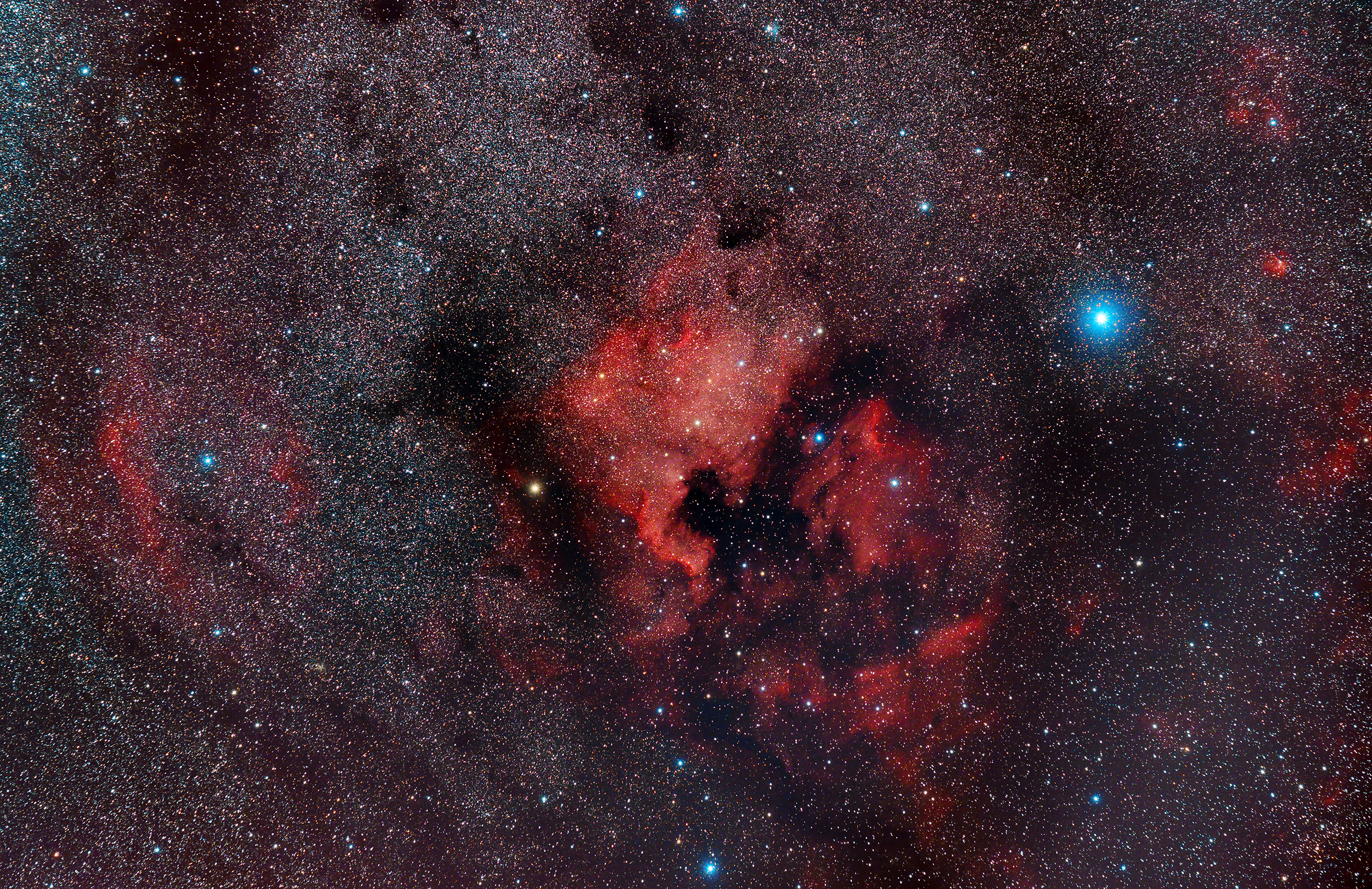
North American Nebula in a wide field with Samyang 135mm and QHY268C camera
This is my first ever image capture with the excellent NINA software. I used my wide-field rig which consists of the Samyang 135mm lens and QHY268C OSC camera using an IDAS 2" LP filter. The wide angle view brings out the North American nebula (NGC 7000) and The Pelican nebula to its right very nicely. There is also a lot of other background luminosity in the image.
The image set is a modest 18 x 180s exposures captured in August 2021, all the data being binned 1x1. Pre-processed and processed in PixInsight with a few tweaks in Photoshop.

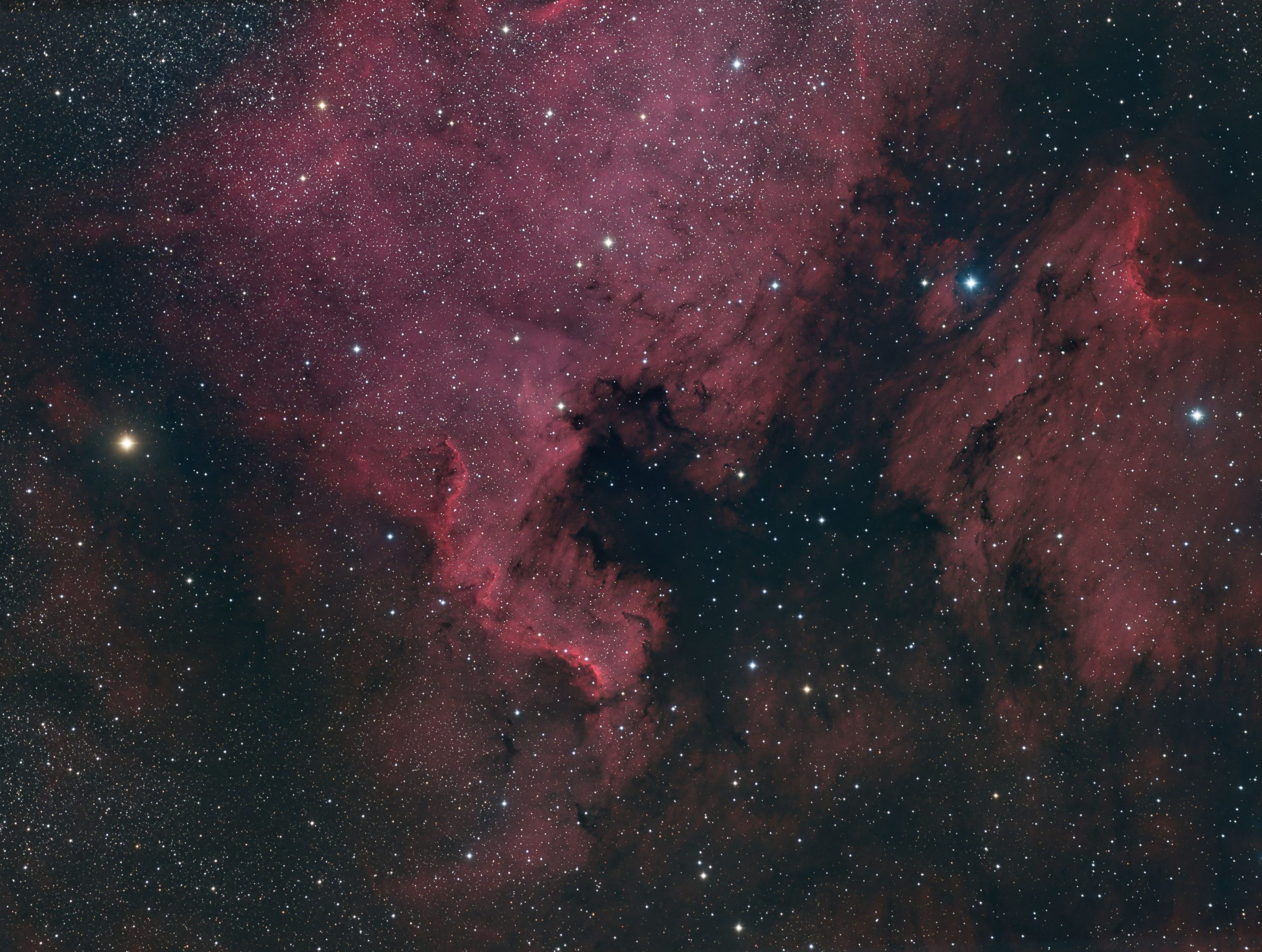
A Set of Images of NGC7000, The North American Nebula. Is Ha data worth it?
A perennial favourite object to image in the summer and autumn months in the Northern Hemisphere. I've imaged this target with multiple equipment combinations over the years. For example, in One Shot Colour (OSC), in widefield and in a very wide field.
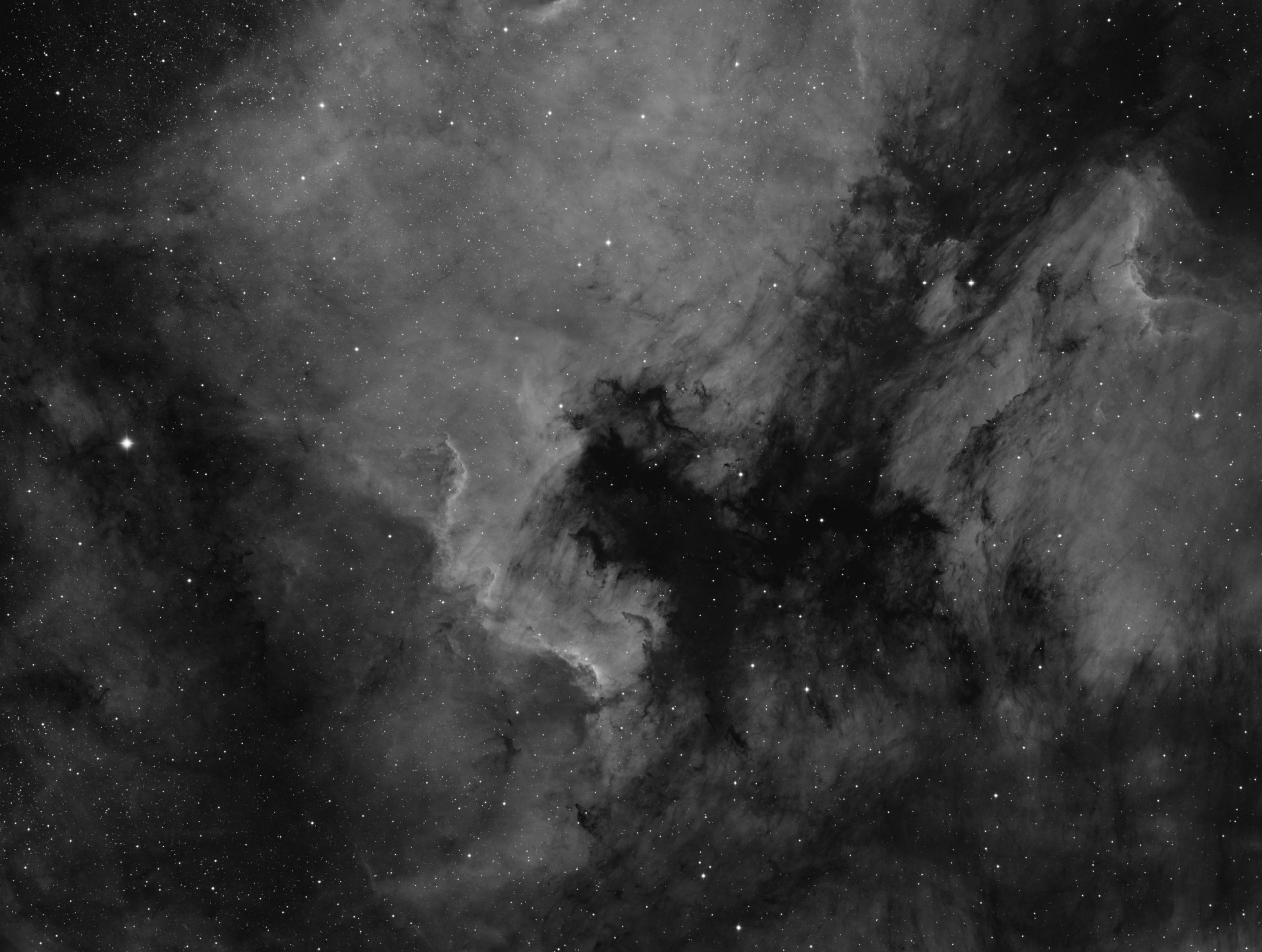
As part of the image I used my existing Ha dataset from 2018/2019 which consists of 48 x 600 second exposures. I discuss capture of this image here.
I then captured the RGB dataset in October 2021. This image is my first image set that I captured using the excellent NINA (Nighttime Imaging "N" Astronomy) imaging software. I captured four hours of RGB data through Astrodon 31mm E series Gen 2 filters binned at 1x1. This consisted of 300 second exposures. Seeing and transparency were not good but clear nights have been very infrequent in the UK in the past six months so I went for it regardless.
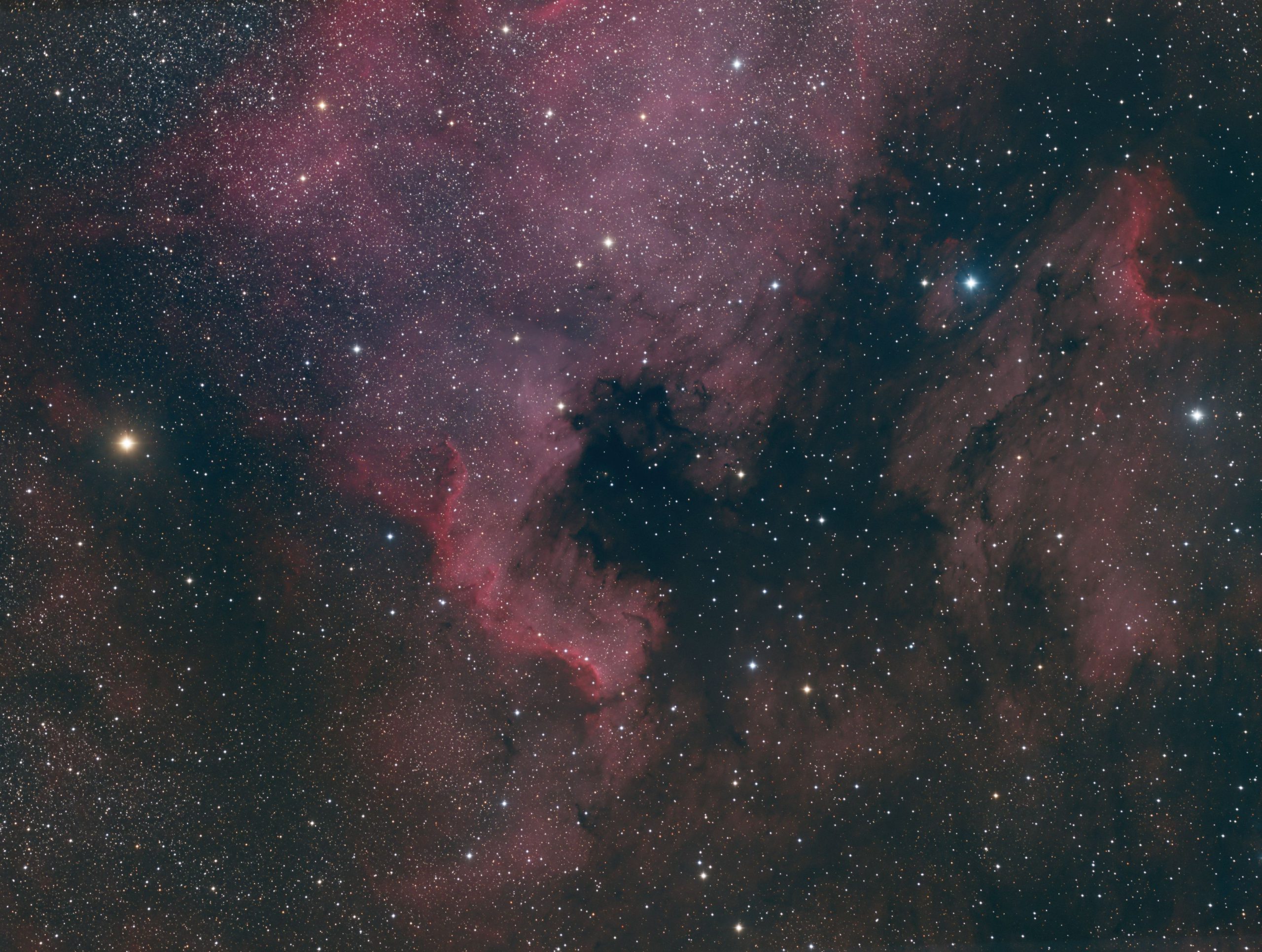
I am very impressed with the quality of the standard RGB image above. Since the data is binned 1x1, I did not feel the need to capture any luminance channel at all. Indeed the RGB alone is so good that the Ha data addition, whilst it does add some signal, adds so little to the final result that I question the time I spent capturing the Ha data. For sure, the Ha image is a pretty picture all on its own. However, it does add something to the picture as detailed below.
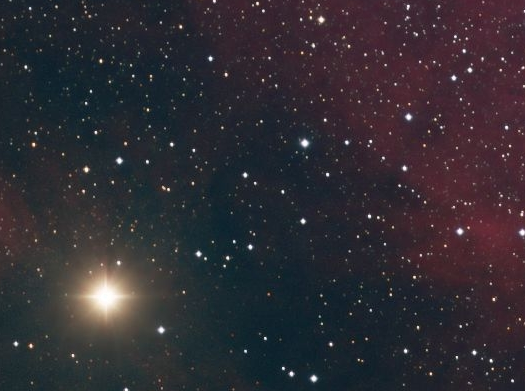
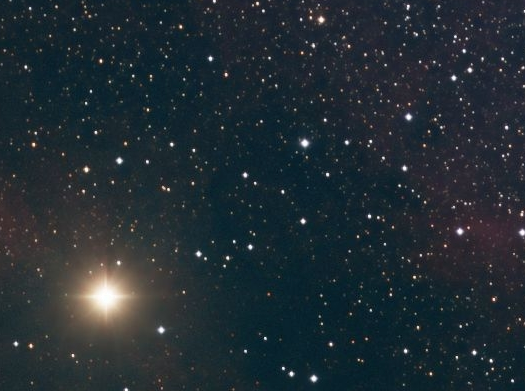
Despite the expense in time of gathering the Ha data, you can see that when it is blended with the RGB it brings out some fainter structures in the nebula. Whether or not a full eight hours is needed though, I doubt.
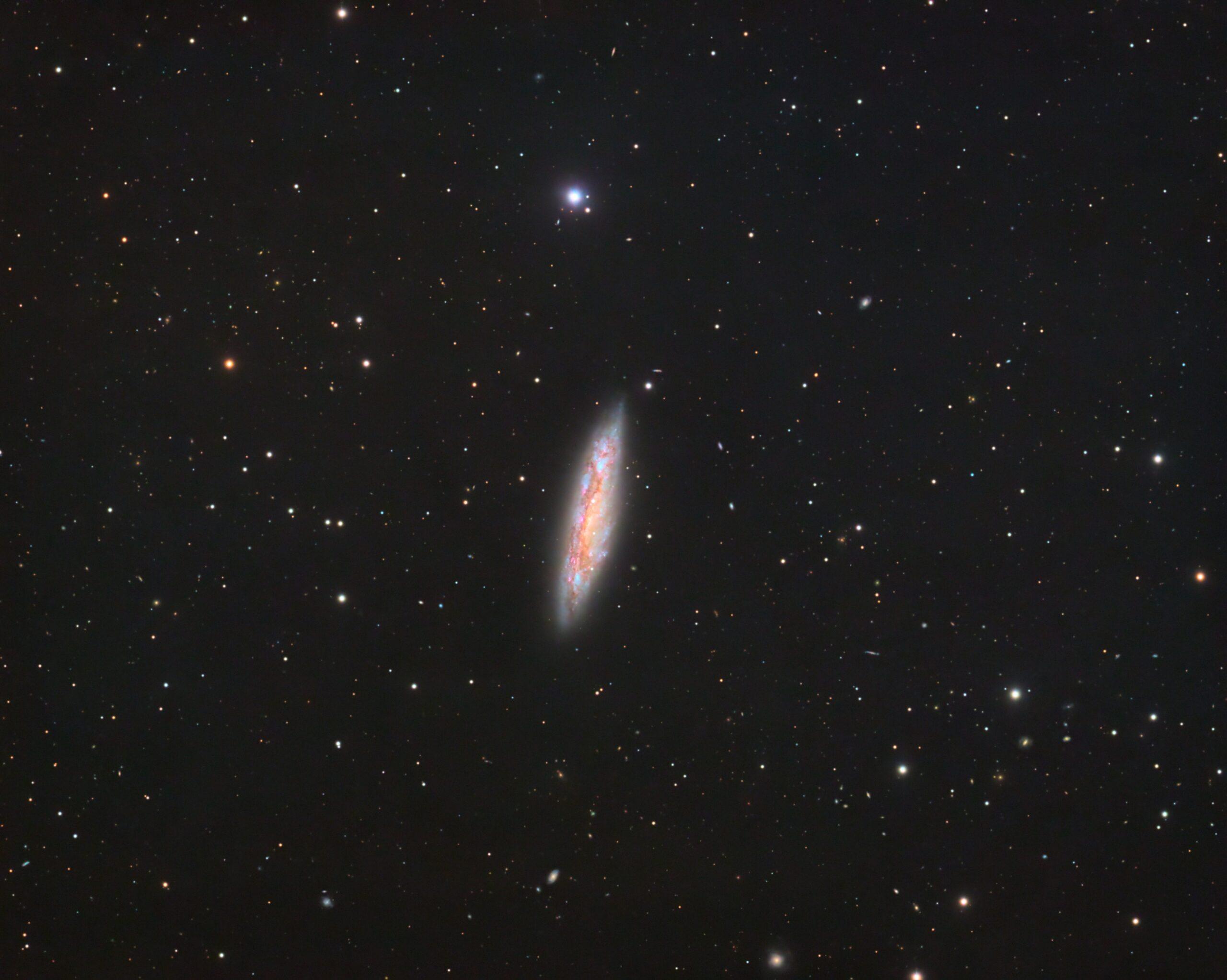
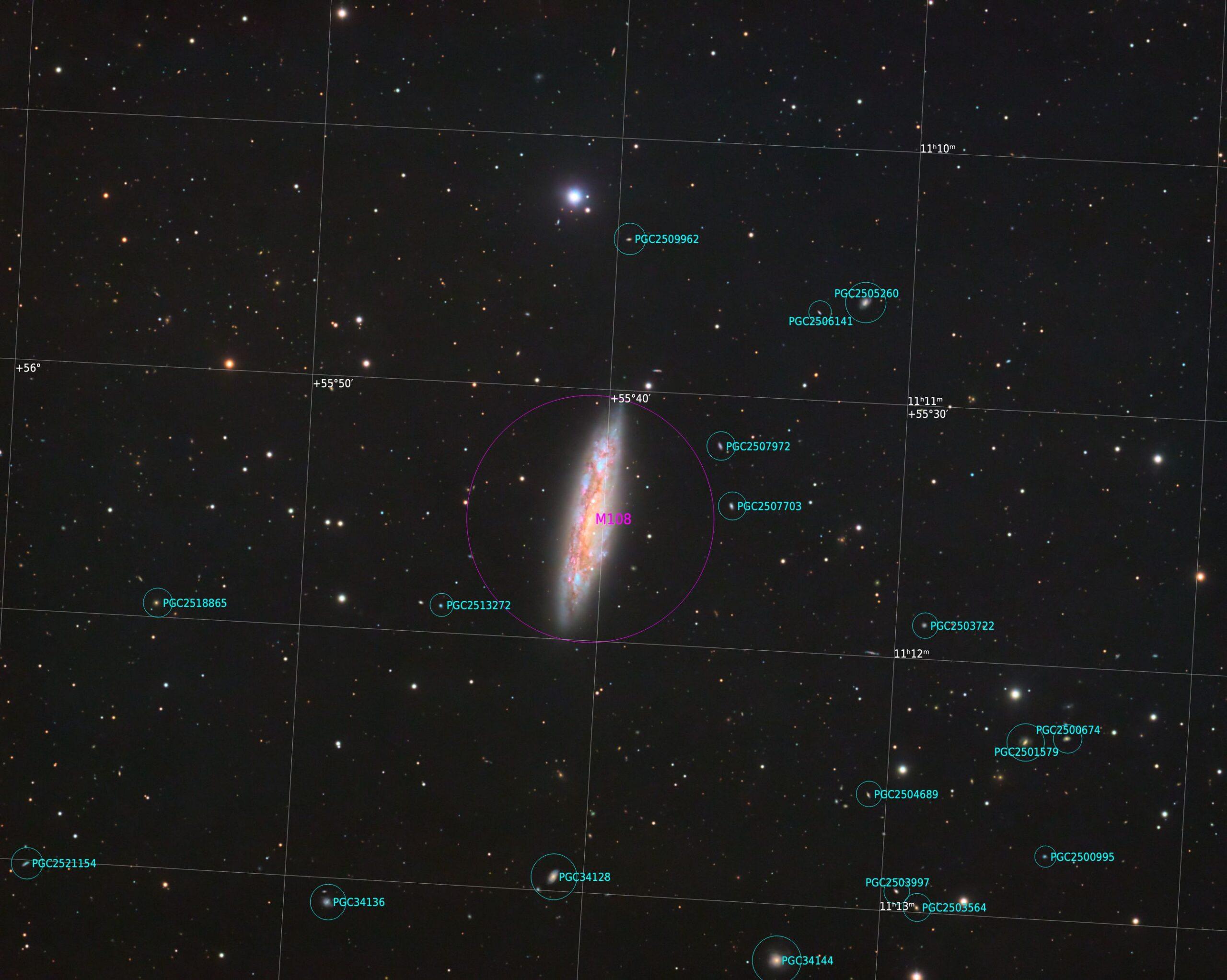
M108 Galaxy in Ursa Major, TEC140
M108 is a galaxy about 45 million light years away in the constellation of Ursa Major. It is sometimes called the surfboard galaxy because of its resemblance to a surfboard. Note the huge number of tiny, distant galaxies in the background. These are hundreds and in some cases up to two billion light years away from us.
Technical Information
I imaged M108 from my backyard observatory in Nottingham, UK on 4-5 April 2021 (two imaging sessions) when M108 was almost directly overhead. Conditions were very cold and frosty with good seeing and transparency. I used my TEC140 refractor and Atik 460 CCD camera with Astrodon E series Gen LRGB filters (1.25"). There is almost 9.5 hours of data in this image consisting of:
Lum > 42 x 300s; Red > 24 x 300s; Green > 24x300s; Blue 24 x 300s
Everything was binned 1x1.
Image data was captured using Sequence Generator Pro software and the equipment was was guided using OAG on my MESU 200 mount. Processed with PixInsight.
I hope you like it!
Full size image here (opens in new tab).
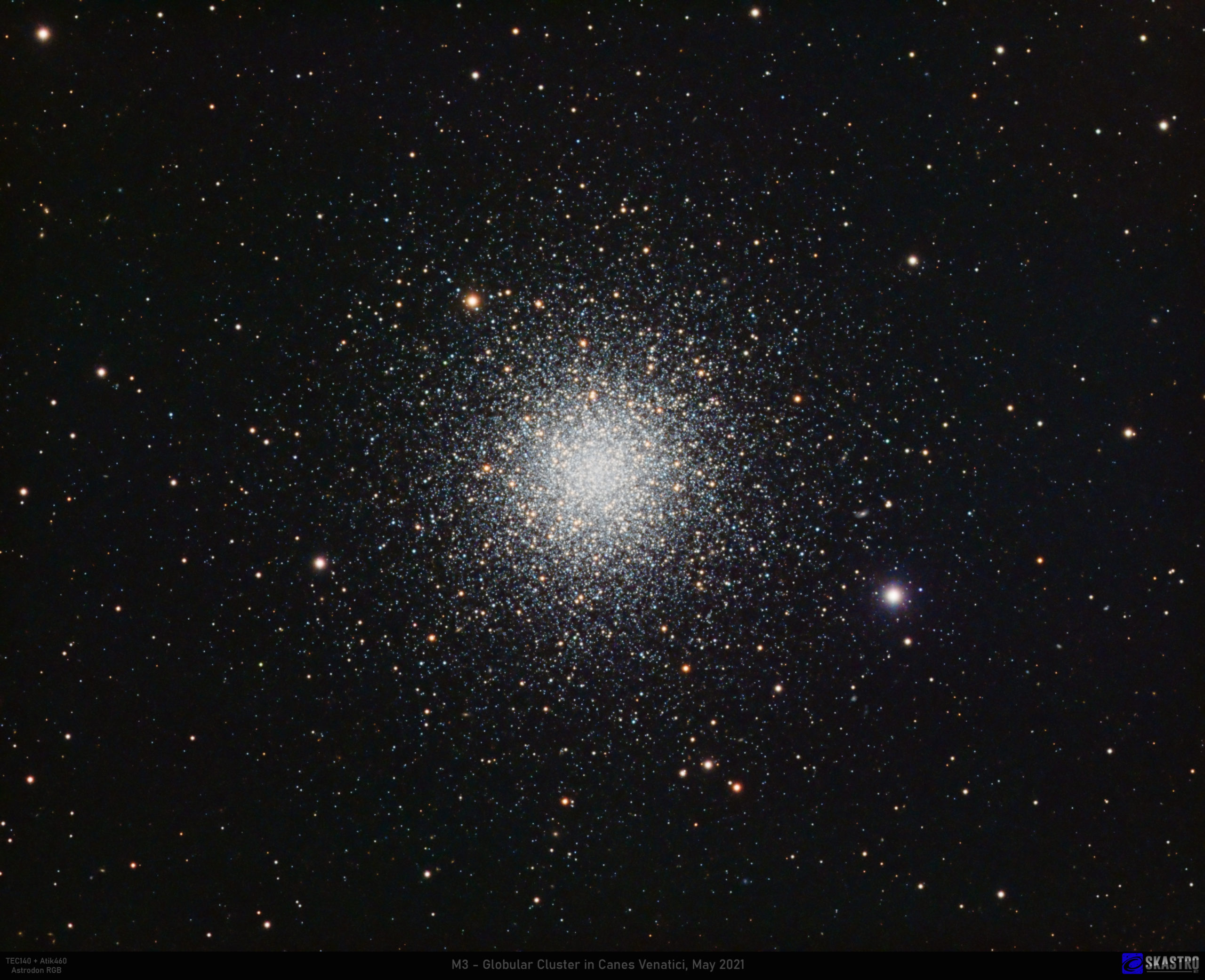
M3 Globular Cluster in Canes Venatici
Lorem ipsum dolor sit amet, consectetur adipiscing elit. Ut elit tellus, luctus nec ullamcorper mattis, pulvinar dapibus leo.
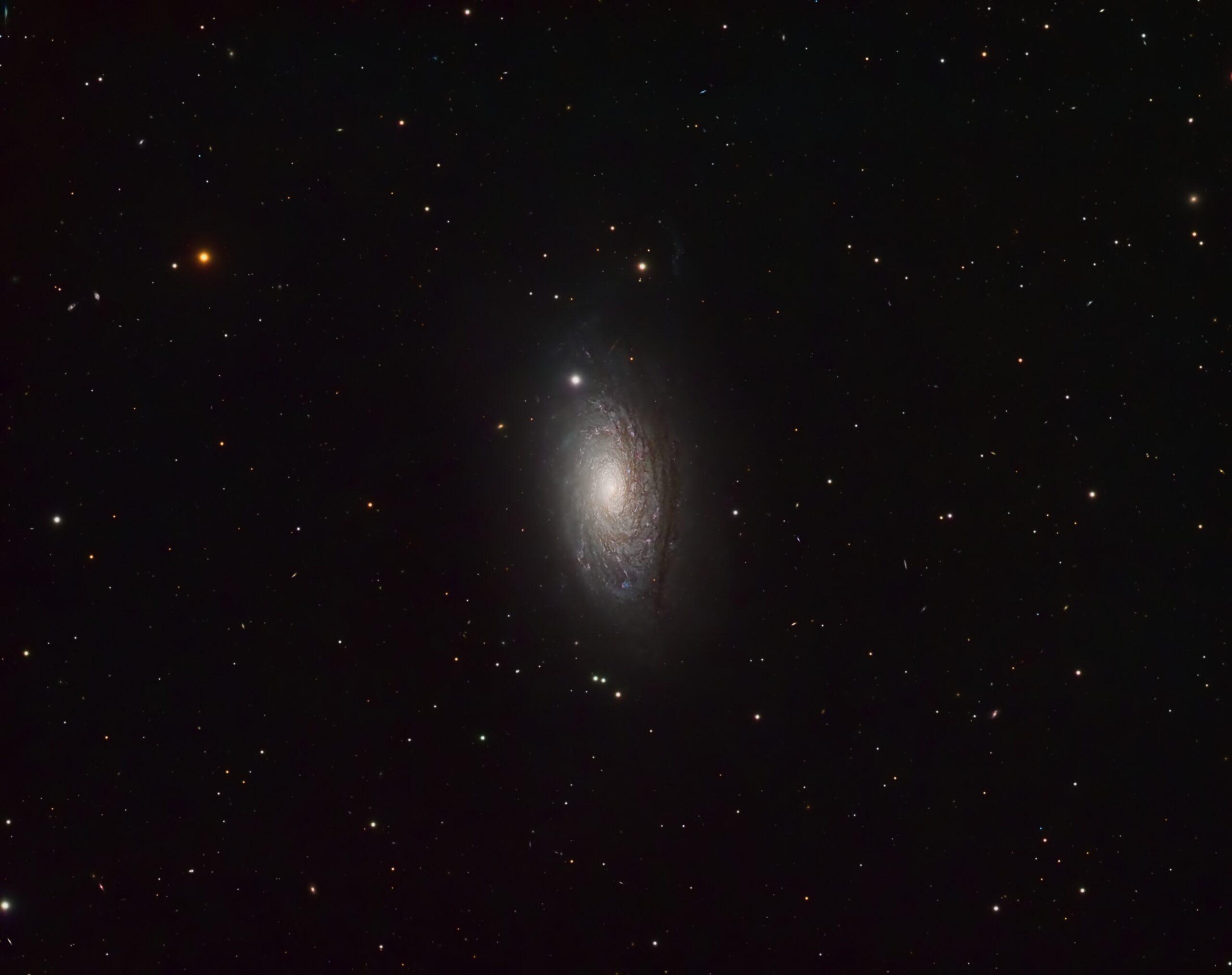
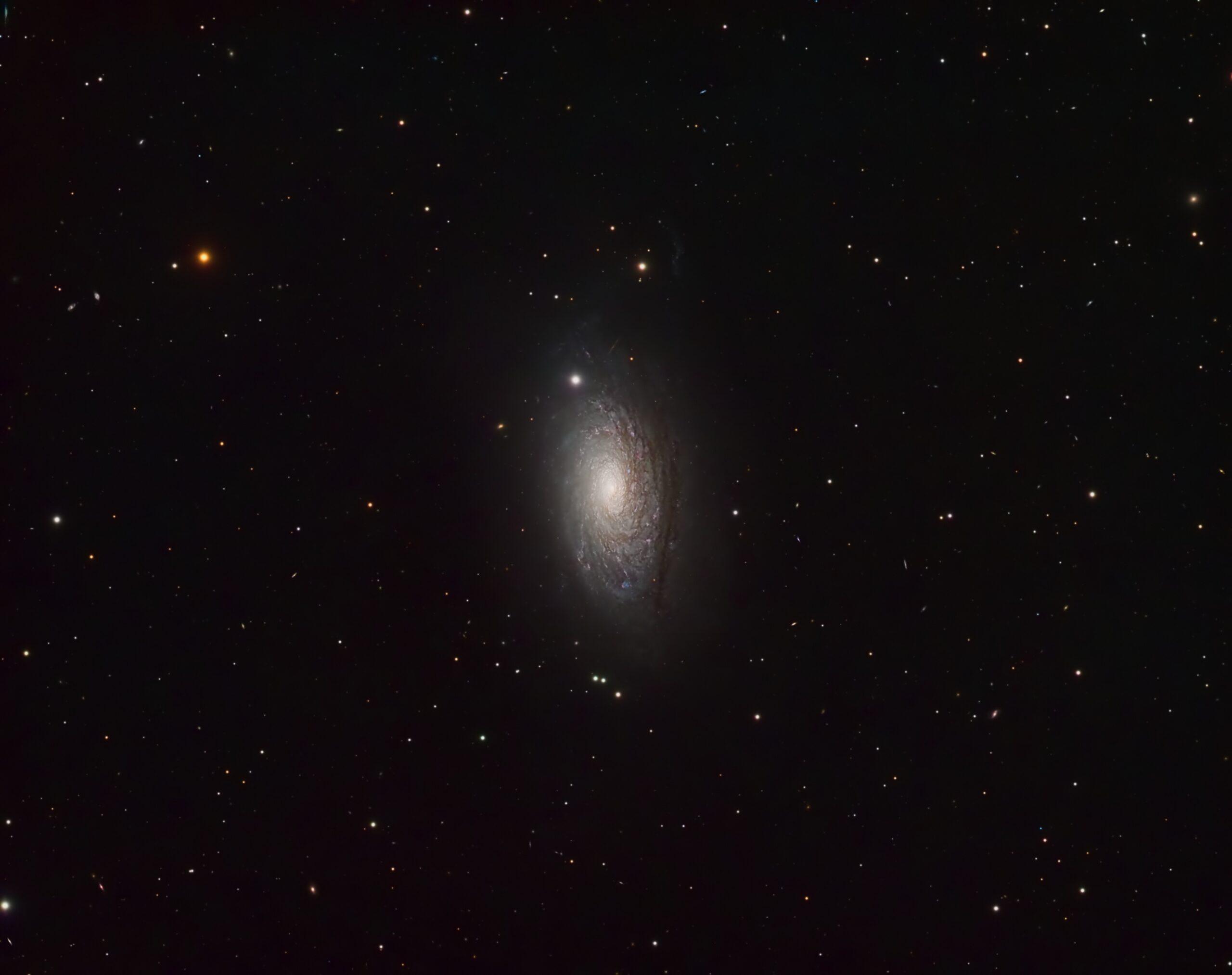
M63 - The Sunflower Galaxy
M63 is a magnificent spiral galaxy located in the Northern constellation of Canes Venatici, about 30 million light years away. The galaxy is a member of the M51 group. There are lots of faint galaxies in the background.
Technical Data
Full resolution image here (opens in new tab)
M63, often called the Sunflower Galaxy because of its resemblance to that flower, is a spiral galaxy about 27 million light years away in the constellation of Canes Venatici. It is a member of the M51 group of galaxies.
I captured the data for this image of the galaxy from my back yard observatory in Nottingham, UK over the nights of 4th and 5th of May 2021 when M63 was high near the zenith. Most of the data was captured in the middle of the night on an automated basis whilst I was asleep in bed! I used my TEC140 refractor and Atik 460 CCD camera with Astrodon E Series LRGB filters. I used off-axis guiding on my MESU200 mount.
Integration is a total of nine hours comprised of:
Luminance > 30 x 300s binned 1×1 ; Red > 22 x 300s 1×1 ; Green > 24 x 300s 1×1 ; Blue > 24 x 300s 1×1 to give a total of about 8.5 hours of integration time. Captured with SGP pro and processed in PixInsight.
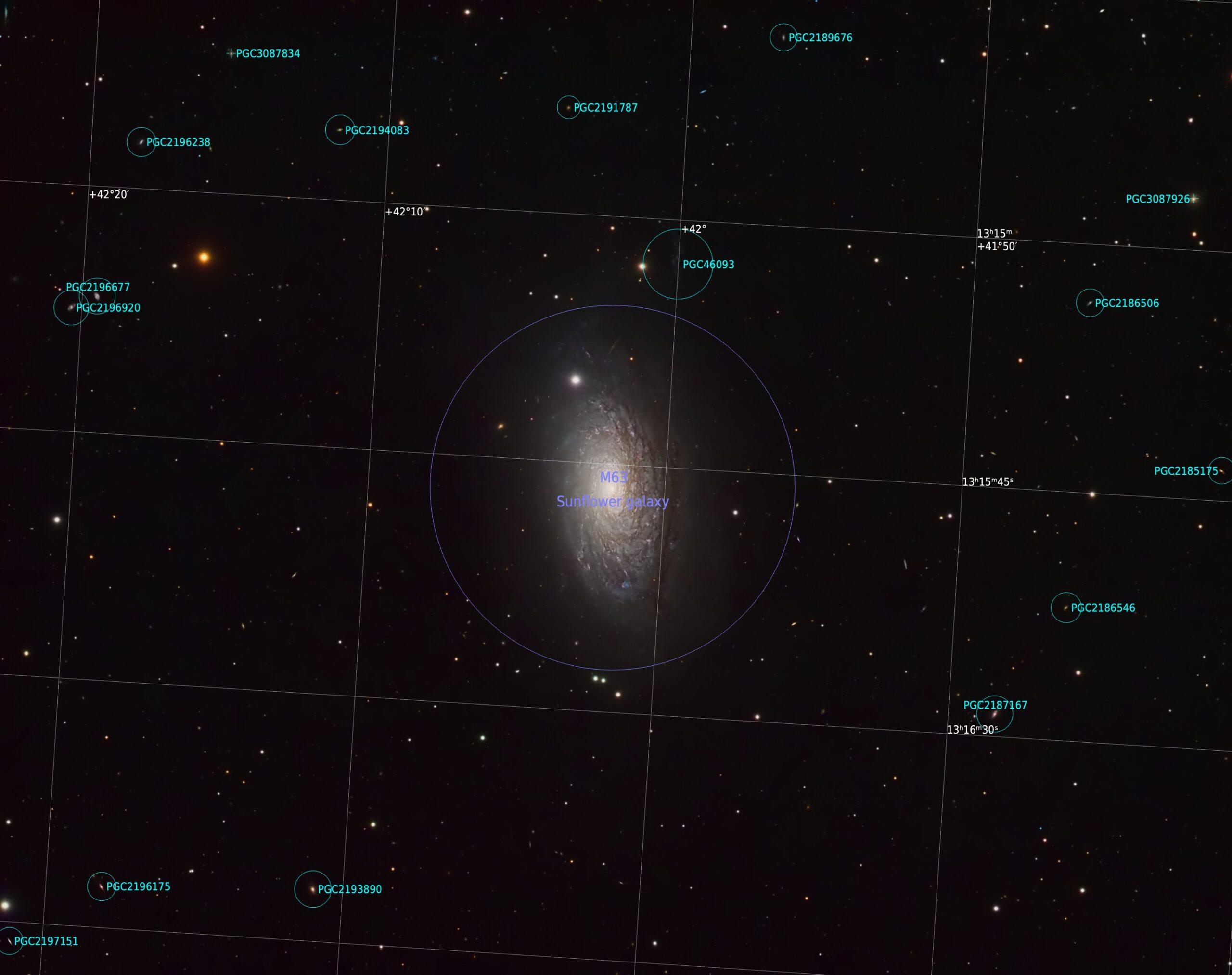
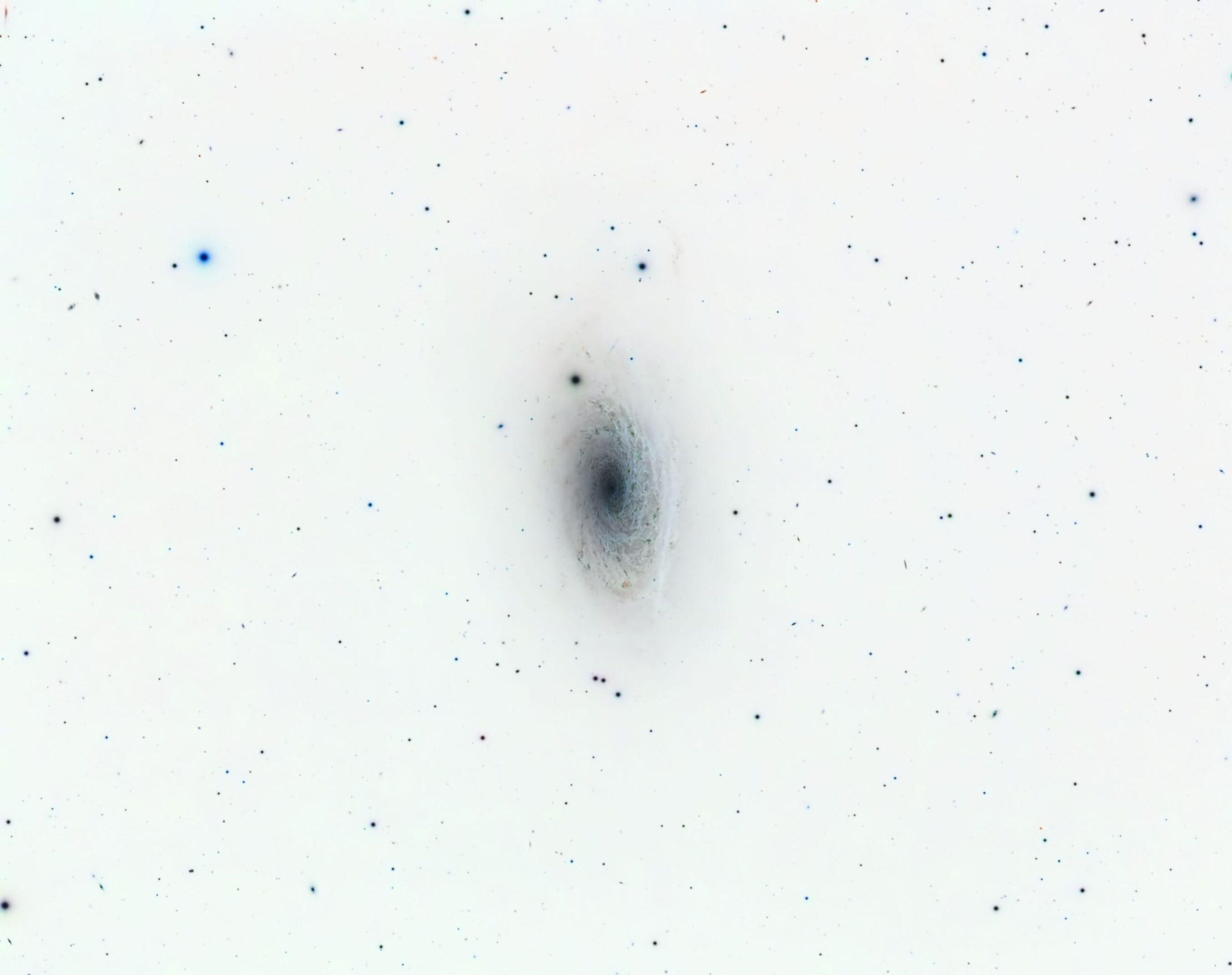
Annotated and inverted versions of the galaxy shown above. The annotated version shows the many, extremely distant background galaxies present in the image, some of which are billions of lightyears away.
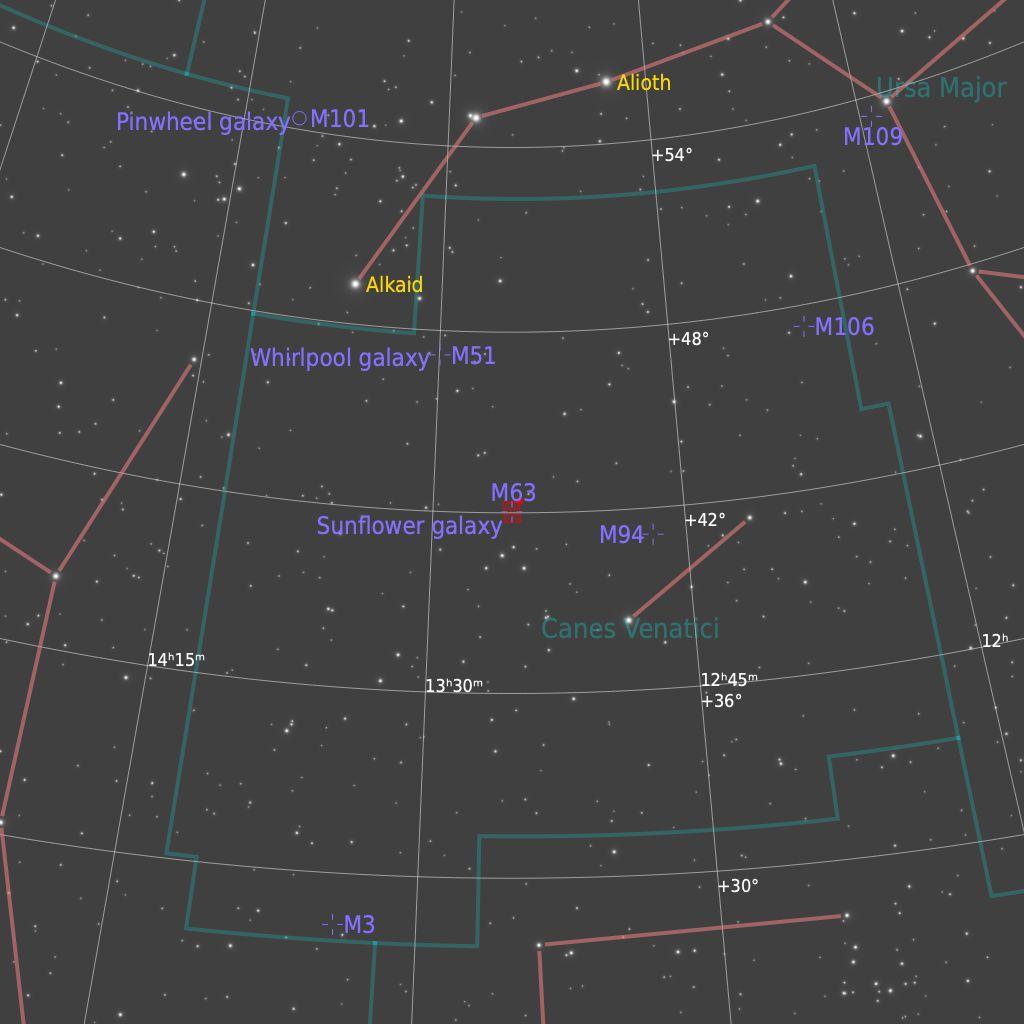
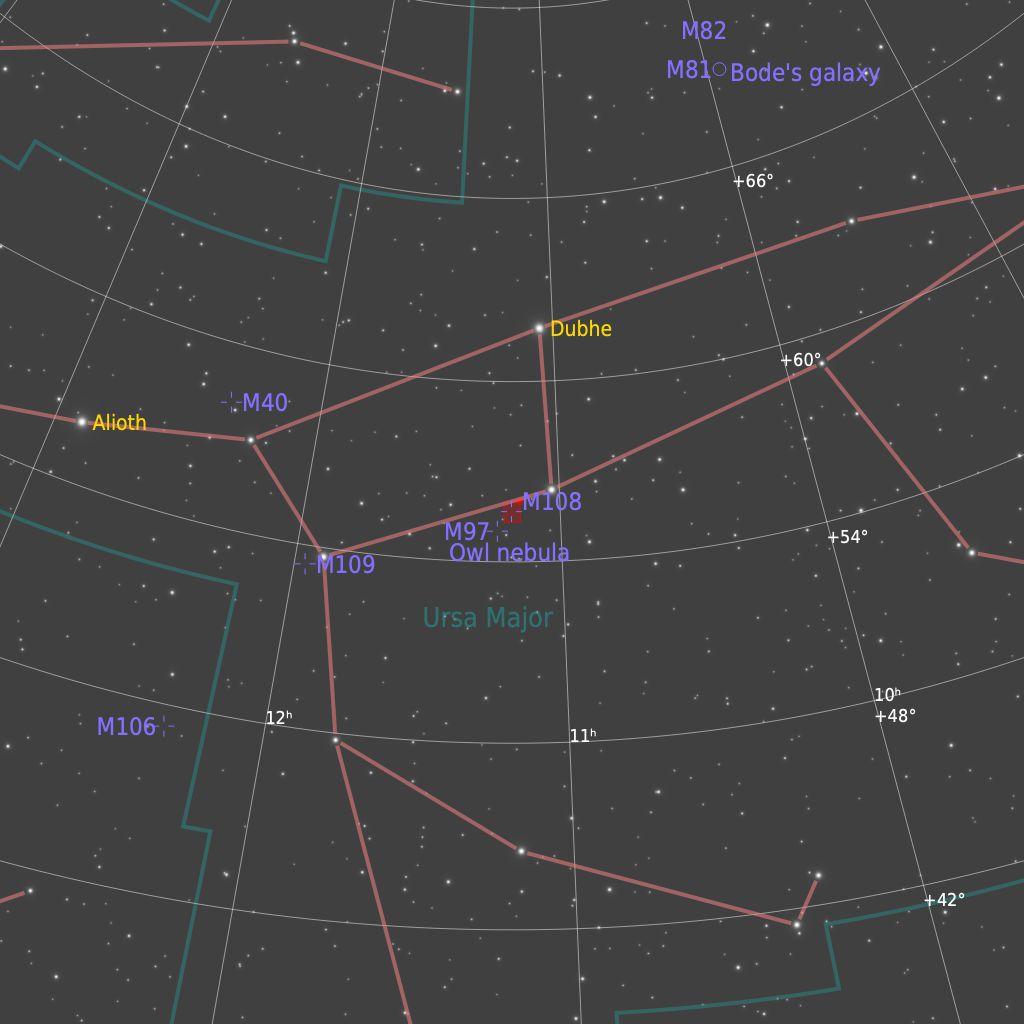
The finder chart to the left shows the location of the galaxy.
The image at the top of this page is 42 arc-minutes in width and 32 arc-minutes in height at an image scale of 0.927 arc-seconds/pixel.
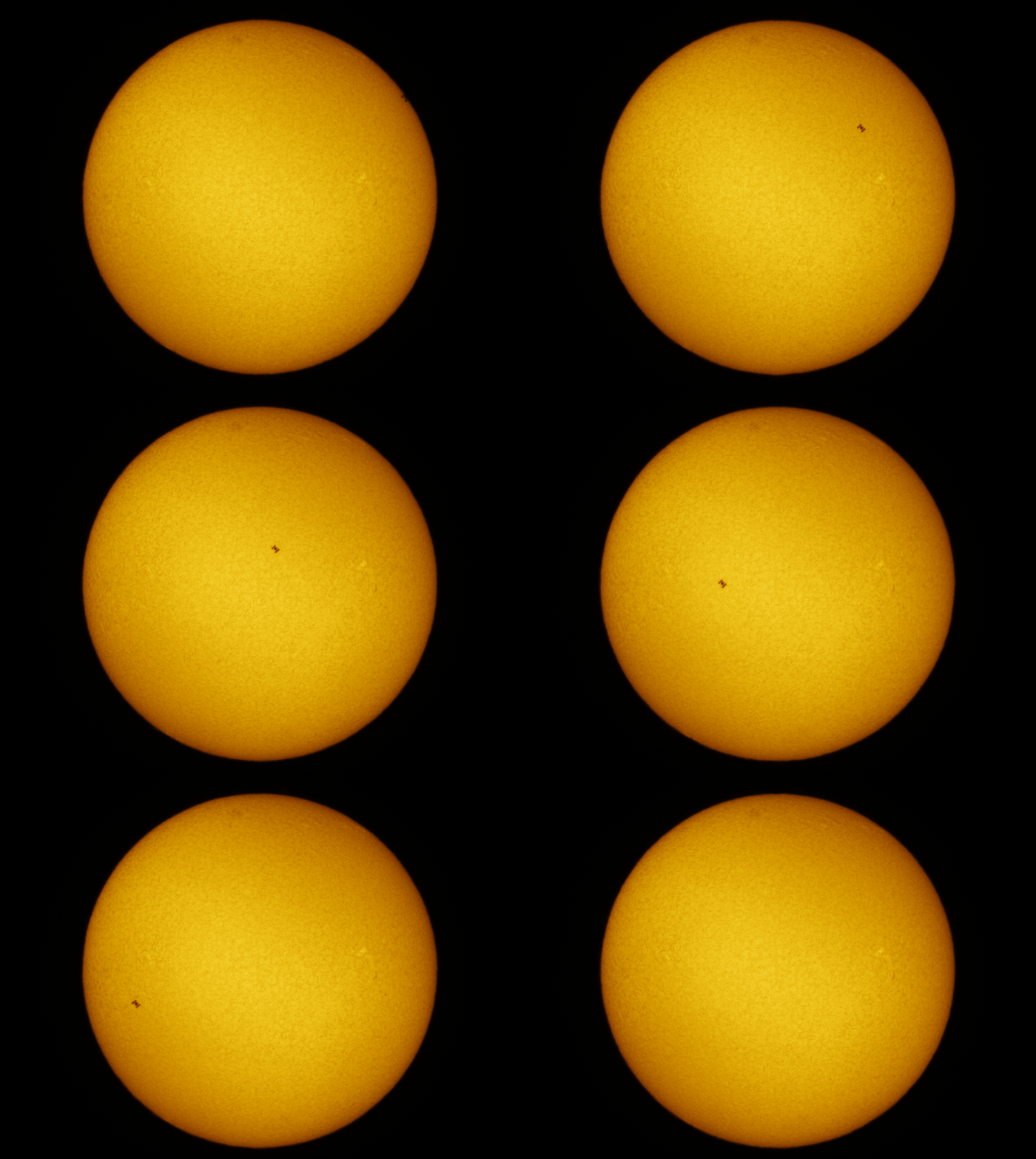
ISS solar transits with Lunt T60Ha telescope and ASI174MM camera
I captured two ISS transits of The Sun on the weekend of 12-13th June 2021. Both images and videos were taken with my Lunt Systems T60Ha Hydrogen Alpha telescope and ASI174MM camera.
The transit above was not quite visible from my back yard and so I had to put all the gear into my car and drive about three miles from where I live. I set up about twenty minutes early to ensure I was ready and there were no technical gremlins. I was not quite located exactly where the ISS crossed the precise diameter of the sun - I was about 300m away! Yes, a very small change of position on the Earth's surface really does make that much difference to the visible track of the ISS across the face of the sun. The ISS was about 520km away when this sequence of images were taken.
The ISS moves much more quickly than the slowed down image would suggest. It crosses the disk of the sun in only about 2/3 of a second. Literally blink and you will miss it. I started the image capture about 30 seconds ahead of time to ensure the camera is running at a high rate prior to the ISS' arrival and to account for any error in the ISS' arrival calculations. As it happens the ISS transit finder tool https://transit-finder.com/ is accurate to the split second. By the way, an iPhone connected to a 3/4G network is accurate to within a few thousandths of a second.
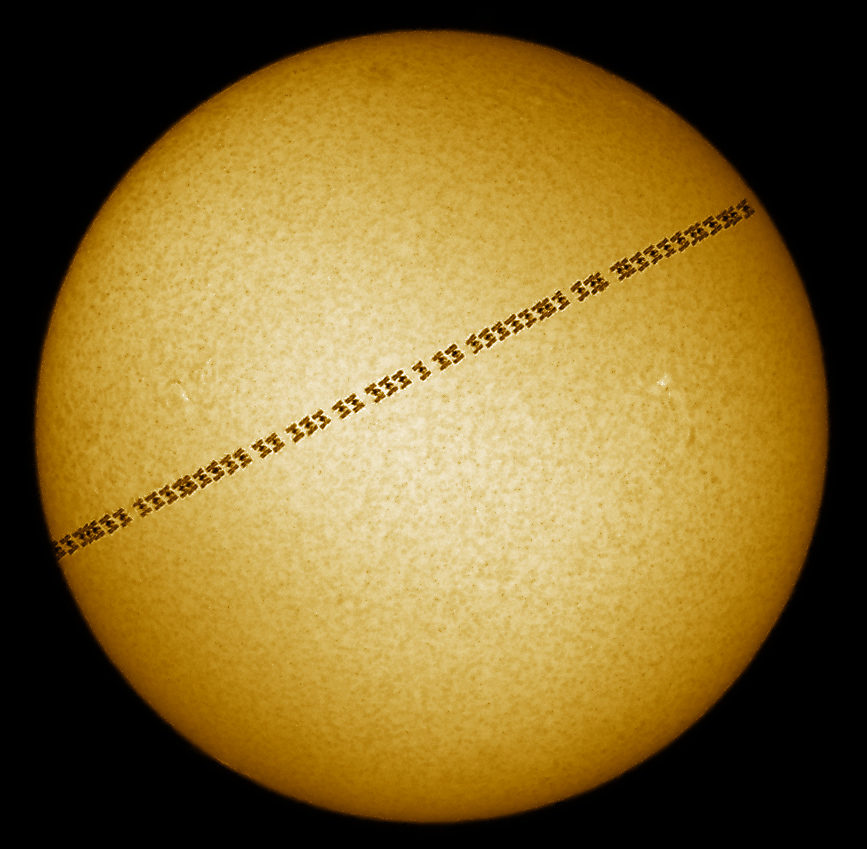
To the left is a composite image of the camera exposures, running at 124 frames per second. The ASI174MM camera has an electronic shutter that captures the entire 1936x1216 HD frame in buffer and then scans that entire frame before transmitting the frame over the USB3 bus at 5Gigabits/second before capturing the next frame. A high speed laptop with a solid state SSD is required in order to write images at this data rate.
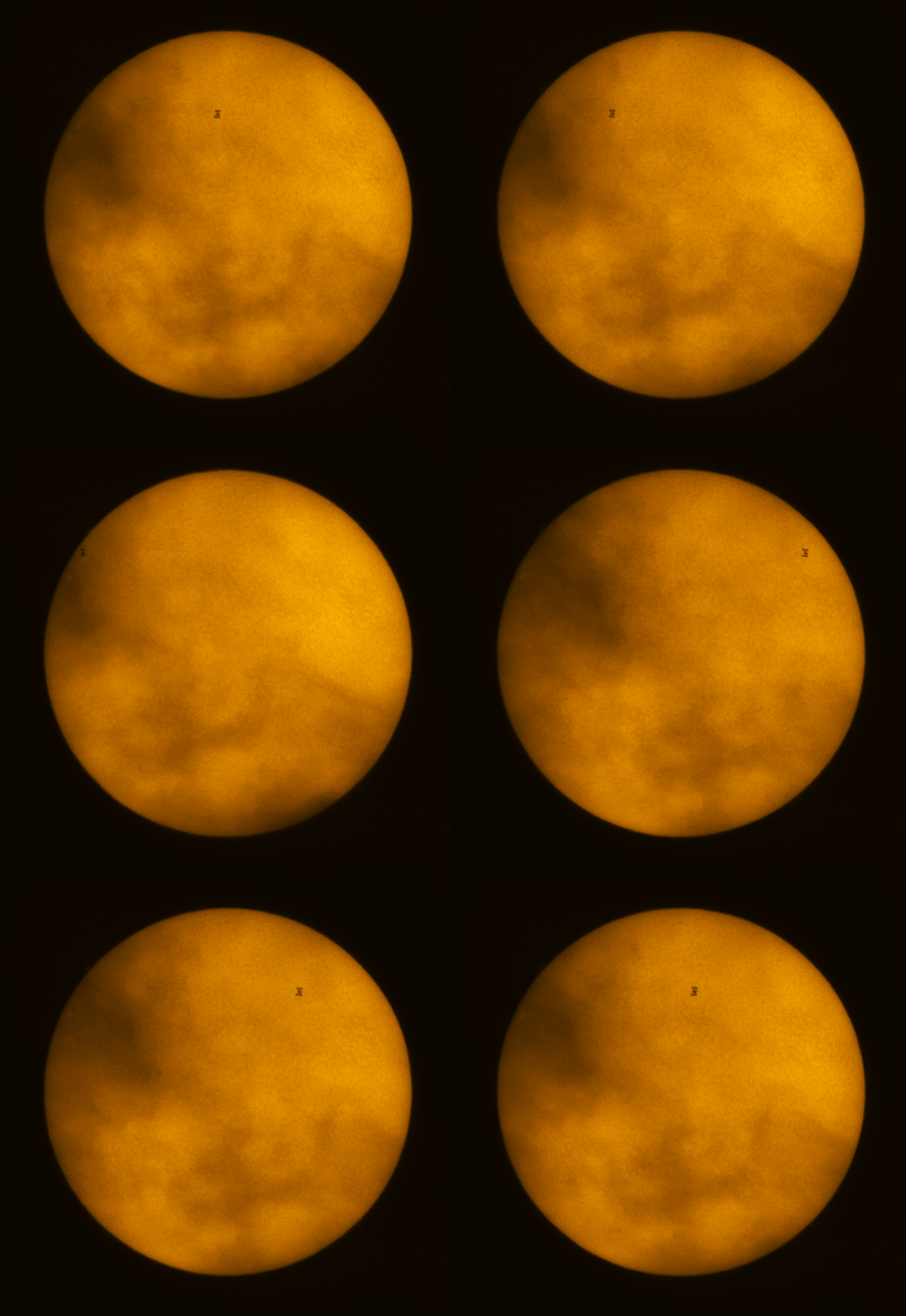
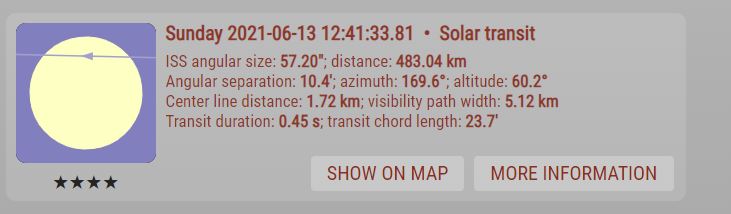
The day afterwards, Sunday 13th June, there was another ISS transit, this time visible from my back yard, albeit as a chord across the sun and not across the diameter (to get a full diameter I would have had to travel with my gear about a mile away). I could have again driven out in the car, but I quite liked the idea of the ISS crossing a chord. This mage is below. The sky had been perfectly clear and hot all morning before the transit and all afternoon afterwards, but just about 30 seconds before the ISS transit occurred the only cloud in the entire blue sky decided to pass in front of the sun! Had the transit occurred ten seconds before or ten seconds later I would have missed it. Fortunately there was a tiny thin bit in that cloud that allowed me to capture the transit, although some faint cloud is visible. I kind of think that the wispy cloud adds to the atmosphere of the image, wouldn't you agree?
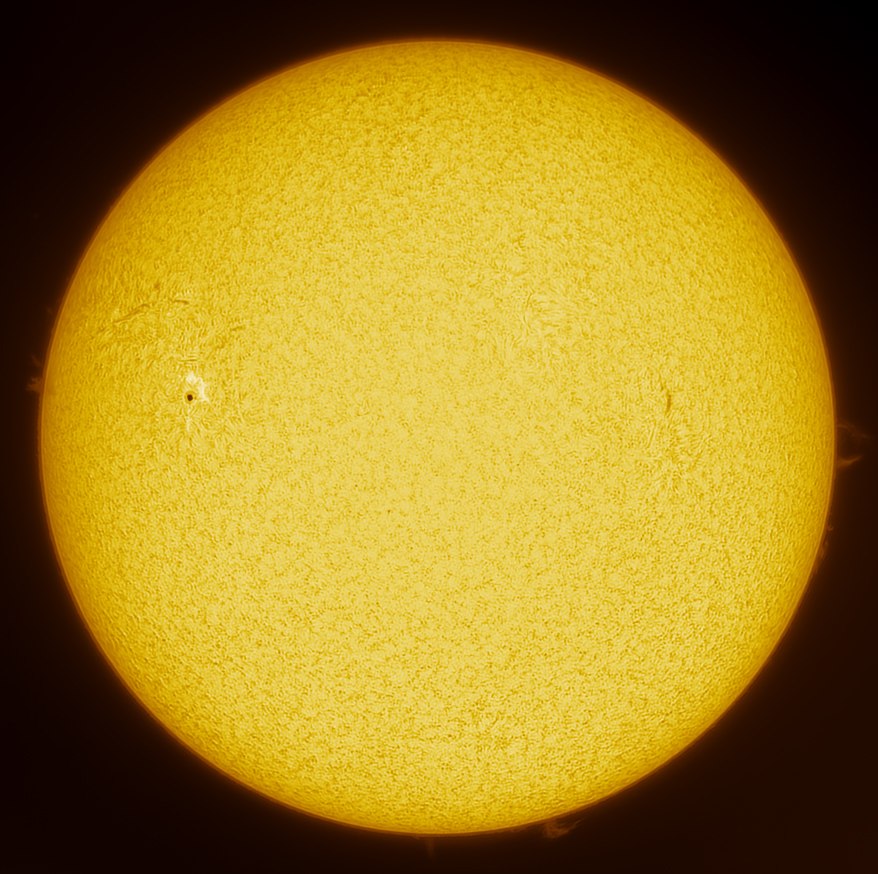
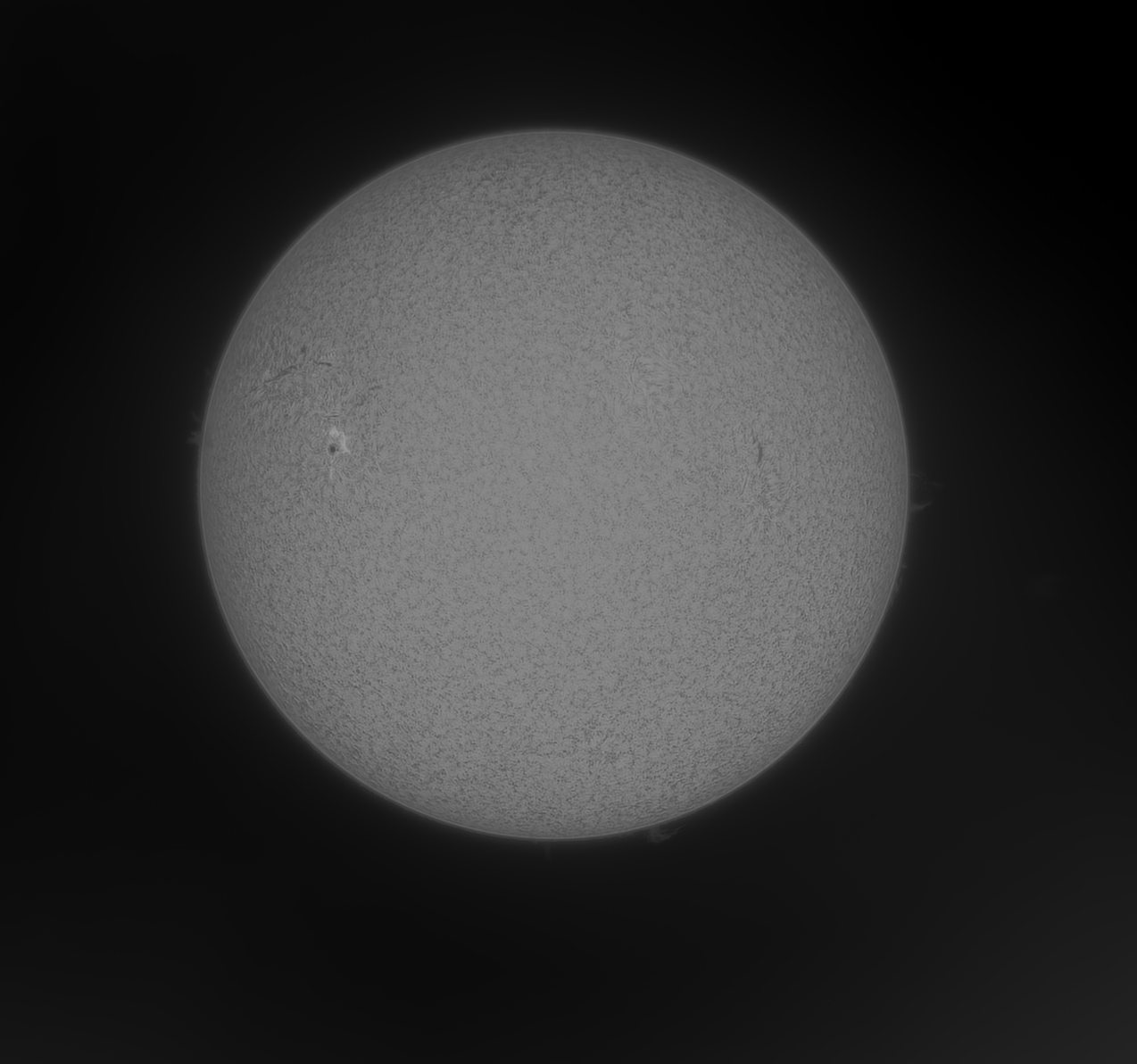
The Sun, 16 June 2021 in Ha with Lunt 60THa and ASI 174MM
This is a 10000 frame capture of the Sun with good seeing at 13:10 UK time in Nottingham. I used my Lunt 60Tha and my ASI174MM camera at 16-bit and 65 fps. The day was very hot - by UK standards - at about 28C and quite humid. I was able to use 92% of the frames which I stacked in Autostakkert. Post processing in IMppg and Photoshop CC. The image capture is a full disk and disk and proms are from the same capture.
The Hubble Deep Field (from Nottingham)
Background
The Hubble Deep Field (hereon-after the HDF) is an iconic image from the Hubble Space Telescope (HST). In 1995 the HST was instructed to stare at a tiny patch of space in the constellation of Ursa Major that is almost devoid of stars and is far from the plane of the galaxy, enabling the telescope to stare out of the galaxy into the depths of the Universe. It did this for about 190 hours with a total of 340 exposures and in so doing captured some of the most distant galaxies in the Universe, some of which are an astonishing 12 billion light years away.
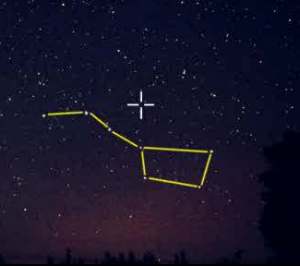
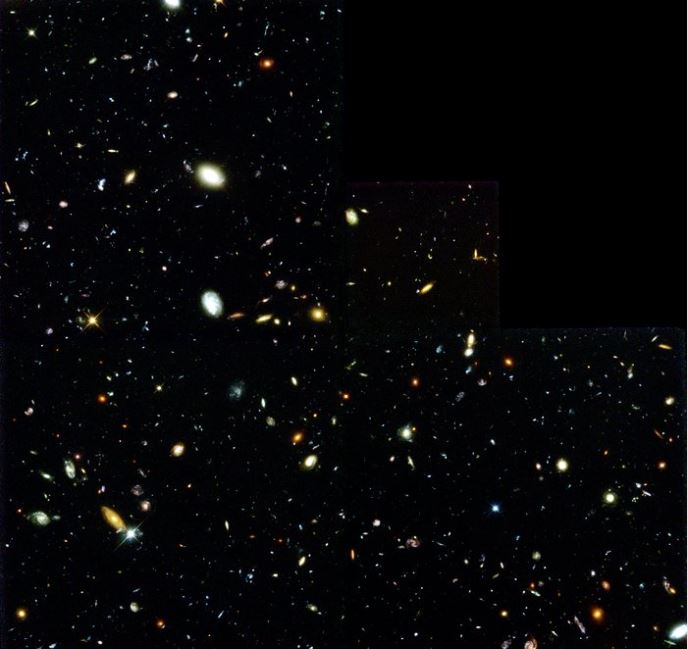
The HDF is located above the "bowl" of The Plough (or Big Dipper as it is called in North America) asterism in Ursa Major as can be seen in the left image above. The right image is the actual HST, a composite of red, green and blue to create a colour picture. No ground based telescope can capture such an image since the galaxies are so remote and faint that the slightest atmospheric turbulence will blur out the faint galaxies. However, the brighter members are available to ground based telescopes as we shall see later. Read more about the HDF here.
The HDF image was created with the Wide Field and Planetary Camera 2 (WFPC2) that was installed on the first Hubble servicing mission in 1993 and is an iconic instrument that created many of Hubble's most famous images. By today's standards its CCD sensor was tiny and comprised of three 800x800 sensors in a "L" shape. The missing top right of the image was used for the planetary section of the WFPC2 camera and just uses the bottom left quarter of the top left segment. By utilising digital manipulation techniques the four imaging quadrants could be stitched together to create a composite image. The WFPC2 was replaced by the WFPC3 in another servicing mission in 2009 that has a more modern (by 2009 standards) sensor that offers a complete image corner to corner. The WFPC2 was returned to earth and is displayed at a NASA museum.
Whilst very interesting, this is not just a pretty, semantic picture - it holds extremely important information about the early universe and the evolution of galaxies. Other Deep Field images were subsequently taken with the HST in other parts of the sky and the deep Universe looks almost identical everywhere we look, proving the cosmological principle that the Universe is essentially identical, everywhere, as a result of the Big Bang 14 billion years ago.
My Version
I took it on myself as a small project to image the Hubble Deep Field myself. Ursa Major and the HDF region is directly overhead at my location in Nottingham, UK in spring time. I downloaded the HDF coordinates from the Internet and used my TEC140 and Atik 460 CCD camera and captured 6 x 600s exposures with a luminance filter. There is no point in acquiring colour data for such remote objects. I used these to create this image:
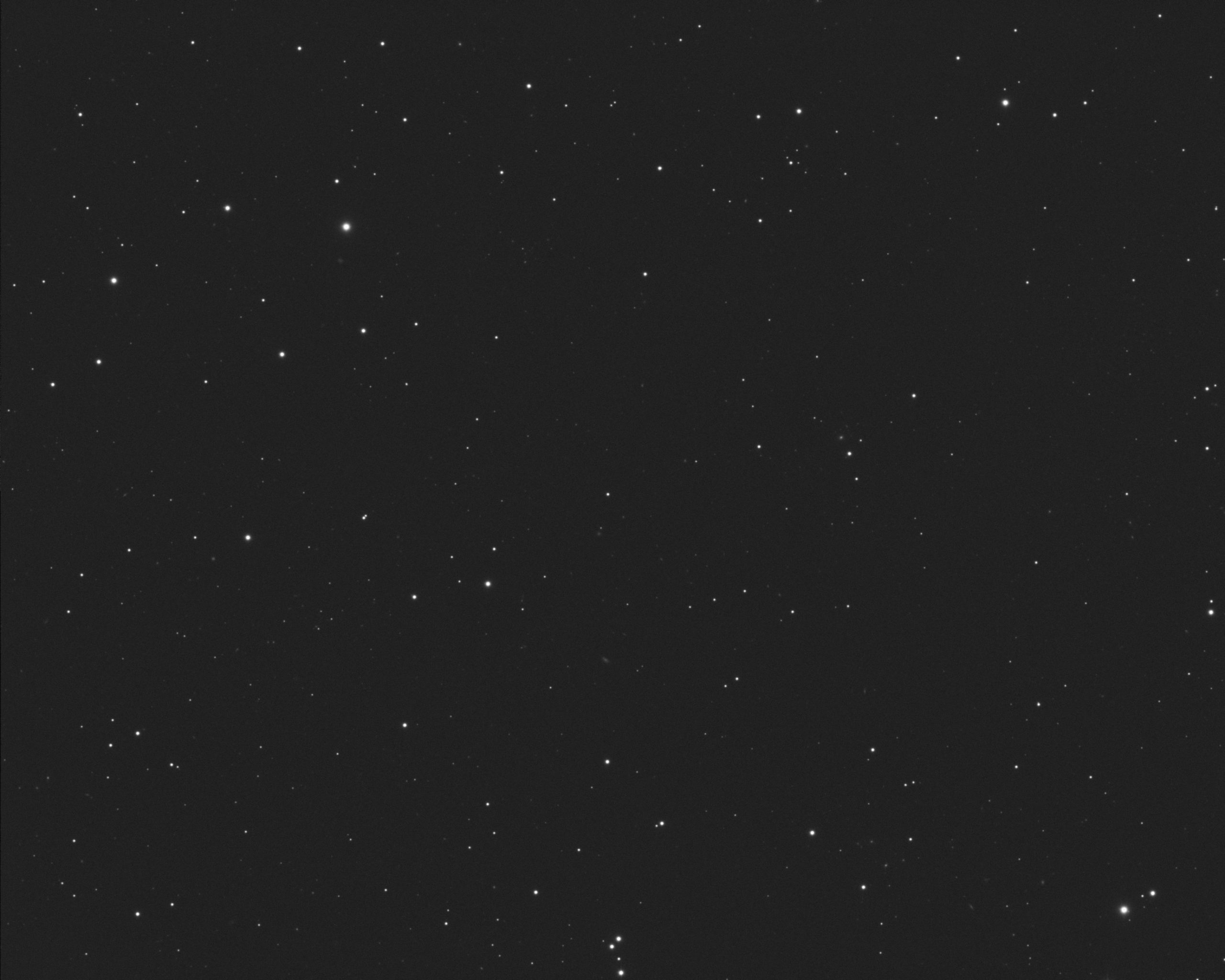
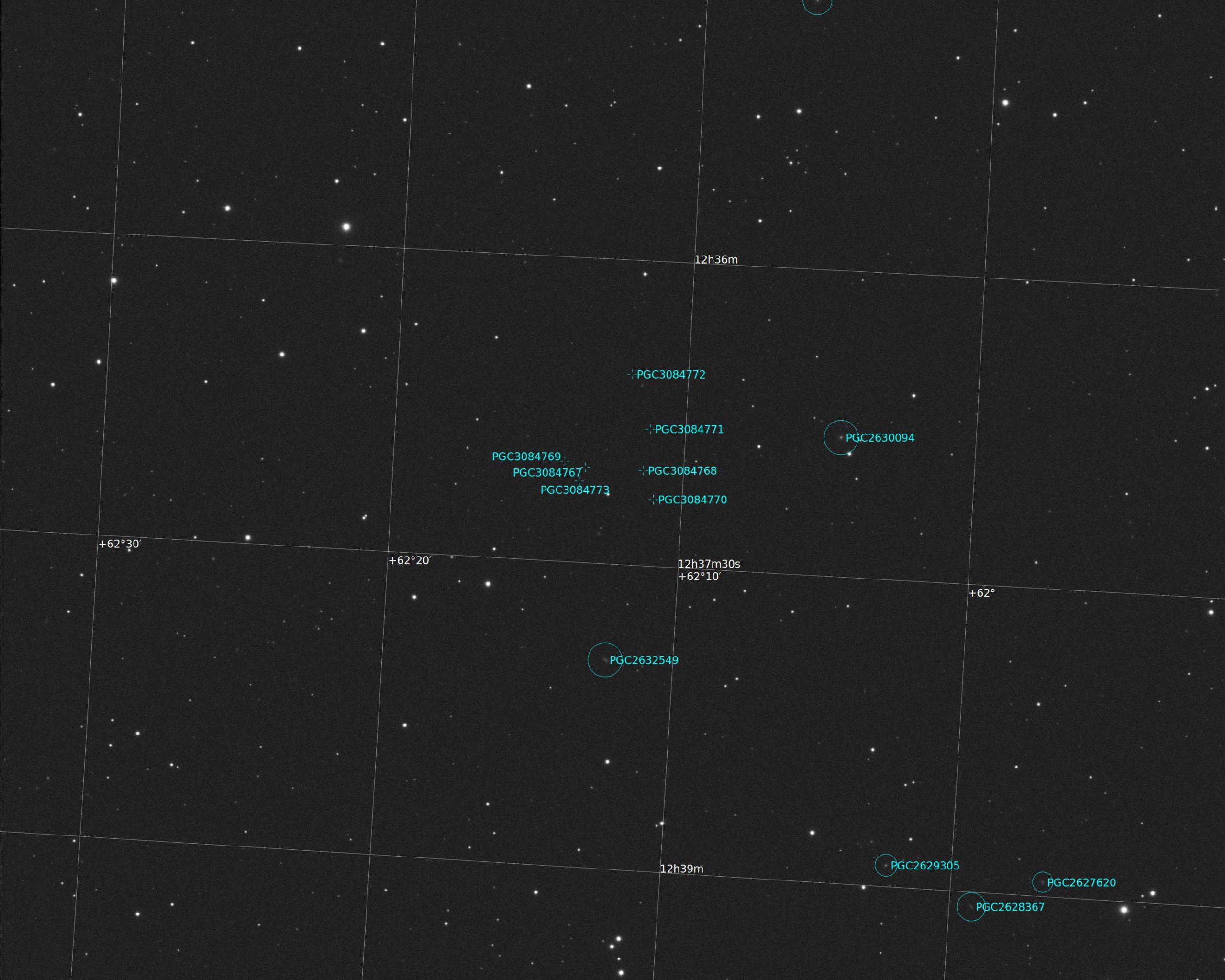
There are many extremely remote and faint fuzzy galaxies across this entire image. I then plate solved this image in PixInsight above to give me the galaxies surrounding the HDF as indicated on the left. Note the PGC galaxies. I used these to zoom in on the Hubble Deep Field area.
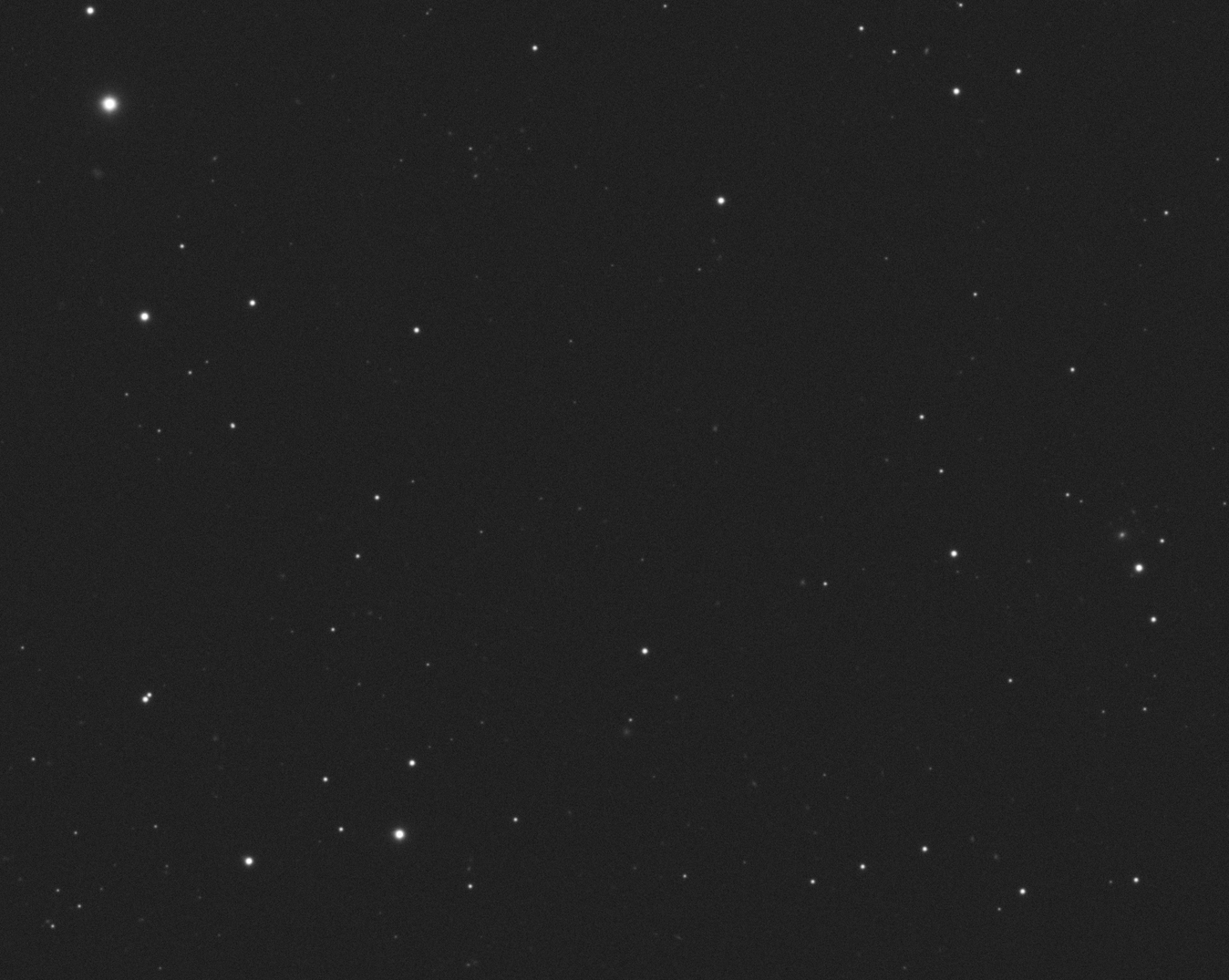
To the left is a zoomed in view of the Deep Field. The HDF is located just above the middle star that is one third of the way up from the bottom of the image.
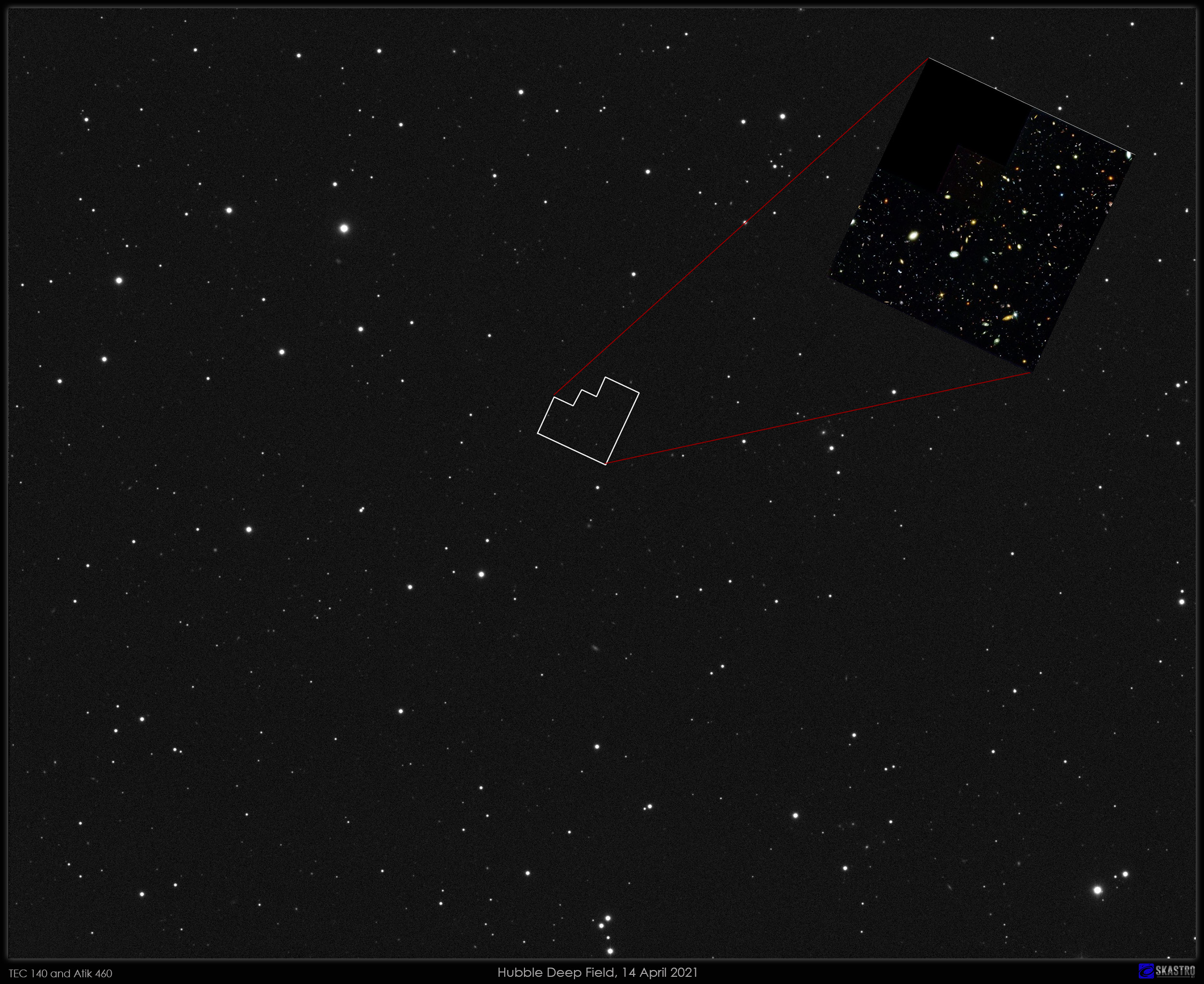
Above is the HDF annotated by superimposing the HST version of the HDF and rotating and scaling it in Photoshop to match my image. You can clearly see the four brighter galaxies (about five billion light years away) and a few of the others in my image.
It is quite remarkable what amateur equipment is capable of these days!
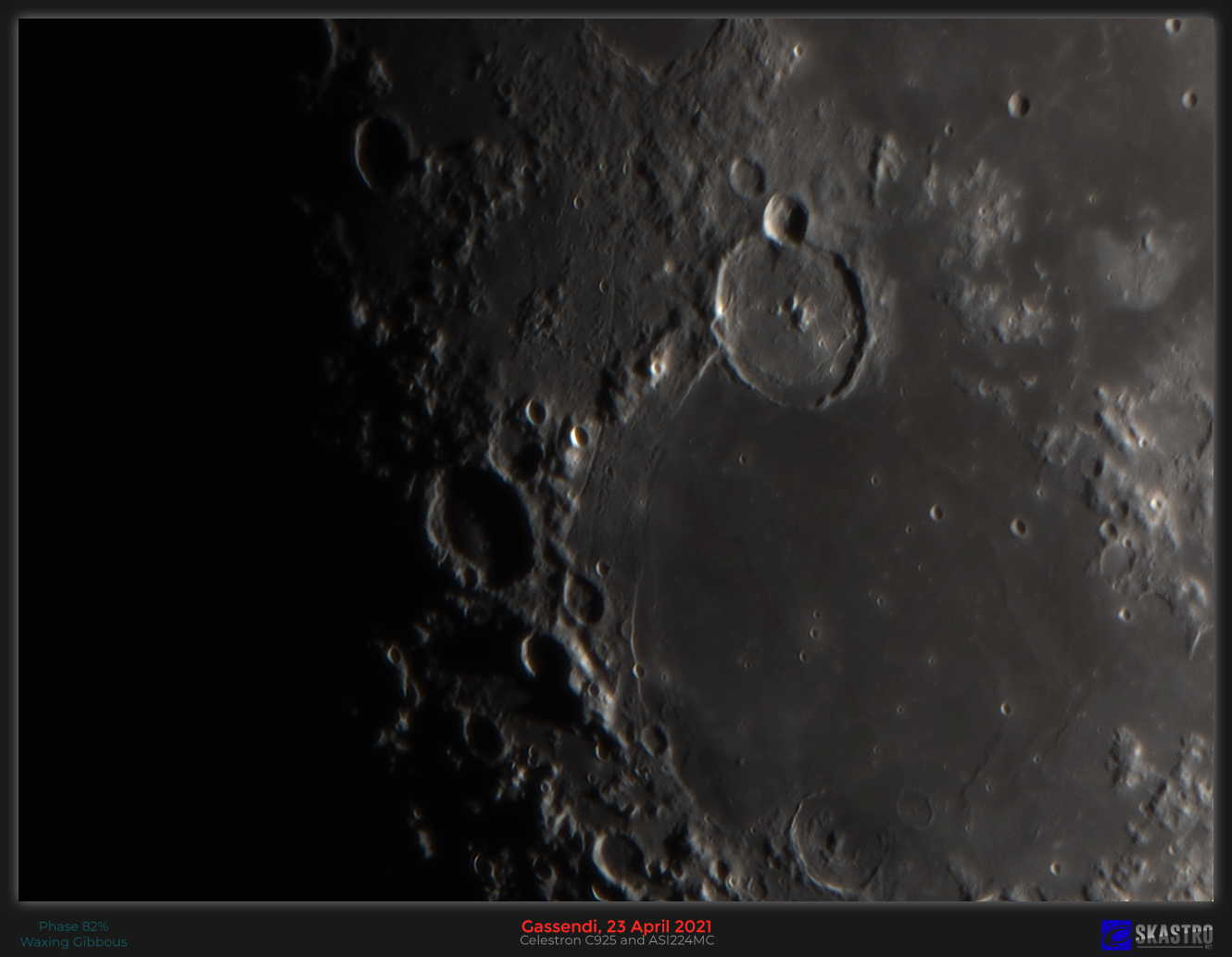
Lunar Pictures from 23rd April 2021 C925 and ASI224MC
A selection of images I took with my C925 and ASI224MC. Transparency was reasonably good but seeing was quite poor and the image was wobbly. Each image is developed from a 5000 frame .ser file choosing the best 15% of frames as a result of the poor seeing. The Moon is at a phase of 82% waxing gibbous and some nice shadows on the terminator.
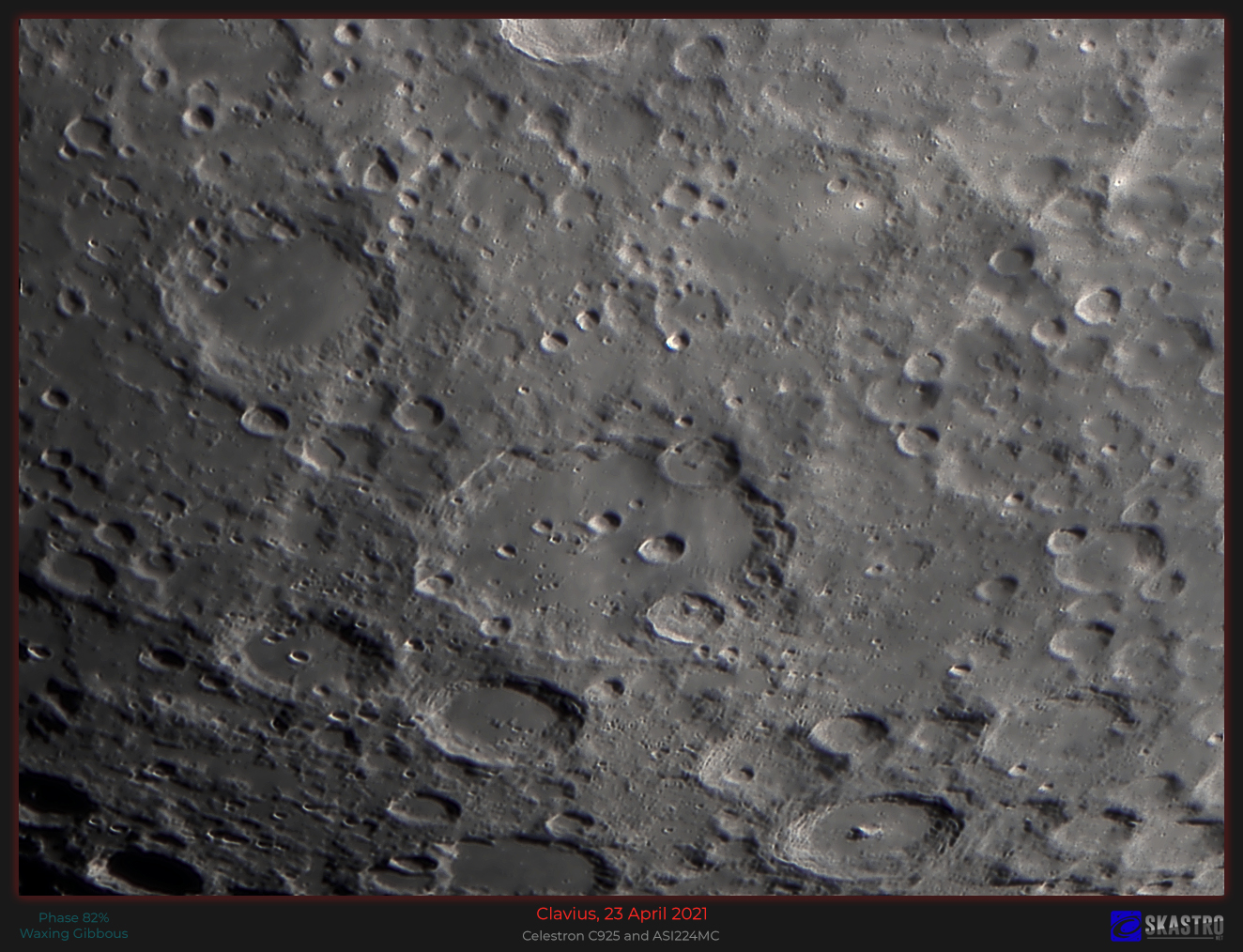
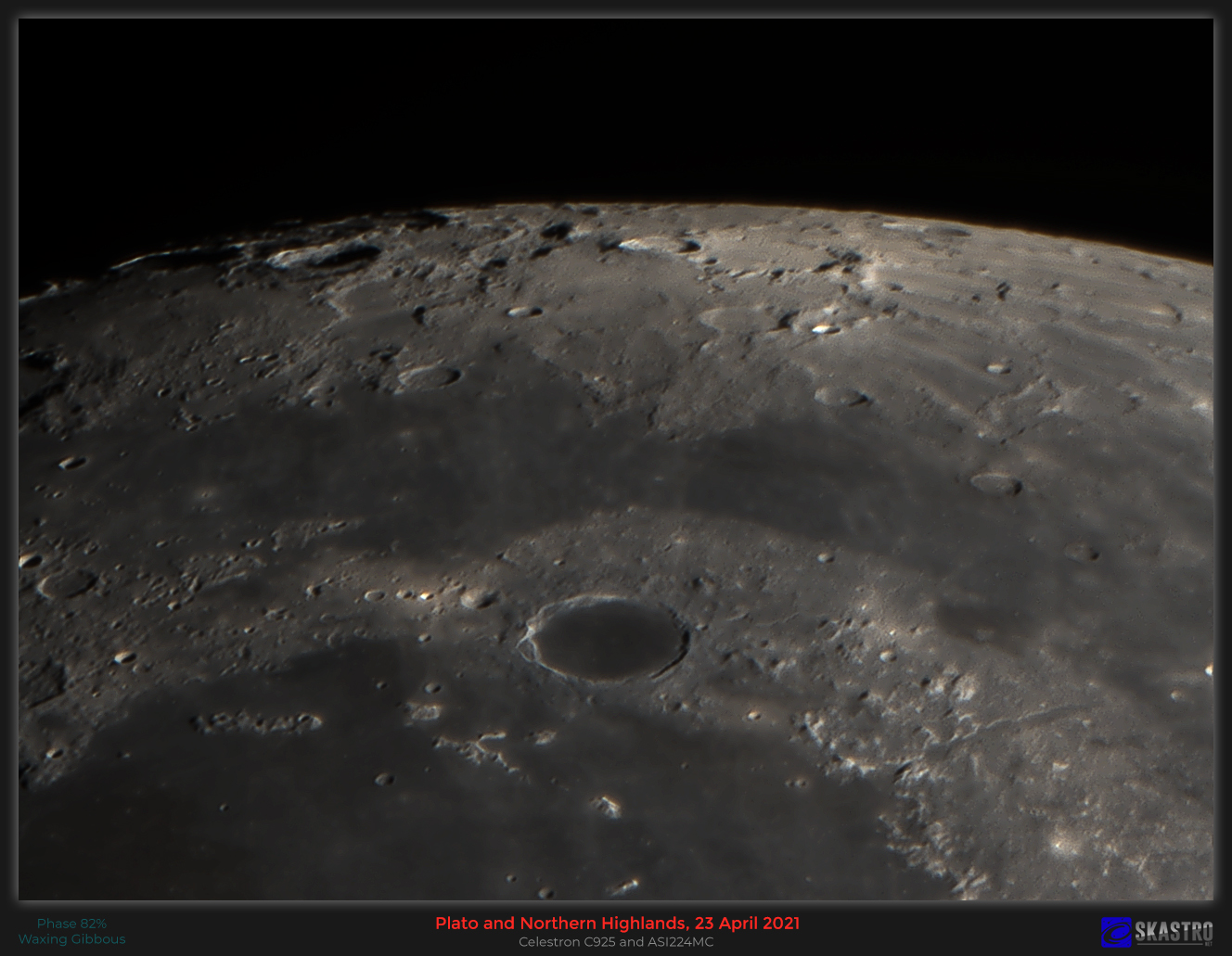
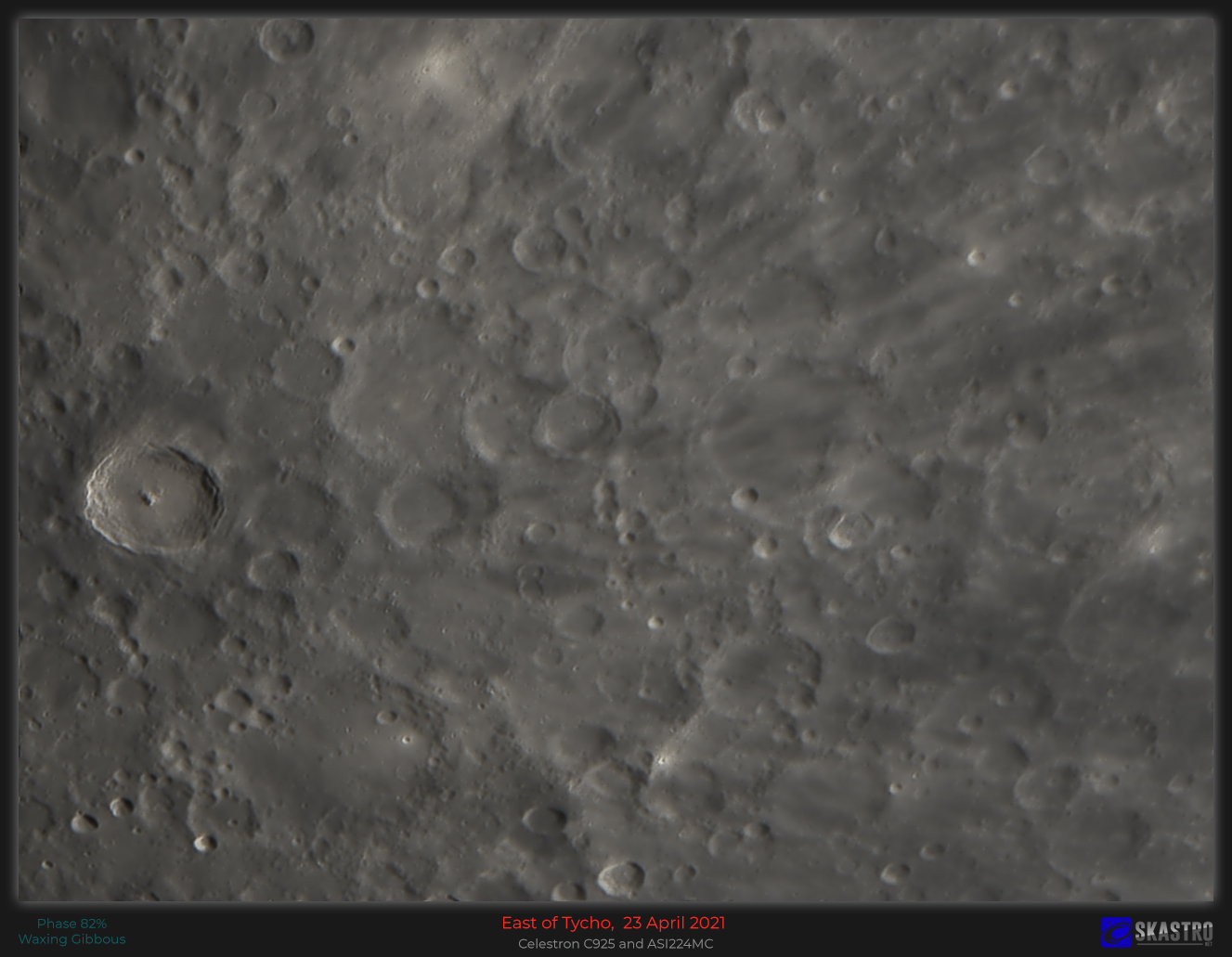
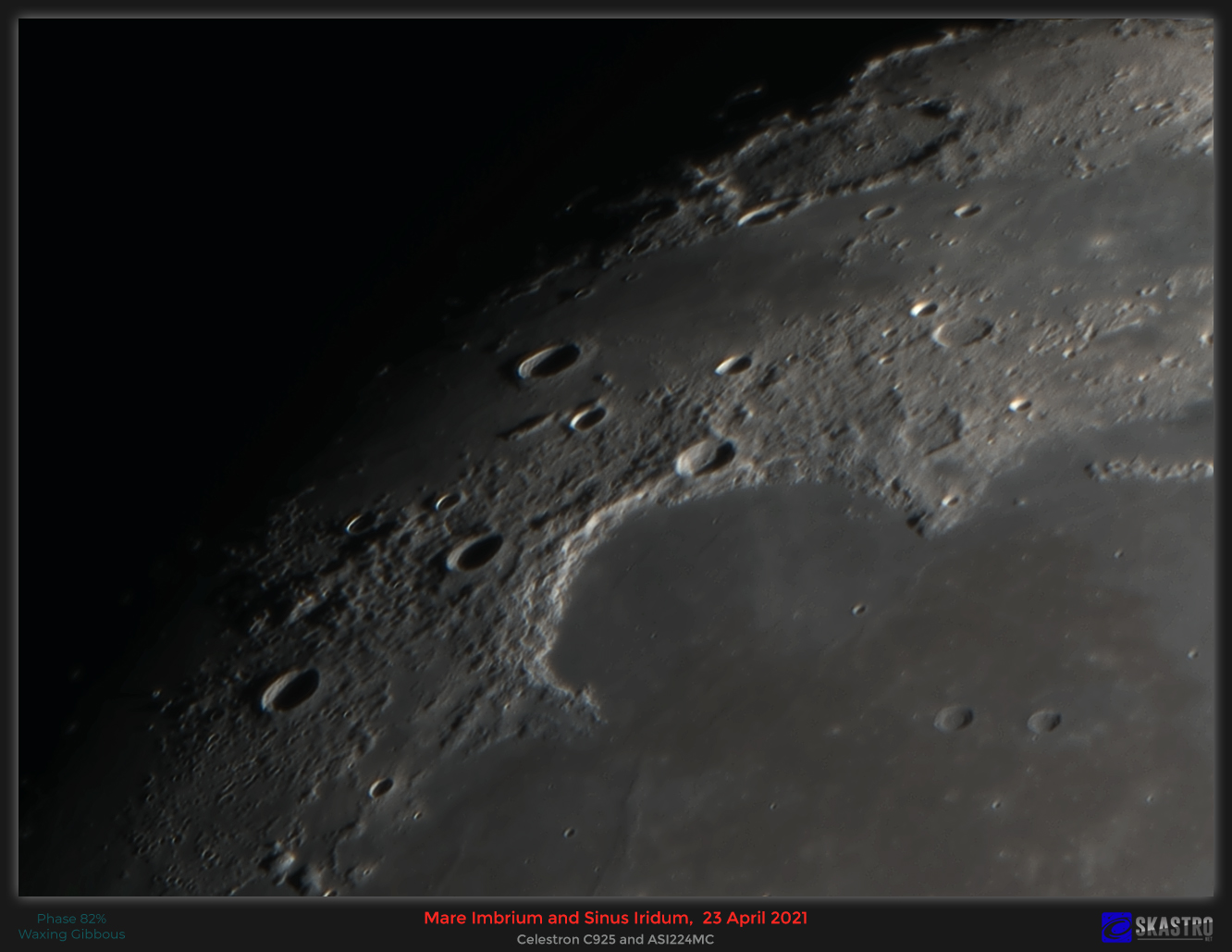
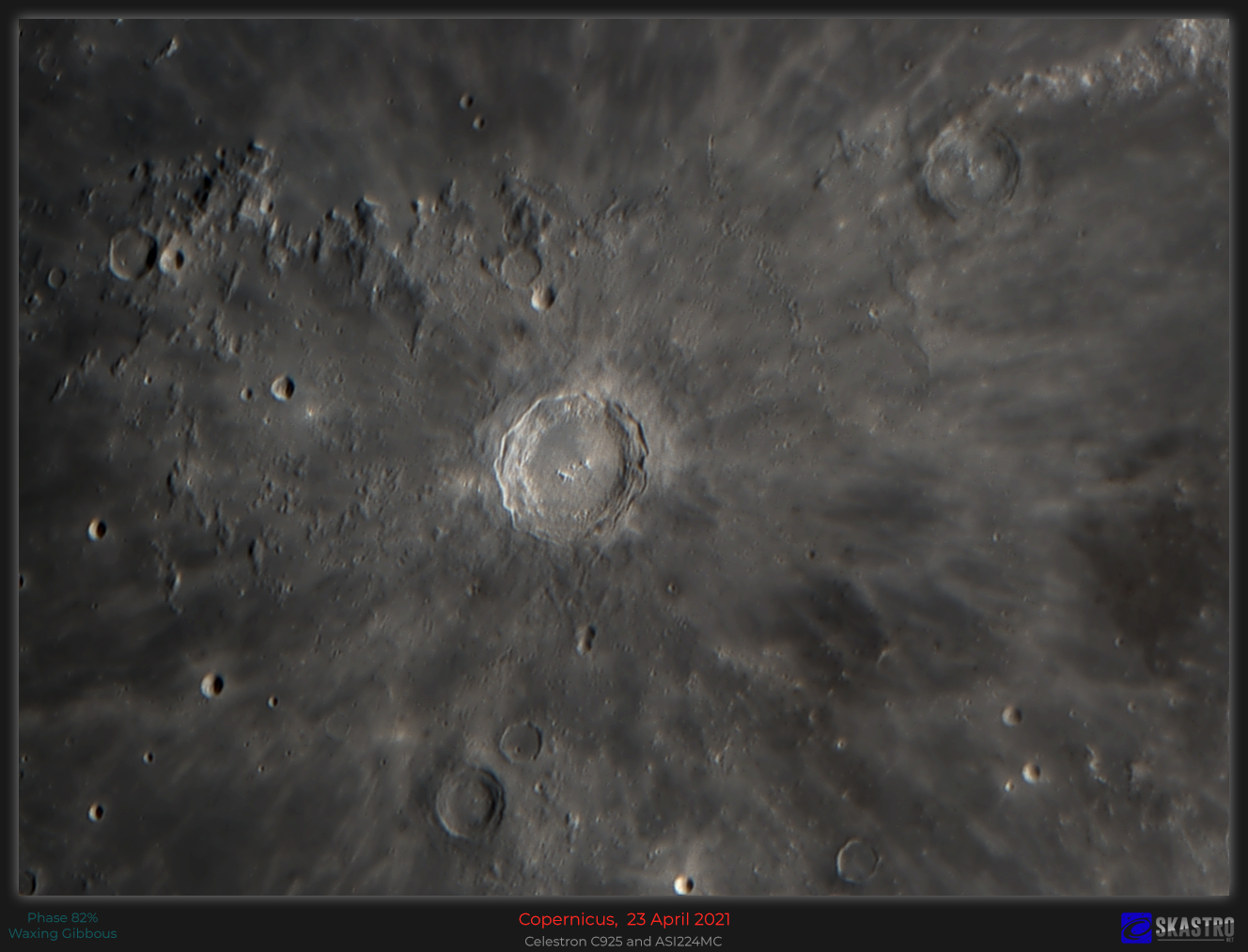
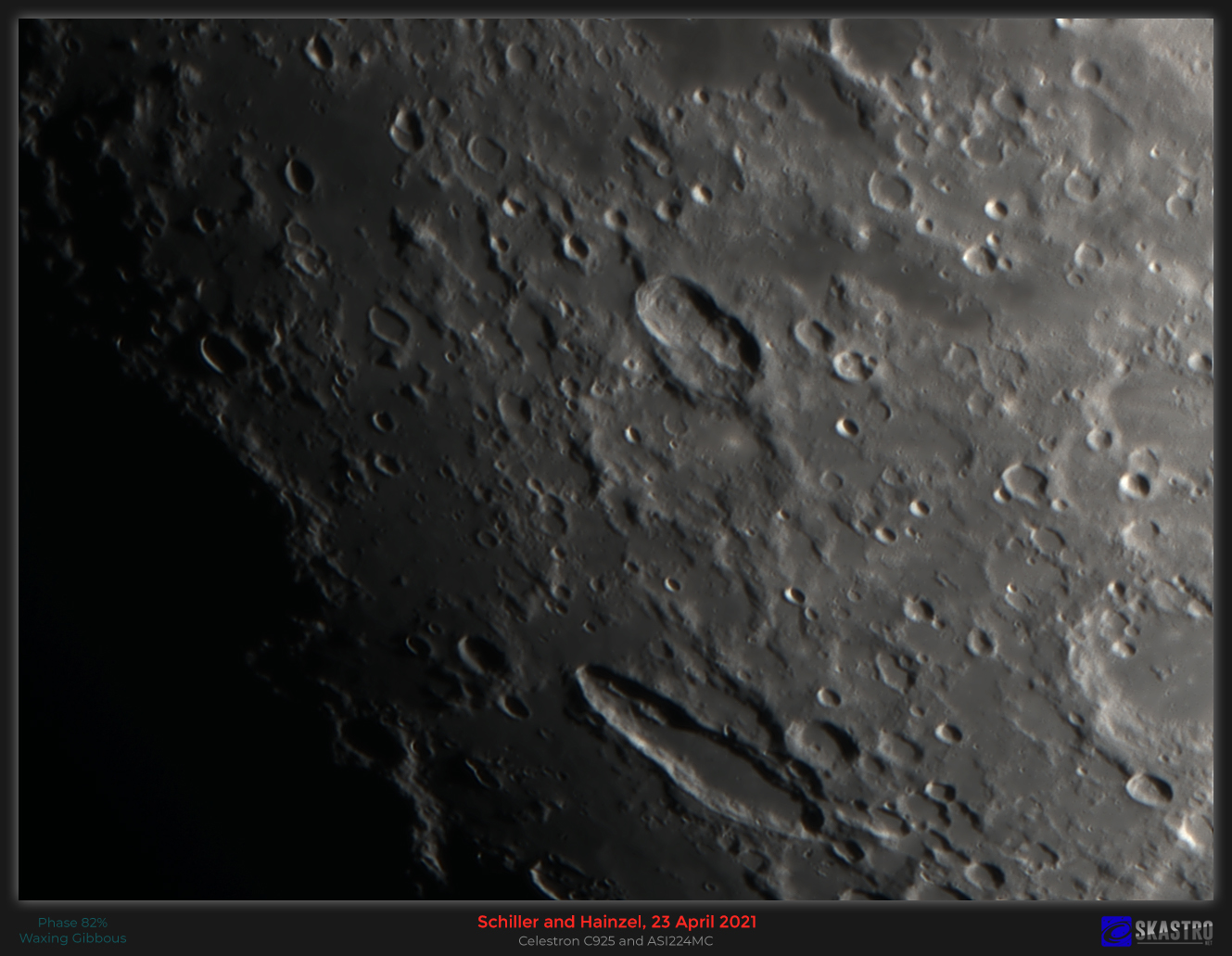
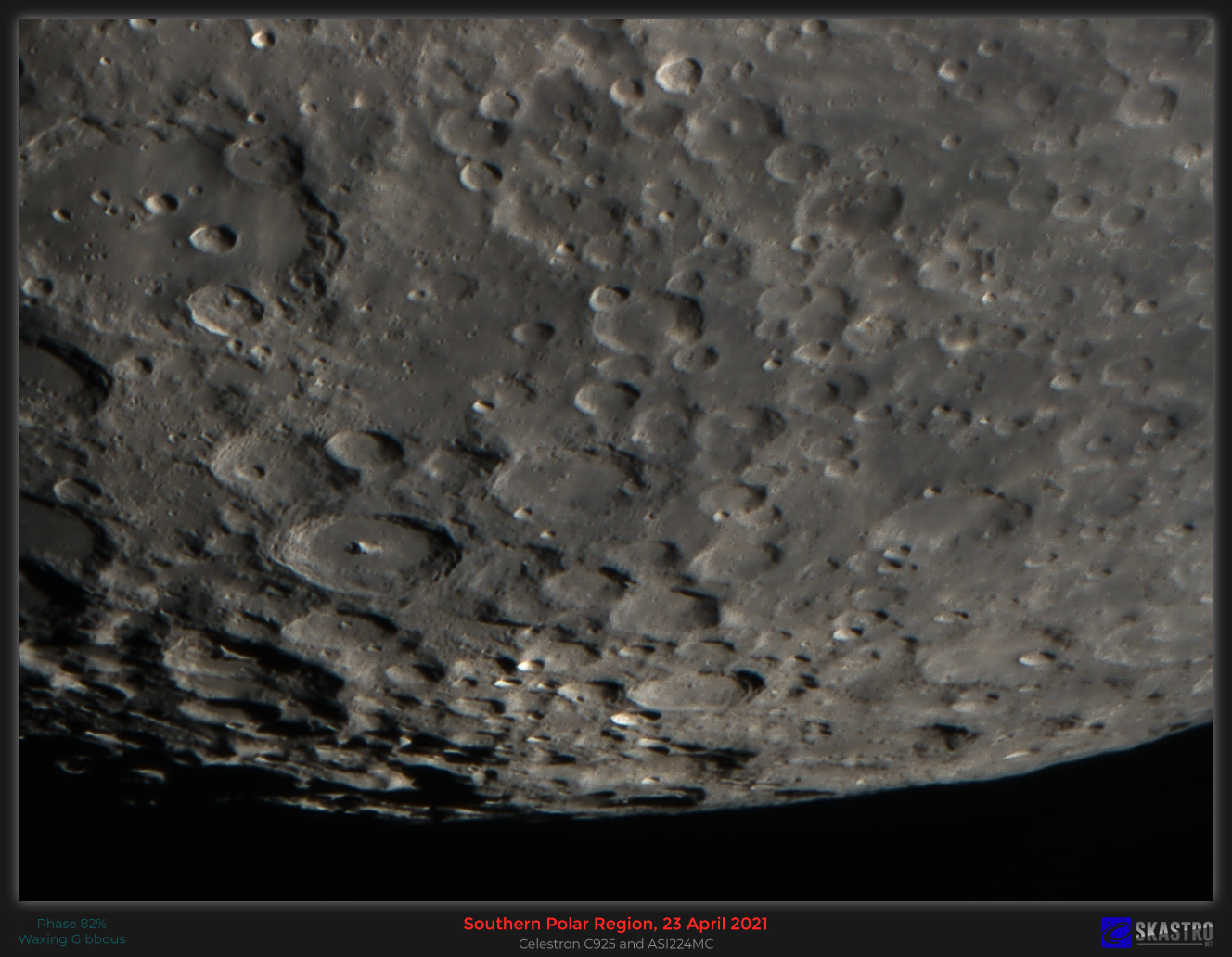
From my back yard observatory in Nottingham, UK. Using Celestron C925 SCT telescope and ASI224MC colour high speed planetary camera.
Telescope is at its native focal length of F10 for all these images since the seeing was much too unstable to use a Powermate or Barlow, even a x2 one woudl have been too much on this session.
Lunar Images from 25th March 2021 with TEC140 and C925 SCT with ASI174M
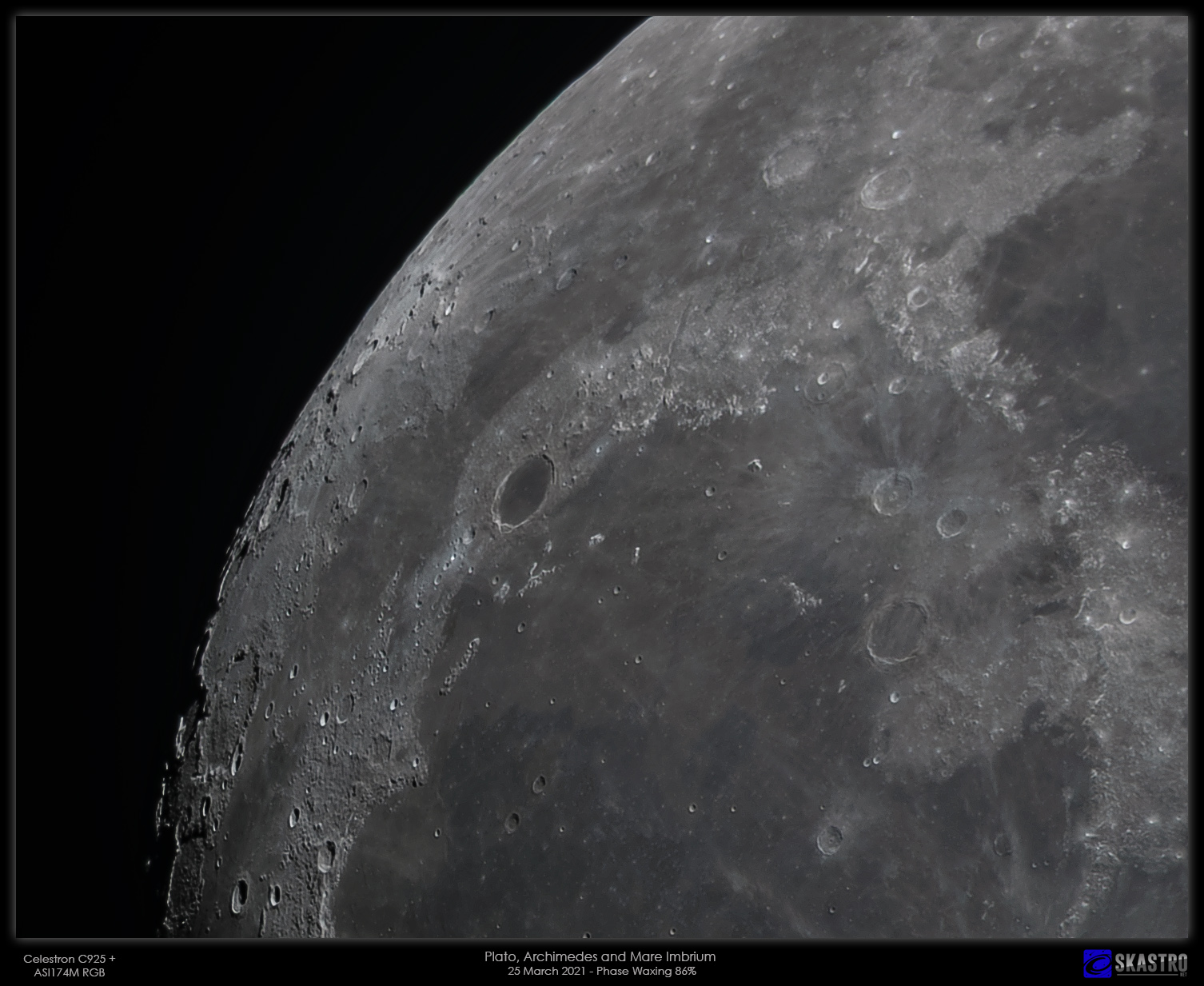
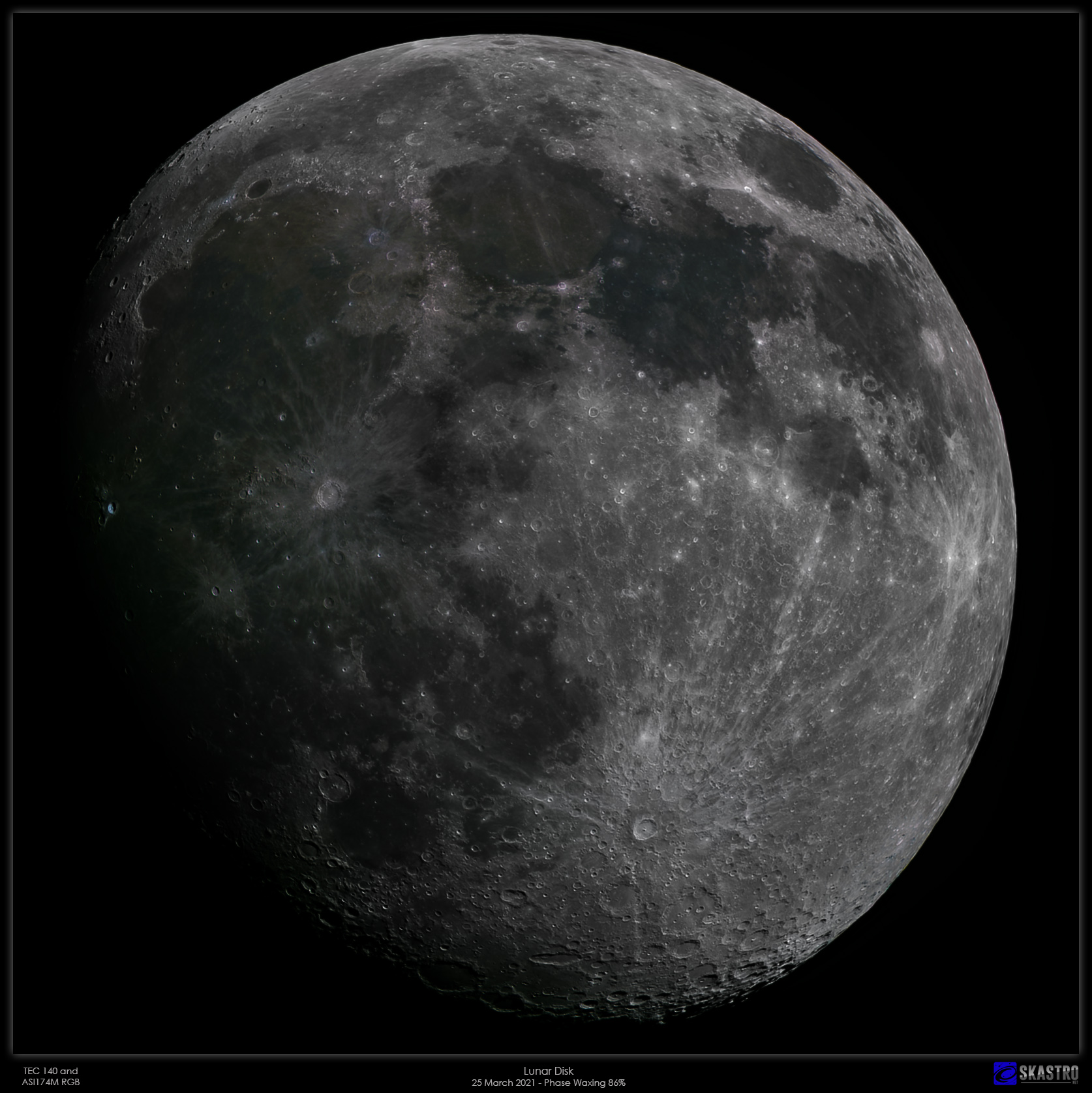
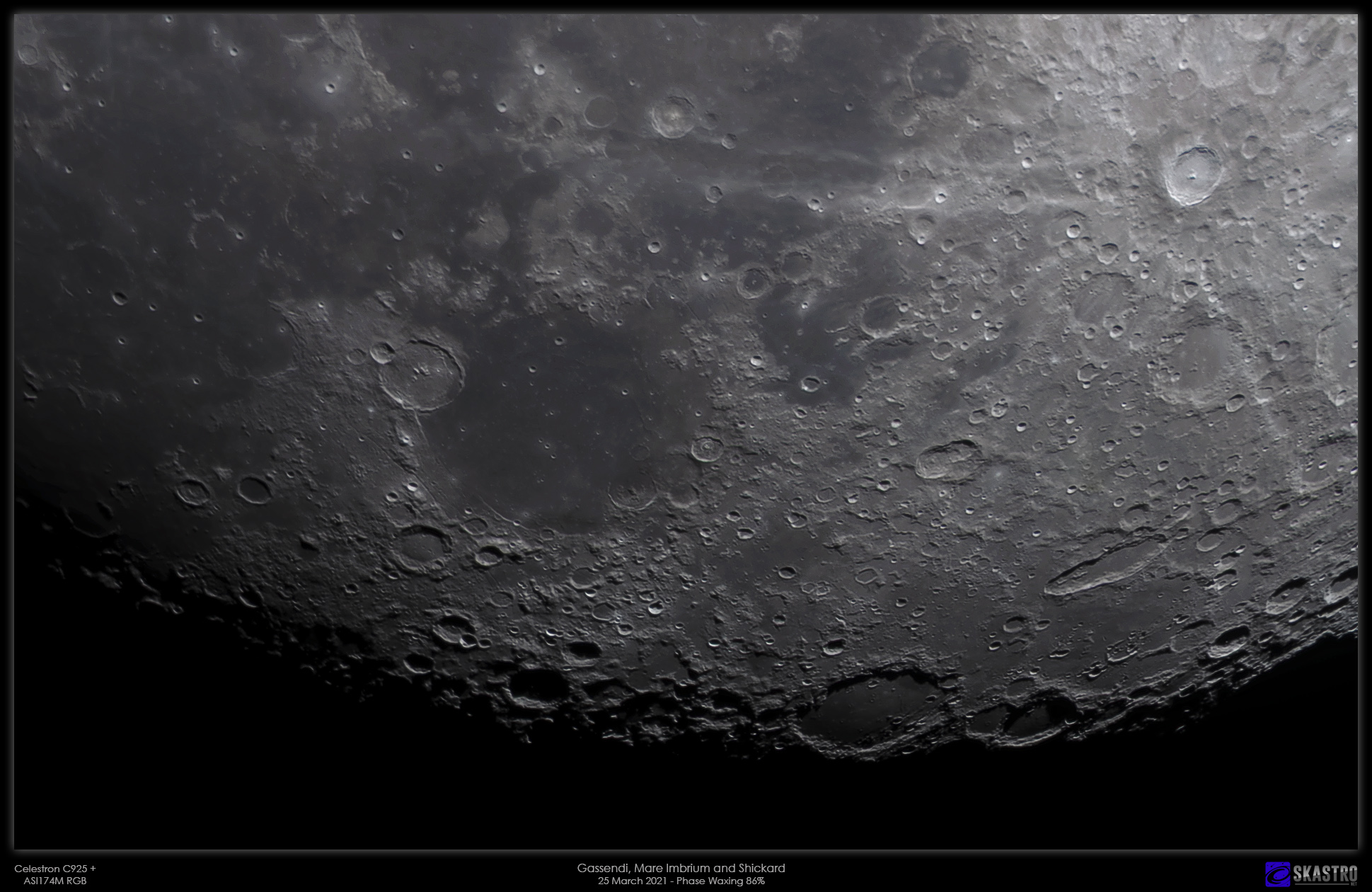
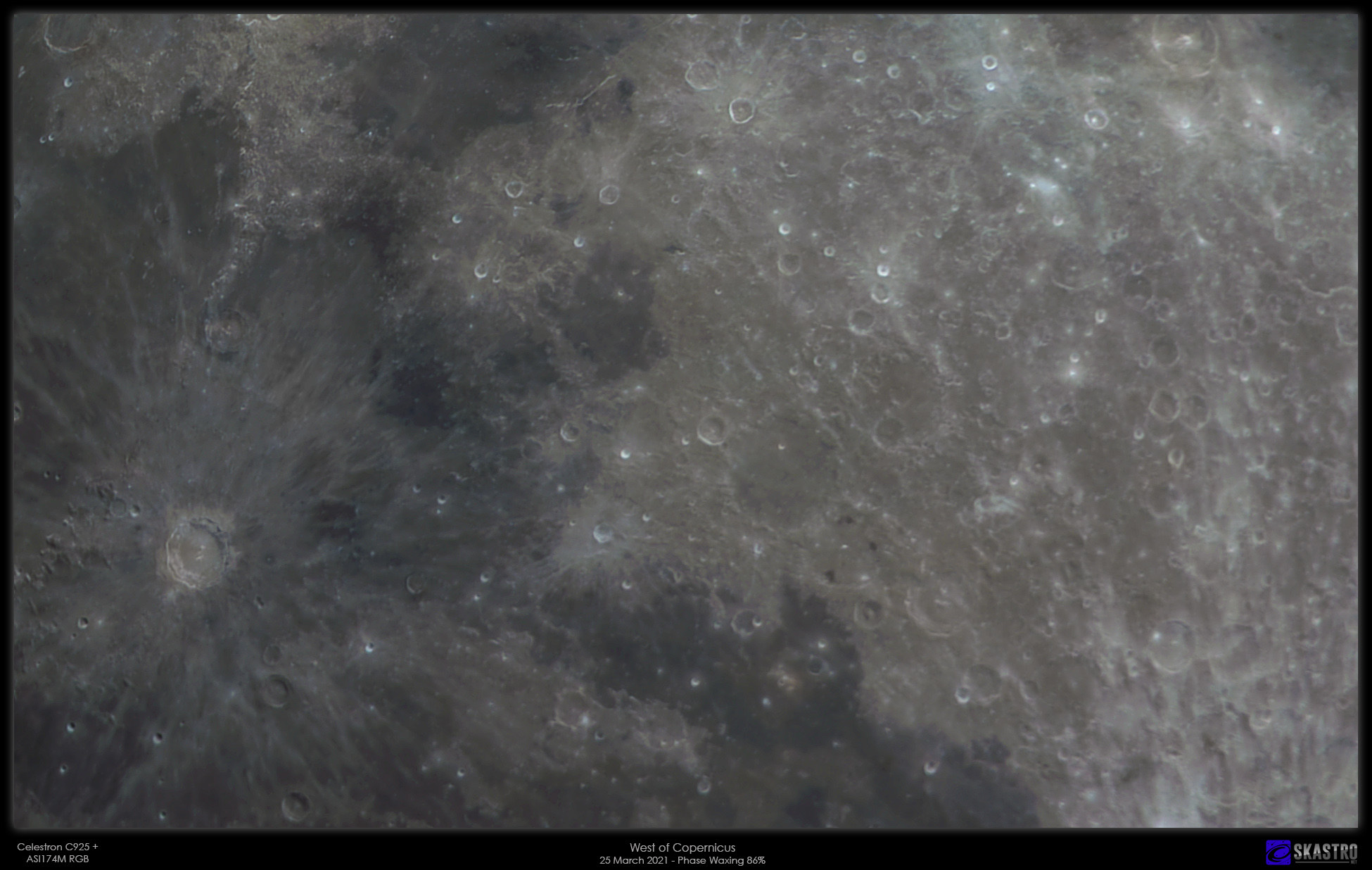
Images on this post were made by using the TEC140 and Celestron C925 SCT telescopes with my ASI174M mono camera. From my backyard in Nottingham on the evening of 25th March 2021 with the Moon high to the south in Leo at a phase of 86% waxing (i.e. growing towards full moon) and at an altitude of about 50 degrees above the horizon. A slightly hazy sky made for quite good seeing although it was very cold and windy and the moon was jiggling about a lot in the gusts, even inside my sheltered observatory. I had to try and time my capture runs between these gusts and passing clouds, a process that was not always successful. As a consequence I accumulated nearly 600G data for these four pictures in total, much of which had to be deleted. I was outside at the scope for about 90 minutes doing these captures.
All the captures were done in Firecapture software at about 60 fps in 16-bit mode. I used DeepSkyStacker for processing the .ser files and then Photoshop and PixInsight for image processing.
First up, the partial disk image below is with my TEC140 refractor (flattener removed) and the ASI174M camera. This is a two pane mosaic using RGB (Baader CCD RGB filters) for colour and a Baader Ha 7mm filter for the luminance. For the merging together of the two panes I used the Photoshop merge tool. The image is the best 50% of 6000 frames in each of the RGB channels and the top 50% of 10000 frames in the Ha. For my next run on this I am going to try for 20000 frames in each of the RGB to try and get more colour since I struggled to get more colour out of the bluer cobalt rich regions.
I am very happy with this image other than I wish it had that bit more colour. I think my technique of the Ha channel for the luminance is highly effective. I deconvolved this in PixInsight and then used a bit of HDR multiscale transformation and a bit of Unsharpmask to get a wonderful crisp luminance without overdoing it as I often see with some lunar images.
The RGB is simply aligned RGB channels with the alignment performed with the Star Alignment tool in PixInsight which is easier than Photoshop in my opinion for this purpose.
Below we have three images of the Moon in a closer up or more "zoomed in" imaging scale. These are with the C925 SCT telescope at its native F10 focal length - i.e. no Barlow - and again with the ASI174M with RGB filters. I did not use a dedicated luminance channel with these three images and I instead used RGB channels and made a pseudo-luminance after balancing those three channels in a 1:1:1 combination to create the pseudo-luminance. I then used deconvolution, HDR multiscale transformation and Unsharpmask in PixInsight on this pseudo-luminance to enhance the details before blending it with the RGB composite in Photoshop.
I hope you like them!