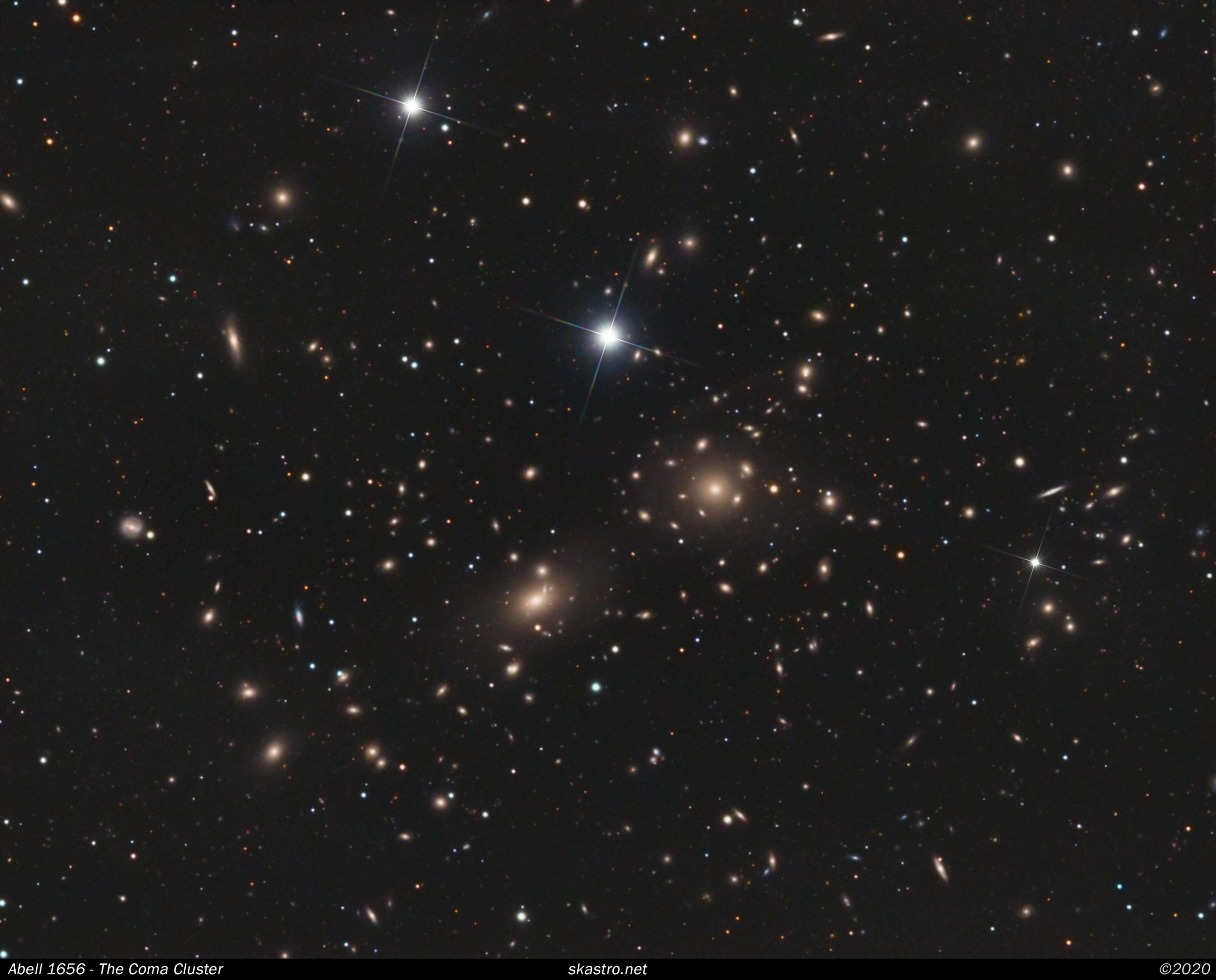
Abell 1656 TEC 140

Abell 1656 - The Coma Cluster - is a cluster of galaxies in the constellation of Coma Berenices, located about 320-330 million lights years away. The cluster is dominated by two supergiant elliptical galaxies NGC 4874 and NGC 4889 which are visible in this image in the centre below the bright blue star (which is local to our own galaxy). NGC 4889 is the largest and most massive galaxy in the local universe and is vsoble in modest amateur telescopes despite the great distance. It contains the most massive black hole yet discovered. The galaxy itself is estimated to have more than 1000 times the mass of opur own Milky Way galaxy.
Image Technical Data
Image acquired spring 2020 (during the Coronavirus lockdown) in my backyard in Nottingham, UK. It was acquired with TEC 140 refractor (with field flattener) with Atik460 CCD camera and Astrodon LRGB Gen2 E series filters on my MESU 200 mount. Guiding was via off-axis guider.
Luminance 30 x 300s 1x1; Red 14 x 300s 2x2; Green 15 x 300s 2x2; Blue 14 x 300s 2x2
Data processed with PixInsight and Photoshop and data collected with SGP Pro and guided with PHD2.


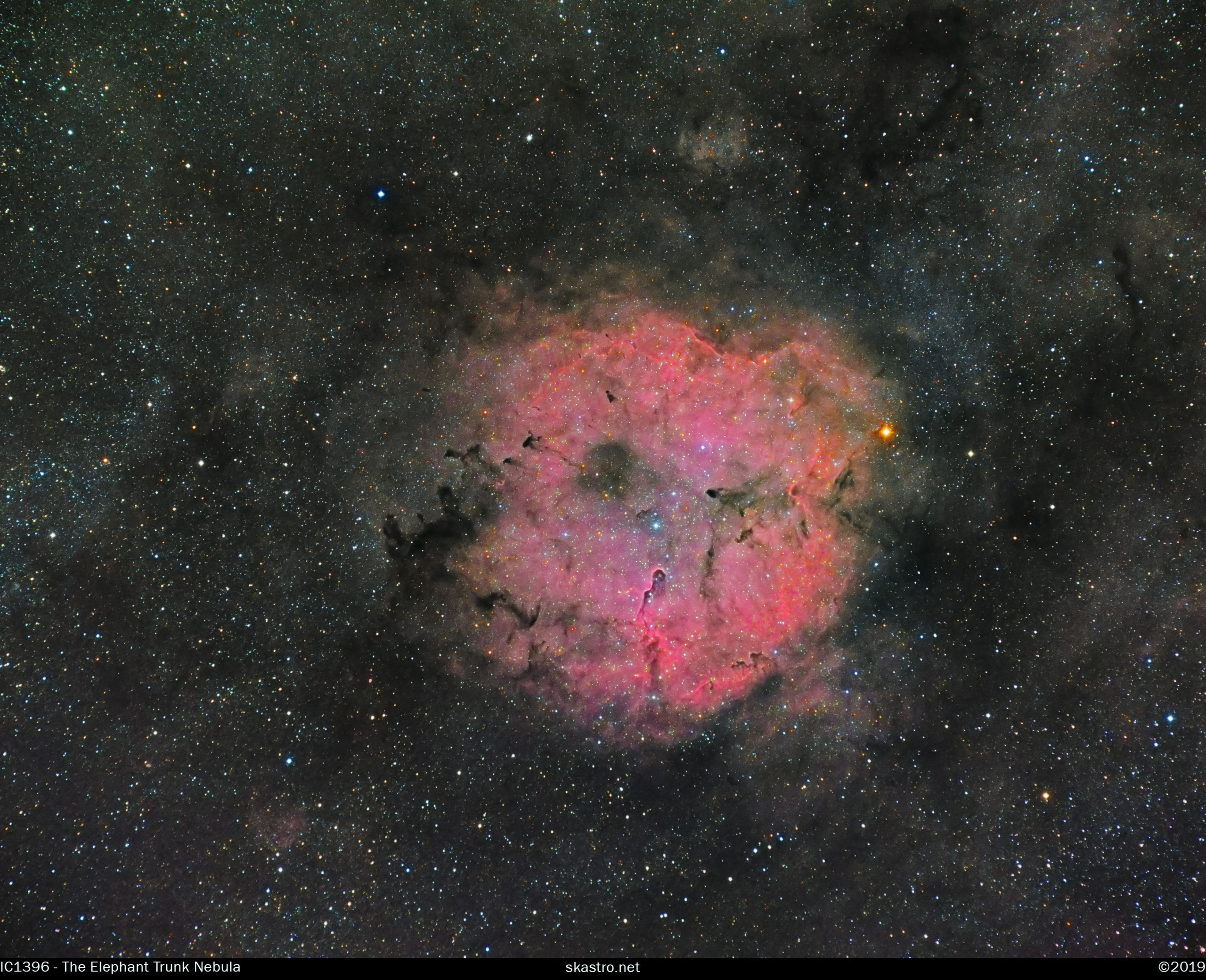
IC1396 with Samyang 135mm

IC1396 - "the Elephant's Trunk Nebula" is a huge emission nebula in the constellation of Cepheus, about 2500 light years away. It has a huge angular diameter of about 2 x 3 degrees so it requires a wide field telescope/lens to capture it in its entirety.
It is a very popular imaging target both in a wide field setting like this picture and also as close up views of the "trunk" that you can see in the image at the 6 o'clock position.


Image Technical Data
Image data acquired September 13th 2019 from my backyard in Nottingham, UK. This image was taken with my Samyang 135mm lens with G2-8300 CCD camera and Astrodon RGBHa filters on NEQ6 mount. Everything is 300s in this image and binned 1x1:
Ha (3nm) x 13; Red x 12; Green x 8; Blue x 14
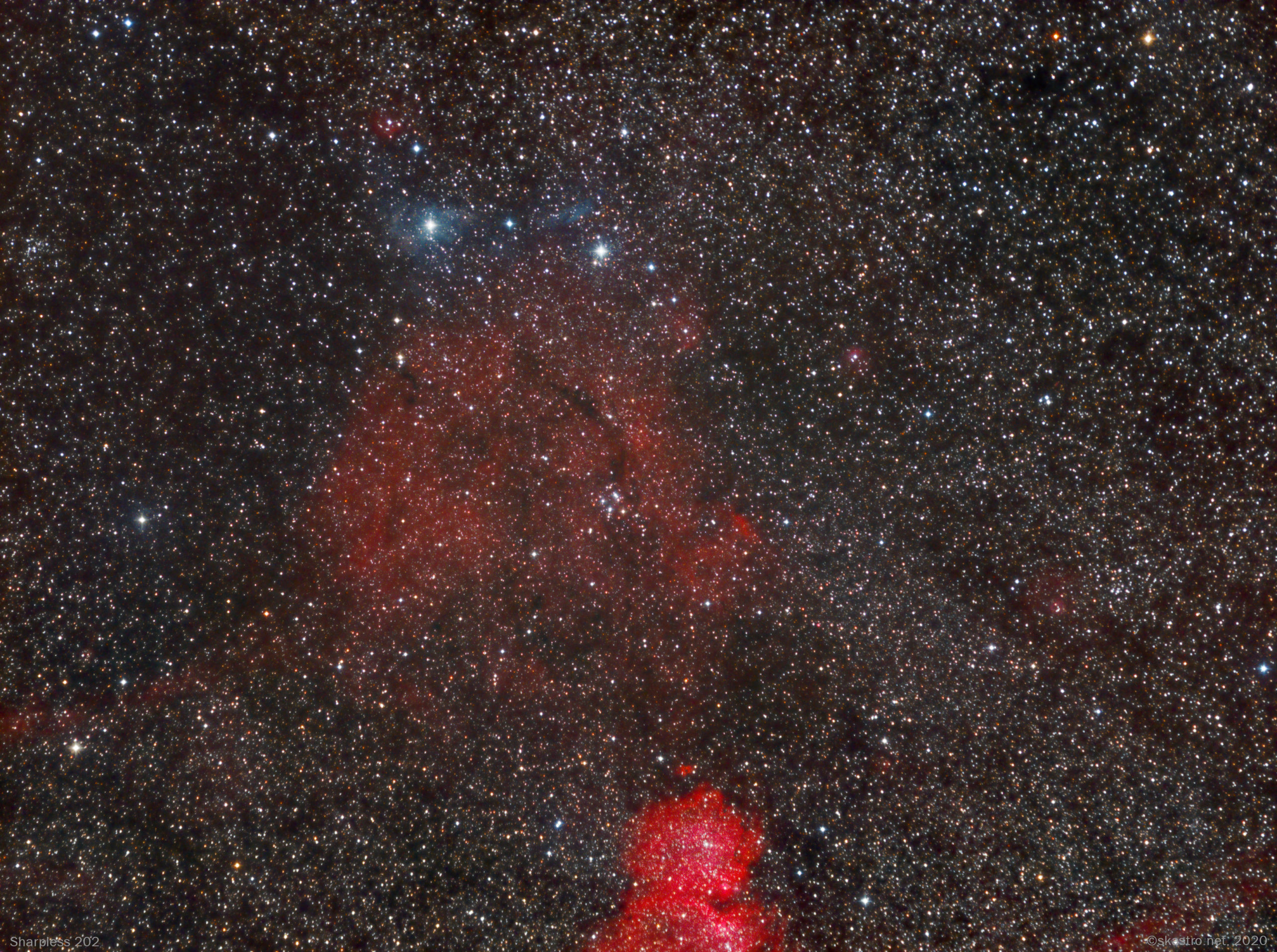
Sh2-202 (Sharpless 202) Samyang 135mm

This image shows Sh2-202 glowing to the left of centre with the top of the Soul Nebula at the bottom. Several other Sharpless Catalogue objects are also visible together with a few objects from the VdB catalogue.

Image Technical Data
This image was captured from my back yard with my widefield rig consisting of my Samyang 135mm lens with Moravian Instruments G2-8300 CCD camera and Astrodon RGBHa filters. I used my NEQ6 mount. The data was acquired when the object was overhead from Nottingham UK on 29 November 2019. All data acquired in one imaging run and all exposures binned 1x1 and 300seconds:
Ha(3nm) 180 mins, Red>50mins, Blue>45mins,Green>45mins
I hope you like it!
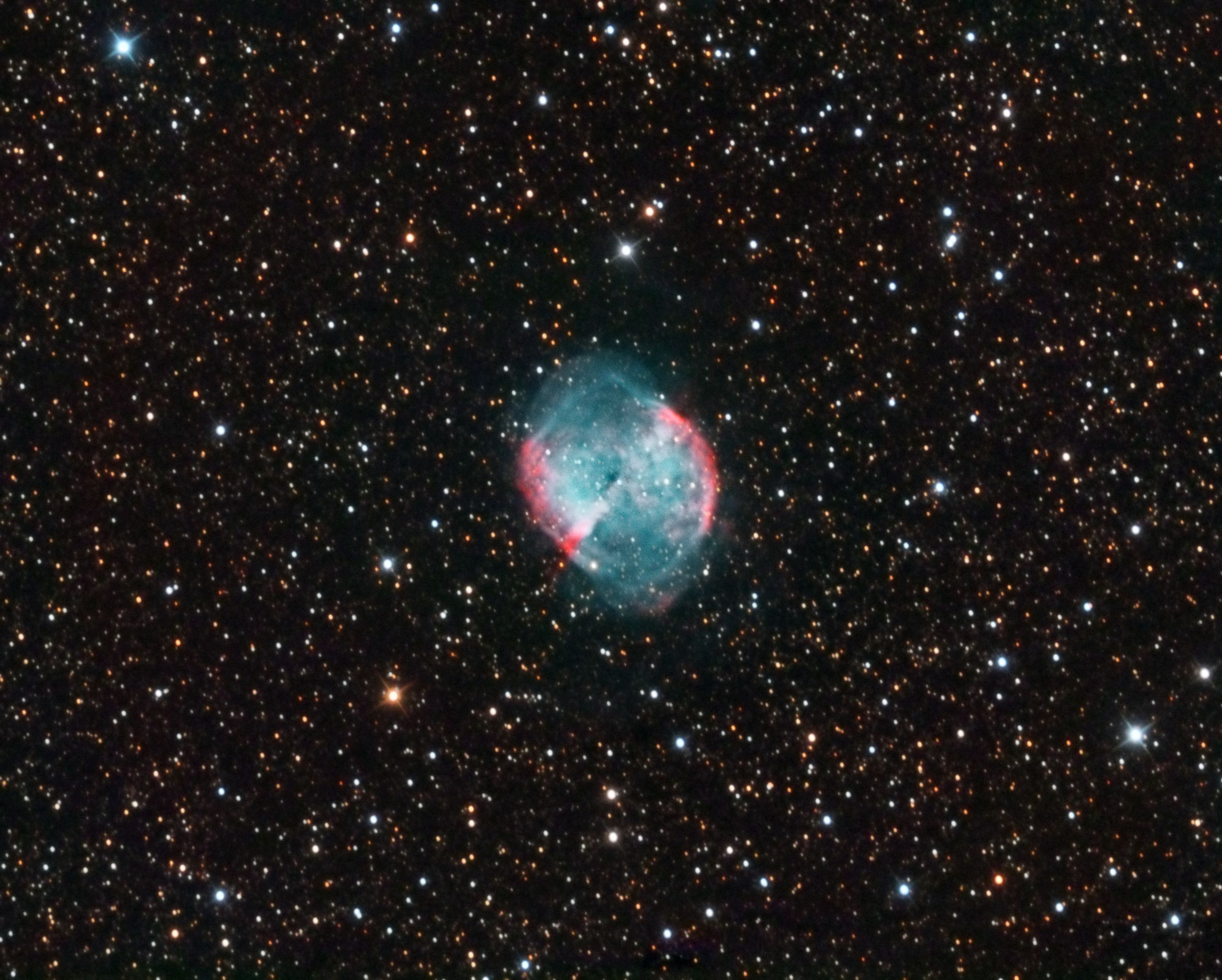
M27 - My First LRGB CCD Picture
M27 is known as The Dumbbell Nebula and is a planetary nebula in the constellation of Vulpecula - The Fox. It is located about 1250 light years away and represents the outer ejected gas envelope of a dying star.
This is the first image I took with my CCD camera - Atik460 - on the 28th October 2013. This is a lovely object in the summer and early autumn skies and is very pleasing visually in a pair of binoculars or a telescope. Its brightness and vivid colour make it a perennial favourite object for astro imagers.
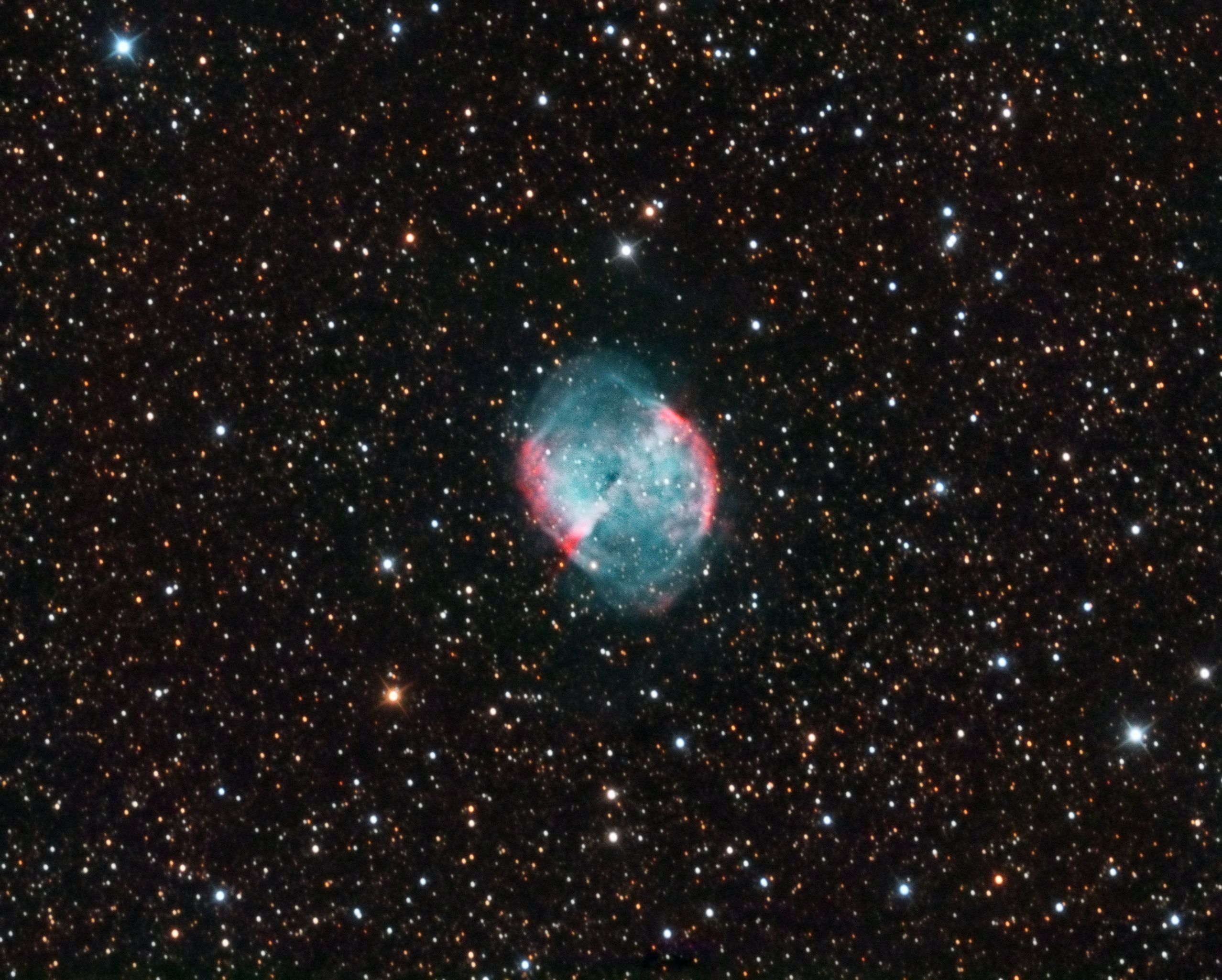
Image Technical Data
This is a small dataset taken with my superb Skywatcher ED80 Black Diamond refractor and Atik 460 CCD camera with Baader LRGB filters on an NEQ6 mount, guided with a Skywatcher guidescope and QHY5 (I still have and use this guide setup). This is a superb imaging setup and despite its modest cost is capable of great results. I upgraded the ED80 to a Takahashi FSQ85 and sold the ED80. Be assured though, the super ED80 is capable of 90% of what the FDSQ can do at 10% of the cost. I kind of regret selling that ED80 now.
Luminance 8 x 300s 1x1; Red 6x 180s 1x1; Green 7 x 180s 1x1; Blue 7x 180s 1x1
Developed in PixInsight - first picture I ever developed with this software.
It looks quite nice for an early effort.
P.S. This excellent Atik 460 CCD camera and EFW2 filter wheel is still going strong after seven years of use (writing this in August 2020). I had to have a port repair on the EFW2's mini-USB port under Atik's fabulous customer service in 2019 but other than that no issues whatsoever with the camera or filter wheel. I have since upgraded the filters to Astrodon E series Gen2 LRGBHaOIII filters.
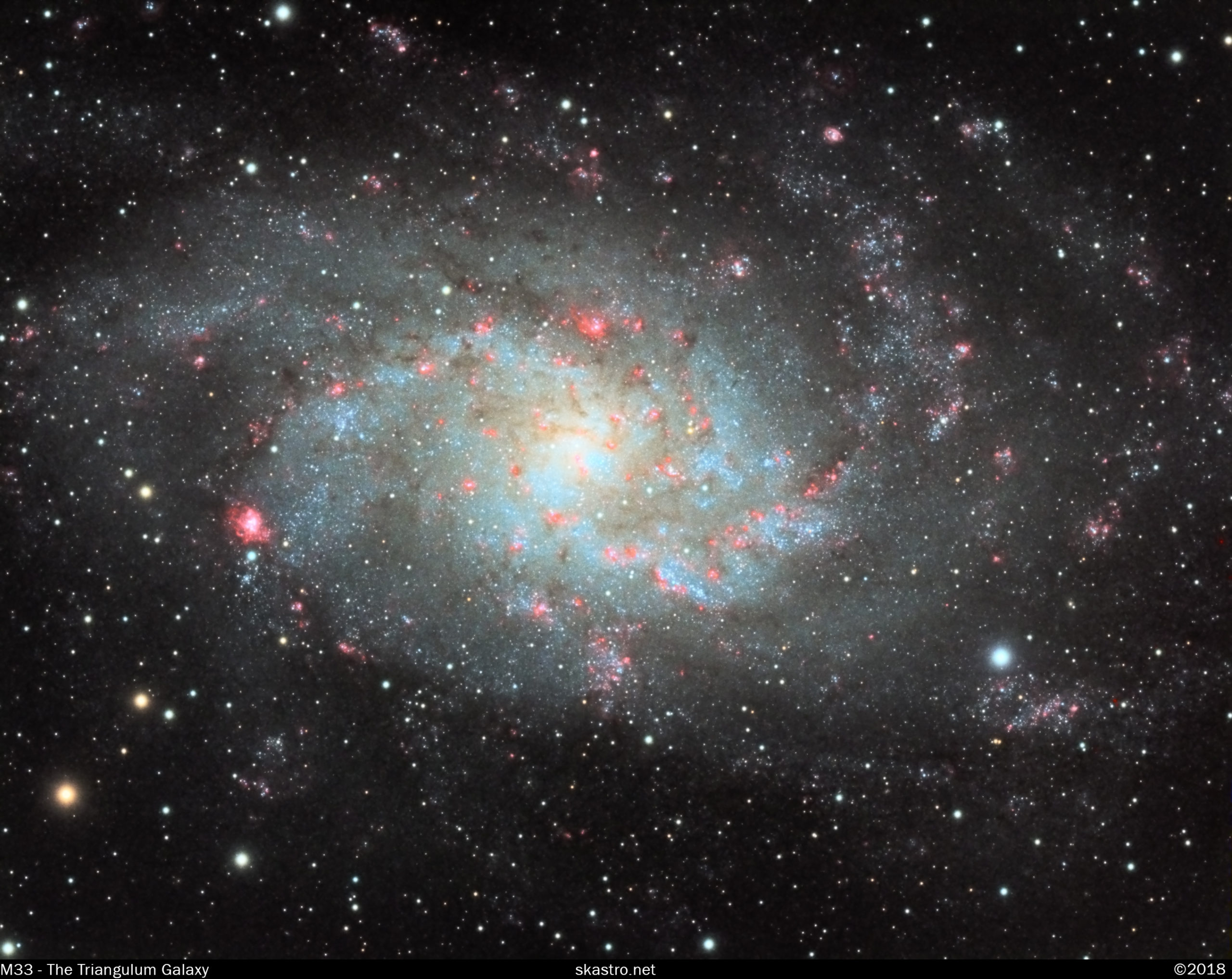
M33 With TEC140 Refractor
I have completed several images of the famous Triangulum Galaxy - M33, over the years. This is one of the most photographed objects in the sky and with good reason; it is a beautiful face on spiral galaxy that is the second closest major galaxy after Andromeda. It is bright and colourful and responds well to all types of imaging, whether with a DSLR or CCD, camera lens or telescope. It is probably the second "go to" target to photograph for astro photography beginners after the Andromeda galaxy.
The image below is a version captured with the TEC 140 refractor and Atik 460 CCD camera and is the total of about 12 hours of LRGBHa data captured from my backyard observatory in Nottingham, UK in 2018. You can see it fills the frame very nicely.


Image Technical Data
Image acquired spring 2018 and 2019 seasons over several capture sessions due to very wet and persistent cloudy weather) in my backyard in Nottingham, UK. It was acquired with TEC 140 refractor with Atik 460 CCD camera and Baader HaLRGB filters on my MESU 200 mount. Guiding was via off-axis guider.
A modest data set with everything binned 1x1 so as not to need so much luminance so a bit of an experiment! Did it work?
Luminance 10 x 300s 1×1; Red 9x 300s 1x1; Green 10x 300s 1×1; Blue 9x 300s 1x1; Ha 12 x 900s 1x1
Data processed with PixInsight and Photoshop and data collected with SGP Pro and guided with PHD2.
Here is another version of M33 with a wider field FSQ85 refractor:
https://thekirkshouse.com/m33-the-triangulum-galaxy/
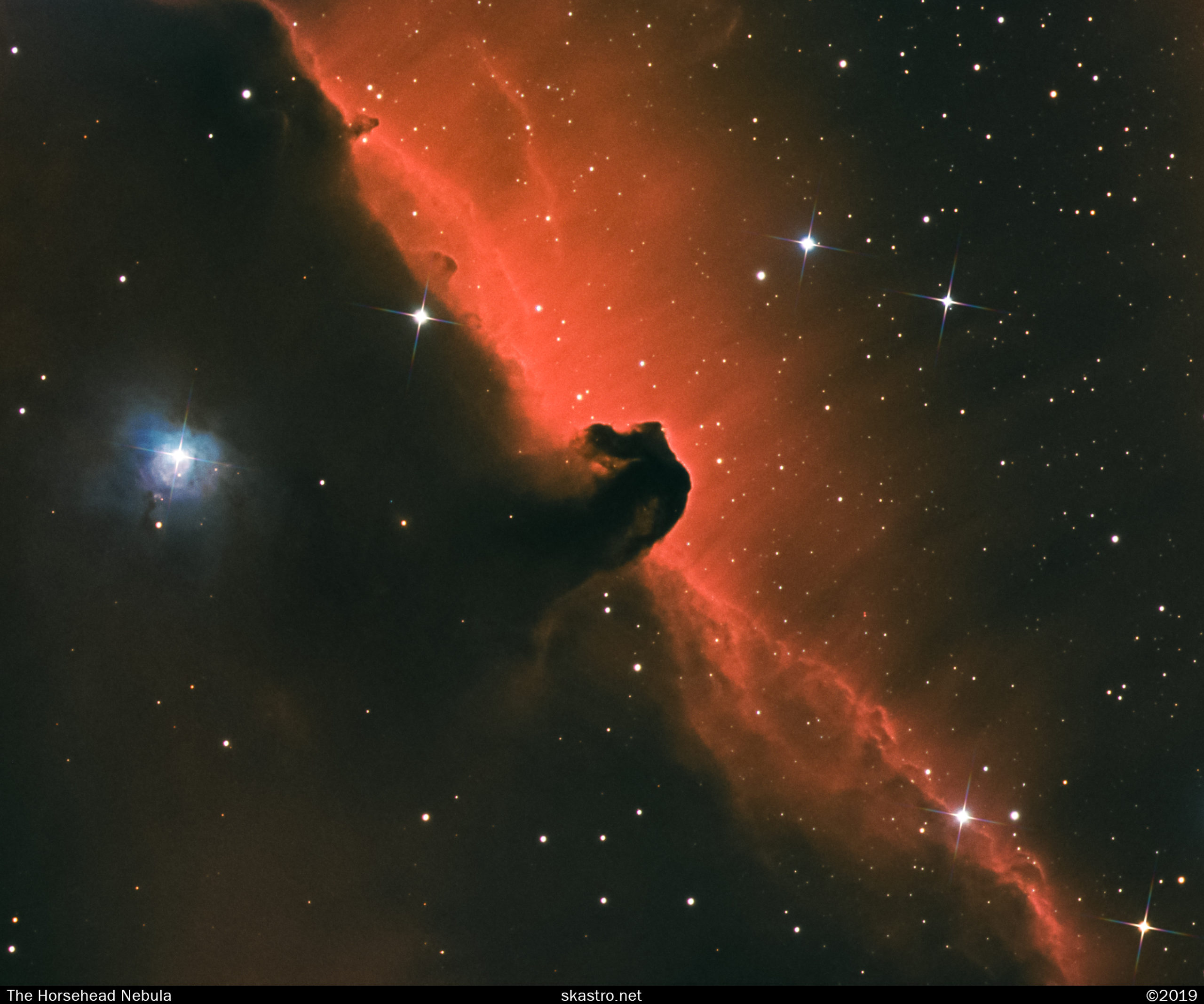
The Horse head Nebula

A famous, indeed iconic nebula in the constellation Orion, The Horsehead was not even discovered until 1888 with the advent of astro photography. It is very faint to see visually with a telescope.
The image above was captured with my TEC 140 refractor and Atik 460 CCD camera with Astrodon RGB and Ha(3nm) filters. It contains a total of 120 minutes of Ha data and 45 minutes each of RGB data, everything binned 1x1 with 5 minutes exposures.
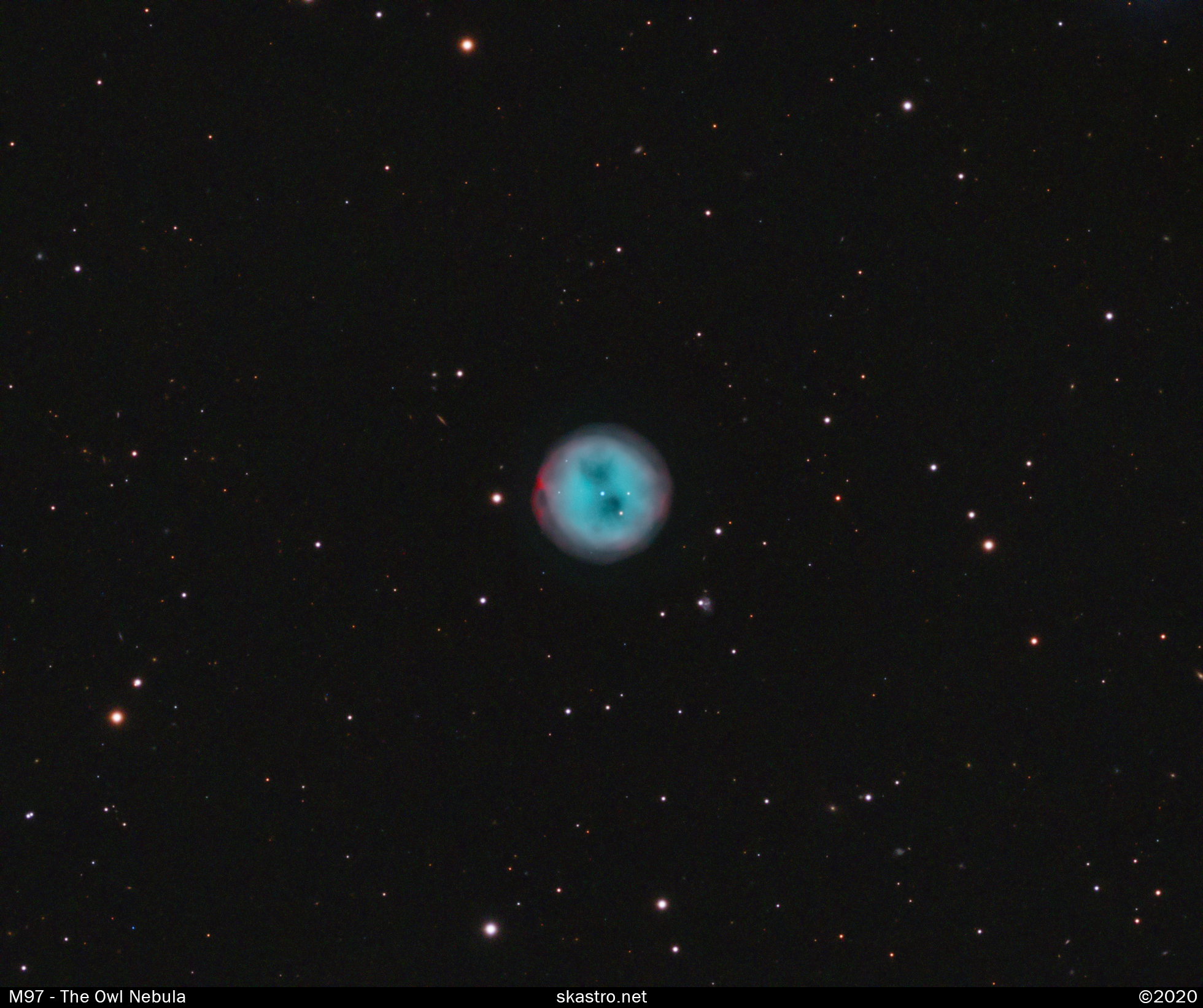
M97 - The Owl Nebula TEC 140
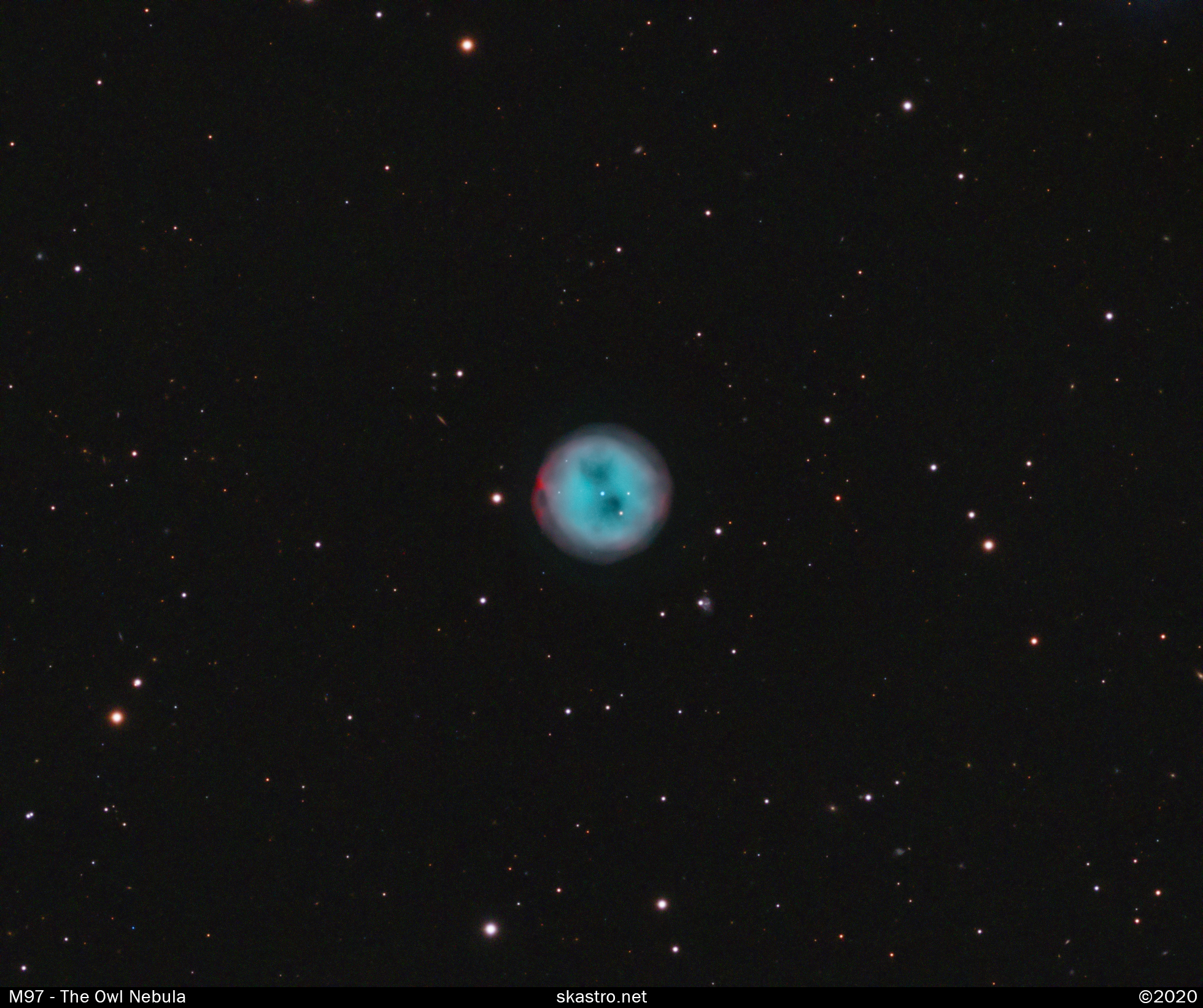
The Owl Nebula is a planetary nebula in the constellation of Ursa Major, one of three planetary nebulae in the Messier catalogue. It is visible as a faint smudge in amateur telescopes but the colours are not evident visually. It is called The Owl Nebula because of the resemblance to the face of an owl. 6 hours and 30 minutes of LRGB in this image
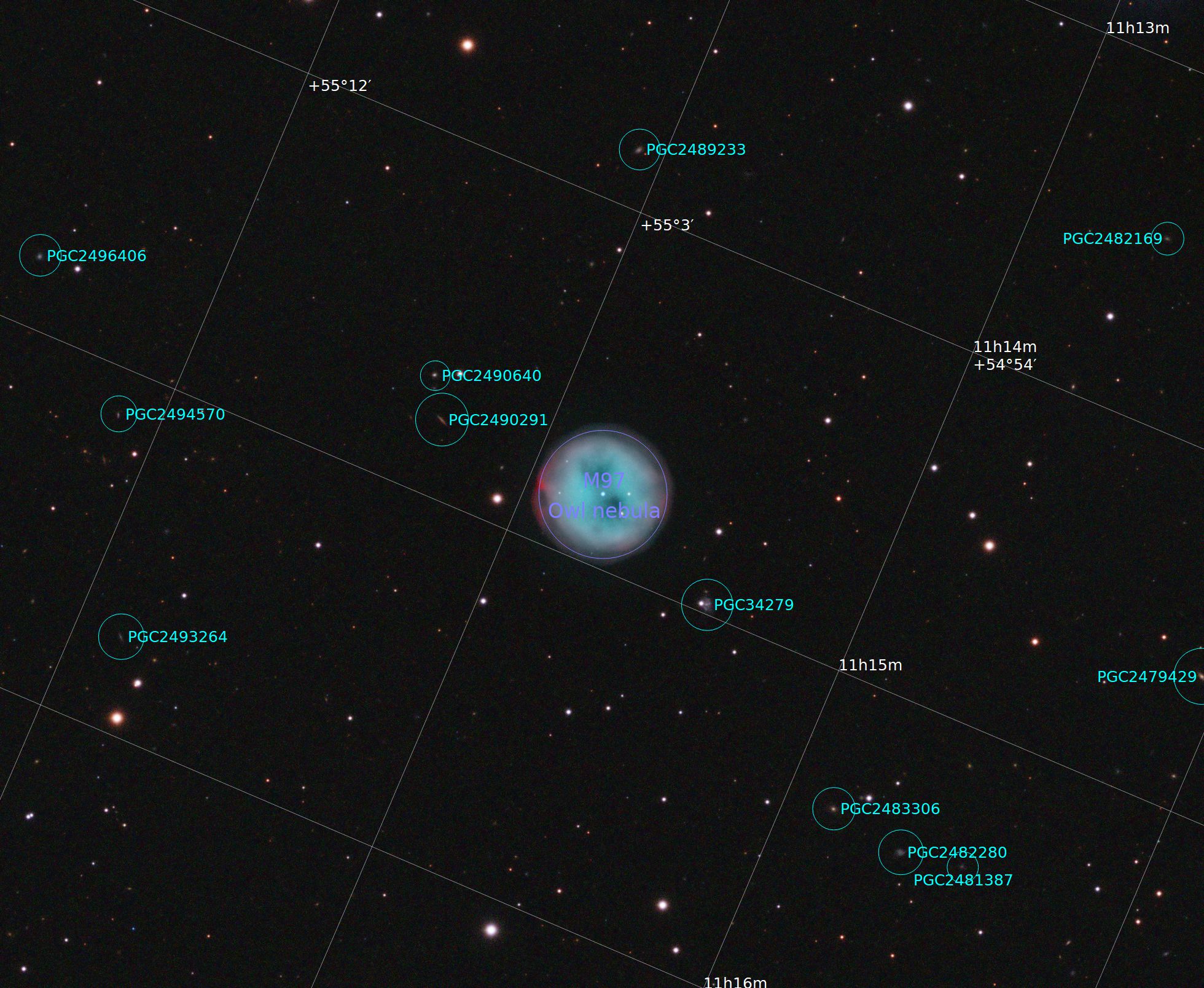
The annotated version above shows many distant galaxies in the same field of view as M97, although obviously these are very much more distant.
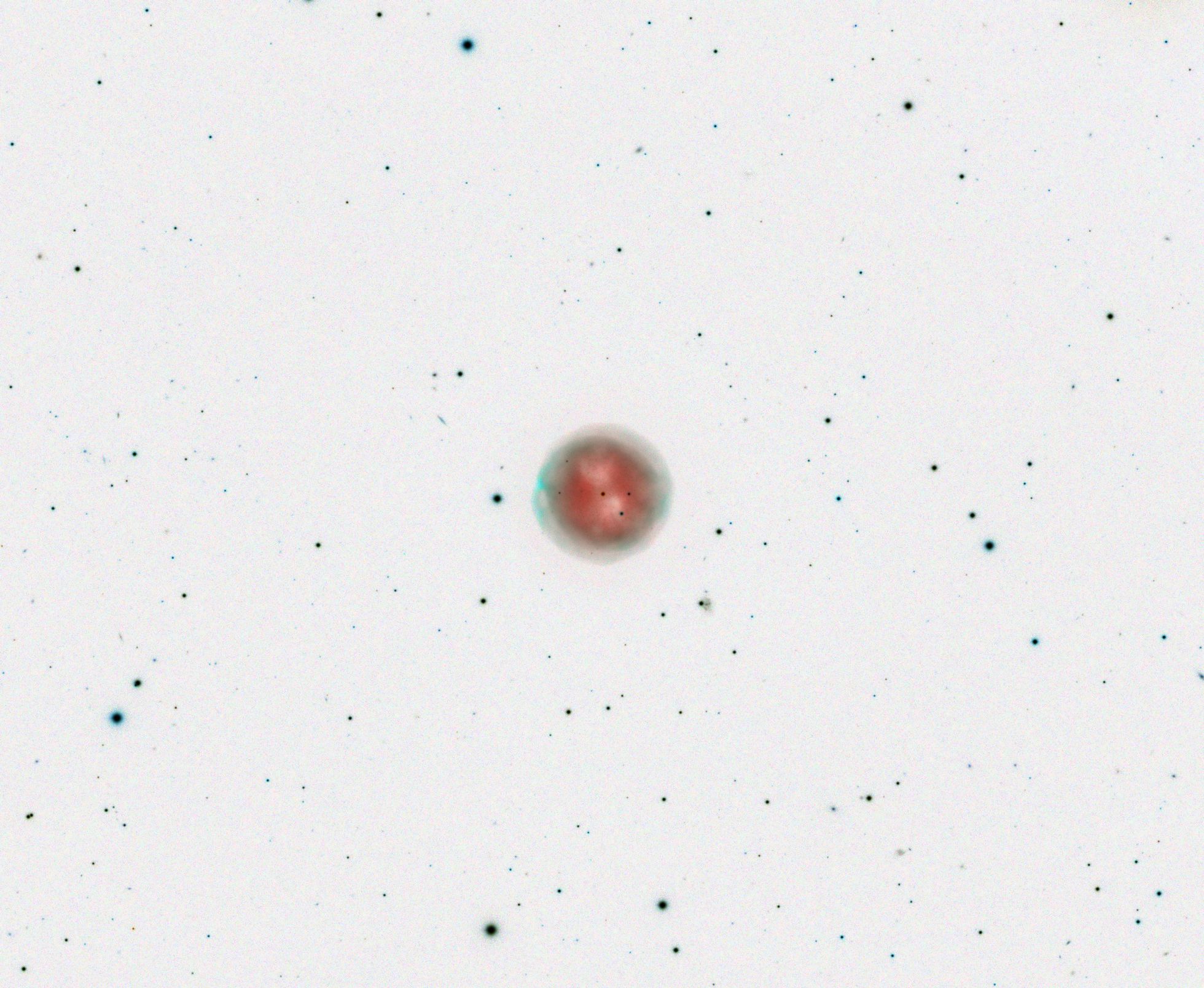
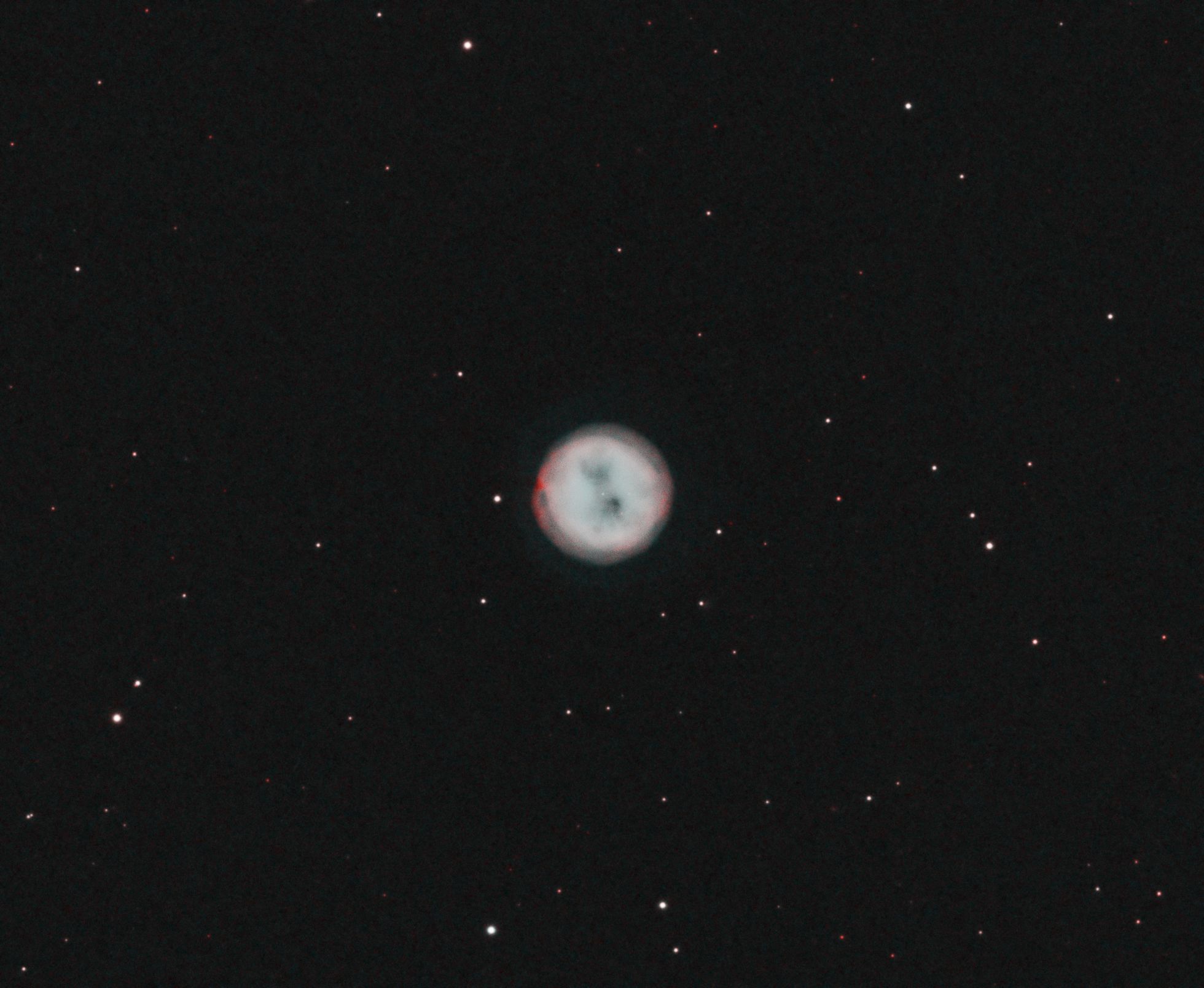
The HOO version above shows the Owl Nebula with Hydrogen Alpha mapped as Red channel and OIII mapped to Green and Blue to create the HOO palette colours. 3 hours and 30 minutes of HaOIII. This HOO image could really do with more data added to it in the Ha and OIII channels and I hope to do this next spring hopefully.
Image Technical Data
This image was captured with TEC 140 refractor and Atik 460 CCD with Astrodon LRGBHaOIII (3nm) filters during Spring 2020 (during the coronavirus lockdown in the UK) from my backyard in Nottingham. Mount is my MESU 200 guided with OAG. There is a quite a lot of data in these images as follows. Everything binned 1x1:
Lum 20 x 600s; Red 13 x 30s; Green 12 x 300s; Blue 13 x 300s; Ha 12 x 600s; OIII 9 x 600s
M97 - The Owl Nebula TEC 140
The Owl Nebula is a planetary nebula in the constellation of Ursa Major, one of three planetary nebulae in the Messier catalogue. It is visible as a faint smudge in amateur telescopes but the colours are not evident visually. It is called The Owl Nebula because of the resemblance to the face of an owl. 6 hours and 30 minutes of LRGB in this image
The annotated version above shows many distant galaxies in the same field of view as M97, although obviously these are very much more distant.
The HOO version above shows the Owl Nebula with Hydrogen Alpha mapped as Red channel and OIII mapped to Green and Blue to create the HOO palette colours. 3 hours and 30 minutes of HaOIII. This HOO image could really do with more data added to it in the Ha and OIII channels and I hope to do this next spring hopefully.
Image Technical Data
This image was captured with TEC 140 refractor and Atik 460 CCD with Astrodon LRGBHaOIII (3nm) filters during Spring 2020 (during the coronavirus lockdown in the UK) from my backyard in Nottingham. Mount is my MESU 200 guided with OAG. There is a quite a lot of data in these images as follows. Everything binned 1x1:
Lum 20 x 600s; Red 13 x 30s; Green 12 x 300s; Blue 13 x 300s; Ha 12 x 600s; OIII 9 x 600s
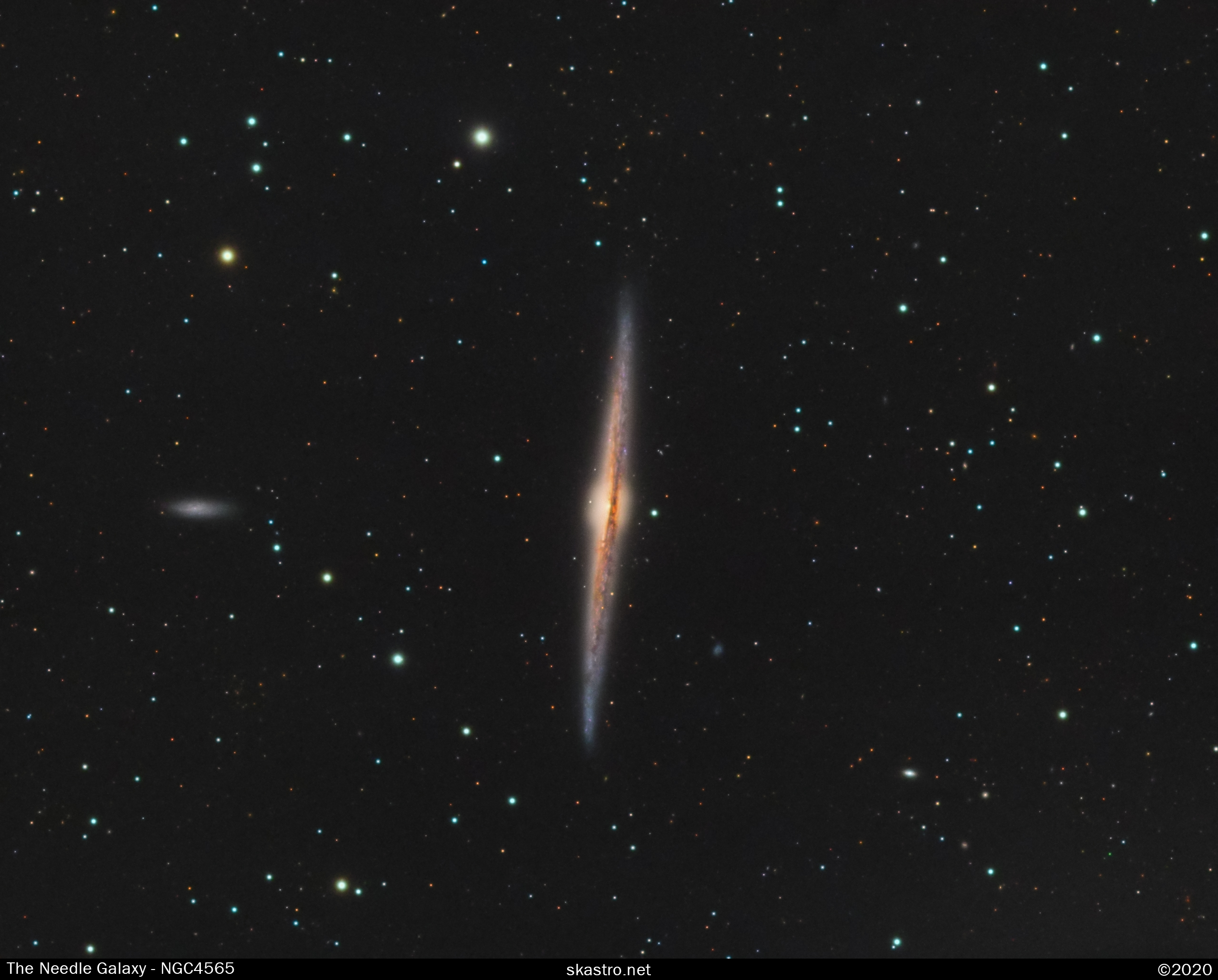
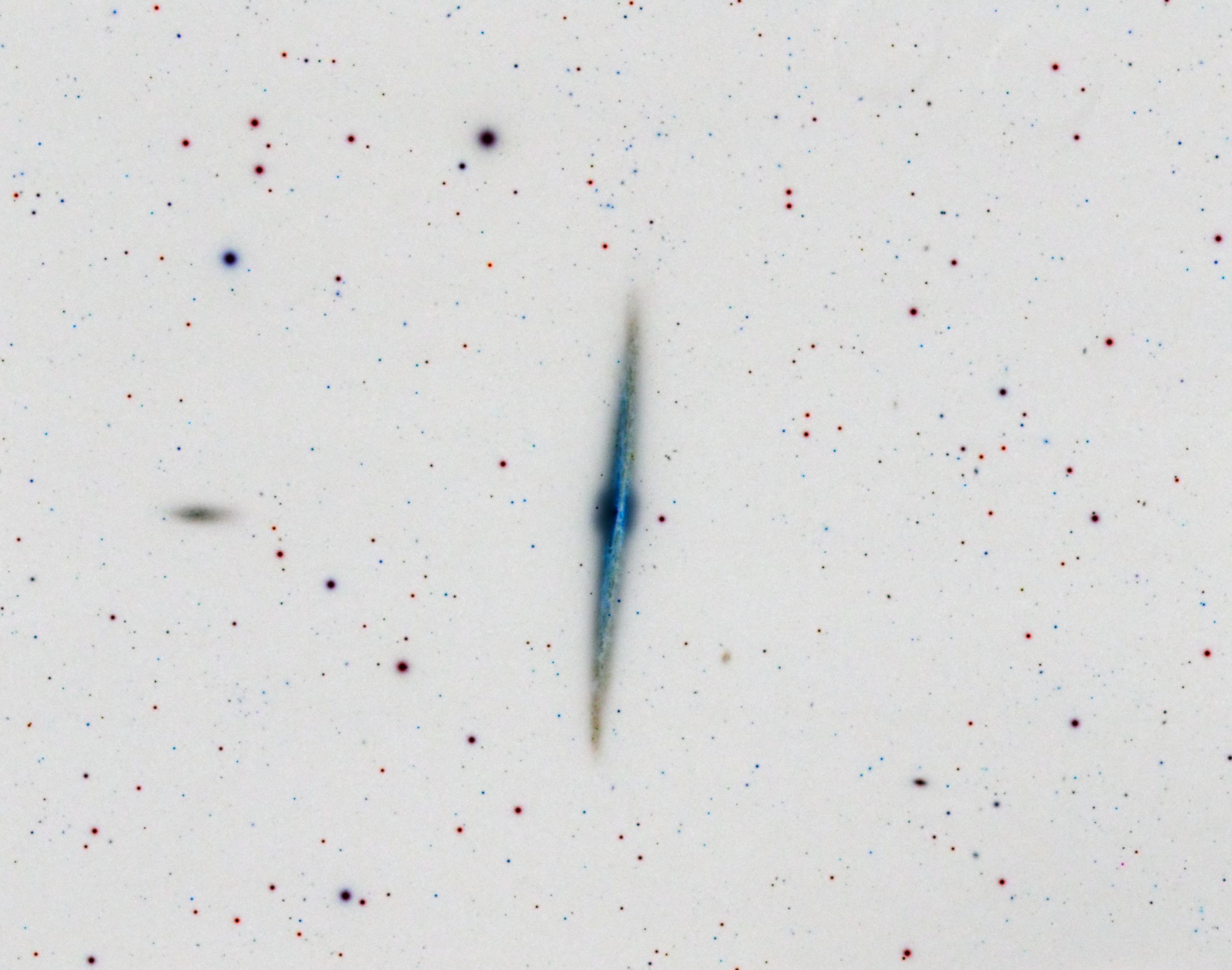
NGC4565 - The Needle Galaxy TEC 140
Located in the constellation of Coma Berenices, The Needle Galaxy is an almost edge on galaxy about 40 million light years away. Much detail can be seen in the dusty lanes of the edge-on spiral arms.
This picture is a two year project, off and on. I acquired the luminance data in May 2019 with a view to completing the image then. However, cloudy weather then plagued the UK for weeks, and when it eventually cleared the object had vanished behind neighbouring roofs! So I had to park this image and wait a year to collect the RGB colour data in April 2020 (whilst my country [UK] was in lockdown due to the coronavirus).
Data used to build the image collected with TEC140 refractor and Atik460 CCD camera with Astrodon LRGB Gen 2 E-series filters. I used Off-Axis guiding on my Mesu 200 mount.
Data set is 20 x ten minute luminance (1x1) and 60 minutes each in R, G and B (2x2). Processed in PixInsight and Photoshop.
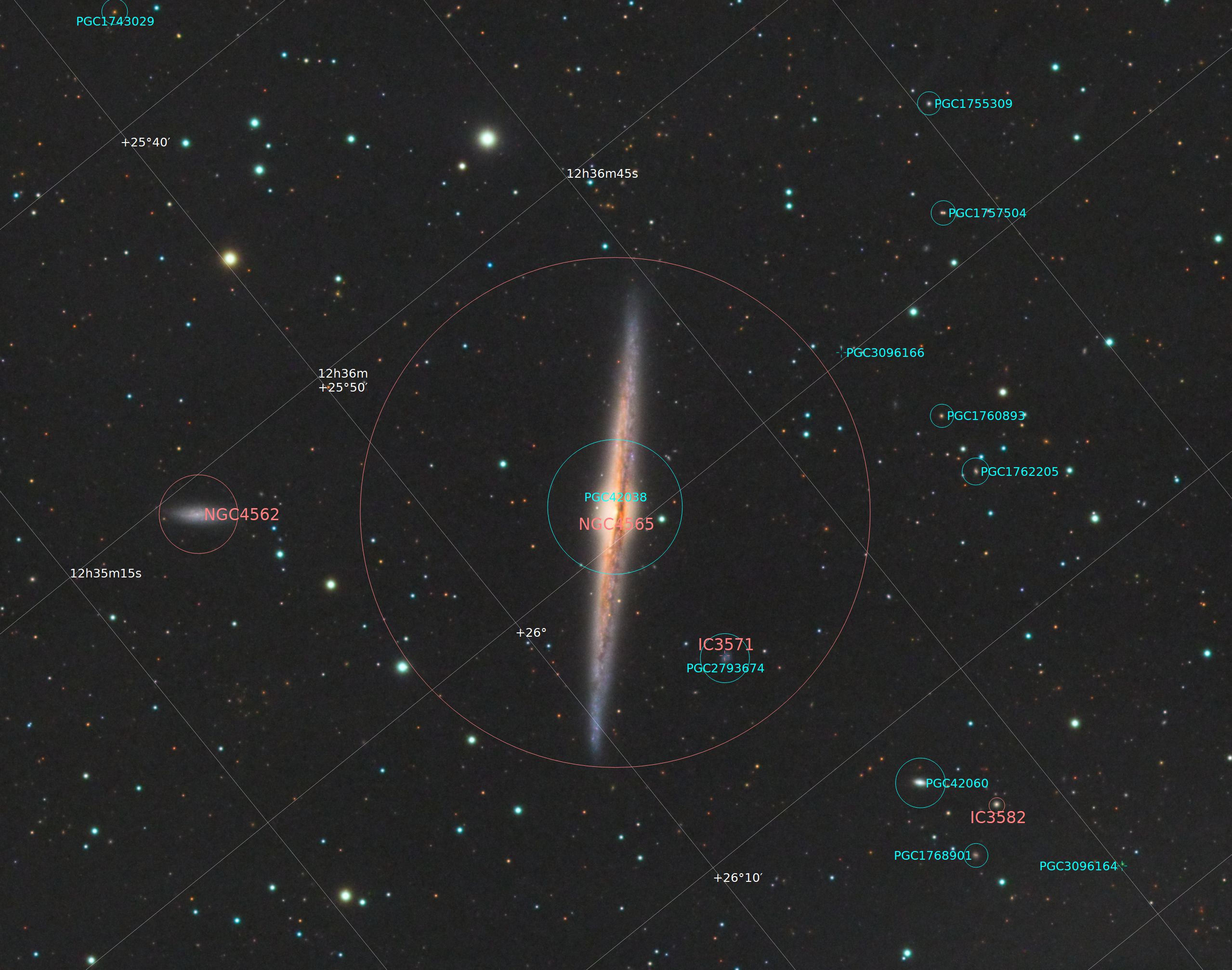
Lots of very faint background galaxies visible the image above and detailed in the annotated version below.
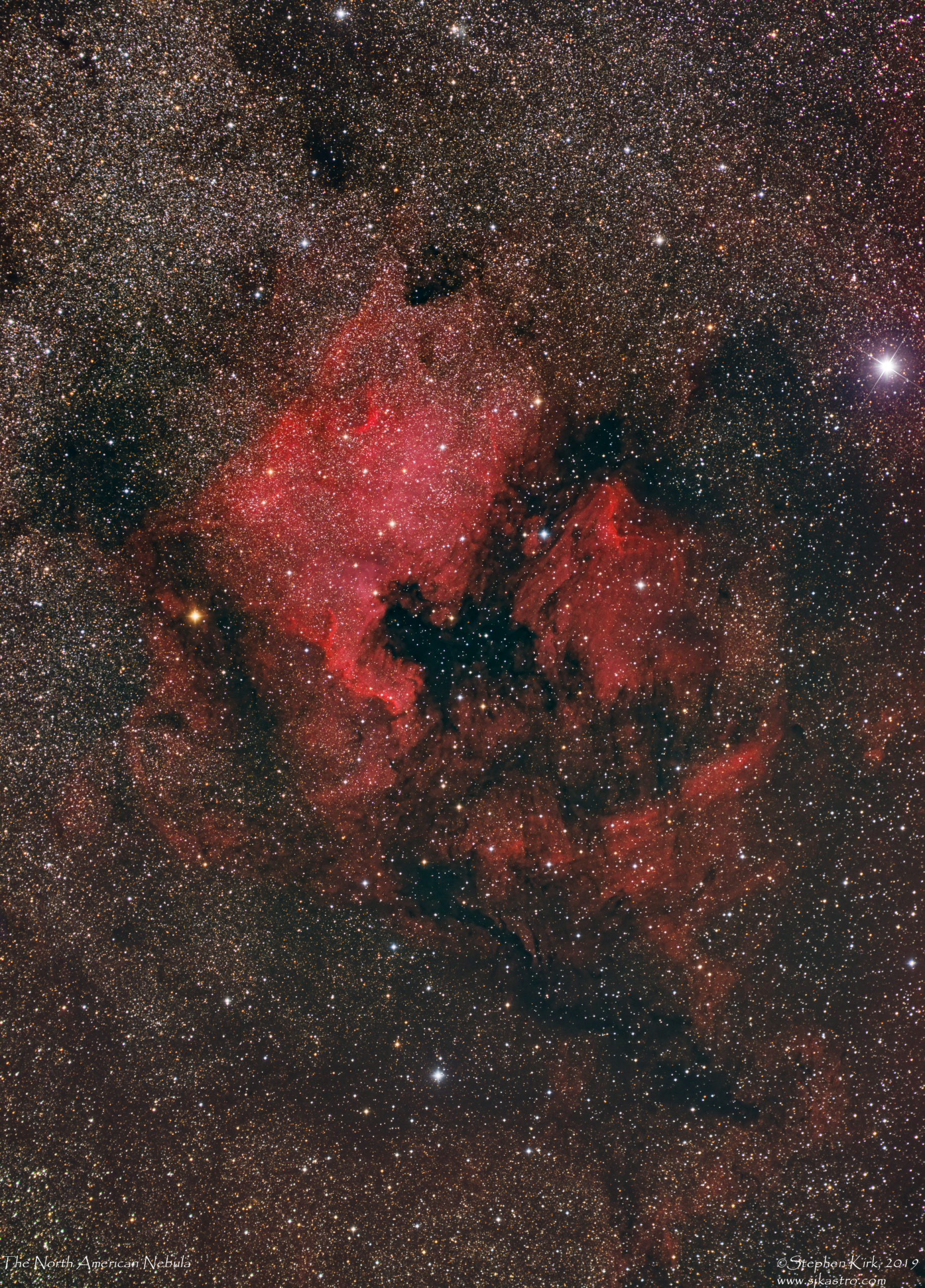
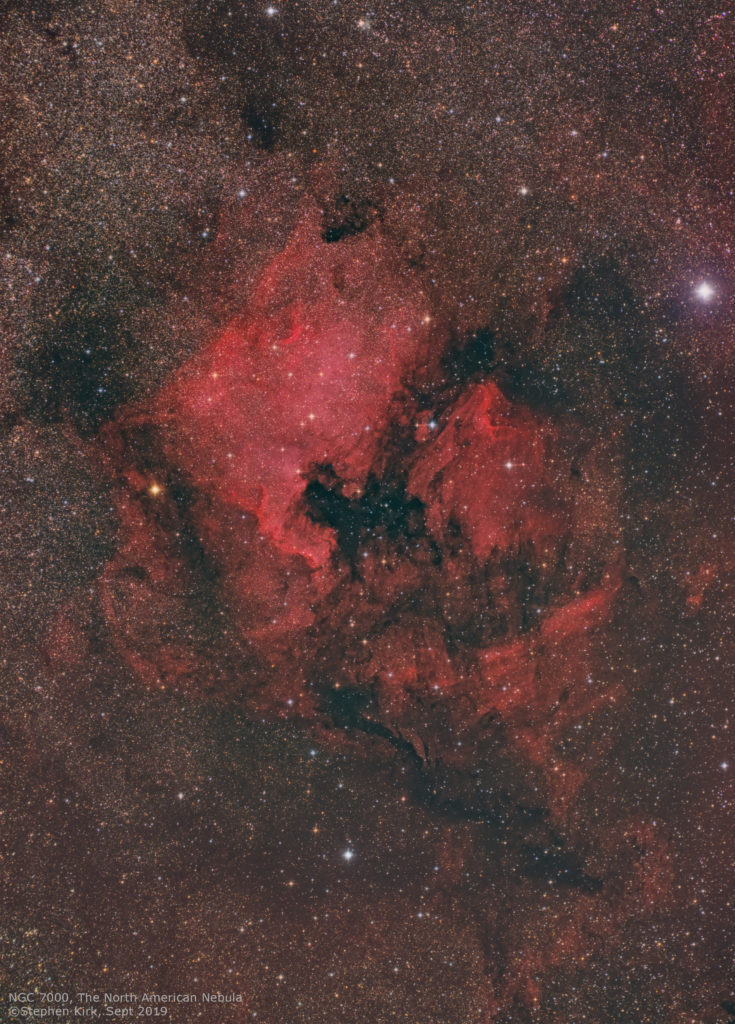
The North American Nebula with Samyang 135mm

Above is 120 minutes worth of Hydrogen Alpha data captured in five minute exposures with an Astrodon Ha 3nm filter and a Samyang 135mm camera lens on a Moravian Instruments G2-8300 CCD camera.

I then captured one hour in each of the Astrodon R,G and B filters with the same rig as detailed for the Ha image, again in five minute exposures. However, use of the superb Astrodon E series RGB filters produce a nice image and the colours are brought out quite nicely although it lacks a bit of punch and vibrancy.
The bright star to the right is Deneb.

In Photoshop I broke out the red channel and then blended it as a 50:50 mix with the Ha image (at the top of this page) before recombining back into RGB. I also saved a copy of this HaR constituent and then used that as a luminance layer to really make the image pop. I then used a series of high pass filters to reveal finer structures in the image.