
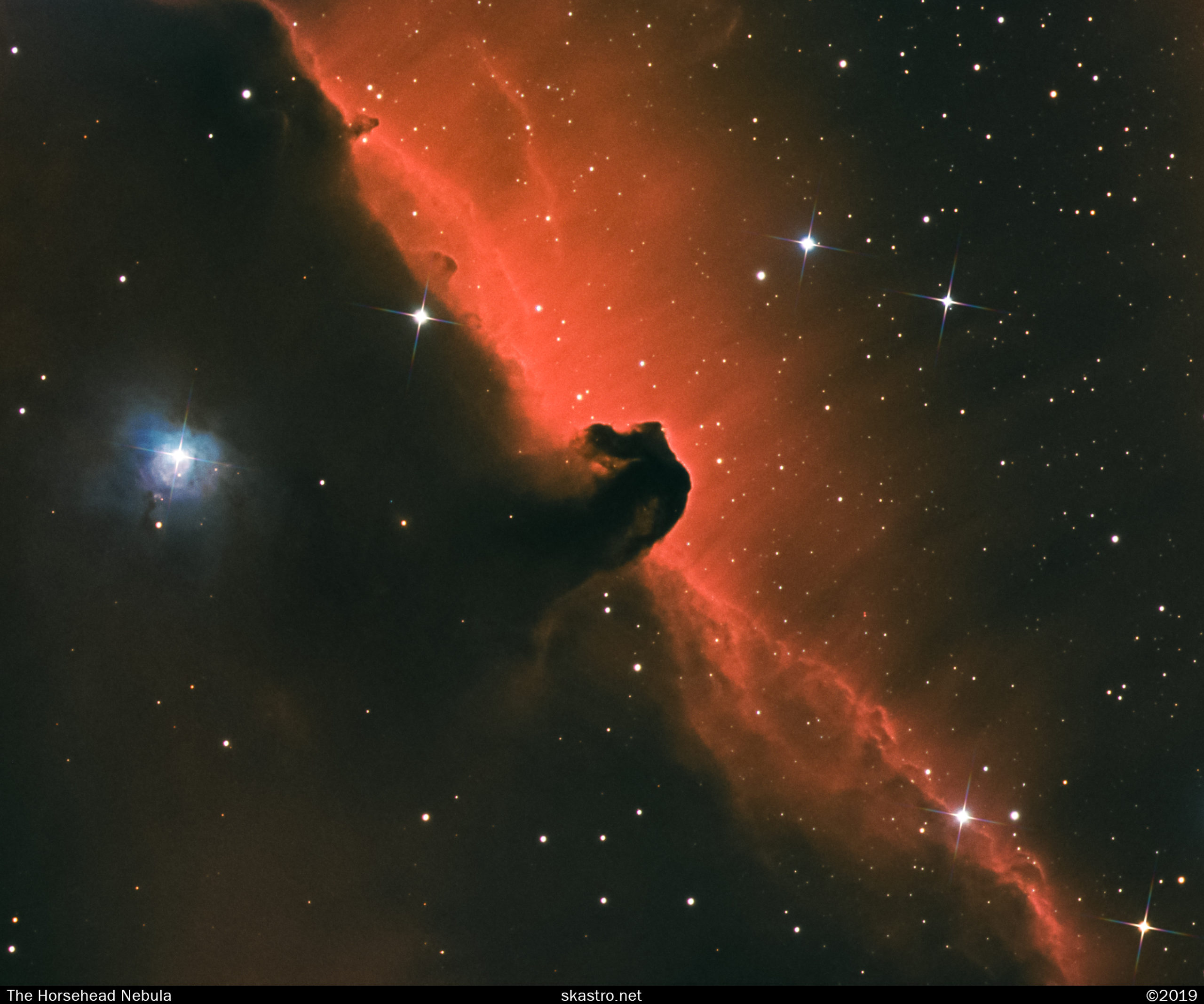
The Horse head Nebula

A famous, indeed iconic nebula in the constellation Orion, The Horsehead was not even discovered until 1888 with the advent of astro photography. It is very faint to see visually with a telescope.
The image above was captured with my TEC 140 refractor and Atik 460 CCD camera with Astrodon RGB and Ha(3nm) filters. It contains a total of 120 minutes of Ha data and 45 minutes each of RGB data, everything binned 1x1 with 5 minutes exposures.

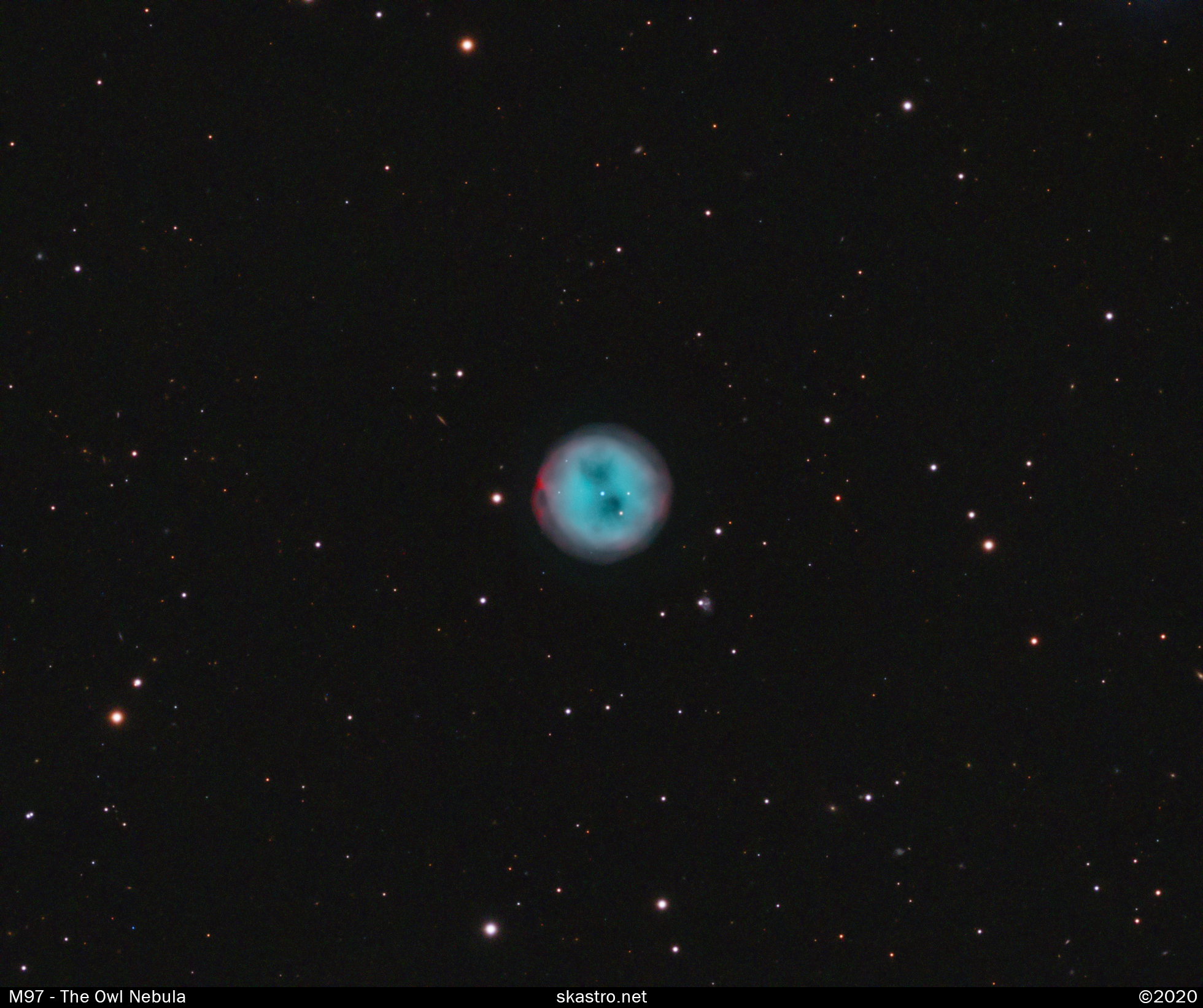
M97 - The Owl Nebula TEC 140
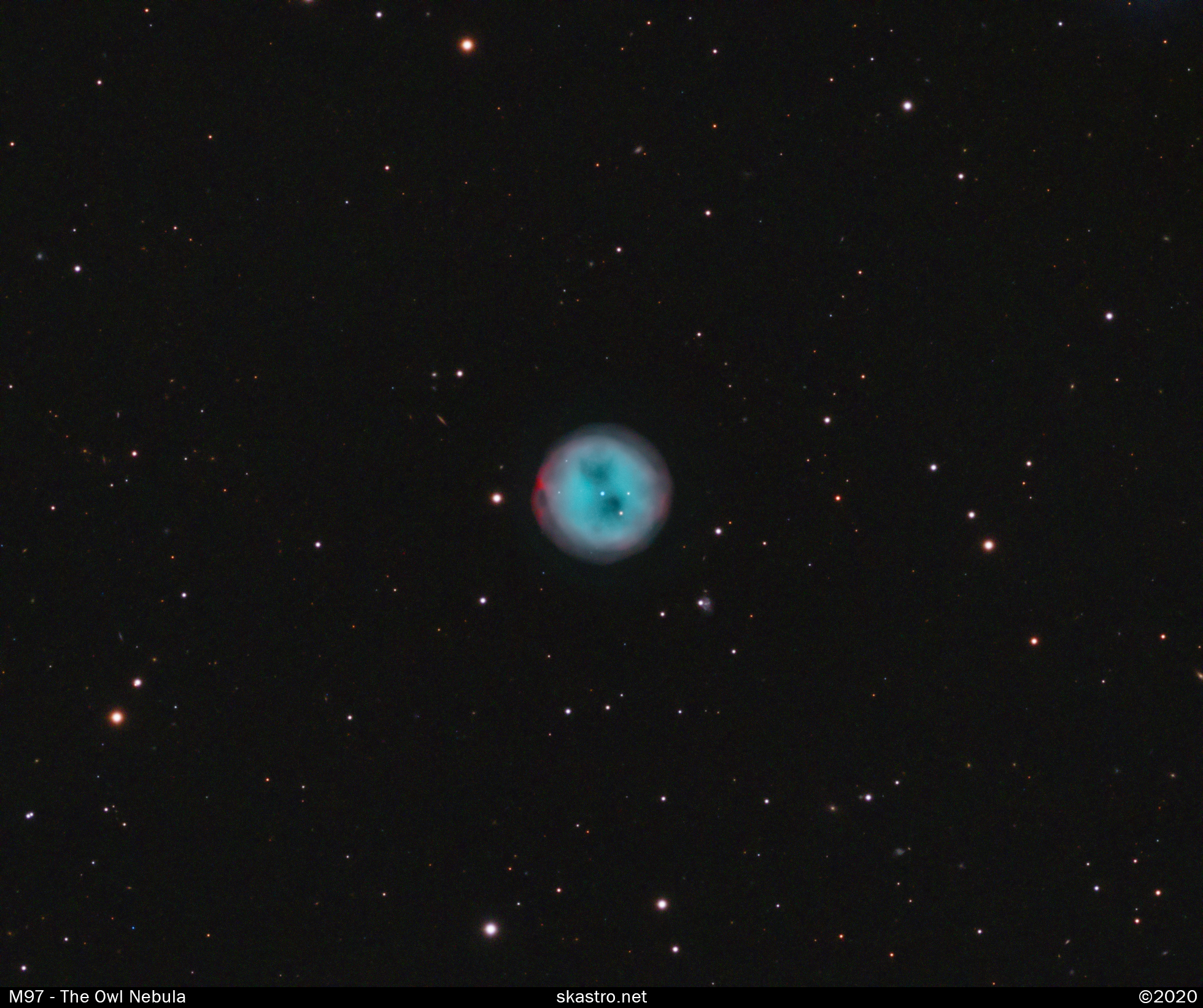
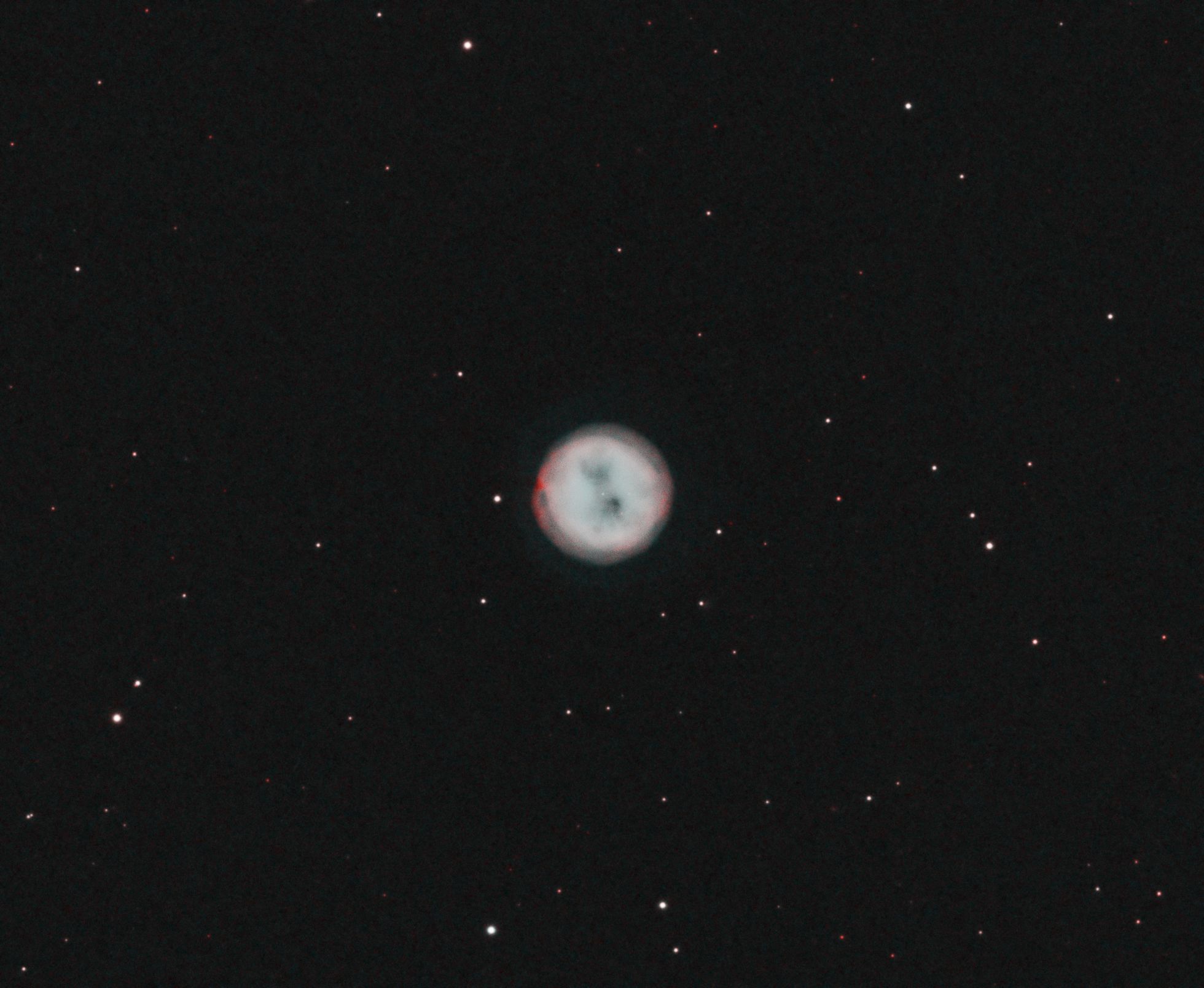
The Owl Nebula is a planetary nebula in the constellation of Ursa Major, one of three planetary nebulae in the Messier catalogue. It is visible as a faint smudge in amateur telescopes but the colours are not evident visually. It is called The Owl Nebula because of the resemblance to the face of an owl. 6 hours and 30 minutes of LRGB in this image
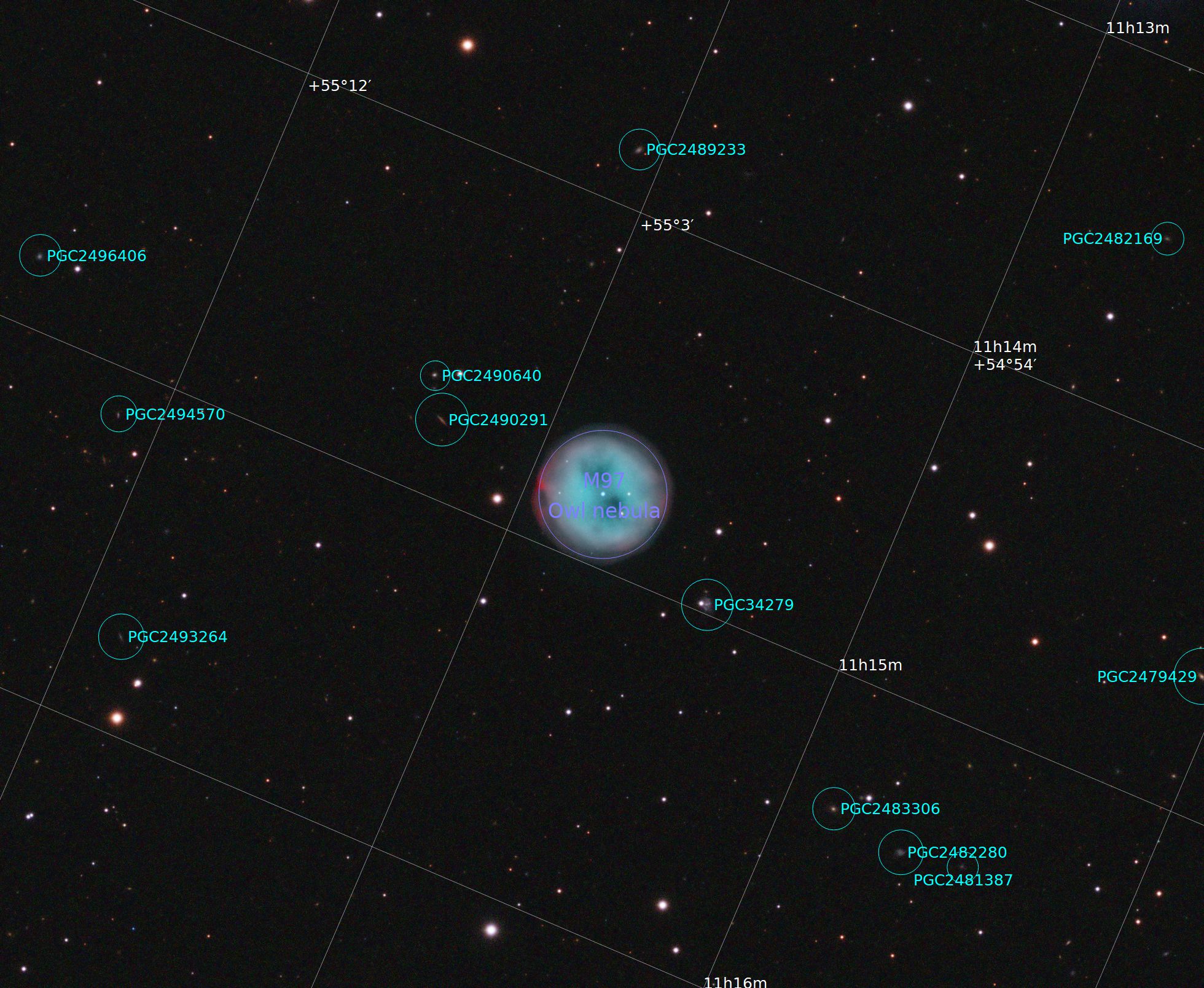
The annotated version above shows many distant galaxies in the same field of view as M97, although obviously these are very much more distant.
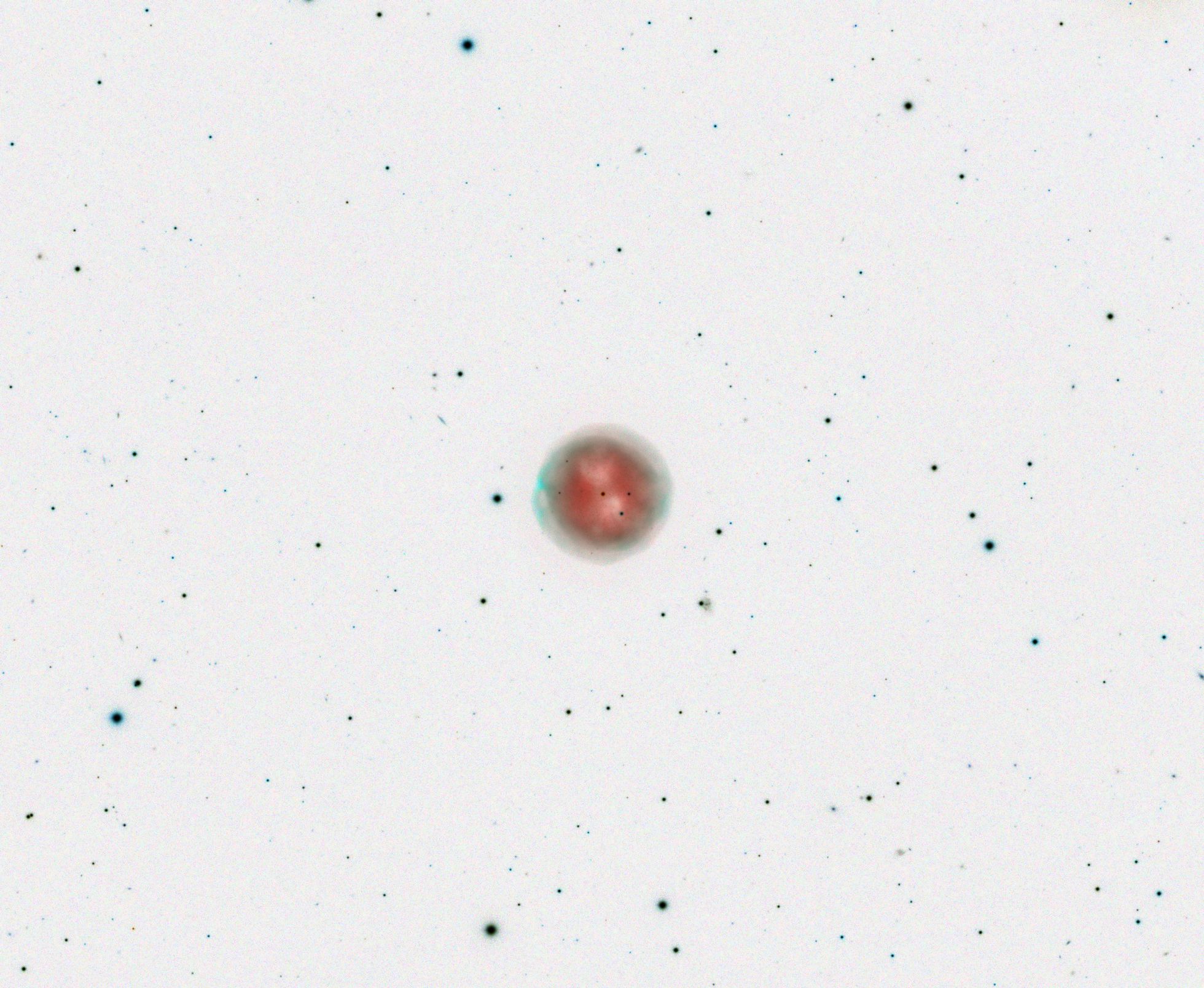
The HOO version above shows the Owl Nebula with Hydrogen Alpha mapped as Red channel and OIII mapped to Green and Blue to create the HOO palette colours. 3 hours and 30 minutes of HaOIII. This HOO image could really do with more data added to it in the Ha and OIII channels and I hope to do this next spring hopefully.
Image Technical Data
This image was captured with TEC 140 refractor and Atik 460 CCD with Astrodon LRGBHaOIII (3nm) filters during Spring 2020 (during the coronavirus lockdown in the UK) from my backyard in Nottingham. Mount is my MESU 200 guided with OAG. There is a quite a lot of data in these images as follows. Everything binned 1x1:
Lum 20 x 600s; Red 13 x 30s; Green 12 x 300s; Blue 13 x 300s; Ha 12 x 600s; OIII 9 x 600s
M97 - The Owl Nebula TEC 140
The Owl Nebula is a planetary nebula in the constellation of Ursa Major, one of three planetary nebulae in the Messier catalogue. It is visible as a faint smudge in amateur telescopes but the colours are not evident visually. It is called The Owl Nebula because of the resemblance to the face of an owl. 6 hours and 30 minutes of LRGB in this image
The annotated version above shows many distant galaxies in the same field of view as M97, although obviously these are very much more distant.
The HOO version above shows the Owl Nebula with Hydrogen Alpha mapped as Red channel and OIII mapped to Green and Blue to create the HOO palette colours. 3 hours and 30 minutes of HaOIII. This HOO image could really do with more data added to it in the Ha and OIII channels and I hope to do this next spring hopefully.
Image Technical Data
This image was captured with TEC 140 refractor and Atik 460 CCD with Astrodon LRGBHaOIII (3nm) filters during Spring 2020 (during the coronavirus lockdown in the UK) from my backyard in Nottingham. Mount is my MESU 200 guided with OAG. There is a quite a lot of data in these images as follows. Everything binned 1x1:
Lum 20 x 600s; Red 13 x 30s; Green 12 x 300s; Blue 13 x 300s; Ha 12 x 600s; OIII 9 x 600s