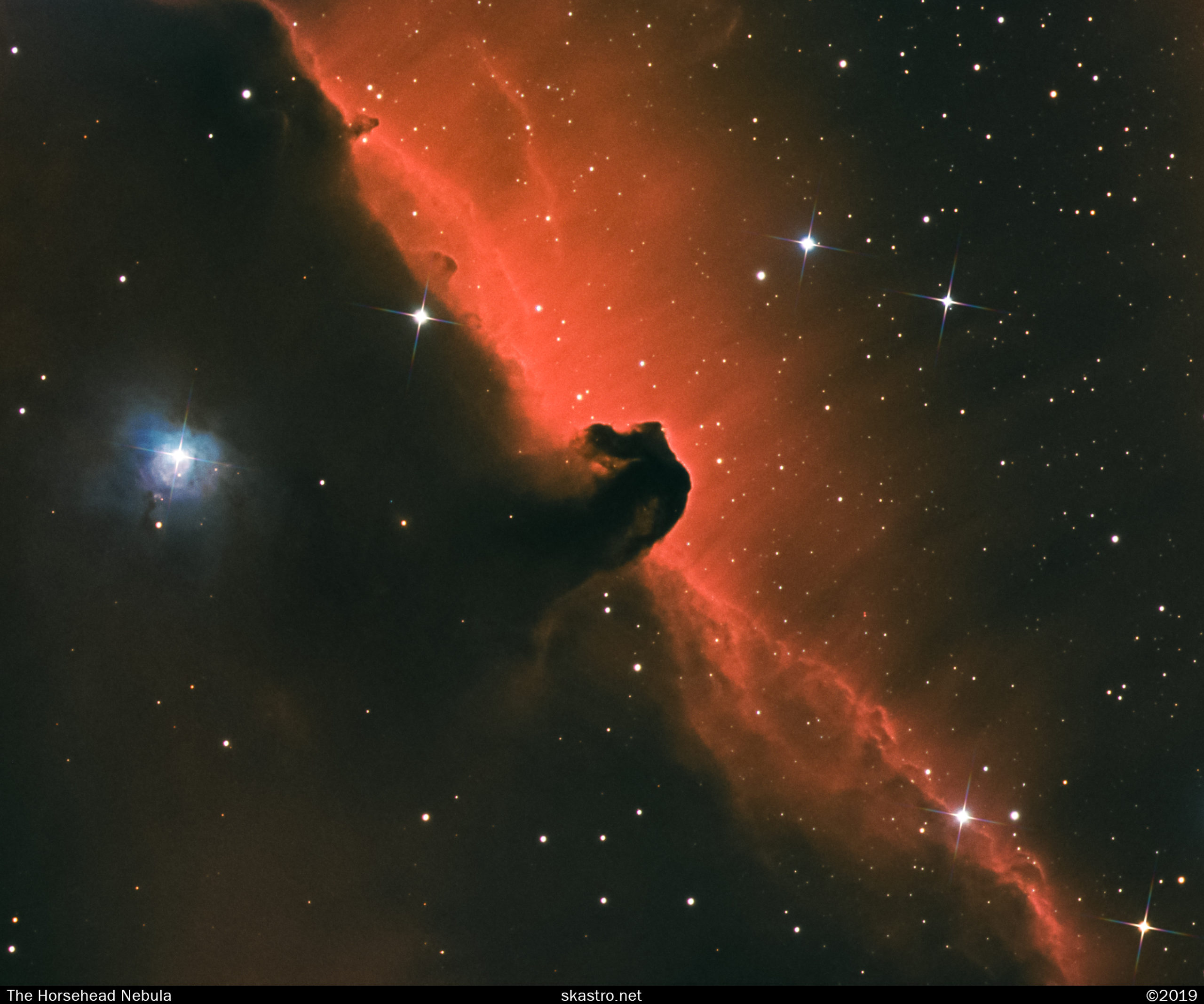
The Horse head Nebula

A famous, indeed iconic nebula in the constellation Orion, The Horsehead was not even discovered until 1888 with the advent of astro photography. It is very faint to see visually with a telescope.
The image above was captured with my TEC 140 refractor and Atik 460 CCD camera with Astrodon RGB and Ha(3nm) filters. It contains a total of 120 minutes of Ha data and 45 minutes each of RGB data, everything binned 1x1 with 5 minutes exposures.

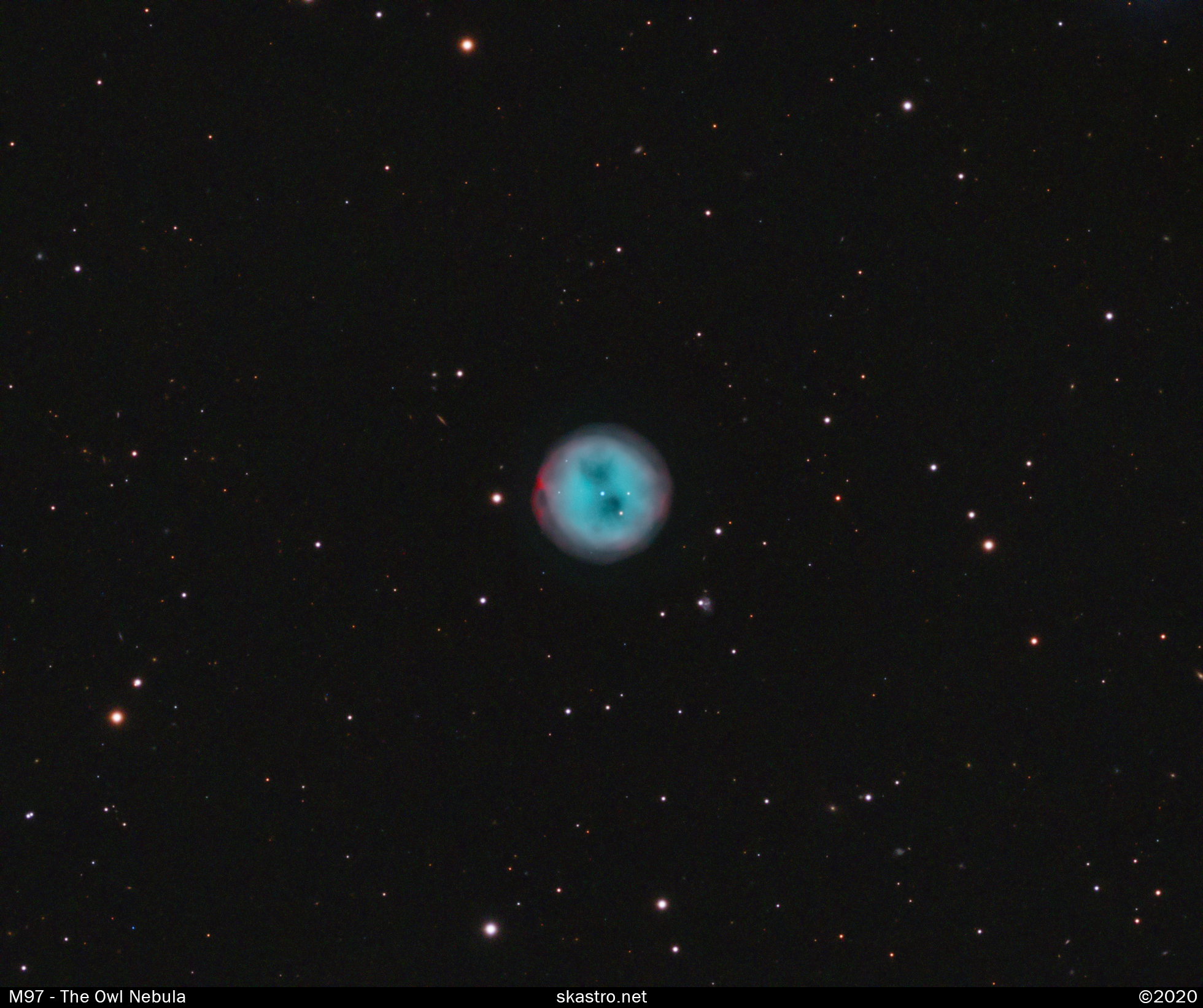
M97 - The Owl Nebula TEC 140
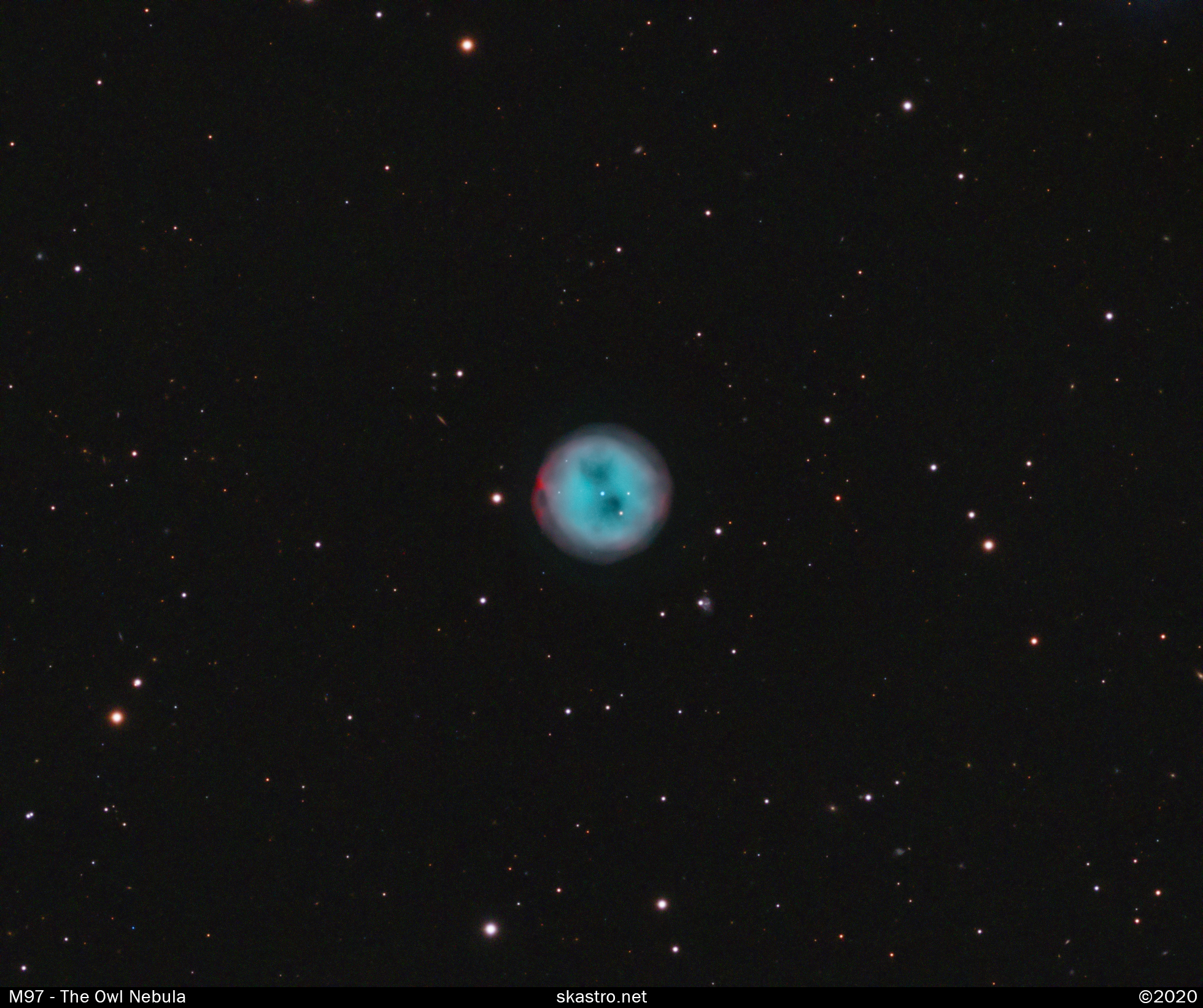
The Owl Nebula is a planetary nebula in the constellation of Ursa Major, one of three planetary nebulae in the Messier catalogue. It is visible as a faint smudge in amateur telescopes but the colours are not evident visually. It is called The Owl Nebula because of the resemblance to the face of an owl. 6 hours and 30 minutes of LRGB in this image
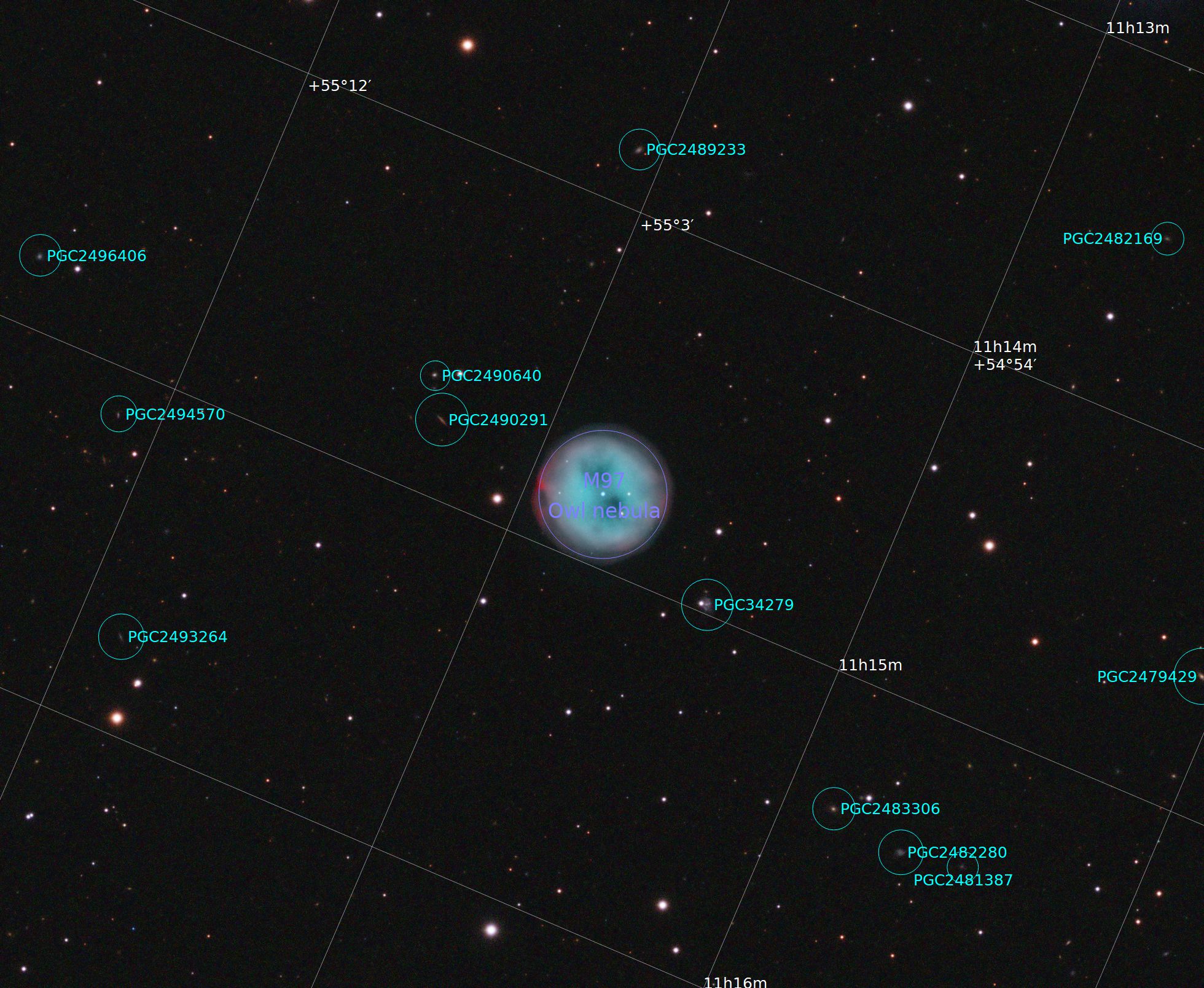
The annotated version above shows many distant galaxies in the same field of view as M97, although obviously these are very much more distant.
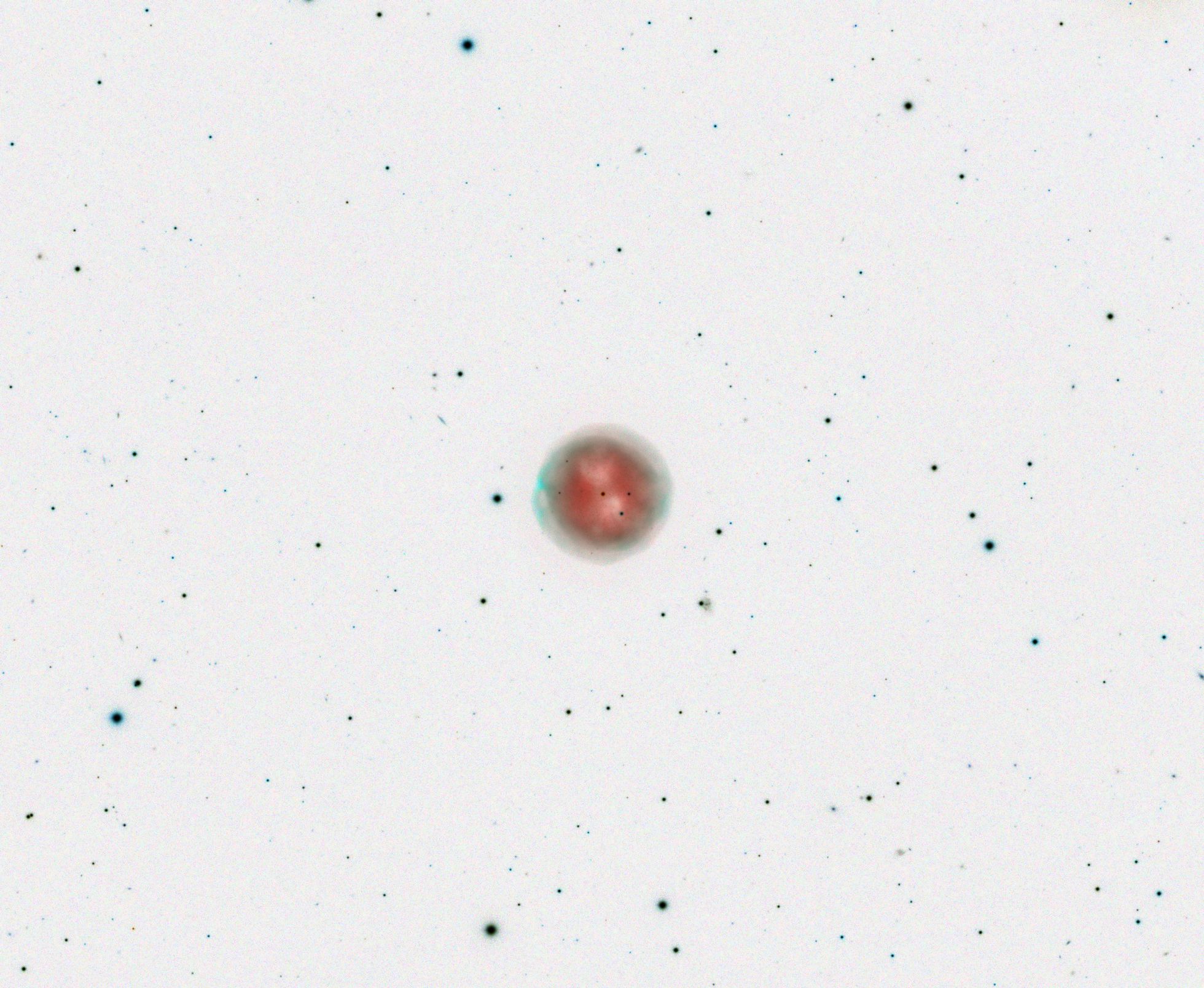
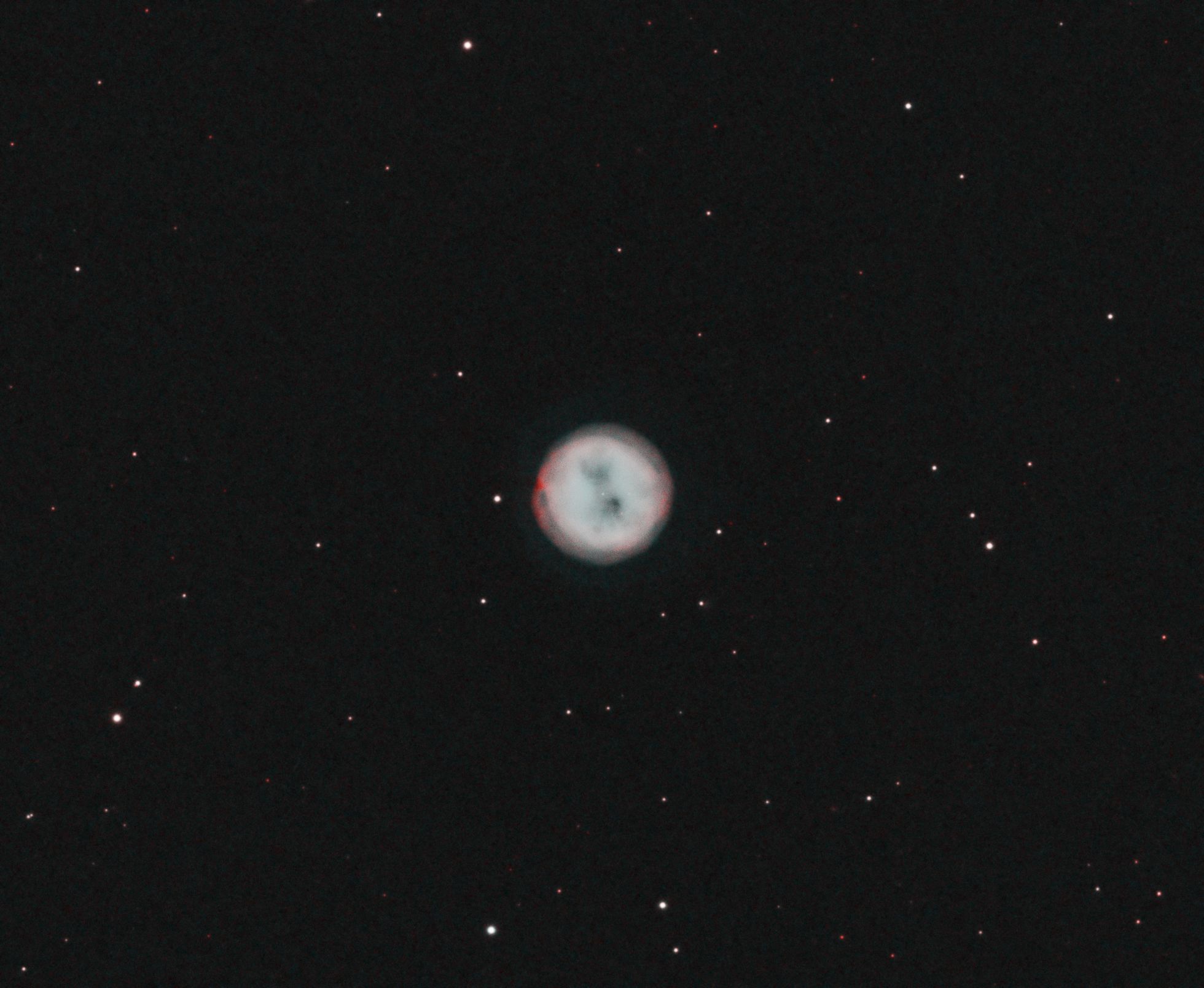
The HOO version above shows the Owl Nebula with Hydrogen Alpha mapped as Red channel and OIII mapped to Green and Blue to create the HOO palette colours. 3 hours and 30 minutes of HaOIII. This HOO image could really do with more data added to it in the Ha and OIII channels and I hope to do this next spring hopefully.
Image Technical Data
This image was captured with TEC 140 refractor and Atik 460 CCD with Astrodon LRGBHaOIII (3nm) filters during Spring 2020 (during the coronavirus lockdown in the UK) from my backyard in Nottingham. Mount is my MESU 200 guided with OAG. There is a quite a lot of data in these images as follows. Everything binned 1x1:
Lum 20 x 600s; Red 13 x 30s; Green 12 x 300s; Blue 13 x 300s; Ha 12 x 600s; OIII 9 x 600s
M97 - The Owl Nebula TEC 140
The Owl Nebula is a planetary nebula in the constellation of Ursa Major, one of three planetary nebulae in the Messier catalogue. It is visible as a faint smudge in amateur telescopes but the colours are not evident visually. It is called The Owl Nebula because of the resemblance to the face of an owl. 6 hours and 30 minutes of LRGB in this image
The annotated version above shows many distant galaxies in the same field of view as M97, although obviously these are very much more distant.
The HOO version above shows the Owl Nebula with Hydrogen Alpha mapped as Red channel and OIII mapped to Green and Blue to create the HOO palette colours. 3 hours and 30 minutes of HaOIII. This HOO image could really do with more data added to it in the Ha and OIII channels and I hope to do this next spring hopefully.
Image Technical Data
This image was captured with TEC 140 refractor and Atik 460 CCD with Astrodon LRGBHaOIII (3nm) filters during Spring 2020 (during the coronavirus lockdown in the UK) from my backyard in Nottingham. Mount is my MESU 200 guided with OAG. There is a quite a lot of data in these images as follows. Everything binned 1x1:
Lum 20 x 600s; Red 13 x 30s; Green 12 x 300s; Blue 13 x 300s; Ha 12 x 600s; OIII 9 x 600s
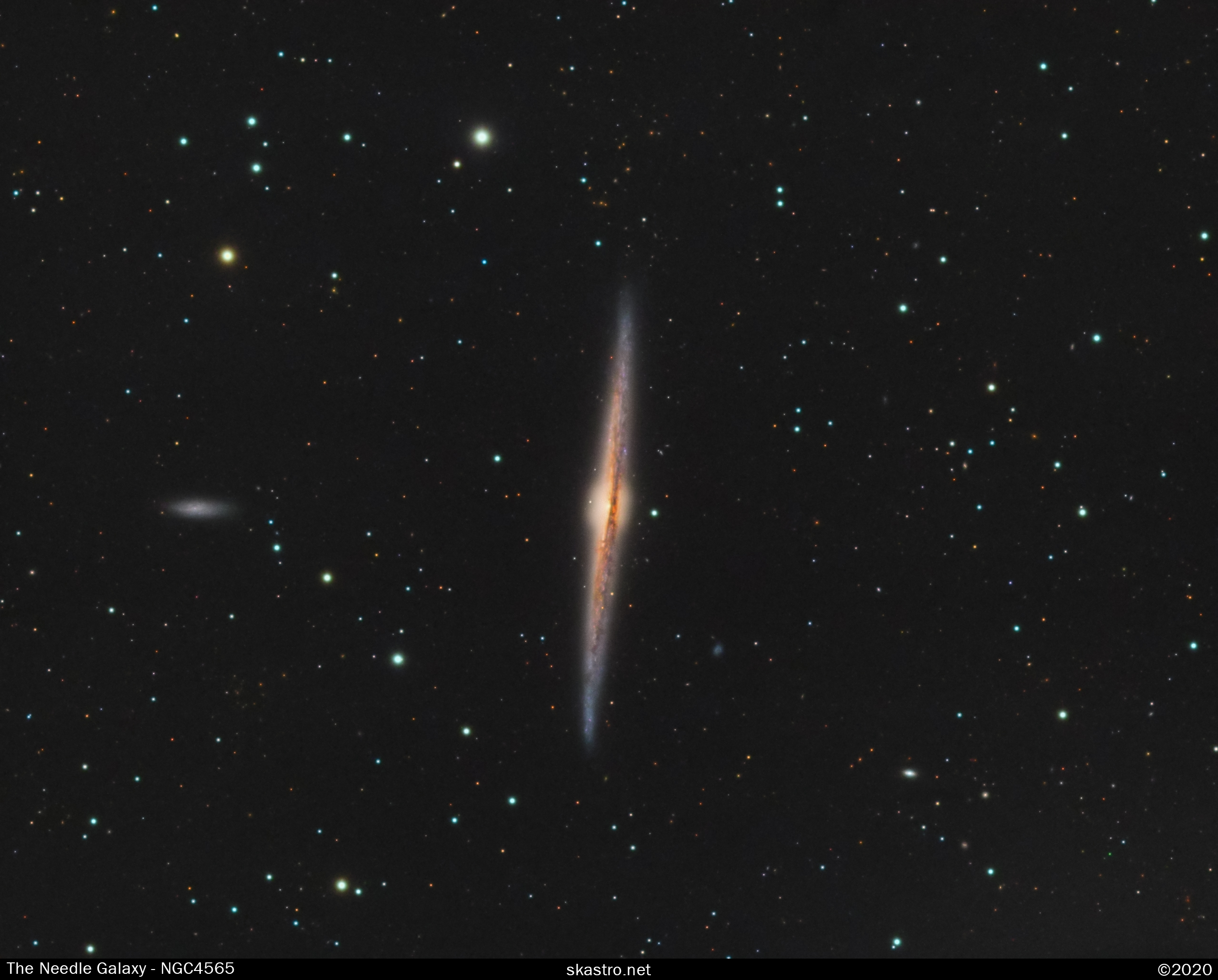
NGC4565 - The Needle Galaxy TEC 140
Located in the constellation of Coma Berenices, The Needle Galaxy is an almost edge on galaxy about 40 million light years away. Much detail can be seen in the dusty lanes of the edge-on spiral arms.
This picture is a two year project, off and on. I acquired the luminance data in May 2019 with a view to completing the image then. However, cloudy weather then plagued the UK for weeks, and when it eventually cleared the object had vanished behind neighbouring roofs! So I had to park this image and wait a year to collect the RGB colour data in April 2020 (whilst my country [UK] was in lockdown due to the coronavirus).
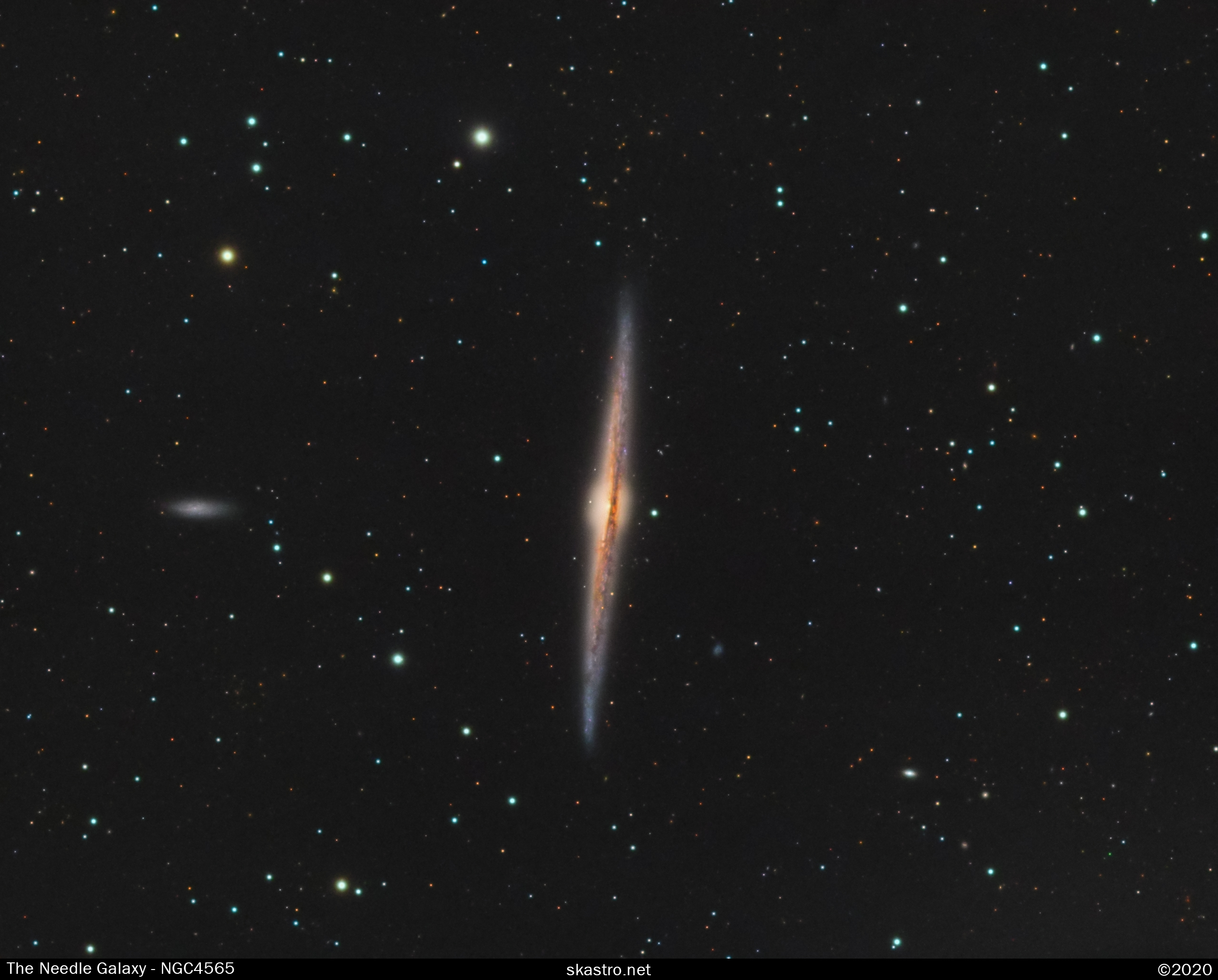
Data used to build the image collected with TEC140 refractor and Atik460 CCD camera with Astrodon LRGB Gen 2 E-series filters. I used Off-Axis guiding on my Mesu 200 mount.
Data set is 20 x ten minute luminance (1x1) and 60 minutes each in R, G and B (2x2). Processed in PixInsight and Photoshop.
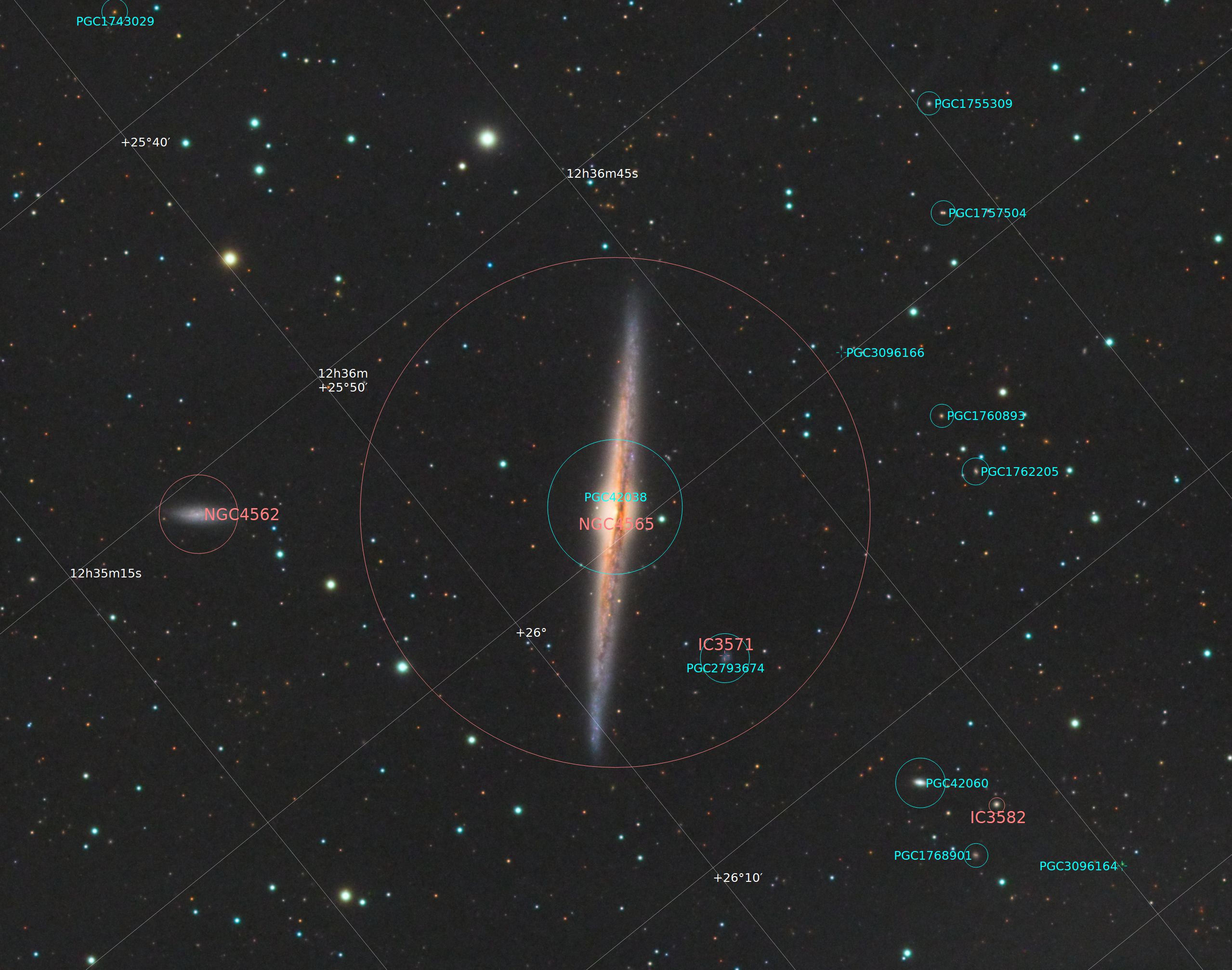
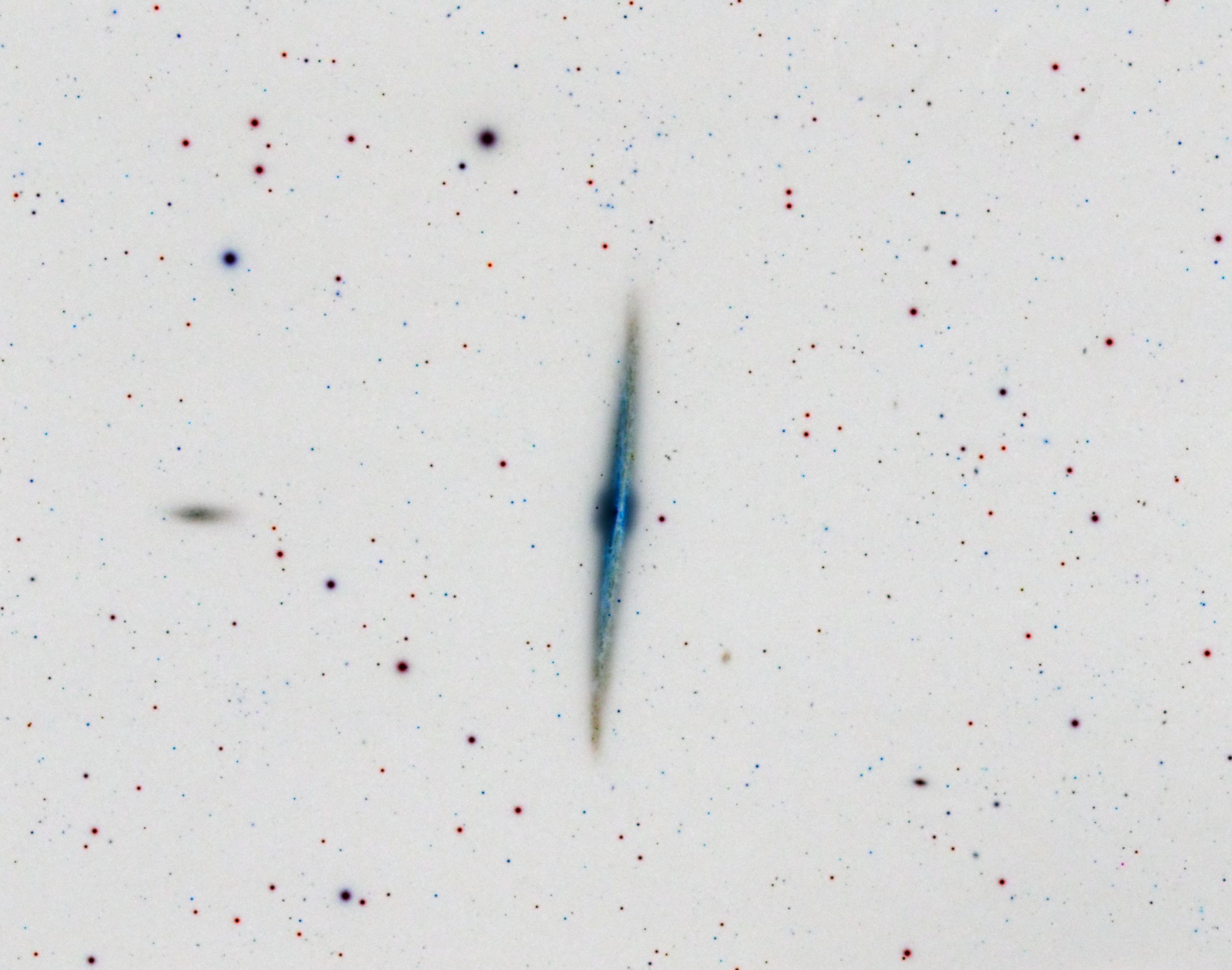
Lots of very faint background galaxies visible the image above and detailed in the annotated version below.
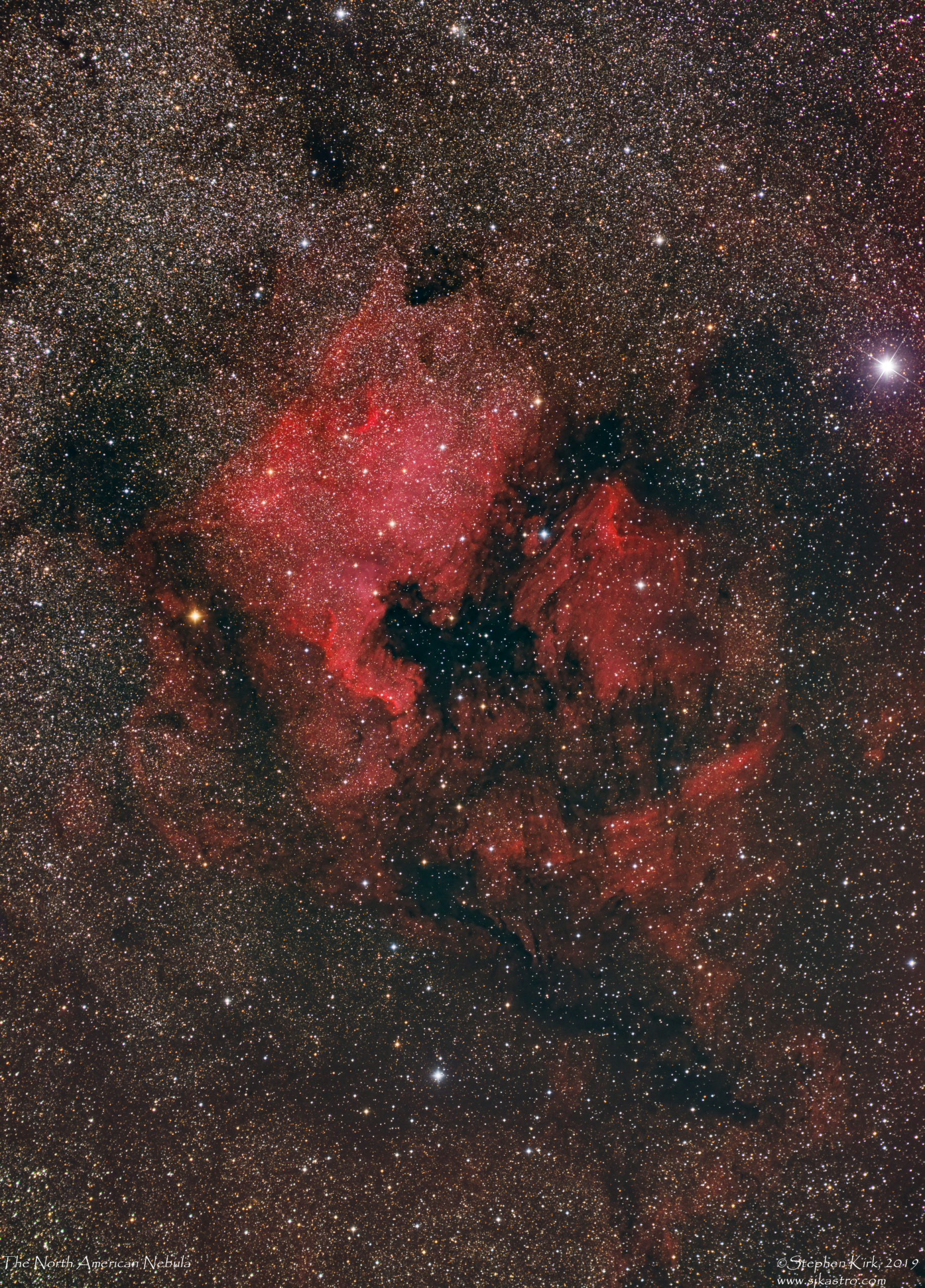
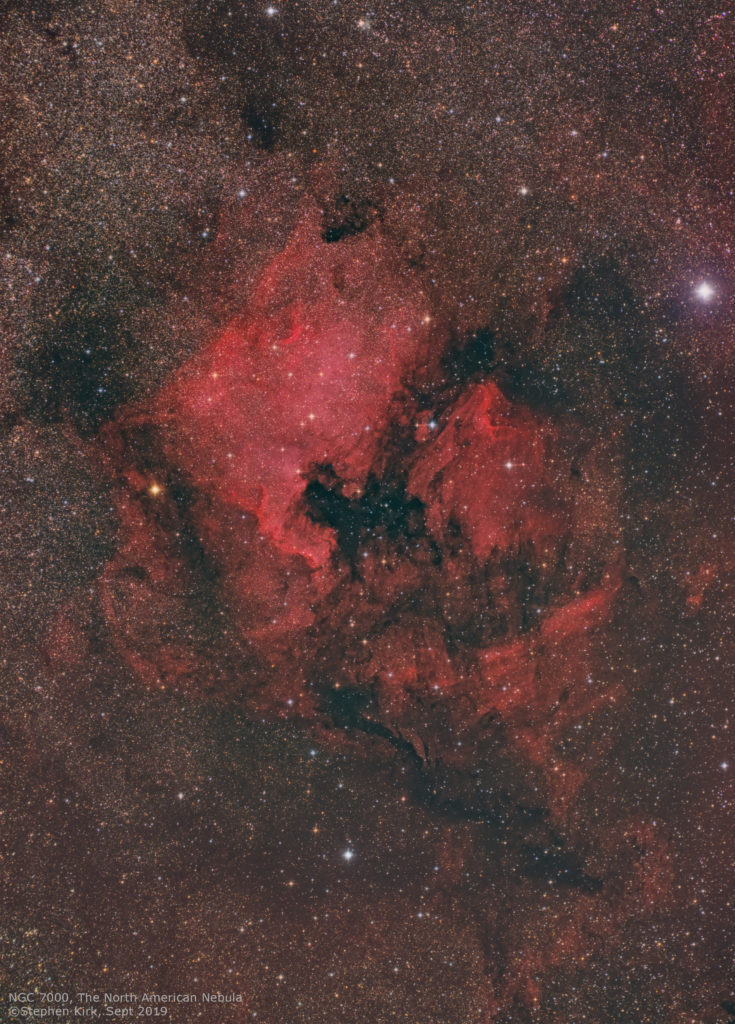
The North American Nebula with Samyang 135mm

Above is 120 minutes worth of Hydrogen Alpha data captured in five minute exposures with an Astrodon Ha 3nm filter and a Samyang 135mm camera lens on a Moravian Instruments G2-8300 CCD camera.

I then captured one hour in each of the Astrodon R,G and B filters with the same rig as detailed for the Ha image, again in five minute exposures. However, use of the superb Astrodon E series RGB filters produce a nice image and the colours are brought out quite nicely although it lacks a bit of punch and vibrancy.
The bright star to the right is Deneb.

In Photoshop I broke out the red channel and then blended it as a 50:50 mix with the Ha image (at the top of this page) before recombining back into RGB. I also saved a copy of this HaR constituent and then used that as a luminance layer to really make the image pop. I then used a series of high pass filters to reveal finer structures in the image.
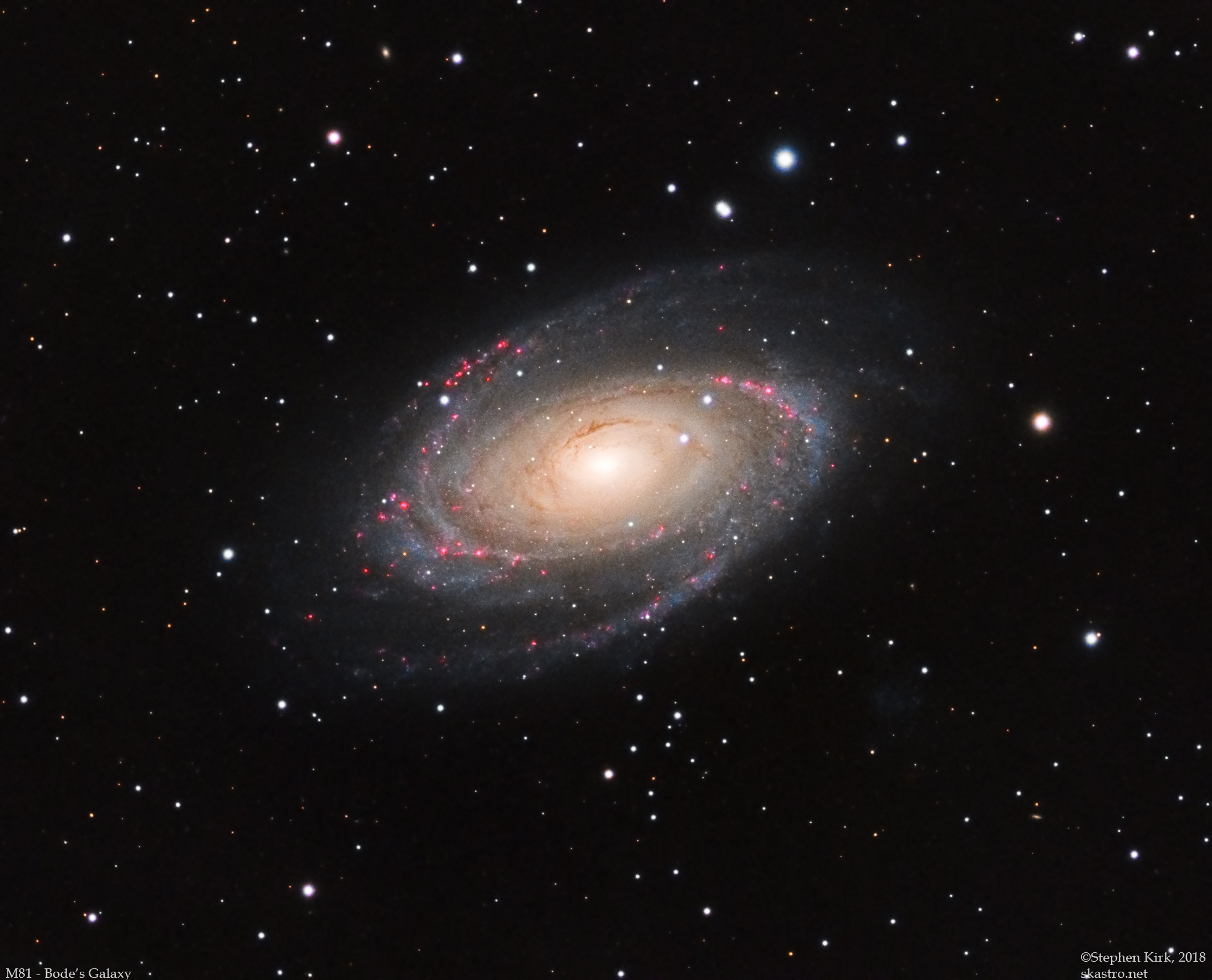
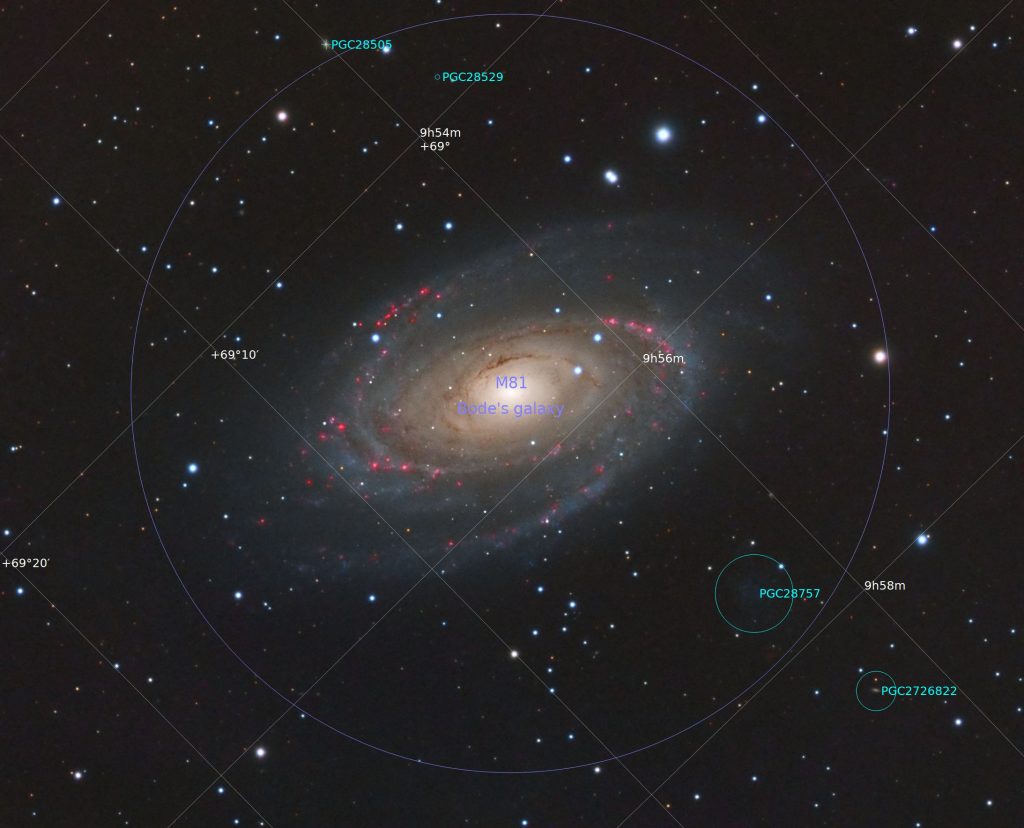
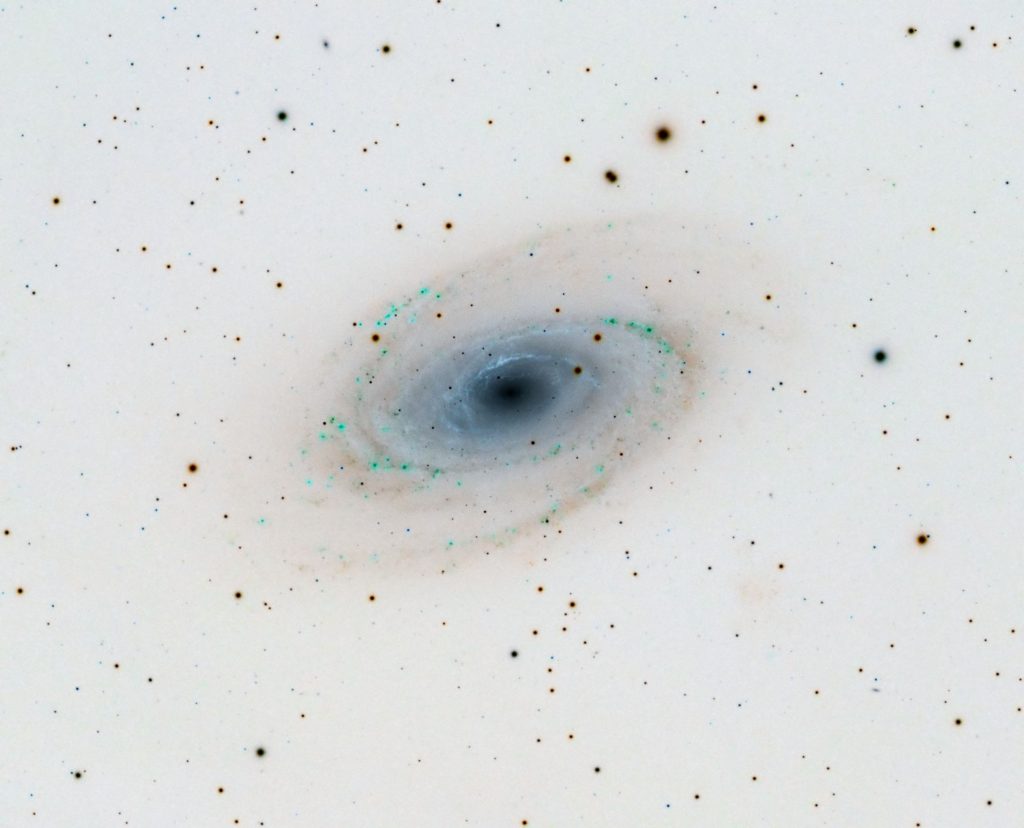
M81 - Bode's Galaxy in Ursa Major with TEC 140
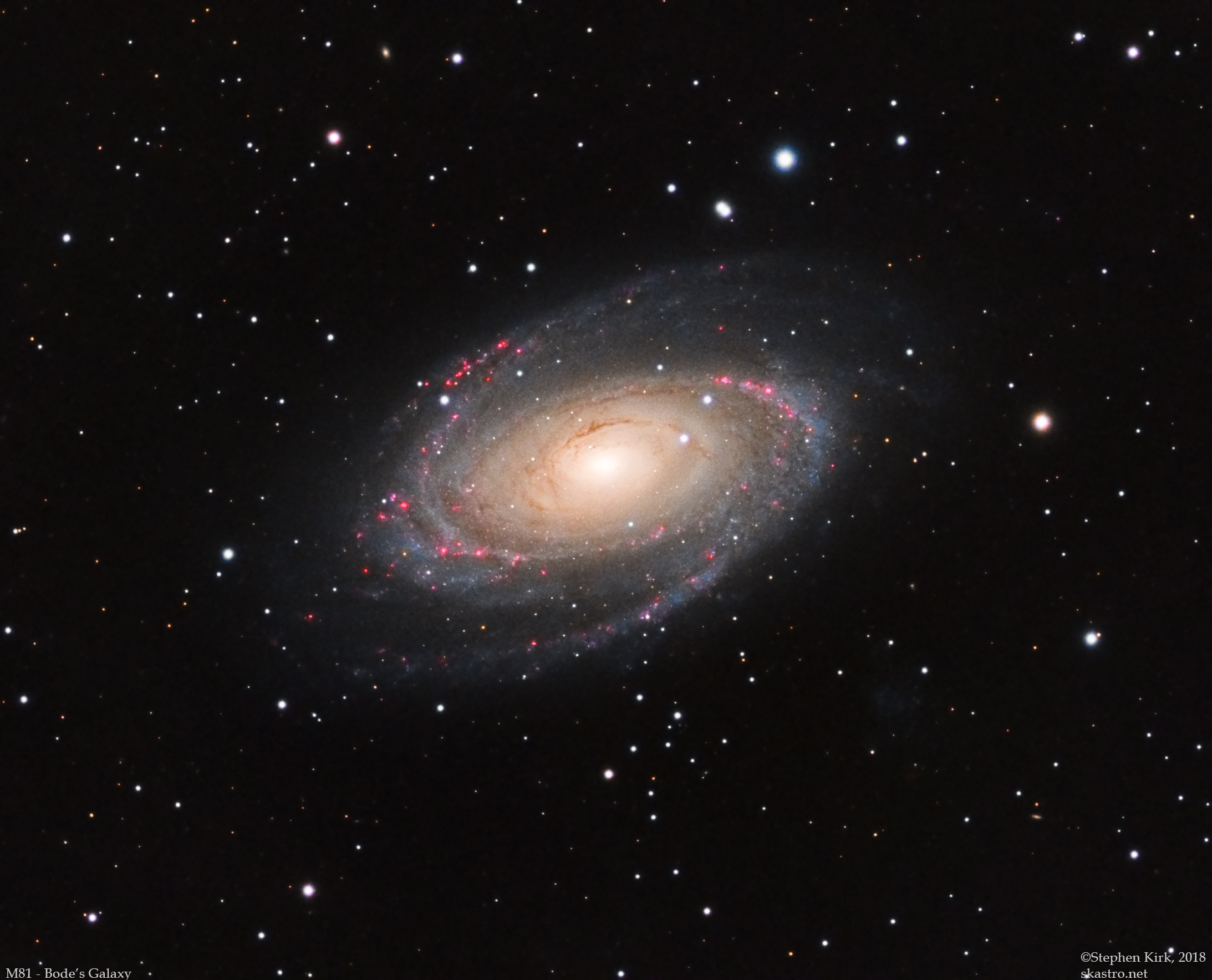
M81 is a face on spiral galaxy in the constellation of Ursa Major and it (and nearby M82) are the most northerly of the Messier objects. It is easily visible in binoculars as a faint smudge. Its open spiral arms and red HII star forming regions make it a popular target for amateur and professional astronomers alike. In this picture note at the four o'clock position the very faint satellite galaxy Holmberg II.
It is located about 12 million light years away, placing it outside of the local group and it is steadily receding from us.
I have imaged M81 in several settings. This picture was taken with my TEC140 refractor and Atik 460 CCD camera with Baader LRGBHa filters. It contains five hours of luminance of 900s exposure, two hours of Ha data and 90 minutes in each of RGB to give a total integration time of about twelve hours.
M13 - The Great Globular Cluster in Hercules
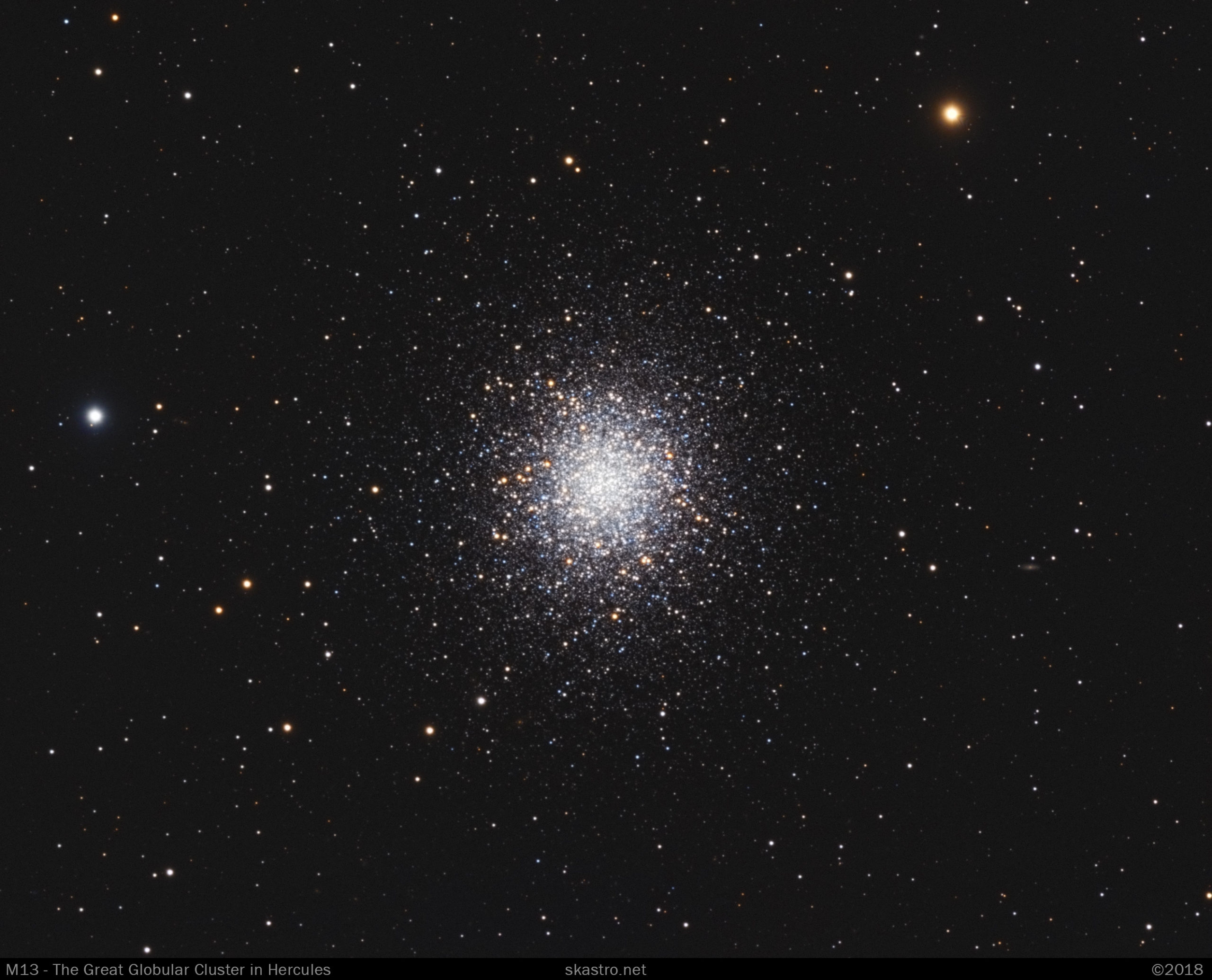
M13 is arguably the greatest of the Northern hemisphere globular clusters and, after Omega Centauri, the greatest globular cluster in the sky.
It is a located about 26000 light years away and has a diameter of about 120 light years. It is one of about 250 globular clusters that surround the nucleus of our galaxy. Most galaxies have globular clusters in orbit around them and the reason why is still unclear. What is clear is that the clusters and the stars within them are extremely old, in the region of ten billion years old or twice the age of the sun.
M13 is visible with the naked eye on a dark night as a fuzzy star. A telescope reveals its starry nature and a scope over 8 inches will show many stars and is an amazing site to behold.

The above image is a composite of LRGB data with one hour of data in each of the RGB channels and two hours in the luminance, everything binned 1x1, giving a total of five hours imaging time. TEC 140 refractor and Atik 460 camera CCD camera with Baader LRGB filters. on MESU 200 mount. The data was collected in 2018 and processed in PixInsight. HDR tool makes a big impact in bringing out the detail in the core of the cluster.
TIP: In this picture look for the "Propeller". Can you see it? :)


M33 - The Triangulum Galaxy
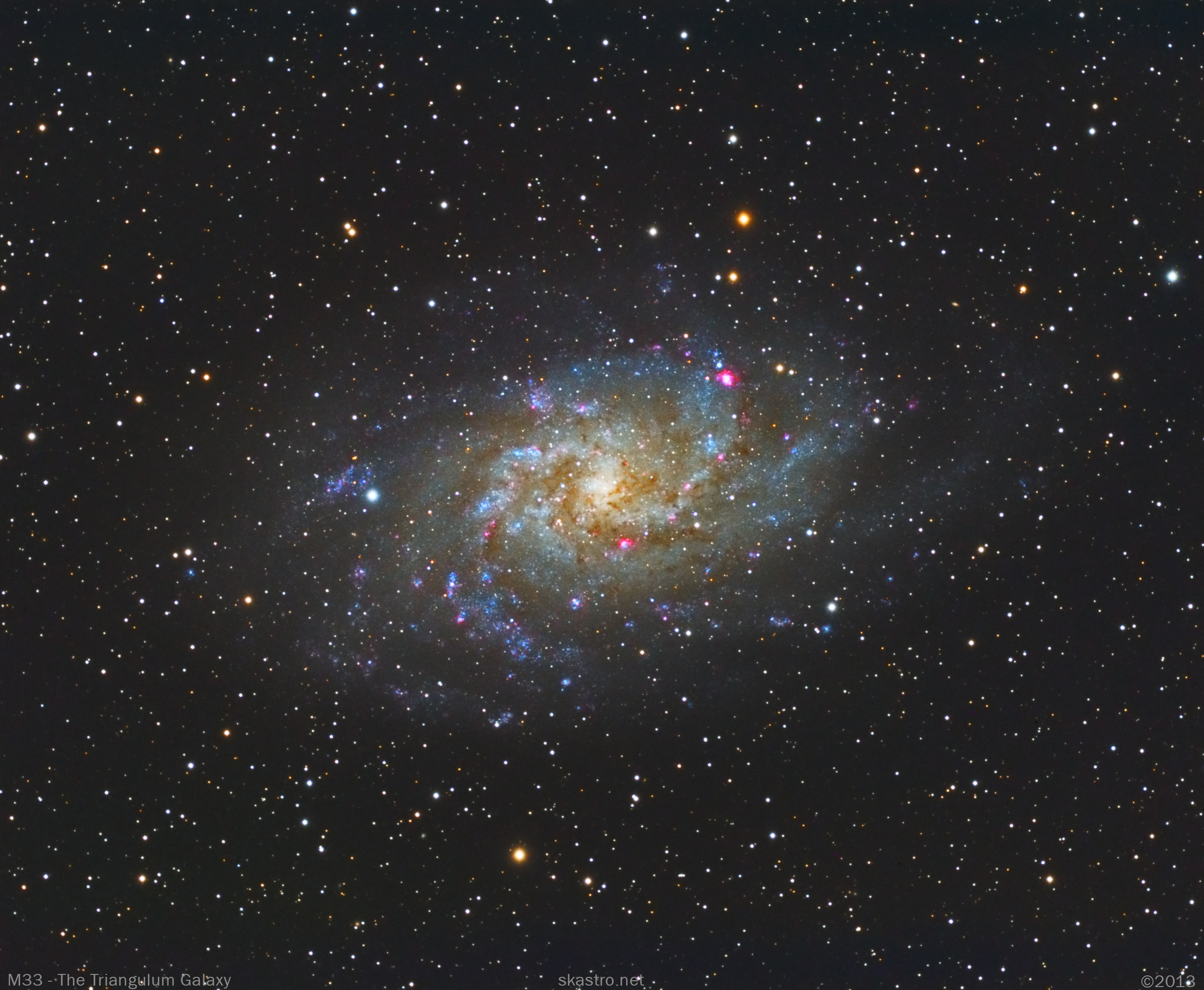
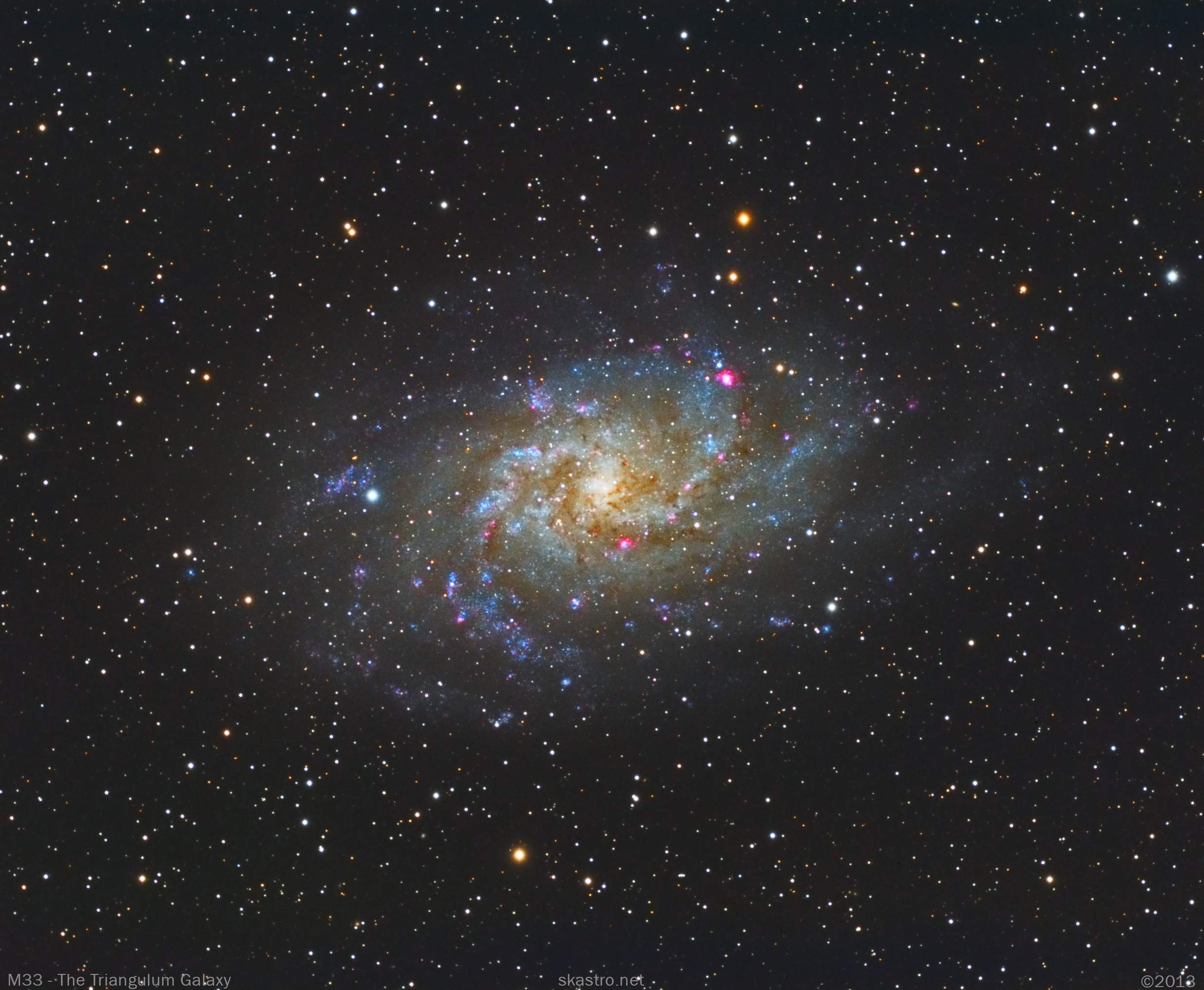
This is about two hours each of LRGB (in each filter) with the Takahashi FSQ85 telescope and Atik 460 CCD camera with Baader LRGB filters. I did not use a Ha filter on this image. The data was collected on 29th November 2013 and it was the second light of the telescope (first light being The Double Cluster here). The telescope performs superbly and is very well colour balanced.
At a distance of about 2.8 - 3.0 million light years, M33 is the most distant object that can be viewed by the unaided eye and is visible in a dark sky setting as a very tenuous patch of light. Being a face-on galaxy, it has rather low surface brightness and it lacks a bright central core making it quite hard for beginners to find as they expect to see something much brighter and more colourful.
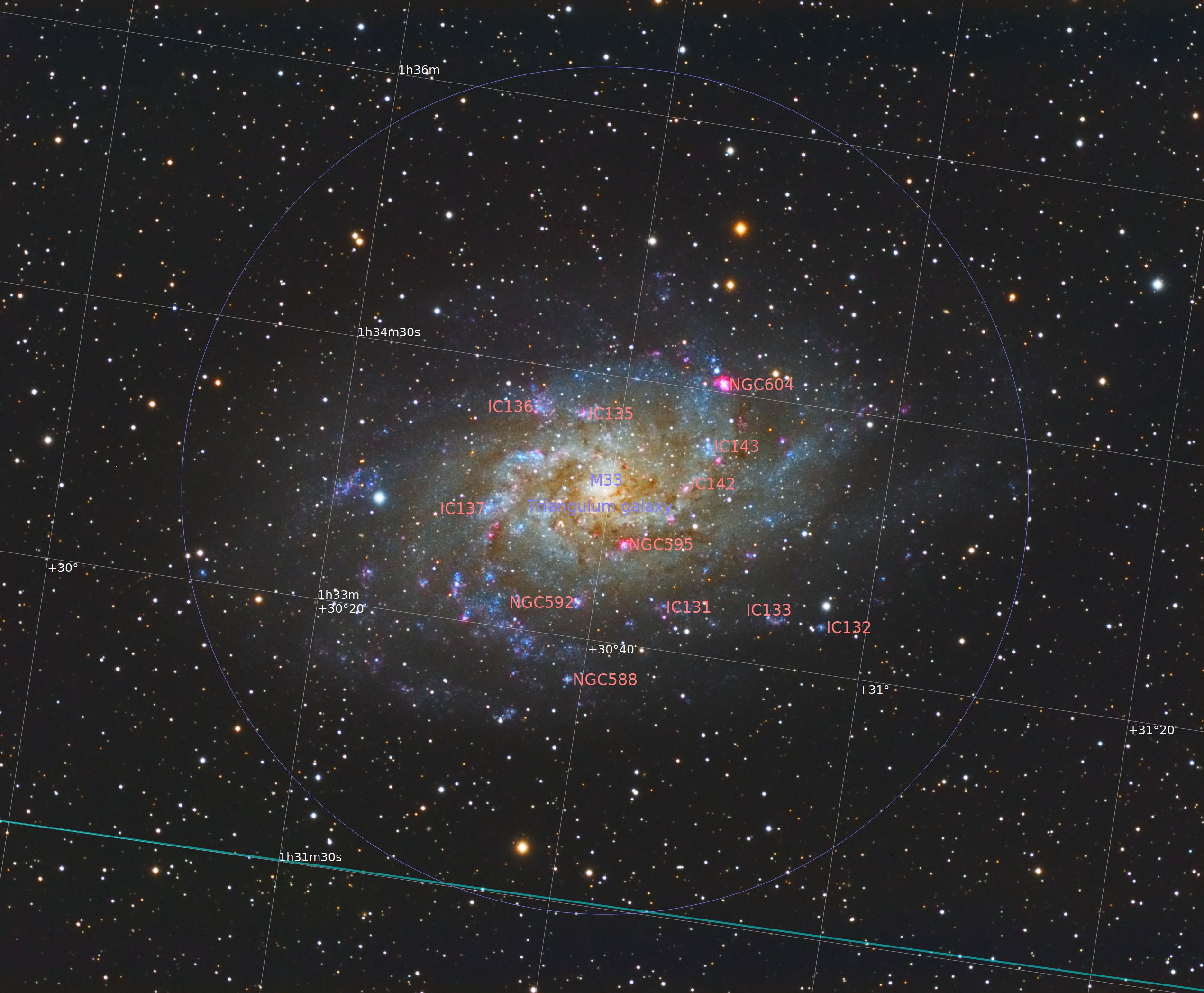
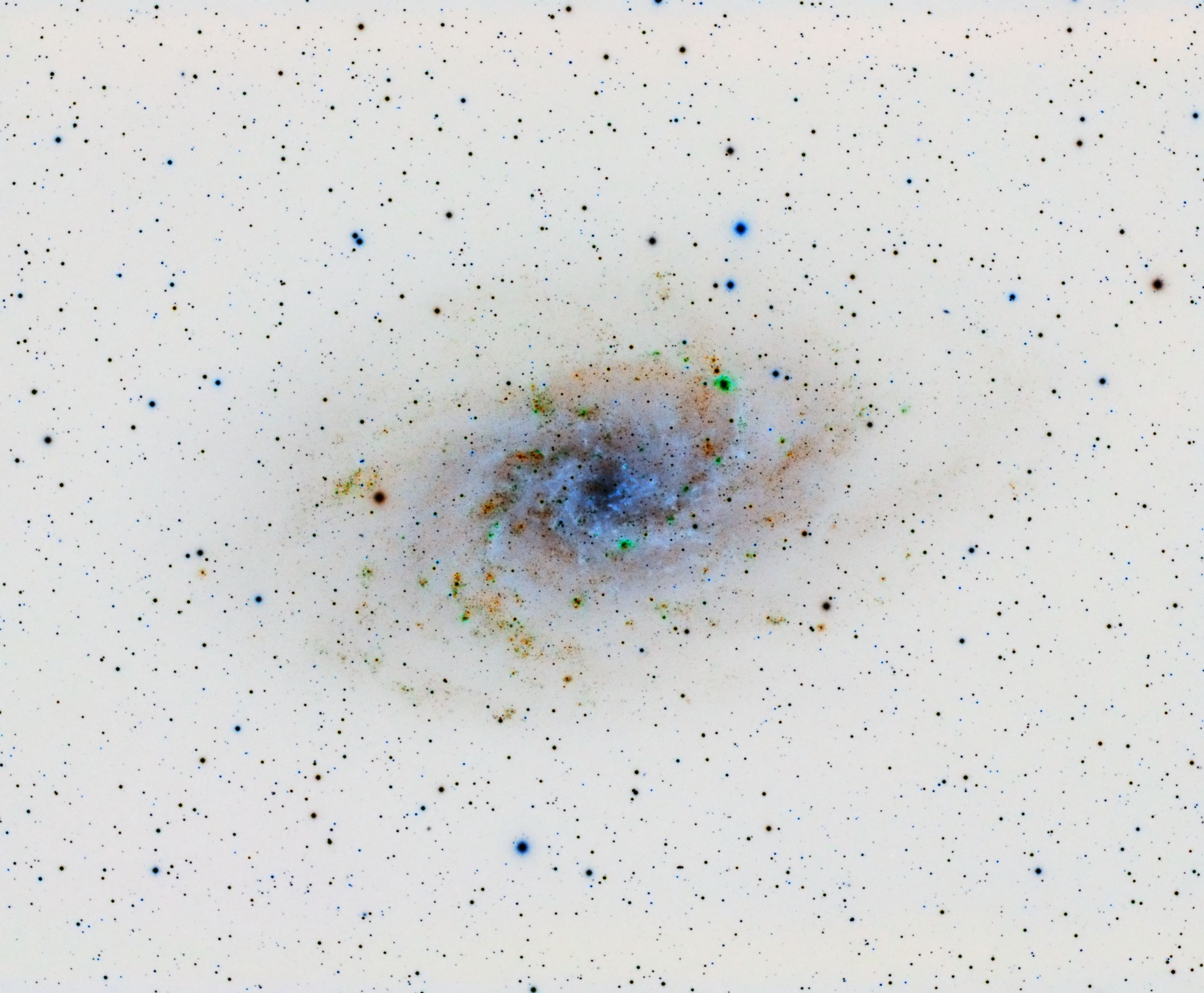
The two above images show an annotated and an inverted version of the galaxy.
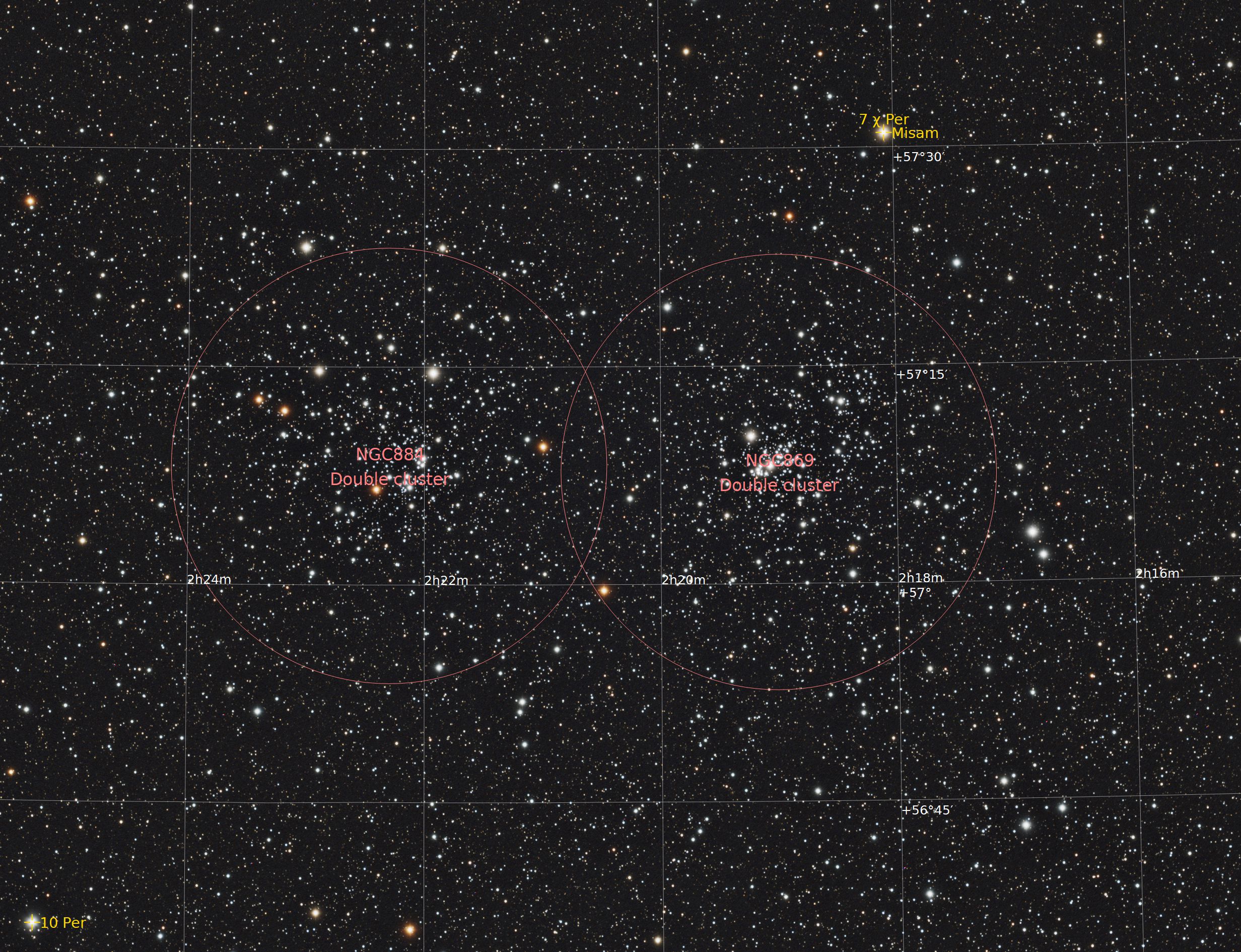
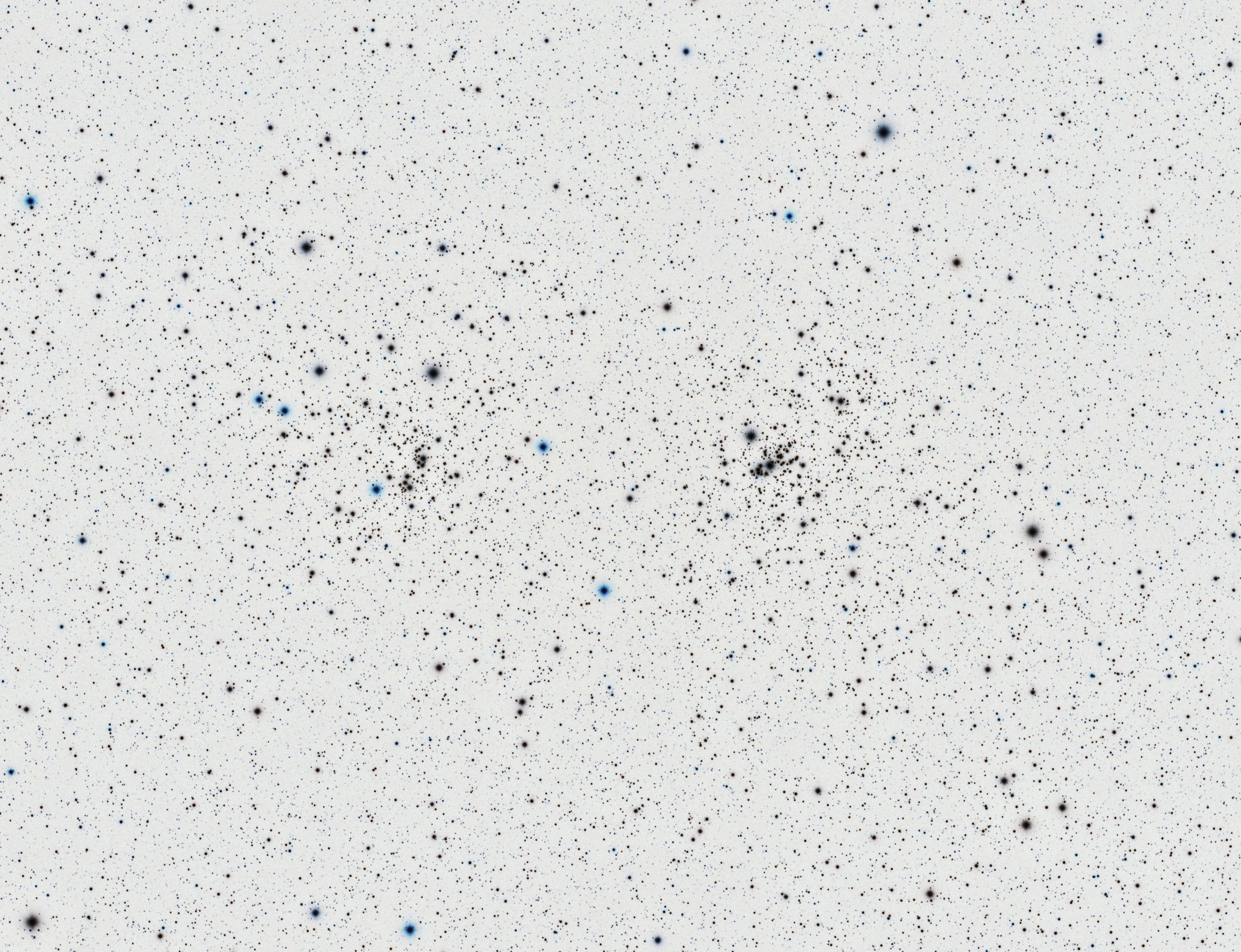
The Double Cluster

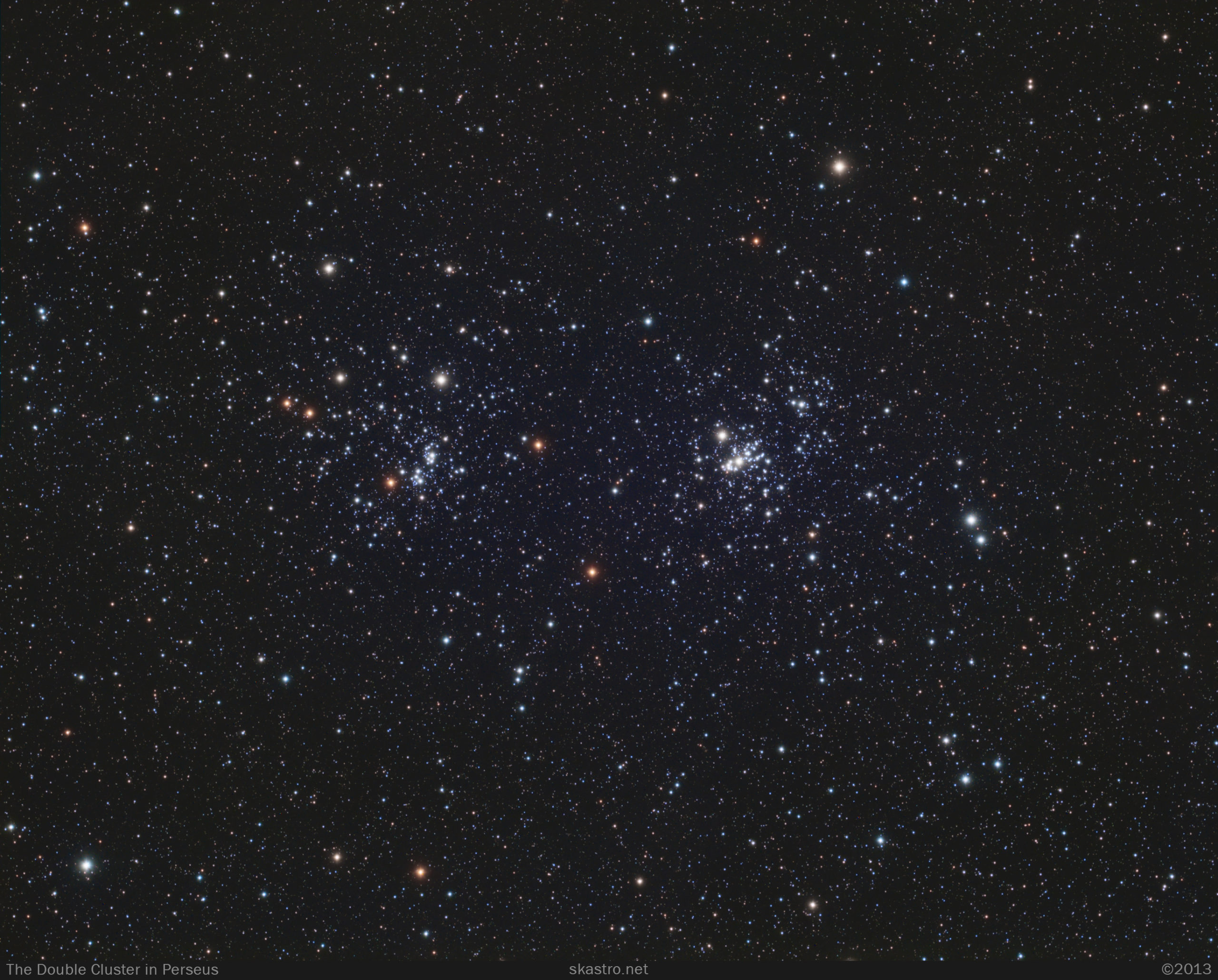
The Double Cluster is located in the constellation of Perseus, near the border with Cassiopeia and is composed of the two Open Clusters NGC869 and NGC 884. They are visible faintly to the naked eye on a dark night and a wide field eye piece shows them superbly in the telescope as does a pair of binoculars if you hold them steady.
The clusters are very distant from us at about 7500 light years and are located outwards in the Perseus spiral arm of the galaxy. Were they as close as The Pleiades (at 450 light years) they would dominate the night sky!
The above image was taken with my Takahashi FSQ85 refractor and Atik 460 CCD camera with Baader RGB filters and contains 45 minutes of exposures in each of the RGB channels. I took these exposures in 2013 and this was the first light of this telescope.