
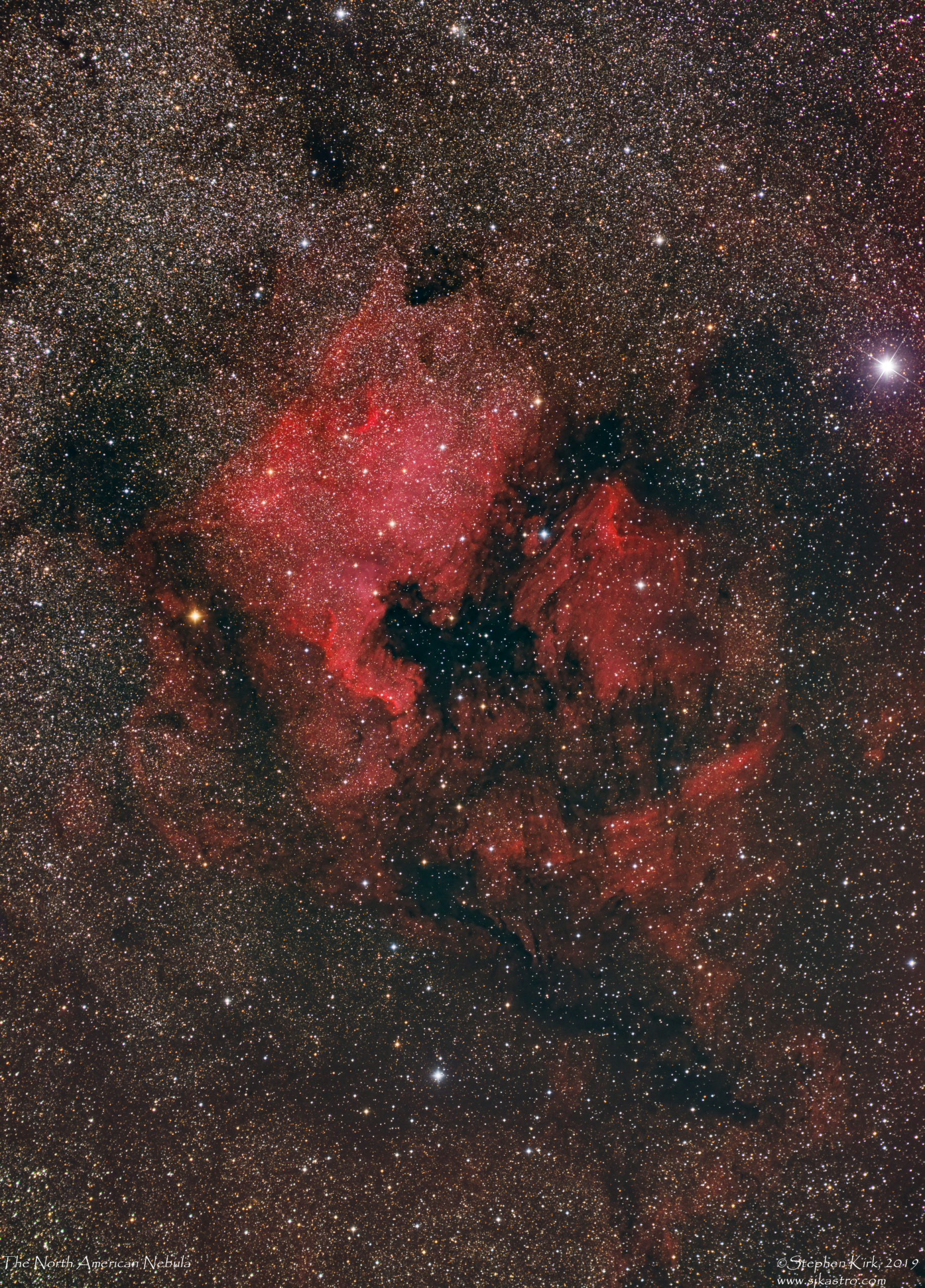
The North American Nebula with Samyang 135mm

Above is 120 minutes worth of Hydrogen Alpha data captured in five minute exposures with an Astrodon Ha 3nm filter and a Samyang 135mm camera lens on a Moravian Instruments G2-8300 CCD camera.

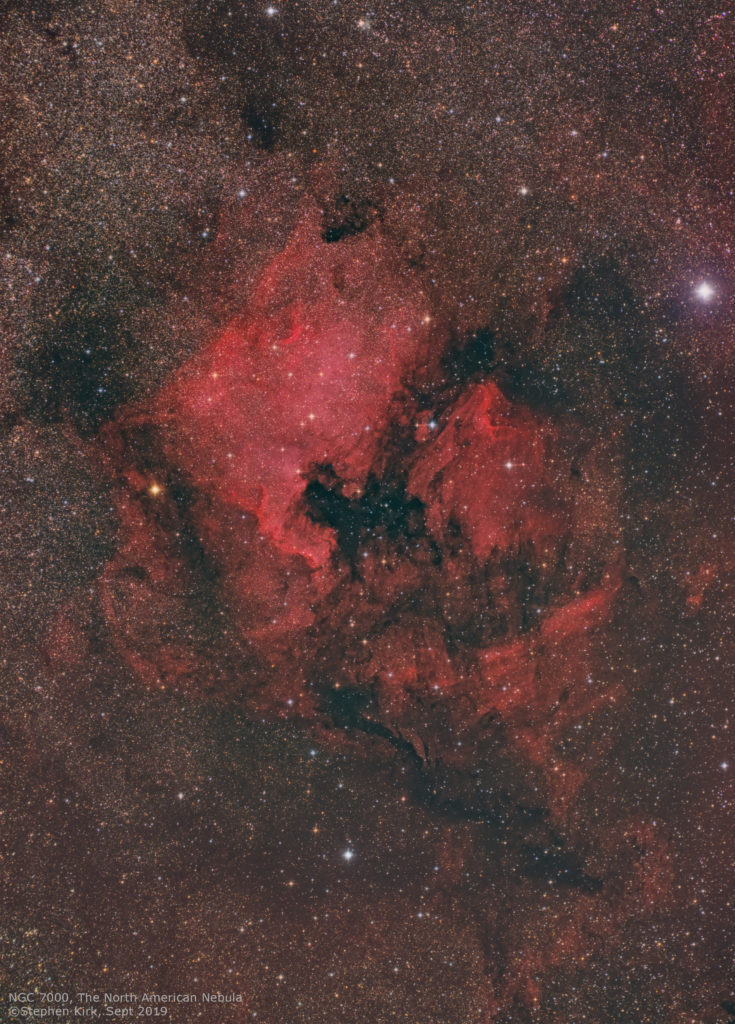
I then captured one hour in each of the Astrodon R,G and B filters with the same rig as detailed for the Ha image, again in five minute exposures. However, use of the superb Astrodon E series RGB filters produce a nice image and the colours are brought out quite nicely although it lacks a bit of punch and vibrancy.
The bright star to the right is Deneb.

In Photoshop I broke out the red channel and then blended it as a 50:50 mix with the Ha image (at the top of this page) before recombining back into RGB. I also saved a copy of this HaR constituent and then used that as a luminance layer to really make the image pop. I then used a series of high pass filters to reveal finer structures in the image.

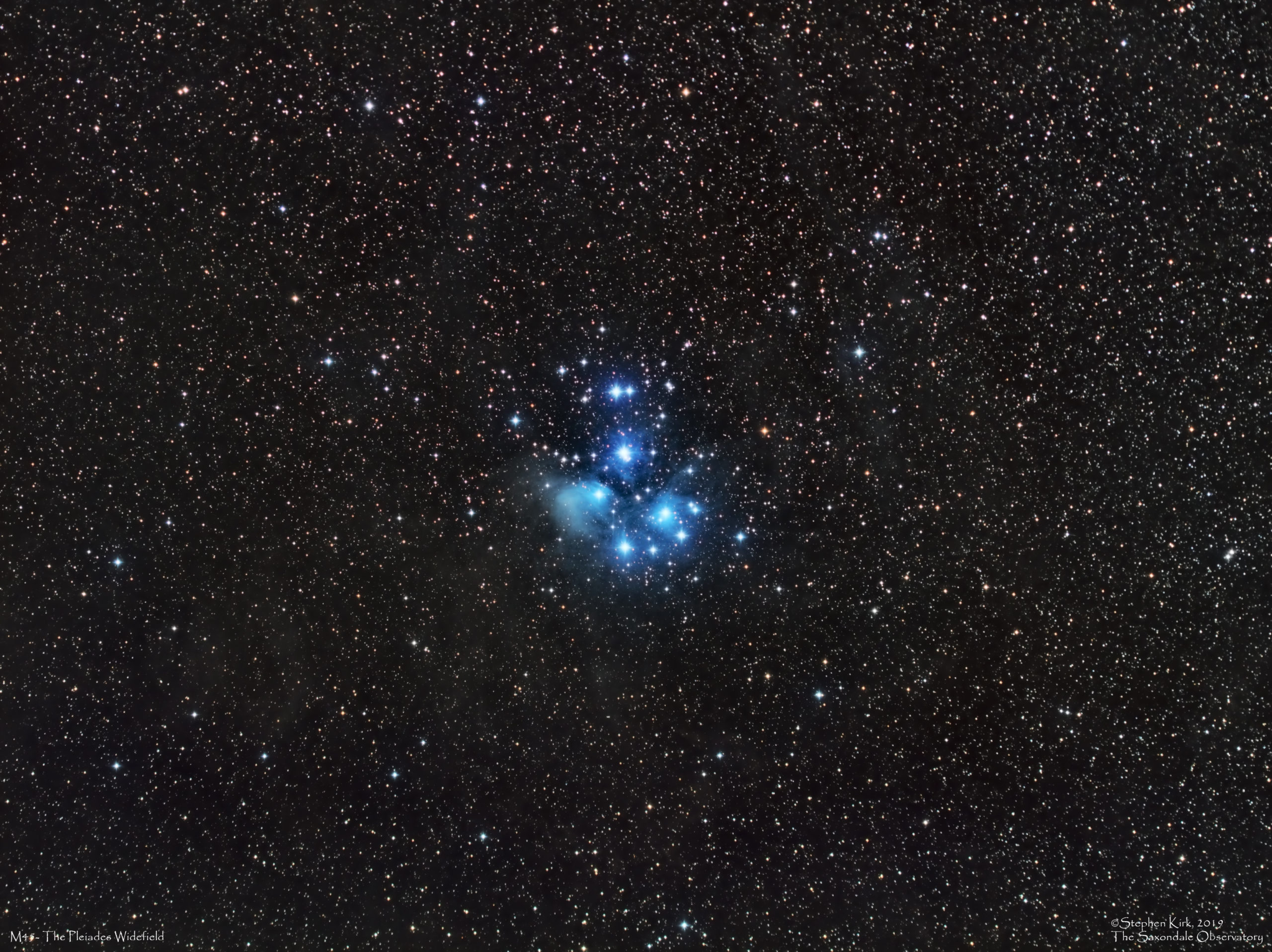
M45 in a Widefield

An image of the Pleiades taken with a Samyang 135mm lens and Astrodon RGB filters.
Field of view is approximately 6x4 degrees.
Taken 18 November 2019 and 10 x 180s exposures in each filter.

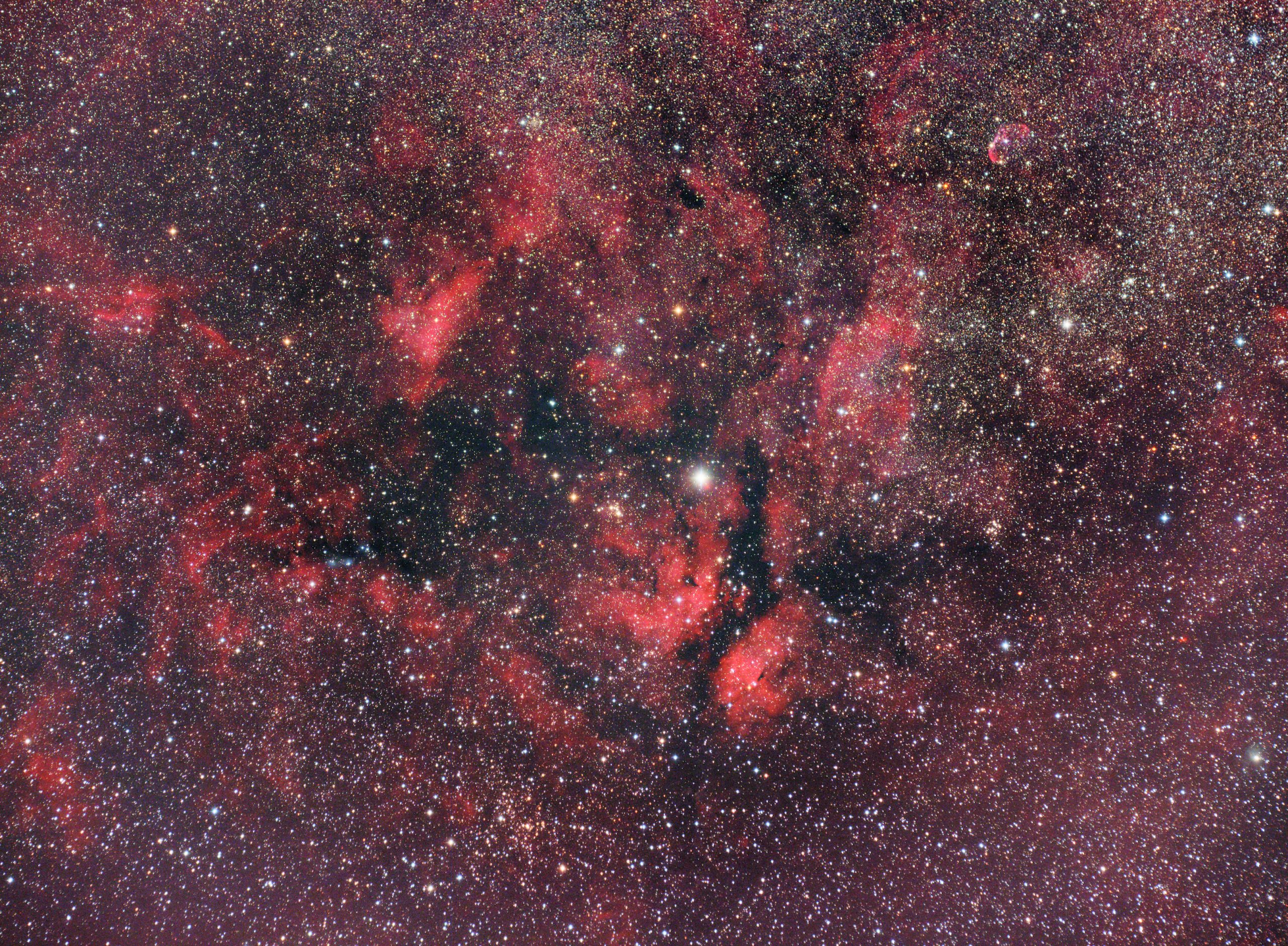
SADR Region of Cygnus
SADR is the central star of the Cross of Cygnus, between the arms of the cross. The constellation of Cygnus is supposed to represent a swan but to most people looks much more like a cross and consequently is often called The Northern Cross. The whole area abounds in nebulosity that is very easy to capture with a camera.
This image is taken with a Samyang 135mm DSLR lens and subtends a field of view of about 8 x 6 degrees across the sky and so the long axis of this image is about sixteen moon widths wide. This is a very large area of sky to capture in one image. It is was made from 12 x 3 minutes exposures in each of the Red, Green and Blue and also a luminance of 24 x 3 minute Hydrogen Alpha 3nm exposures to give a total integration (exposure) time of about three hours. The camera I used is the Moravian Instruments G2-8300 loaded with 31mm Astrodon LRGBHa3nm filters.
I captured it in my back yard on 26th April 2019 with my wide-area autofocus rig mounted atop a NEQ6 mount. The data was captured with SGP and processed with PixInsight and Photoshop.
I hope you like it! :)
