
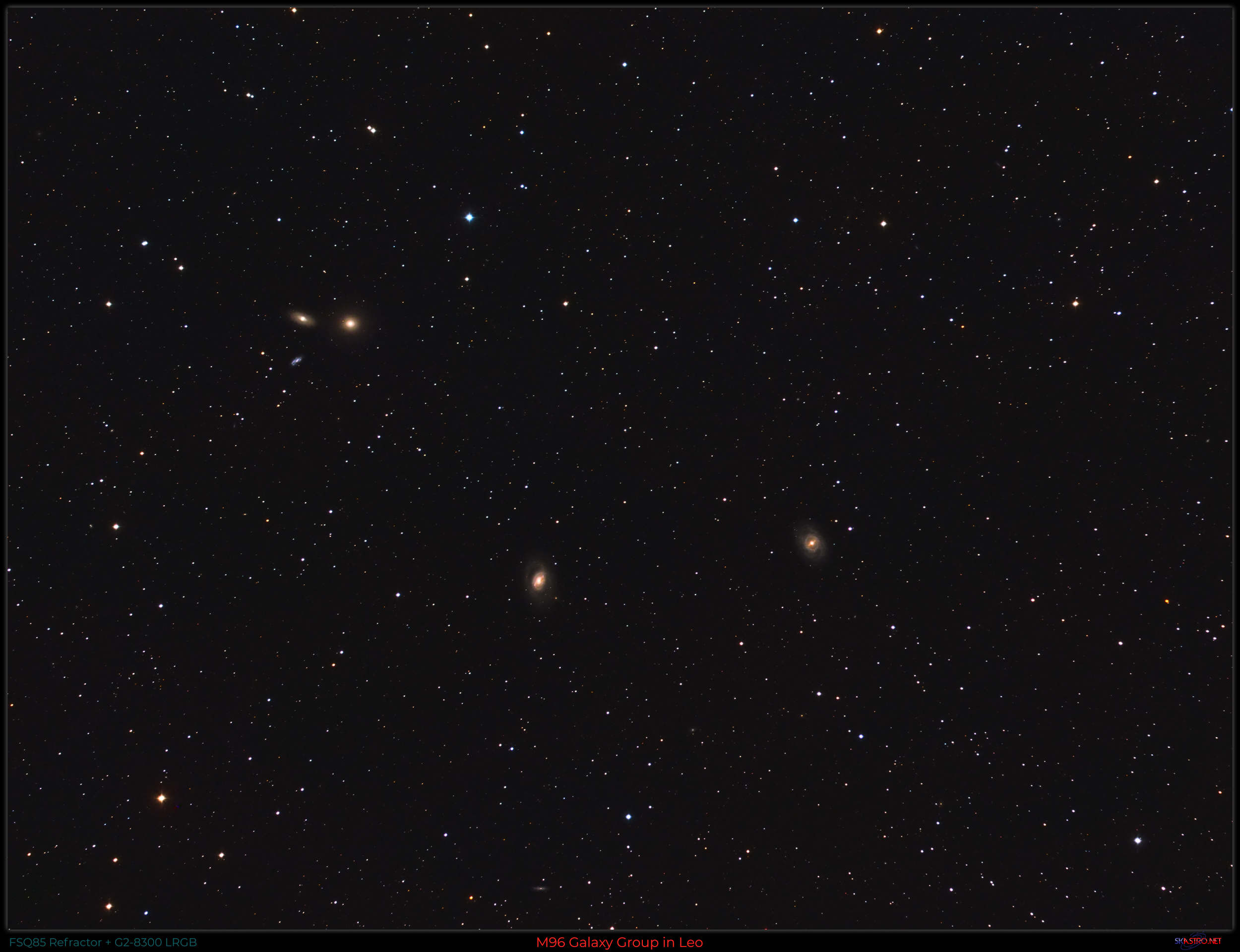
M96 Group in Leo - FSQ85
The M96 Group is a cluster of galaxies in the constellation of Leo. Not to be confused with the separate and arguably more famous Leo triplet. The M96 group contains three Messier galaxies (M95, M96 and M105) and many fainter galaxies in the background. The three main galaxies are about 35 million light years away and are easily visible in small telescopes.
Image Technical Data
Technical Information
Imaged from my backyard, March 2019, in Nottingham, UK. I used my FSQ85 refractor with 0.73 reducer and my Moravian instruments G2-8300 CCD camera and Astrodon LRGB filters. Mount is my MESU200 and guided with an Off-Axis guider. Image acquisition data:
Luminance 11 x 600s 1x1; Red 9 x 300s 2x2; Green 10 x 300s 2x2; Blue 10 x 300s 2x2


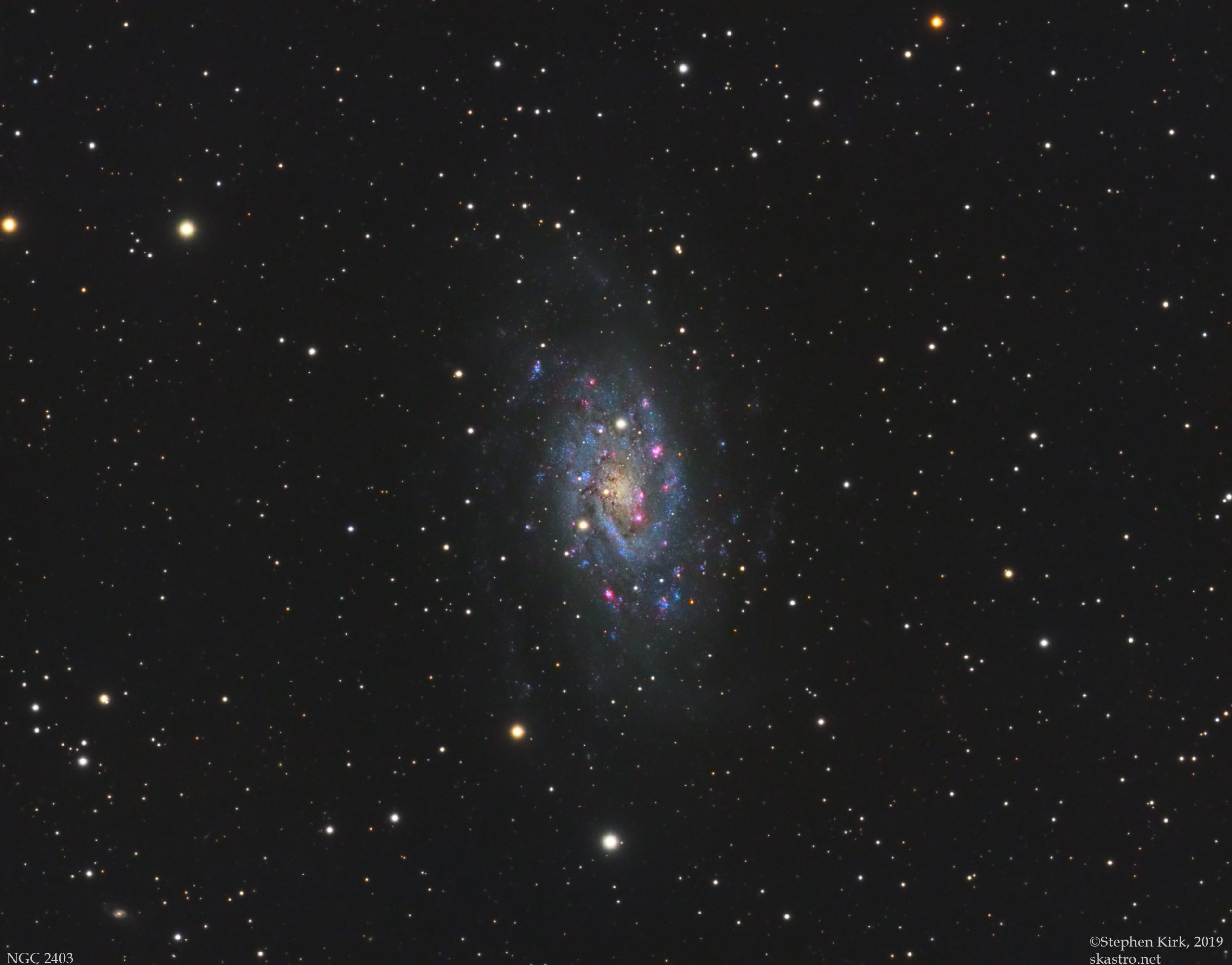
NGC 2403 - TEC140
NGC 2403 is a spiral galaxy located about eight million light years away in the constellation of Camelopardalis in the Northern hemisphere. It is an outlying member of the M81/M82 group. You will note that it bares a striking resemblance to M33 and contains huge HII star forming regions. NGC2403 is much smaller than our own galaxy, being only about 50000 light years in diameter as opposed to about 120000 light years for our own Milky Way galaxy. It is not known why a smaller galaxy like this should have such huge HII regions that dwarf those of our own, larger galaxy.

Image Technical Data
Imaged from my backyard, March 2019, in Nottingham, UK. I used my TEC 140 refractor with Atik 460 CCD camera and Astrodon LRGB filters. Image acquisition data, everything binned 1x1
Luminance 29 x 600s; Red 12 x 300s; Green 12 x 300s; Blue 12 x 300s


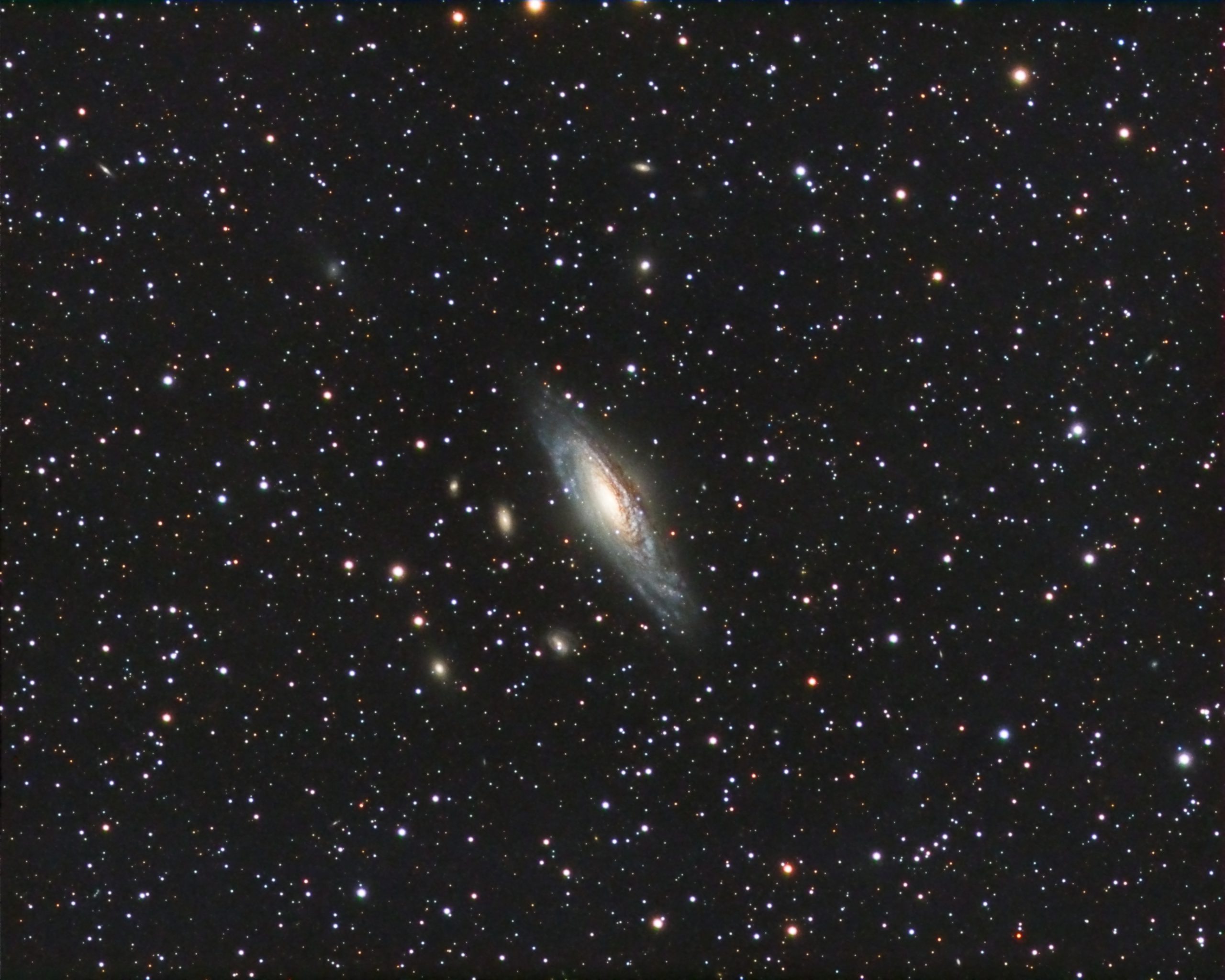
NGC 7331 TEC 140 Refractor - The Deer Lick Group
NGC 7331 (Caldwell 30) is a spiral galaxy about 46 million light years away in the constellation of Pegasus. It is a vibrant and colorful galaxy, often referred to as the Milky Way's "twin" due to it being of a similar size and mass to our own galaxy. It is visible in amateur telescopes as a faint smudge if the sky is dark.
In the images below, the smaller galaxies to the left of the main galaxy are a chance line-of-sight alignment. These four galaxies are much more distant than NGC 7331 (about 320 million light years) and are nothing to do with the main galaxy. This collection of galaxies (NGC 7331 and the distant background galaxies are collectively referred to as the Deer Lick Group named after the Deer Lick gap in the mountains of North Carolina by astronomer Tomm Lorenzin who liked to observe from there.

Image Technical Data
Imaged over two nights on the 21st and 22nd September 2019 with my TEC 140 refractor from my backyard in Nottingham, UK. I used my Atik 460 CCD camera with Astrodon LRGB Generation 2 E-series 1.25" filters. I used my MESU 200 mount that was guided via OAG.
Luminance 24 x 600s 1×1; Red 12 x 300s 2×2; Green 12 x 300s 2×2; Blue 12 x 300s 2×2
Total Integration of the data set is seven hours. It would benefit from the addition of more data but I am quite content with it now as it is.
Image processing with PixInsight and data collected with Sequence Generator Pro.

In the second version I processed the data slightly differently with a bit more focus on the red spectrum of the galaxy in the absence of any Hydrogen Alpha data. However, I think this is slightly too much and I prefer the first image as more natural. However, I include it here as an interesting contrast in the different approaches that can be taken to astronomy image processing with the same data set with differing emphases that can be quite subjective.


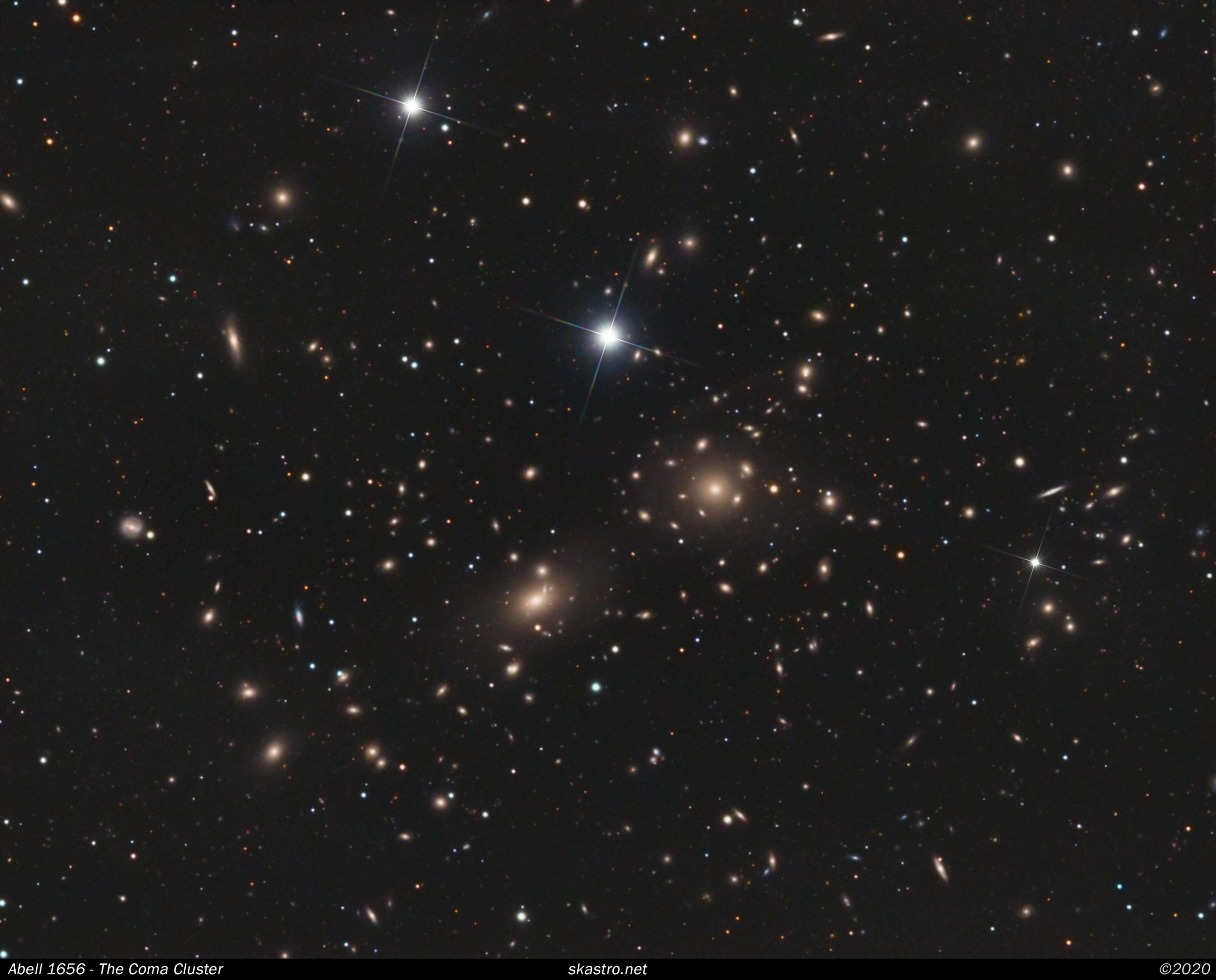
Abell 1656 TEC 140

Abell 1656 - The Coma Cluster - is a cluster of galaxies in the constellation of Coma Berenices, located about 320-330 million lights years away. The cluster is dominated by two supergiant elliptical galaxies NGC 4874 and NGC 4889 which are visible in this image in the centre below the bright blue star (which is local to our own galaxy). NGC 4889 is the largest and most massive galaxy in the local universe and is vsoble in modest amateur telescopes despite the great distance. It contains the most massive black hole yet discovered. The galaxy itself is estimated to have more than 1000 times the mass of opur own Milky Way galaxy.
Image Technical Data
Image acquired spring 2020 (during the Coronavirus lockdown) in my backyard in Nottingham, UK. It was acquired with TEC 140 refractor (with field flattener) with Atik460 CCD camera and Astrodon LRGB Gen2 E series filters on my MESU 200 mount. Guiding was via off-axis guider.
Luminance 30 x 300s 1x1; Red 14 x 300s 2x2; Green 15 x 300s 2x2; Blue 14 x 300s 2x2
Data processed with PixInsight and Photoshop and data collected with SGP Pro and guided with PHD2.

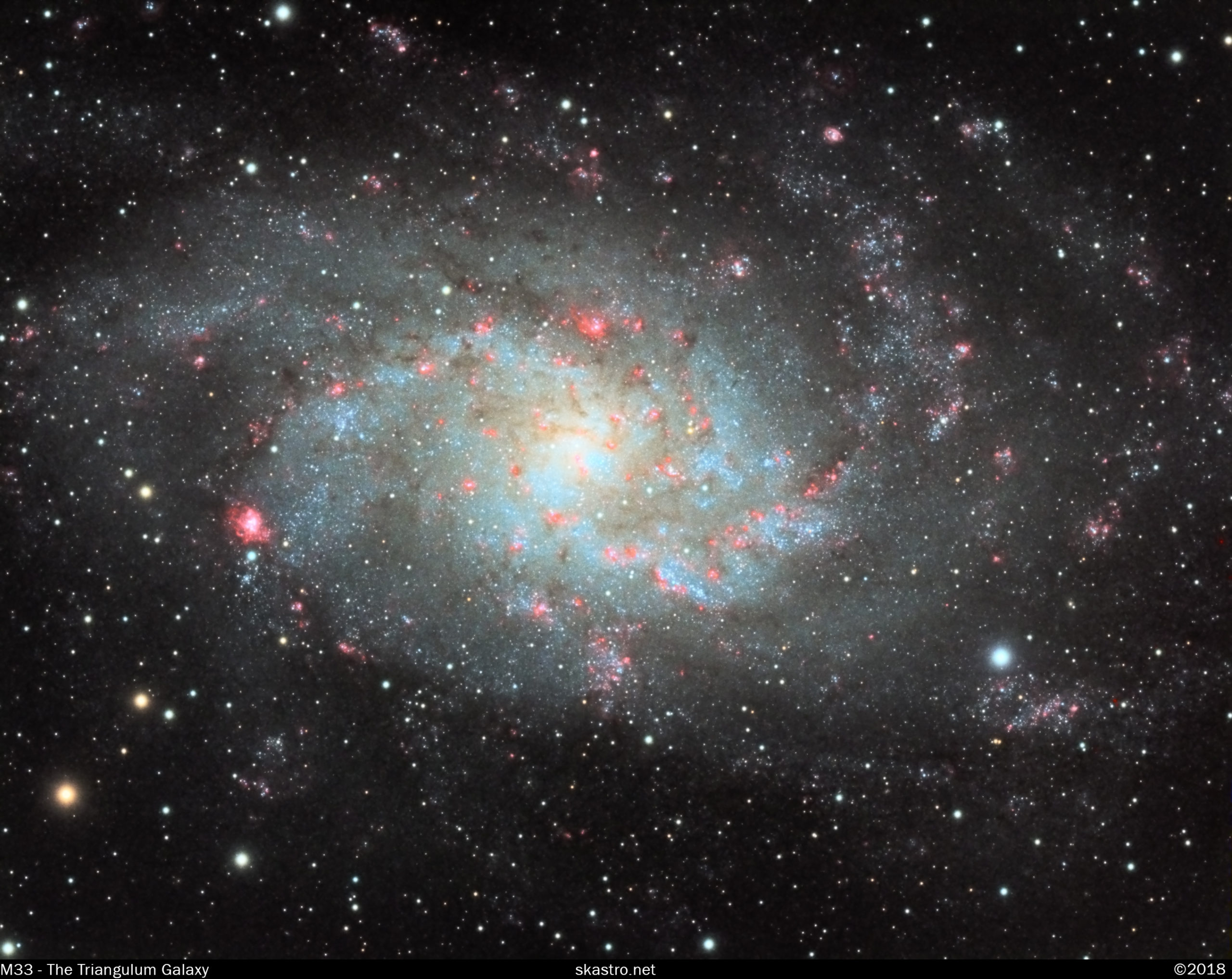
M33 With TEC140 Refractor
I have completed several images of the famous Triangulum Galaxy - M33, over the years. This is one of the most photographed objects in the sky and with good reason; it is a beautiful face on spiral galaxy that is the second closest major galaxy after Andromeda. It is bright and colourful and responds well to all types of imaging, whether with a DSLR or CCD, camera lens or telescope. It is probably the second "go to" target to photograph for astro photography beginners after the Andromeda galaxy.
The image below is a version captured with the TEC 140 refractor and Atik 460 CCD camera and is the total of about 12 hours of LRGBHa data captured from my backyard observatory in Nottingham, UK in 2018. You can see it fills the frame very nicely.


Image Technical Data
Image acquired spring 2018 and 2019 seasons over several capture sessions due to very wet and persistent cloudy weather) in my backyard in Nottingham, UK. It was acquired with TEC 140 refractor with Atik 460 CCD camera and Baader HaLRGB filters on my MESU 200 mount. Guiding was via off-axis guider.
A modest data set with everything binned 1x1 so as not to need so much luminance so a bit of an experiment! Did it work?
Luminance 10 x 300s 1×1; Red 9x 300s 1x1; Green 10x 300s 1×1; Blue 9x 300s 1x1; Ha 12 x 900s 1x1
Data processed with PixInsight and Photoshop and data collected with SGP Pro and guided with PHD2.
Here is another version of M33 with a wider field FSQ85 refractor:
https://thekirkshouse.com/m33-the-triangulum-galaxy/
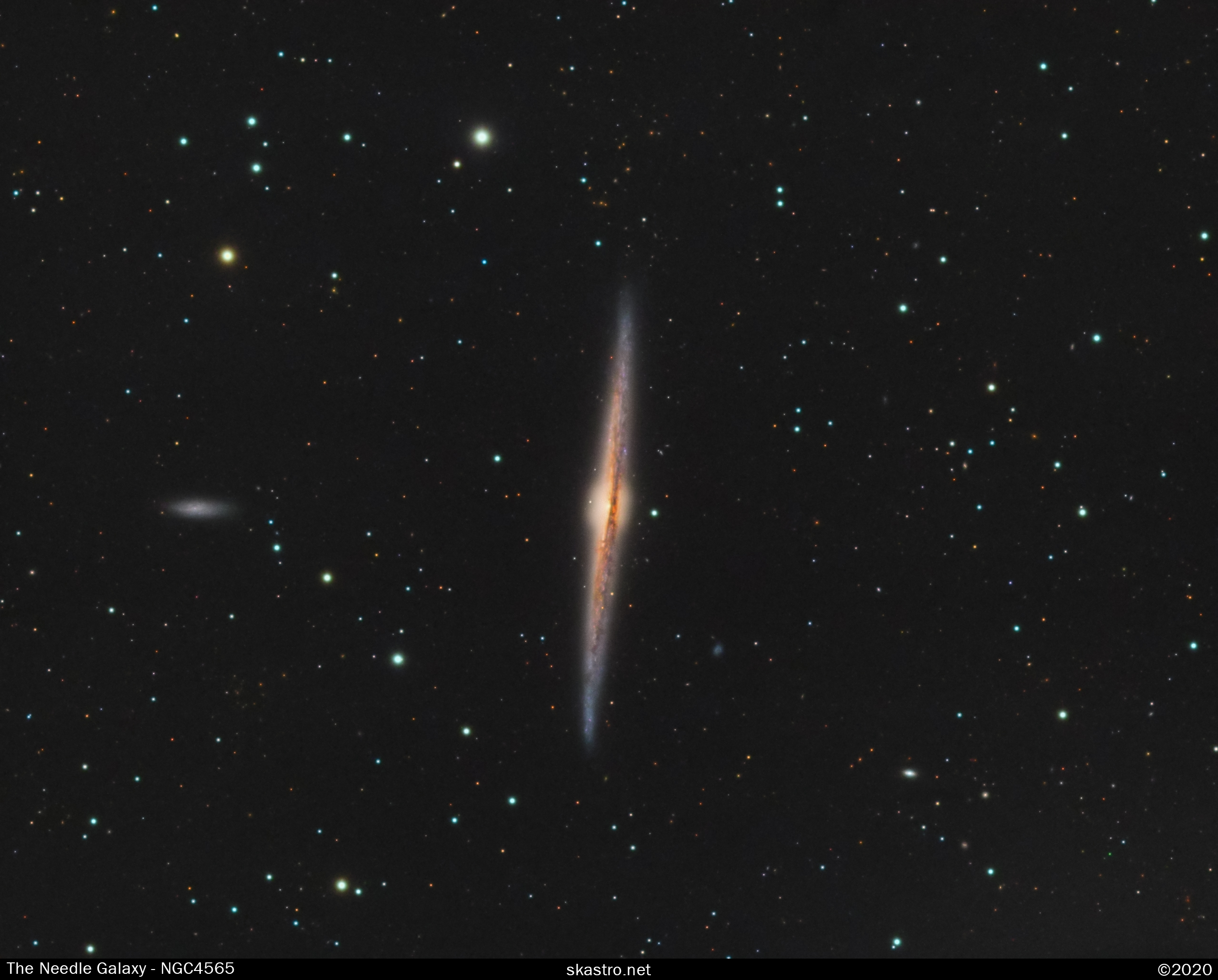
NGC4565 - The Needle Galaxy TEC 140
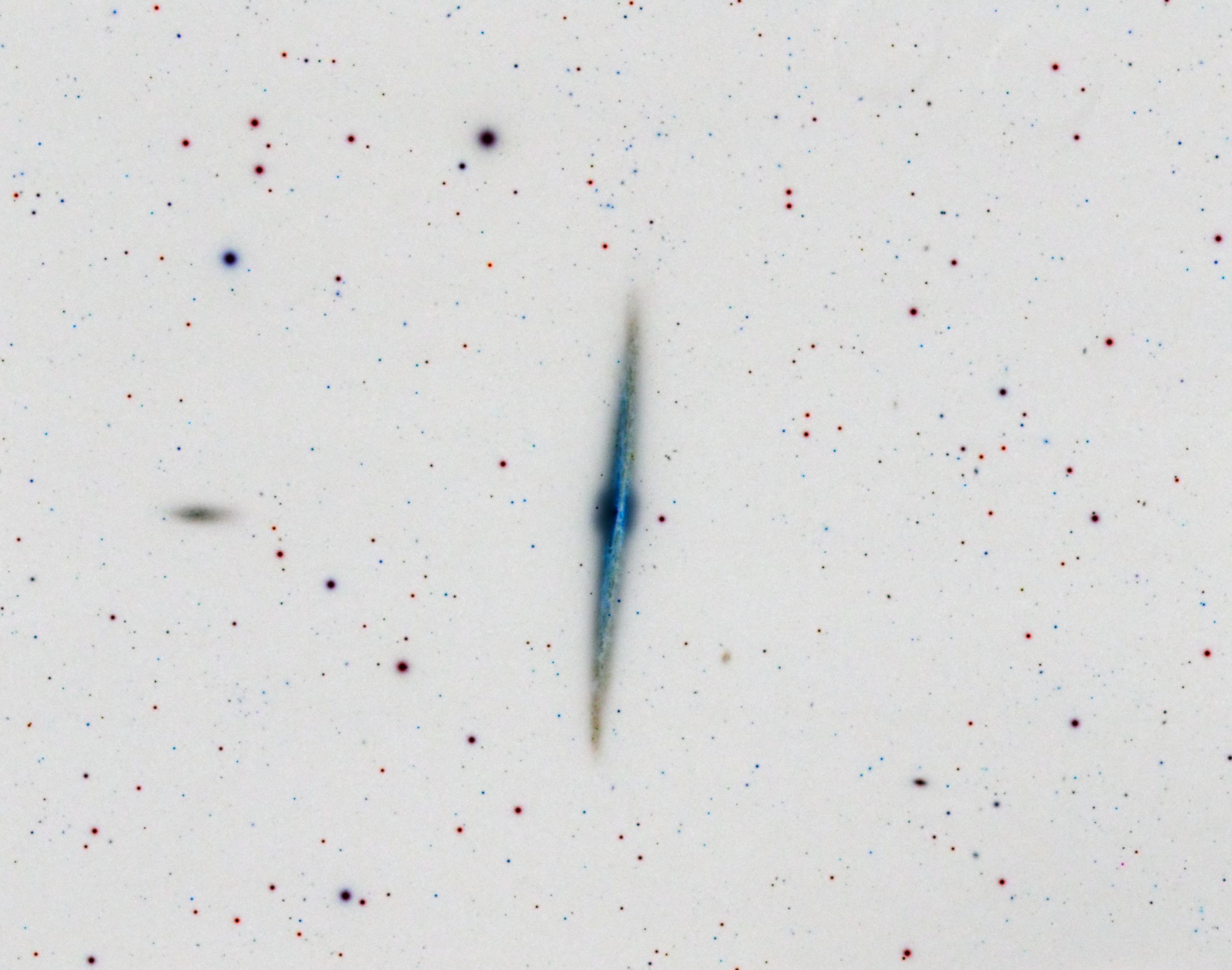
Located in the constellation of Coma Berenices, The Needle Galaxy is an almost edge on galaxy about 40 million light years away. Much detail can be seen in the dusty lanes of the edge-on spiral arms.
This picture is a two year project, off and on. I acquired the luminance data in May 2019 with a view to completing the image then. However, cloudy weather then plagued the UK for weeks, and when it eventually cleared the object had vanished behind neighbouring roofs! So I had to park this image and wait a year to collect the RGB colour data in April 2020 (whilst my country [UK] was in lockdown due to the coronavirus).
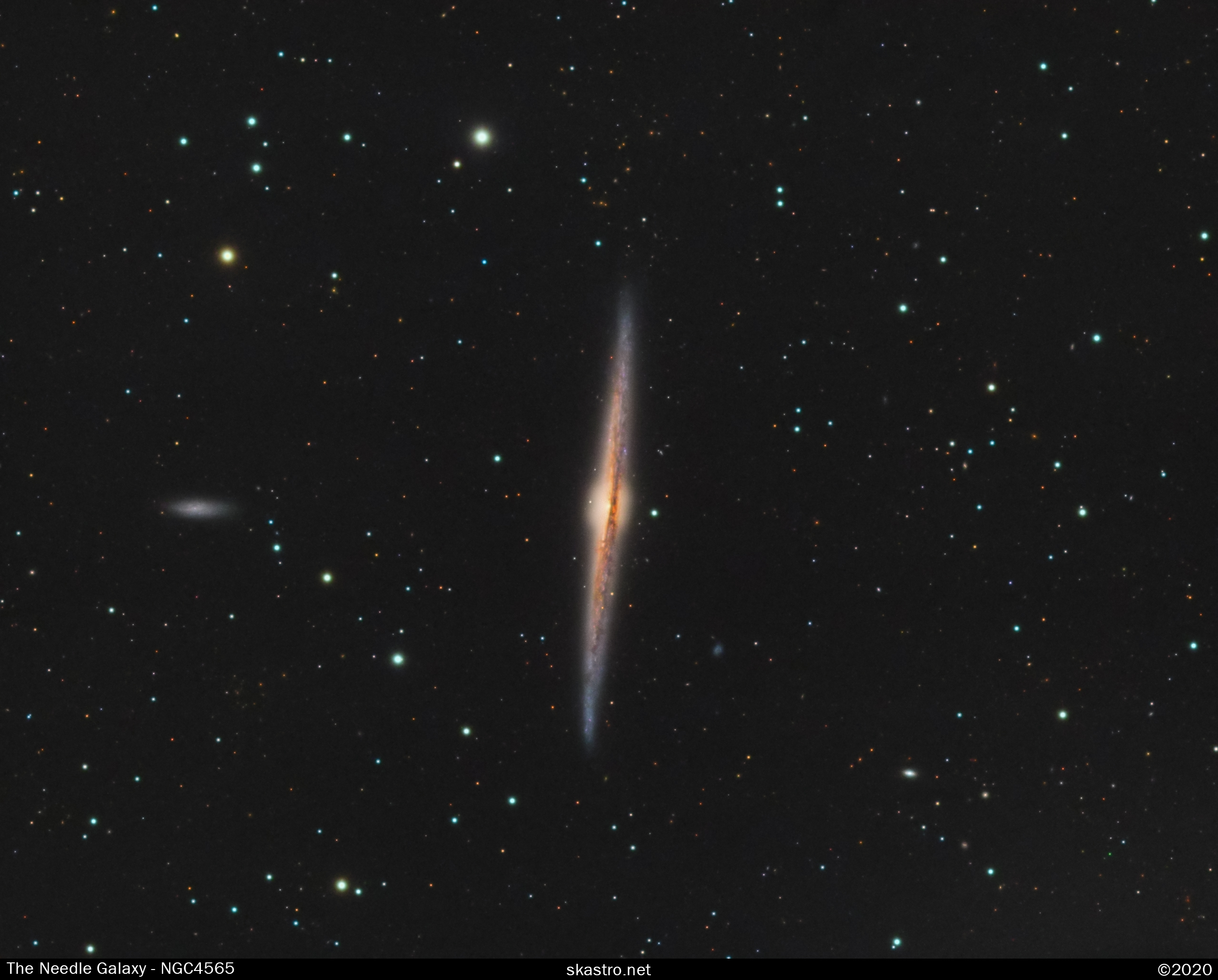
Data used to build the image collected with TEC140 refractor and Atik460 CCD camera with Astrodon LRGB Gen 2 E-series filters. I used Off-Axis guiding on my Mesu 200 mount.
Data set is 20 x ten minute luminance (1x1) and 60 minutes each in R, G and B (2x2). Processed in PixInsight and Photoshop.
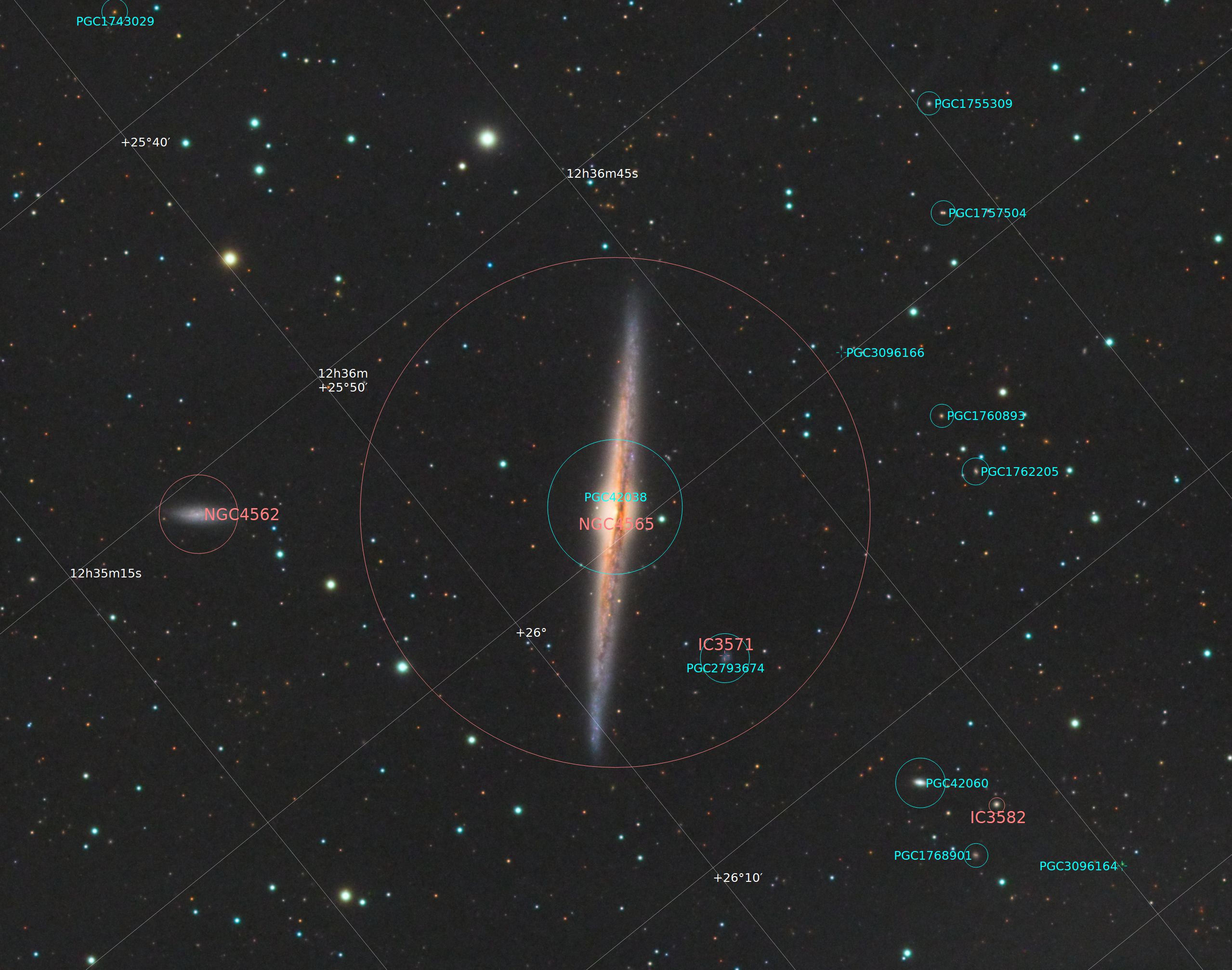
Lots of very faint background galaxies visible the image above and detailed in the annotated version below.
M81 - Bode's Galaxy in Ursa Major with TEC 140
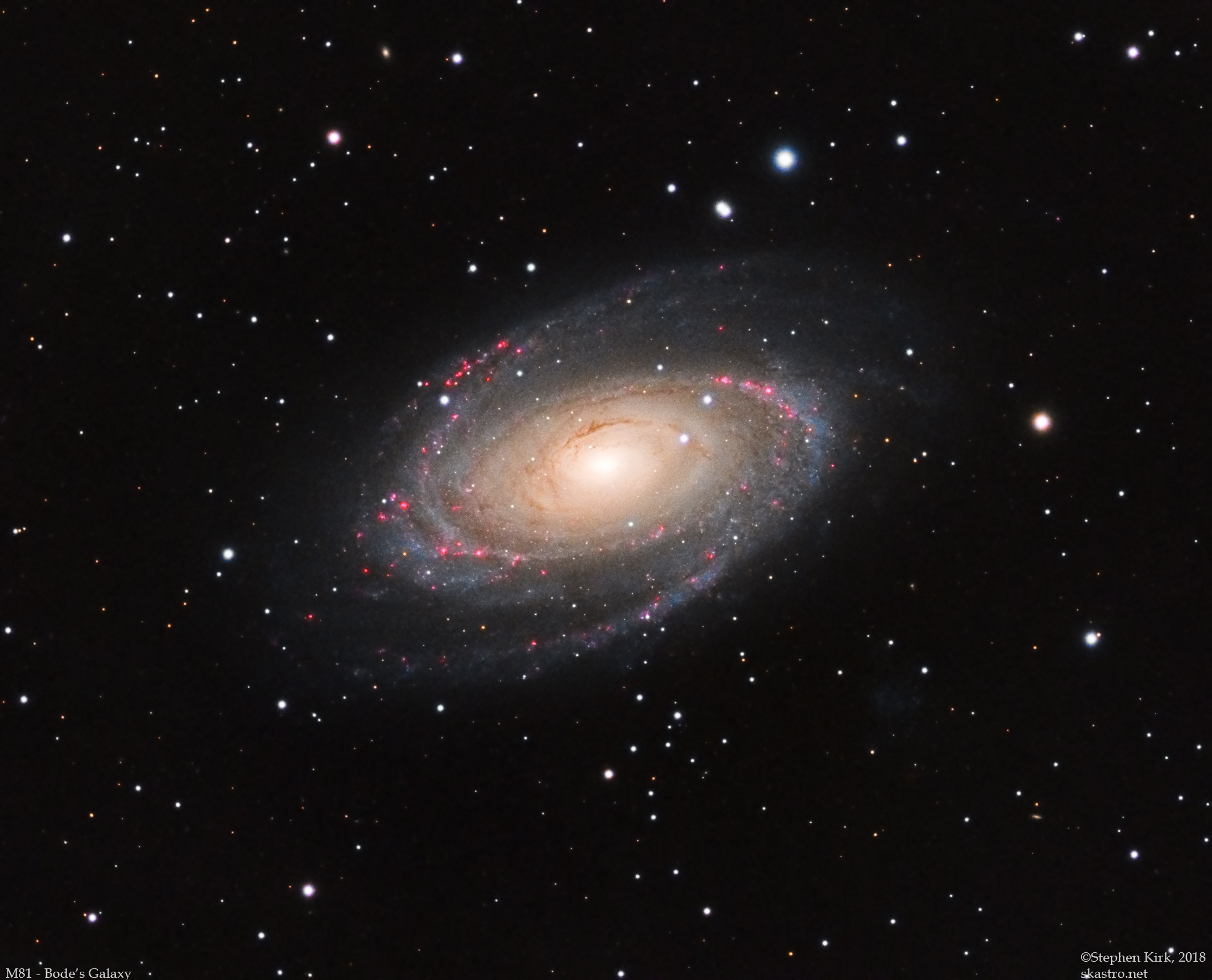
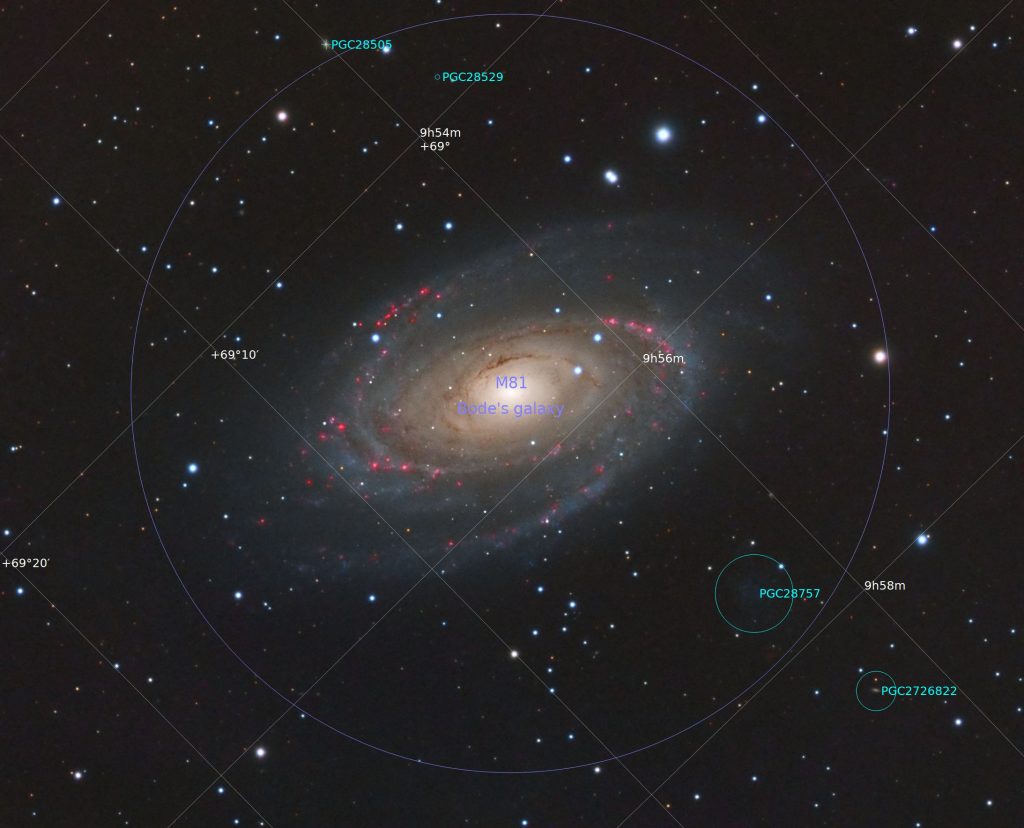
M81 is a face on spiral galaxy in the constellation of Ursa Major and it (and nearby M82) are the most northerly of the Messier objects. It is easily visible in binoculars as a faint smudge. Its open spiral arms and red HII star forming regions make it a popular target for amateur and professional astronomers alike. In this picture note at the four o'clock position the very faint satellite galaxy Holmberg II.
It is located about 12 million light years away, placing it outside of the local group and it is steadily receding from us.
I have imaged M81 in several settings. This picture was taken with my TEC140 refractor and Atik 460 CCD camera with Baader LRGBHa filters. It contains five hours of luminance of 900s exposure, two hours of Ha data and 90 minutes in each of RGB to give a total integration time of about twelve hours.
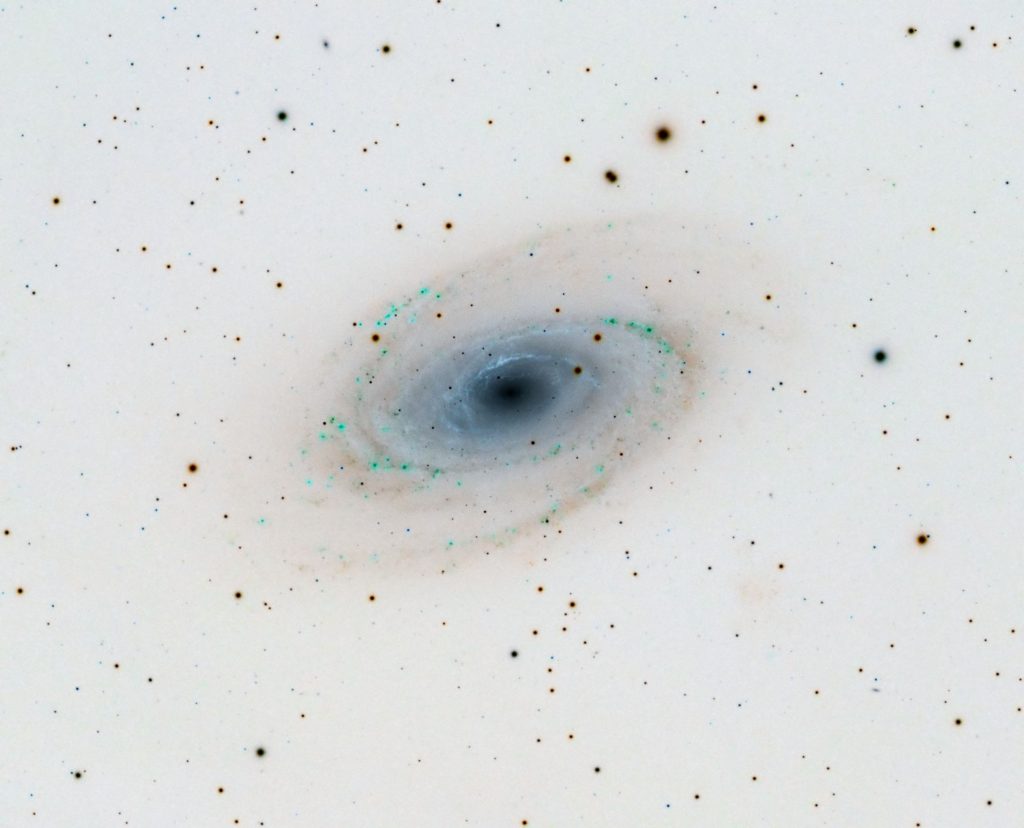
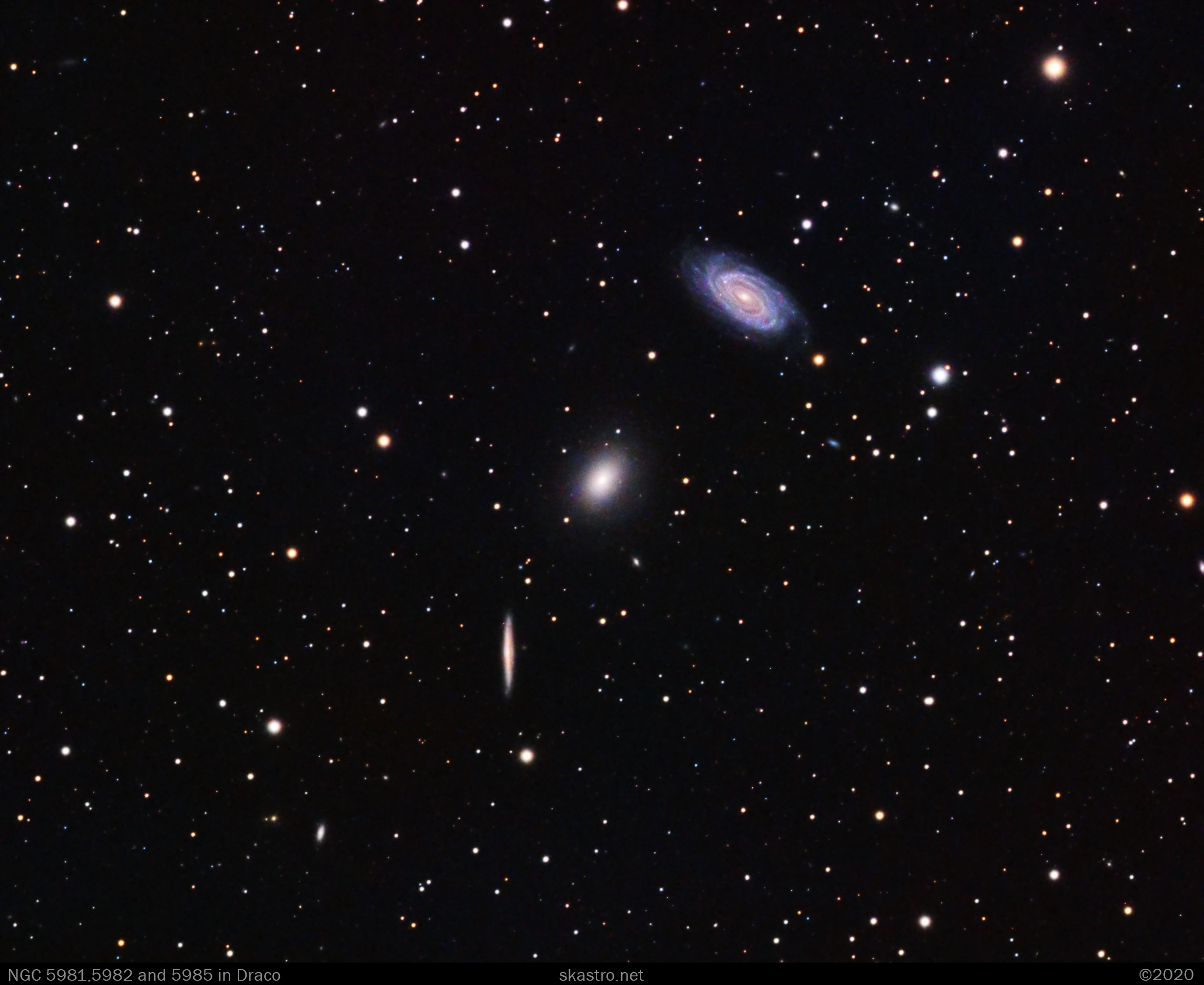
Three Galaxies in Draco
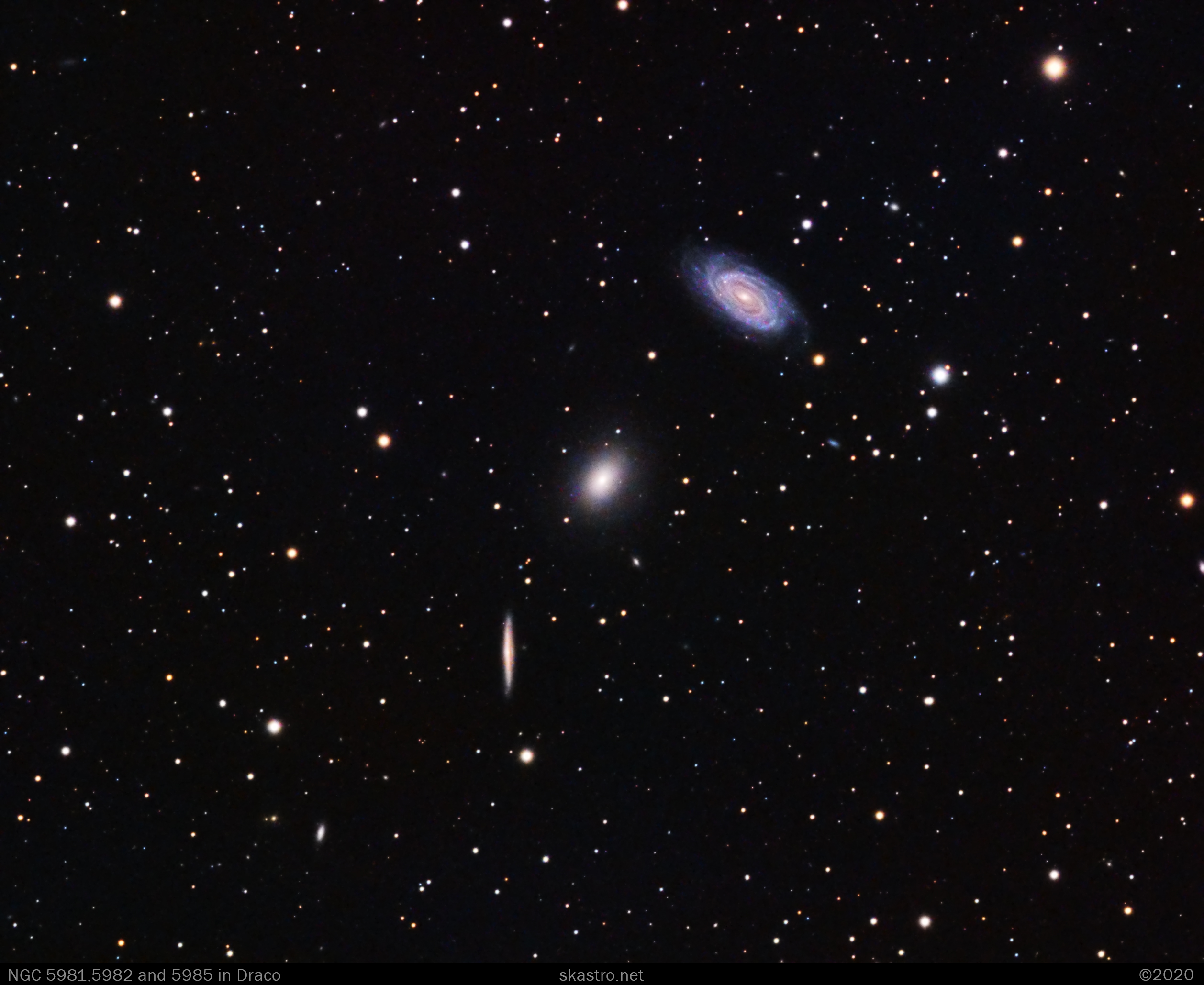
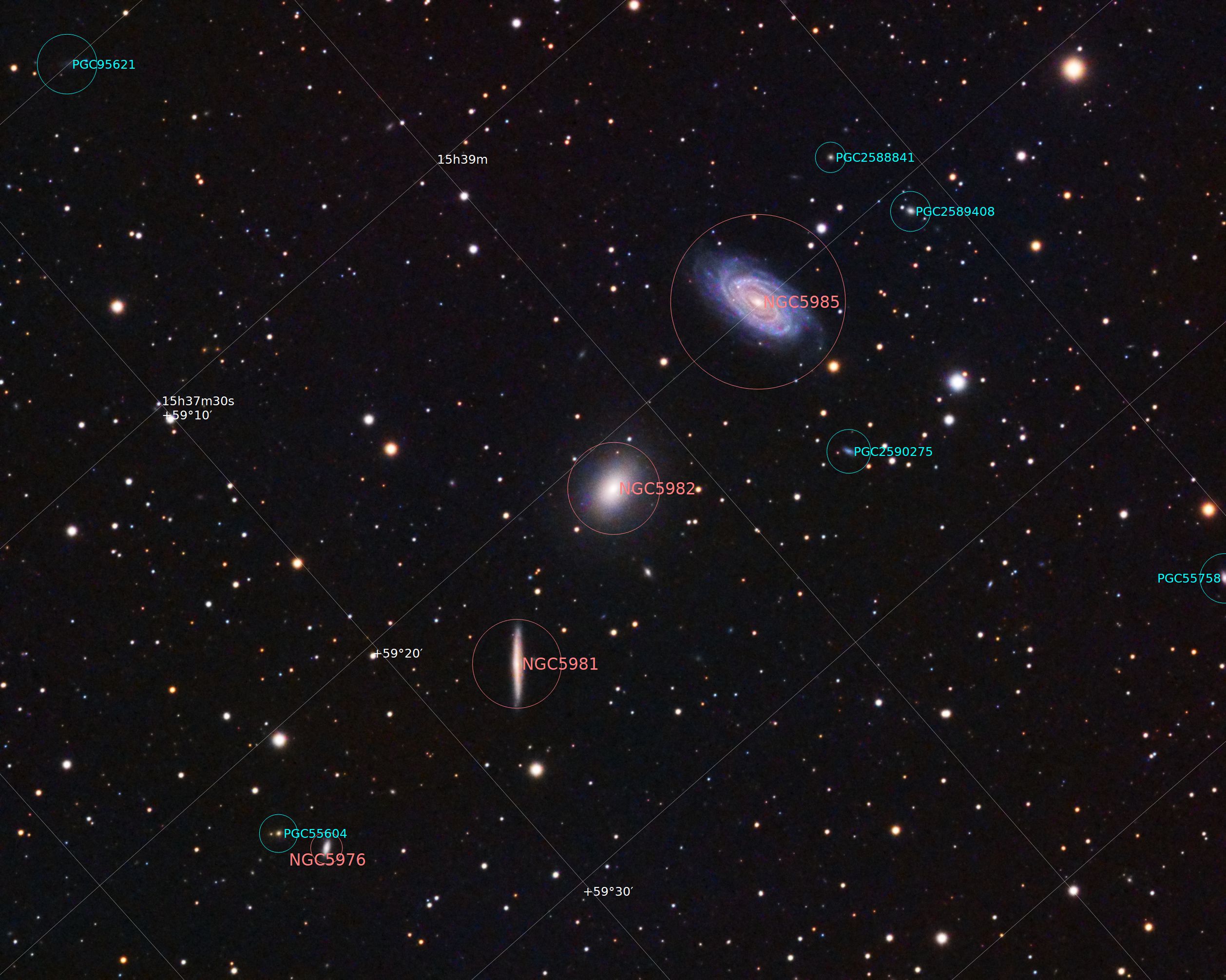
The Draco Trio is a group of three galaxies in the constellation of Draco, The Dragon. They are located about 120-130 million light years away.
This image was captured over the winter 2019-2020. I used my TEC140 refractor with Atik 460 CCD and Astrodon LRGB filters. The luminance is four hours of 15 minute exposures binned 1x1 and the RGB one hour in each filter binned 2x2. Mount is MESU200 guided with OAG with a QHY5.
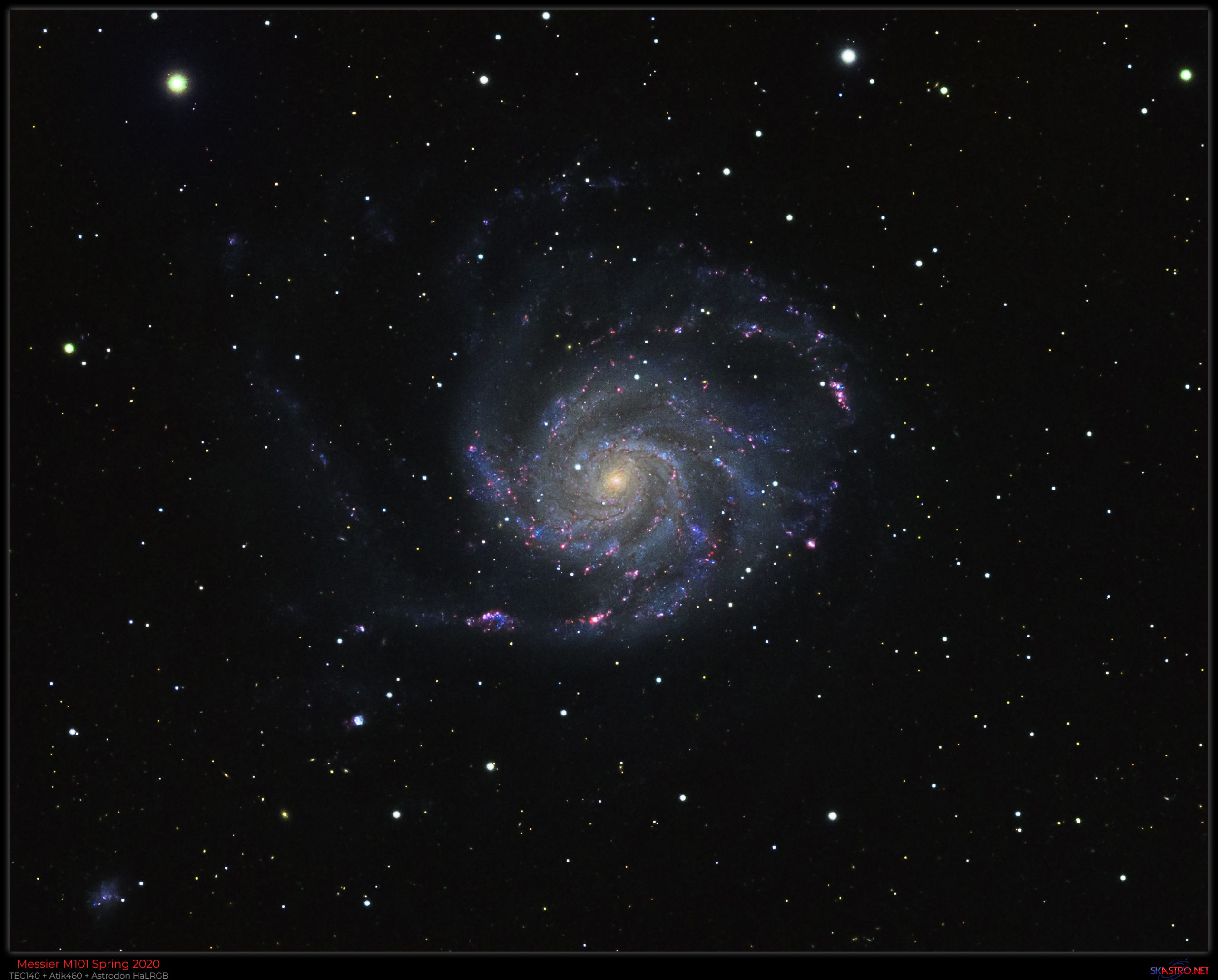
M101 - The Pinwheel Galaxy with TEC140 and Atik460

M101 - The Pinwheel Galaxy - is a spectacular, face-on "Grand Design" spiral galaxy located about 20 million light years away. It is quite a hard object to observe visually unless your skies are dark due to the galaxy's very low surface brightness. In the image below you can see the many red HII (pronounced "H-two") star forming regions. The galaxy is not a part of the local group of galaxies and is receding away from us with the expansion of the universe.

The image was acquired in my back yard observatory in Nottingham, UK with my TEC140 refractor and Atik 460 CCD camera with LRGBHa Astrodon Filters between 2018 and 2020. I used off-axis guiding to keep the telescope precisely aligned and the whole imaging ensemble was atop my MESU200 mount. M101 is not easily captured from my observatory since it is sandwiched between the neighbour's house and my house meaning that I can only grab it when it is almost at the zenith, which is where I captured these images in the early springtimes. Consequently, it took several years to acquire the data needed to build the image.
The imaging data set is as follows:
Luminance > 20 x 900s binned 1×1 ; Red > 18 x 300s 2×2 ; Green > 18 x 300s 2×2 ; Blue > 18 x 300s 2×2 ; Ha > 24 x 300s 1x1
This gives a total integration time of about 11.5 hours. This is a large investment of time on a single object in the UK skies, where clear nights are a great rarity.
I used Sequence Generator Pro for image capture. I then used PixInsight for pre processing to get to the five LRGBHa master files. I then used PixInsight to create the HaRGB and Luminance master TIFF files. I then switched to Photoshop to do the blending of these two L and HaRGB with multiple layers of blending saturation and tweaking. As I have mentioned elsewhere, I find it easier and more intuitive to do this in Photoshop as opposed to LRGB combination tool and/or PixelMath in PixInsight since blending inside Photoshop gives immediate feedback off the effect when the sliders are tweaked. A personal preference and I am sure many folks are completely happy doing this task purely inside PixInsight.
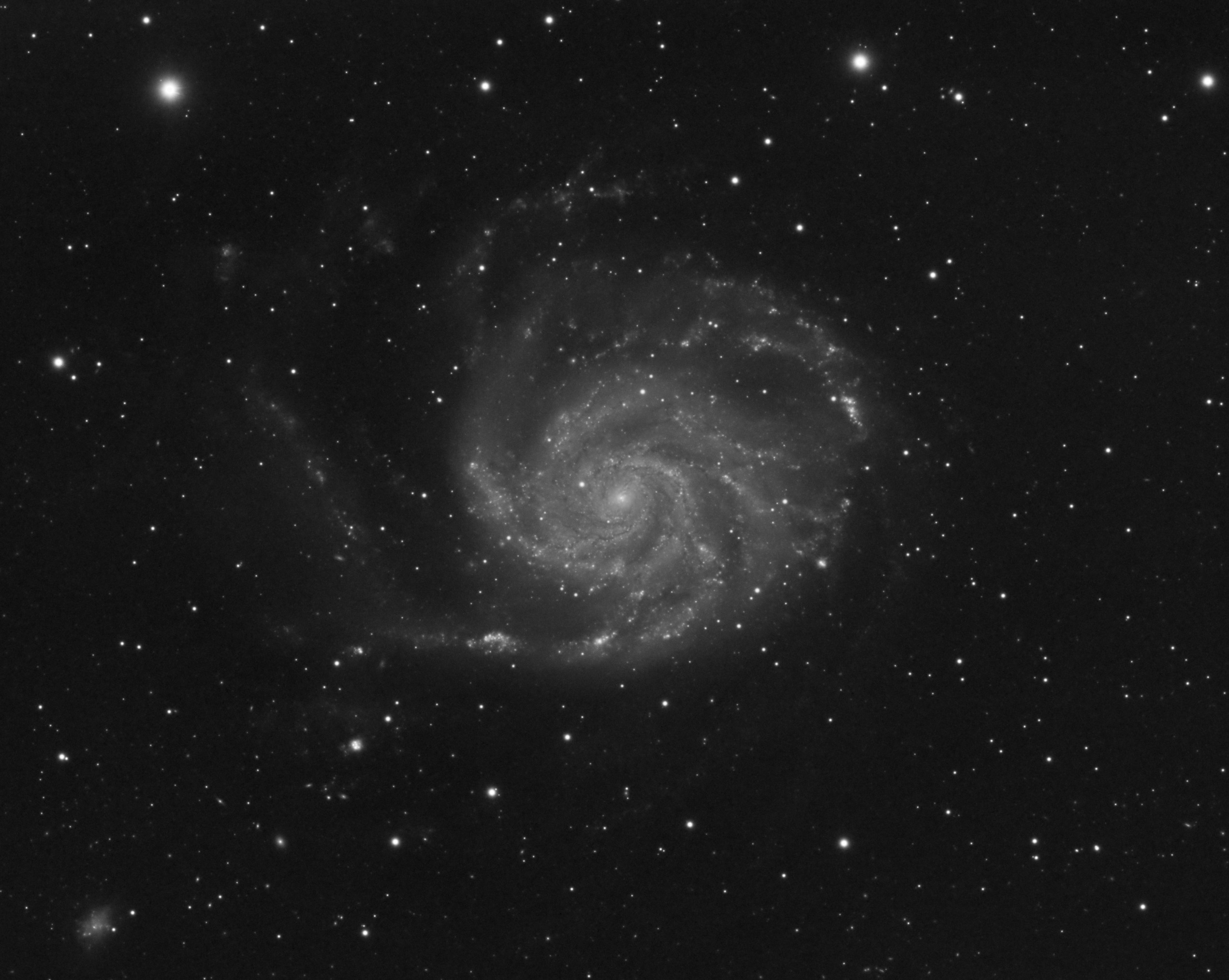
Above is five hours of luminance only. It reveals much of the fine structure inside the galaxy's core and spiral arms. This data was then blended into the RGBHa composite.
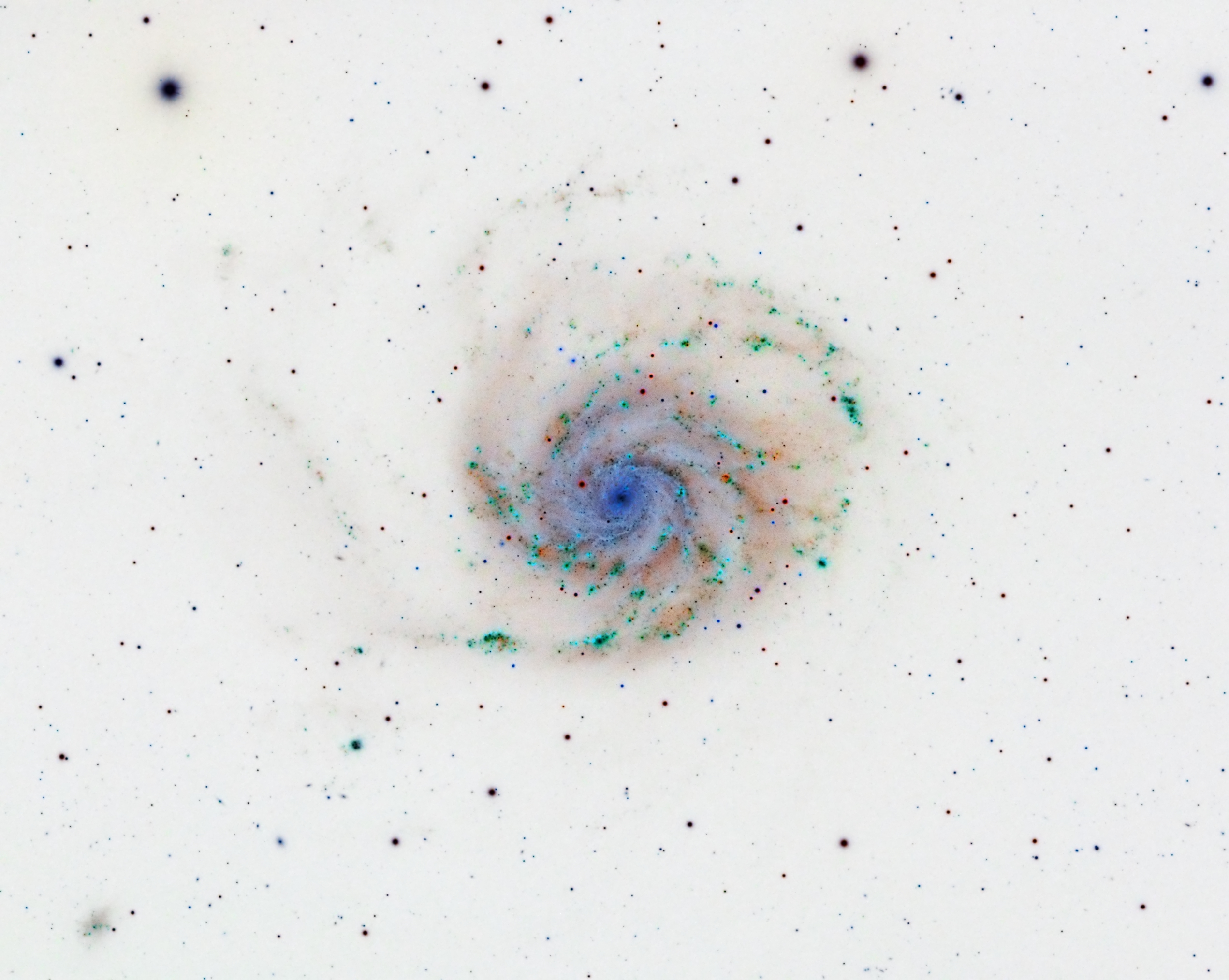
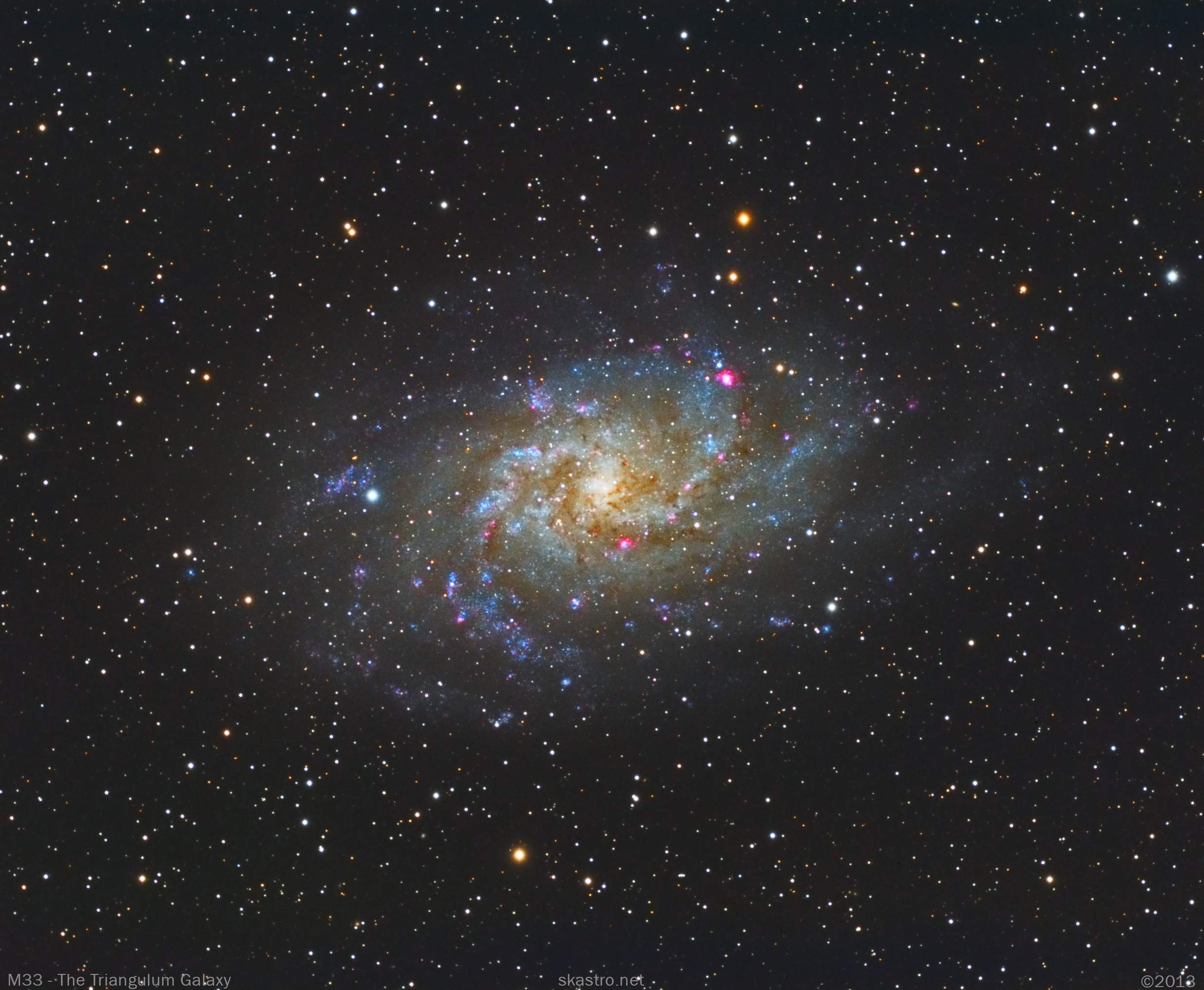
M33 - The Triangulum Galaxy
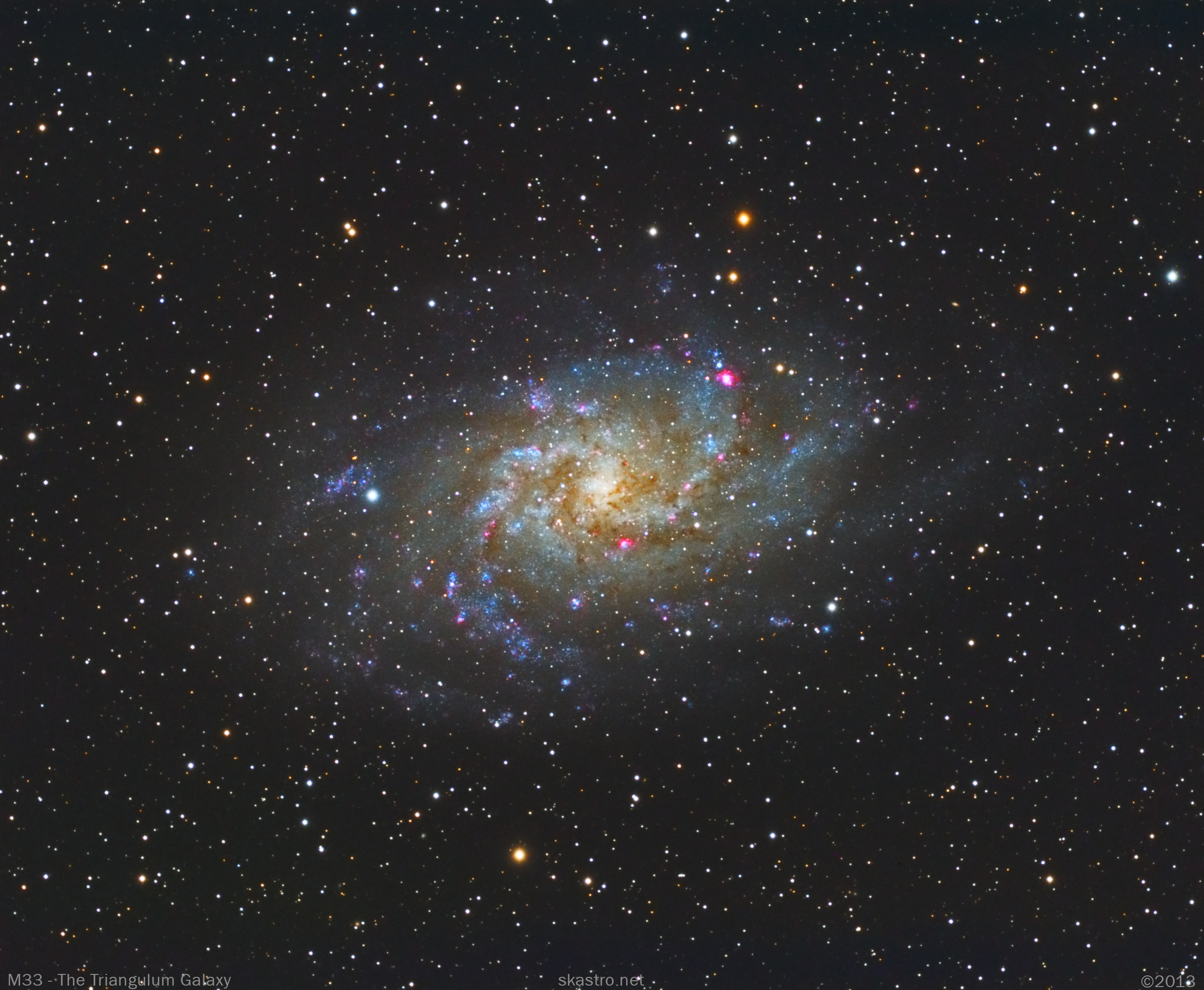
This is about two hours each of LRGB (in each filter) with the Takahashi FSQ85 telescope and Atik 460 CCD camera with Baader LRGB filters. I did not use a Ha filter on this image. The data was collected on 29th November 2013 and it was the second light of the telescope (first light being The Double Cluster here). The telescope performs superbly and is very well colour balanced.
At a distance of about 2.8 - 3.0 million light years, M33 is the most distant object that can be viewed by the unaided eye and is visible in a dark sky setting as a very tenuous patch of light. Being a face-on galaxy, it has rather low surface brightness and it lacks a bright central core making it quite hard for beginners to find as they expect to see something much brighter and more colourful.
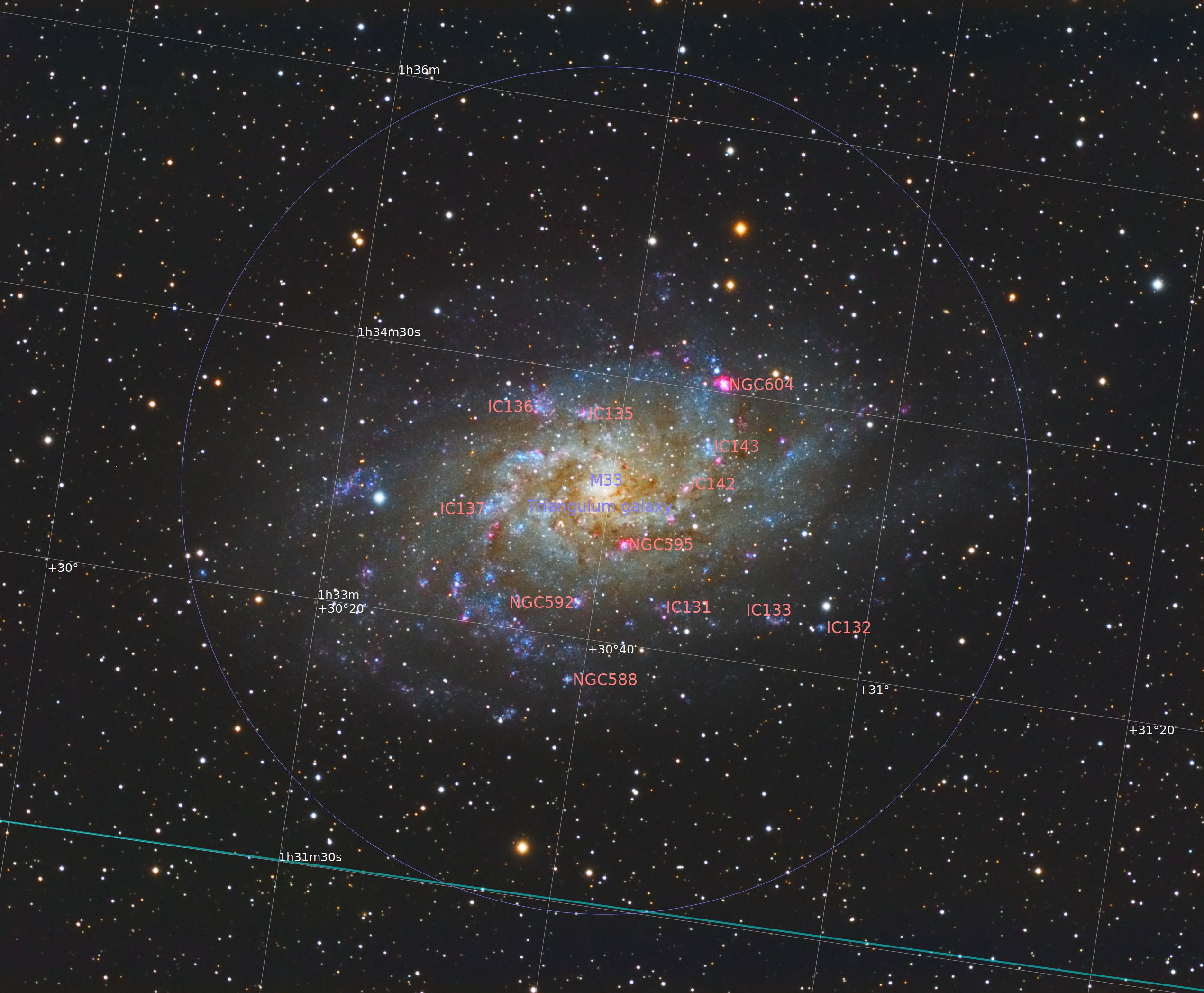
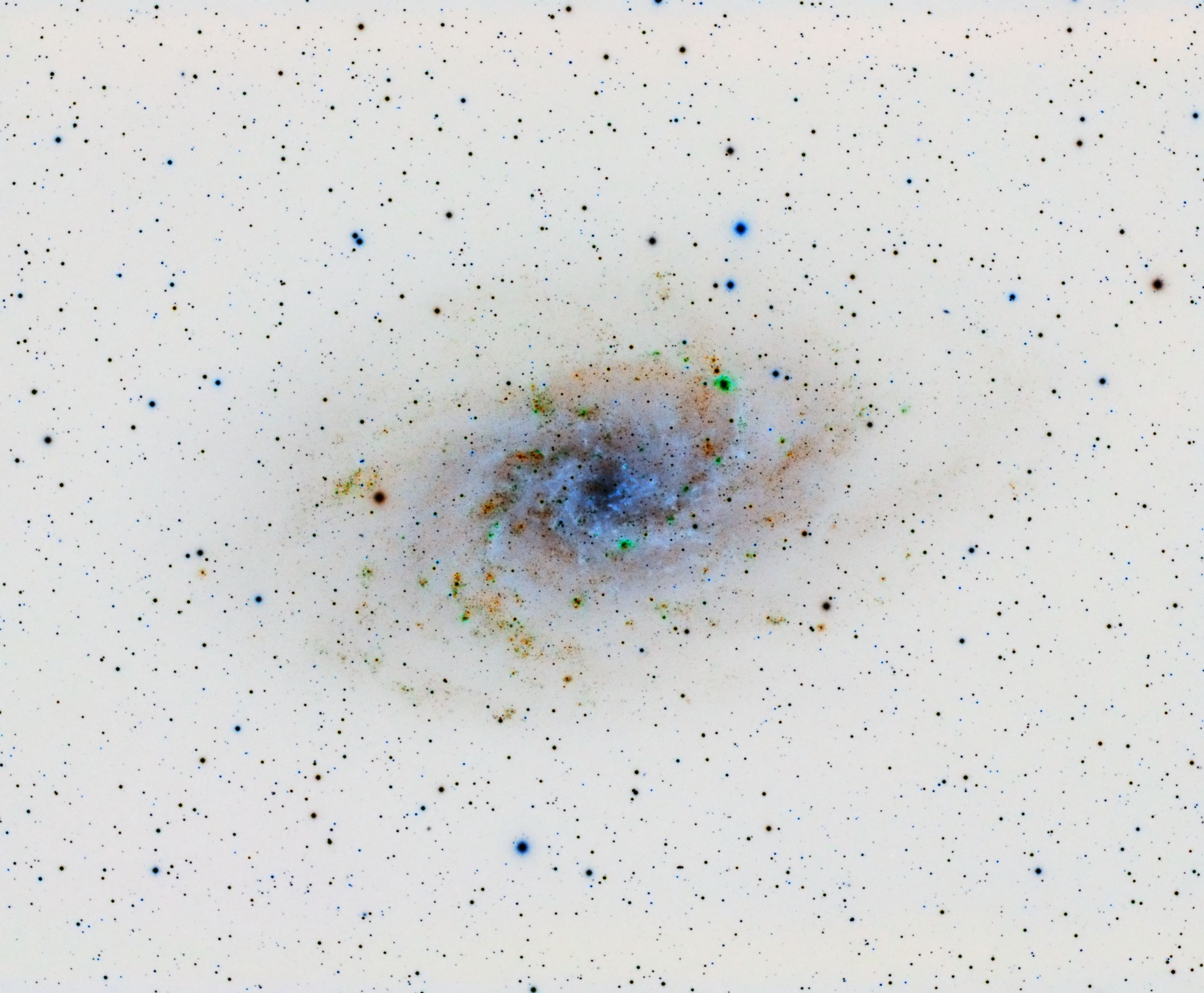
The two above images show an annotated and an inverted version of the galaxy.