
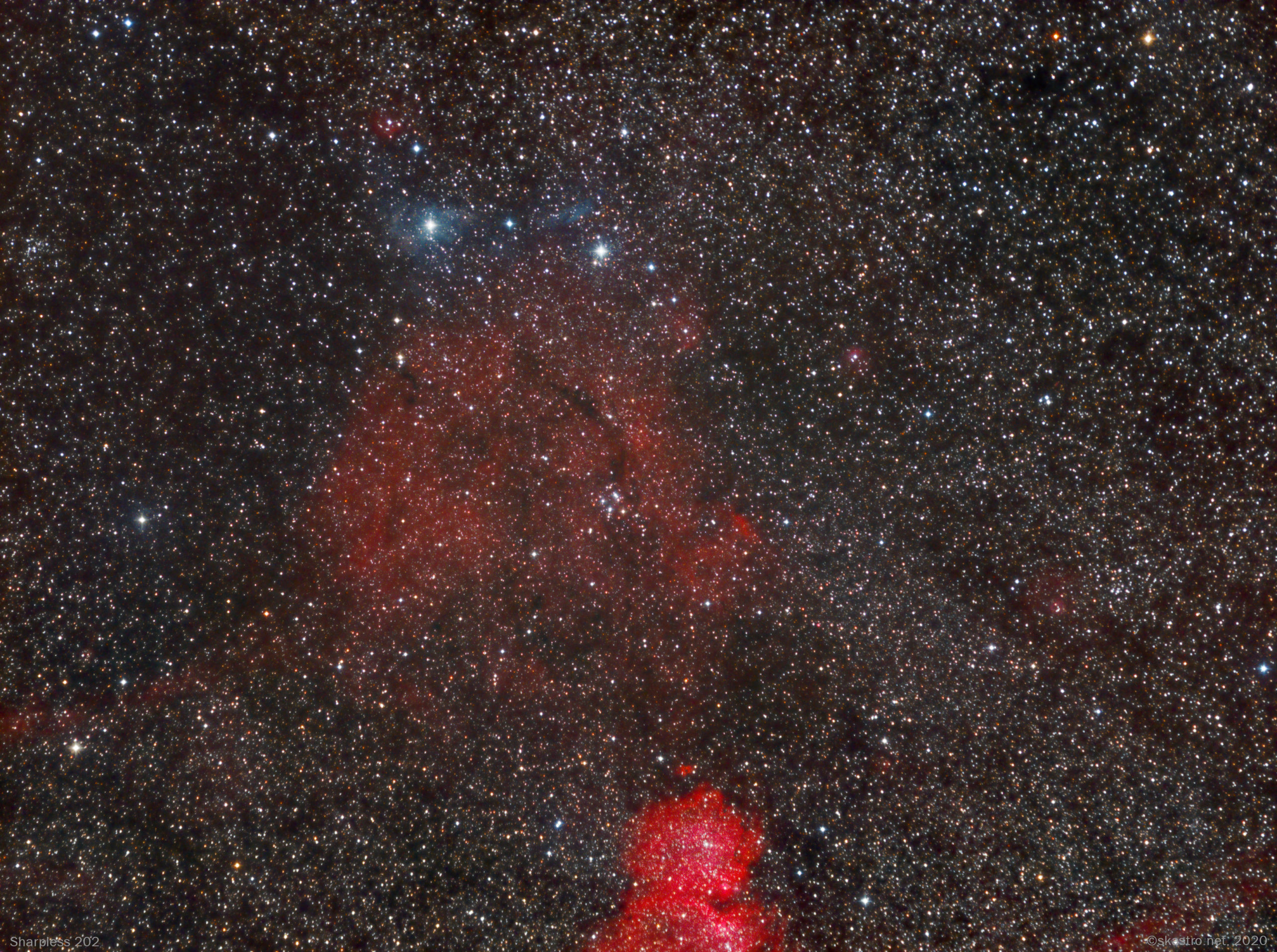
Sh2-202 (Sharpless 202) Samyang 135mm

This image shows Sh2-202 glowing to the left of centre with the top of the Soul Nebula at the bottom. Several other Sharpless Catalogue objects are also visible together with a few objects from the VdB catalogue.

Image Technical Data
This image was captured from my back yard with my widefield rig consisting of my Samyang 135mm lens with Moravian Instruments G2-8300 CCD camera and Astrodon RGBHa filters. I used my NEQ6 mount. The data was acquired when the object was overhead from Nottingham UK on 29 November 2019. All data acquired in one imaging run and all exposures binned 1x1 and 300seconds:
Ha(3nm) 180 mins, Red>50mins, Blue>45mins,Green>45mins
I hope you like it!

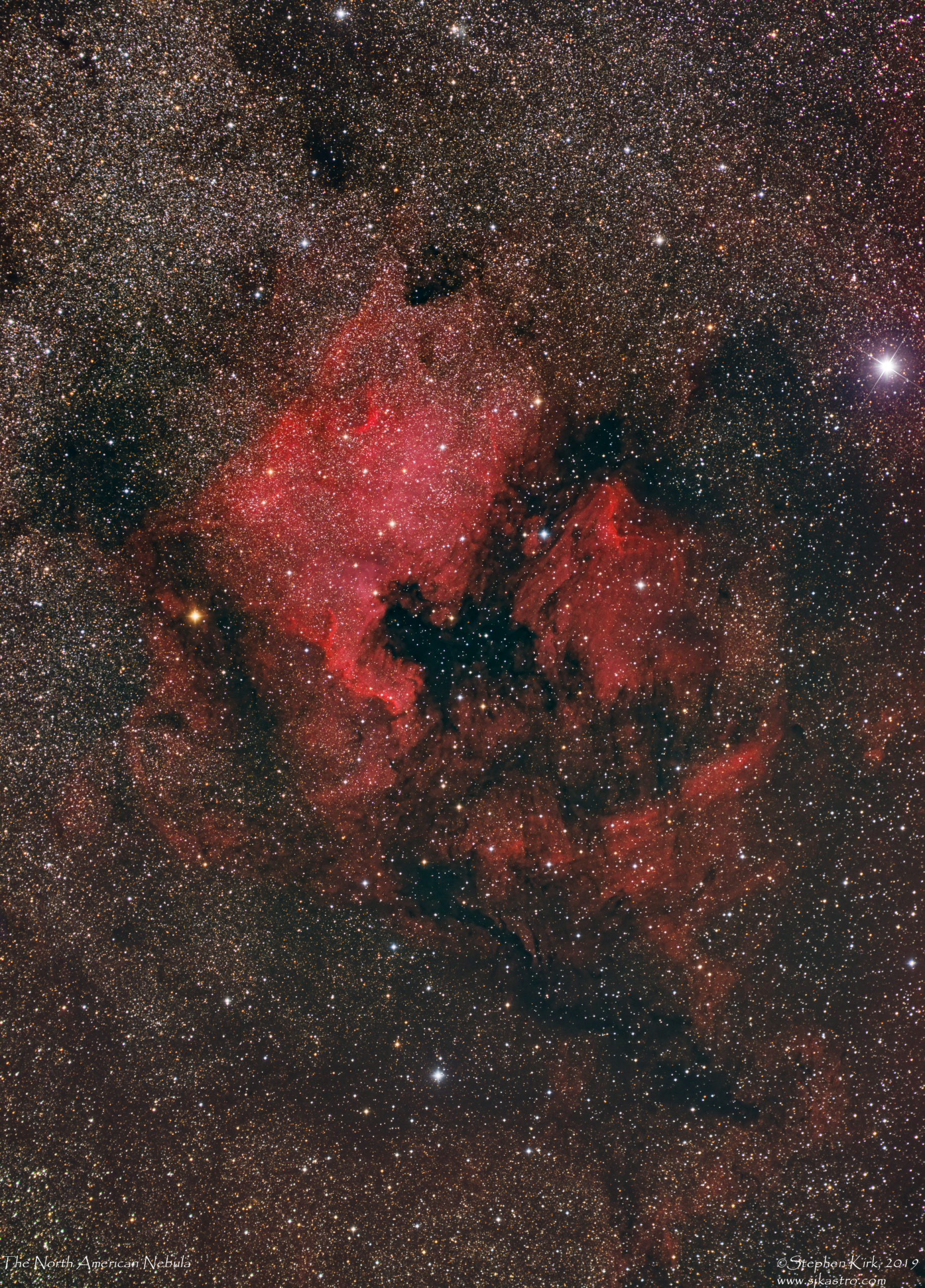
The North American Nebula with Samyang 135mm

Above is 120 minutes worth of Hydrogen Alpha data captured in five minute exposures with an Astrodon Ha 3nm filter and a Samyang 135mm camera lens on a Moravian Instruments G2-8300 CCD camera.

I then captured one hour in each of the Astrodon R,G and B filters with the same rig as detailed for the Ha image, again in five minute exposures. However, use of the superb Astrodon E series RGB filters produce a nice image and the colours are brought out quite nicely although it lacks a bit of punch and vibrancy.
The bright star to the right is Deneb.

In Photoshop I broke out the red channel and then blended it as a 50:50 mix with the Ha image (at the top of this page) before recombining back into RGB. I also saved a copy of this HaR constituent and then used that as a luminance layer to really make the image pop. I then used a series of high pass filters to reveal finer structures in the image.
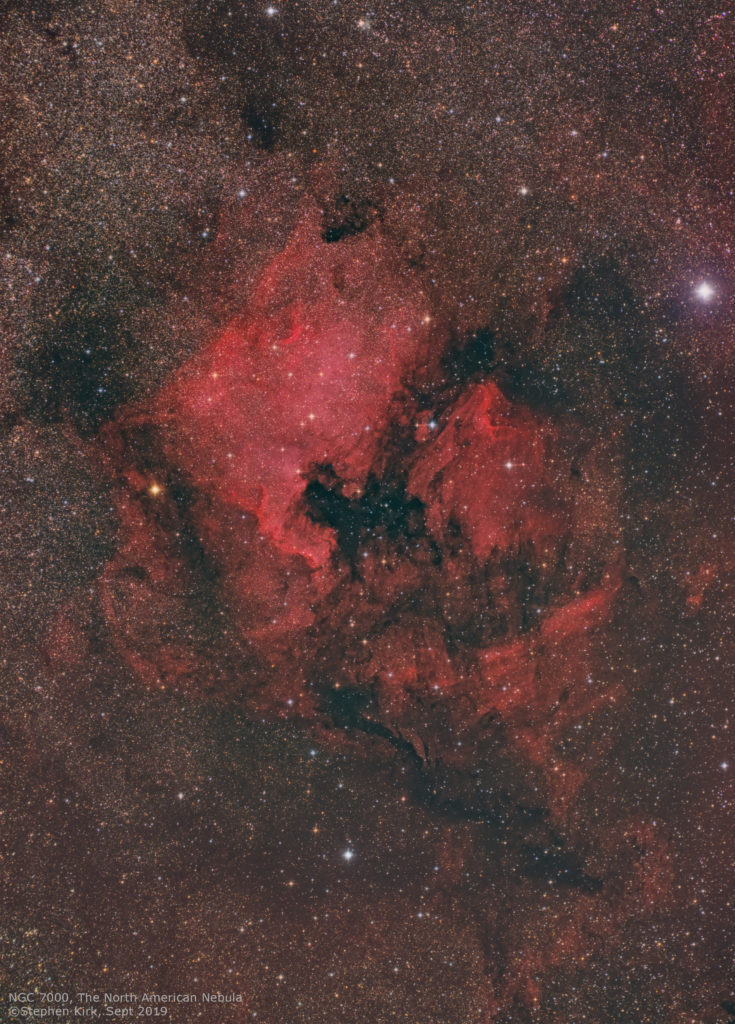
Markarian's Chain
A famous string of galaxies in the constellation of Virgo, named after the astronomer Benjamin Markarian who first discovered their common motion. The chain contains several Messier catalogue objects and is visible in the late winter and spring in the Northern Hemisphere. The galaxies are located between 65-75 million light years away and are nice objects to observe with a telescope if you can do so from a dark sight.
This image was created from a data set acquired in Spring 2019 with my FSQ85 refractor.
Image is centred on "The Eyes" of NGC4435 and NGC4438 just below dead centre of the image. At the bottom is the monstrous supergiant elliptical galaxy M87, the most massive object in the local universe harbouring the famous black hole recently imaged with the event horizon telescope.
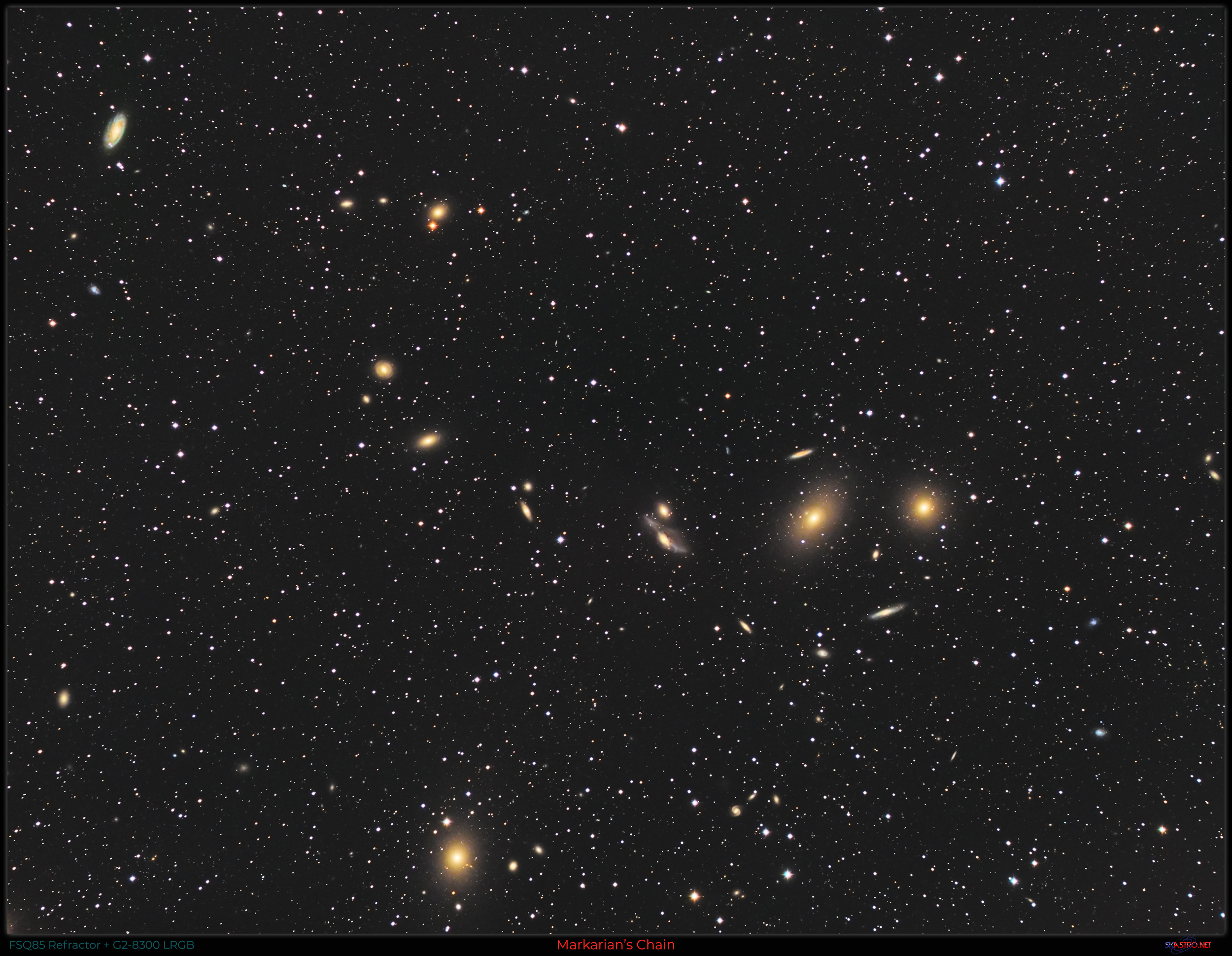
Below is an inverted version that help show the galaxies with more contrast.

Technical Information
The data set was acquired with my FSQ85 refractor with the 0.73 reducer and Moravian Instruments G2-8300 CCD camera with Astrodon LRGB filters.
Data set is as follows: Lum > 26 x 600s ; Red 14 x 300s ; Green > 14 x 300s ; Blue > 14 x 300s
Everything binned 1x1 on my MESU 200 mount and using off axis guiding. The data was acquired in two nights. The data is processed with PixInsight and Photoshop.
Below are two annotated versions; a simpler version showing the main Messier, NGC and IC catalogues and then, at the bottom, a version adding the hundreds of PGC (Primary Galaxy Catalogue) objects deep in the universe many of which are billions of light years away.


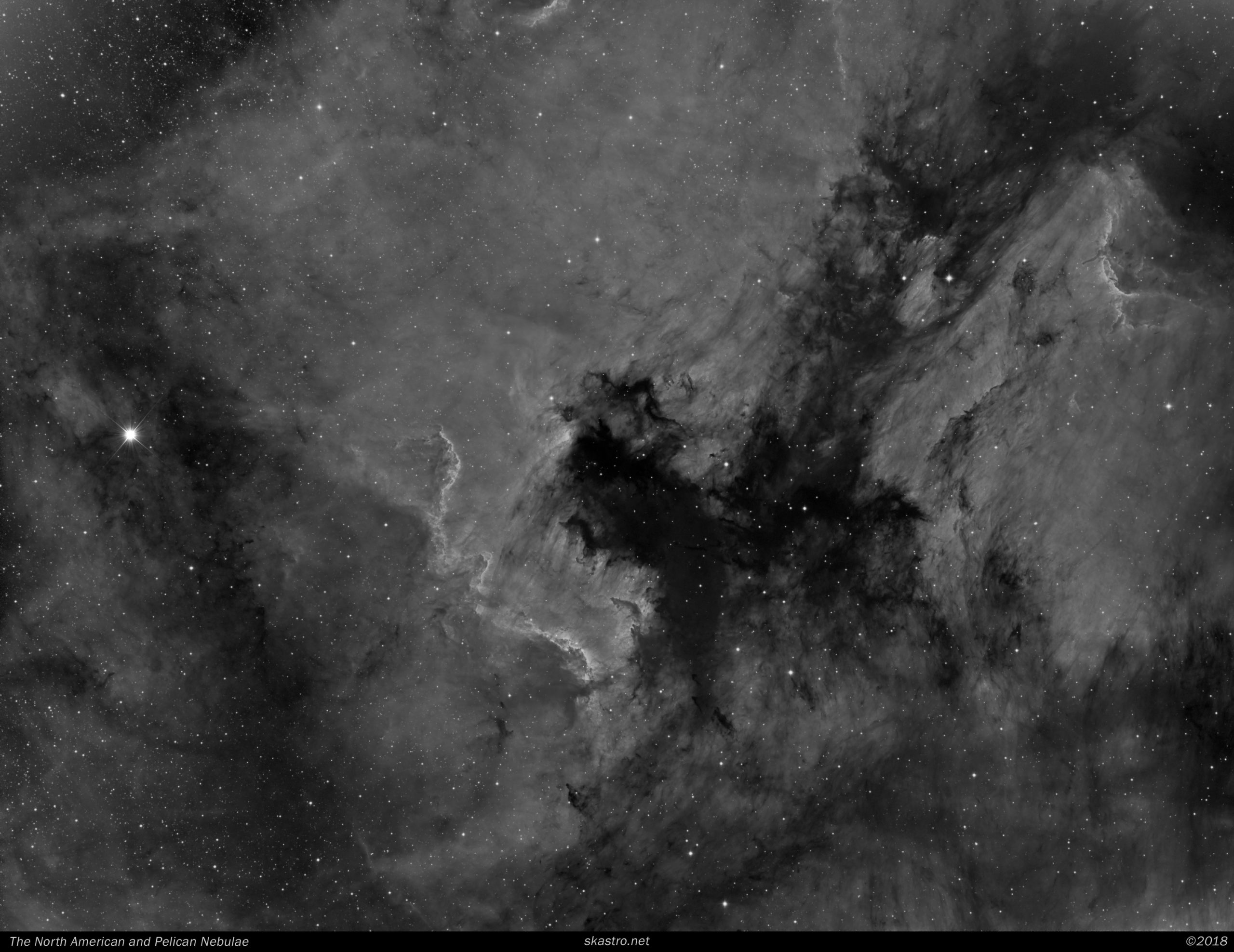
The North American and Pelican Nebulae in Hydrogen Alpha
The North American Nebula and the adjacent Pelican nebula to the right of it are popular objects of the summer and autumn sky in the Northern Hemisphere. Both of these objects are aptly named because the nebula to the left really does look like the continent of North America being looked at by a pelican to the right!
This post discusses a version of these objects in the light of Hydrogen Alpha 3nm only. You can see the vast amount of detail that is emitted at this wavelength by the clouds of hydrogen that the nebulae are composed from.
This picture is composed of 48 x 600s exposures with a Takahashi FSQ85 refractor and Moravian G2-8300 CCD camera with an Astrodon 31mm 3nm Ha filter and the Takahashi 0.73 reducer. The image discussed here is a pure Ha monochrome image but I also combined this data set with RGB colour data as well that you can see here.

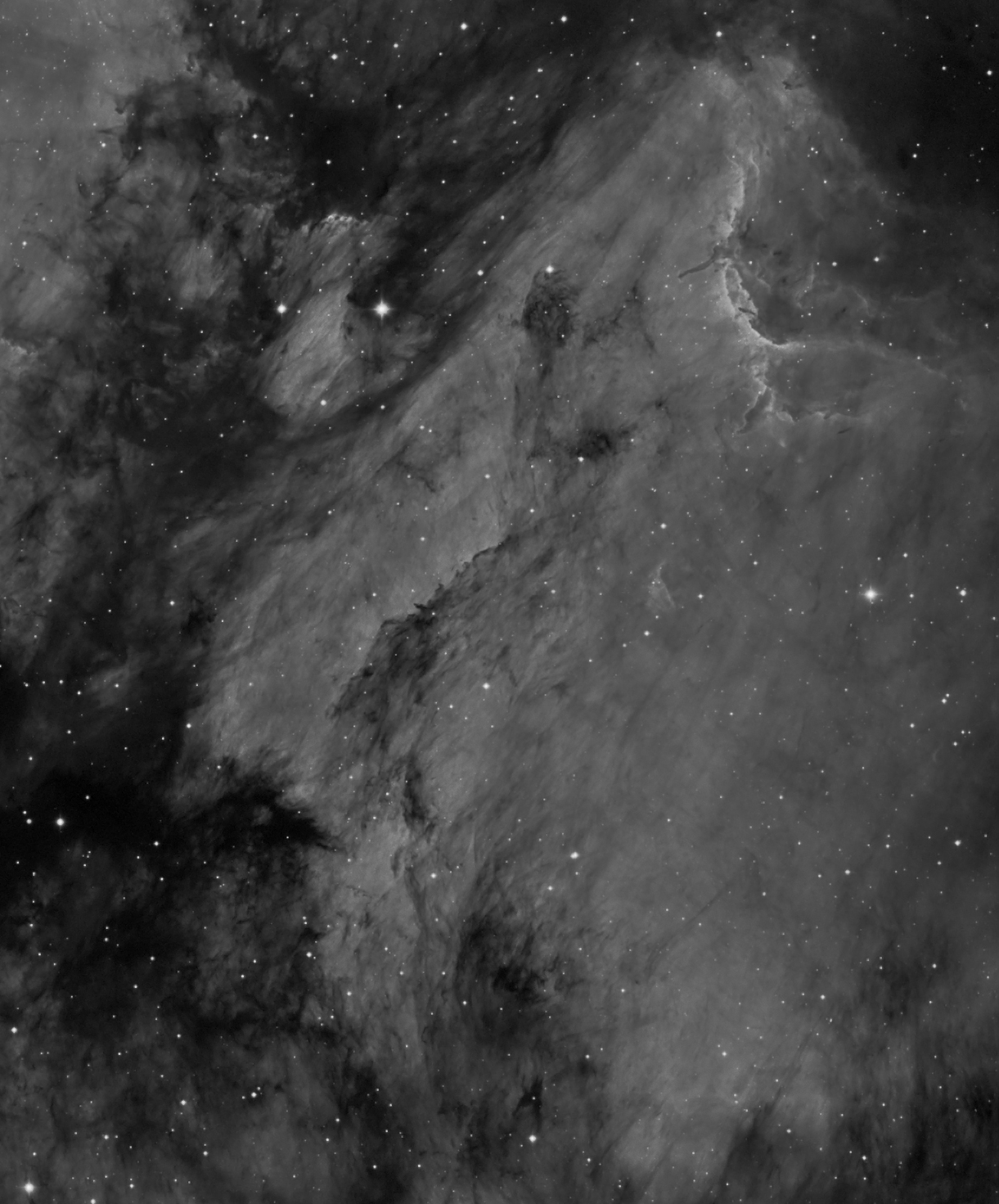
A snippet of the above picture showing The Pelican nebula.
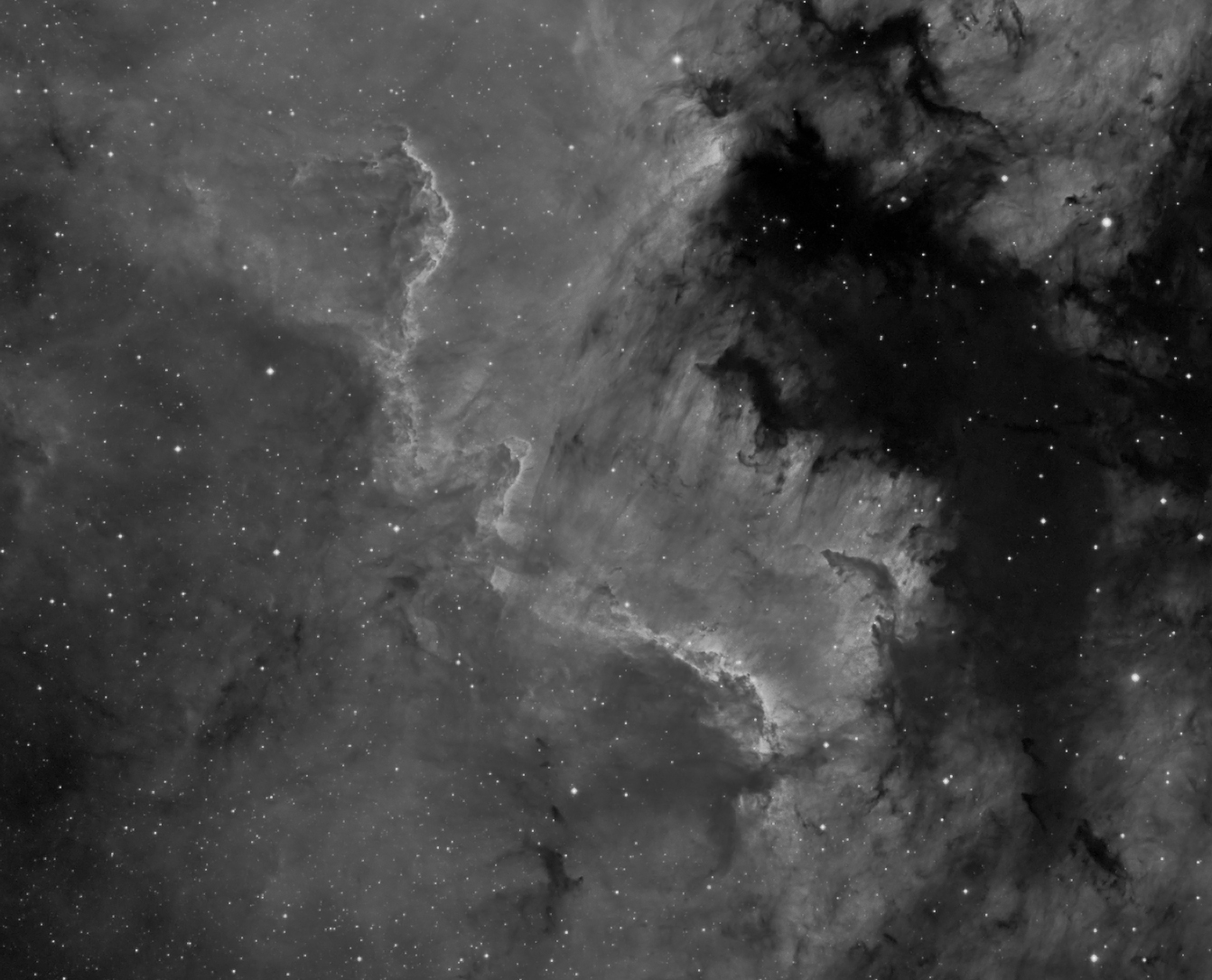
This shows the portion of the nebula commonly known as "The Wall"
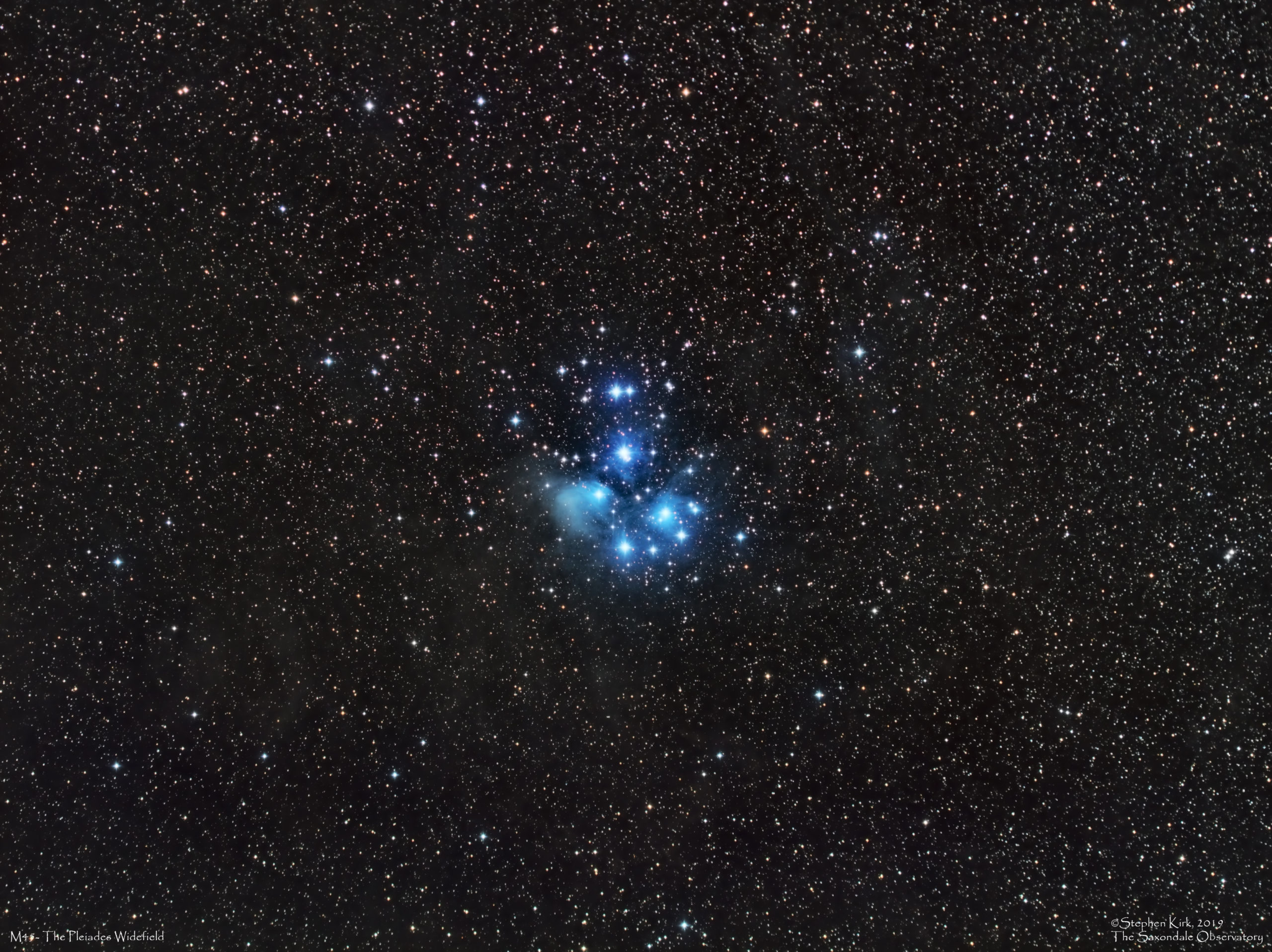
M45 in a Widefield

An image of the Pleiades taken with a Samyang 135mm lens and Astrodon RGB filters.
Field of view is approximately 6x4 degrees.
Taken 18 November 2019 and 10 x 180s exposures in each filter.

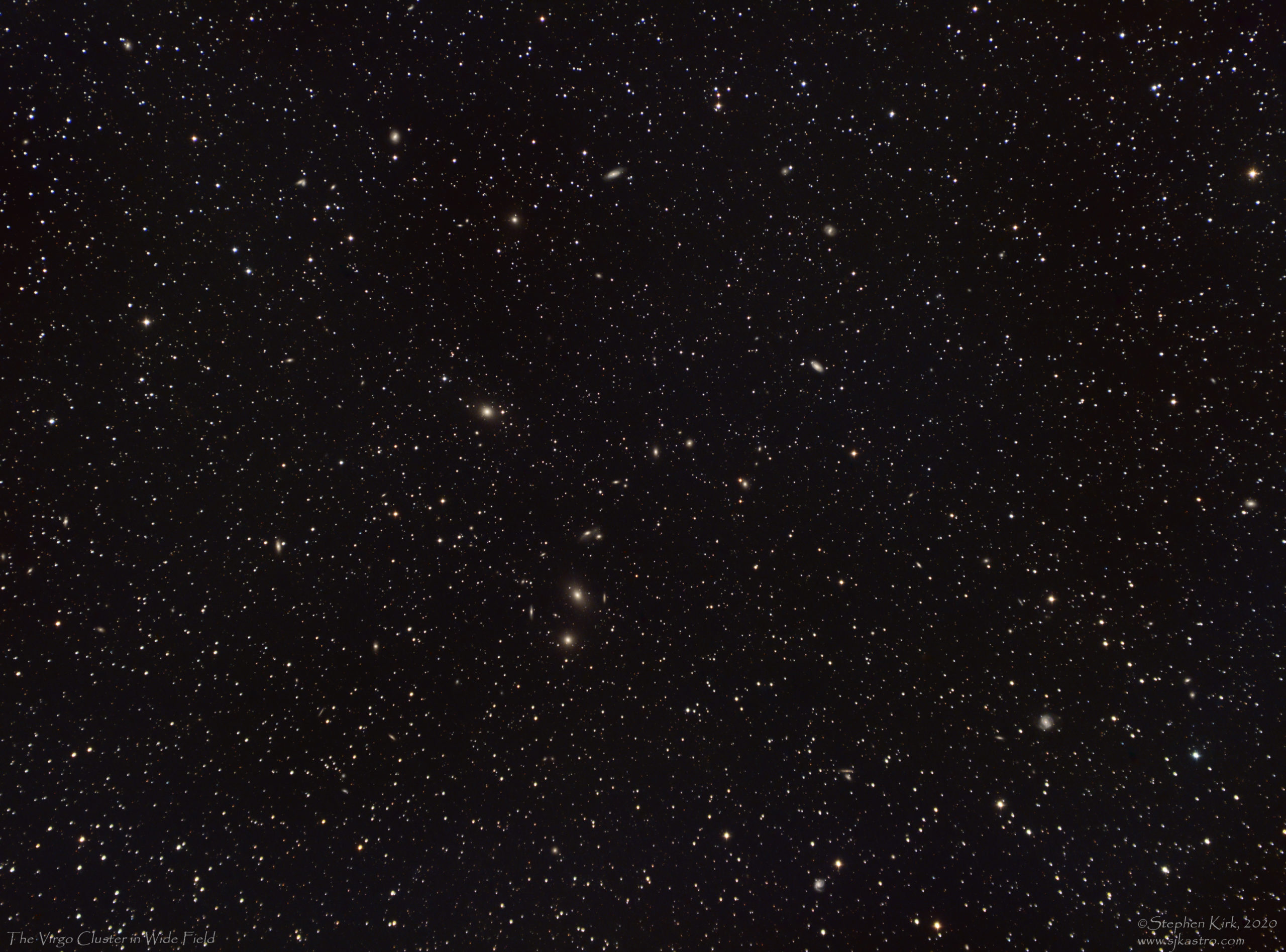
Virgo Cluster in Wide Field Setting
This is the Virgo Cluster of galaxies presented in a wide field setting. The cluster is a popular area for amateur astronomers and professionals alike and contains some very important galaxies, the most important of which is M87, the supergiant elliptical galaxy and one of the largest galaxies in the local universe.
You can see Markarian's Chain demonstrated at an unfamiliar angle in this picture.
The picture is comprised from data captured during late March 2020 and I used my Samyang 135mm DSLR lens connected to G2-8300 cooled CCD camera from Moravian Instruments and Astrodon RGB filters. The picture is comprised of 70 minutes (of five minute exposures binned 1x1) in each of the red, green and blue filters to give a total integration time of three hours and thirty minutes. The data was developed with PixInsight and Photoshop.


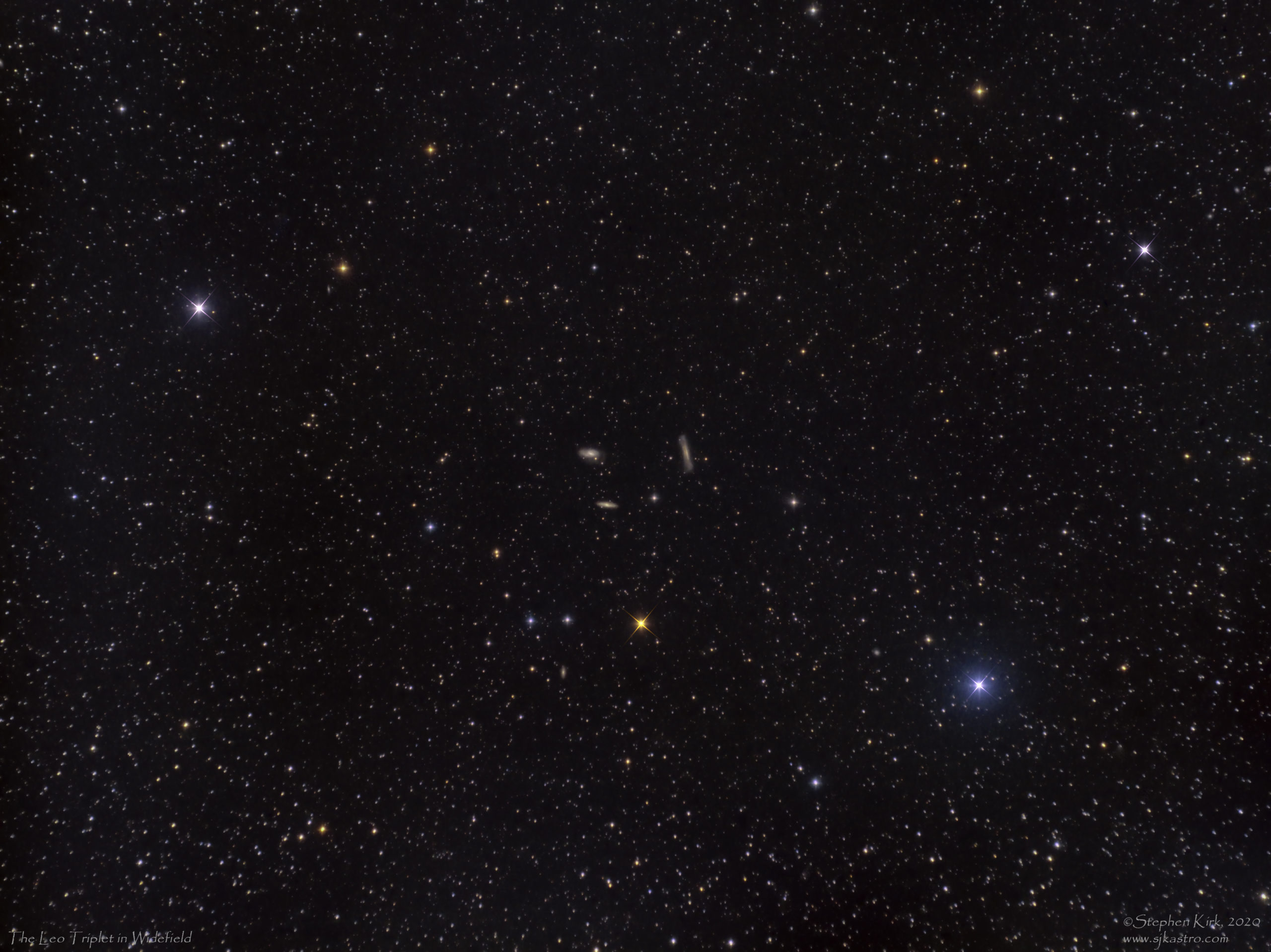
The Leo Triplet in a Widefield
The Leo Triplet is a popular trio of galaxies in the constellation of Leo, popular with amateur and professional astronomers alike. They are visible in the late winter and spring in the Northern Hemisphere. Consisting of M65, M66 and NGC 3628, the galaxies are about 35 million light years away. NGC 3628 was never given the distinction of as Messier number for some reason, even though it is as bright as the other two members.
The image was taken with my Samyang 135mm DLSR lens coupled with Moravian G2-8300 cooled CCD camera with Astrodon RGB filters. It consists of seventy minutes (5 minute exposures binned 1x1) in each of the red, green and blue filters to give a total integration time of three hours and thirty minutes.
The triplet was about 45 degrees above the horizon when the exposures were captured. IT was then processed with Pixinsight and Photoshop.


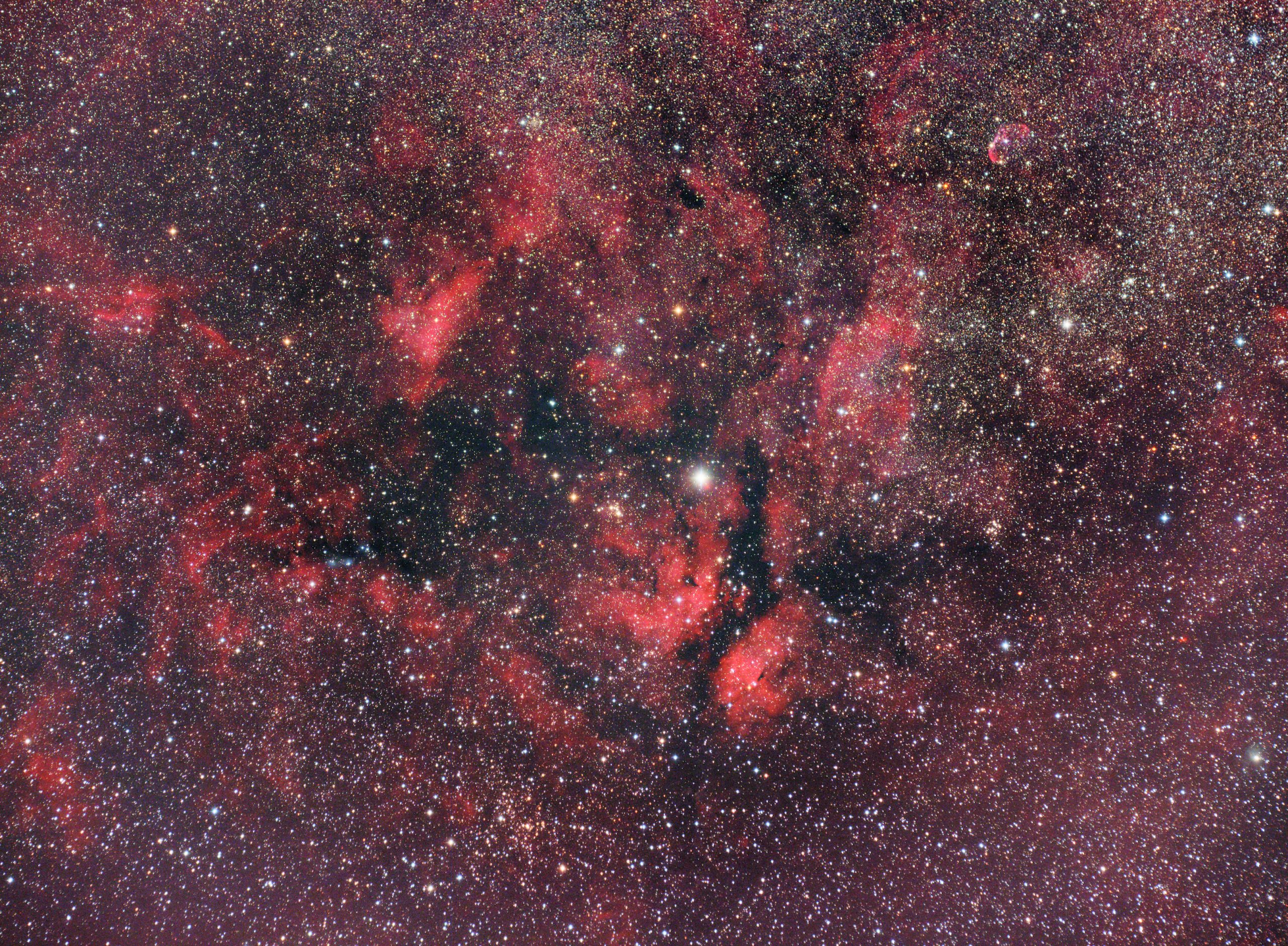
SADR Region of Cygnus
SADR is the central star of the Cross of Cygnus, between the arms of the cross. The constellation of Cygnus is supposed to represent a swan but to most people looks much more like a cross and consequently is often called The Northern Cross. The whole area abounds in nebulosity that is very easy to capture with a camera.
This image is taken with a Samyang 135mm DSLR lens and subtends a field of view of about 8 x 6 degrees across the sky and so the long axis of this image is about sixteen moon widths wide. This is a very large area of sky to capture in one image. It is was made from 12 x 3 minutes exposures in each of the Red, Green and Blue and also a luminance of 24 x 3 minute Hydrogen Alpha 3nm exposures to give a total integration (exposure) time of about three hours. The camera I used is the Moravian Instruments G2-8300 loaded with 31mm Astrodon LRGBHa3nm filters.
I captured it in my back yard on 26th April 2019 with my wide-area autofocus rig mounted atop a NEQ6 mount. The data was captured with SGP and processed with PixInsight and Photoshop.
I hope you like it! :)

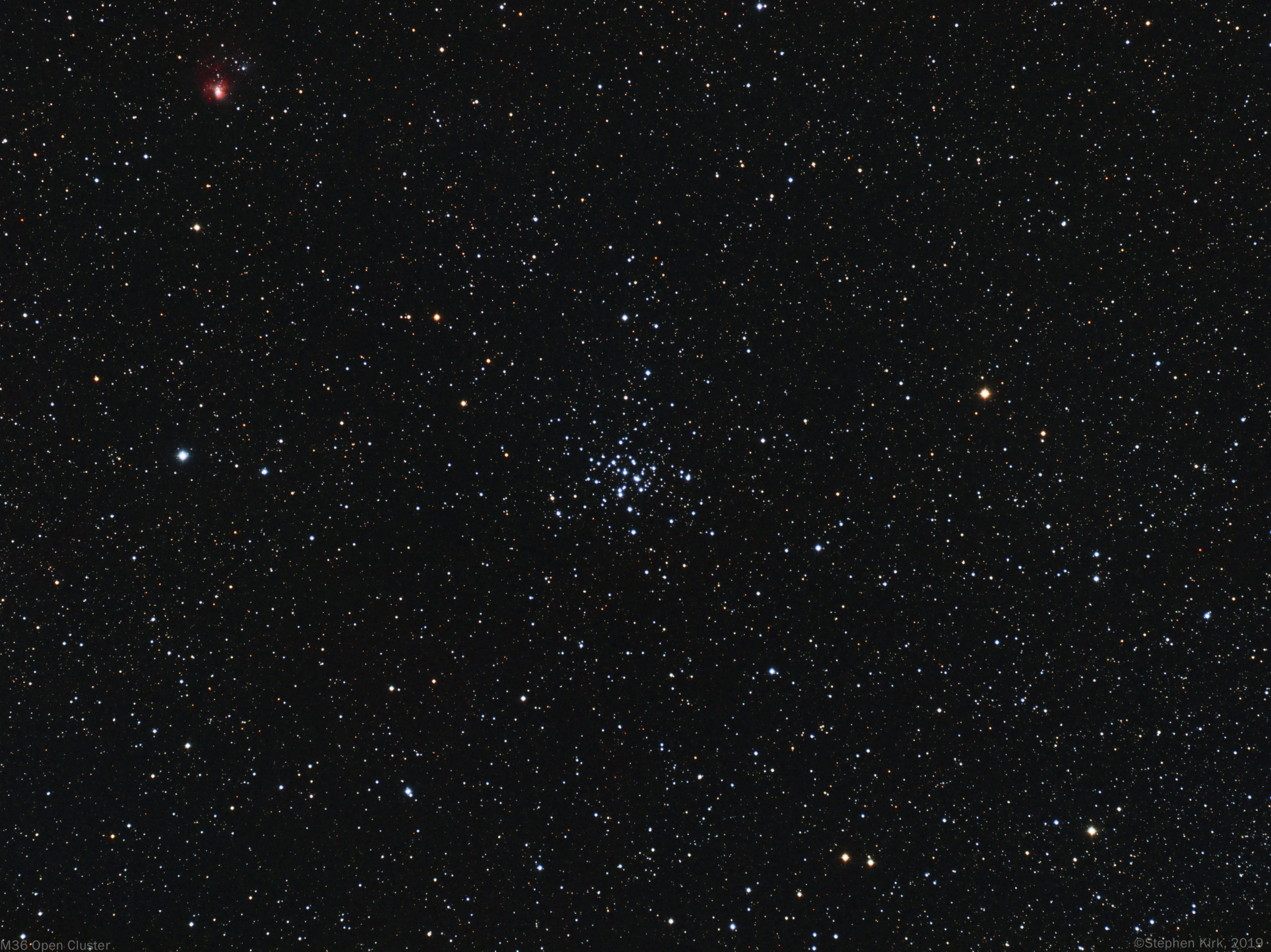
M36 Open Cluster in Auriga - FSQ85
M36 is an Open Cluster of stars (as opposed to a Globular Cluster) in the Constellation of Auriga. M36 is high overhead in Europe during the nightimes of winter months and is one of three Messier Open Clusters in Auriga, the others being M37 and M38. All of these are visible in a small pair of binoculars as nebulous and fuzzy blobs. M36 and the other clusters make a fine site in a telescope and dozens of stars can be seen. Note also the Red nebula to the top left - NGC 1931 (Sh2-237). There are some tiny PGC catalogue galaxies, billions of light years away in this image.

This image was taken from by backyard in Nottingham, UK on the 24th January 2018 with my Takahashi FSQ85 refractor and Moravian instruments G21-8300 CCD camera with Astrodon RGB Generation 2 E series filters on MESU 200 mount. All data was binned 1x1.
Red > 12 x 120s ; Green 12 x 120s ; Blue 12 x 120s
Total Integration is about an hour and twelve minutes. Data captured with Sequence Generator Pro and processed in PixInsight and Photoshop.


Astrobin Image here: https://www.astrobin.com/fersyj/