
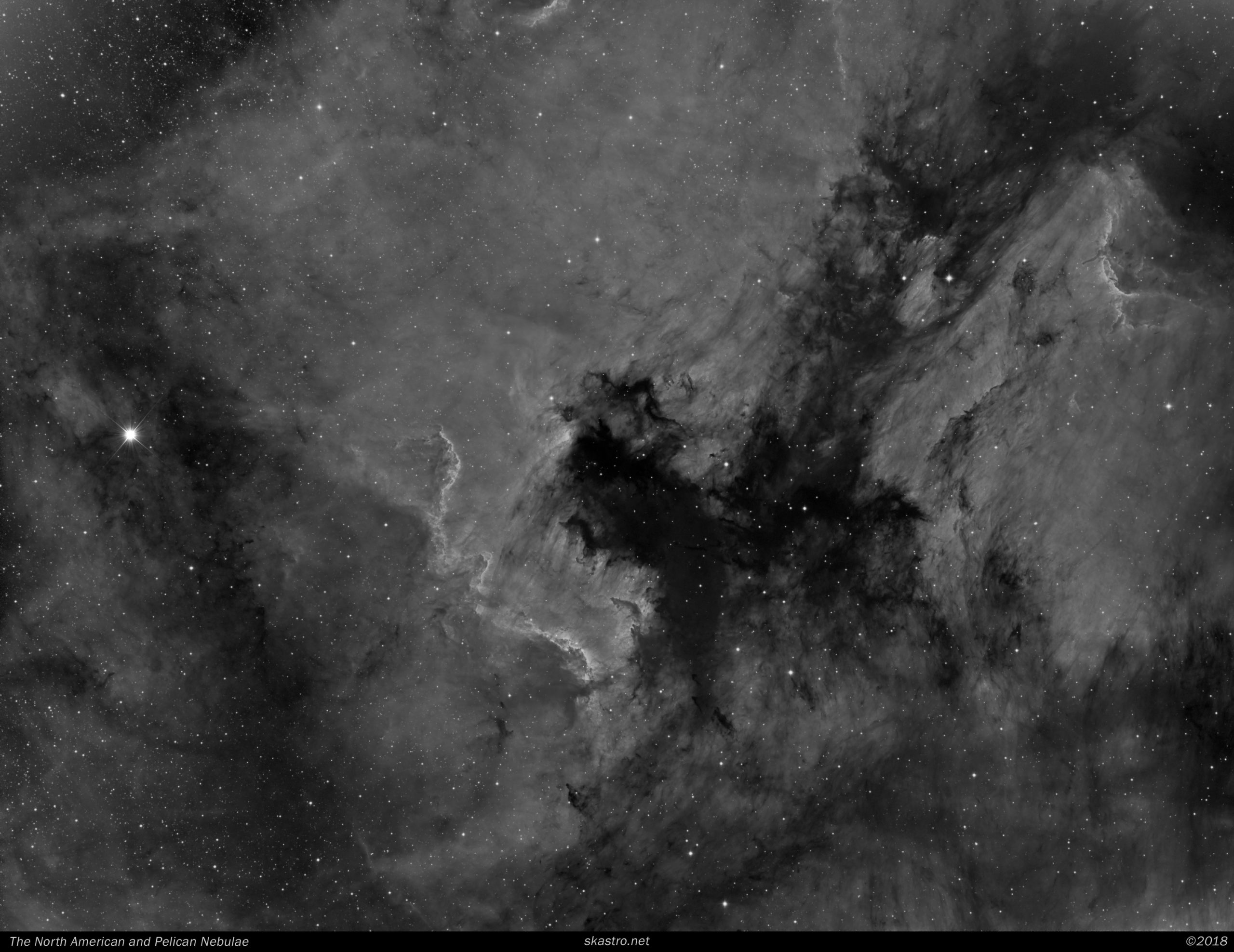
The North American and Pelican Nebulae in Hydrogen Alpha
The North American Nebula and the adjacent Pelican nebula to the right of it are popular objects of the summer and autumn sky in the Northern Hemisphere. Both of these objects are aptly named because the nebula to the left really does look like the continent of North America being looked at by a pelican to the right!
This post discusses a version of these objects in the light of Hydrogen Alpha 3nm only. You can see the vast amount of detail that is emitted at this wavelength by the clouds of hydrogen that the nebulae are composed from.
This picture is composed of 48 x 600s exposures with a Takahashi FSQ85 refractor and Moravian G2-8300 CCD camera with an Astrodon 31mm 3nm Ha filter and the Takahashi 0.73 reducer. The image discussed here is a pure Ha monochrome image but I also combined this data set with RGB colour data as well that you can see here.

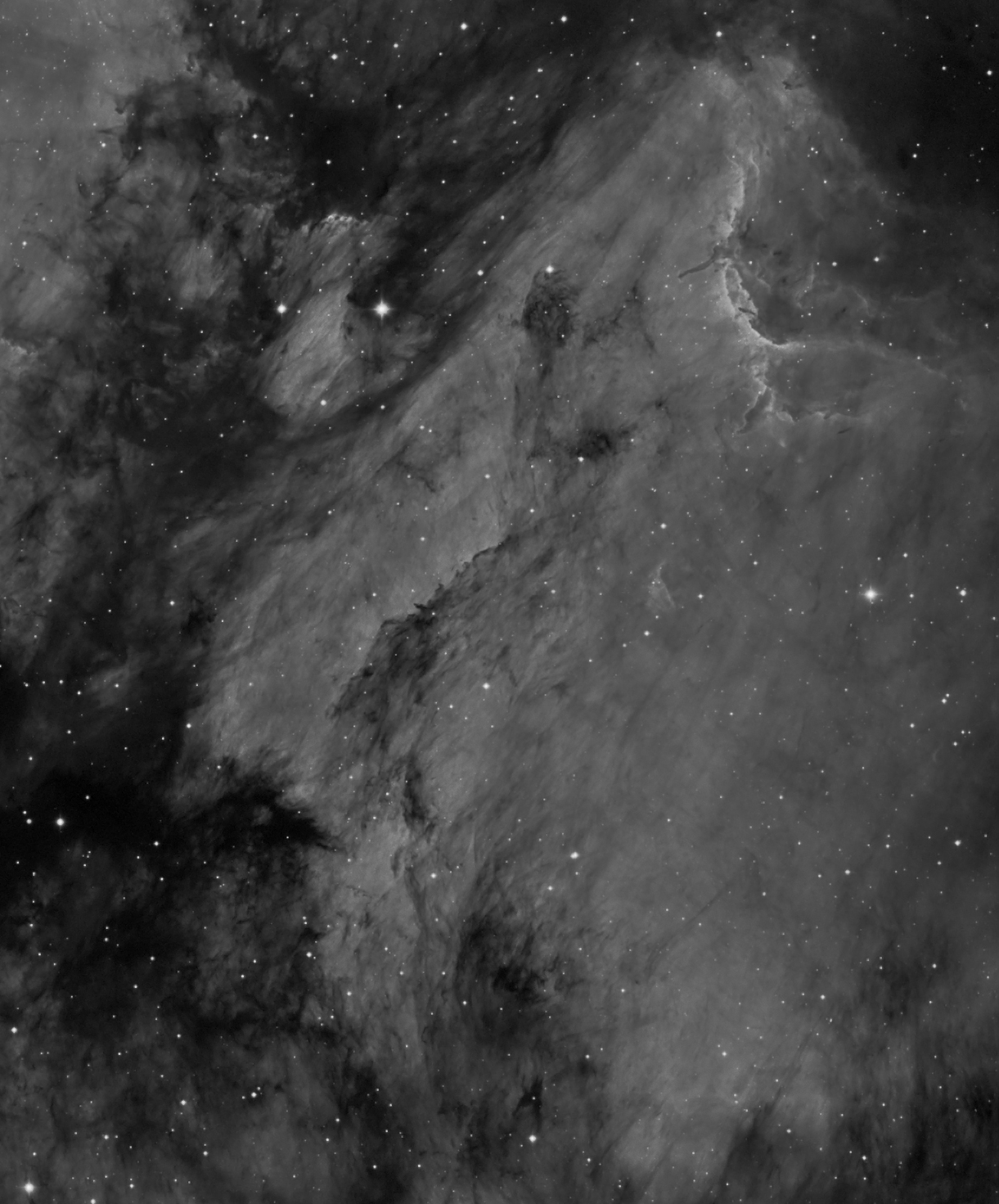
A snippet of the above picture showing The Pelican nebula.
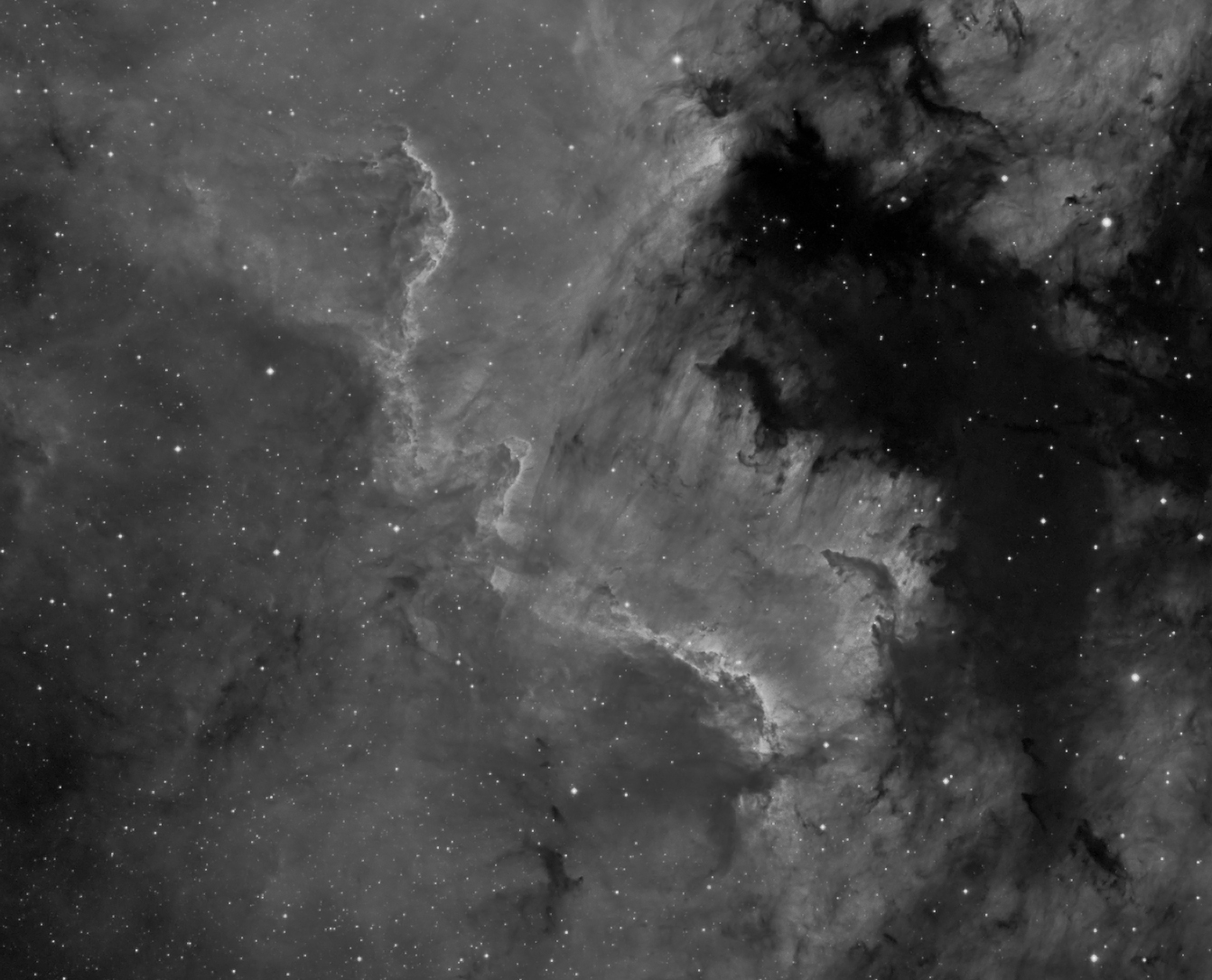
This shows the portion of the nebula commonly known as "The Wall"

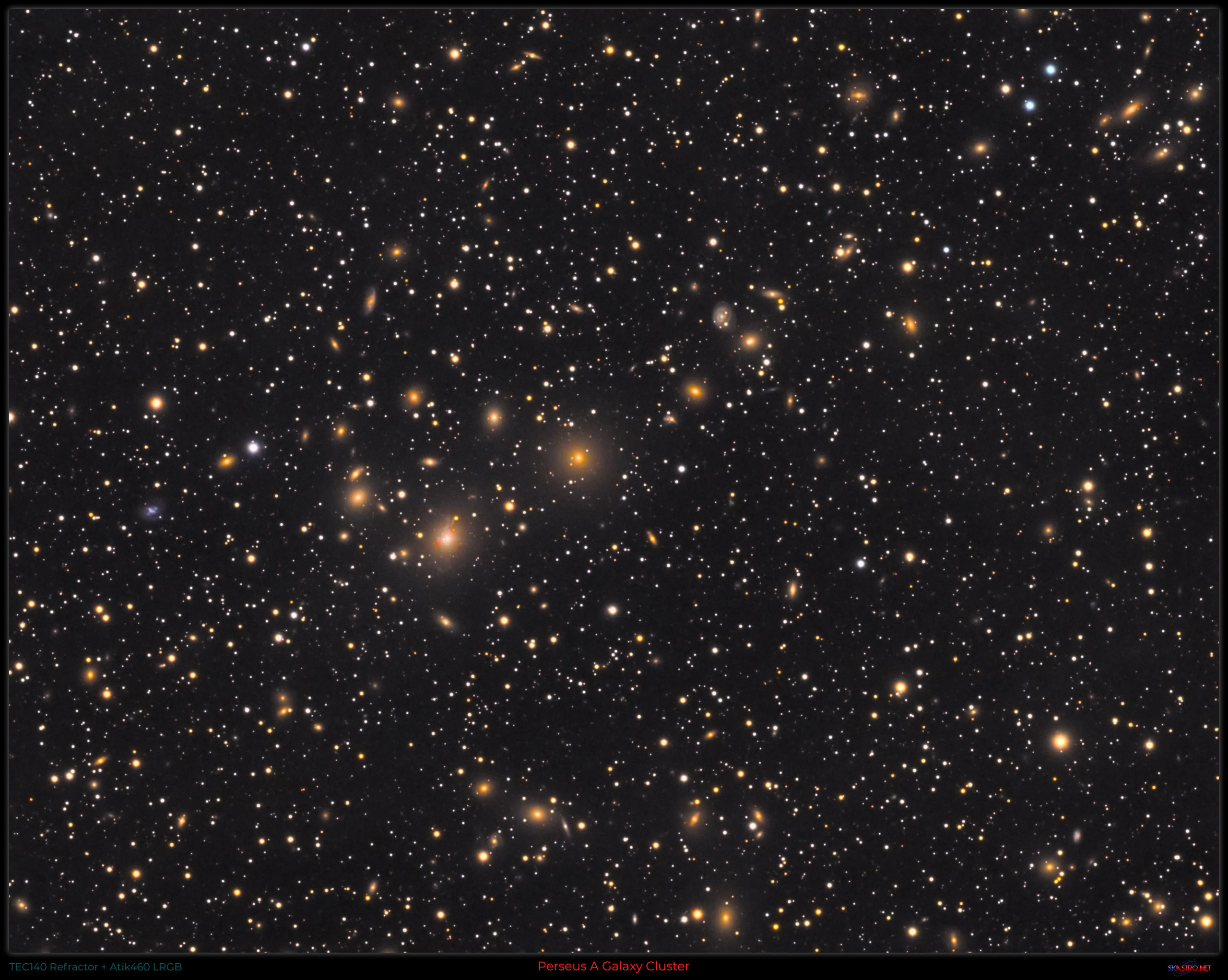
The Perseus Galaxy Cluster - Abell 426
The Perseus Galaxy Cluster (Abell 426) is one of the most massive known objects in The Universe. It is a supercluster of galaxies with thousands of individual members located between 230-280 million light years away. The galaxies are located within a vast cloud of enveloping gas, the gas being much more massive than the total mass of the galaxies themselves. This area is very important for physicists testing the theory of relativity.
It is clear from the red patches on the main Perseus galaxy itself (NGC 1275) slightly to left and bottom of this images centre (at the eight o'clock position) that something dramatic is happening inside this galaxy.
Technical Information
Imaged from my backyard observatory in Nottingham, UK with my TEC 140 refractor and Atik 460 CCD camera with Astrodon LRGB filters between October 2019 to January 2020. The image was created from 20 x 900s luminance exposures collected on the 27/28 Oct 2019. The red, green and blue channels were collected between October 2019 and January 2020 over multiple and frustrating imaging sessions due to a very wet winter in the UK with almost total cloud cover for weeks on end. As much data had to be thrown away as is presented here!
Lum > 20 x 900s; Red > 14 x 300s; Green 14 x 300s; Blue 14 x 300s. Everything binned 1x1.
This data set gives a total integration (exposure) time of 8 hours and 30 minutes.
Guiding was with OAG on my MESU 200 mount. Image data acquired with Sequence Generator Pro and developed in PixInsight and PhotoShop CC.

The chart above shows an annotated version of the primary picture. The principle galaxy NGC1275 is shown a third of the way from the left border and just below the centre line. If you then look carefully at the NGC 1275 galaxy in the main image clearly something very significant is taking place inside the galaxy, twisting and distorting it. This galaxy is called Perseus A and is one of the brightest sources of radio and X-rays in the sky.
Technical Data
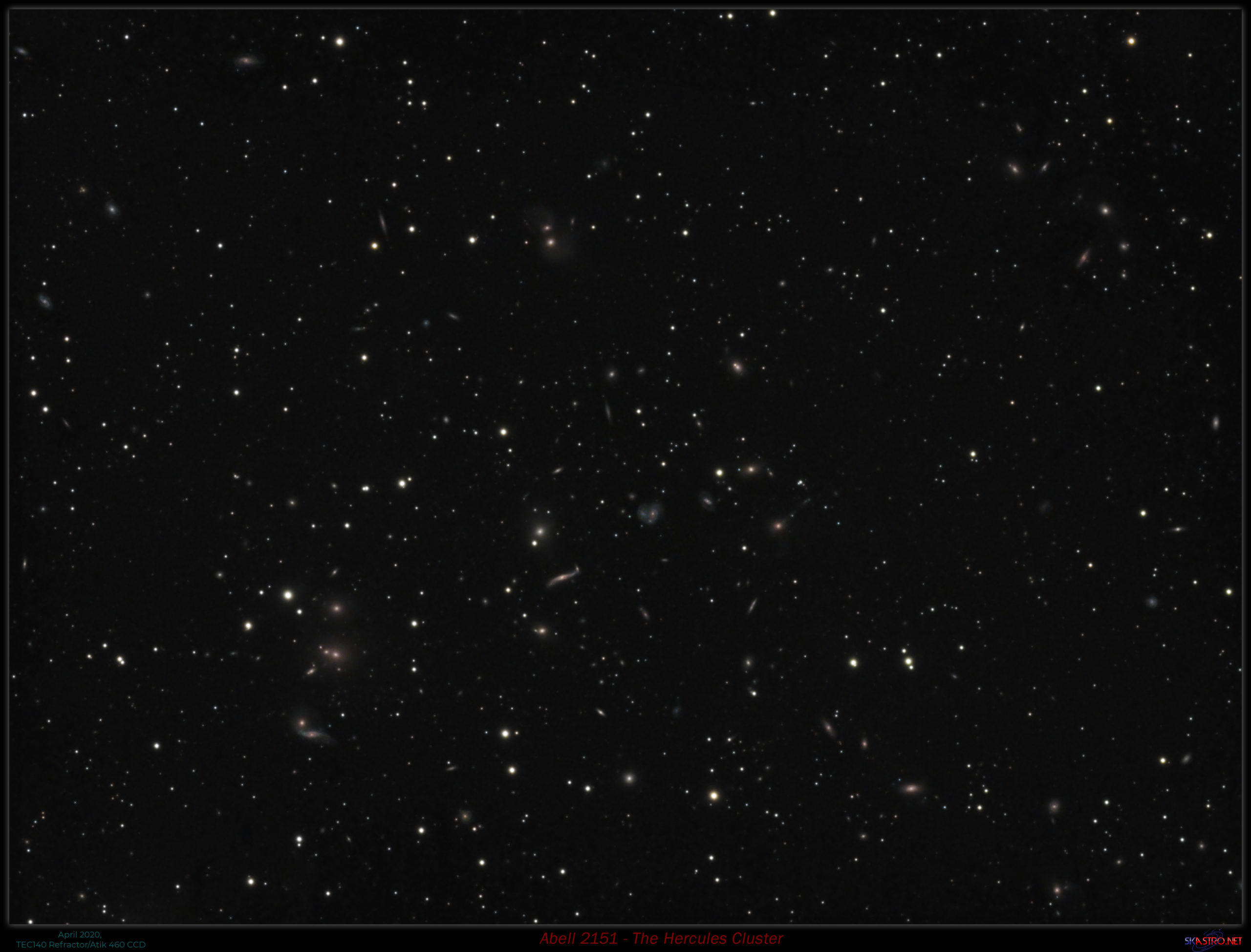
Abell 2151 - The Hercules Cluster
Abell 2151 is a cluster of galaxies about 500 million light years away in the constellation of Hercules. There are a total of about 300-400 galaxies in this image. I am especially interested in these remote galaxy clusters and it is sobering to think how many planets and civilisations must exist amidst this vastness. Countless trillions.

Image Technical Data
Technical Details
Imaged from my backyard in Nottingham over four nights in late April and May 2020, during the Coronavirus lockdown. We had some superb clear skies over the UK during this period with very good visibility and seeing - highly unusual for the UK. I used my TEC 140 refactor at its native focal length of F7 and Atik 460 cooled CCD camera with Astrodon LRGB filters. The telescope was mounted on my MESU 200 mount and guided with OAG.
All data is binned 1x1:
Lum > 23 x 600s ; Red 14 x 300s ; Green > 12 x 300s ; Blue > 16 x 300s
The total integration time is seven hours and twenty minutes; this is quite an investment of time in one object by UK standards.
Captured with Sequence Generator Pro and processed with PixInsight and Photoshop CC.


The two images immediately above are annotated versions of the primary picture at the top. The version to the left shows the annotation with the NGC/IC catalogs of galaxies. The one of the right adds the many PGC (Principle Galaxy Catalog) galaxies, many of which are much more remote than Abell 2151 and are billions of light years distant in the depths of the Universe.
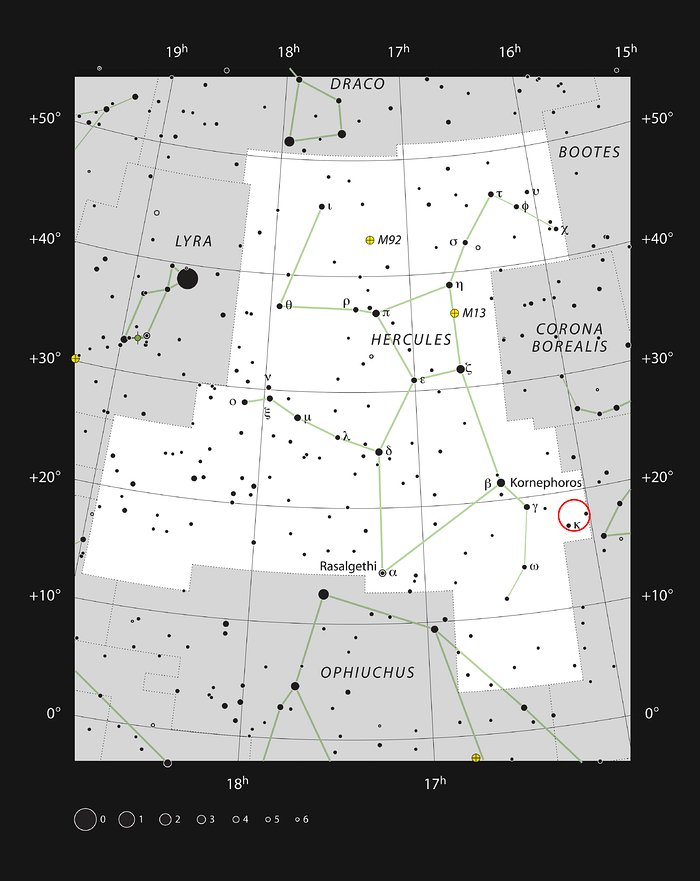
To the left is a star chart showing the location (in red circle) of the Hercules cluster.
Alternate Version

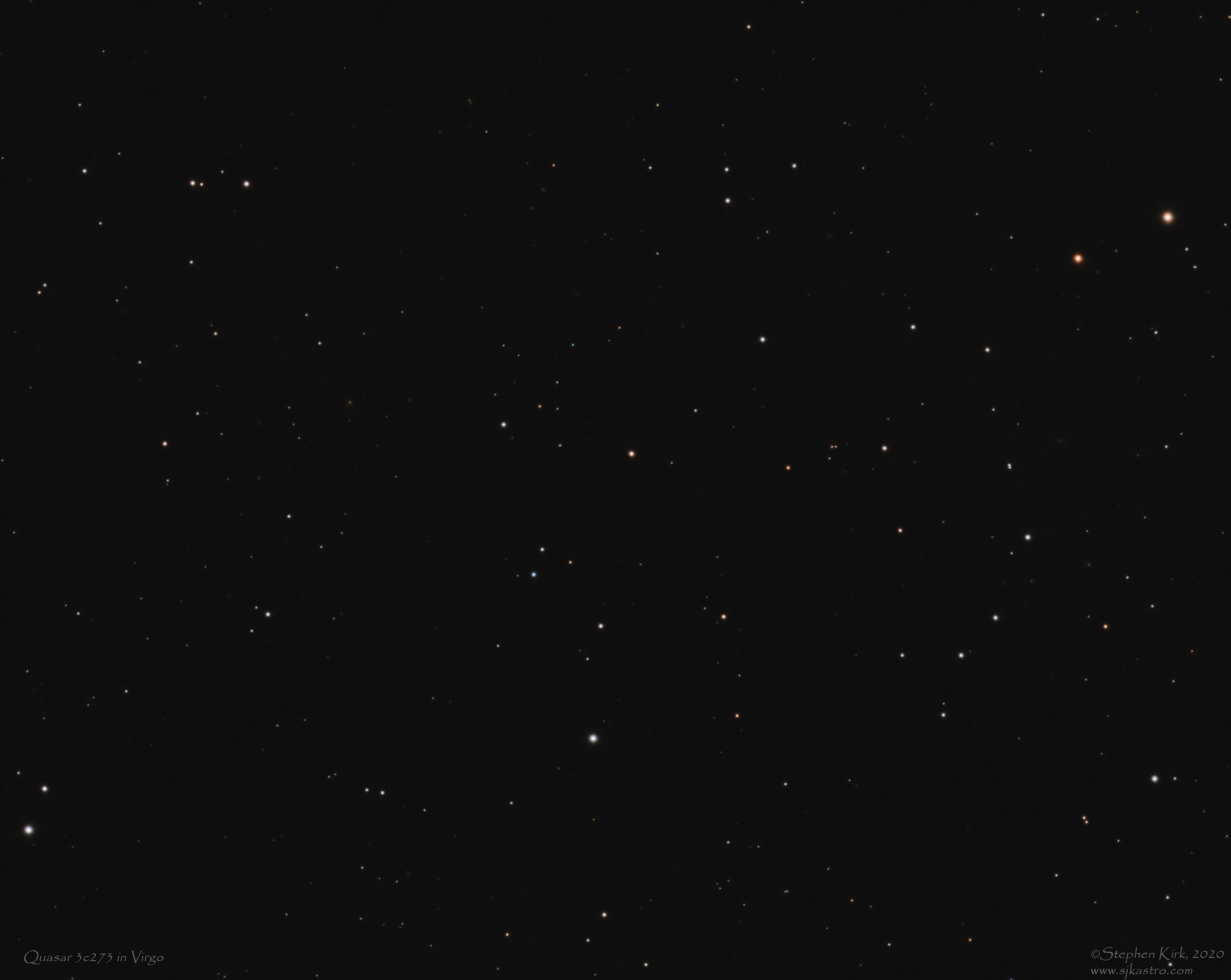
Quasar 3C273 in Virgo


Not the most exciting of images but significant for what is actually shown here. Just looking at the photo on the above left, you'd be forgiven for thinking this was just an image of a star field, a boring one at that. However, this is a picture of the Quasar 3C273 in Virgo, one of the most distant objects possible for an amateur astronomer with instruments available to the average amateur to see. Light left this object two billion years ago!
3C273 is the 273rd object in the Third Cambridge University catalogue of radio objects. It was discovered as an extremely bright source of radio waves long before it was identified visually. It was the first ever quasar to be discovered in 1959.
It represents an extremely active core of a very distant galaxy, so distant that we only see the core and not the outer parts of the galaxy because of the vast distance. Matter is circling around a supermassive black hole and is energised to such an extent that it is visible across the universe. Our own galaxy would not be visible at such a distance suggesting how incredibly bright the quasar actually is. We also know, through daily variations in the light intensity that the source cannot be more than a light-day in diameter!

Image shows the above image of 3C273 with other galaxies in the PGC catalogue (Principle Galaxies Catalogue) in the same field of view. 3c273 is PGC41121.
Image taken with a TEC 140 refractor in April 2020 (during Coronavirus lockdown in the UK). Thirty minutes each in R,G,B.as two minute exposures binned 1x1.
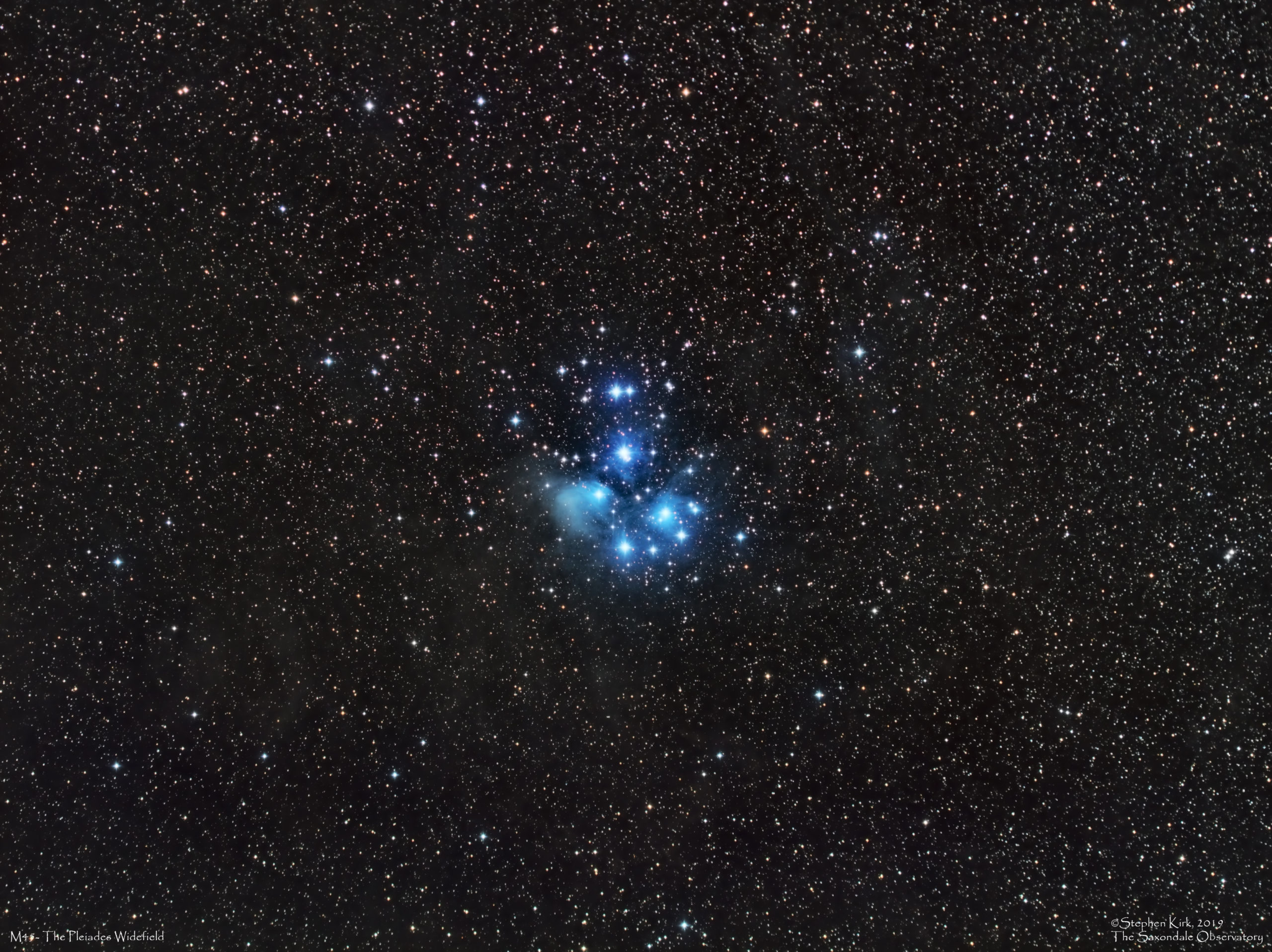
M45 in a Widefield

An image of the Pleiades taken with a Samyang 135mm lens and Astrodon RGB filters.
Field of view is approximately 6x4 degrees.
Taken 18 November 2019 and 10 x 180s exposures in each filter.

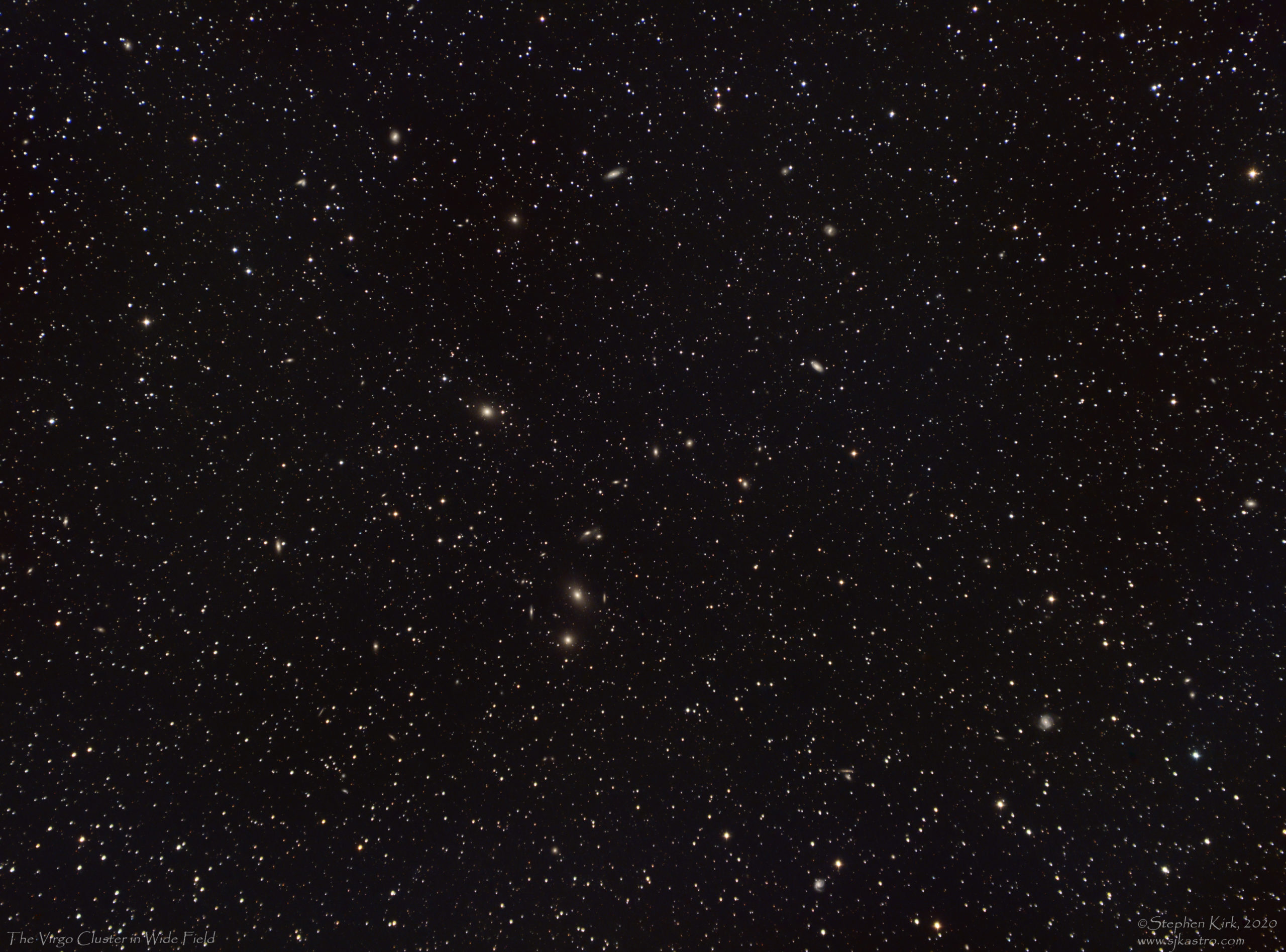
Virgo Cluster in Wide Field Setting
This is the Virgo Cluster of galaxies presented in a wide field setting. The cluster is a popular area for amateur astronomers and professionals alike and contains some very important galaxies, the most important of which is M87, the supergiant elliptical galaxy and one of the largest galaxies in the local universe.
You can see Markarian's Chain demonstrated at an unfamiliar angle in this picture.
The picture is comprised from data captured during late March 2020 and I used my Samyang 135mm DSLR lens connected to G2-8300 cooled CCD camera from Moravian Instruments and Astrodon RGB filters. The picture is comprised of 70 minutes (of five minute exposures binned 1x1) in each of the red, green and blue filters to give a total integration time of three hours and thirty minutes. The data was developed with PixInsight and Photoshop.


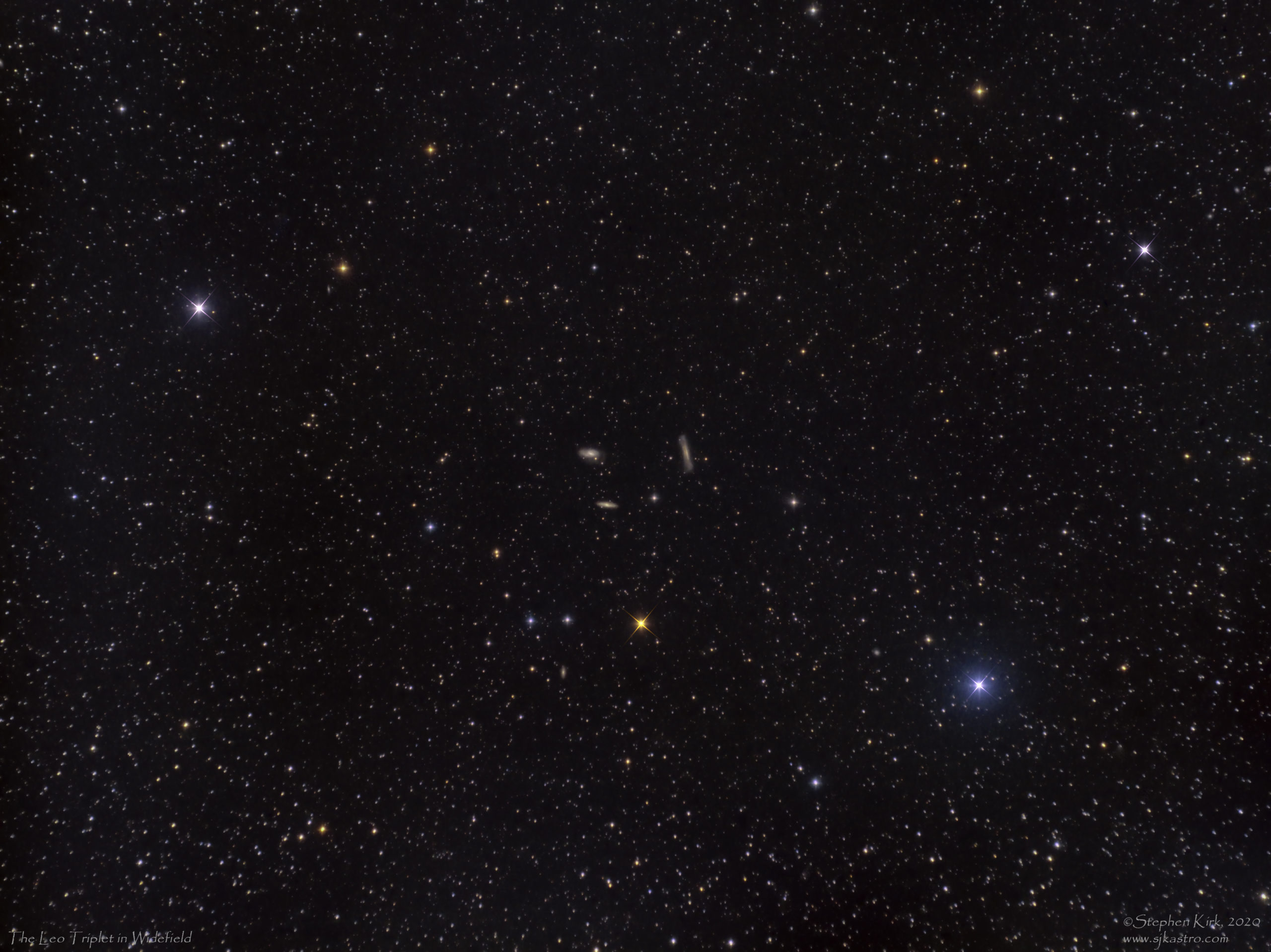
The Leo Triplet in a Widefield
The Leo Triplet is a popular trio of galaxies in the constellation of Leo, popular with amateur and professional astronomers alike. They are visible in the late winter and spring in the Northern Hemisphere. Consisting of M65, M66 and NGC 3628, the galaxies are about 35 million light years away. NGC 3628 was never given the distinction of as Messier number for some reason, even though it is as bright as the other two members.
The image was taken with my Samyang 135mm DLSR lens coupled with Moravian G2-8300 cooled CCD camera with Astrodon RGB filters. It consists of seventy minutes (5 minute exposures binned 1x1) in each of the red, green and blue filters to give a total integration time of three hours and thirty minutes.
The triplet was about 45 degrees above the horizon when the exposures were captured. IT was then processed with Pixinsight and Photoshop.


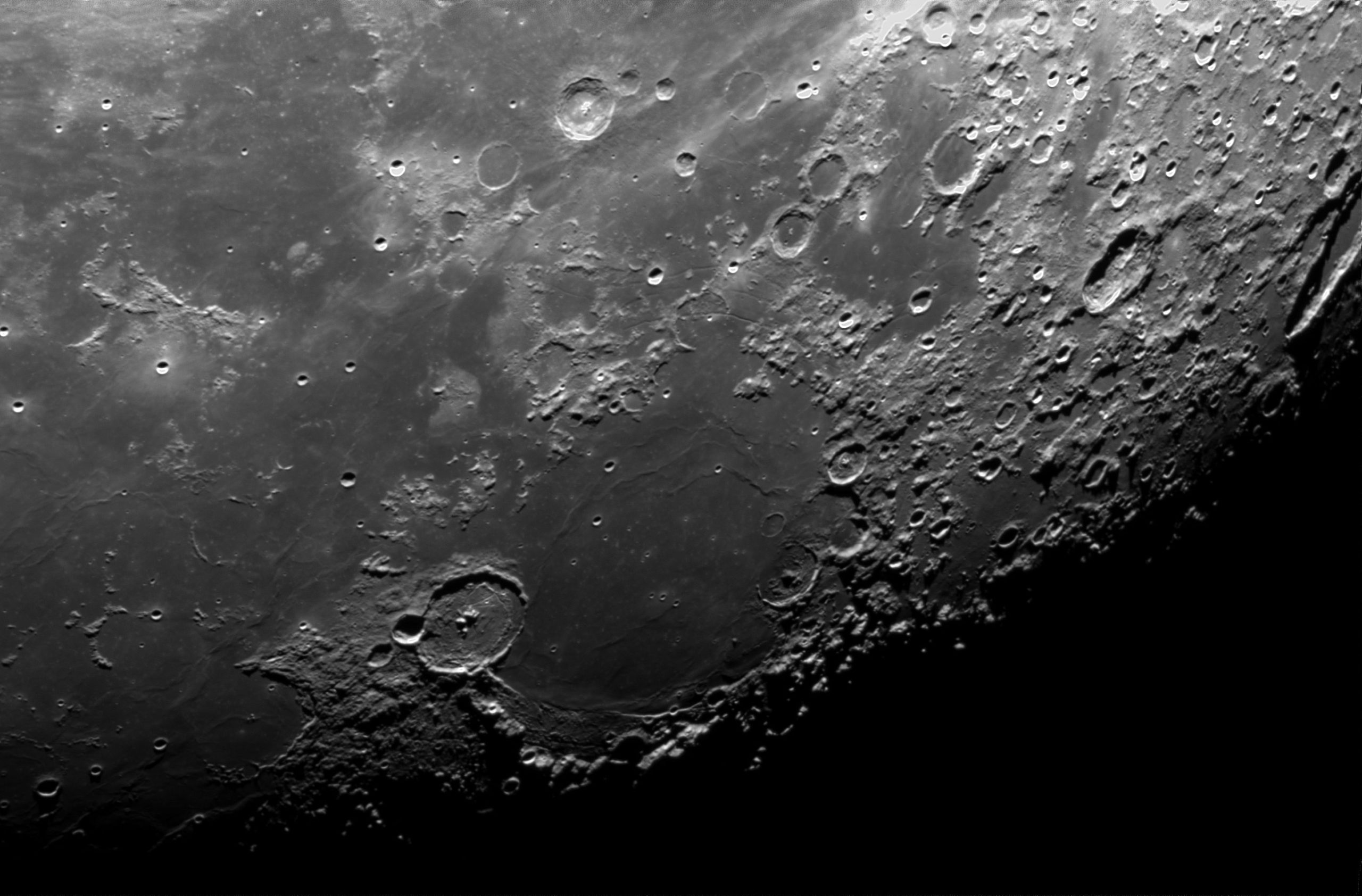
Lunar Pictures from January 2020
A few pictures of the moon that I took with my Meade 14 ACF SCT scope with a ASI 174MM camera in January 2020. The pictures utilised no filters at all.


The Meade 14" is an astounding scope that I liked very much. However, with a heavy heart I subsequently went on to sell this telescope since I felt that in my Bortle 5skies it doesn't offer any significant advantage over and above the Celestron C925; the latter scope being very much more manageable that the huge (and very heavy) 14" Meade. At some point in the future I may regret this decision since the scope excelled on the few occasions I took it to truly dark skies. However, I could not let my heart rule my head and I decided to sell it.
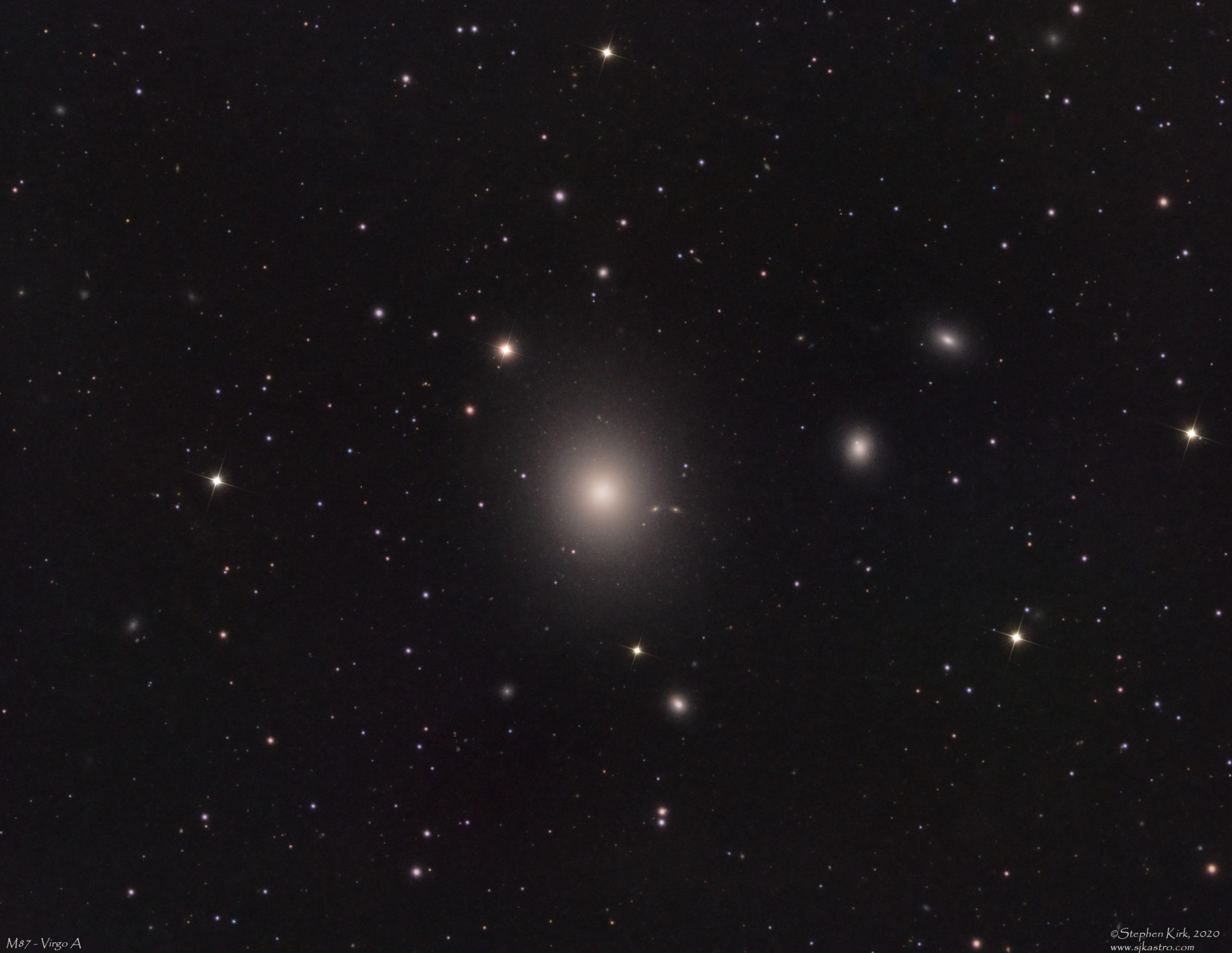
M87, The Giant Elliptical Galaxy in Virgo TEC 140

M87 is a supergiant elliptical galaxy at the heart of the Virgo cluster of galaxies and is visible in many pictures of the famous Markarian's Chain. It is about 65 million light years away and, after the Sun, is the brightest source of radio waves in the sky - at that vast distance! The galaxy is one of the most massive in the local universe at two hundred times the mass of our own Milky Way galaxy. M87 harbours one of the most massive Black holes in the Universe at 8 billion solar masses. The galaxy is surrounded by a swarm of globular clusters, about 12000 of them, compared to only 200 from our galaxy.
The galaxy is so large that from The Earth the extended galaxy is almost the size of the full moon.
Image Technical Data
Imaged from by back yard in Nottingham, UK with my TEC 140 refractor and Atik 460 CCD camera with Astrodon E series LRGB filters on my MESU mount. Data acquired April 2020 (middle of the Coronavirus lockdown in the UK) and is comprised of the following data - everything binned 1x1.
Lum > 12 x 600s ; Red > 12 x 300s ; Green 12 x 300s ; Blue 12 x 300s
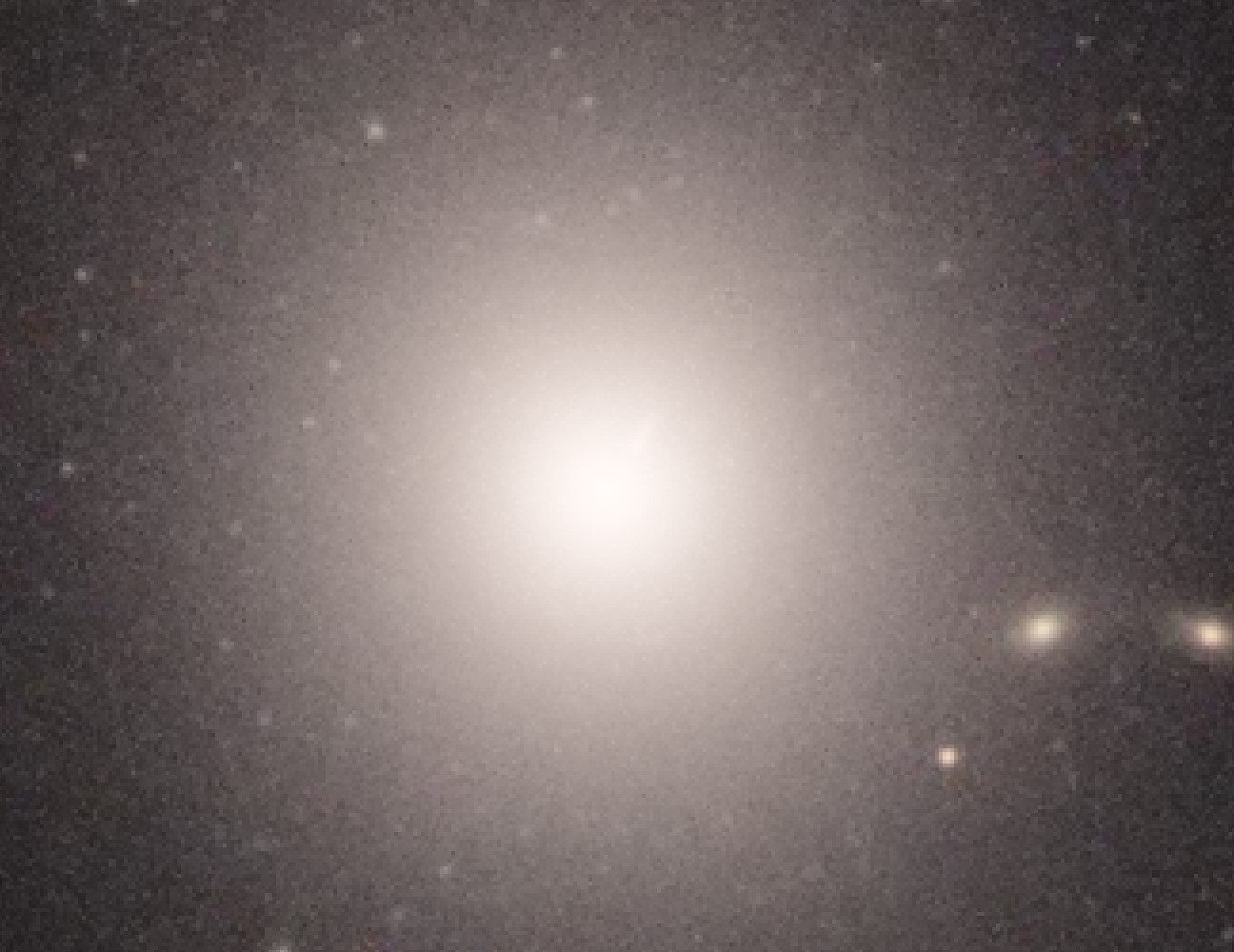
The closeup above shows the famous "jet" emanating from the central black hole (at "one o'clock" in this photo) in the core of the galaxy and the latest theories suggest this is radiation being emitted from the poles of the black hole at almost the speed of light.
Also can be seen in this picture some of the many globular clusters that orbit M87. Some of M87's globular clusters are hugely larger than the Milky Way's and are giant enough to be seen from 65 million light-years away. M87, in growing to be such a huge galaxy, is though to have consumed many other galaxies during its history and is thought to have robbed the globular clusters of the now dead galaxies.

M87, The Giant Elliptical Galaxy in Virgo TEC 140
M87 is a supergiant elliptical galaxy at the heart of the Virgo cluster of galaxies and is visible in many pictures of the famous Markarian's Chain. It is about 65 million light years away and, after the Sun, is the brightest source of radio waves in the sky - at that vast distance! The galaxy is one of the most massive in the local universe at two hundred times the mass of our own Milky Way galaxy. M87 harbours one of the most massive Black holes in the Universe at 8 billion solar masses. The galaxy is surrounded by a swarm of globular clusters, about 12000 of them, compared to only 200 from our galaxy.
The galaxy is so large that from The Earth the extended galaxy is almost the size of the full moon.
Image Technical Data
Imaged from by back yard in Nottingham, UK with my TEC 140 refractor and Atik 460 CCD camera with Astrodon E series LRGB filters on my MESU mount. Data acquired April 2020 (middle of the Coronavirus lockdown in the UK) and is comprised of the following data - everything binned 1x1.
Lum > 12 x 600s ; Red > 12 x 300s ; Green 12 x 300s ; Blue 12 x 300s
The closeup above shows the famous "jet" emanating from the central black hole (at "one o'clock" in this photo) in the core of the galaxy and the latest theories suggest this is radiation being emitted from the poles of the black hole at almost the speed of light.
Also can be seen in this picture some of the many globular clusters that orbit M87. Some of M87's globular clusters are hugely larger than the Milky Way's and are giant enough to be seen from 65 million light-years away. M87, in growing to be such a huge galaxy, is though to have consumed many other galaxies during its history and is thought to have robbed the globular clusters of the now dead galaxies.