M101 - The Pinwheel Galaxy with TEC140 and Atik460

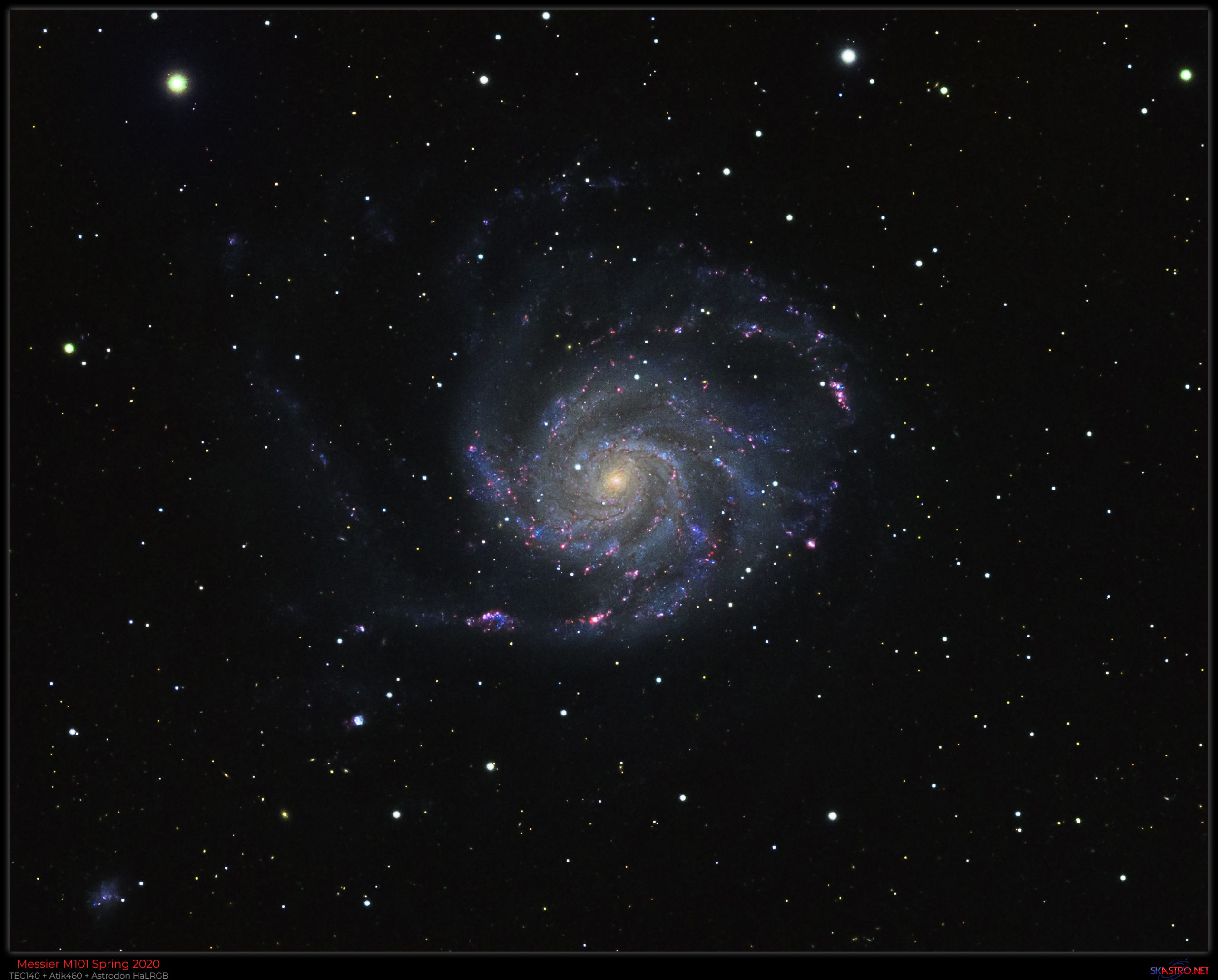
M101 - The Pinwheel Galaxy - is a spectacular, face-on "Grand Design" spiral galaxy located about 20 million light years away. It is quite a hard object to observe visually unless your skies are dark due to the galaxy's very low surface brightness. In the image below you can see the many red HII (pronounced "H-two") star forming regions. The galaxy is not a part of the local group of galaxies and is receding away from us with the expansion of the universe.

The image was acquired in my back yard observatory in Nottingham, UK with my TEC140 refractor and Atik 460 CCD camera with LRGBHa Astrodon Filters between 2018 and 2020. I used off-axis guiding to keep the telescope precisely aligned and the whole imaging ensemble was atop my MESU200 mount. M101 is not easily captured from my observatory since it is sandwiched between the neighbour's house and my house meaning that I can only grab it when it is almost at the zenith, which is where I captured these images in the early springtimes. Consequently, it took several years to acquire the data needed to build the image.
The imaging data set is as follows:
Luminance > 20 x 900s binned 1×1 ; Red > 18 x 300s 2×2 ; Green > 18 x 300s 2×2 ; Blue > 18 x 300s 2×2 ; Ha > 24 x 300s 1x1
This gives a total integration time of about 11.5 hours. This is a large investment of time on a single object in the UK skies, where clear nights are a great rarity.
I used Sequence Generator Pro for image capture. I then used PixInsight for pre processing to get to the five LRGBHa master files. I then used PixInsight to create the HaRGB and Luminance master TIFF files. I then switched to Photoshop to do the blending of these two L and HaRGB with multiple layers of blending saturation and tweaking. As I have mentioned elsewhere, I find it easier and more intuitive to do this in Photoshop as opposed to LRGB combination tool and/or PixelMath in PixInsight since blending inside Photoshop gives immediate feedback off the effect when the sliders are tweaked. A personal preference and I am sure many folks are completely happy doing this task purely inside PixInsight.
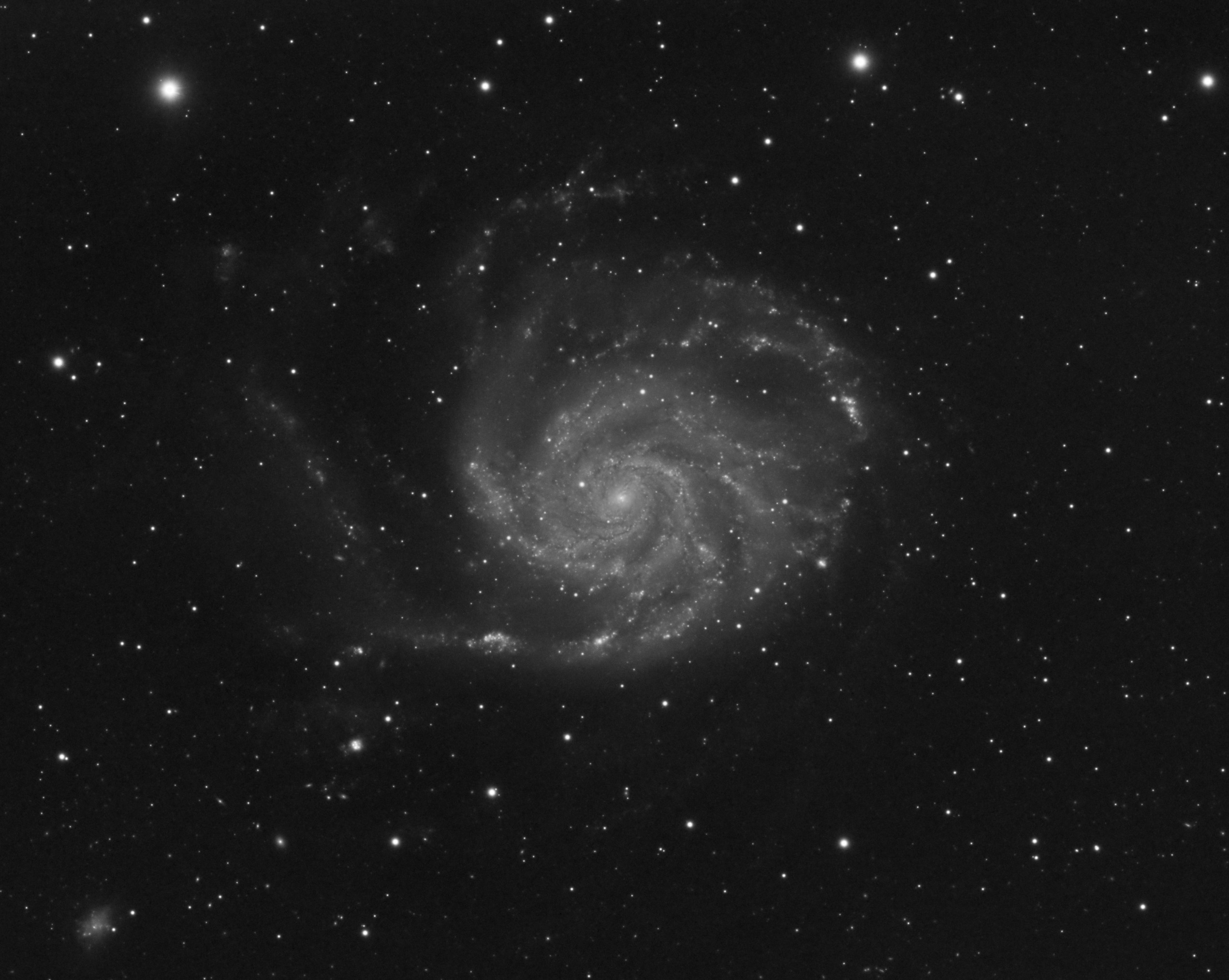
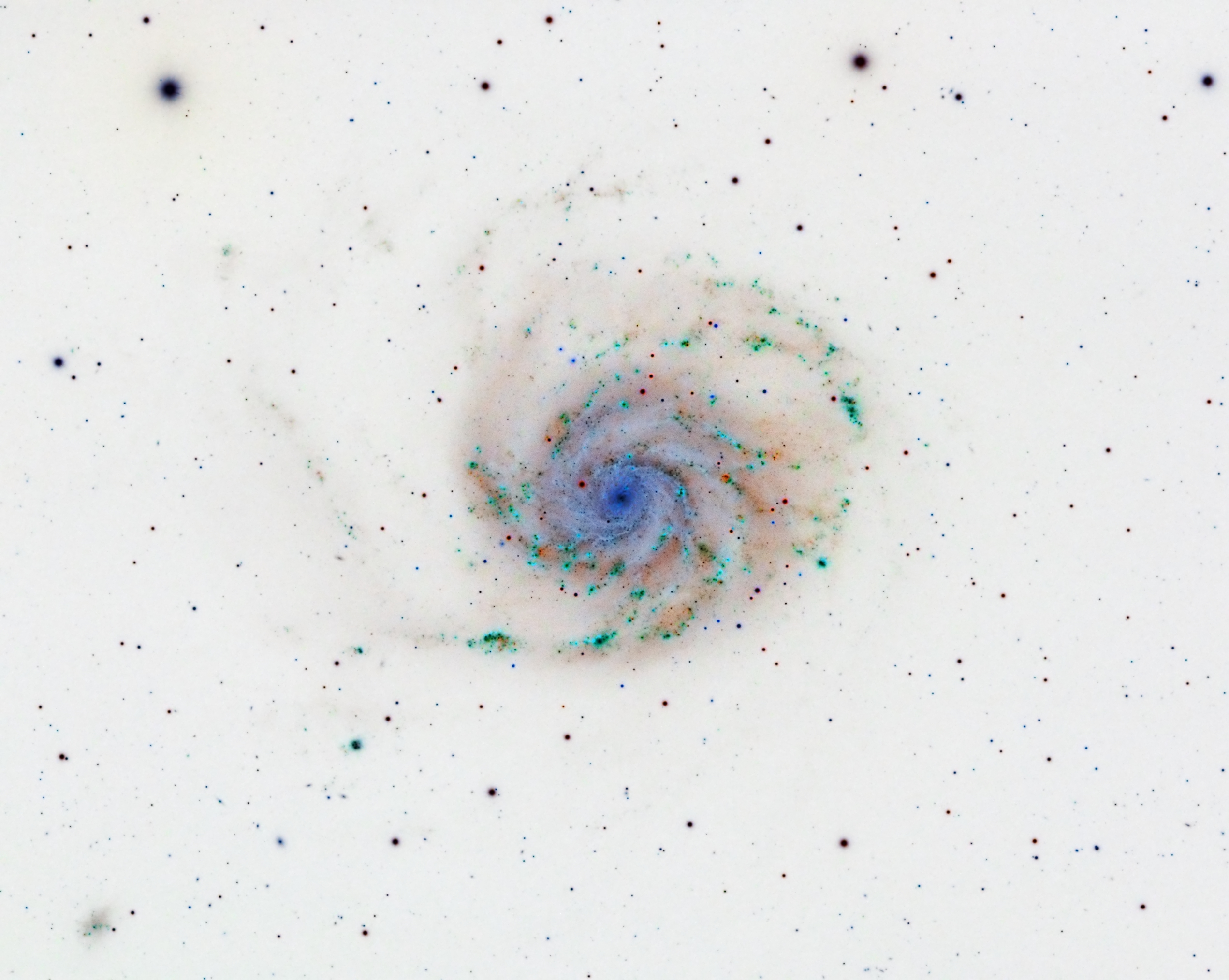
Above is five hours of luminance only. It reveals much of the fine structure inside the galaxy's core and spiral arms. This data was then blended into the RGBHa composite.

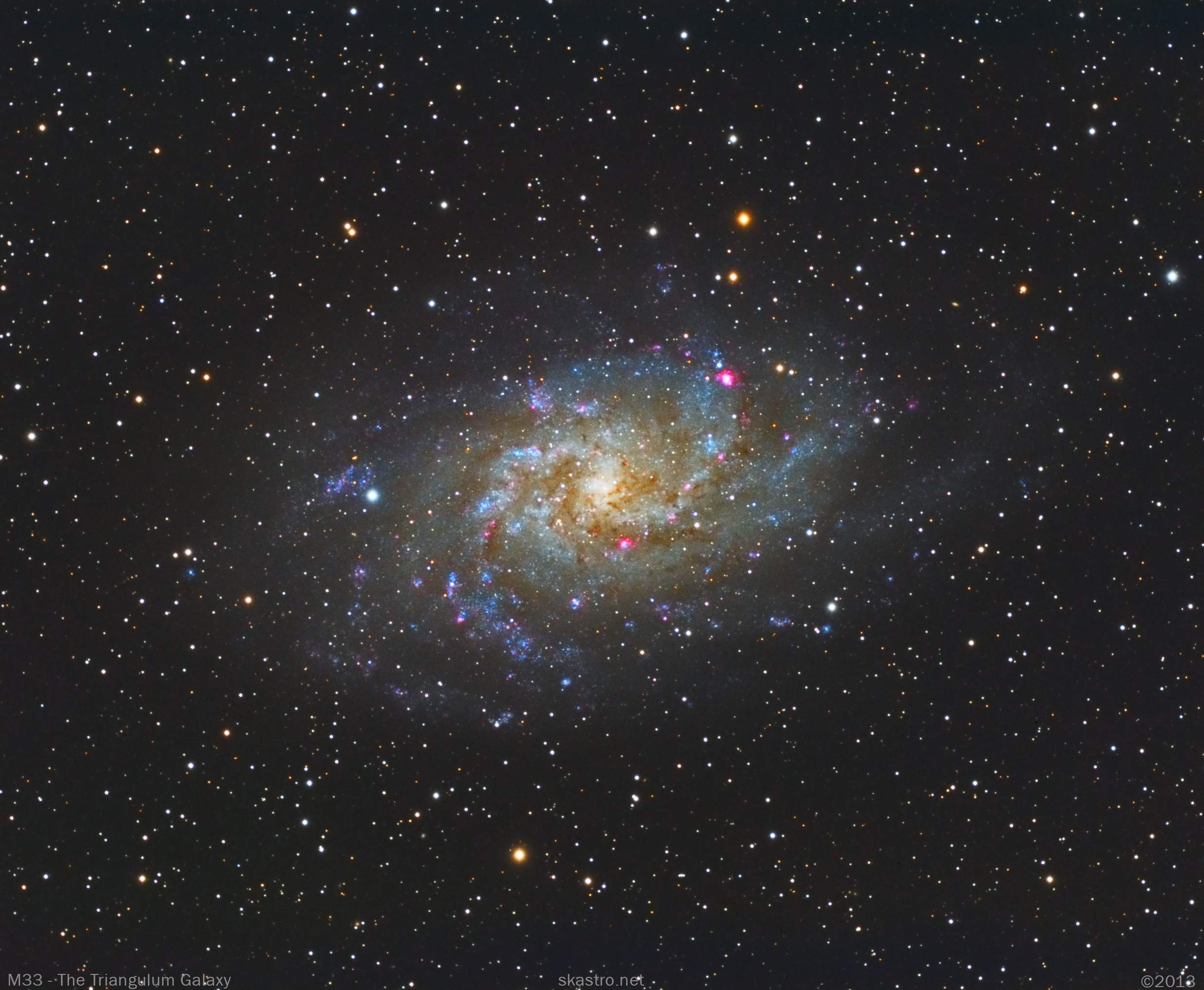
M33 - The Triangulum Galaxy
This is about two hours each of LRGB (in each filter) with the Takahashi FSQ85 telescope and Atik 460 CCD camera with Baader LRGB filters. I did not use a Ha filter on this image. The data was collected on 29th November 2013 and it was the second light of the telescope (first light being The Double Cluster here). The telescope performs superbly and is very well colour balanced.
At a distance of about 2.8 - 3.0 million light years, M33 is the most distant object that can be viewed by the unaided eye and is visible in a dark sky setting as a very tenuous patch of light. Being a face-on galaxy, it has rather low surface brightness and it lacks a bright central core making it quite hard for beginners to find as they expect to see something much brighter and more colourful.
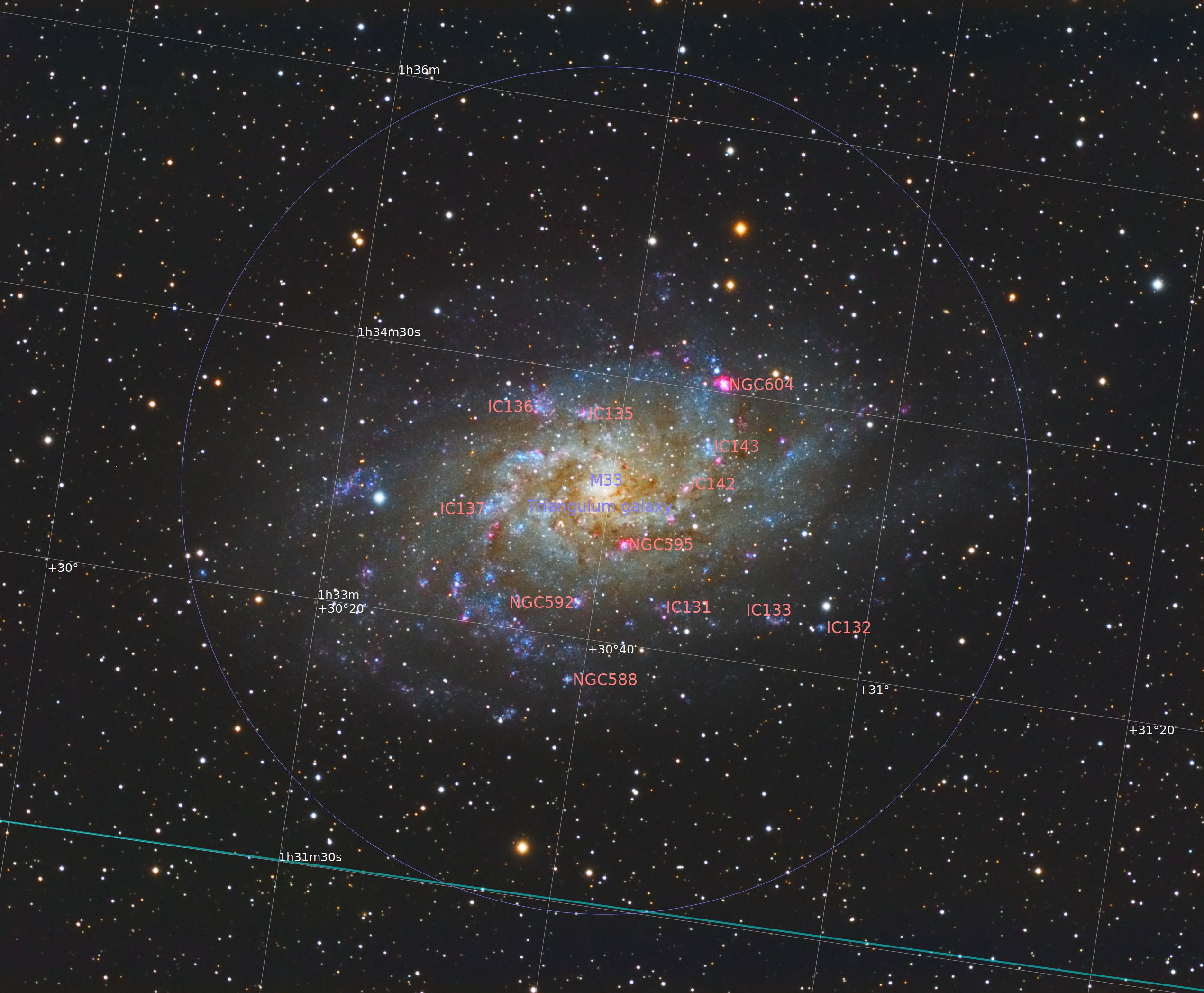
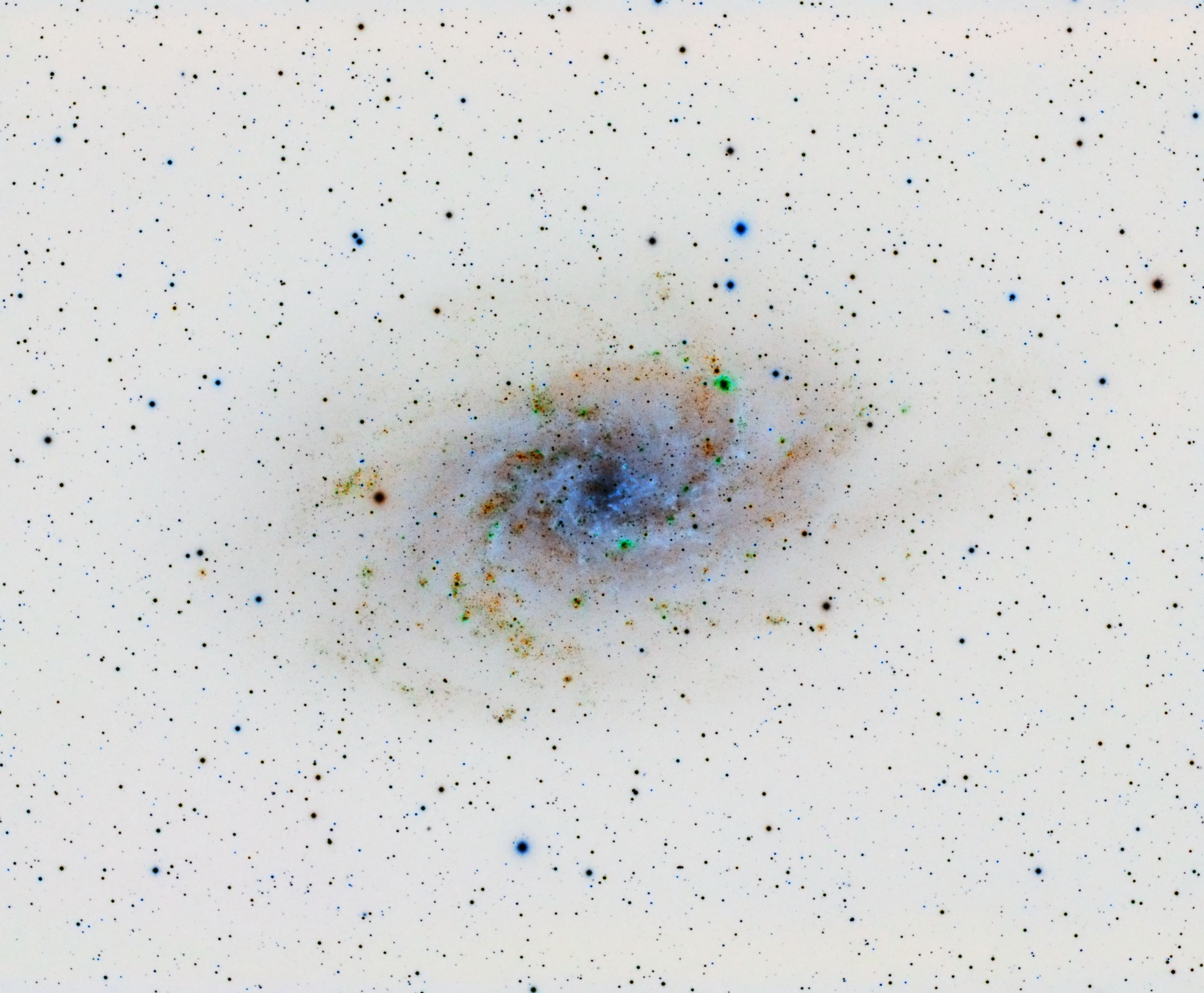
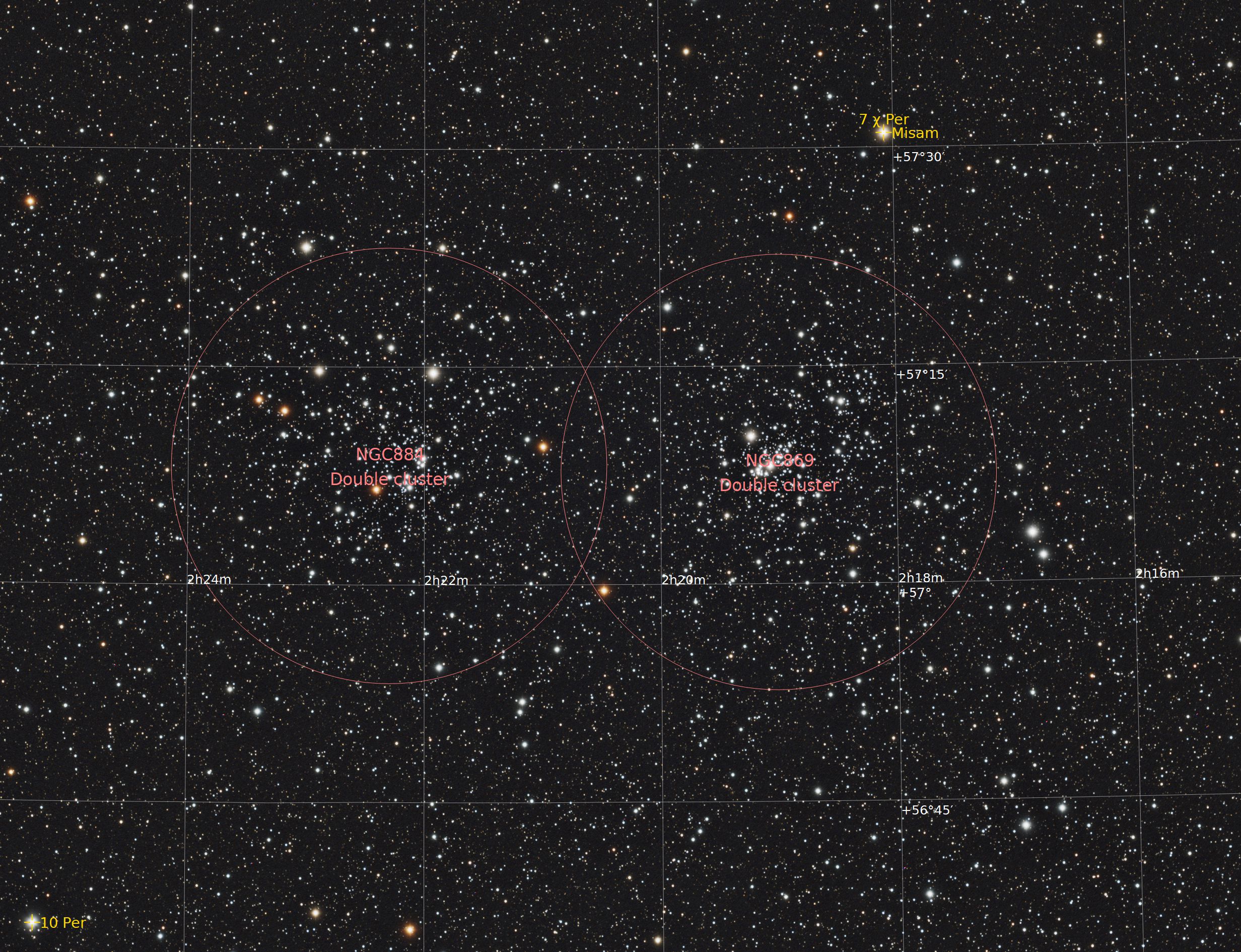
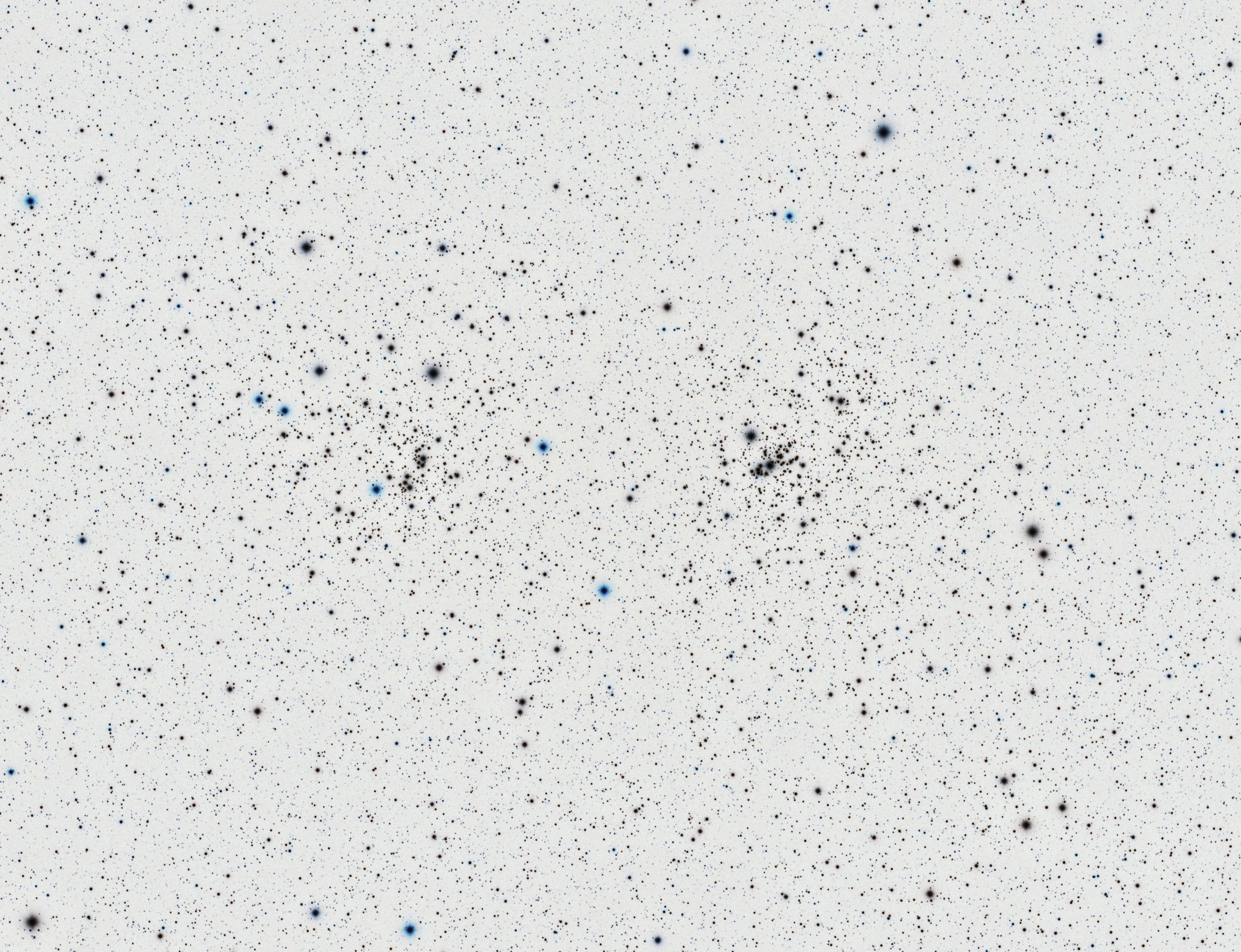
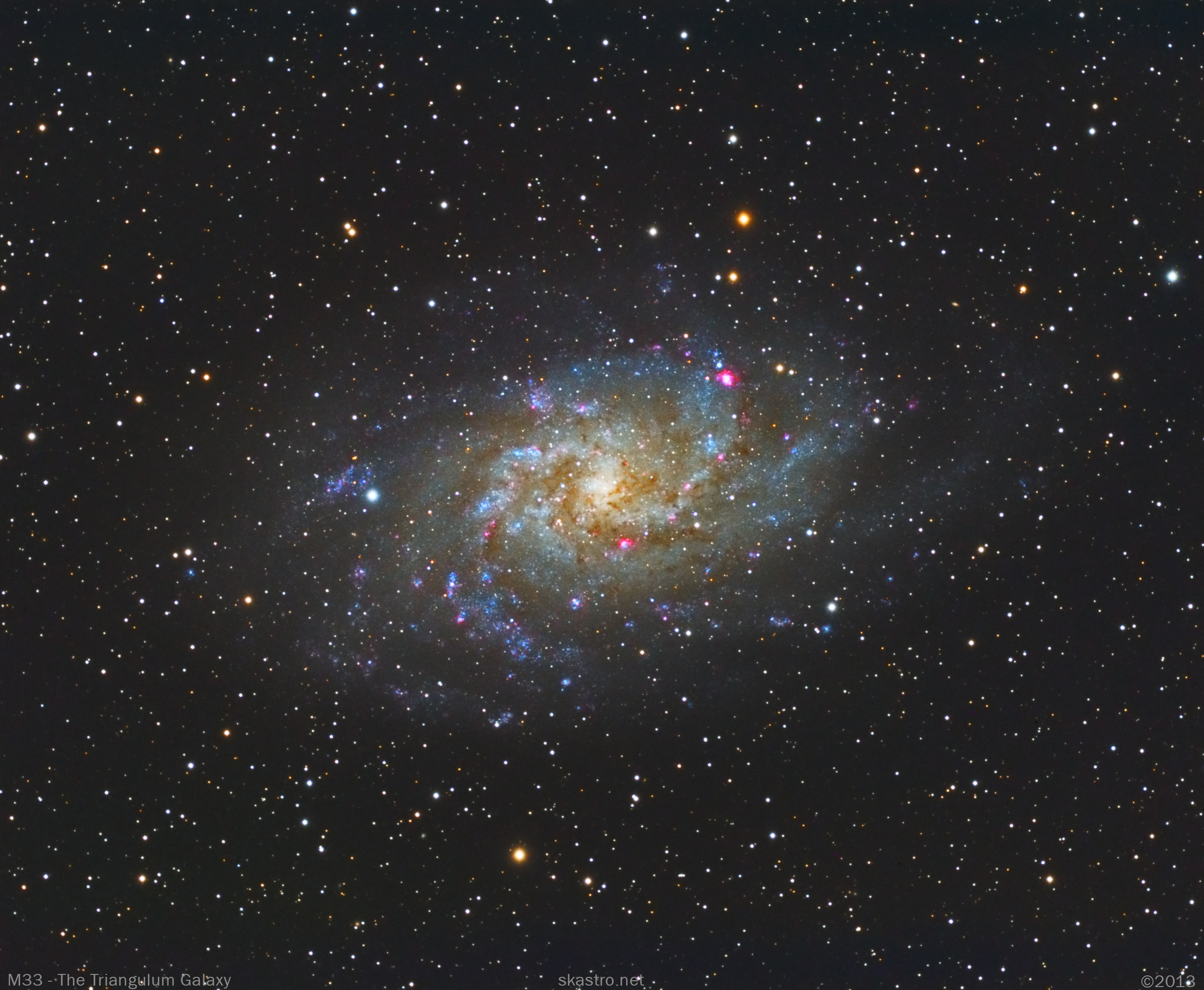
The two above images show an annotated and an inverted version of the galaxy.
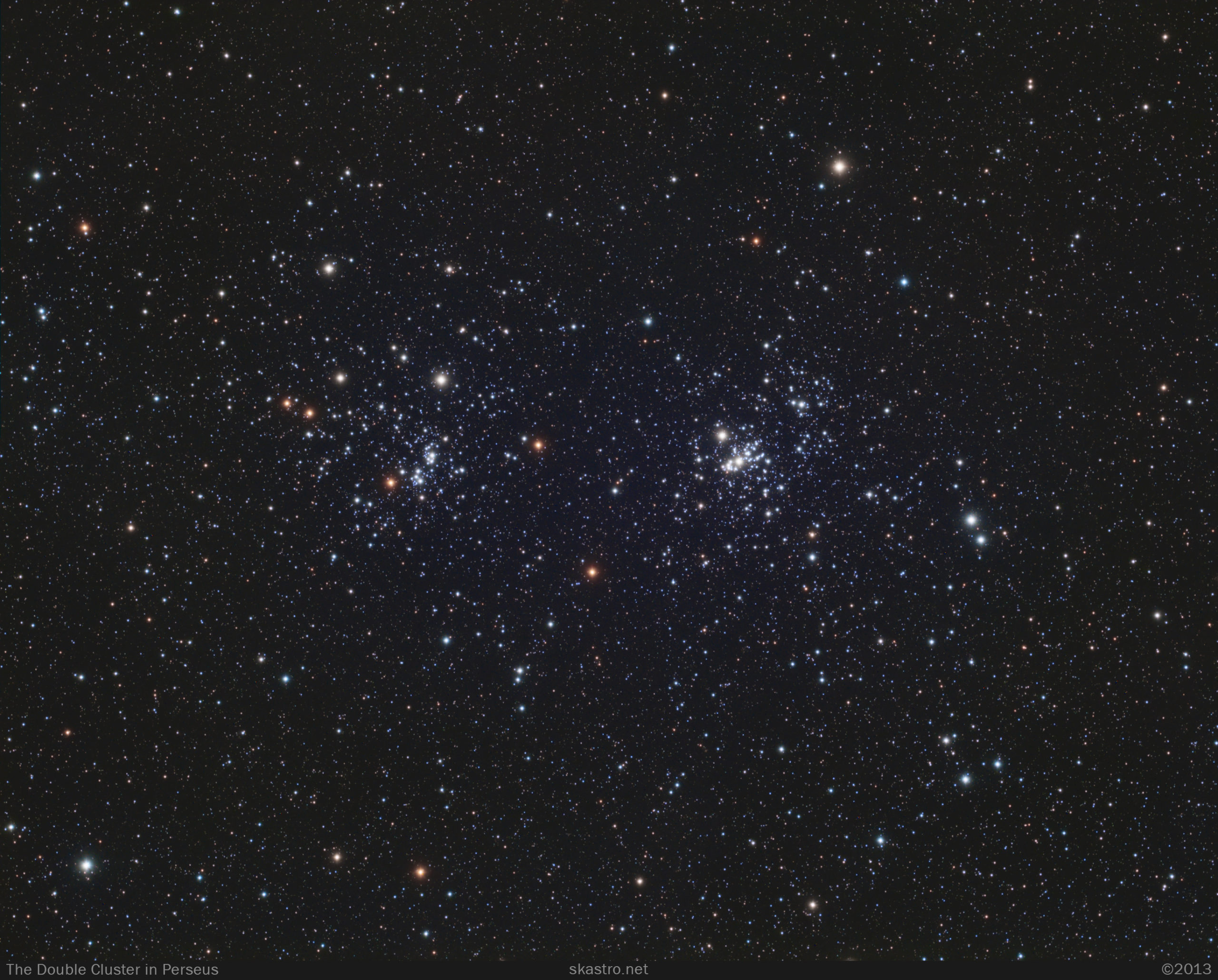
The Double Cluster

The Double Cluster is located in the constellation of Perseus, near the border with Cassiopeia and is composed of the two Open Clusters NGC869 and NGC 884. They are visible faintly to the naked eye on a dark night and a wide field eye piece shows them superbly in the telescope as does a pair of binoculars if you hold them steady.
The clusters are very distant from us at about 7500 light years and are located outwards in the Perseus spiral arm of the galaxy. Were they as close as The Pleiades (at 450 light years) they would dominate the night sky!
The above image was taken with my Takahashi FSQ85 refractor and Atik 460 CCD camera with Baader RGB filters and contains 45 minutes of exposures in each of the RGB channels. I took these exposures in 2013 and this was the first light of this telescope.