
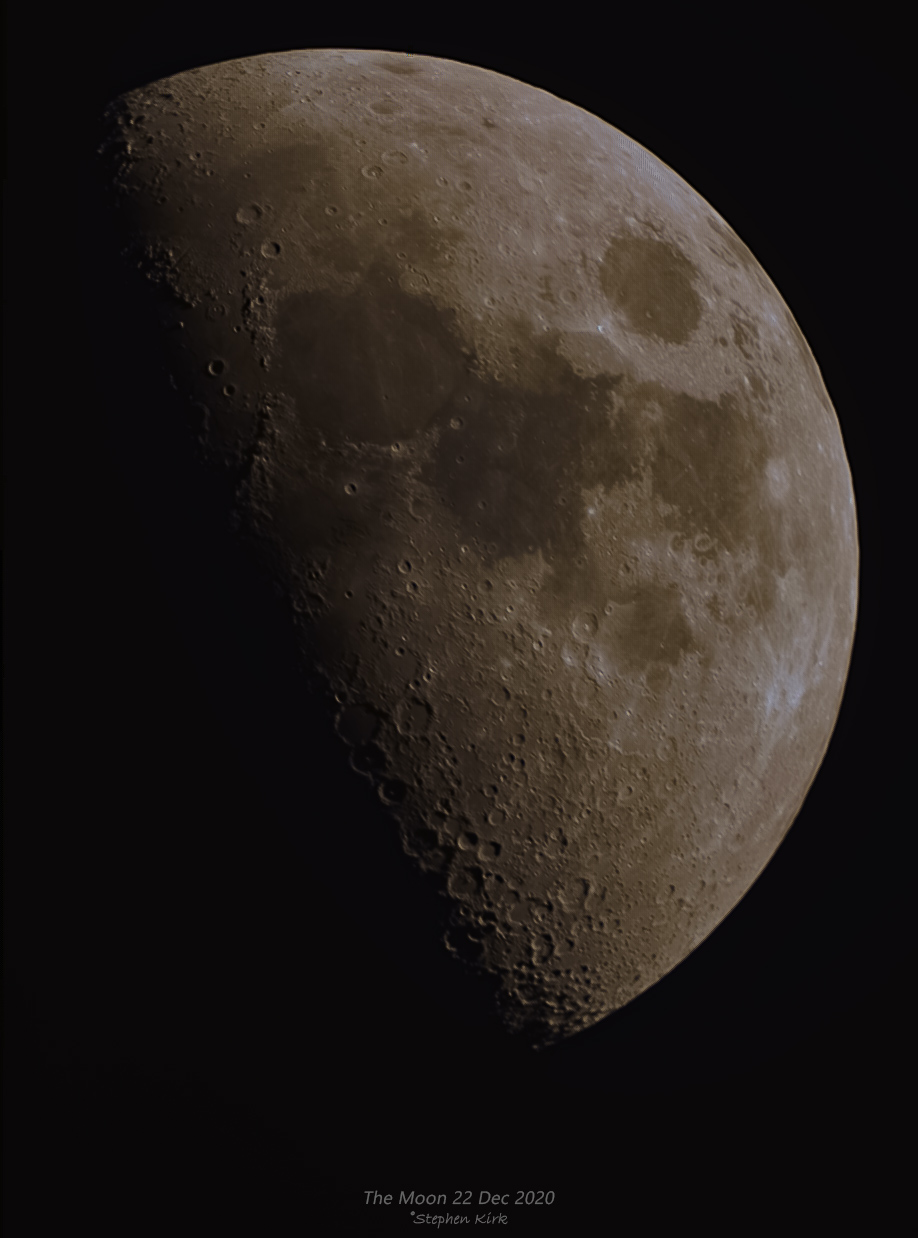
The Moon
The Moon was at about first quarter when I captured this image. There are a lot of firsts in this image when capturing as I discuss below.
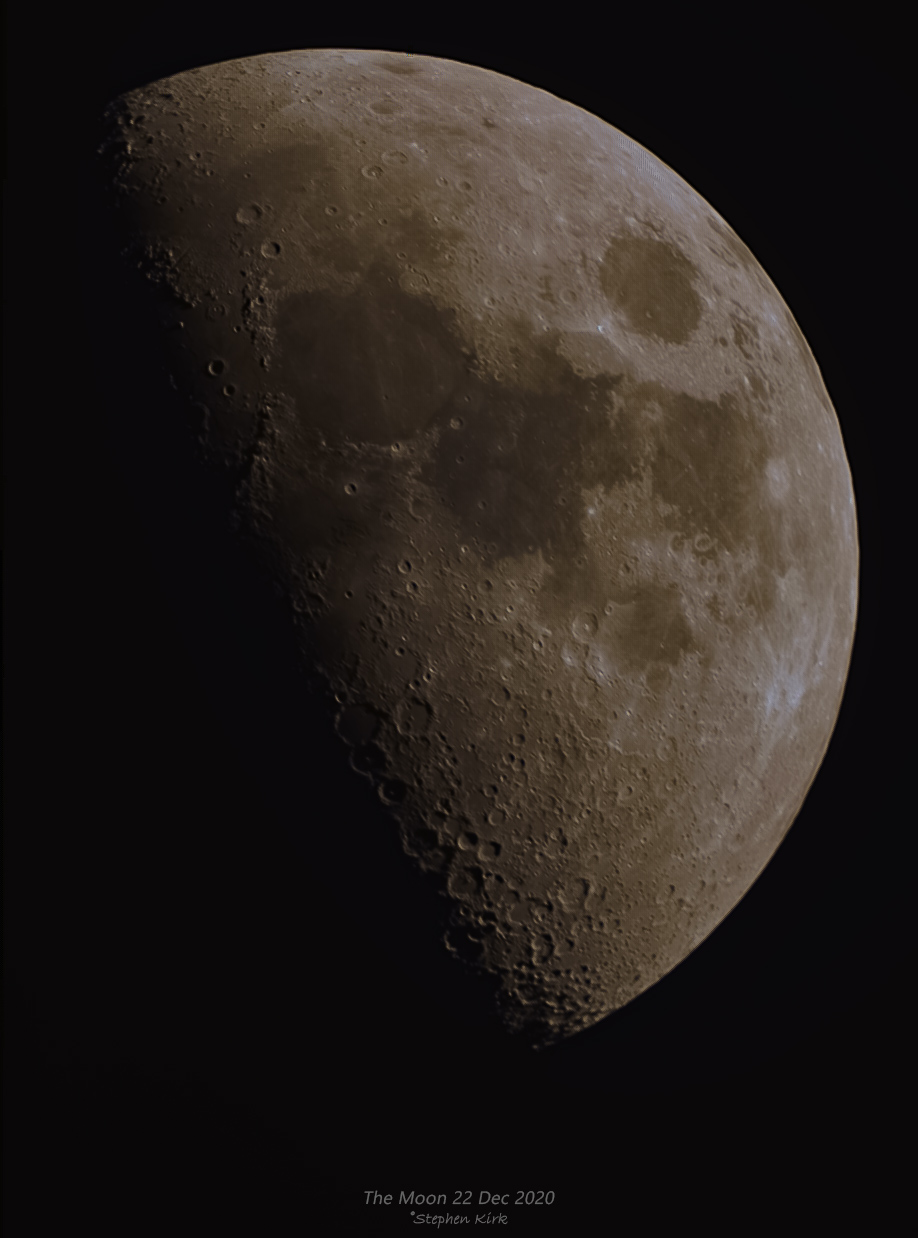
First up, this is the first time I used the QHY268C for planetary photography in video mode. Before now, I always used this camera in long exposure mode. I think the camera works very well and when I cropped the capture area down to 1600x1200 from its native 6000x4000, I was capturing16fps in Sharpcap, which is quite reasonable.
Secondly, this is the first time I used my Takahashi FSQ85 as a planetary/lunar scope. I think it worked our pretty well. I would normally have moved the camera over to the TEC140 or even the C925 SCT scope, however, I do not yuet have the adapters for the QHY268C to do that just yet.
Technical Details
As mentioned, imaged with FSQ85 and QHY268C. I used Lakeside motorfocus and captured 2000 frames in Sharpcap - another first use of this software (excellent) and utilised the best 35% of the frames in Autostakkert.
I used Photoshop to process the outputr from Autostakkert. Try as I might, and despite colour correction, I still think there is a slight green tinge to The Moon in this image so I will experiment with some different processing techniques.
EDIT: I am leaving the image as is but the reason for the green tinge is because I did not equalise the RGB channel intensities properly. There are several ways to achieve this. You can use linear fit in PixInsight and use the weakest median channel as the master with which to equalise the other two channels. Or, again with PixInsight, you could combine the RGB with channel combination with the channel intensities as they emerge from the stacking program and then do a colour combination to equalise the three channels. Or, you could use autocolour in Photoshop to achieve the colour calibration. Actually, there is a fourth way too, bu using Helmut Bornemann's autocolour script in PixInsight.
http://www.skypixels.at/pixinsight_scripts.html

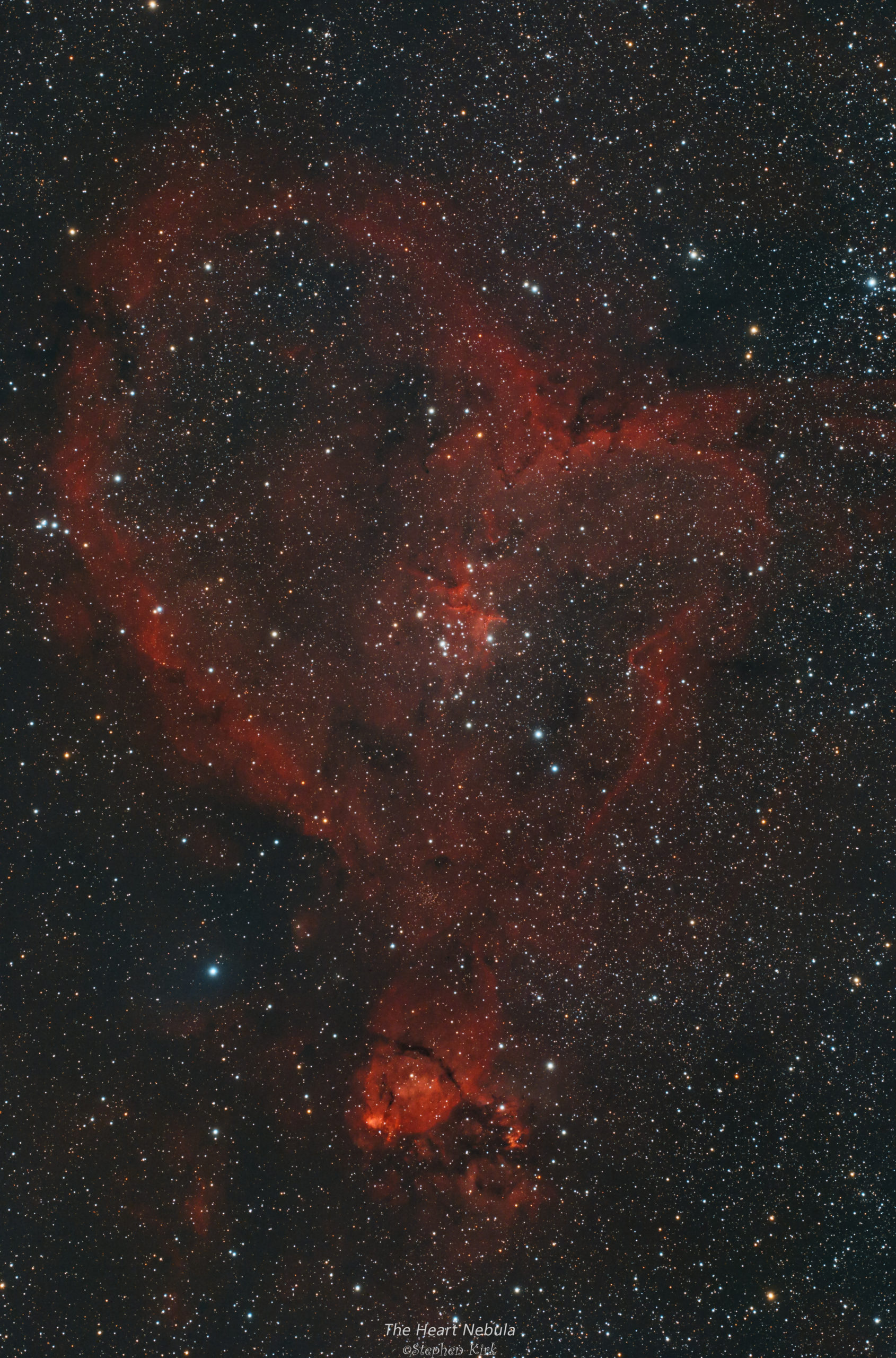
The Heart Nebula - IC1805
A famous emission nebula in the Northern constellation of Cassiopeia, the Heart Nebula is a huge star forming region located about 8000 light years away, out in the Perseus Arm of our galaxy. It is often imaged as a pair of nebulae alongside the Soul Nebula as the famous Heart and Soul Nebulae. I have imaged them together here as well as The Soul nebula here, presented on its own. It is also known as IC1805 and Sharpless S2-190.

It is a beautiful nebula and I have even seen it portrayed on Valentine cards :)
Technical Details
Imaged from my back yard in Nottingham, UK on 20 December 2020. Seeing conditions and sky transparency were reasonable. I used Takahashi FSQ85 refractor at native focal length and a QHY268C OSC CMOS camera. I took 42 x 180s exposures and the data was captured with Sequence Generator Pro. Processed in PixInsight and Photoshop.